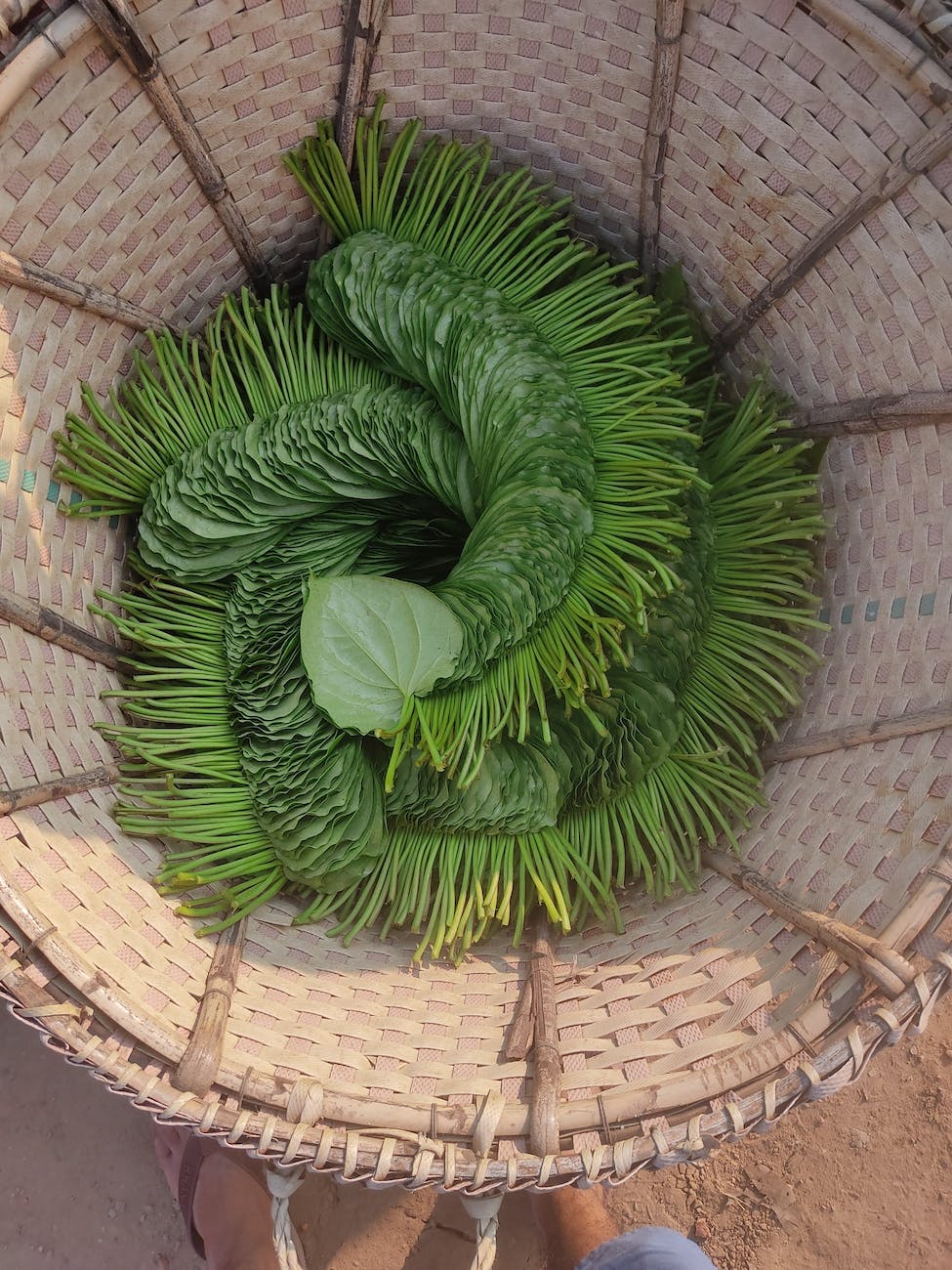
While travelling in Bhutan, it is impossible not to notice the red stained mouths of the Bhutanese. These stains are the result of constantly chewing upon the betel leaves and chunks of areca nuts (known as Doma) which are widely available. From roadside shops to supermarkets, small plastic pouches of the leaves and nuts being sold, are a regular sight. Other than the well known fact that chewing on the doma helps keep warm in the harsh cold weather that the Bhutanese deal with, there is also a very interesting tale as to how this started.
Back in yonder, the original inhabitants of the land of Bhutan traditionally known as Monyul (the land of the Monpas where Buddhism still hadn’t reached) were believed to be cannibals – they lived on raw flesh, chewed upon bones and drank the blood. Around 8th century, when the Tibetan Buddhist saint Guru Rinpoche (better known as Padmasambhava) arrived in Bhutan, he was disheartened to see the brutal way of existence. He offered to them the betel leaf, lime and areca nuts as a substitute to eating flesh, bones and drinking blood. It is said that the inhabitants of the land adopted this offering by Guru Rinpoche and ever since the tradition of chewing on betel nuts and leaves (with a dash of lime which contributes to the red stain) has stayed intact.

(Image source link)


Got a thought or a question ? Let’s hear it below !