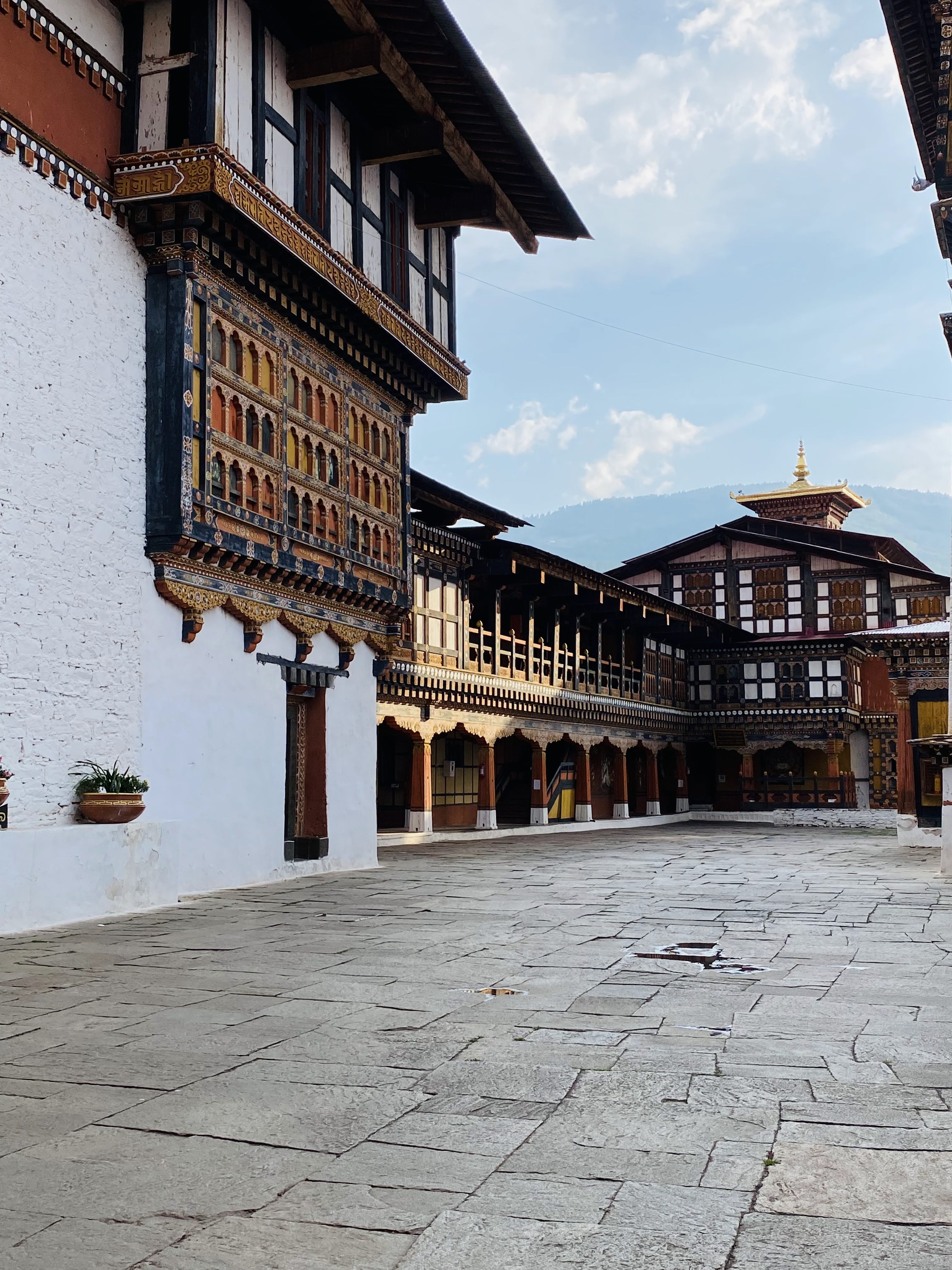
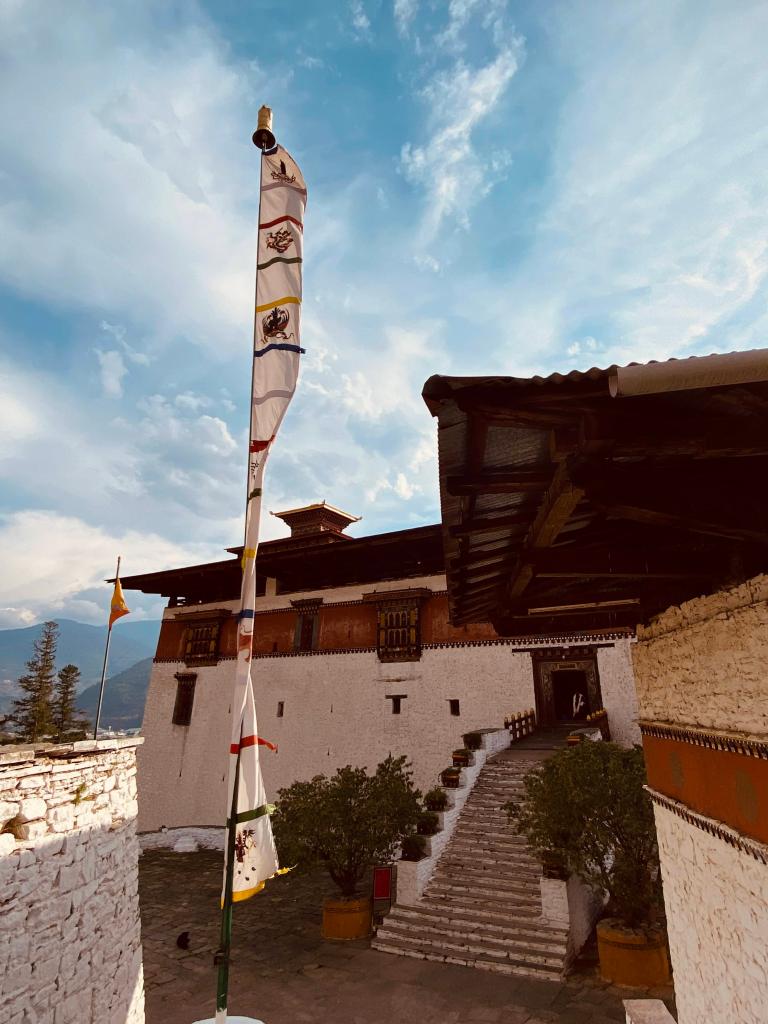
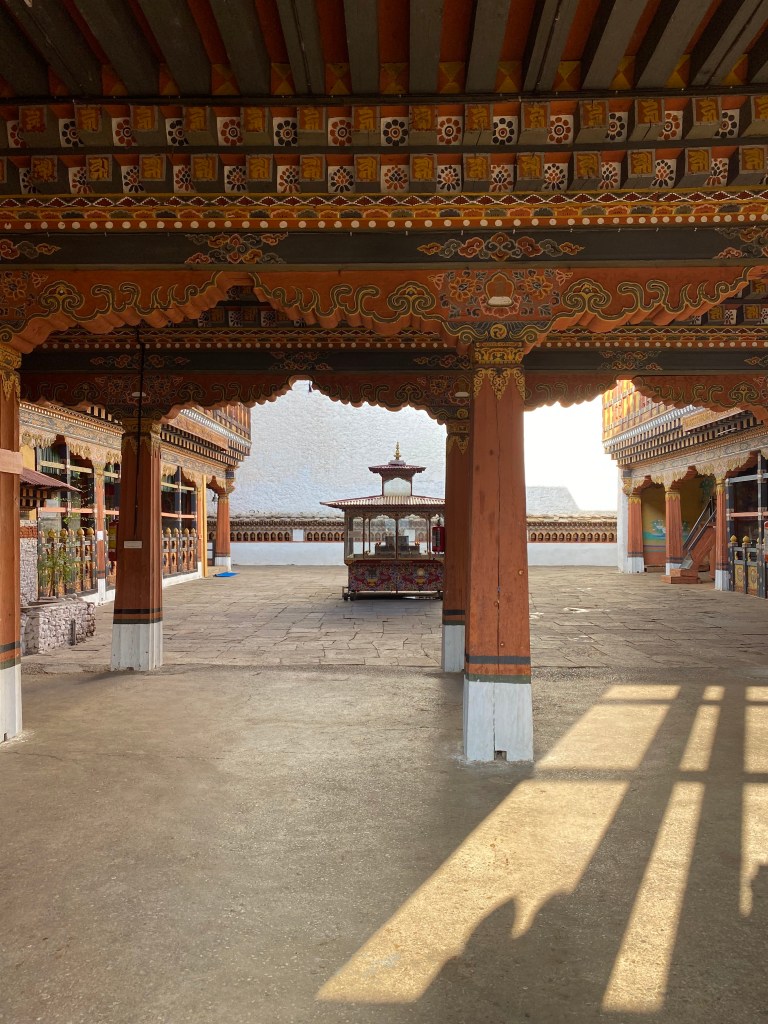
Paro Dzong, officially known as Rinchen Pung Dzong and shortened to Rinpung Dzong means ‘fortress on a heap of jewels’. An ancient fortress with a complex housing a monastic body, administration offices, courtyards and temples all surrounded by towering walls.
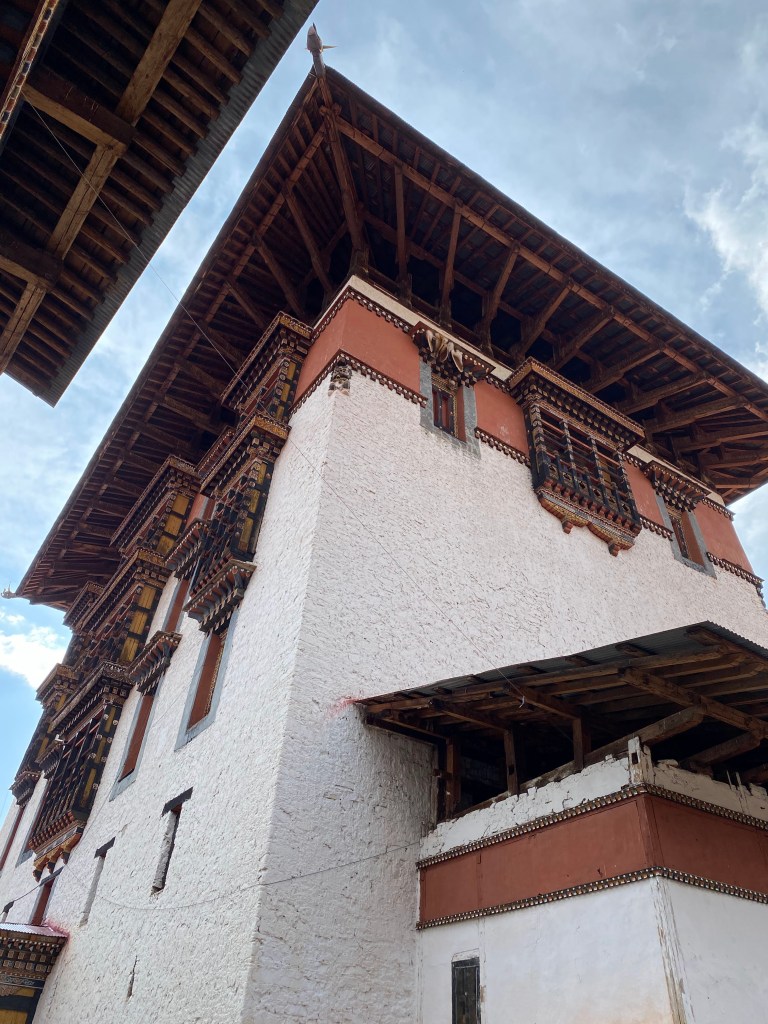
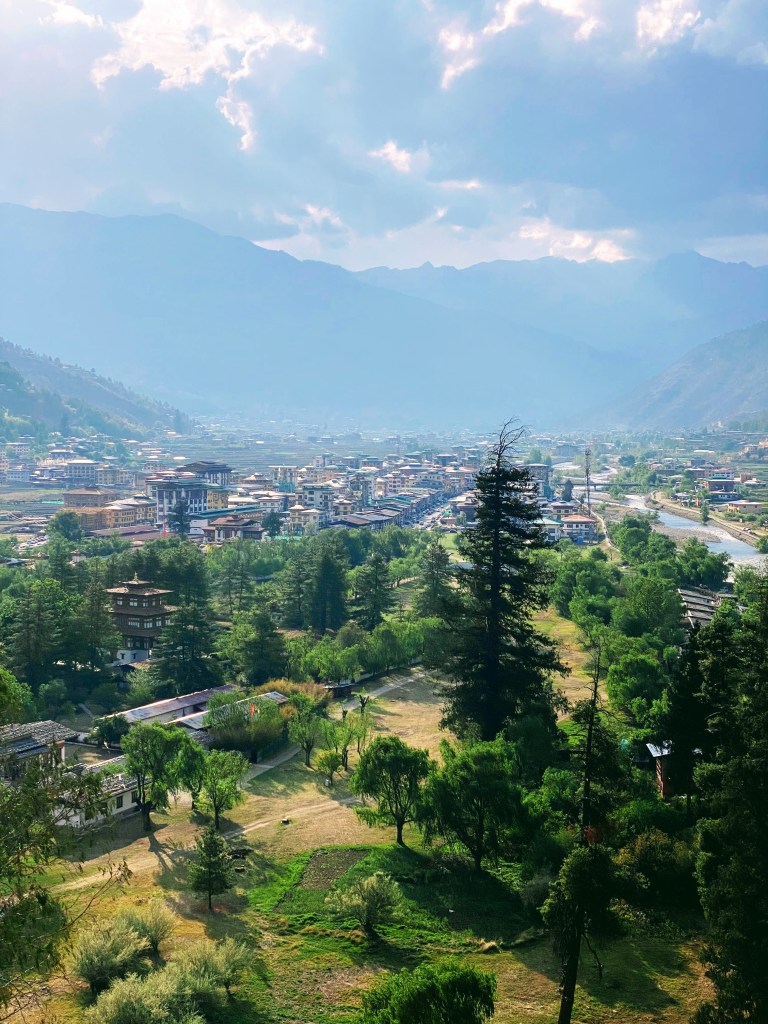
The dzong is a fine example of Bhutanese architecture, and is built on a cliff overlooking the Paro Chuu (chuu means river). Around the 17th century, Paro Dzong has served as defence for Paro Valley from invasion by Tibet. Certain features true to it’s defensive nature. The dzong’s walls do not contain any outward facing windows at ground level. There are smaller windows higher up which finally transition to huge balconies at the topmost level, beyond the reach of attackers and offering the most fantastic views of Paro. On a clear day, one can see the Paro airport runway from the balcony.
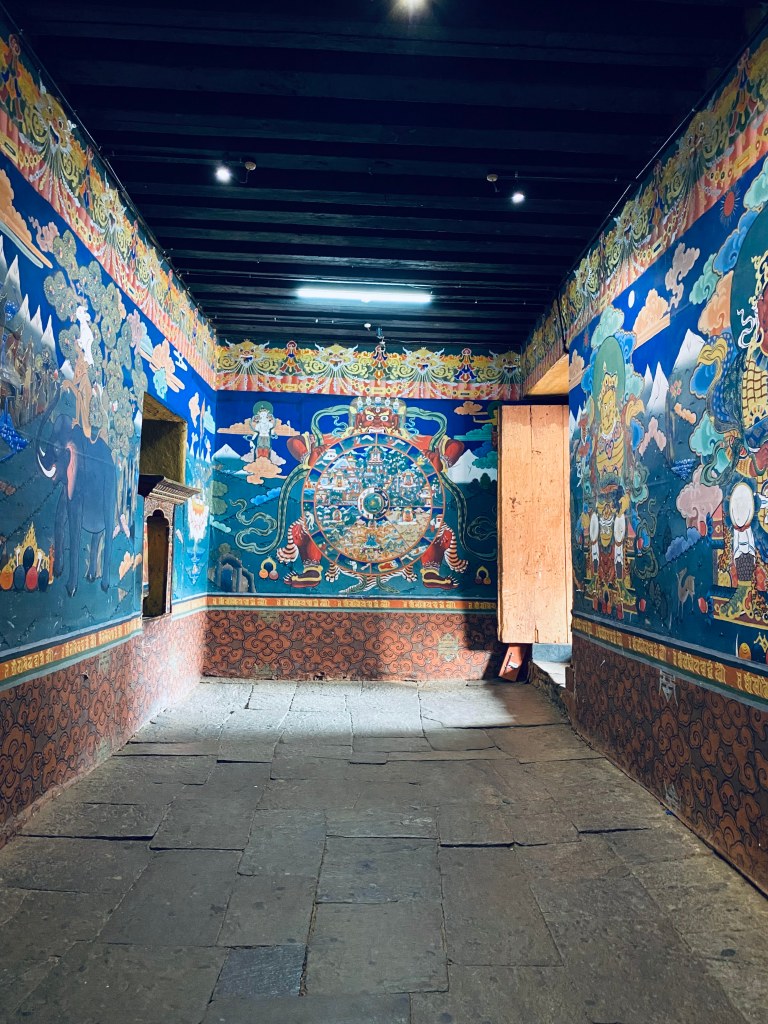
As you enter the fortress you will see the popular paintings of “six elements of longevity”, “the wheel of life”, and “four harmonious friends”.
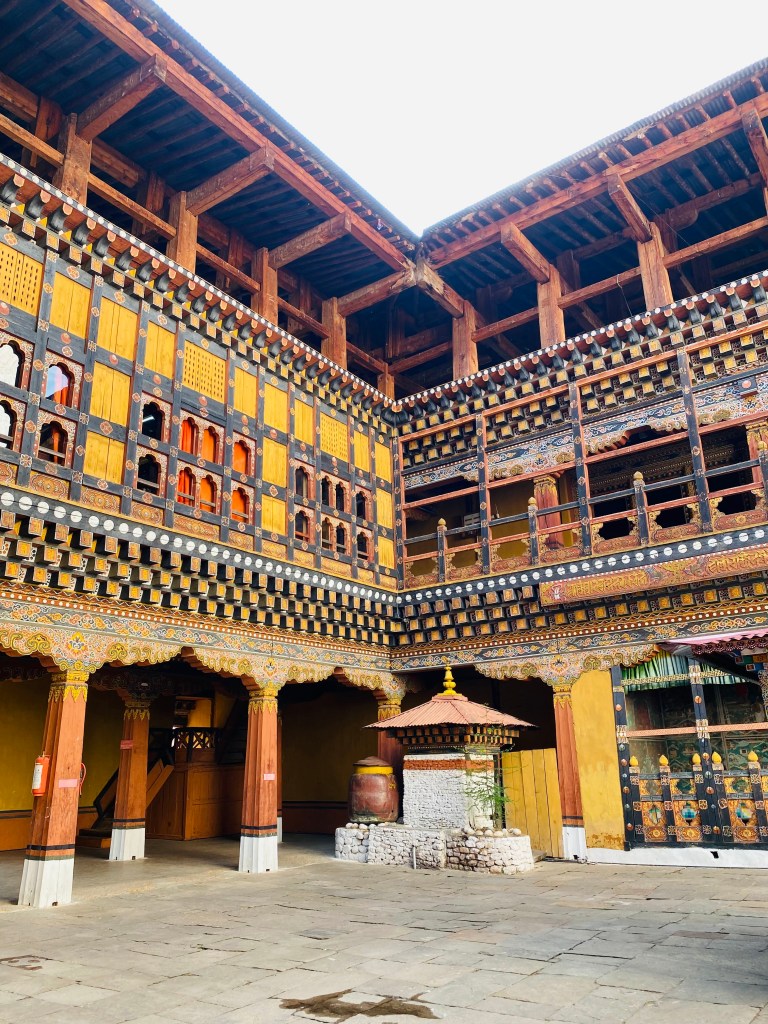
This fortress is well divided into Administrative and Monastic. As you walk down to the second courtyard from first one soon after the entrance, you will reach Kunre Lhakhang which is the monastic division and is used by monks for all practical purposes. The administrative section is at a higher level compared to the monastic courtyard. Inside the main sacred shrine, there are huge beautiful paintings and wooden carvings of Guru Rinpoche, 3 ages of Buddha, Zhabdrung, and other divine figures. Photography is not allowed inside the shrine.
The legend behind…
In the 15th century, two brothers named Gyelchok and Gyelzom, descendants of Phajo Drugom Zhigpo, the founder of the Drukpa Kagyupa School in Bhutan, lived in the Paro valley.
Gyelzom established himself at Gangtakha Monastery, while his brother Gyelchok traveled to Tibet to study theology and spent all of his wealth over his education. When Gyelchok returned to Paro, he was not respected in the community, as he had become a pauper. His brother Gyelzom renounced his existence as for him a beggar could not be part of the family.
Gyelchok then moved to Humrelkha, a place which took its name from the guardian deity of Paro, Humrel Gyalpo. He built a five-storied structure, which would later become the Paro Dzong, on a ridge above the Paro Chhu.
In 1905 it was completely burned by fire and was reconstructed by Paro Penlop Dawa Penjor through the special tax levied throughout Bhutan.



Discover more from thatbrowngirlinblackboots
Subscribe to get the latest posts sent to your email.

