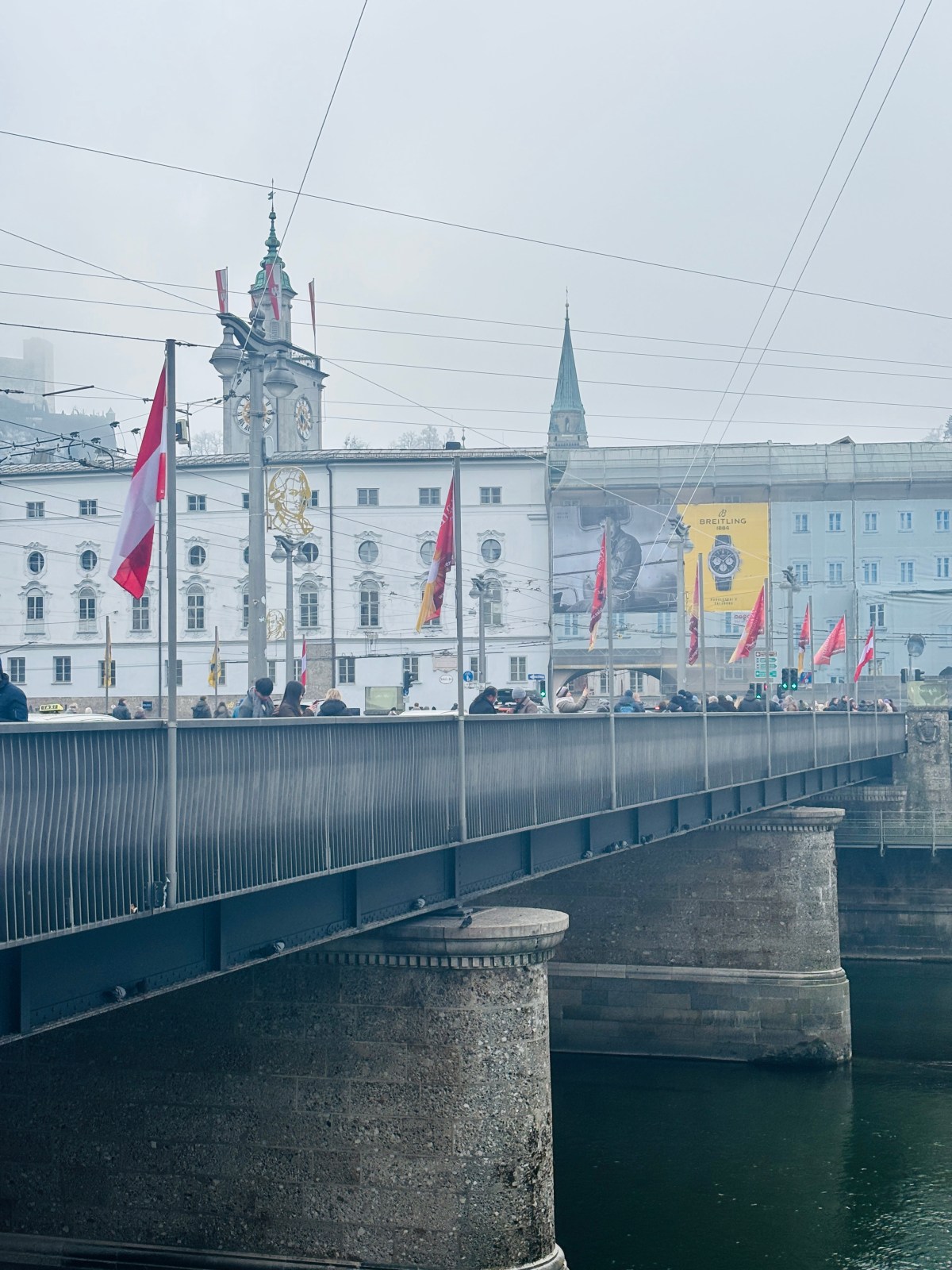
December is when we stop trying to keep up.
It’s that time of the year when the world seems to slow down. Work fades into the background, and it finally feels okay to step away without constantly checking notifications. And somehow, that always makes it the right time to travel.
In December 2025, Austria fit into that holiday mood of ours and it became the first of the two countries for our year end vacation. We travelled through Vienna, Innsbruck, and Salzburg, experiencing Christmas markets, alpine landscapes, and winter city life in Austria.
It wasn’t a trip we tried to control much, and maybe that’s why it worked so well!
Here’s a breakdown of everything that can help you plan your winter trip to Austria.
The Itinerary
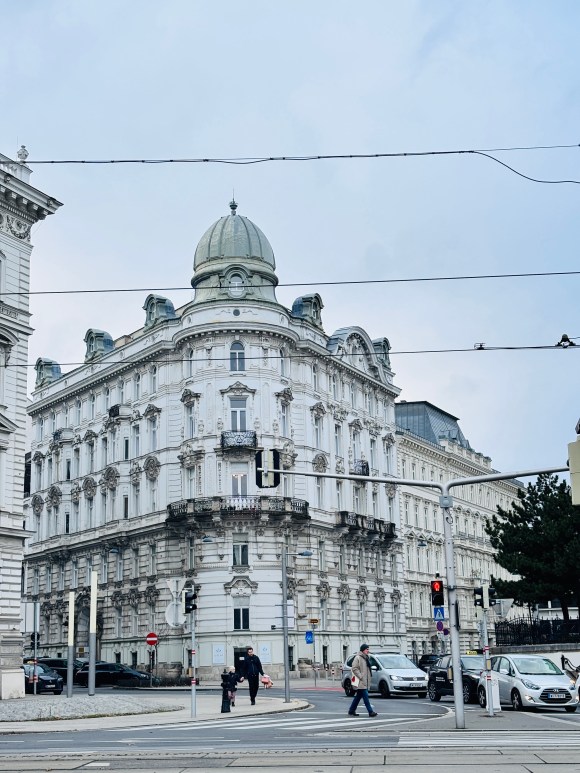
Vienna — 2 nights
Explore Vienna Christmas markets, St. Stephen’s Cathedral, Mozart concerts, and historic streets. (You can read all about the 2 nights in Vienna in this post below)

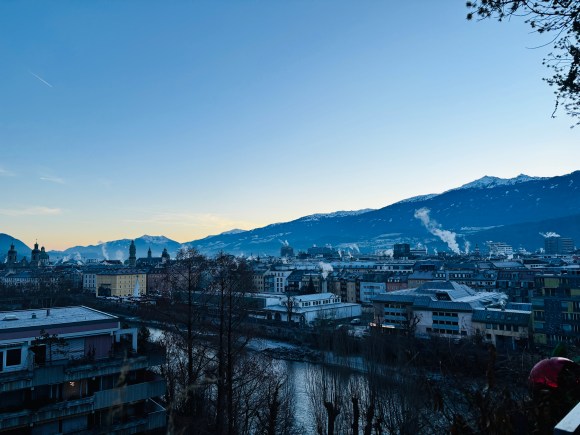
Innsbruck — 3 nights
Experience the Alps in winter, Nordkette cable cars, Tyrolean evenings, and Marktplatz Christmas market. (You can read all about the 3 nights in Innsbruck in this post below)
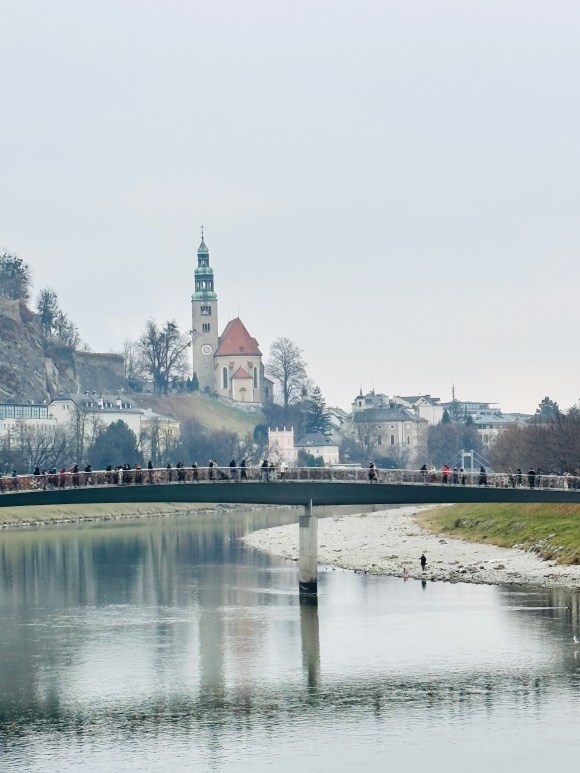
Salzburg — 3 nights
Walk through Salzburg Altstadt, visit Christmas markets at Domplatz & Residenzplatz, take a Hallstatt day trip, and add the theatrical touch to it with The Sound of Music tour. (You can read all about the 3 nights in Innsbruck in this post below)
The Christmas Markets 🎄
The first agenda for any Europe trip in December should always be chasing Christmas markets, coz you can never get enough of it.
The Christmas Markets (Christkindlmärkte) in Austria are a centuries-old tradition with earliest records dating back to Vienna in 1298, making them one of Europe’s oldest festive customs.
Across the 3 cities we visited, these markets typically run from mid-November to around 23–24 December, with few extending into early January. But while the concept is the same – wooden stalls, lights, food, music – each city does it differently.
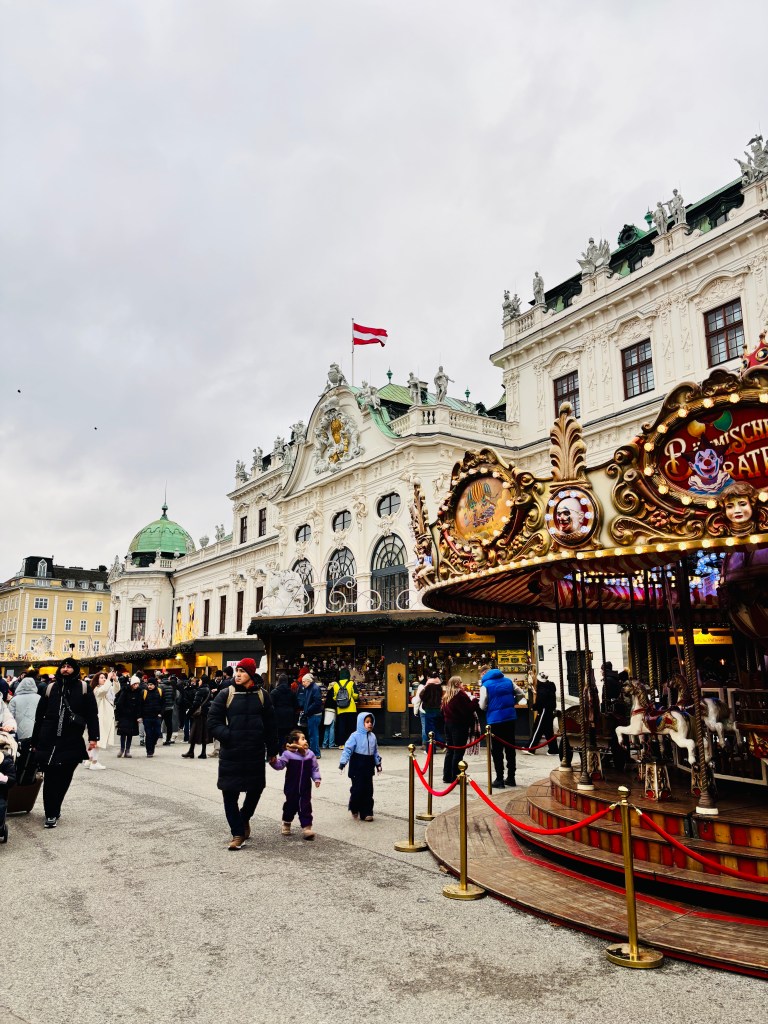
🎄 Vienna Christmas Markets
The city hosts about 15-20 markets across different districts.
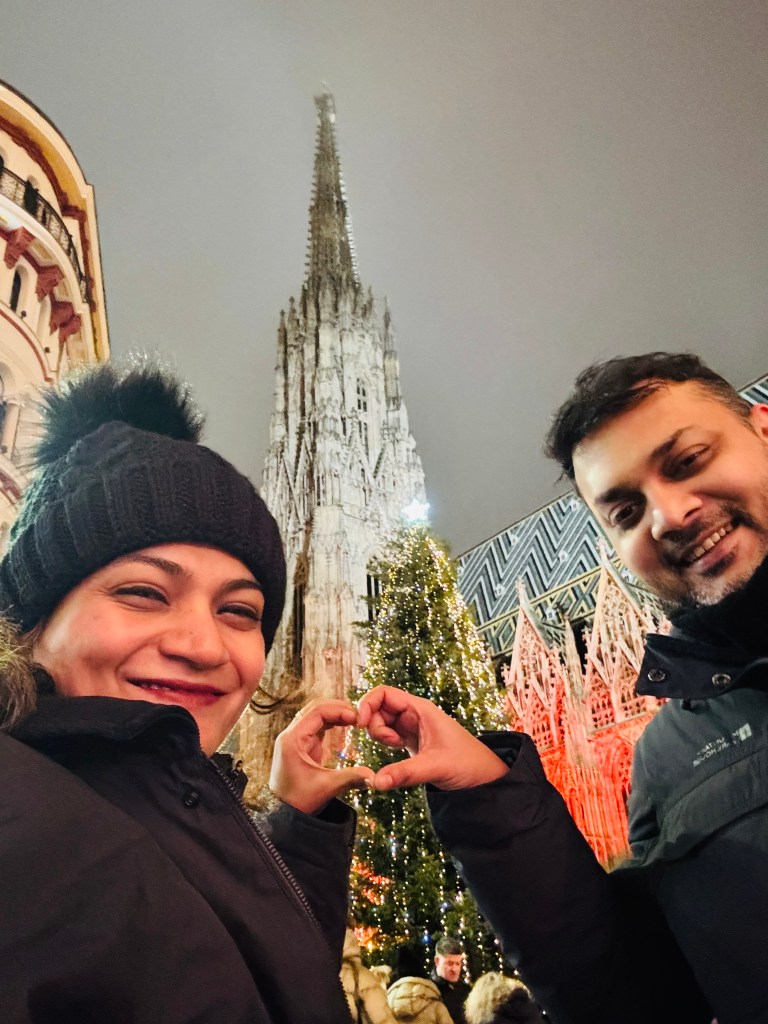
The most famous is at Rathausplatz (Vienna Christmas World), which became viral in 2025 for the hearts.
Others include Schönbrunn Palace, Belvedere Palace, Stephansplatz, Karlsplatz, Spittelberg
Date / Time – The markets run till 24 December, with timings typically from around 10 am to 10 pm.
🎄 Innsbruck Christmas Markets
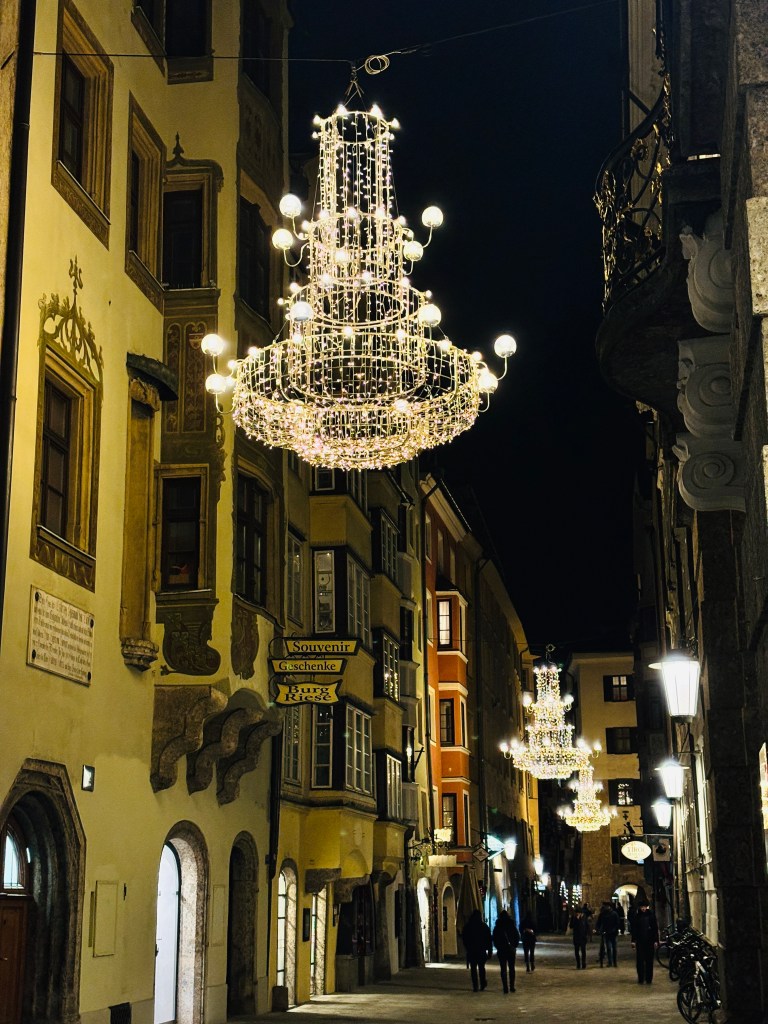
Innsbruck feels different compared to it’s counterparts in the bigger cities – smaller, quieter, and with a backdrop of the Alps. There are multiple markets across the city, but the key ones are Old Town (Alstadt), Marktplatz (by the Inn River and featuring the Swarovski Crystal Tree) and Maria-Thereisien Strasse.
Date / Time – The markets in Innsbruck run from 15 Nov to 23 Dec and timings ranging from 11 am to 9 pm.
🎄 Salzburg Christmas Market — Historic & Compact
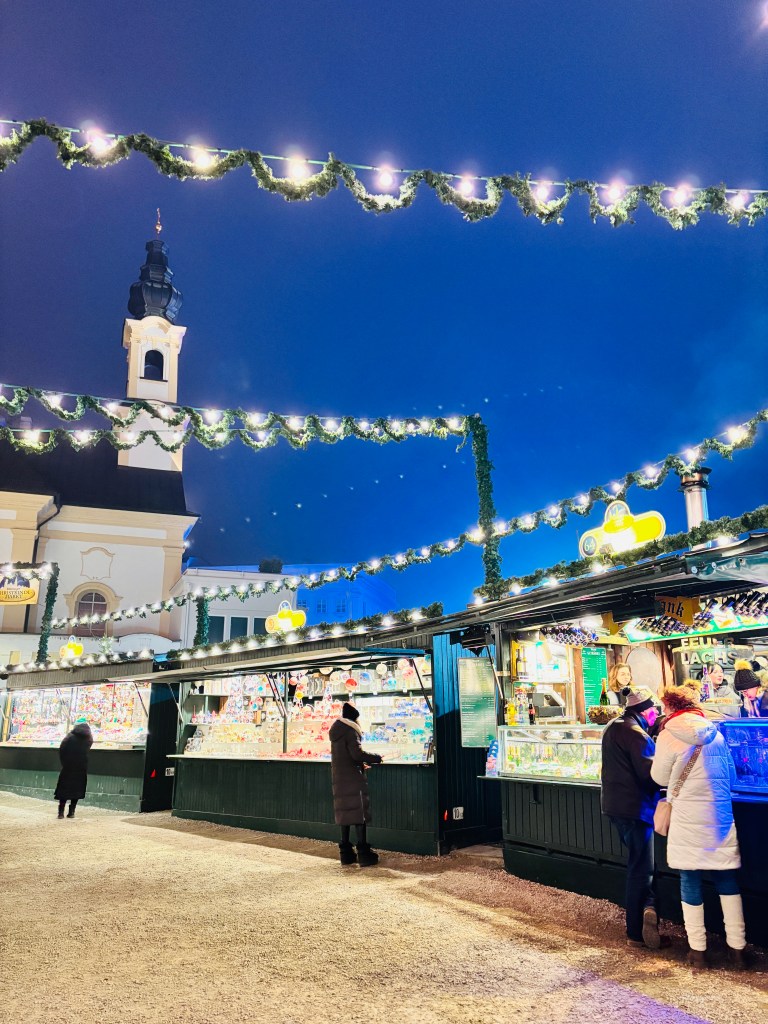
Salzburg’s market is another one of the oldest in Europe, with roots going back to the 15th century. The main market locations are Domplatz (Cathedral Square) and Residenzplatz – making it concentrated in one central area.
Date / Time – The market runs from late November to 1 January, making it longer than most others.
Must try foods in Christmas markets
There is a strong focus on traditional Austrian food across all markets. Some of the must try food items across Austria which are native to the region are –
- Germknödel
- Kaiserschmarrn
- Glühwein, Punch, Jagatee (mulled wine, often spiked)
- Bratwurst / sausages
- Raclette, potato pancakes, Langos
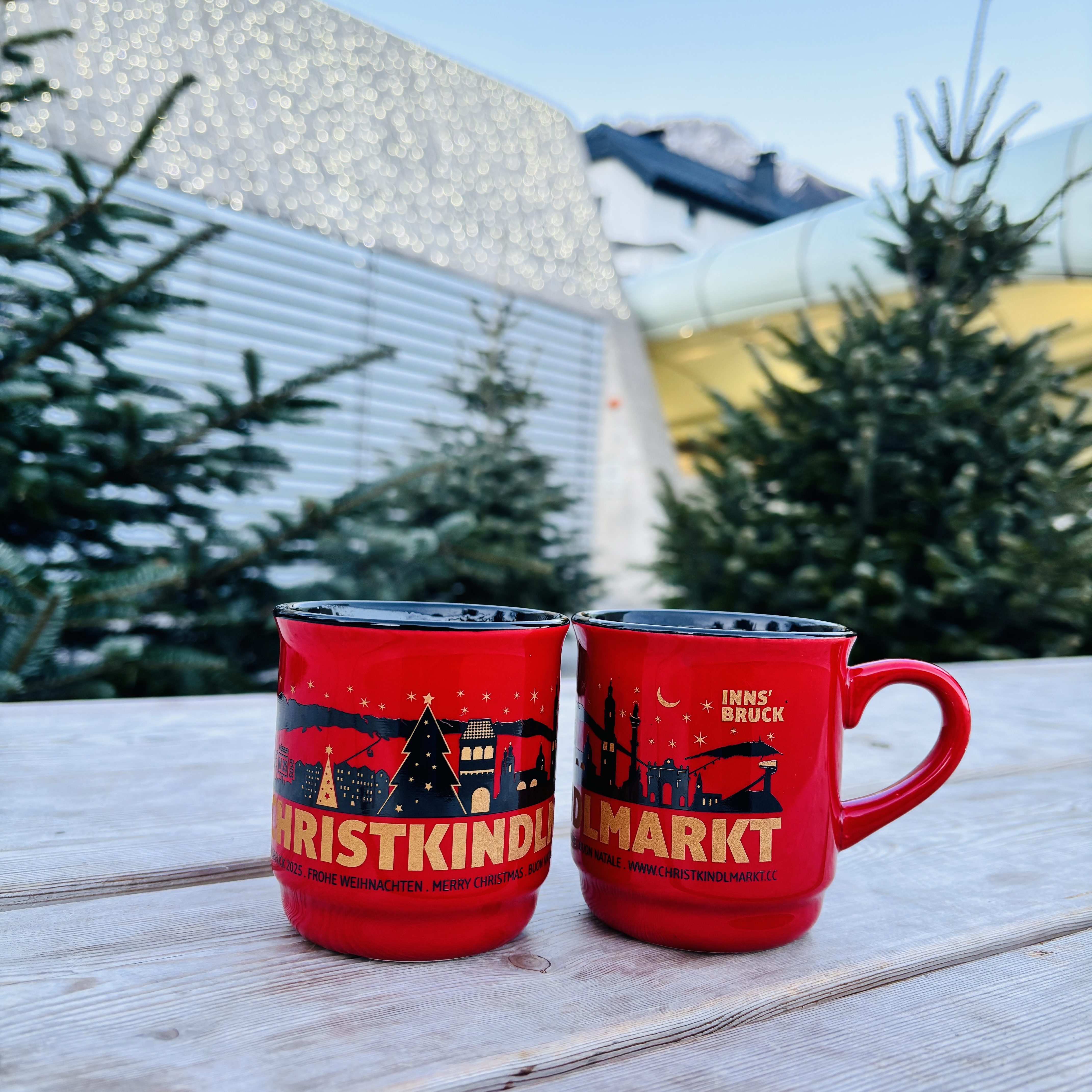
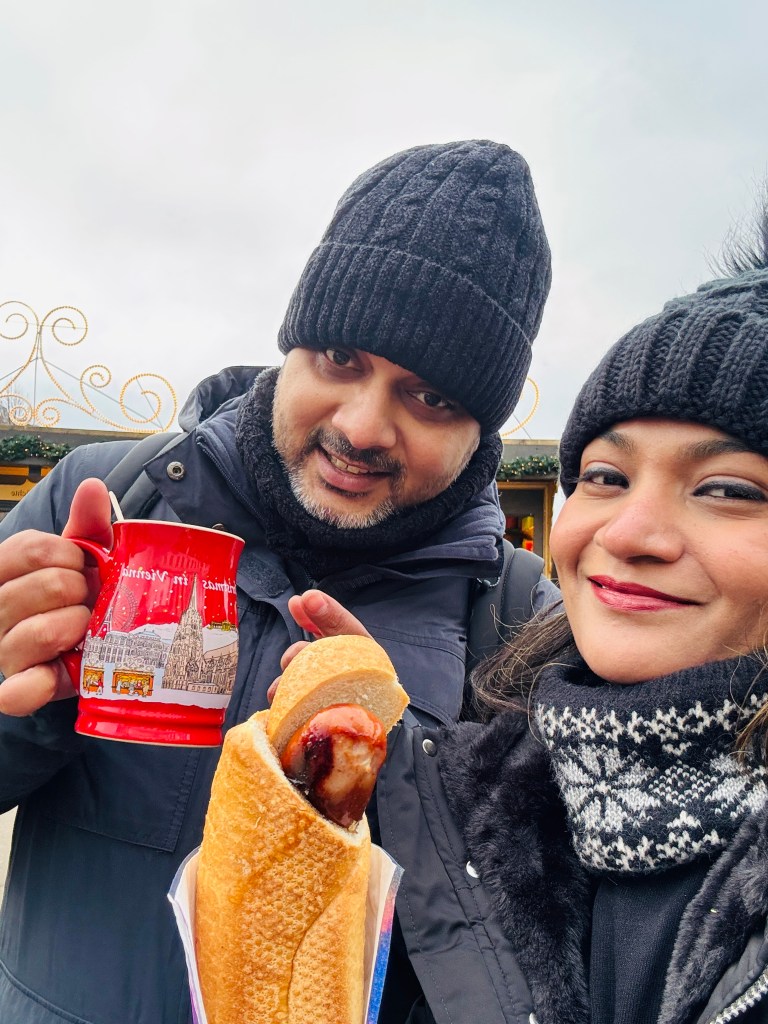
Unique – A very unique aspect which I’ve seen only in Austria – The drinks are served in ceramic mugs with a €4–€5 deposit so you can keep the mugs as a collectible by foregoing the deposit!
Payments – Cash is king. (Cards were accepted only in Vienna, that too sparsely)
The Food in Austria
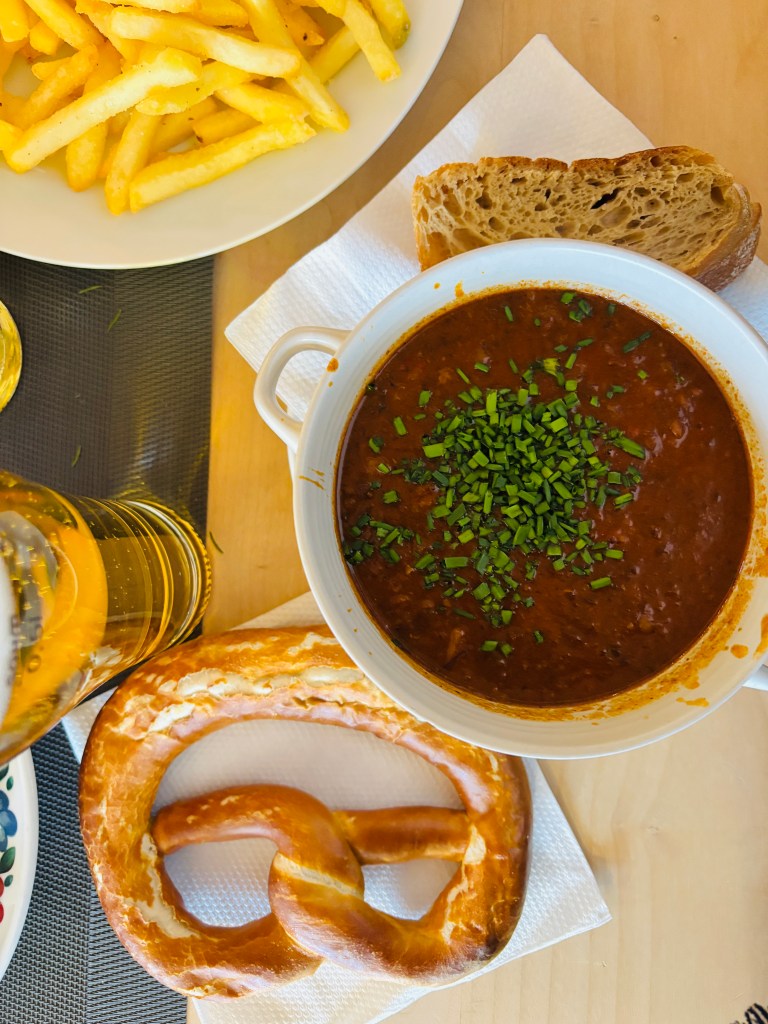
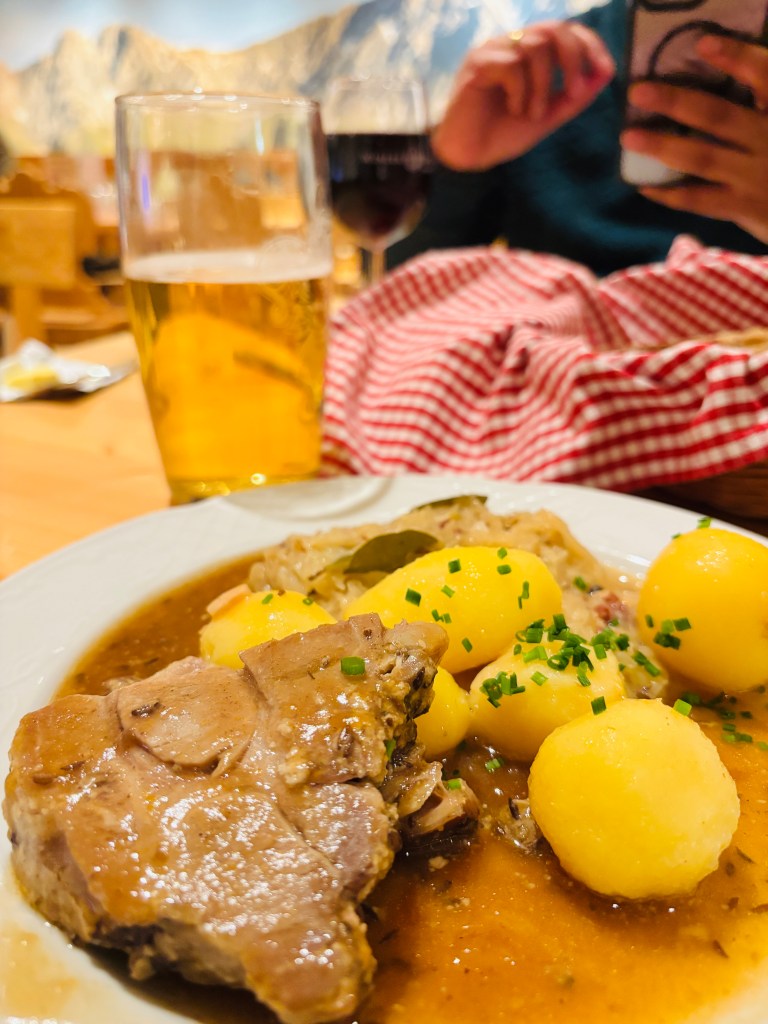
The food in Austria is traditional, hearty, and deeply rooted in Central European influences, especially Bavarian and broader Alpine cuisine. If you’ve travelled through parts of Germany (Bavaria), Switzerland, or even Northern Italy, some of it will feel familiar – similar ingredients, similar techniques, just slightly different interpretations. The food is also built for the climate – cold weather, long winters, and a culture that values comfort over complexity -which means meals are often heavy on meat, carb-forward, rich, filling and designed to keep you warm.
The overlap with Bavarian food traditions (especially in Salzburg and Tyrol) comes from shared cultural and political ties within the Austro-Bavarian region, which influenced food habits across borders. Austrian cuisine shares a strong overlap with Bavarian food traditions, especially in regions like Salzburg and Tyrol (Innsbruck). This shows up in the sausages, pretzels (brezels), beer culture and roast meats.
Must try food items
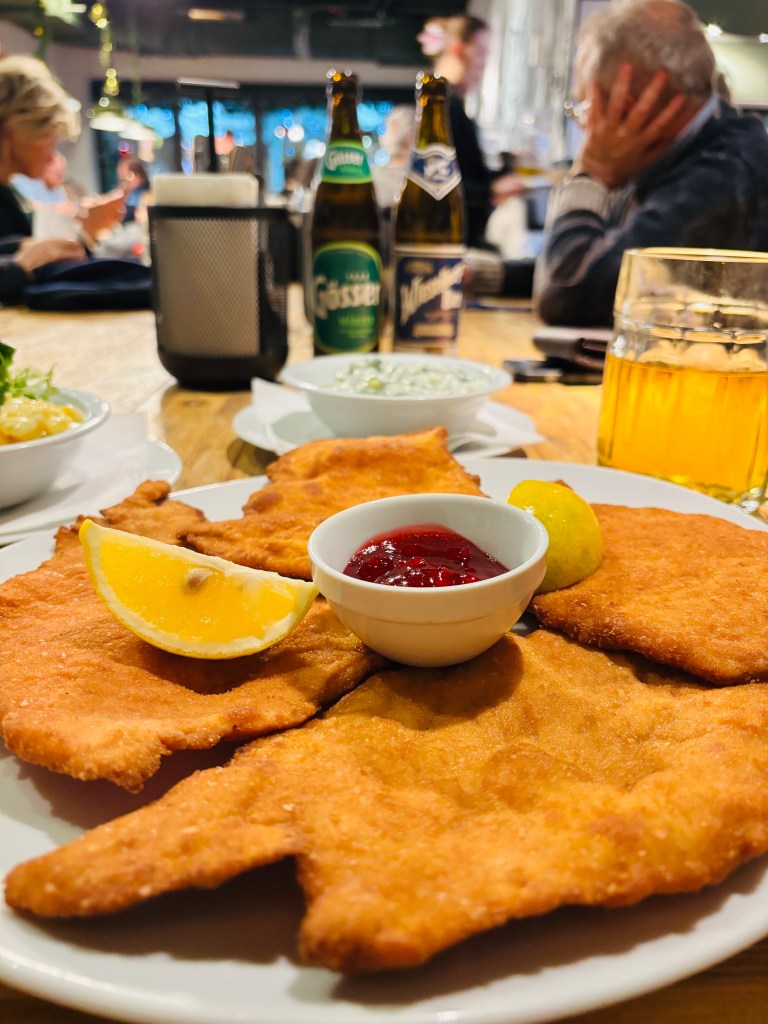
Wiener Schnitzel – Probably the most well-known Austrian dish. Traditionally made with veal (Kalb), though pork versions are common. Served with potato salad or parsley potatoes.
Goulash – Originally Hungarian, but fully adopted into Austrian cuisine. A slow-cooked meat stew with paprika, often served with bread or dumplings.
Tafelspitz – A classic Viennese dish — boiled beef served with broth, root vegetables, and horseradish sauces.
Kaiserschmarnn – One of the best desserts to try — a shredded pancake, lightly caramelised, served with powdered sugar and fruit compote.
Apfelstrudel – Classic apple strudel with cinnamon, often served warm with vanilla sauce.
Germknödel – Steamed dumpling filled with plum jam (powidl), topped with butter and poppy seeds.
Vegetarian food in Austria
Austria is not the easiest destination for vegetarians, but it’s also not impossible. There are cheese-based dishes (Käsespätzle), bread, pretzels (bakery items), potato based sides.
There are an increasing number of vegan/vegetarian cafés in cities like Vienna and Salzburg – just needs some research.
The Commute – Getting around Austria
The country is built for movement. Cities are well connected, distances are manageable, and the entire system – from long-distance trains to local trams – all works in the favour of the public!
Intra-city travel
At the centre of it all is the Austrian Federal Railways (ÖBB), the national rail operator that runs most intercity and regional trains across the country. You can book tickets on the ÖBB official website or mobile app and even ticket machines at stations. Alongside it, private operators like WESTbahn also run on key routes such as Vienna–Salzburg.
Seat reservations are optional on most trains but highly recommended during weekends, holidays, and winter peak season
If you’re travelling between cities like Vienna, Innsbruck, and Salzburg, trains are easily the most efficient and comfortable option.
Public transport within cities
Once you’re in cities like Vienna or Salzburg, the system shifts from trains to trams, buses, and metros (U-Bahn in Vienna). It’s completely trust based – no entry gates, or turnstiles. Instead, it operates on a proof-of-payment system — you buy your ticket beforehand and validate it, and inspectors randomly check passengers.
There are also regional buses which connect smaller towns and complement train routes. Many are integrated into the same ticketing system as trains.
Ferries are used in specific places like Hallstatt, where the train station is across the lake and a ferry connects you to the village.
Cost of Transport in Austria
Transport in Austria sits somewhere in the middle – not cheap, but not unreasonable for what you get. It typically ranges from €20–€70 (depending on distance and booking time) for intercity trains. Regional trains are cheaper, often under €20. The seat reservation charges are extra.
There are also passes –
The KlimaTicket allows unlimited travel across Austria (annual pass ~€1,095+). And then there are regional day/weekly tickets for city transport.
In cities, public transport is relatively affordable and often bundled – one ticket can cover train + tram + bus combinations within a region
The Accommodation
Austria is expensive when it comes to accommodation and in winter, we felt the pinch. Book in advance, if possible.
Plan the accommodation based on your itinerary – if you intend to do day trips and use public transport – it would be ideal to stay close to the station.
If your itinerary includes only local sightseeing – stay “close” to the city center. If you’re choosing Old Town as your preferred choice, rooms will be smaller, and prices higher.
The Cost
Totally depends on your flights, accommodations, personal preferences, so I will refrain from commenting on this.
The Clothing
I’m focusing on winter essentials here – Austria is cold – so layer up. Like we’ve done Norway, and somehow this felt colder! I’m no fashionista but focus on good thermals – Uniqlo works well. Layer up so you can dress up or down depending on weather fluctuations. Remember you can enjoy only if you’re warm “enough”.
The Things We’d Do Differently
Spend more days in Vienna.
Rethink the Sound of Music Tour.
Maybe do Hallstatt in spring / summer to be able to walk around while there is more daylight.
Practical Tips & Mistakes to Avoid
Not booking restaurants in advance
Underestimating cold
Not carrying cash
Overpacking the itinerary
Lastly, remember to enjoy! We sure did.



Discover more from thatbrowngirlinblackboots
Subscribe to get the latest posts sent to your email.

