Another train, this time from Innsbruck (read about the Innsbruck trip here) towards Salzburg, the final stop of our winter vacation in Austria. At this point, train travel had quietly become a regular rhythm of the trip. Bags stowed, window seats claimed, and the familiar ritual of watching the landscape rearrange itself outside.
Salzburg greeted us with a completely different energy. Where Innsbruck was rugged and mountain-bound, Salzburg felt composed – almost theatrical in its beauty (umm, read through and you’ll probably understand why theatrical)
Arriving in Salzburg
We reached Salzburg early in the morning and checked into our hotel right next to the station. The room was technically allotted, but not ready for us yet – so we dropped our bags, stepped back out into the cold, and decided to start walking instead of waiting around. We headed towards old town, without even giving it a thought. The immediate surroundings were functional – wider roads, trams passing by, people heading about their morning.
Andräkirche
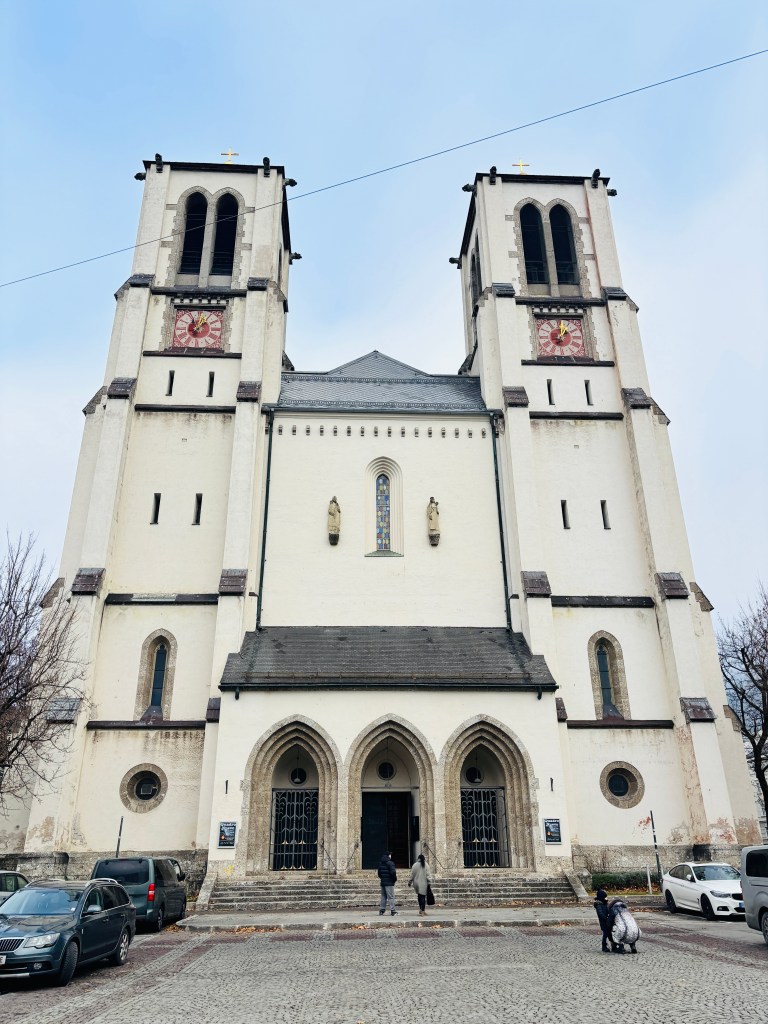
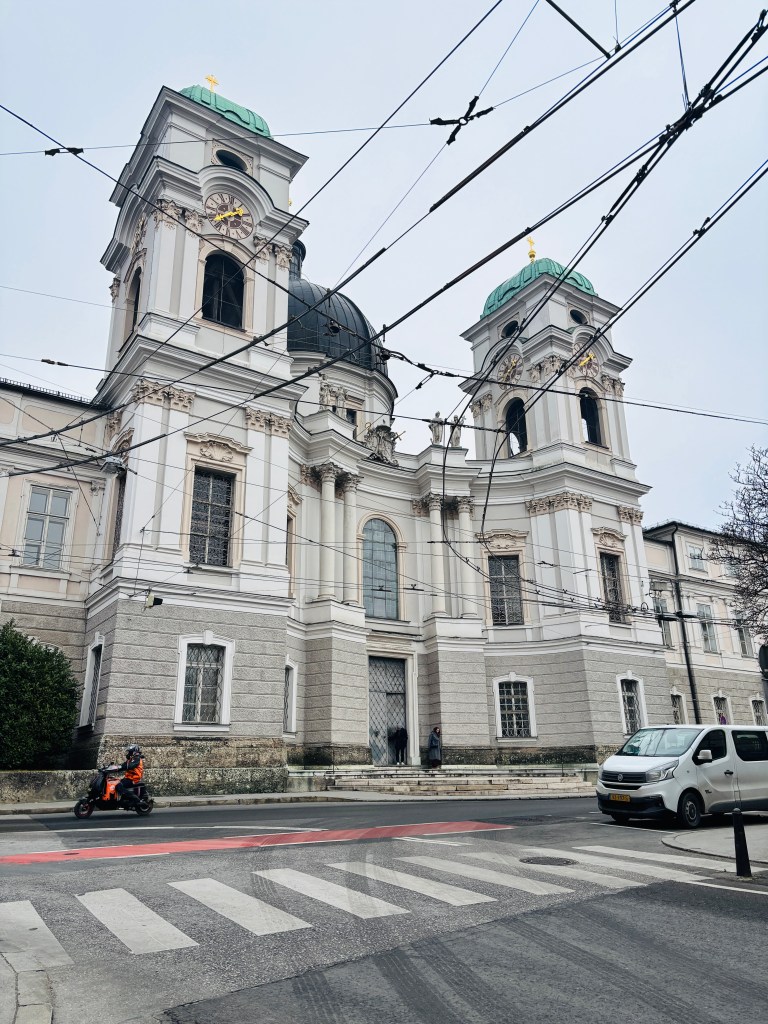
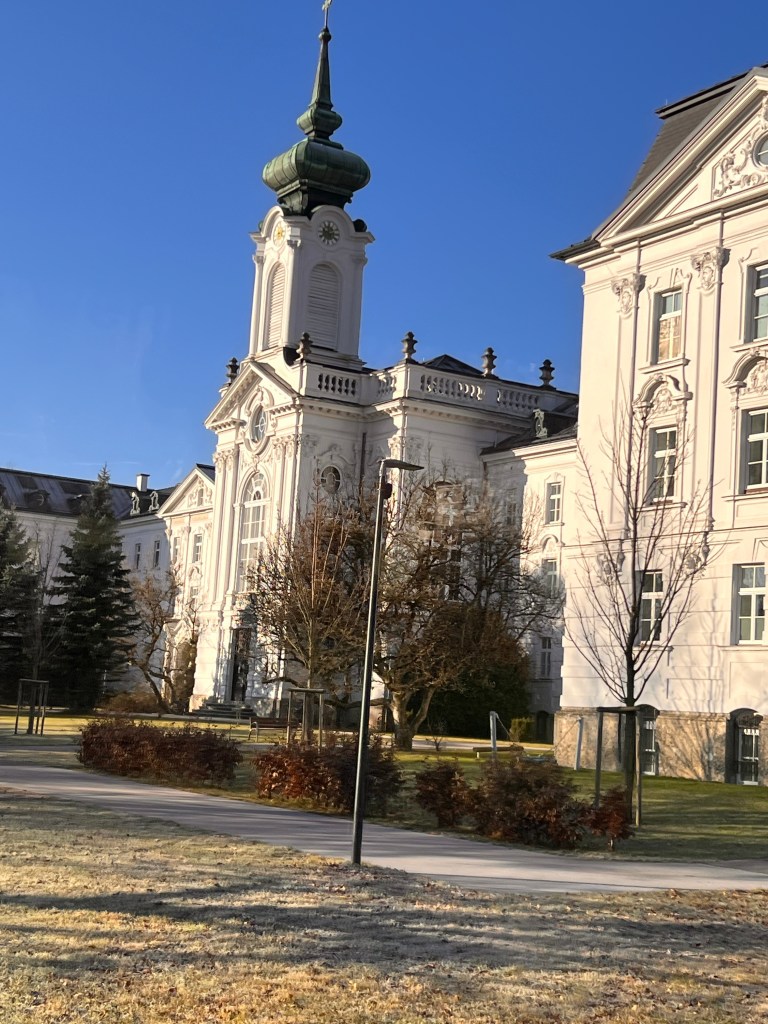
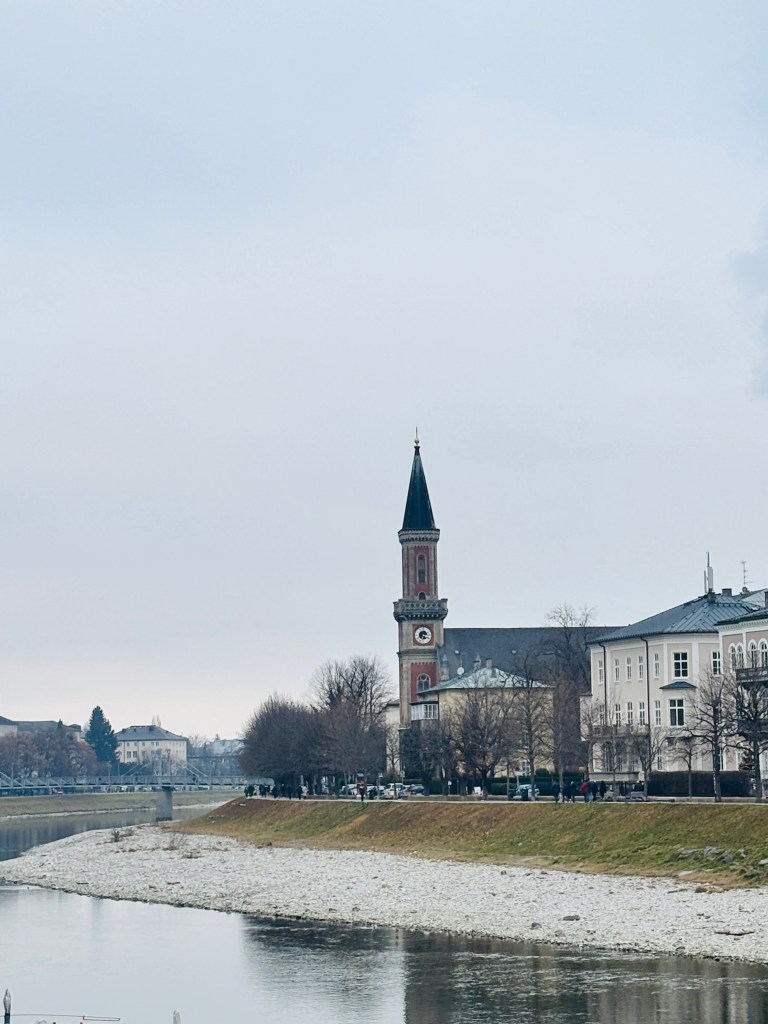
One of the first places that made us pause was Andräkirche (St. Andrew’s church) sitting quietly along the way, not grand, but still striking in its own right. Located on Mirabellplatz, it doesn’t dominate the skyline, but it holds its own power, especially because of where it sits, right at the transition between the newer part of the city and the historic centre.
From the outside, the church stands out for its neo-Gothic design, built between 1892 and 1898 after an earlier church on a different site had to be demolished to make way for road expansion.
The current appearance is actually the result of reconstruction: the church was heavily damaged during World War II air raids (1944–45) and later rebuilt in a simplified form, which is why the towers today are shorter and less ornate than originally intended. What’s seen now is essentially a post-war interpretation of a neo-Gothic church – cleaner, less decorative, but still carrying the vertical emphasis and symmetry of the original design.
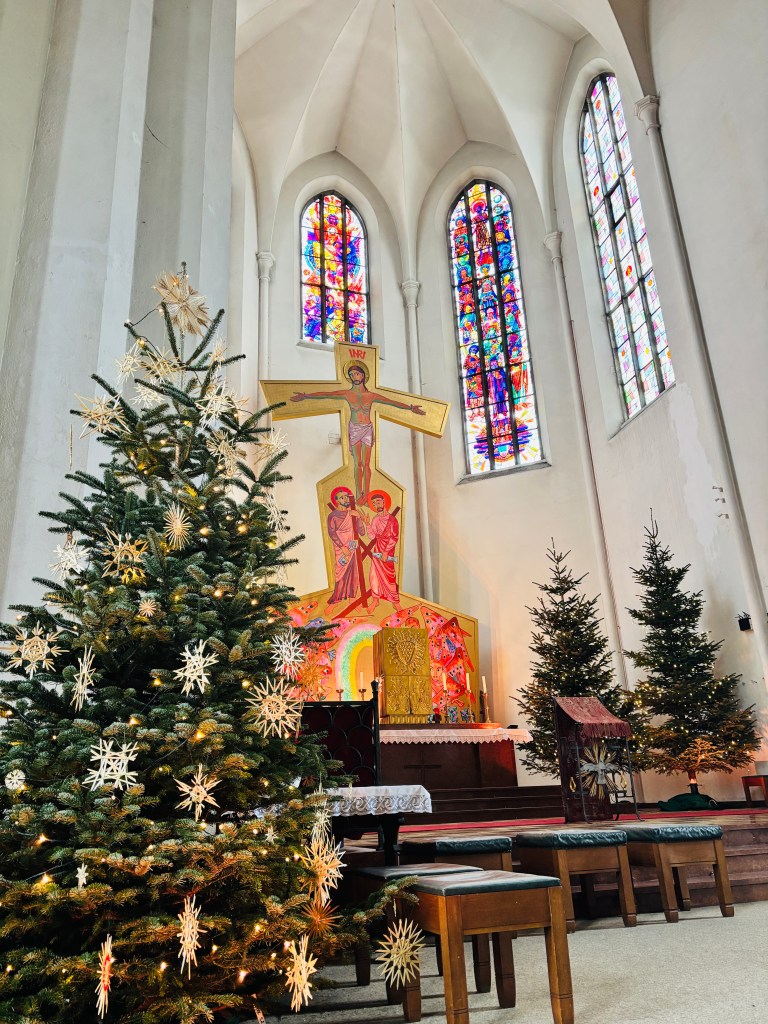
Inside, like many neo-Gothic interiors, the space is designed to draw your eyes upward – high ceilings, elongated proportions, and a sense of quiet height rather than grandeur, definitely feeling calmer and more contained.
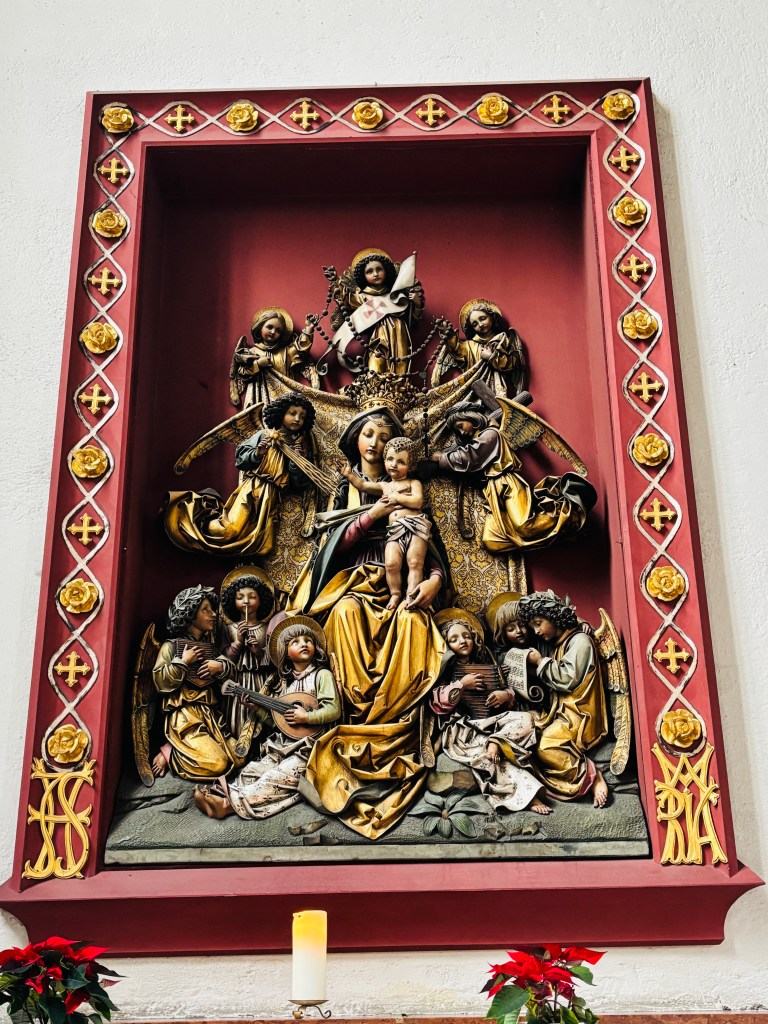
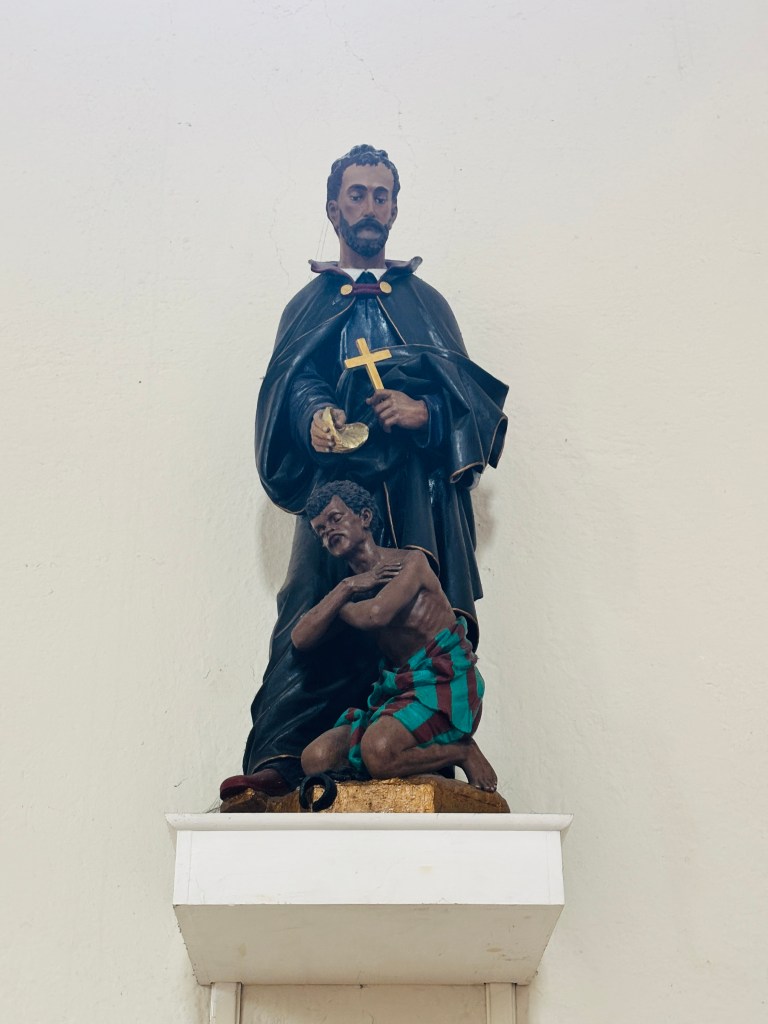
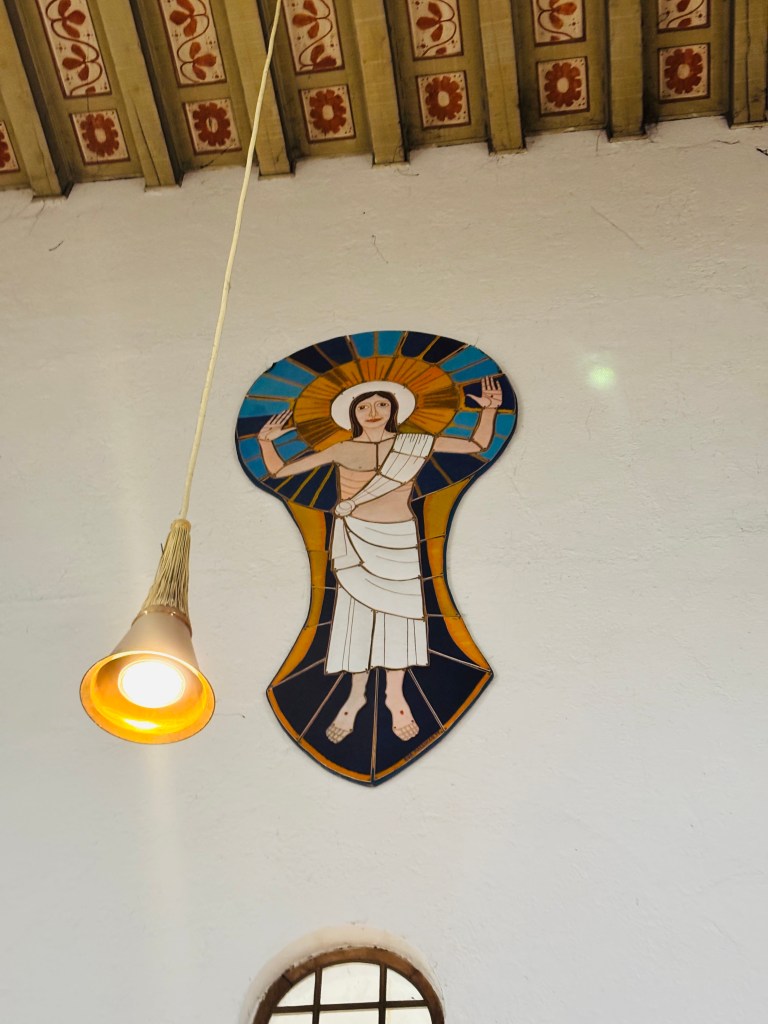
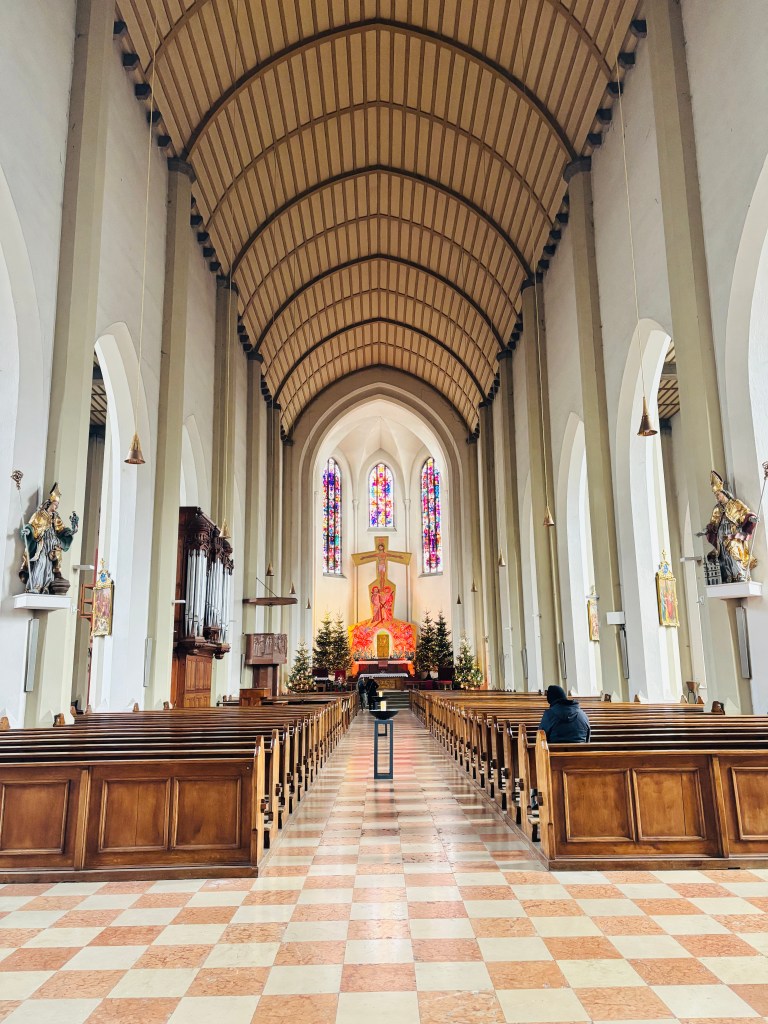
Today, Andräkirche functions as a parish church in the Neustadt (New Town) and anchors the Mirabellplatz area.
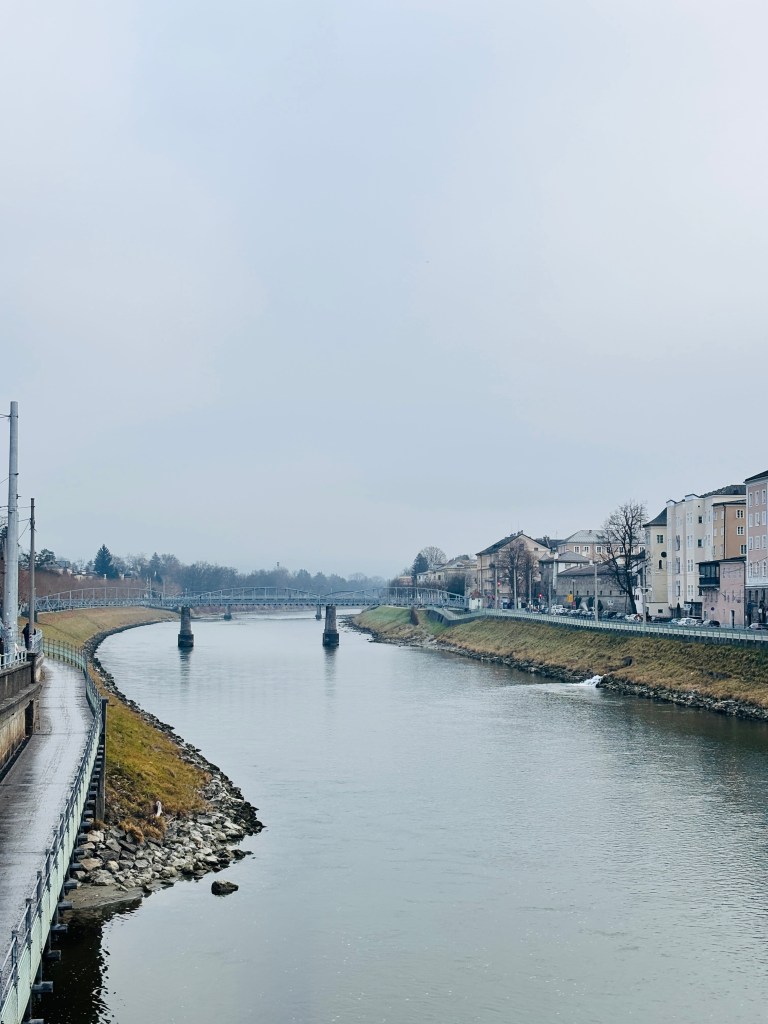
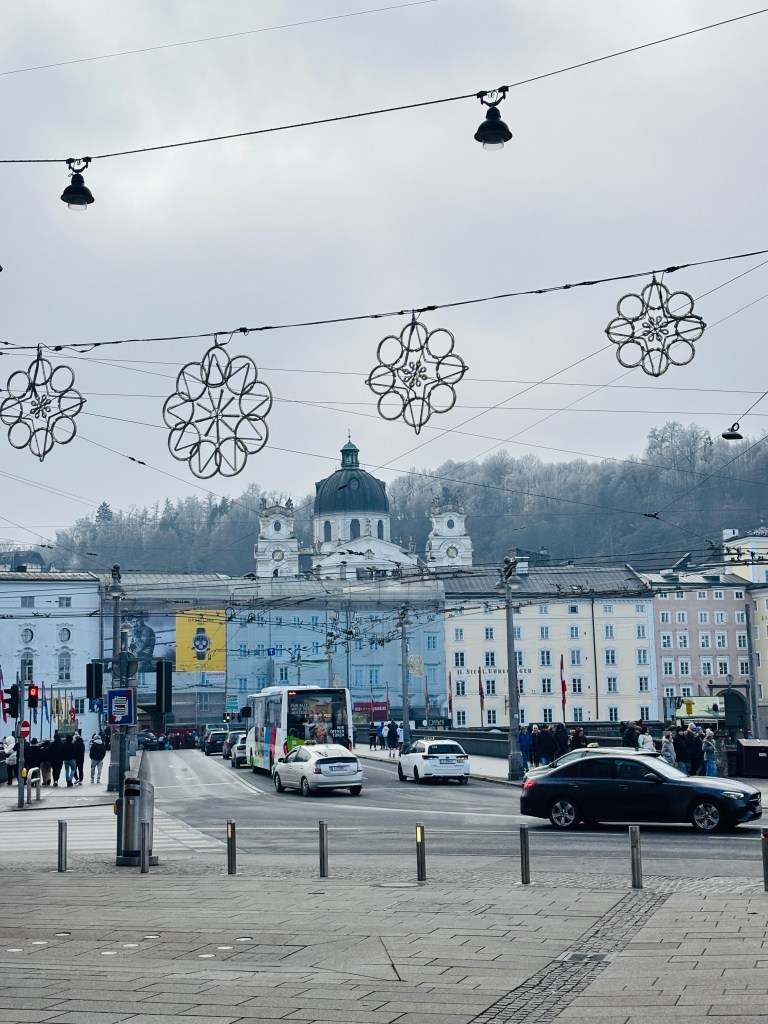
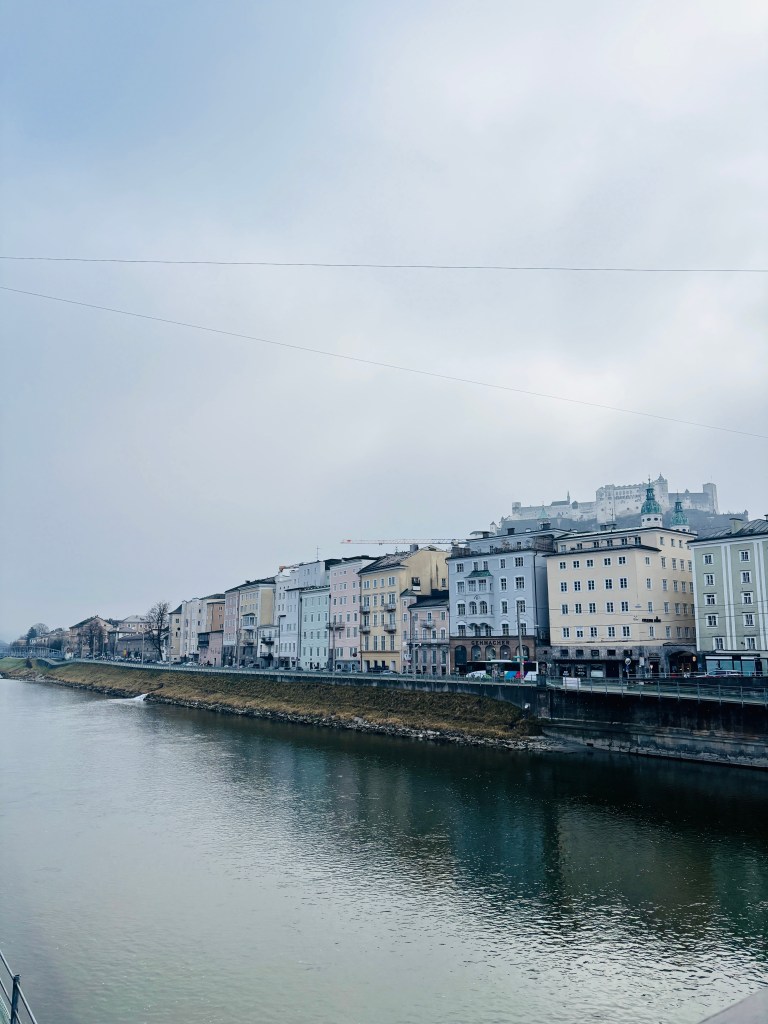
So, out of the church and as we moved further towards the old town, the walk naturally led us toward the river. The Salzach river divides Salzburg into the Neustadt (New Town) on one side and the Altstadt (Old Town) on the other, the latter recognised as a UNESCO World Heritage Site for its preserved Baroque architecture and medieval urban layout. There was already a gradual change in the sights – the city tightened – streets narrowed, buildings rose closer together, and one of the most distinct characteristics of old town for me – church domes began appearing between rooftops.
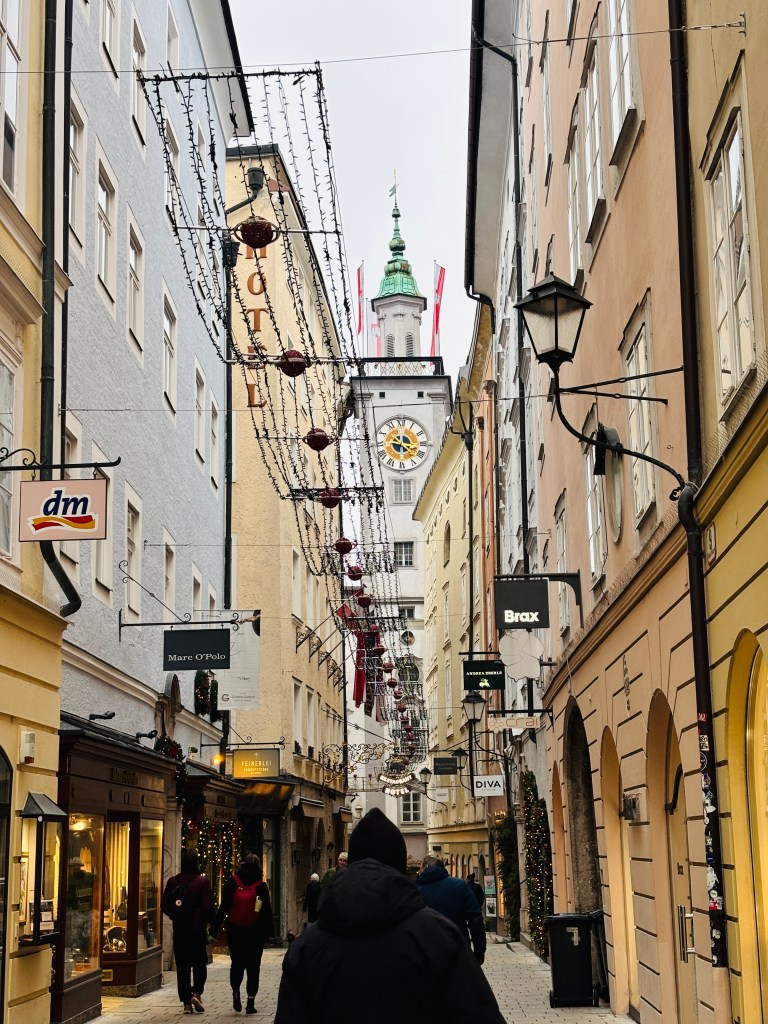
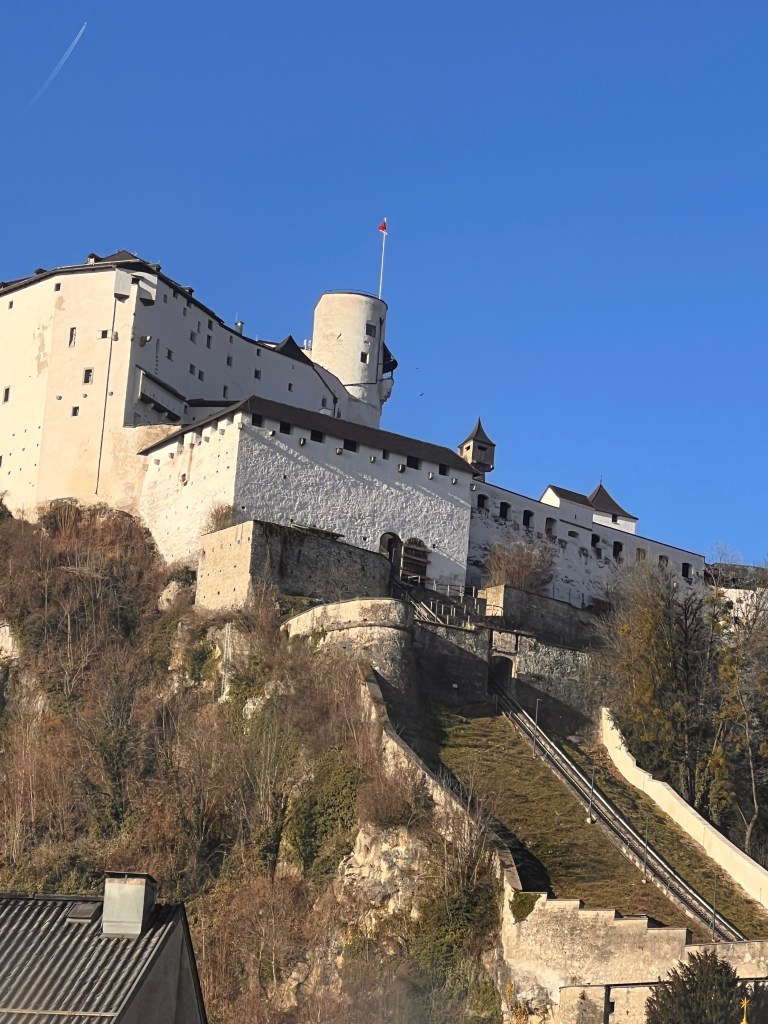
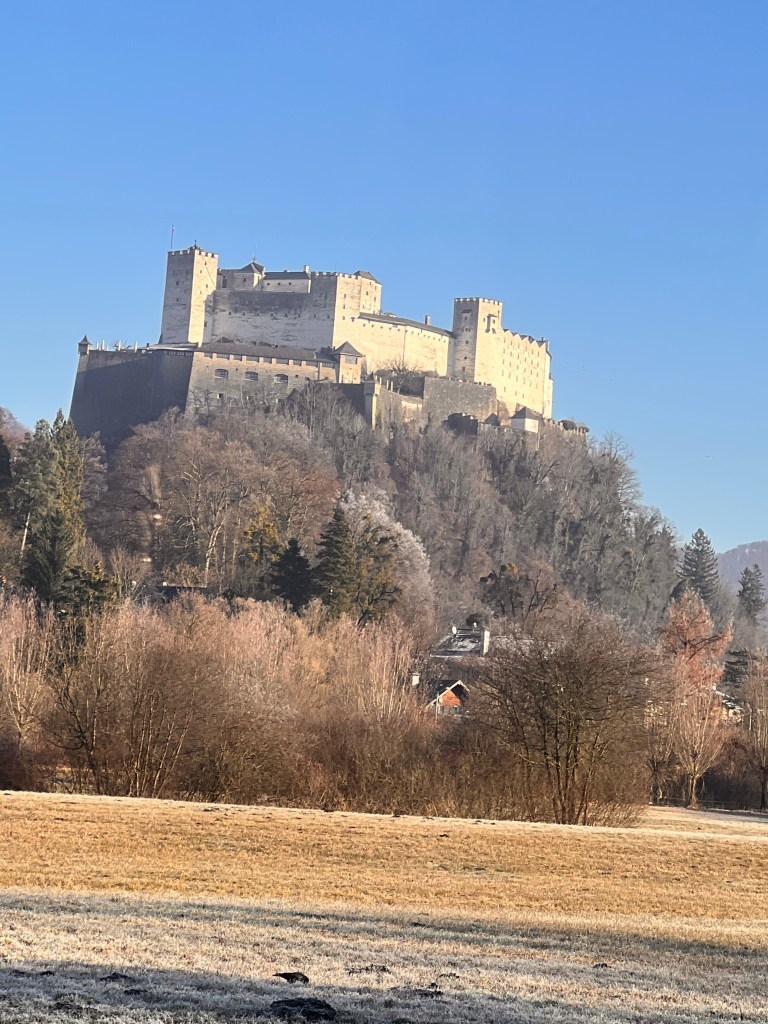
Above it all, the Hohensalzburg Fortress, dating back to 1077, remained constantly visible, grounding everything in a much older timeline.
Mozart’s Geburtshaus
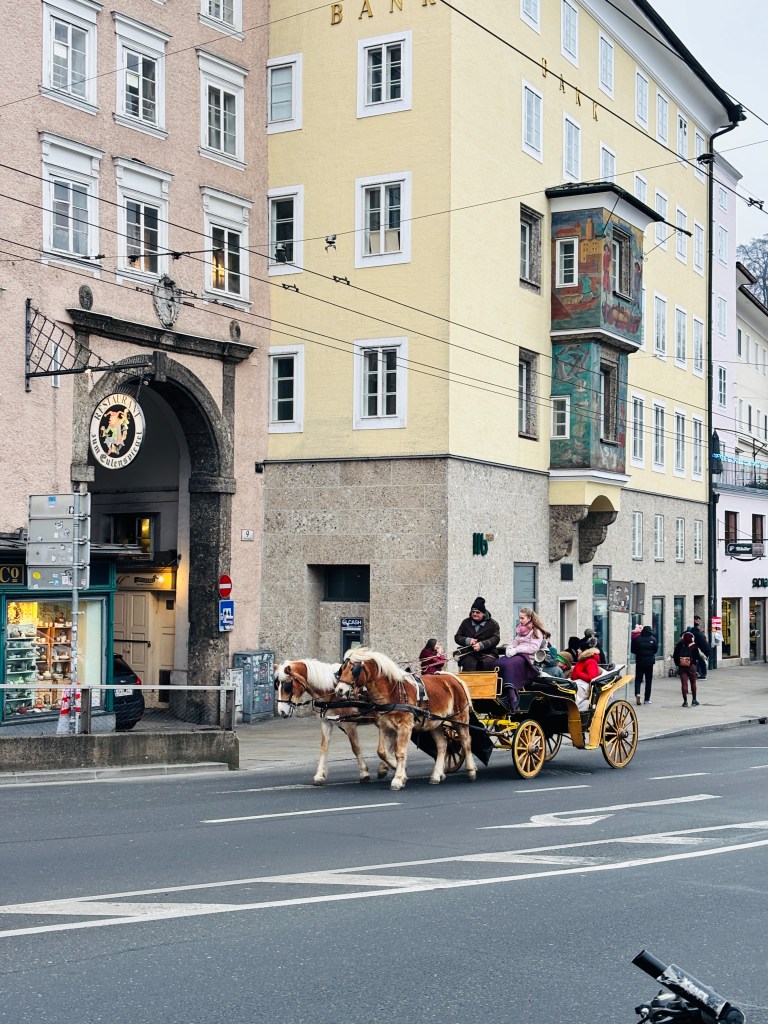
Not too far into the Altstadt, we found ourselves pulled and pushed into (thanks to leading crowds 🤪) one of the narrower alleys. This was Getreidegasse, one of Salzburg’s most famous streets, and easily one of the busiest with people moving in both directions, stopping abruptly, looking up, squeezing past each other, all while the narrowness of the lane amplified everything.
The street dates back to medieval times, and it still carries that structure – tall, closely packed buildings with wrought-iron guild signs hanging above shopfronts instead of large modern signage. It’s part of Salzburg’s historic core and has been a central commercial street for centuries.
Somewhere along this stretch – marked, but easy to miss if you’re not looking carefully – is Mozart’s Birthplace (Mozart’s Geburtshaus) at No. 9 Getreidegasse. It’s a tall, narrow building painted in a distinct yellow, standing among similar façades but carrying a completely different weight.
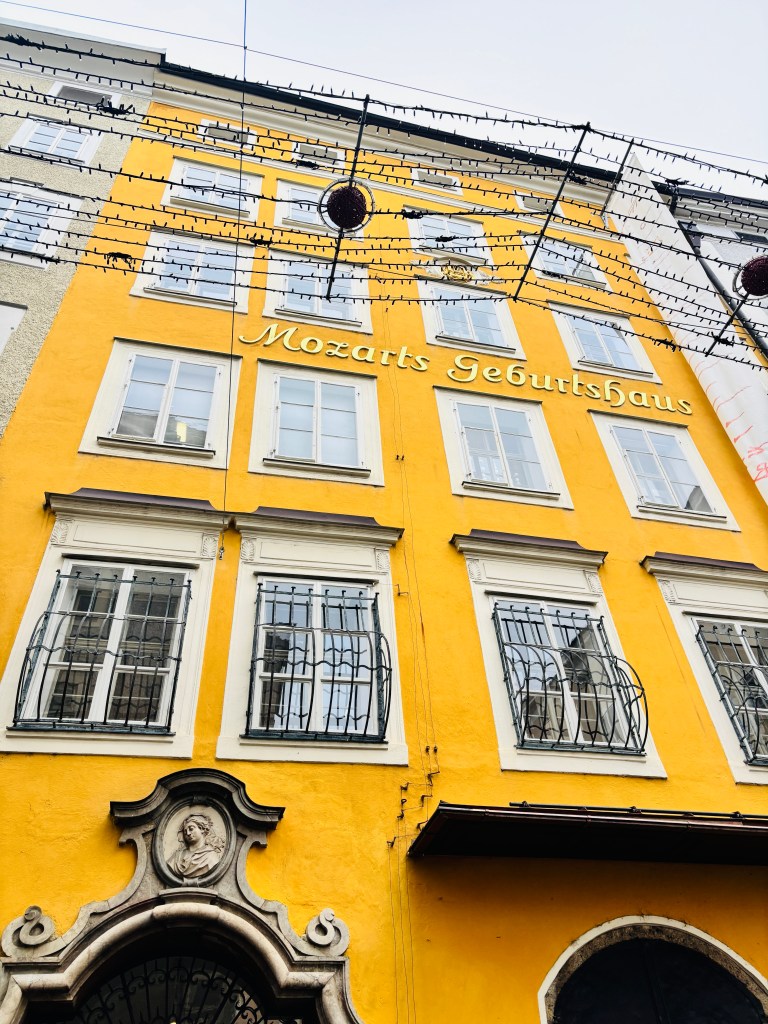
This is where Wolfgang Amadeus Mozart was born in 1756 and spent his early childhood years before his family moved elsewhere in the city. Today, the building functions as a museum, preserving rooms, artefacts, and instruments connected to his life – including early compositions and historical instruments associated with his time.
From the outside, though, it doesn’t feel like a monument in the traditional sense. There’s no open square around it, no space to step back and take it in. It sits right there in the middle of a functioning street – shops on either side, people brushing past, cameras lifting quickly and dropping just as fast.
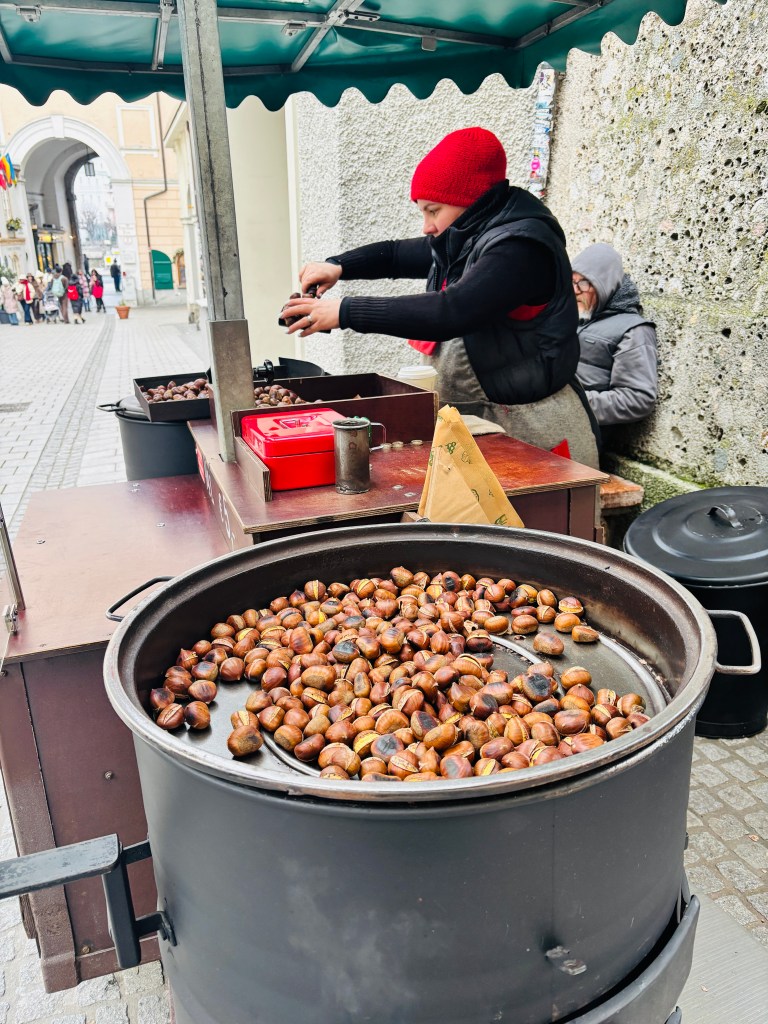
And, right opposite it, there was a small stall selling hot roasted chestnuts in paper cones. Steam rising into the cold air, people standing around warming their hands as much as eating. We ended up getting one too, mostly for the warmth.
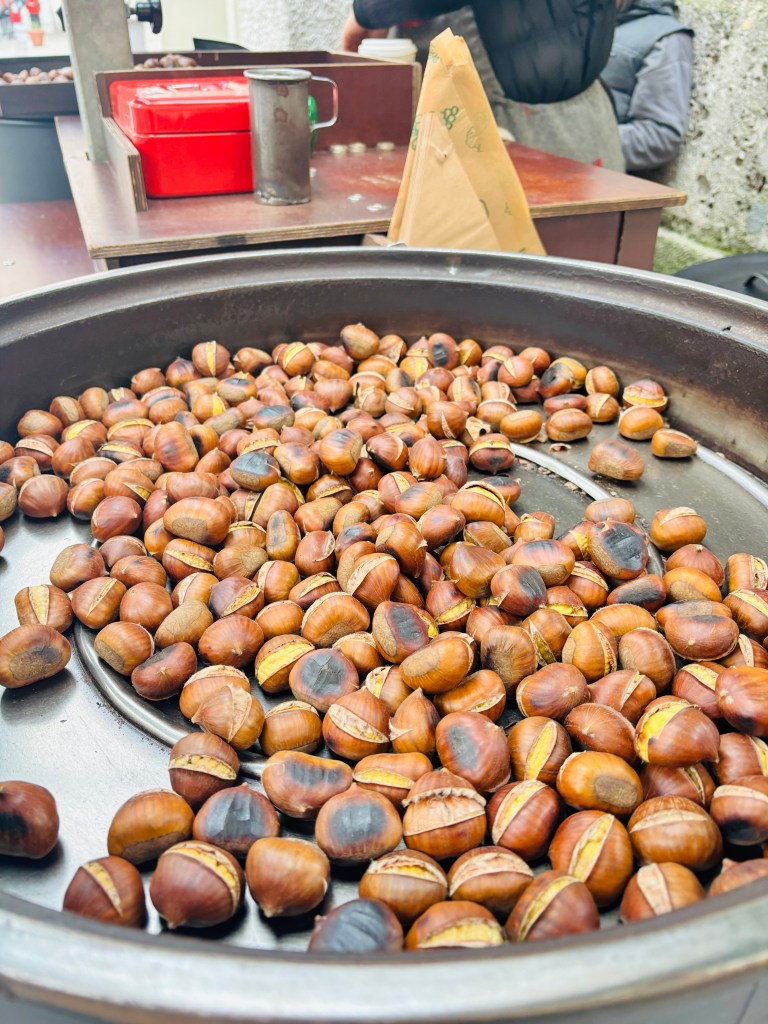
And then we kept walking – because the street doesn’t really allow you to stop for too long.
The crowd moved us forward, past shopfronts and narrow passages, and slowly the street opened up. The sounds changes – less echo, more hum, slight music. And faint smells of sugar, grilled food, something warm cutting through the cold air.
Salzburg Christmas Market — Domplatz & Residenzplatz
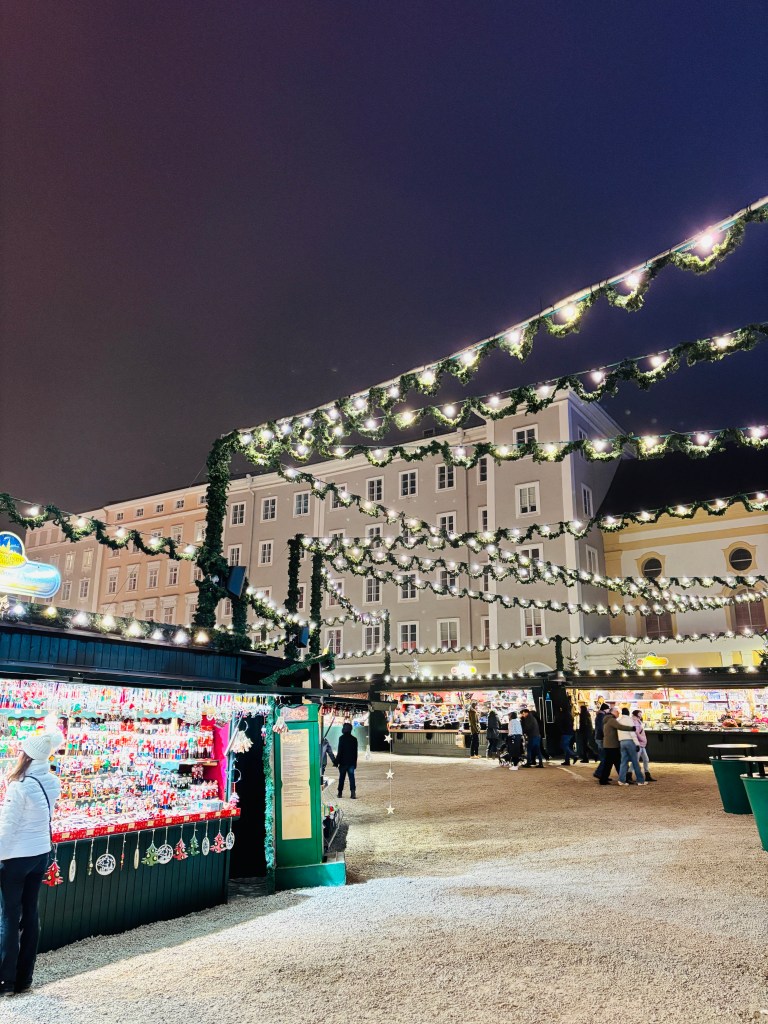
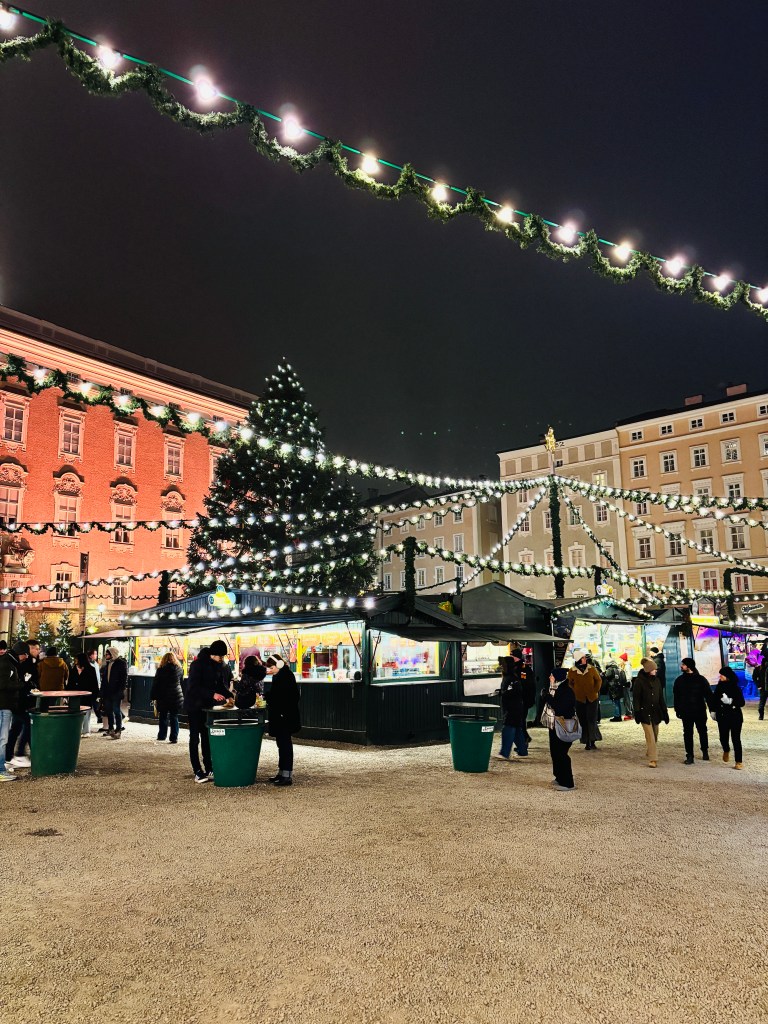
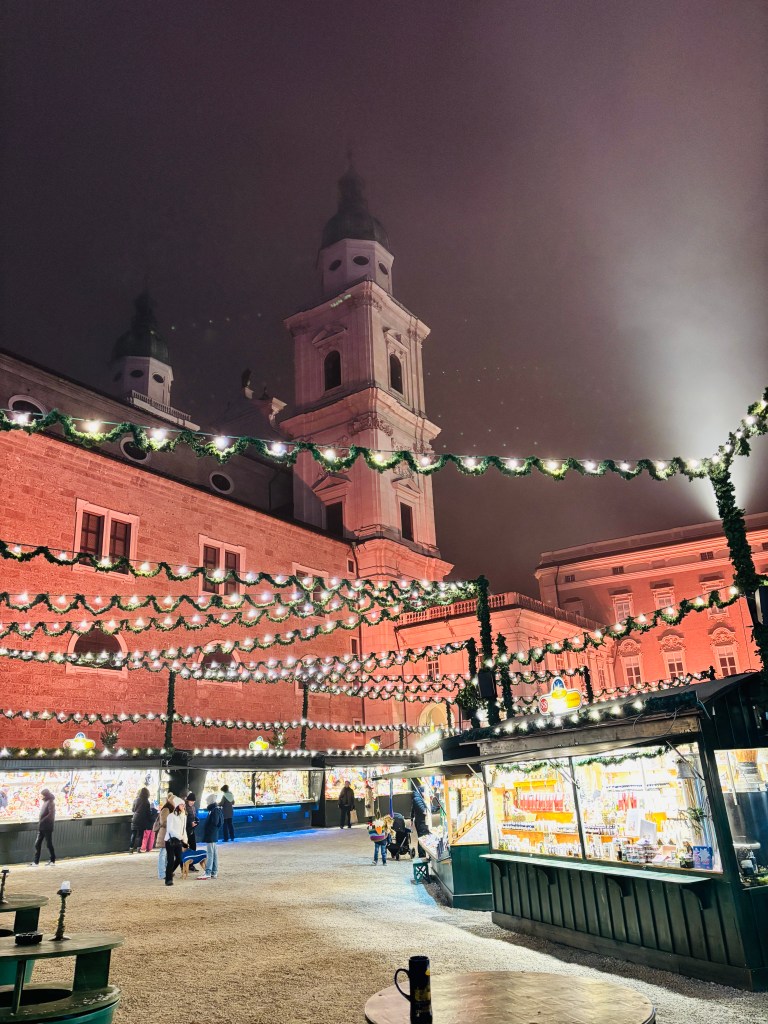
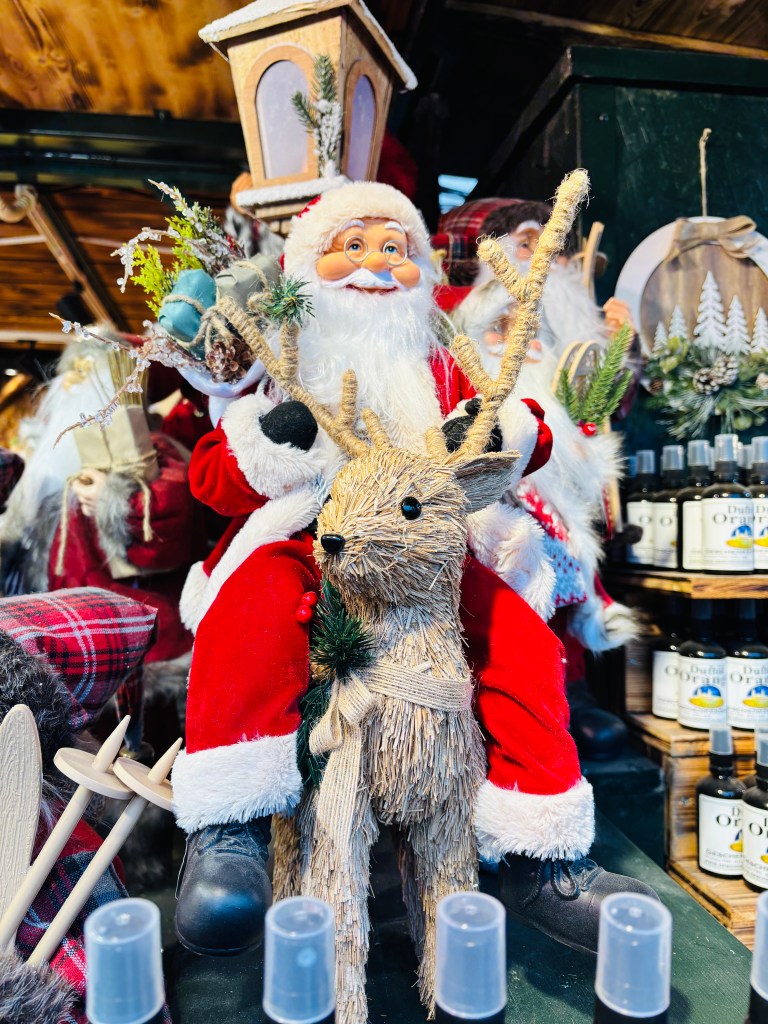
The street opens up into a wider space, and the Christmas market takes over completely. This is one of the oldest Advent markets in Europe – the Salzburger Christkindlmarkt, held across Domplatz (Cathedral Square) and Residenzplatz in the heart of the old town.
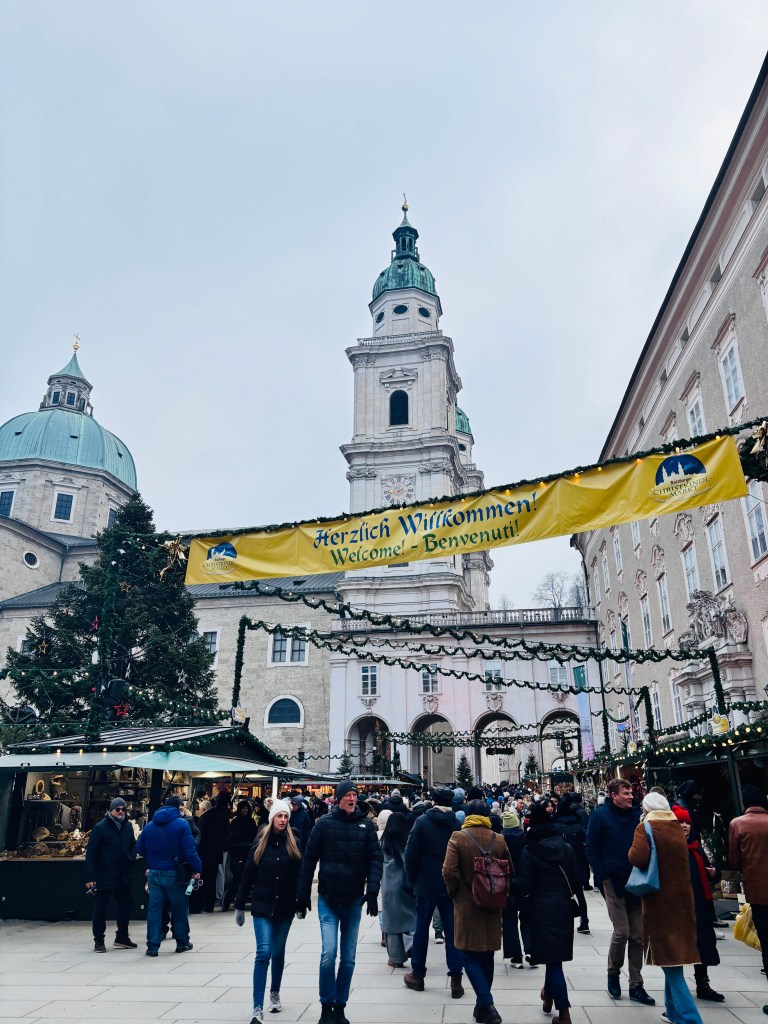
Its origins trace back to the late 15th century, with records of a “Tandlmarkt” (a general market) held here as early as the 1400s, later evolving into a dedicated Advent market by the 17th century. Today, it runs annually from late November until 1 January, making it one of the few markets that continues beyond Christmas Day.
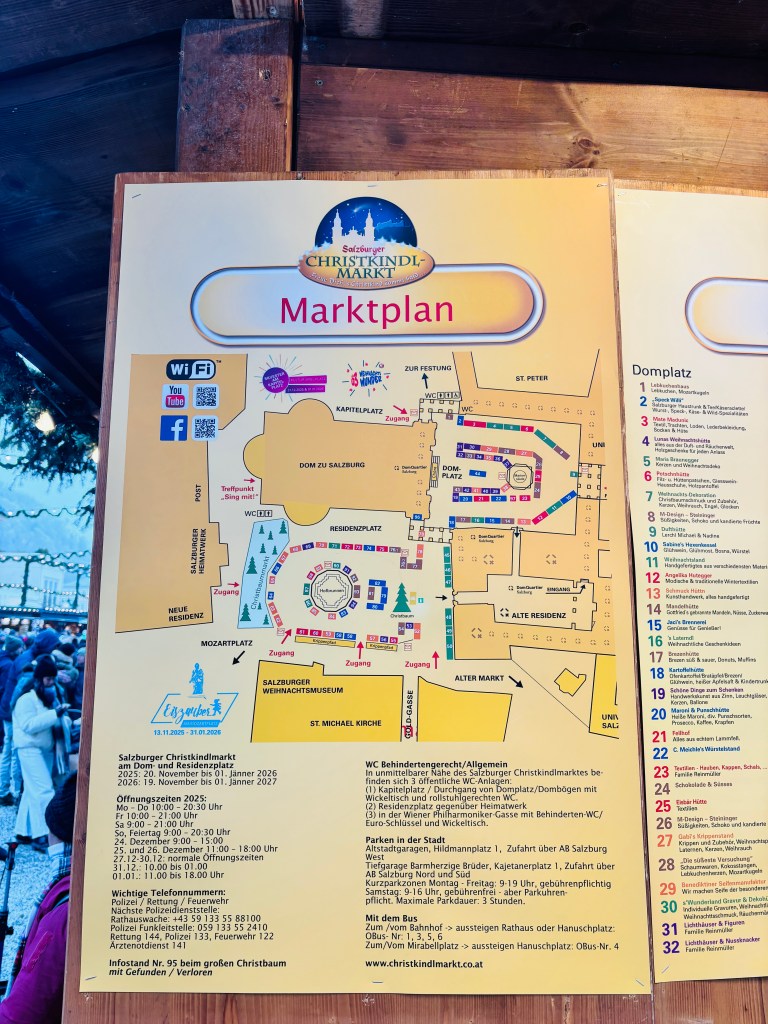
On one side of the grand setup stands the Salzburg Cathedral (Dom Zu Salzburg), a massive Baroque structure completed in 1628, with its façade forming a natural boundary to Domplatz. On the other, the square opens into Residenzplatz, dominated by the Residenz Fountain (Residenzbrunnen) – one of the largest Baroque fountains north of the Alps, built in the 17th century. Surrounding it all are the Residenz buildings, once home to the Prince-Archbishops who ruled Salzburg as an independent ecclesiastical state.
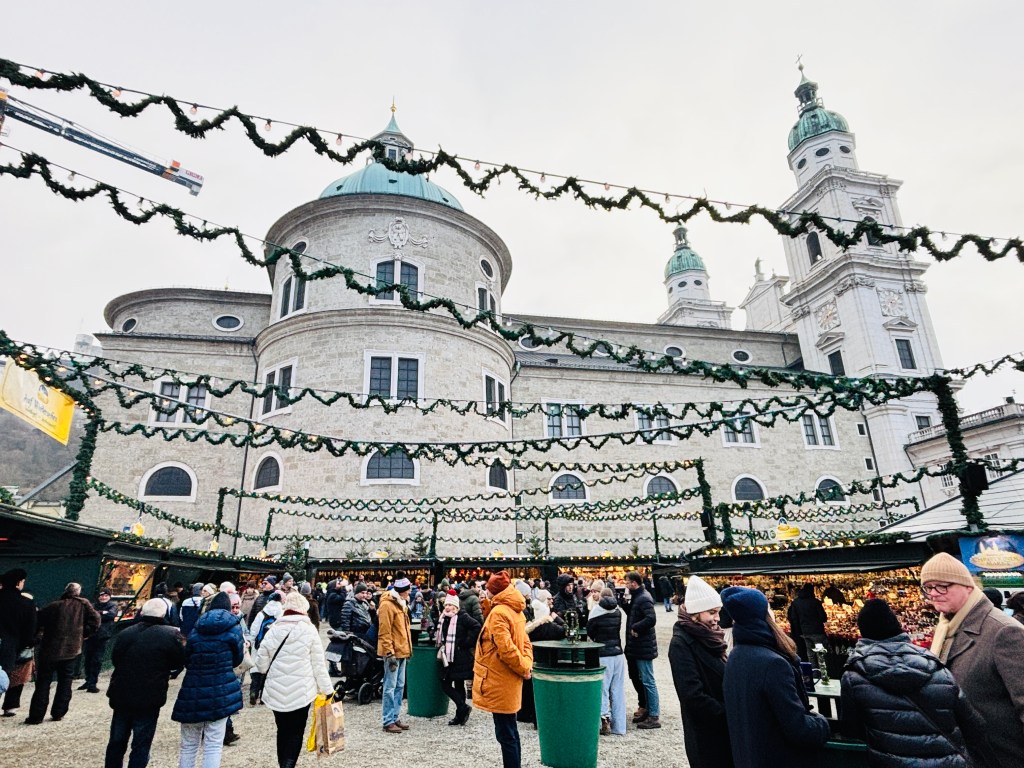
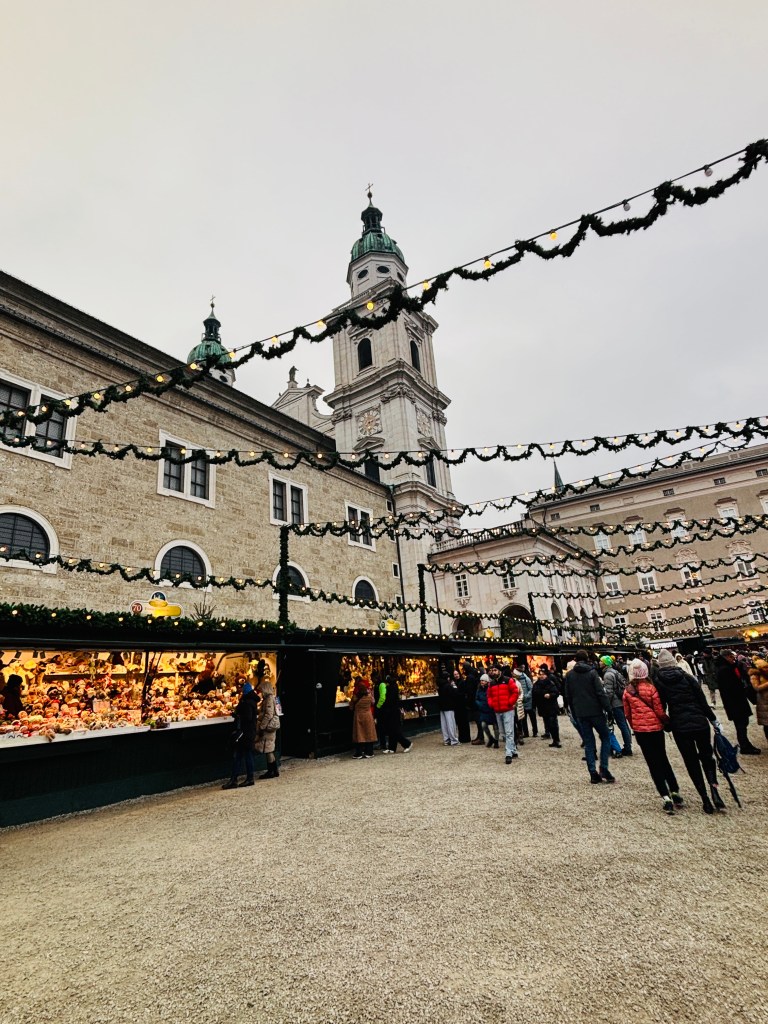
And above everything – always visible – is the Hohensalzburg Fortress, dating back to 1077, one of the largest fully preserved medieval castles in Europe. It doesn’t just frame the market; it defines the skyline.
The market had several stalls arranged across the two squares, leaning heavily into traditional Austrian crafts and food, many of which items we tried over the next couple days.
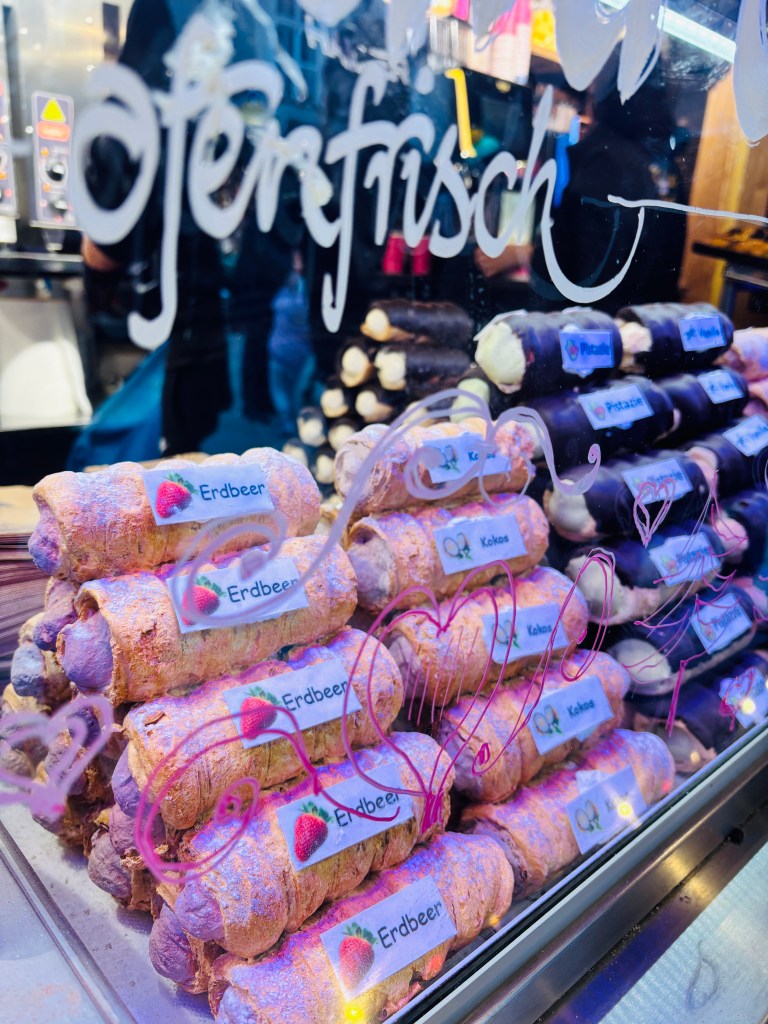
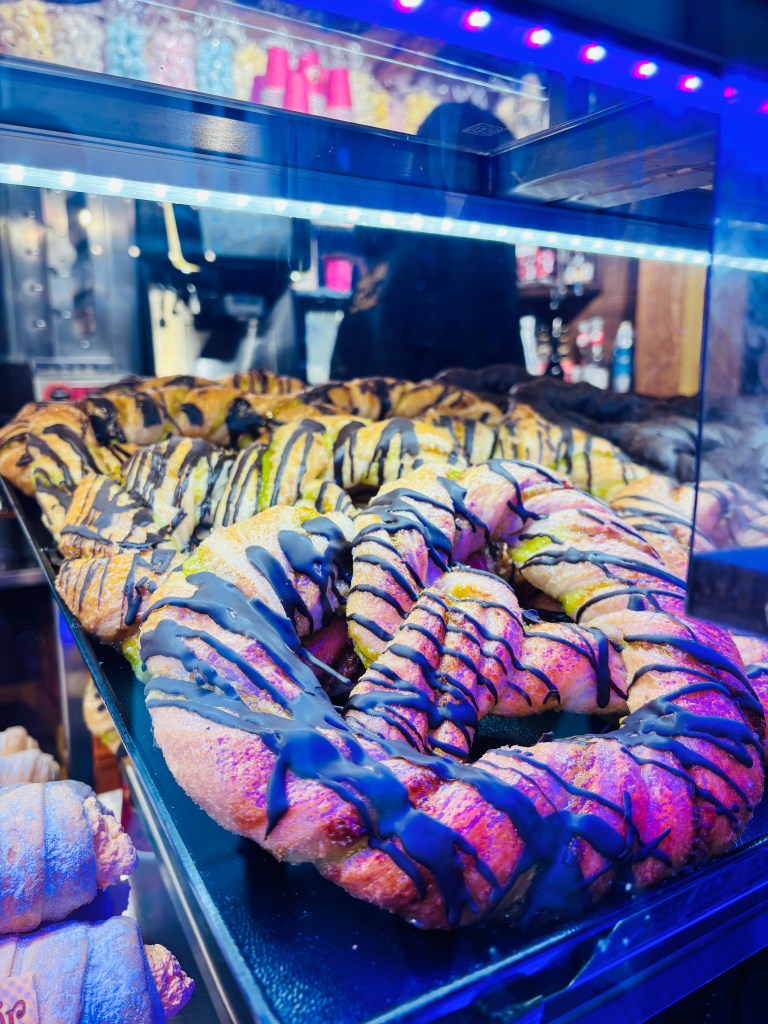
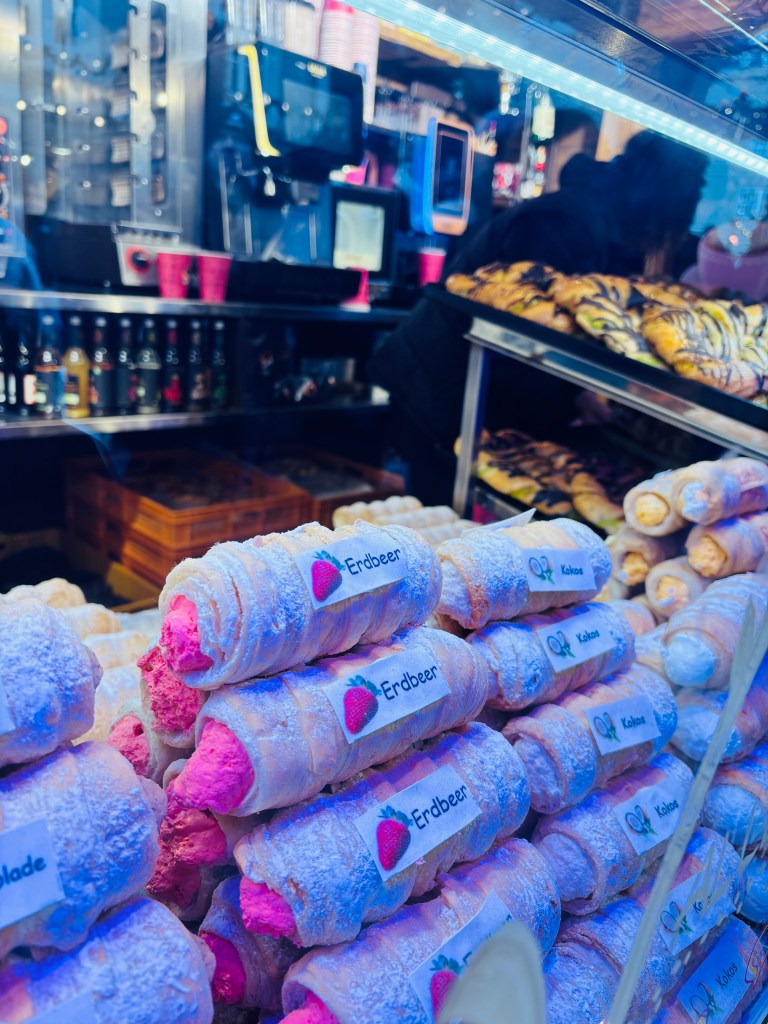
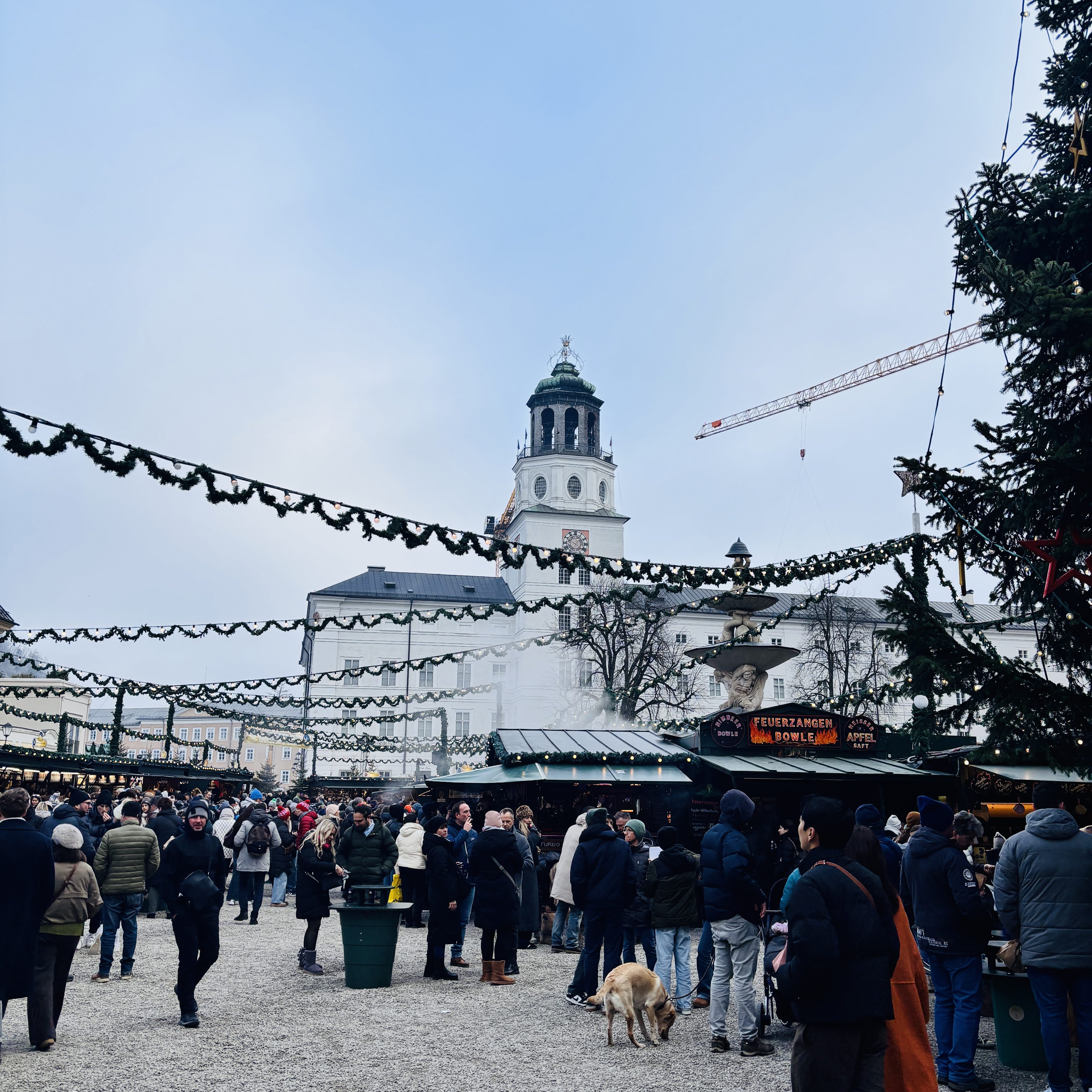
There’s also a structured cultural layer to the market. Throughout the Advent season, the squares host choral performances and brass ensembles, traditional “krampus runs” and even advent singing from Salzburg choirs. We did see glimpses of the choirs while walking back and forth over the days we stayed in Salzburg.
On that first day, tired as we were since we’d risen really early to board the train to Salzburg, we didn’t really “do” the market – we just walked through it slowly, taking it in. The lights, the smells, the constant movement of people stopping and starting. Every few steps, something different caught attention – sweet, smoky, spiced – all of it mixing into that very distinct Christmas market air.
At some point, we gave in and picked up a sauerkraut burger. I’ve had sauerkraut before – usually on the side, paired with roast pork, sharp and slightly sour, something that cuts through heavier food. But this was different. In a burger, it just worked. The warmth of it, the slight tang from the fermented cabbage, balanced by the richness of the meat, all held together in something soft and easy to eat while standing in the cold. And then there was this subtle spice – something like a curry powder – not strong, not obvious, but just enough to round everything out and make it feel fuller, deeper.
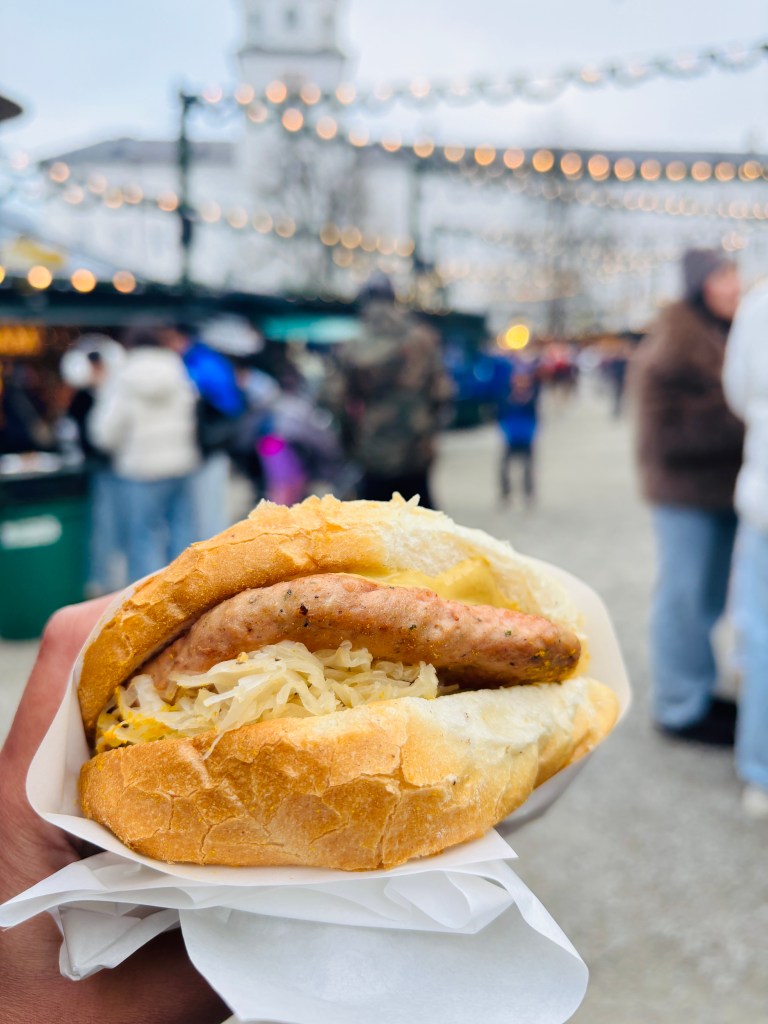
I thought I was done for the day. The burger had done its job – warm, filling, exactly what was needed.
We walked another round of the market, slower this time. Passing the same stalls, noticing different things, catching smells we had missed the first time. And somewhere along that second loop, I saw it – the Germknödel – and that was it. There was no stepping back.
I had been looking for it ever since we stepped into Austria – almost like a small, ongoing side mission – and when I finally spotted it on one of the stalls, there was no debate left. This was happening.
Germknödel is a traditional Austrian sweet dumpling, especially common in Alpine regions like Tyrol and Salzburg. It’s made from yeast dough, steamed rather than baked, and typically filled with powidl — a thick, slightly tangy plum jam that’s been slow-cooked to concentrate its flavour. Once served, it’s topped generously with melted butter, poppy seeds, and powdered sugar.
There are variations — some versions come with vanilla sauce poured over, some slightly lighter on the toppings, but the core remains the same: warm, soft dough, a rich filling, and something sweet layered on top.
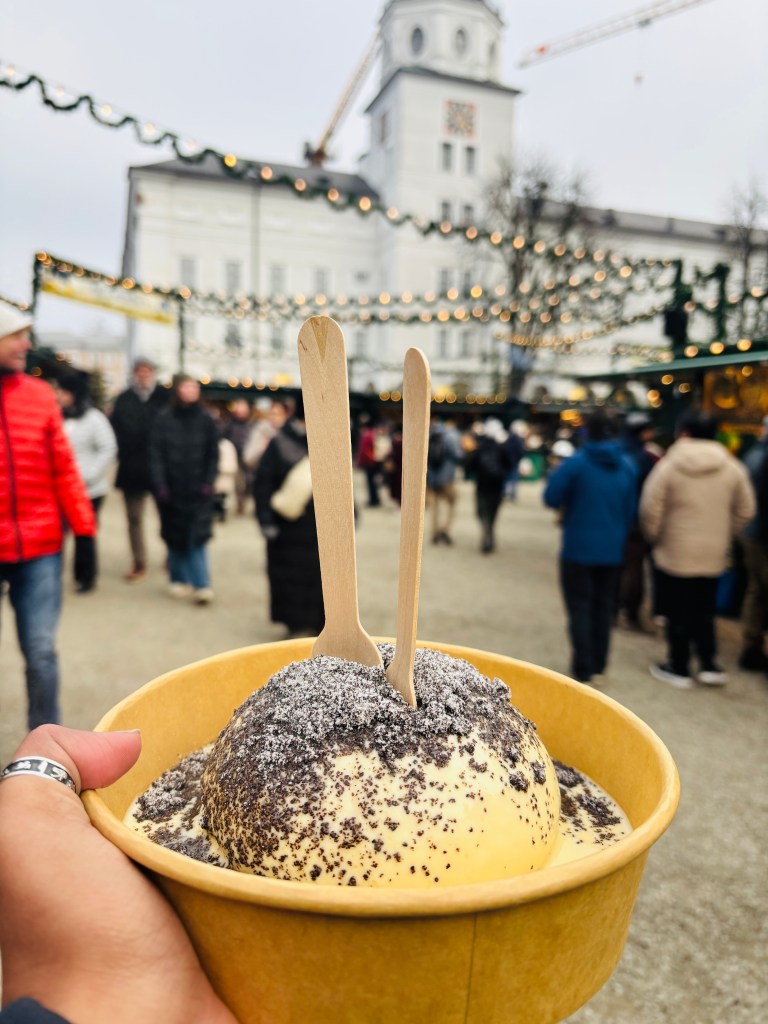
What you get is deceptively simple. It looks like just a dumpling. But once you cut into it, the filling spills out, the butter soaks in, and everything turns into this warm, slightly sticky, slightly sweet, very comforting mix that feels designed for cold weather.
The burger and germknödel after that, was a complete meal. By then, I was quite ready to call it a day, but all that food needed a walk, so we stepped out of the market and started heading uphill, loosely in the direction of the fortress.
It seemed like a good idea for about twenty minutes. Soon enough the incline became more noticeable, and somewhere along the way it became clear that this wasn’t a casual post-meal stroll – this was going to turn into a proper climb. That was enough of a signal. We decided this was something better left for another time and turned back.
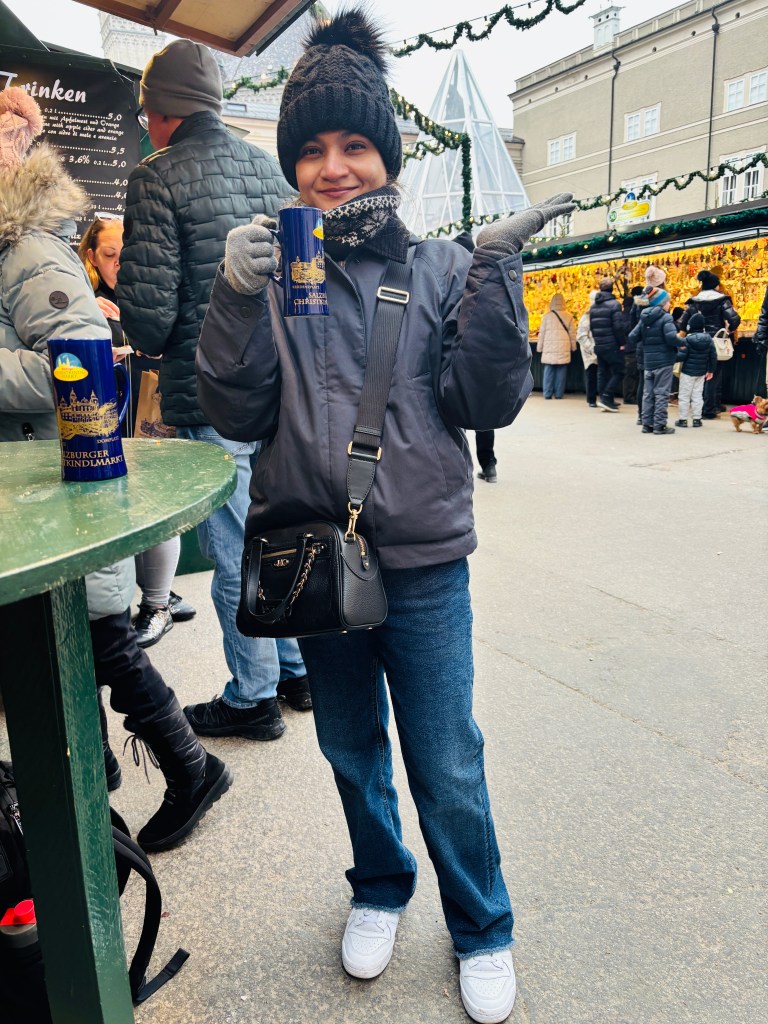
Back at the market we picked up a cup of hot Jagatee, to try something different.
Jagatee is a traditional Austrian winter drink, especially common in Alpine regions. It’s made with a base of black tea mixed with rum, along with spices, citrus, and sometimes sugar – originally associated with hunters and cold mountain conditions.
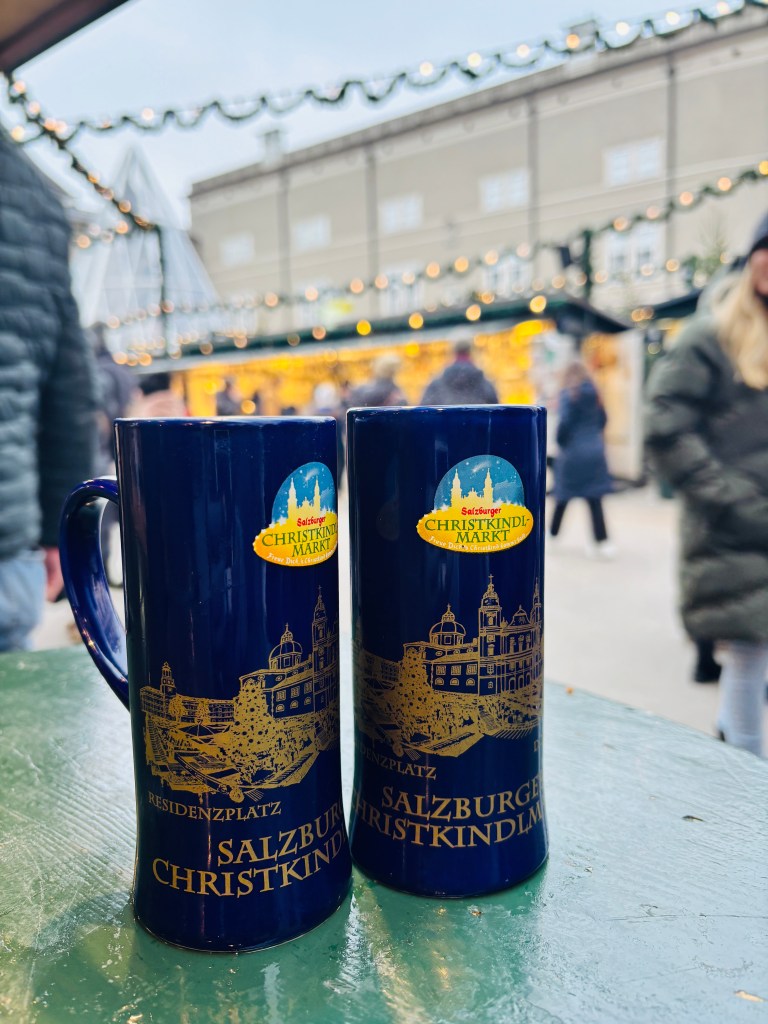
We tried the Jagatee, warmed our hands around it, took a few sips – and while it did the job, it wasn’t quite our thing. We really preferred the Glühwein.
Day one, quietly complete
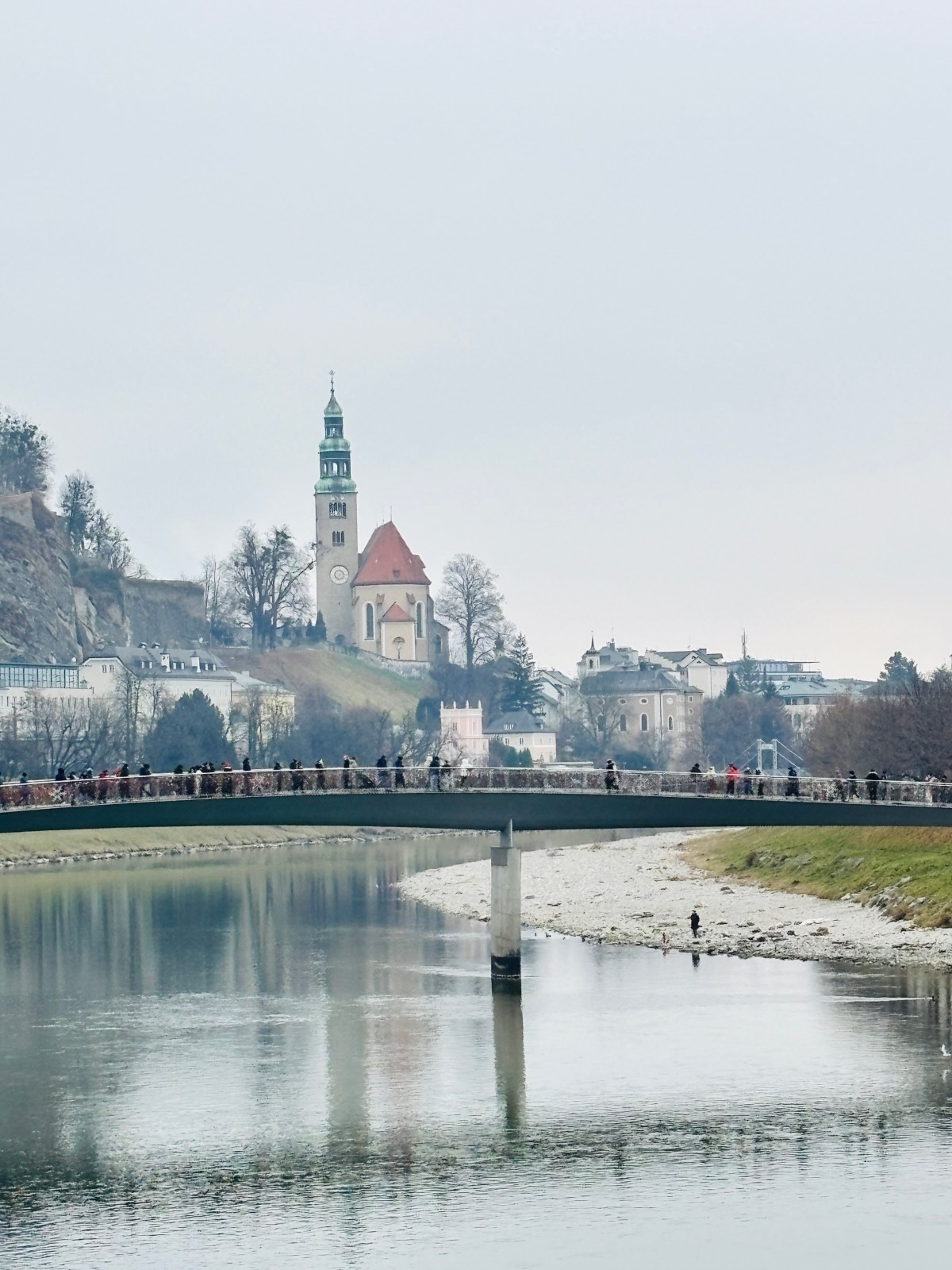
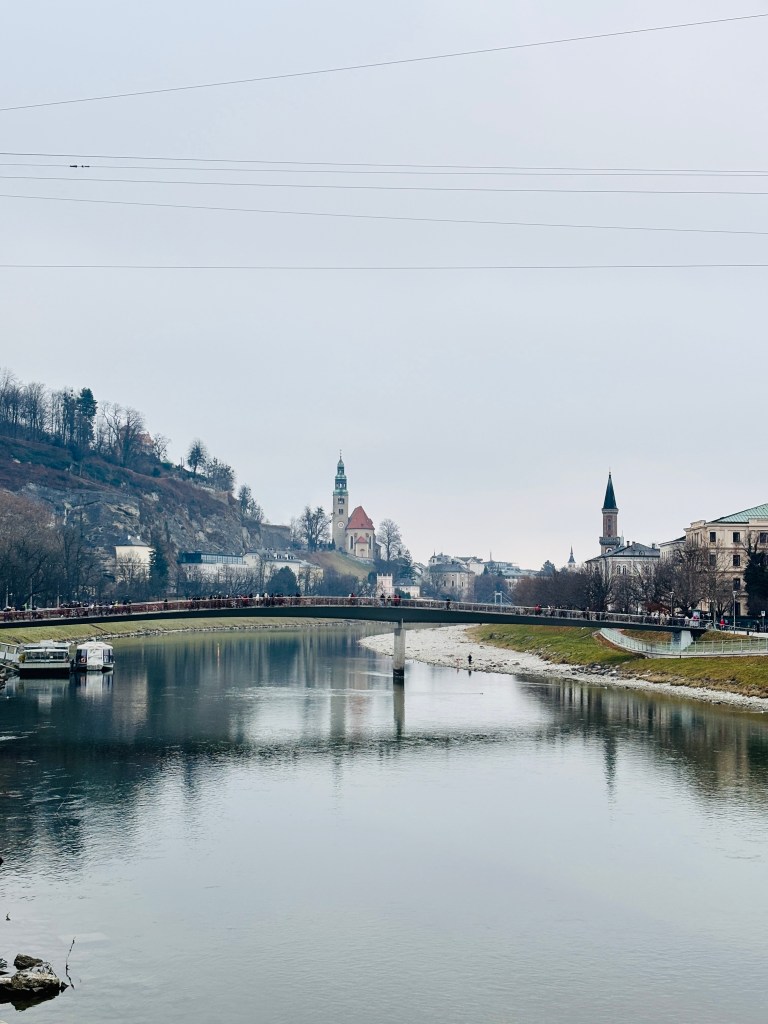
We walked back, retracing our steps – but slower this time. The urgency of getting somewhere was gone, replaced by that end-of-day drift where you just let the city carry you along. Instead of taking the exact same route, we crossed over using the bridge parallel to the one we’d taken earlier, just to see the city from a slightly different angle. It was a very small detour, but enough to change the perspective – the same river, the same skyline, just seen from a slightly different angle.
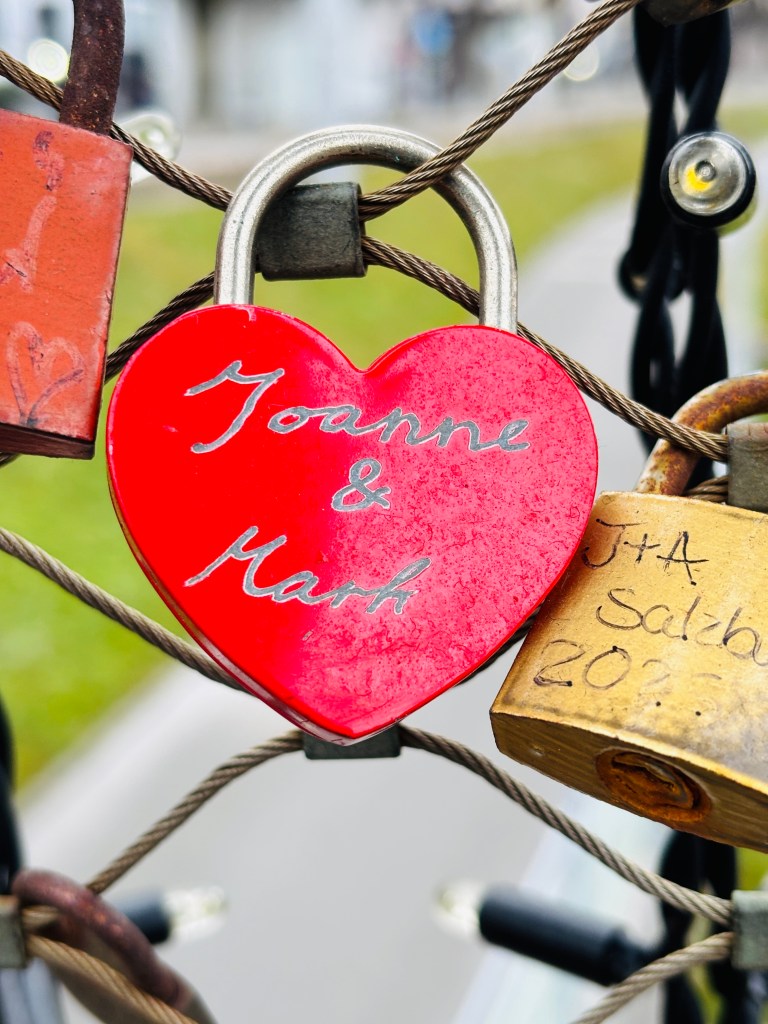
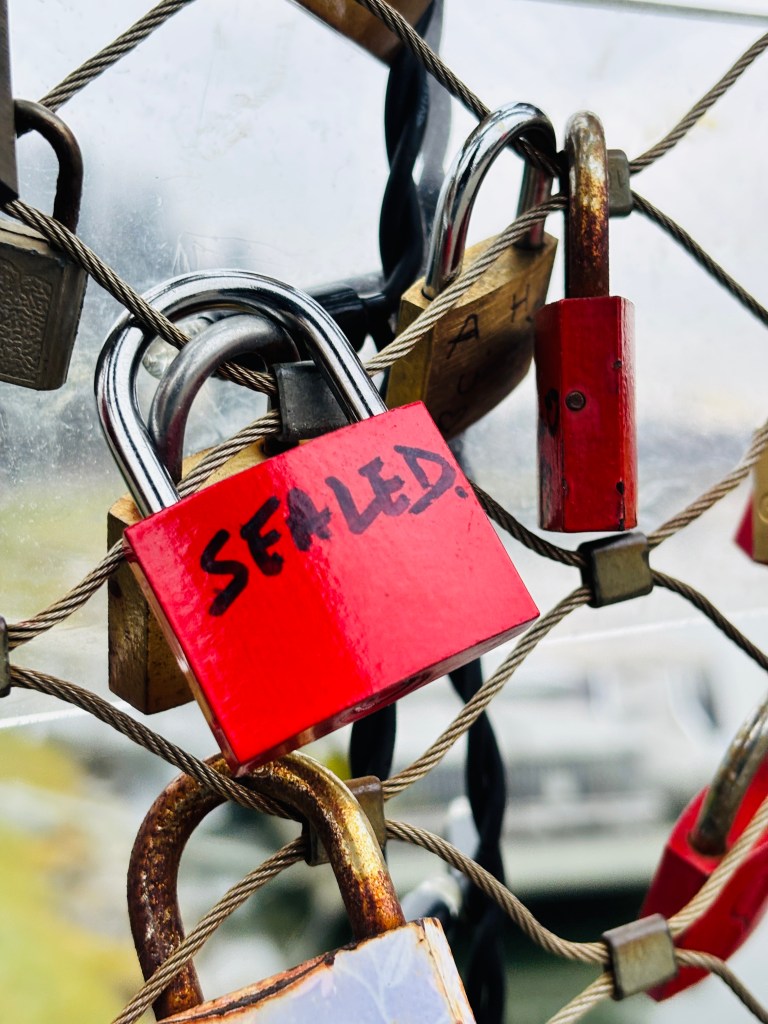
We leaned against the railing for a bit, and like most European cities, there were love locks everywhere – small, colourful, some rusting, some new, all clipped onto the metal like they belonged there. It’s always so fascinating to me – the idea of locking something as intangible as love onto something physical – permanent, public, almost stubborn. Not sure I fully understand it, but it’s hard not to pause and look.
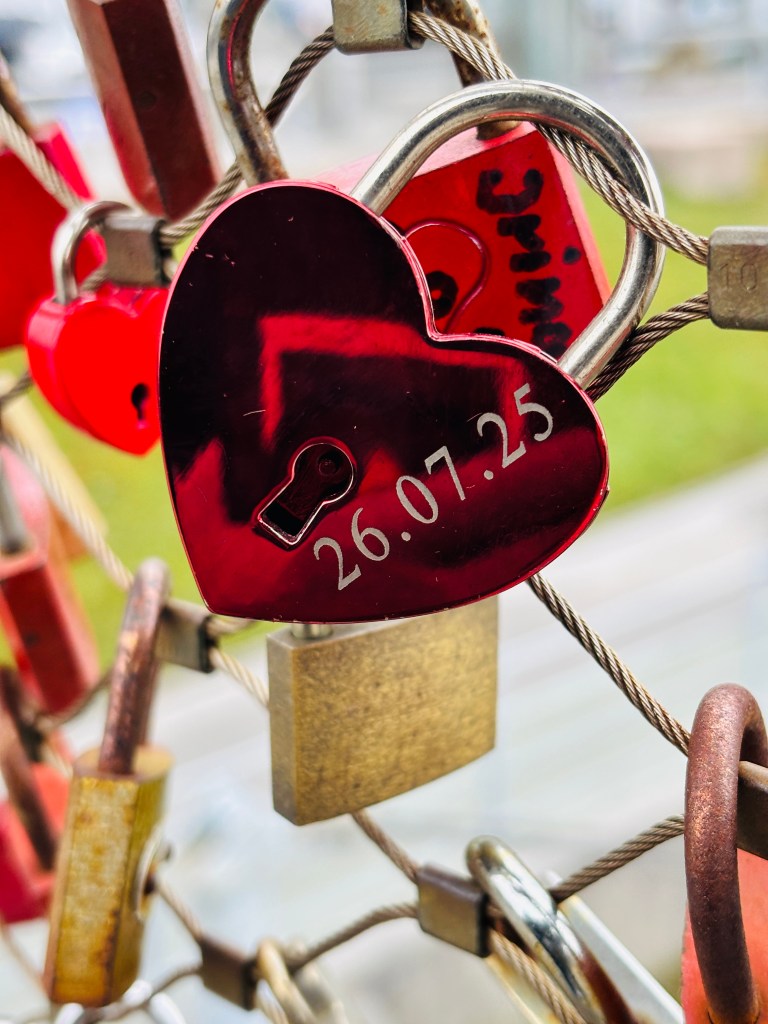
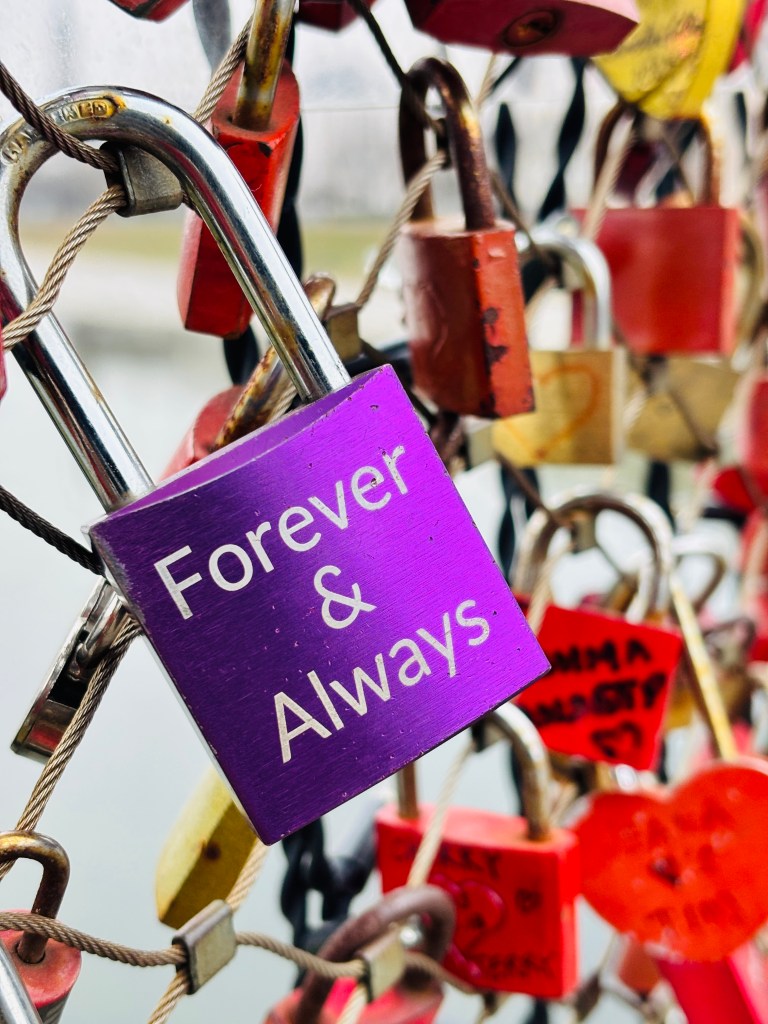
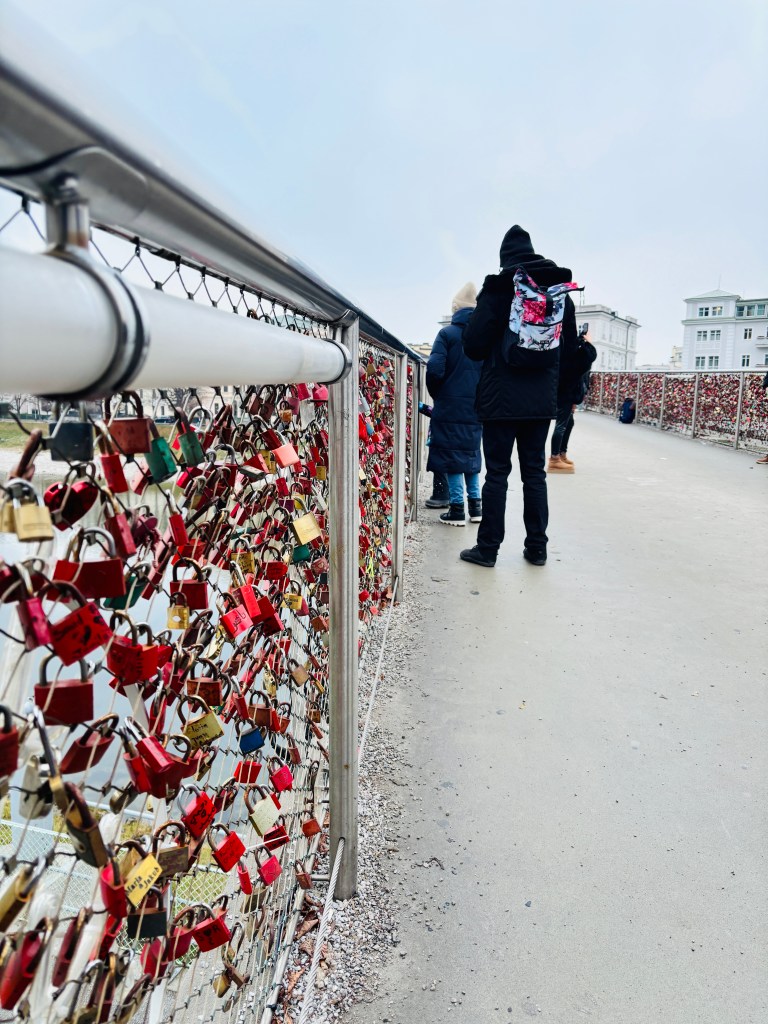
From there, we could also see the fortress again – closer but fainter this time. The fog had thickened, softening everything, so instead of standing sharp against the sky, it was just a vague outline. We didn’t rush it. Just stood for a bit, took a few pictures, and moved on.
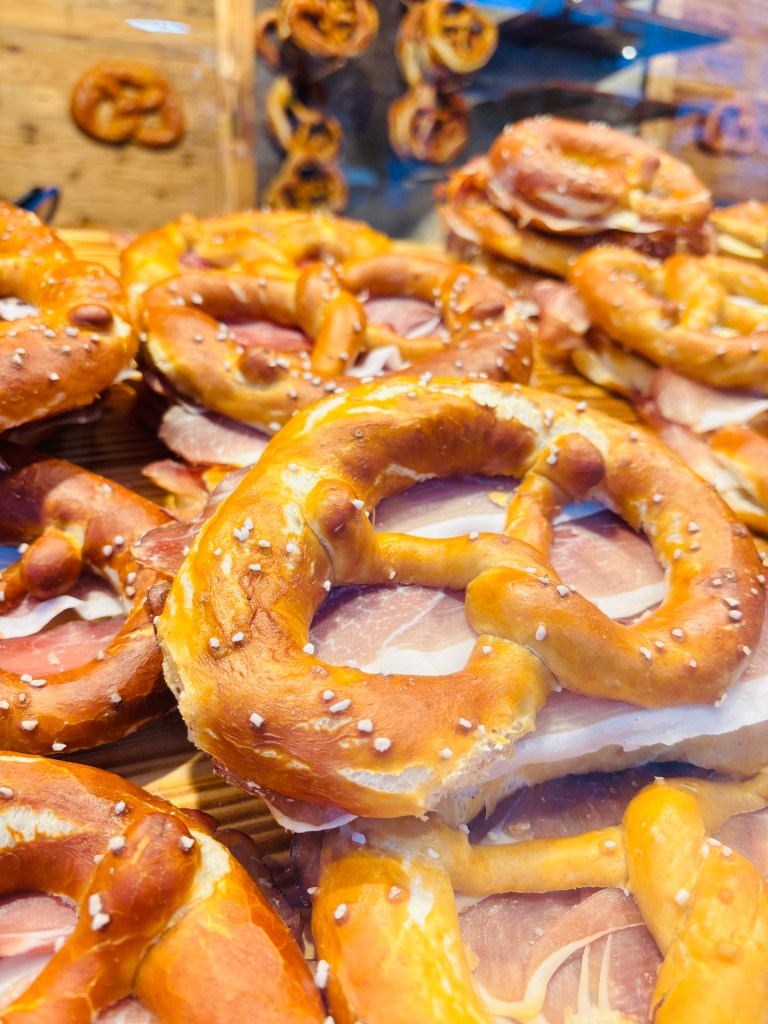
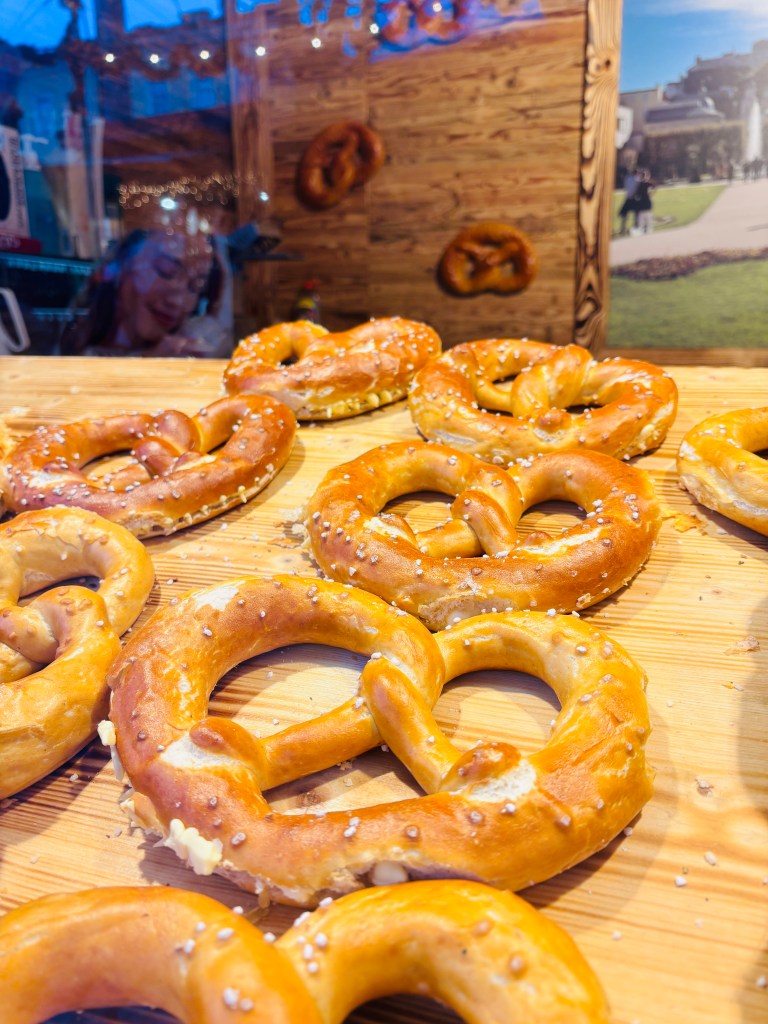
Further again, on the way back, we passed by the Mirabell Christmas market, picked up a couple of pretzels – by now almost a habit – warm, simple, and easy to carry. Nothing elaborate, just something to have with the next day’s morning coffee!
And that was about it. Back to the hotel, early enough to rest, with the kind of tiredness that comes from a full day – not exhausting, just complete.
Day 2 – Salzburg to Hallstat
Our second day in Salzburg started early, with a simple plan – getting to Hallstatt.
Hallstat
Located in the Salzkammergut region of Upper Austria, about 70–80 km from Salzburg, it sits along the edge of Hallstätter See, backed by steep Alpine mountains that rise almost directly behind the village. It’s part of the Hallstatt-Dachstein / Salzkammergut UNESCO World Heritage Site, recognised not just for its beauty, but also for its historical significance — the area has been associated with salt mining for over 7,000 years, making it one of the oldest continuously inhabited regions in Europe.
Despite its small size, Hallstatt has become globally famous — largely because of how it looks. A lakeside village, tightly packed houses, a church spire rising in the middle, mountains enclosing everything — it’s the kind of setting that feels almost unreal. Over time, it’s been widely photographed, shared, and replicated across media, turning it into one of the most recognisable destinations in Austria. And then there’s the more unusual proof of that appeal — in 2012, a full-scale replica of Hallstatt was built in Huizhou, China, (read more about it here) recreating elements like the central square, church, and layout of the original village.
In the Indian context, it has featured in travel circuits popularised through social media and has appeared in the background of European travel sequences in films and shows – even if not always explicitly named.
And like most people, we weren’t immune to it.
By the time we planned this trip, Hallstatt had already been on our radar – through photos, reels, travel blogs, and that constant stream of “must-visit” European destinations. It had built itself up quietly in our heads over time. So when we finally decided to go, it wasn’t a spontaneous choice.
It was something we had already seen – just not in person yet.
The route
There’s no direct train from Salzburg to Hallstatt. The most common route involves at least one change, usually at Attnang-Puchheim, before continuing on the Salzkammergut railway line toward Hallstatt. The total journey typically takes around 2.5 to 3 hours, depending on connections, with the fastest routes just over 2 hours. Tickets can be booked via the ÖBB (Austrian Railways) website or app, or directly at the station. Prices usually start around €10–€30 one way, depending on how early you book and the type of train. Seats aren’t always reserved by default on regional trains, so it’s worth boarding early if you want a good window spot.
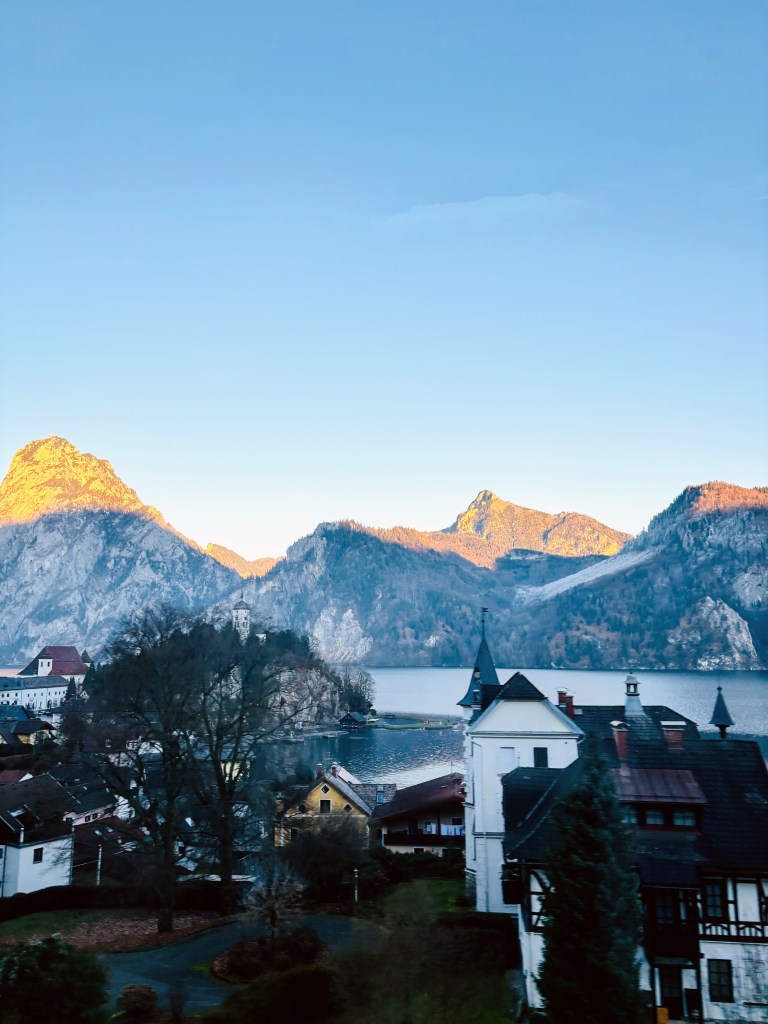
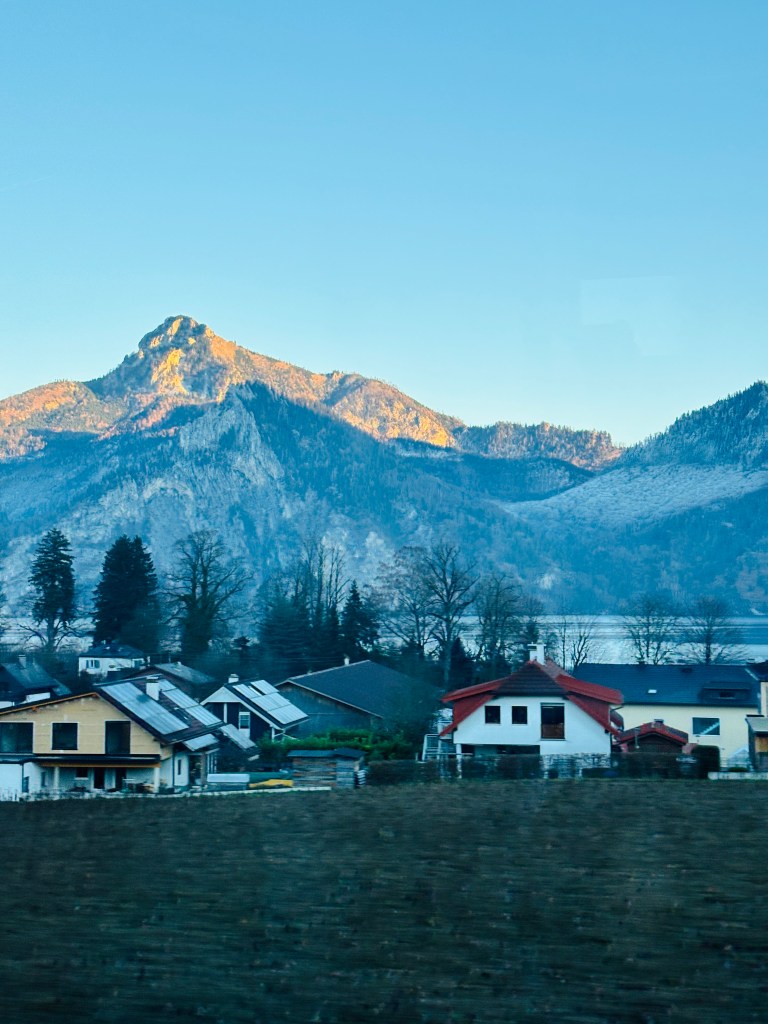
The first leg out of Salzburg is relatively straightforward — towns, open countryside, and gradually fewer buildings. But once you change trains and move deeper into the Salzkammergut region, the journey becomes noticeably more scenic. The train starts running alongside lakes, rivers, and forested valleys, with stretches where the tracks follow the water closely — especially near places like Traunsee, where you get uninterrupted views of mountains rising directly from the lake’s edge.
If you’re doing this route, try to get a window seat on either side – both offer views at different stretches, but generally the Right side (direction Hallstatt) has better lake views in parts and the left side has more valley and village landscapes.
Honestly, it keeps switching, so the best strategy is just – don’t lose your window seat.
The arrival
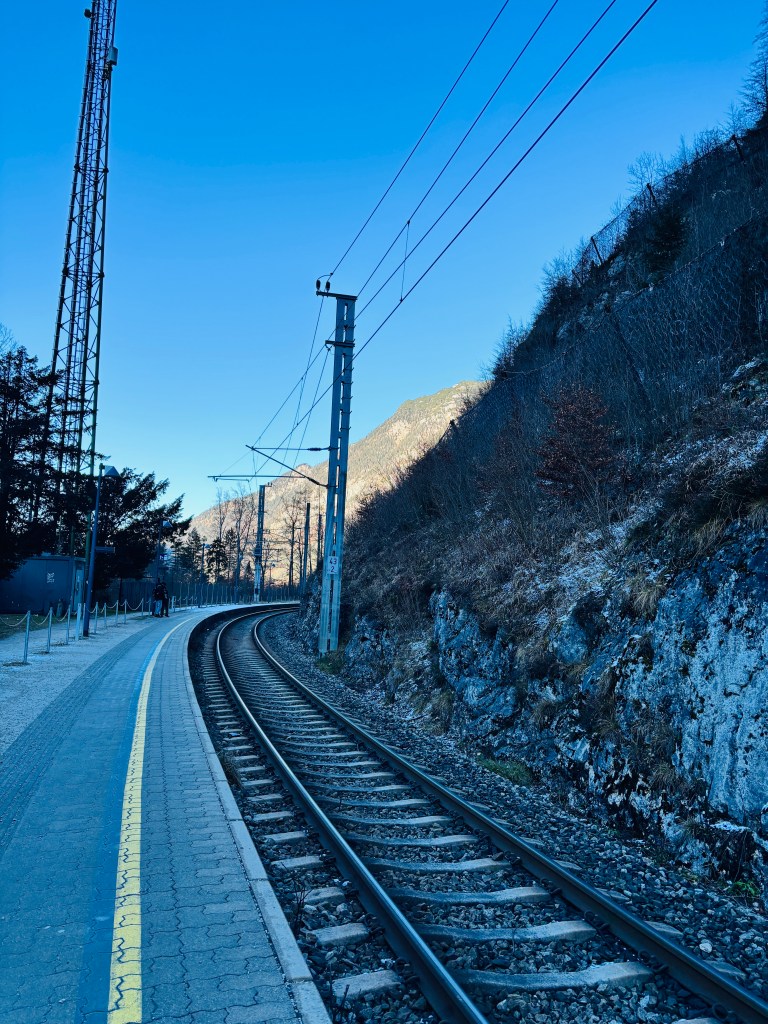
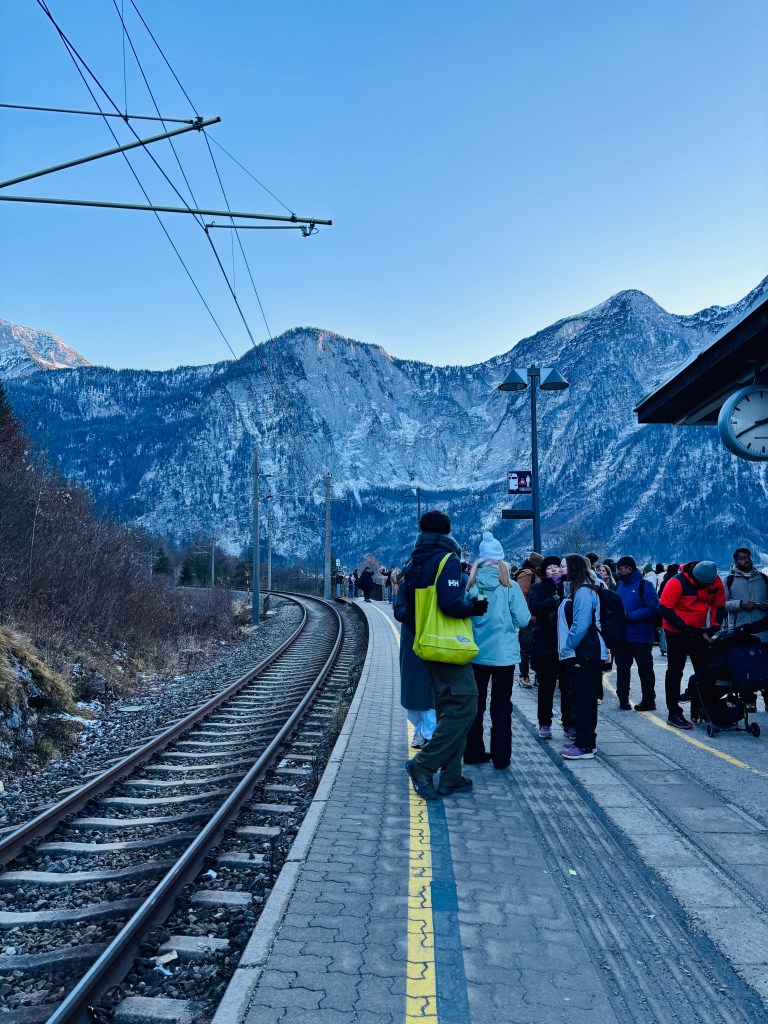
The most unexpected part of this journey comes at the end. The train doesn’t take you into Hallstatt town itself. It stops at Hallstatt Bahnhof, which is actually on the opposite side of the lake from the village. From there, you walk about 2–3 minutes downhil to the Schiffstation (ferry dock). And then comes the final leg — the boat ride across Hallstätter See.
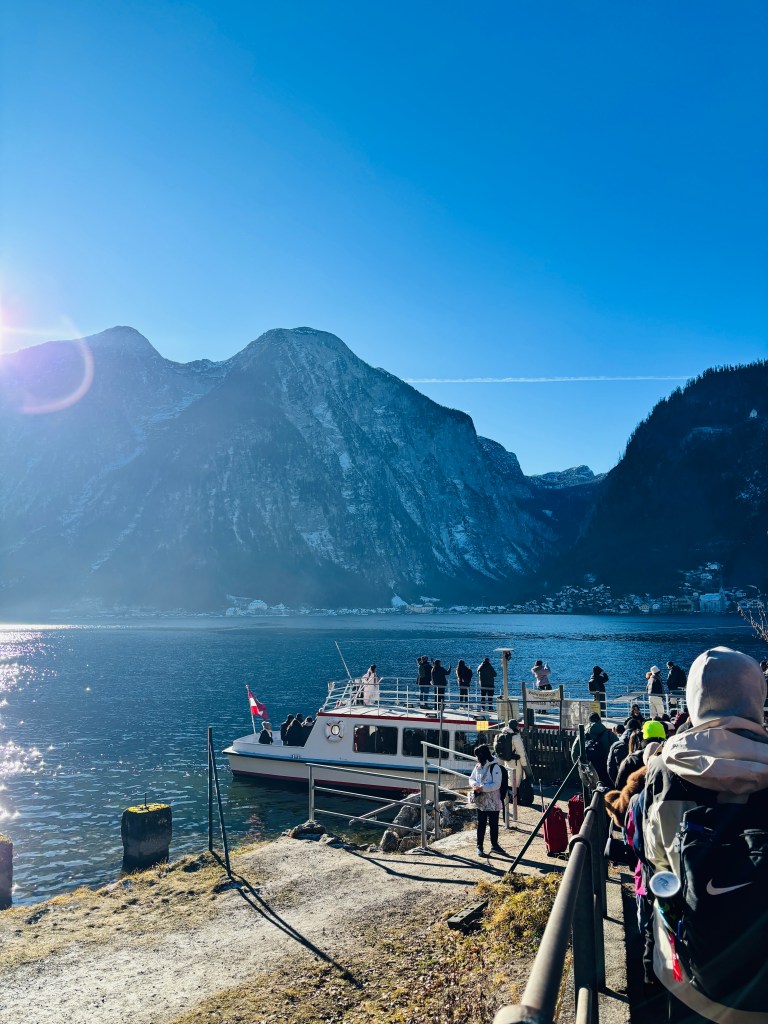
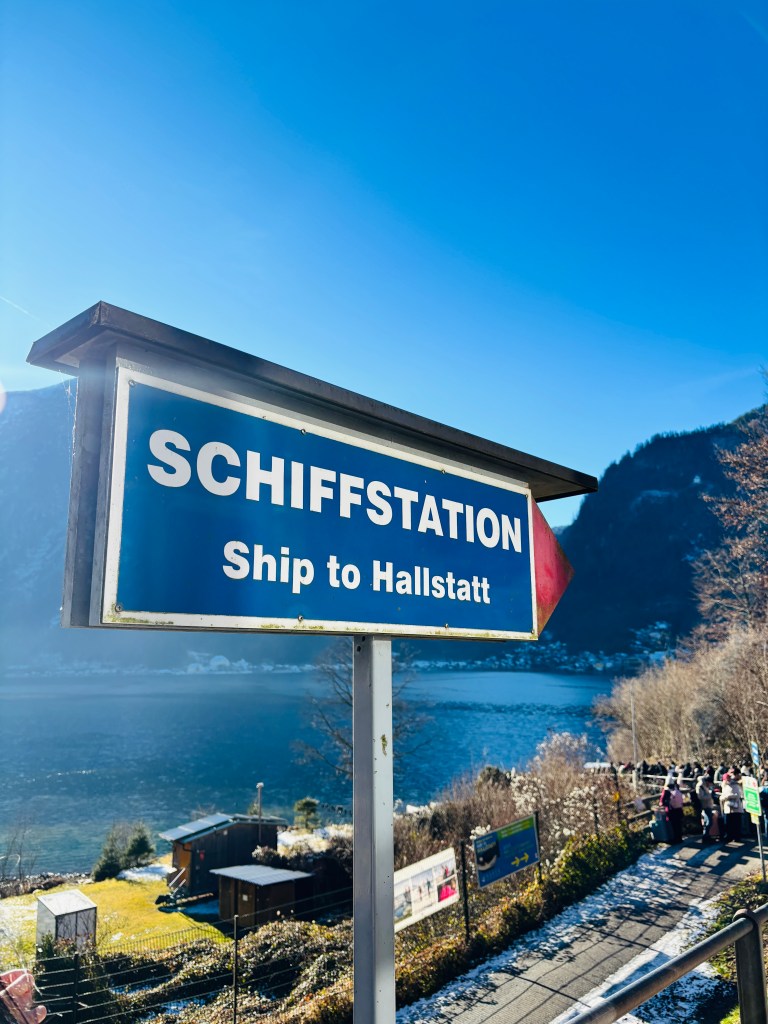
The ferry is timed to match train arrivals, so you don’t have to wait long. The ride takes about 10 minutes and costs roughly €4 per person, with tickets usually bought directly on the boat (cash).
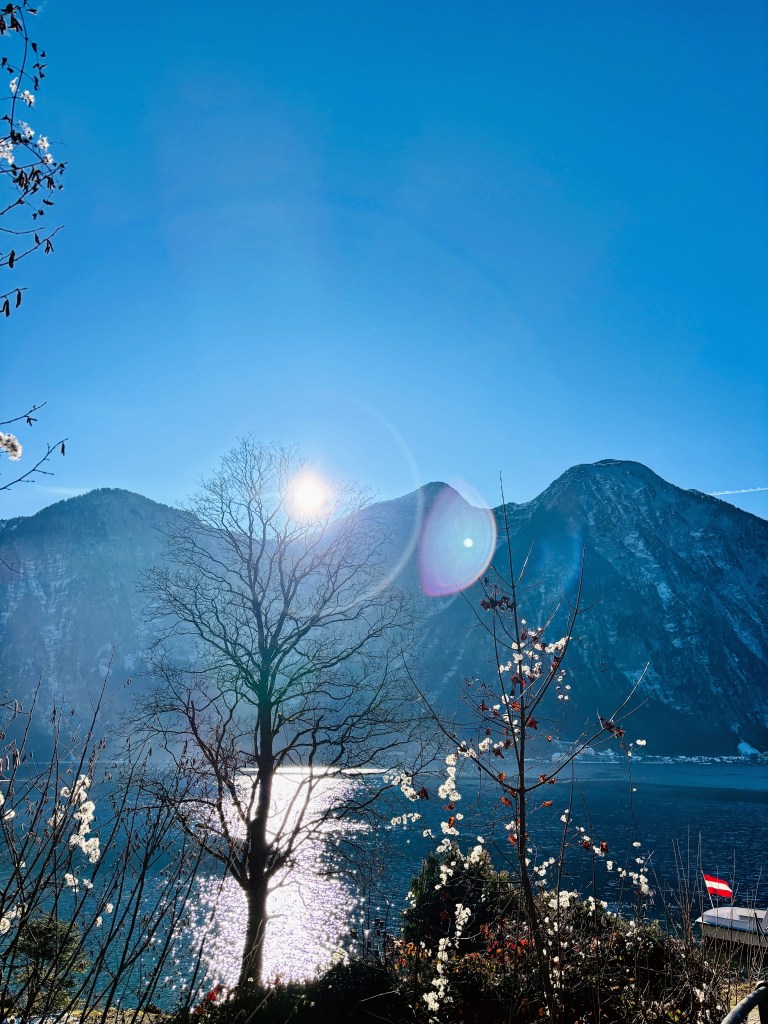
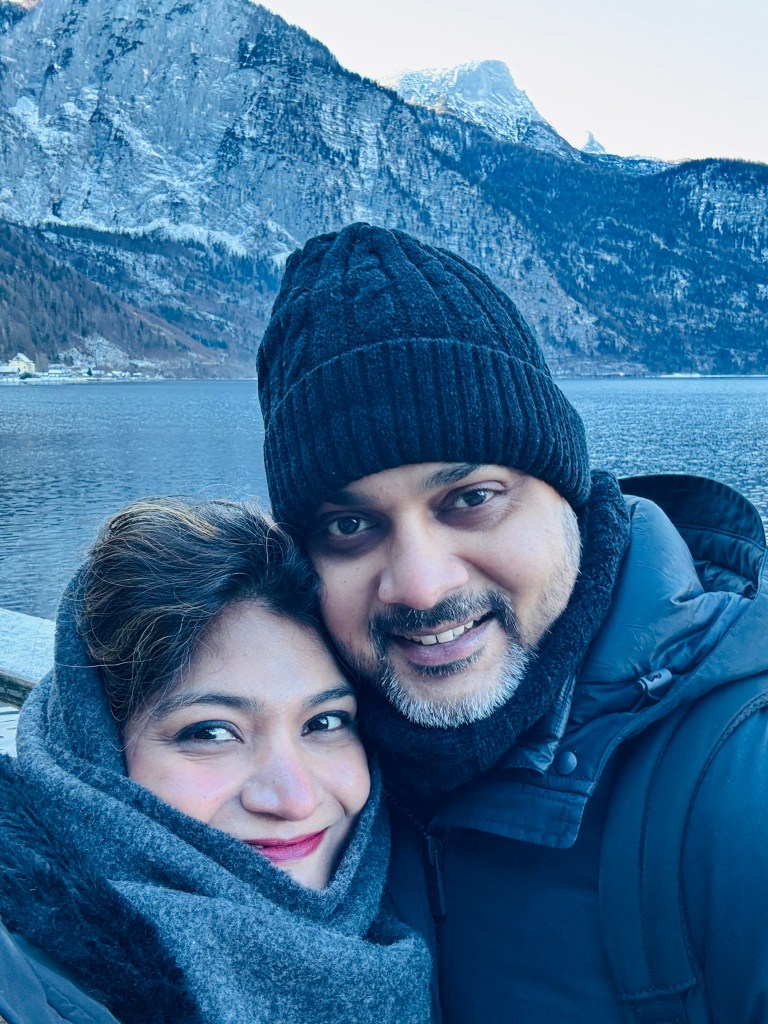
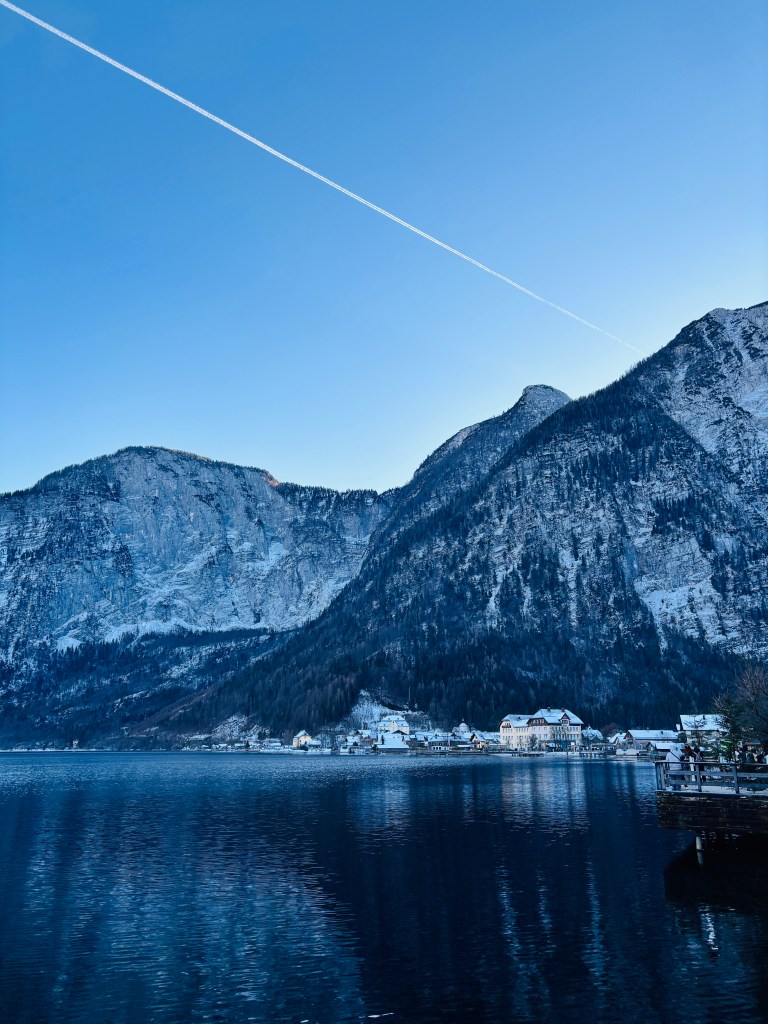
This is where the arrival really happens. As the boat pulls away, the lake opens up. For a while, there’s just water, still and slightly grey under the then winter sky, with mountains rising steeply on both sides, their rocky faces and dark patches of forest.
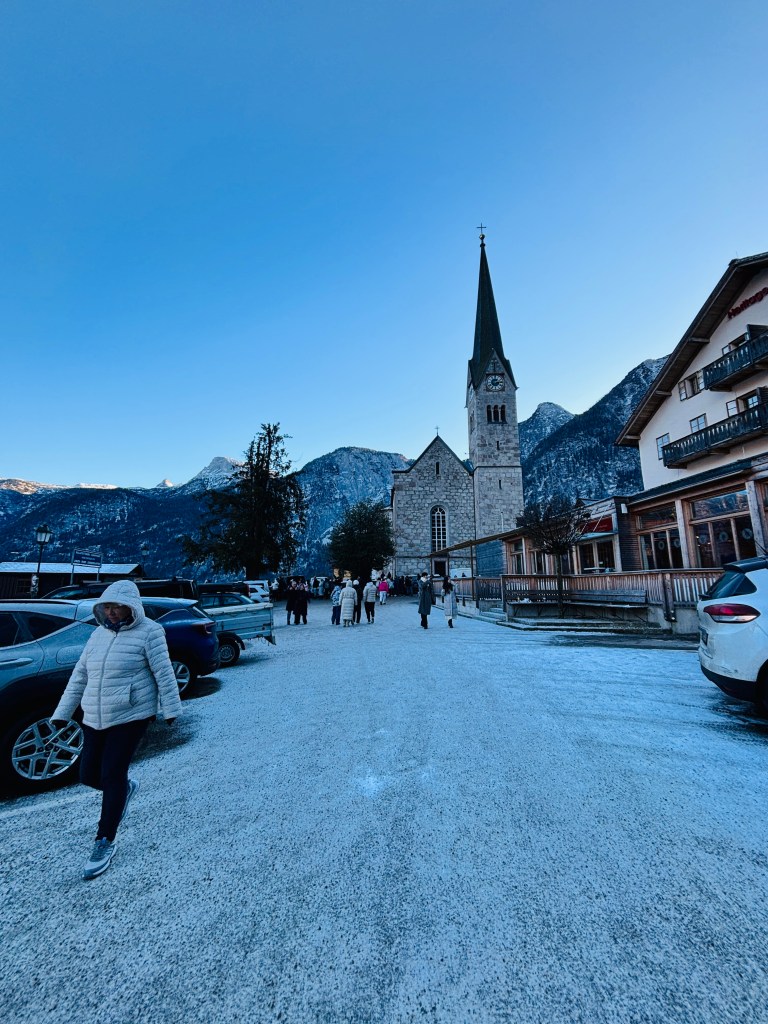
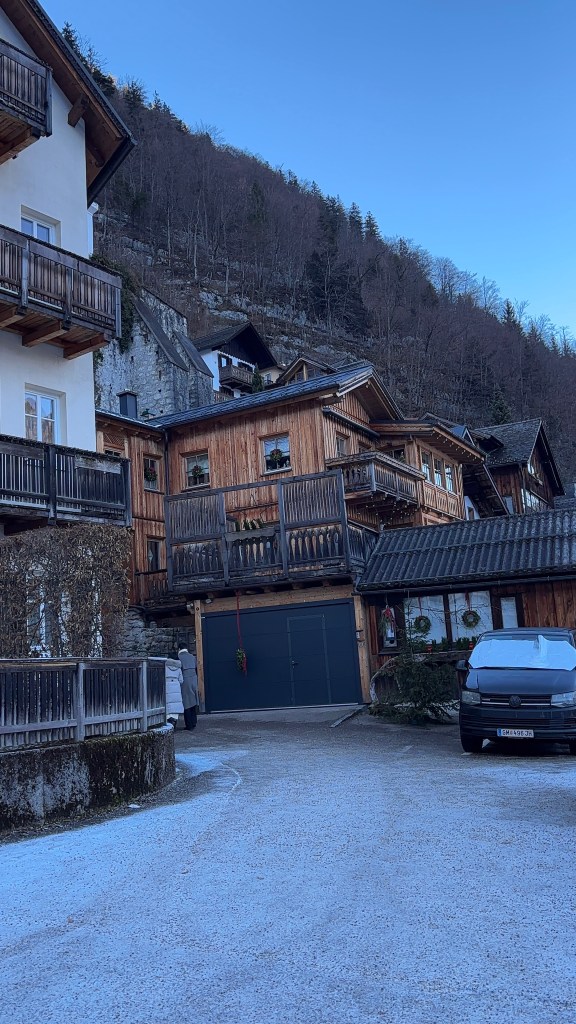
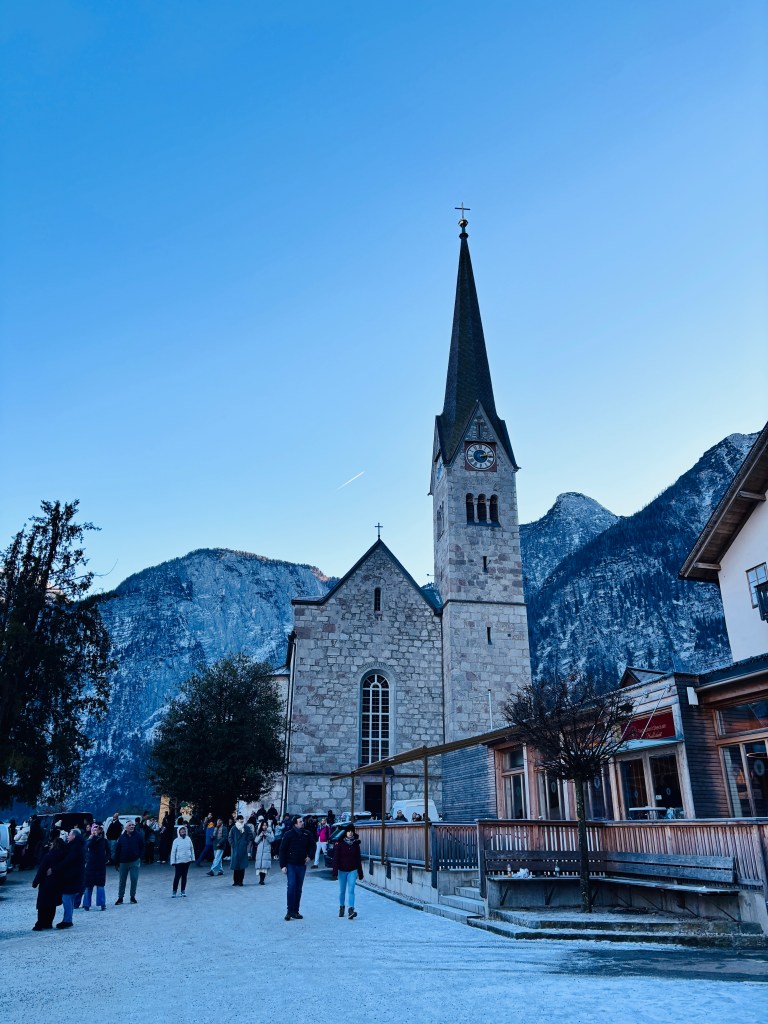
And then, slowly, Hallstatt begins to appear. As the boat moves closer to the dock, the details sharpen. The church spire rises above everything else – tall, pointed, and almost disproportionate to the scale of the village around it. The houses seem stacked into the mountain behind. Up close, it feels older than it looks in pictures. The textures stand out more – wood, stone, uneven lines – nothing polished, nothing overly maintained. Just structures that have existed for a long time and continue to do so.
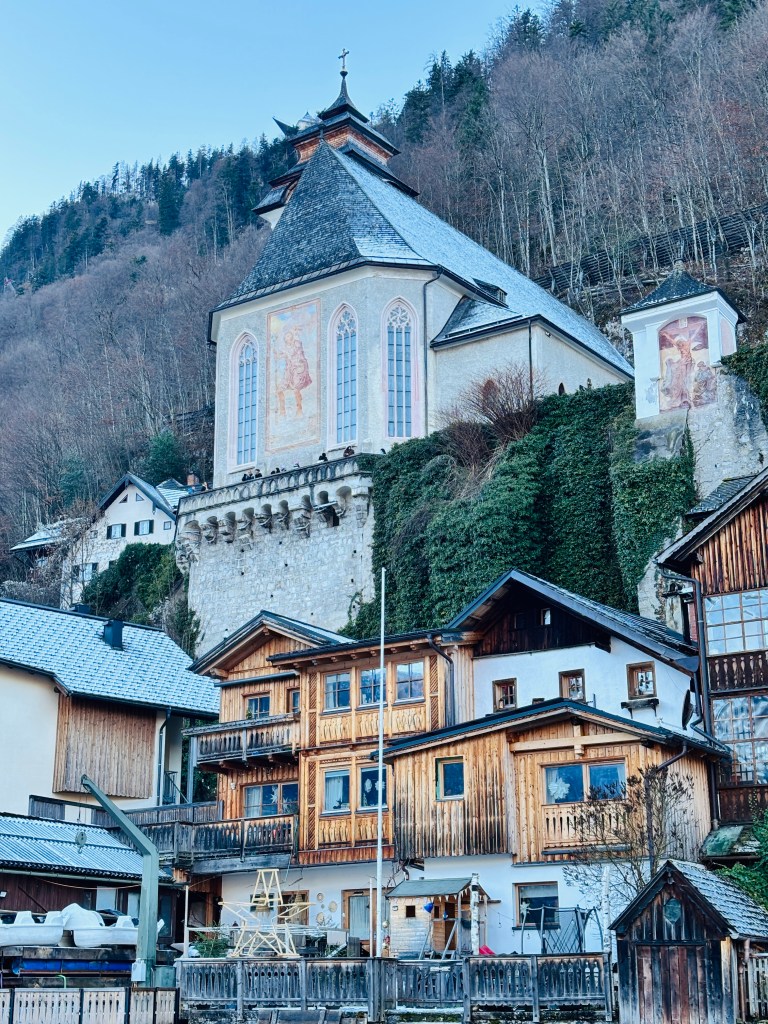
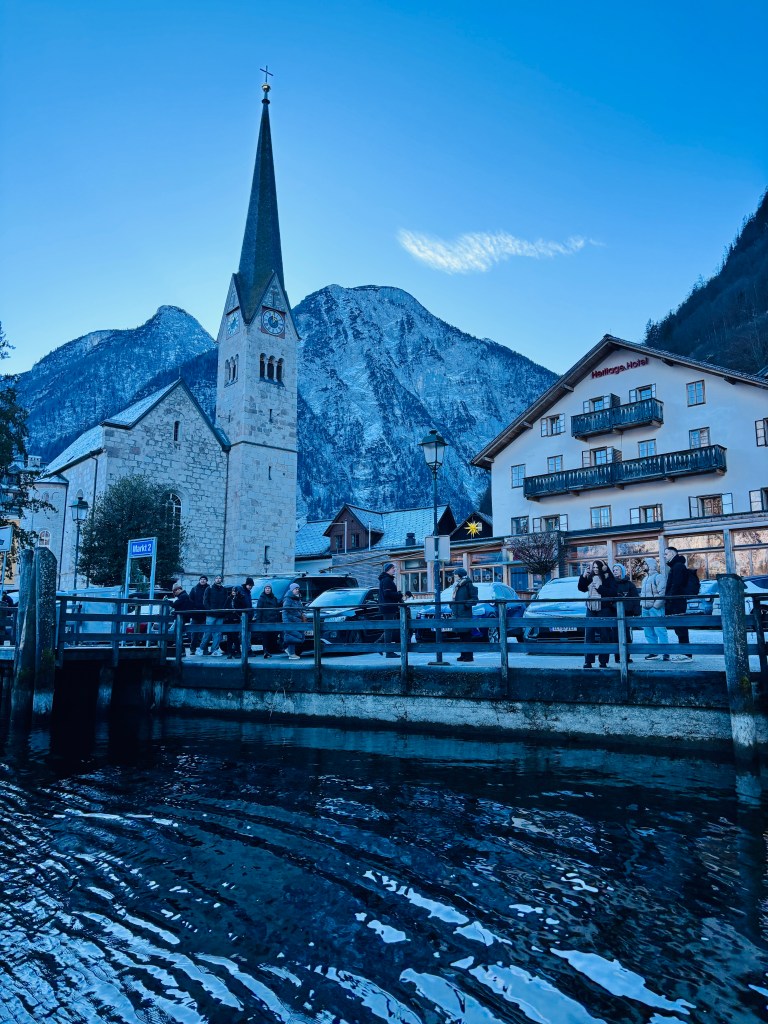
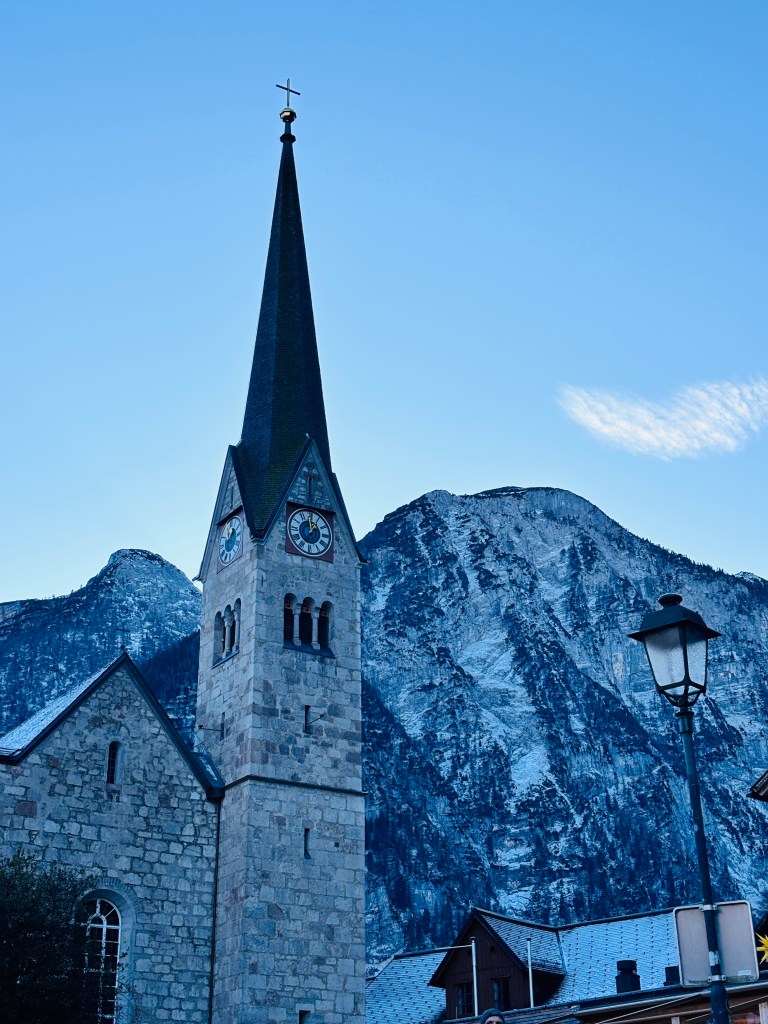
That day, the weather added its own layer to it. It was cold and slightly gloomy with the light staying flat and the reflections faint, almost reluctant.
The walk into town
Once off the boat, there’s no confusion about where to go. Hallstatt is small enough that it almost directs you itself. From the dock, there’s essentially one main path that runs along the lake, a narrow lane that hugs the shoreline and threads its way through the village.
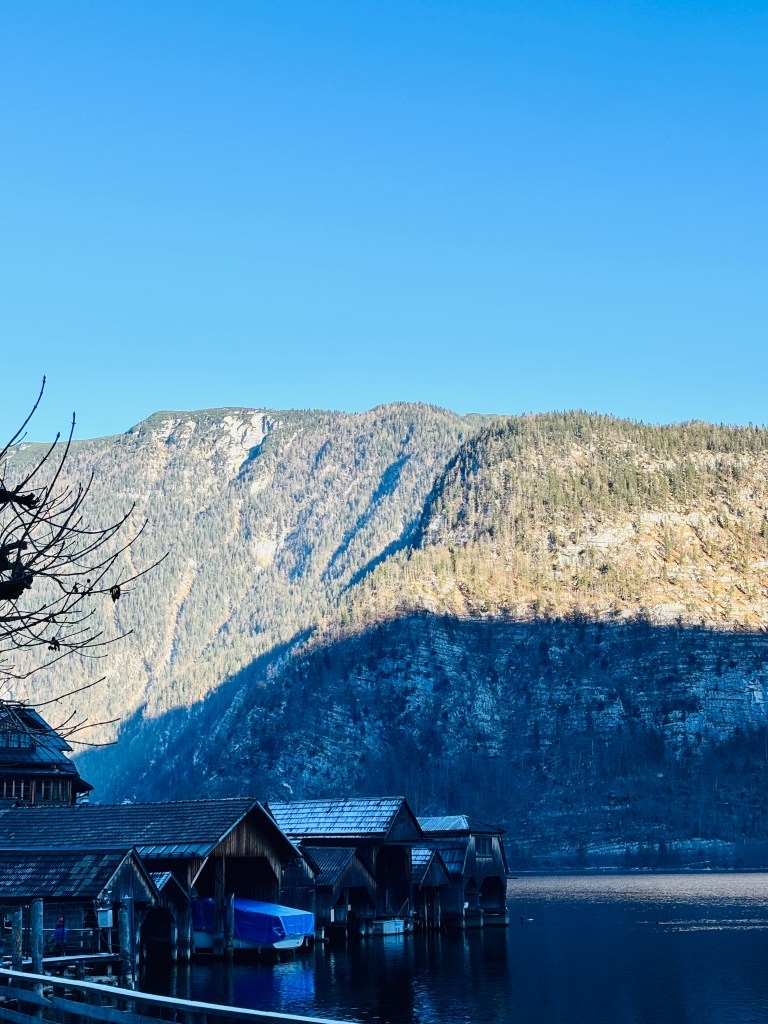
We took the leftward stretch. On one side, the lake stayed constantly in view, calm and grey, occasionally opening up between buildings. On the other, houses rose tightly against the mountain, stacked in a way that felt less planned and more adapted — like they had grown into the slope rather than been built on it. Timber balconies, sloping roofs, and façades painted in soft colours — all very typical of Alpine architecture, but here everything felt closer, more condensed.
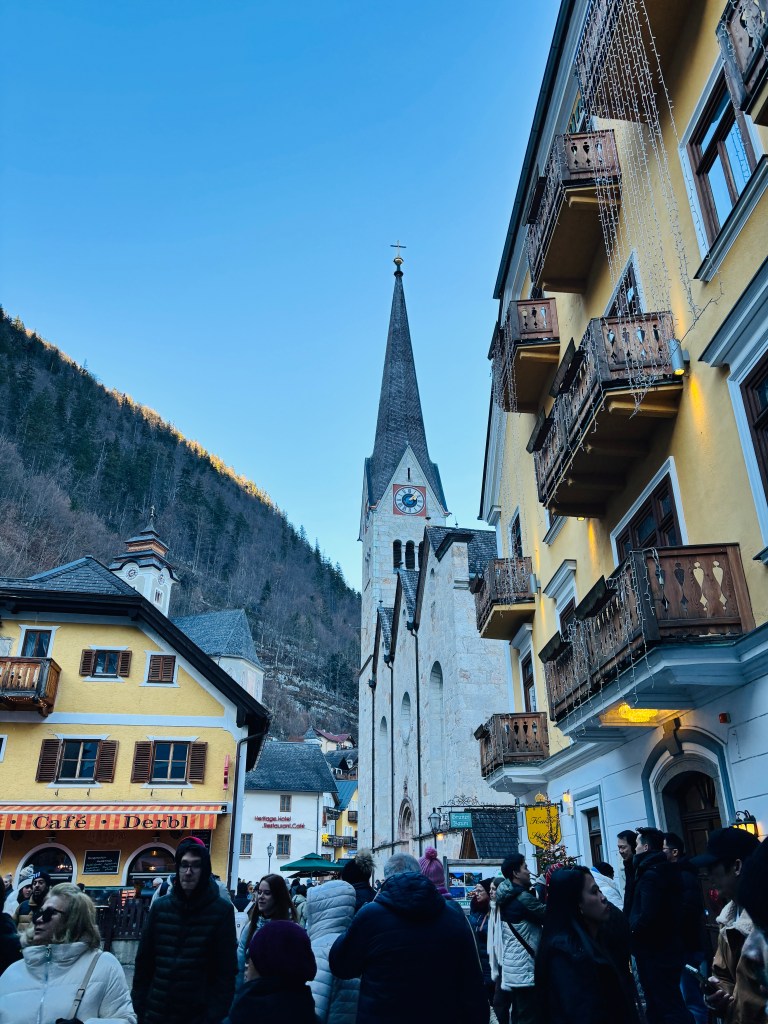
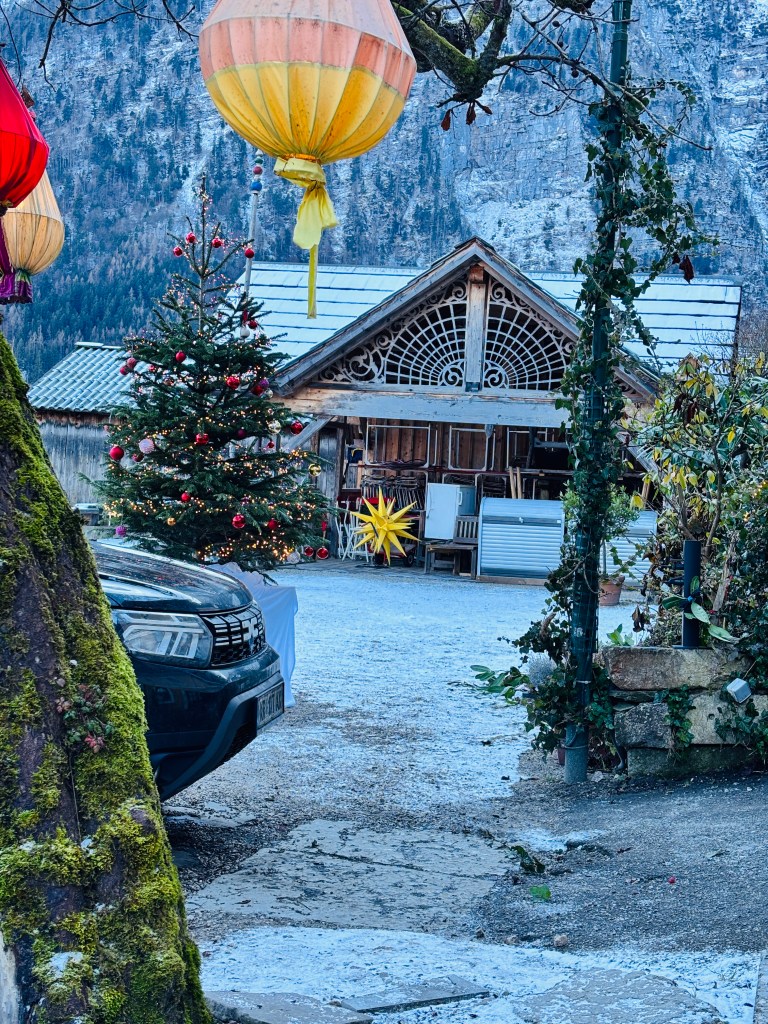
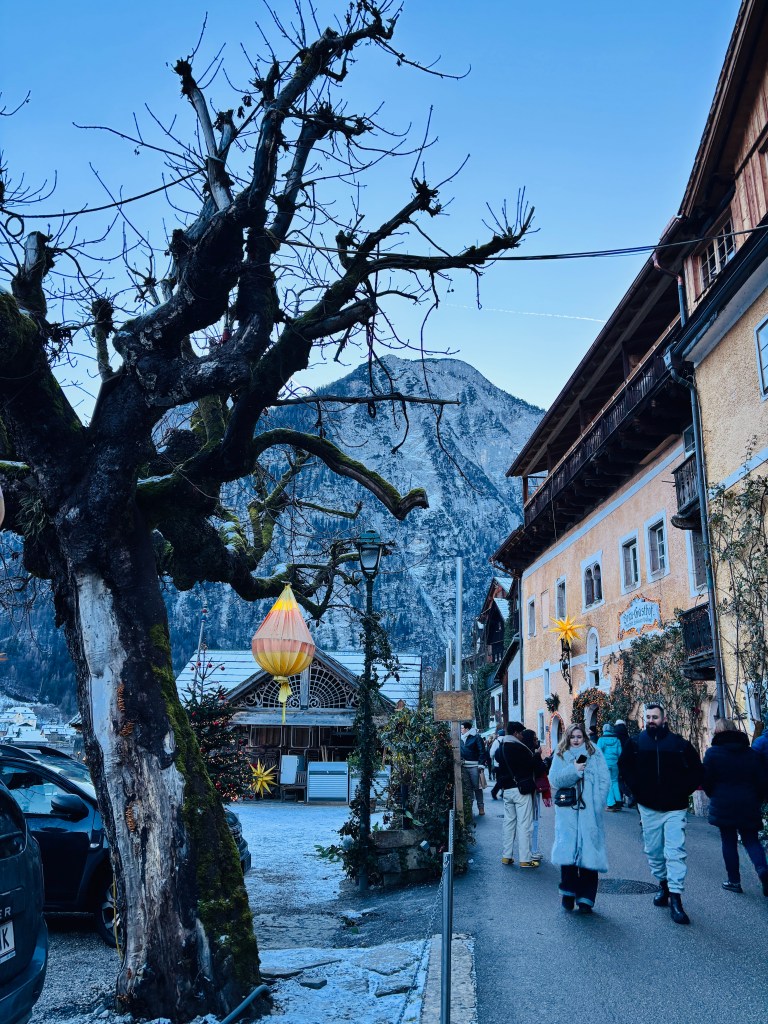
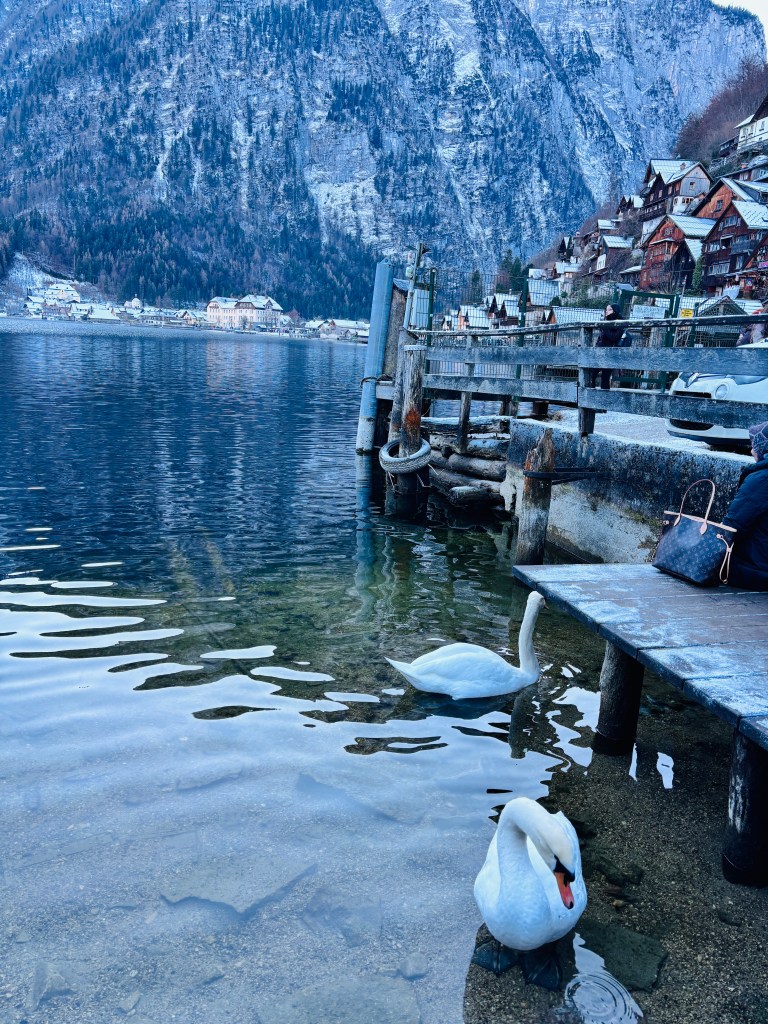
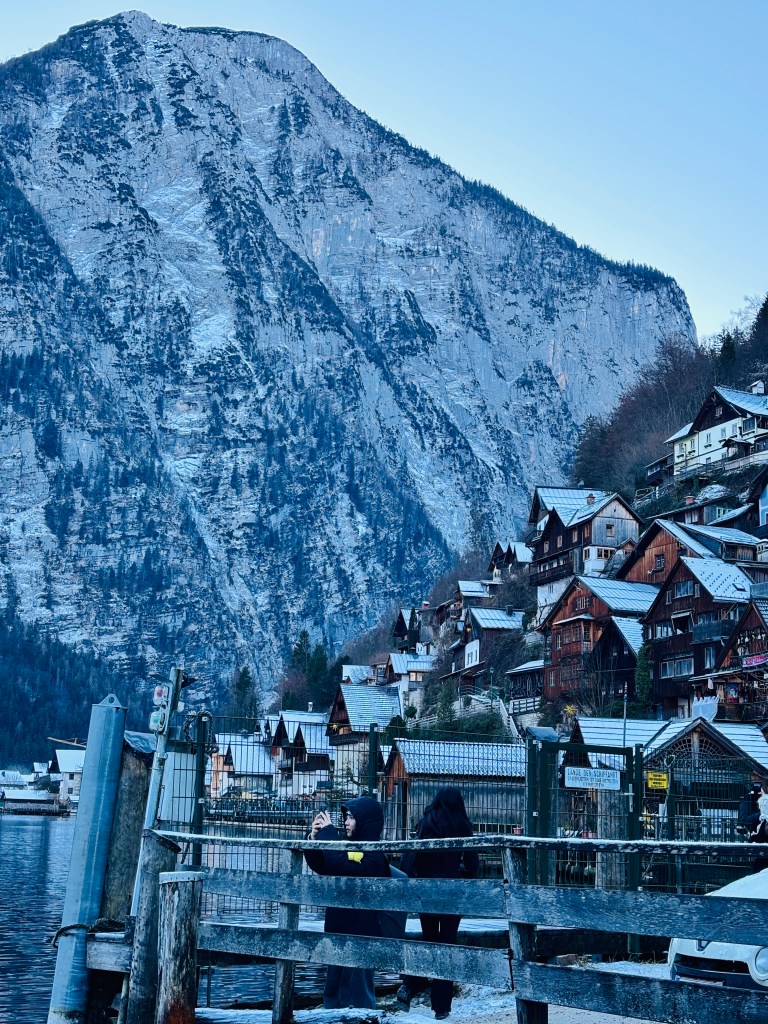
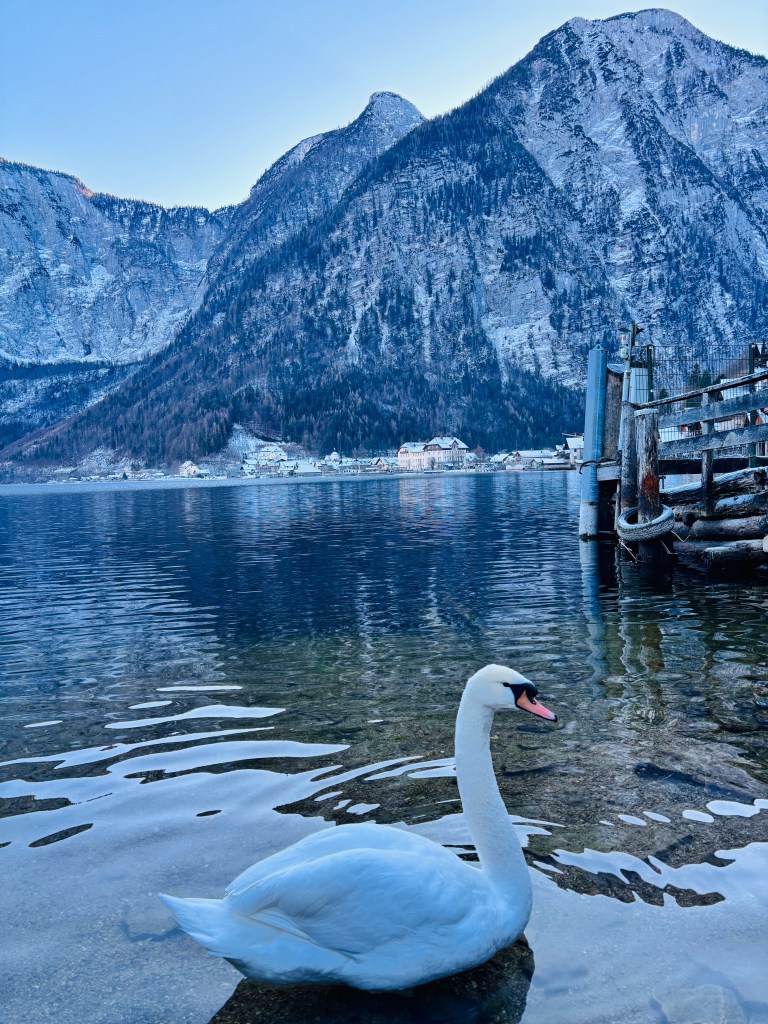
The lane wasn’t wide. No cars, only pedestrians, and a steady movement of people going both ways with shops, cafés, and small restaurants lining the entire stretch. The village is small enough to be able to walk from one end to the other in minutes, and this main street more or less connects everything.
The tightly packed lane opens up only at – Marktplatz – the historic market square at the centre of Hallstatt. It dates back to at least the 14th century and has long been the focal point of the town, surrounded by centuries-old houses, cafés, and shops, with the Holy Trinity column standing in the middle.
After having walked till the end of the stretch, instead of lingering around, we moved across toward the opposite side, the quieter side near the church, where things opened up a little. Fewer people, more space to breathe, and a slightly different perspective of the same place.
Honest acknowledgement
For all the build-up, the views, the journey – once we were actually in the village, it felt… different!! Beautiful, yes. But not something that held us the way we thought it would.
The main lane was overcrowded – more than we had expected. A constant flow of people, stopping for photos, moving in clusters, filling up the already narrow space. It was hard to pause, hard to take anything in without being aware of the movement around you.
And it turns out, this isn’t unusual. On the way back, I managed to read a bit on this – Hallstatt has fewer than 800 residents, but sees 1000s of visitors every day, with estimates going up to 10,000–30,000 visitors daily during peak times.
A place this small simply wasn’t built for that kind of volume – and it shows. The narrow lanes, limited space, and the way most people pass through quickly for a few photos all contribute to a feeling of congestion rather than immersion.
Several travellers have describe the experience similarly – that it’s both stunning and overwhelming at the same time, depending on when you arrive and how long you stay.
In hindsight, it also felt like Hallstatt might be better experienced differently – not as a quick visit in the middle of the day, but maybe by staying for a couple of days and walking around the other areas surrounding the lake, or arriving early or late, when the crowds thin out and the place returns to something closer to its natural rhythm. Even locals and travel reports suggest that much of the pressure comes from short-stay, day-trip tourism, where people arrive, take in the views quickly, and leave. And maybe that’s what we felt.
Not disappointment exactly – just a sense that we were seeing only one version of it. A version shaped as much by the number of people as by the place itself.
After a while, we made our way back to the dock and took the ferry across to the station. By then, the crowd had already started building up again – people lining up for the next train, the same flow repeating itself in reverse. It all felt familiar, just in a slightly more hurried version.
The hunt for authentic Austrian cuisine
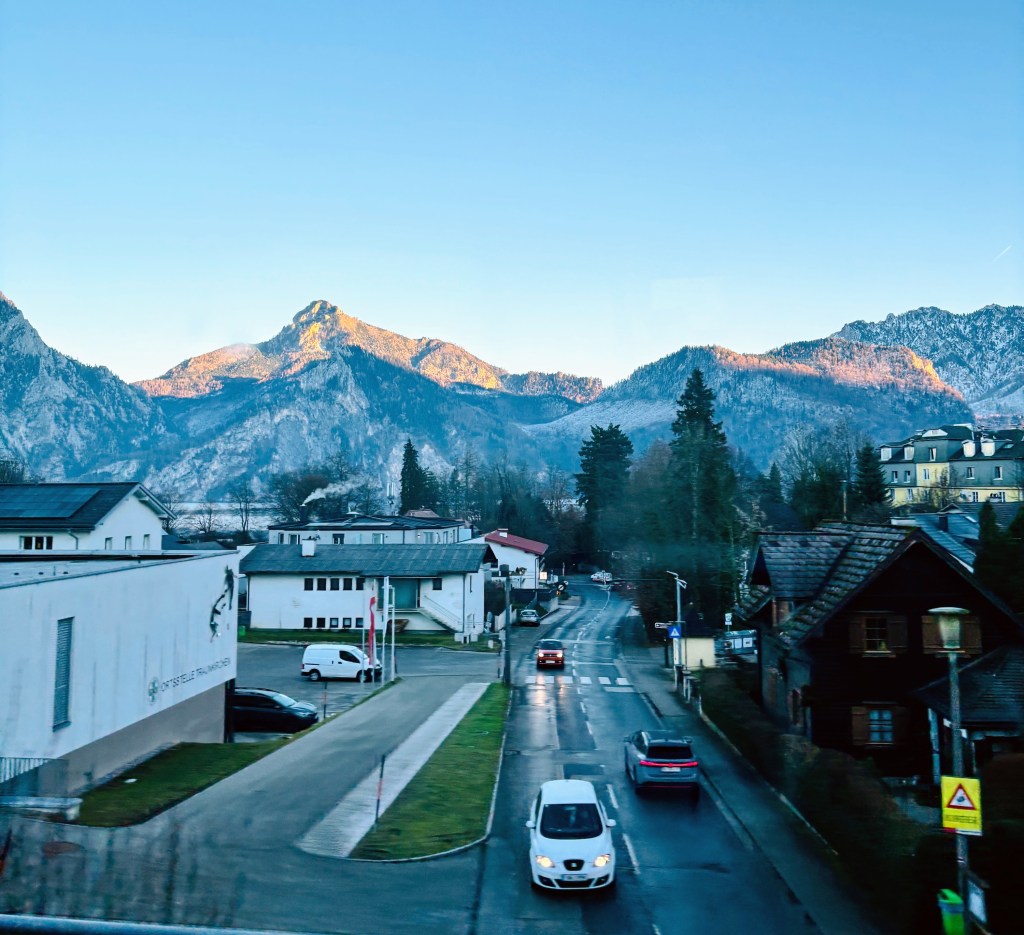
Back in Salzburg, we didn’t waste any time. Coz we had spent a lot of it in figuring out the connection trains, but thankfully we got some good landscape views with the sun settling in for the day.
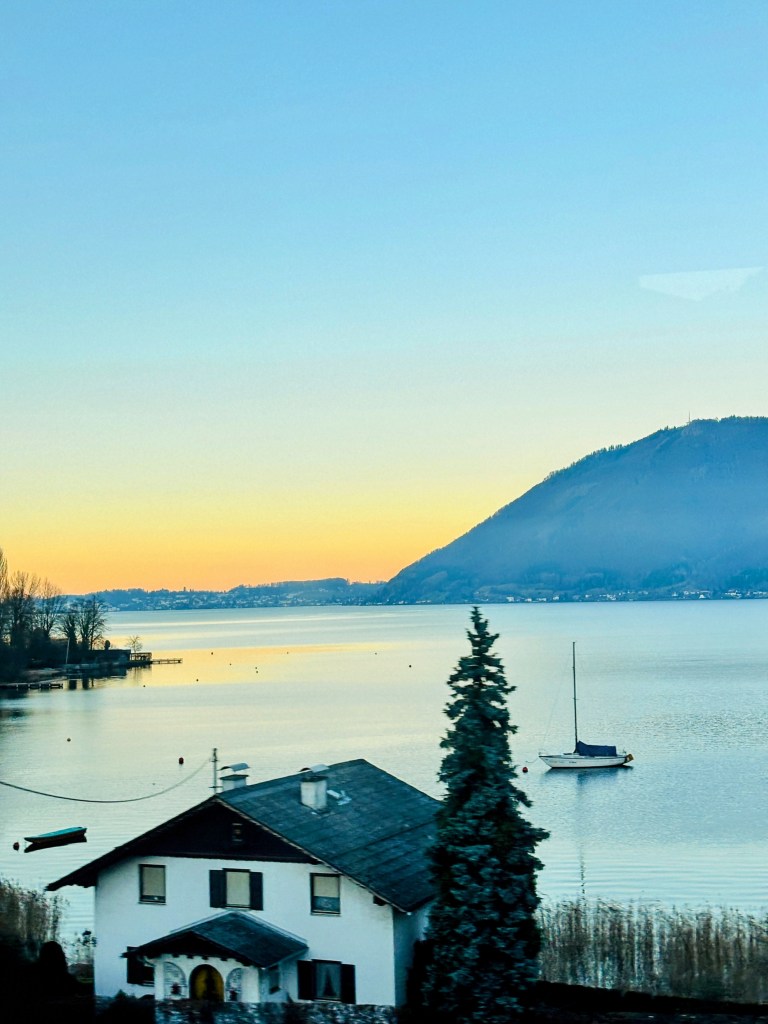
Hunger had taken over by then, so we headed straight toward the old town again – no detours, no pauses.
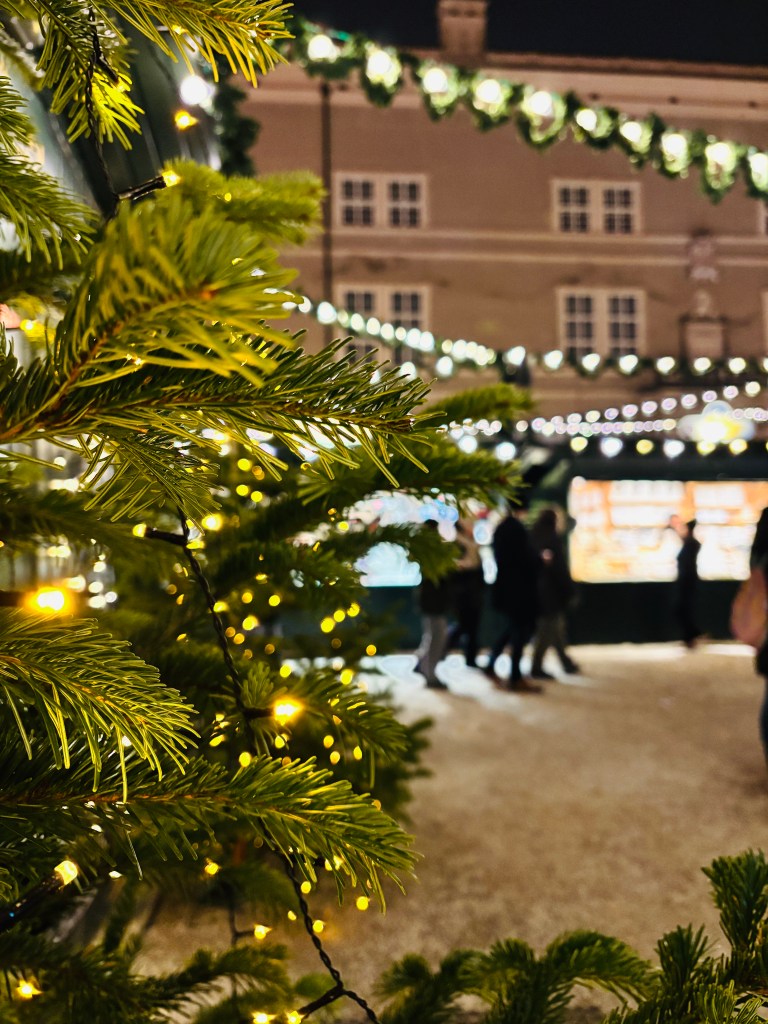
As we crossed the Christmas market, it felt fuller than it had earlier in the day. The same stalls, the same layout – but now everything was lit up, and that made all the difference. Warm yellow lights strung overhead, stalls glowing from within, steam rising more visibly in the cold air.
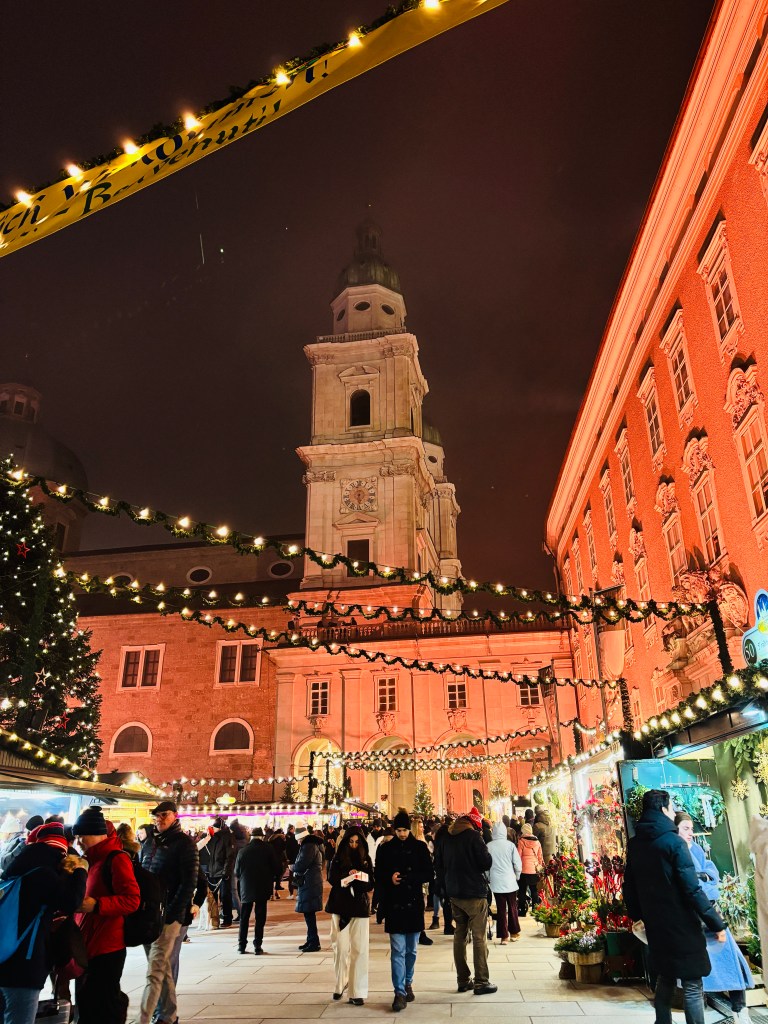
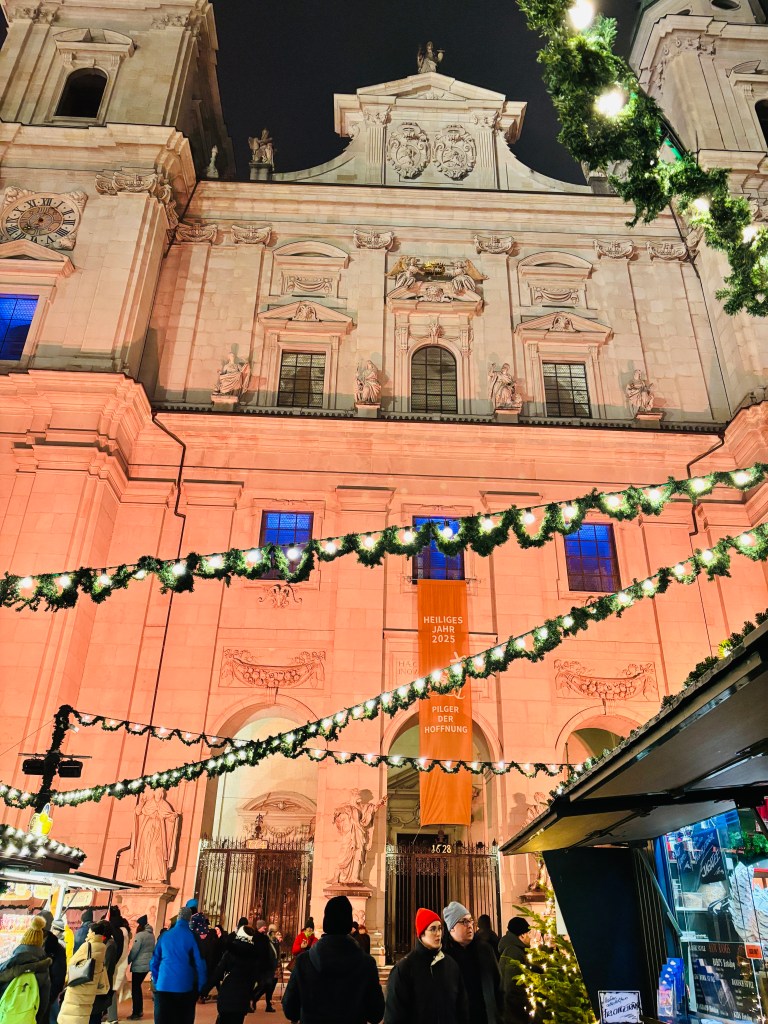
There was music in the square when we passed through, but not in the usual way. It wasn’t coming from a single stage. Instead, it came from different directions. You’d hear it from one side, and people would instinctively turn. Then another instrument would pick up from somewhere else – a different corner, a different height – and the crowd would shift again, trying to locate the sound.
We’d seen this in Innsbruck too, but later we realised this is actually an European tradition called “Turmblasen” (tower blowing) – where musicians play brass instruments like trumpets, horns, and trombones from elevated points around the square, including towers and balconies.
We stopped for a bit, just letting it play out but hunger has its own priorities.
We moved on, weaving through the crowd again and outside the market premises walking into absolute silence and almost engulfed by fog- making it feel almost eerie.
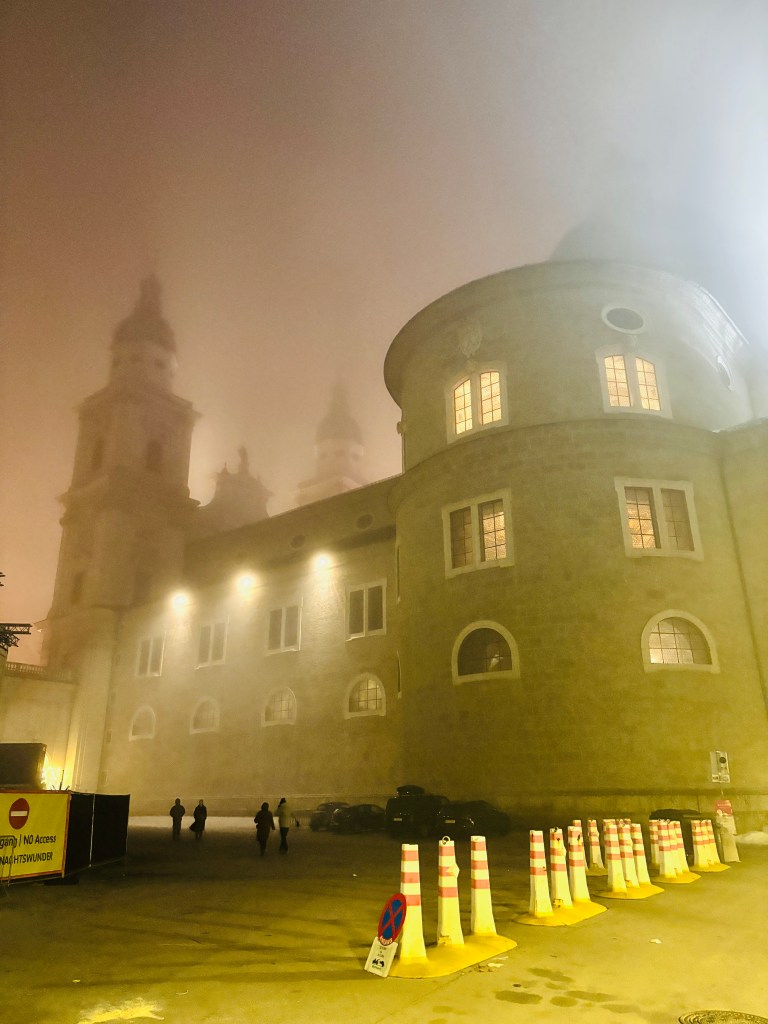
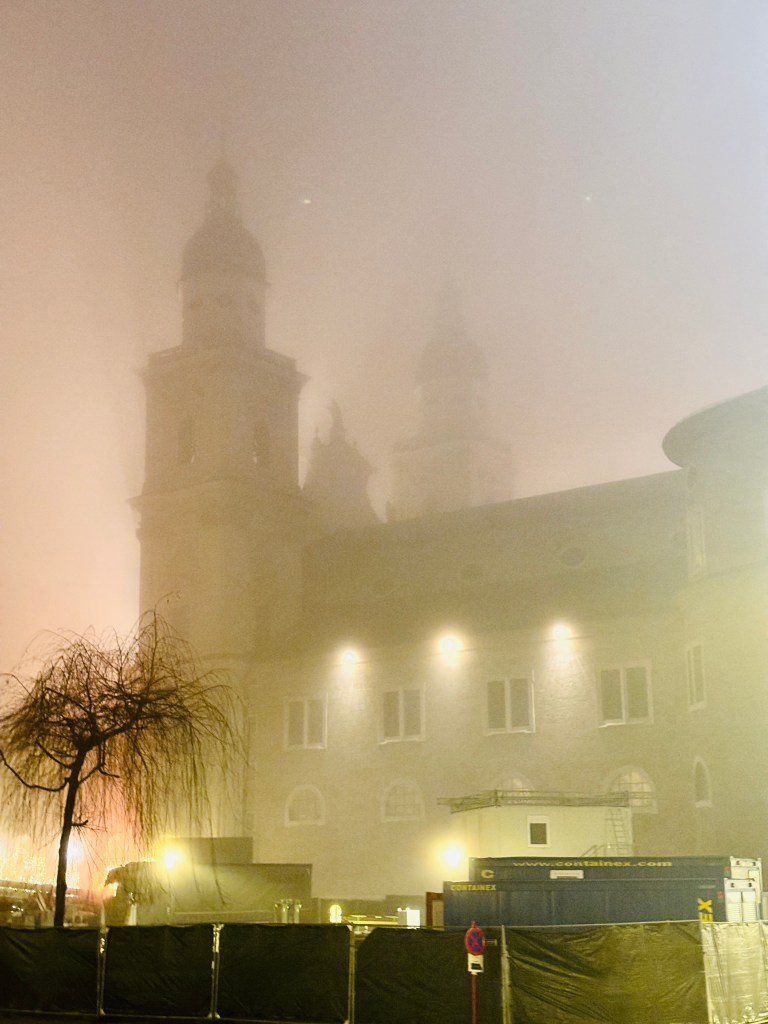
Anyway, we couldn’t afford distractions and our plan was simple – find something proper, warm, and local. But so had everyone else, it seemed.
Most of the places we had shortlisted were packed. Doors opening and closing, people waiting outside, staff shaking their heads at walk-ins. No reservations meant no chance. We tried a few places anyway. Walked in, checked, stepped out. Repeated the cycle.
And then finally, one place where we could actually wait. Not immediately seated, but close enough. So we stood there for a bit, watching tables turn, doing that quiet calculation of how long it might take.
Zwettler’s Wirtshaus
Zwettler’s Wirtshaus, a rustic buzzing restaurant was everything we could have hoped for after a long day of having survived on only coffee and pretzels. The most delish local cuisine was had, and washed down with beers. The highlight – yet another local dessert called Sachertorte – the iconic, rich chocolate cake dessert of Austria, widely enjoyed in Salzburg.
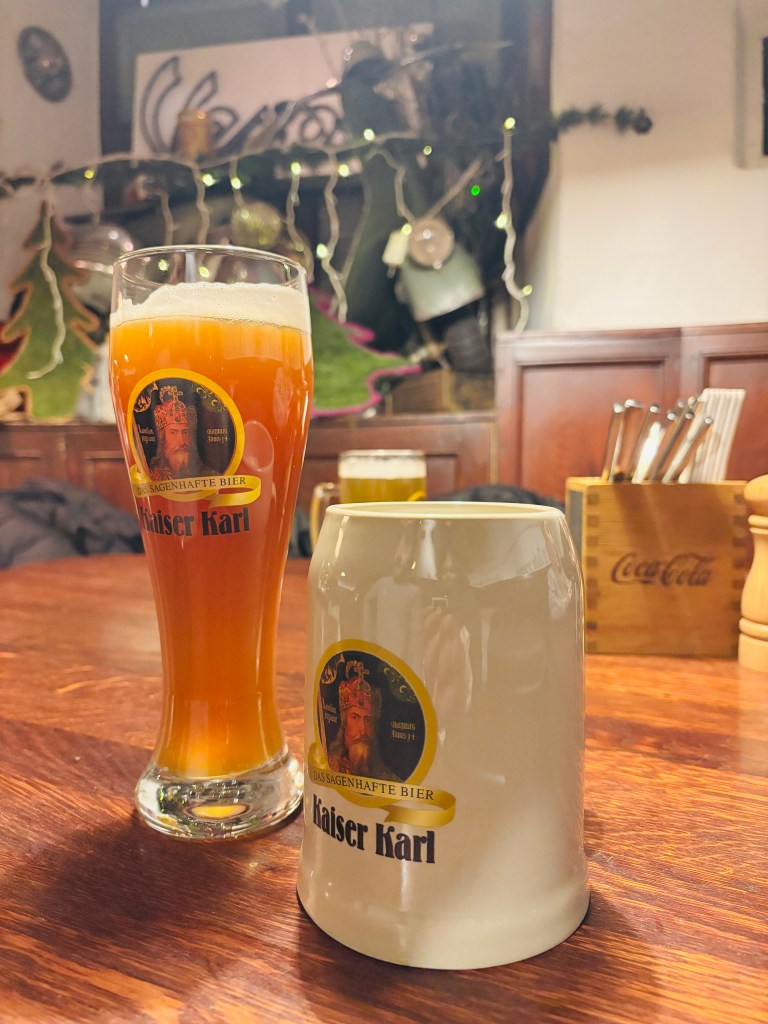
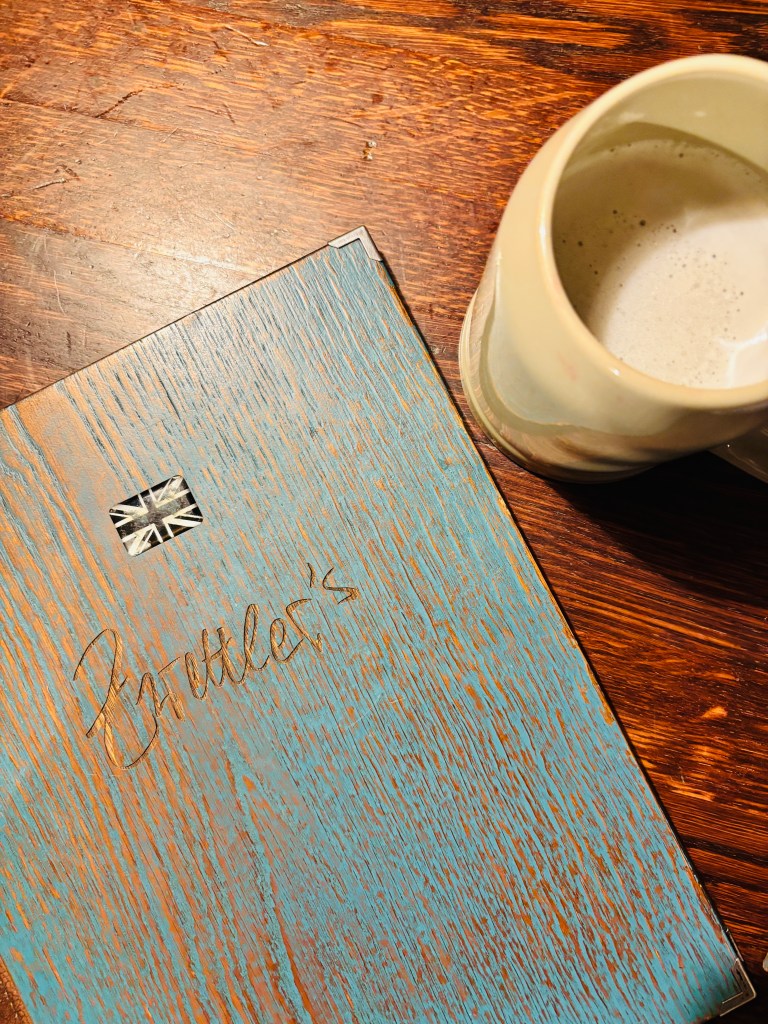
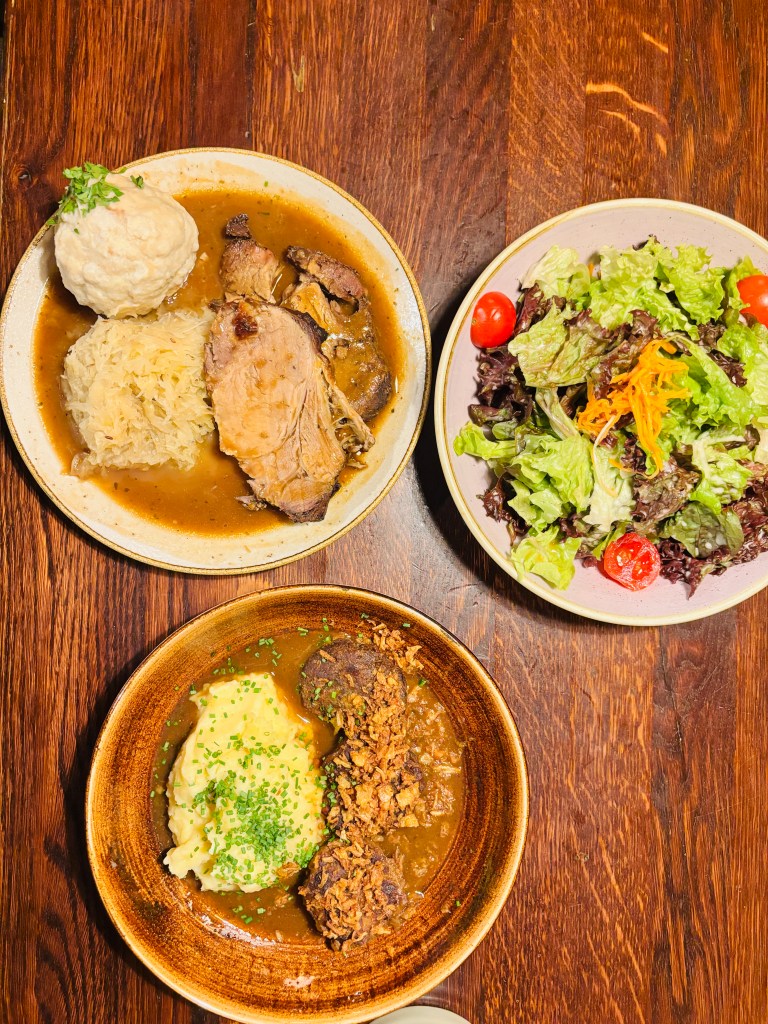
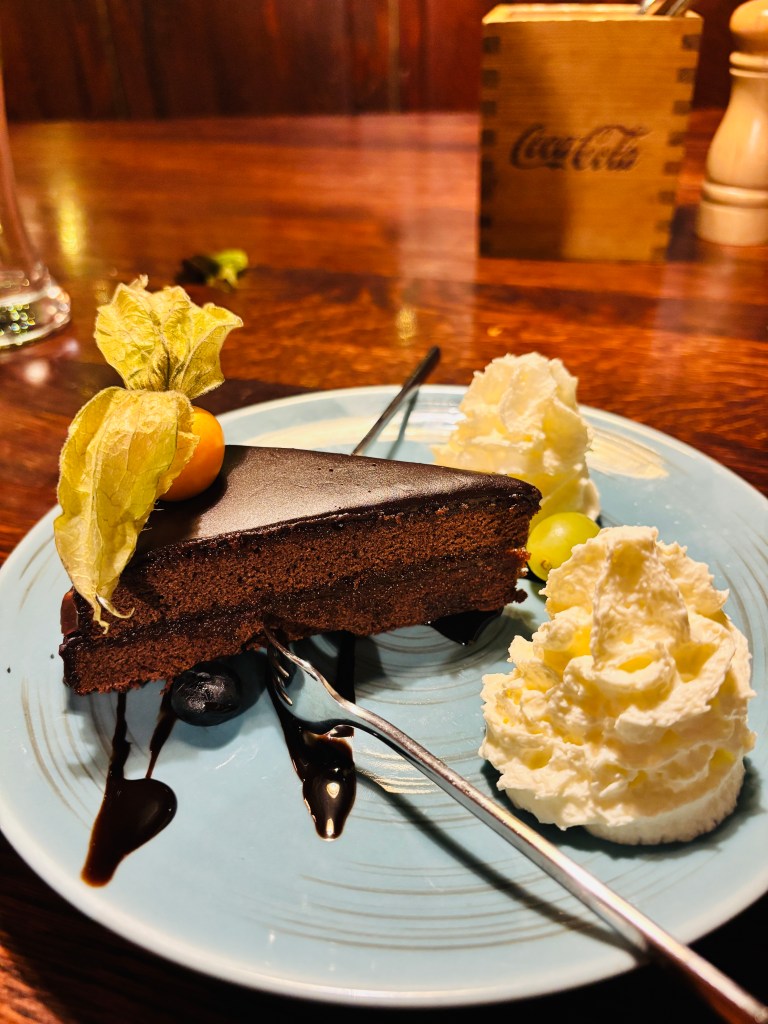
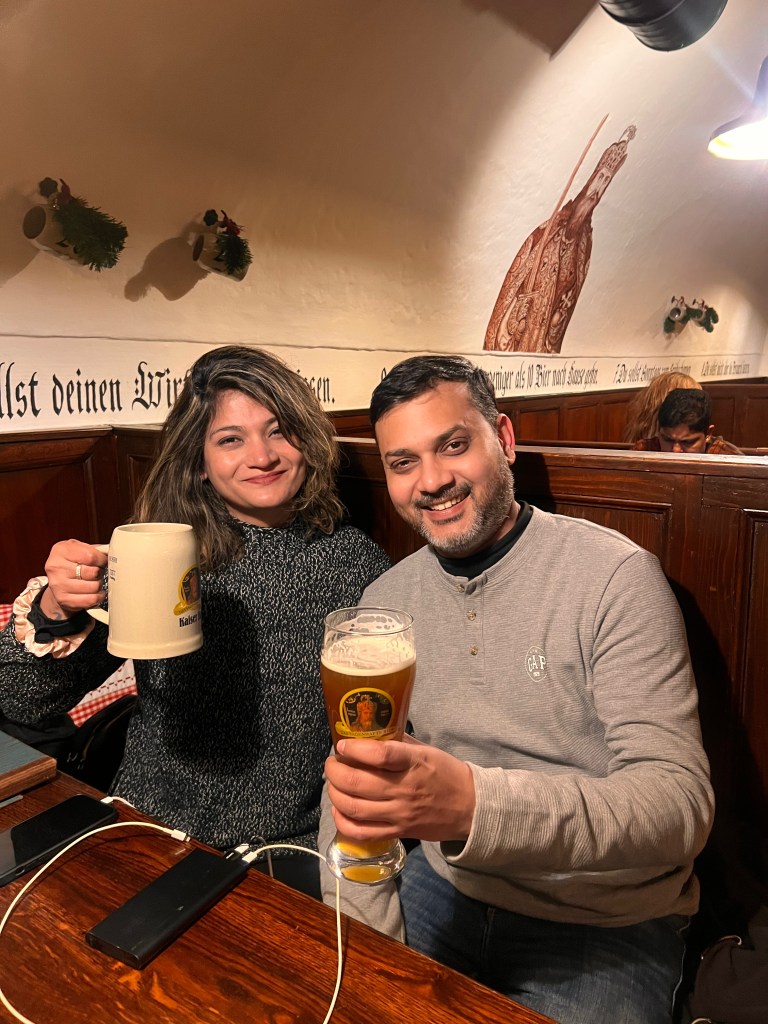
After dinner, we walked back. It was the second day of going back and forth on the same route and that feeling of familiarity had settled in. From Alstatdt, across the Salzach river and then crossing Mirabelleplatz towards the station to our hotel.
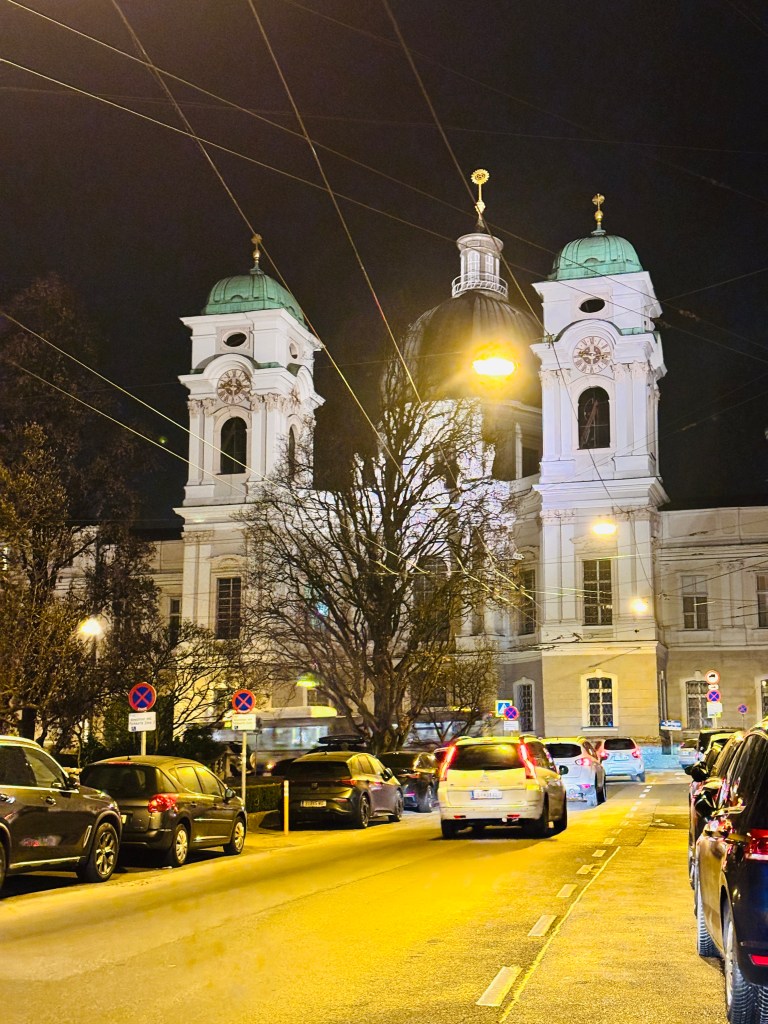
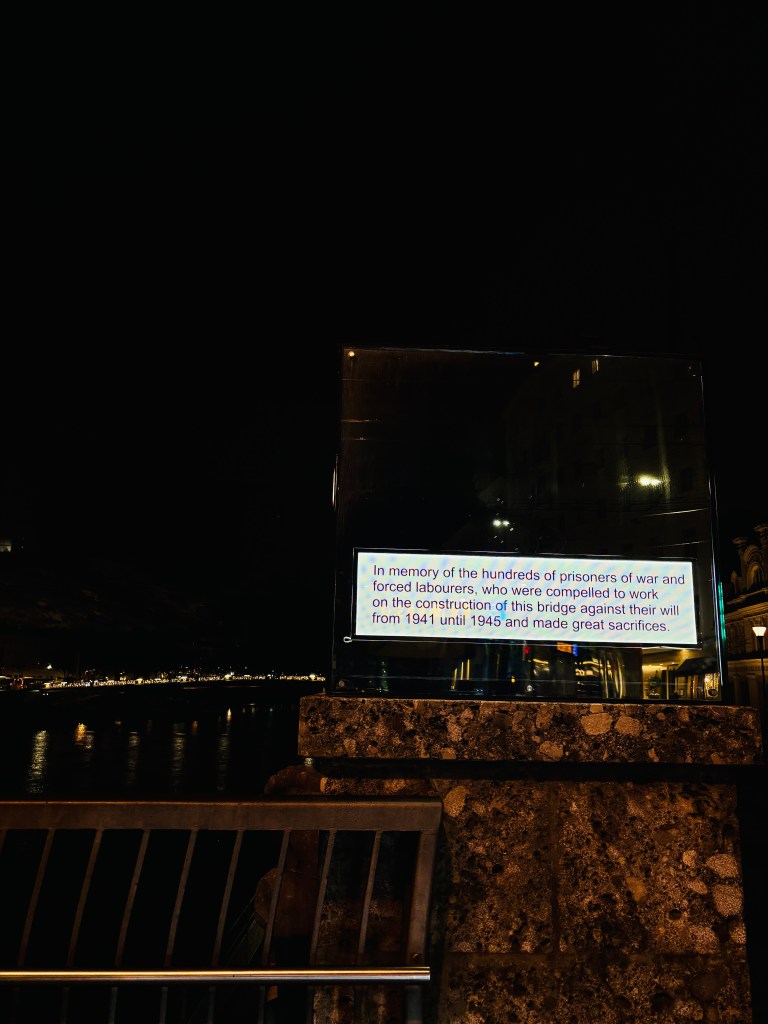
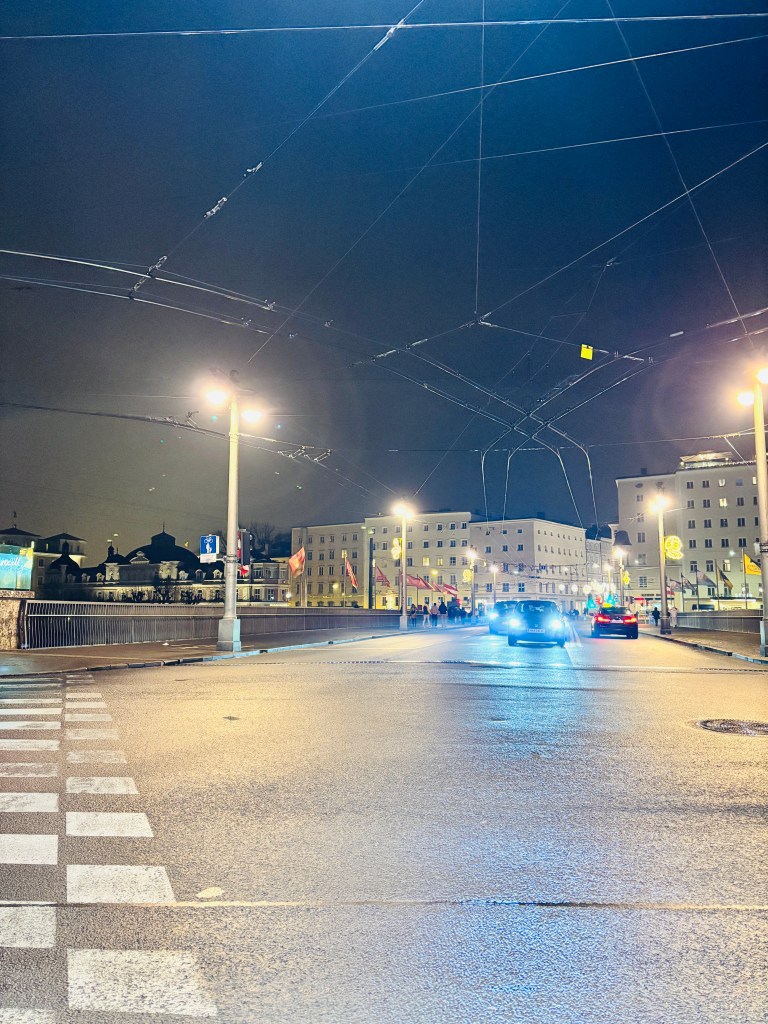
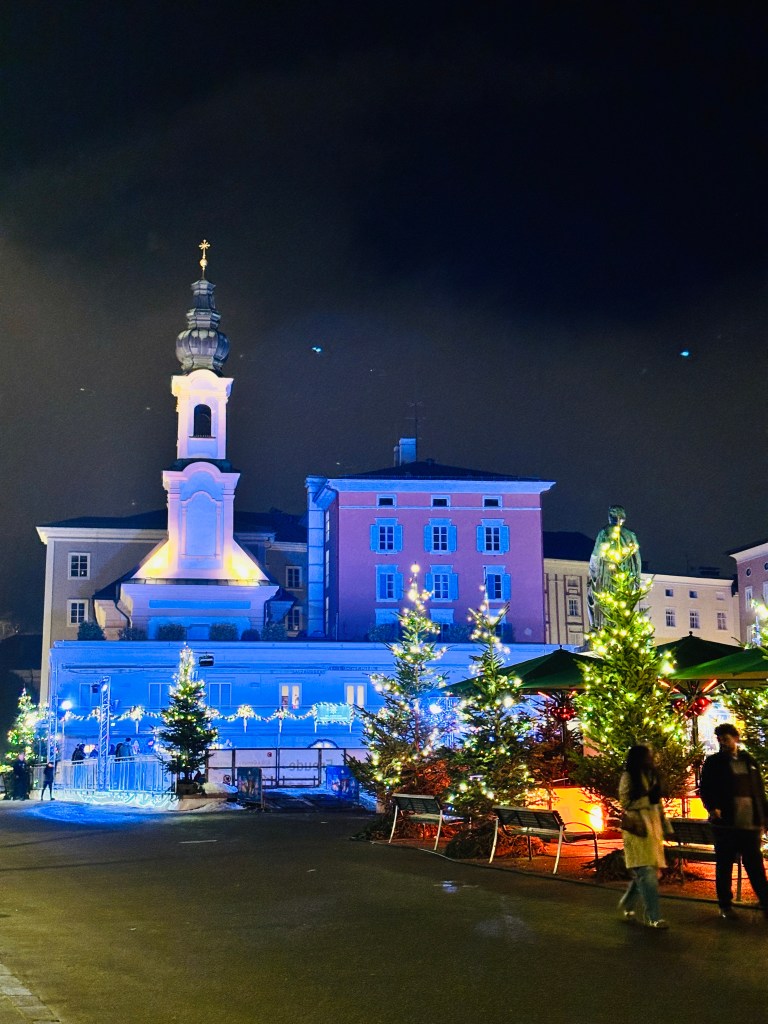
The cold had settled in more sharply by then. Crossing the river again, the city looked calmer. The bridges were lit, their reflections stretching faintly across the water, slightly broken by the movement of the current.
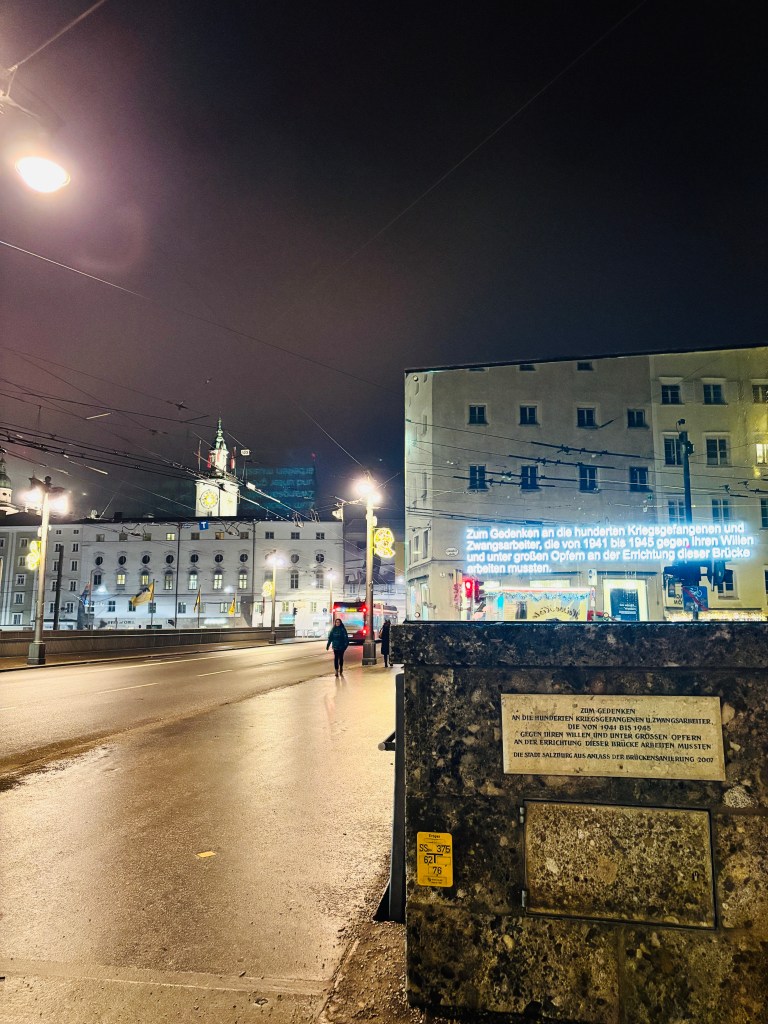
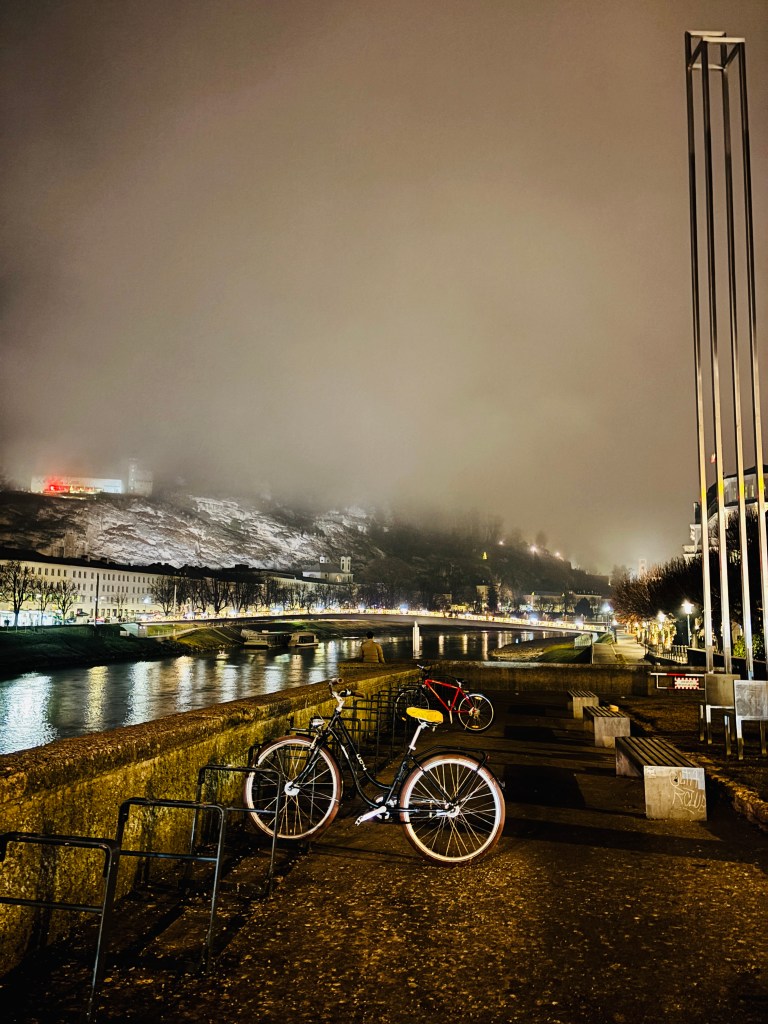
We didn’t talk much. Just walked, stopped for pictures, taking our time, letting the cold air and the quiet do their thing. And with that our second day at Salzburg had come to an end, and I was becoming more aware that our time in Austria had almost come to an end.
The Sound of Music Tour – Day 3
On the third day, we embarked on the Sound of Music tour. We had booked our tickets in advance on GetYourGuide. They’re also available on platforms like Klook and Viator. Or they can be bought at the Mirabellplatz ticket office, but you risk the chance of limited to zero availability.
Most tours in Salzburg are operated by companies like Panorama Tours, and the standard Original Sound of Music tour runs for about 4 hours, usually with departures around 9:15 am and 2:00 pm. Ours was the 9:15 am slot so we were already running out of breath early in the morning making sure we do not miss the bus!
The bus picks up passengers from Mirabellplatz, right next to Andräkirche, which by now felt like familiar ground. From there, the tour moves through the city and out into the surrounding countryside, covering the original filming locations from the 1965 movie – not just within Salzburg, but also beyond it, combining short stops, drive-through commentary, and a few longer halts where you can actually step out and take things in.
Drive Through Old Town and Nonnberg Abbey (Pass-by)
The journey starts next to Mirabell Gardens. As the bus moves out, the guide starts pointing out locations you might have already walked past – sometimes without realising their significance.
One of them is Nonnberg Abbey, the oldest convent in the German-speaking world, where the real Maria von Trapp was a novice.
You don’t necessarily stop here, but it anchors the story – this is where the real and cinematic timelines overlap.
Leopoldskron Palace (First Major Stop)
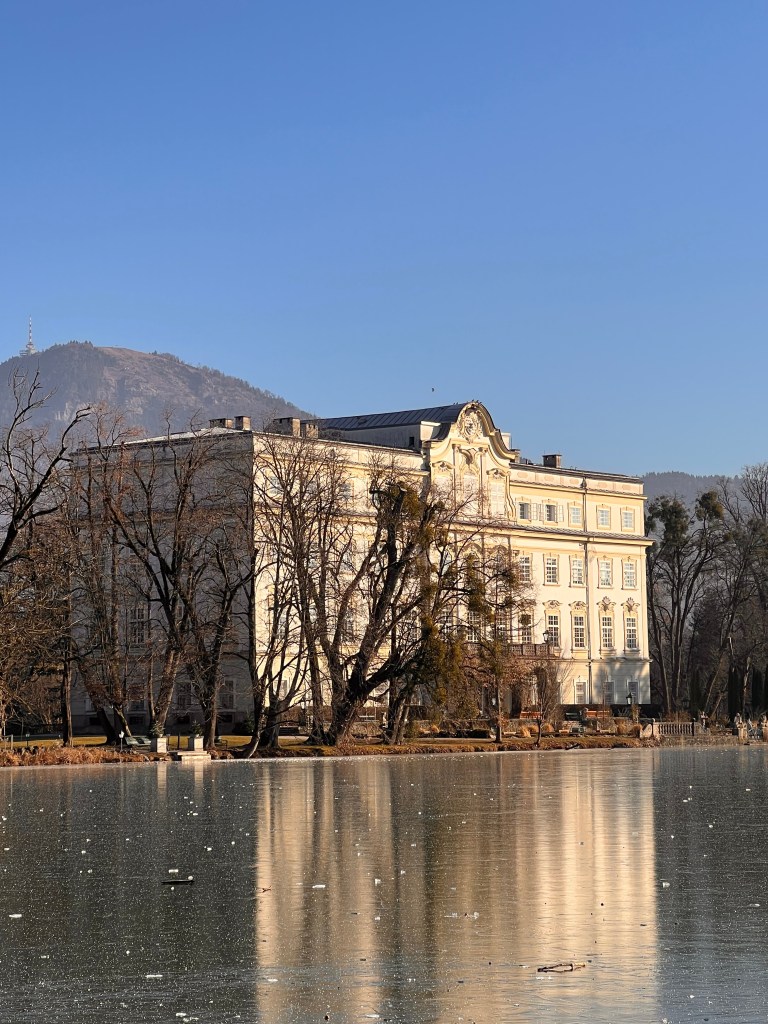
This is where things started to feel a bit cinematic. The bus stopped near Schloss Leopoldskron, a Rococo palace by a lake, used as the backside of the Von Trapp family home in the film. This is also where the famous boat scene was filmed – the one where Maria and the children fall into the water. We did not enter the palace (of course! as it’s now a hotel), but standing across the lake, the view is unmistakable.
Hellbrunn Palace & Gazebo (Second Stop)
From there, the tour moved to Hellbrunn Palace, where one of the most recognisable elements of the film now sits – the gazebo. Originally filmed at Leopoldskron, the gazebo was later relocated here, and this is where the “Sixteen Going on Seventeen” scene is associated. The tour guide, maybe in an attempt to be funny had people try to recreate scenes, even if only for a minute.
Drive into the Salzkammergut (The Scenic Stretch)
After that, the tour shifts tone. The bus leaves the city behind and heads into the Salzkammergut lake district, and this part isn’t about specific stops as much as the journey itself.
Lakes begin to appear — Fuschlsee, Wolfgangsee — with mountains rising close around them. These landscapes were used for many of the film’s wide scenic shots and opening visuals.
Sadly, there were no stops here, although that would have been appreciated as the lakes looked incredibly beautiful from the tiny window of the bus !
Mondsee — Basilica of St. Michael (Final Stop)
The final major stop is Mondsee, a small town about 30 km from Salzburg. This was the only place where we were left on our own to walk and explore and was worth it.
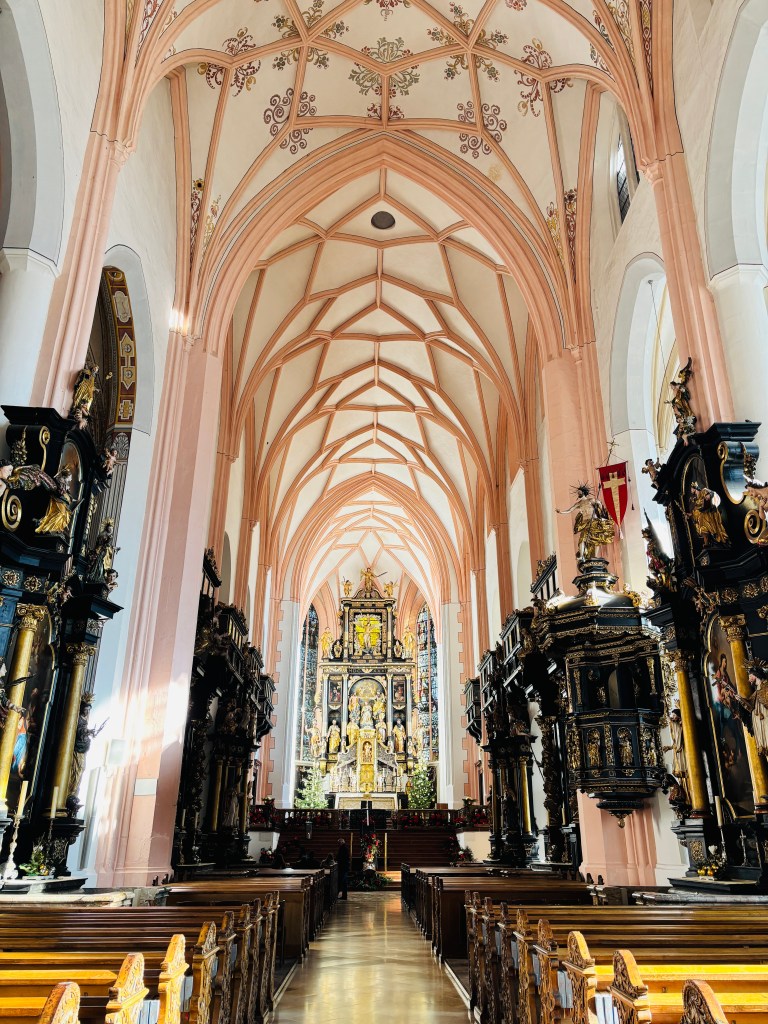
From the outside, the church is hard to miss. It has a Baroque façade, completed in the 18th century, with two symmetrical towers and a pale exterior that stands out against the darker tones of the surrounding buildings. The church itself, however, is much older in origin — the site dates back to a Benedictine monastery founded in 748 AD, making it one of the earliest monastic settlements in the region. Over time, the original structure evolved, and the current Baroque form largely comes from renovations carried out in the early 1700s.
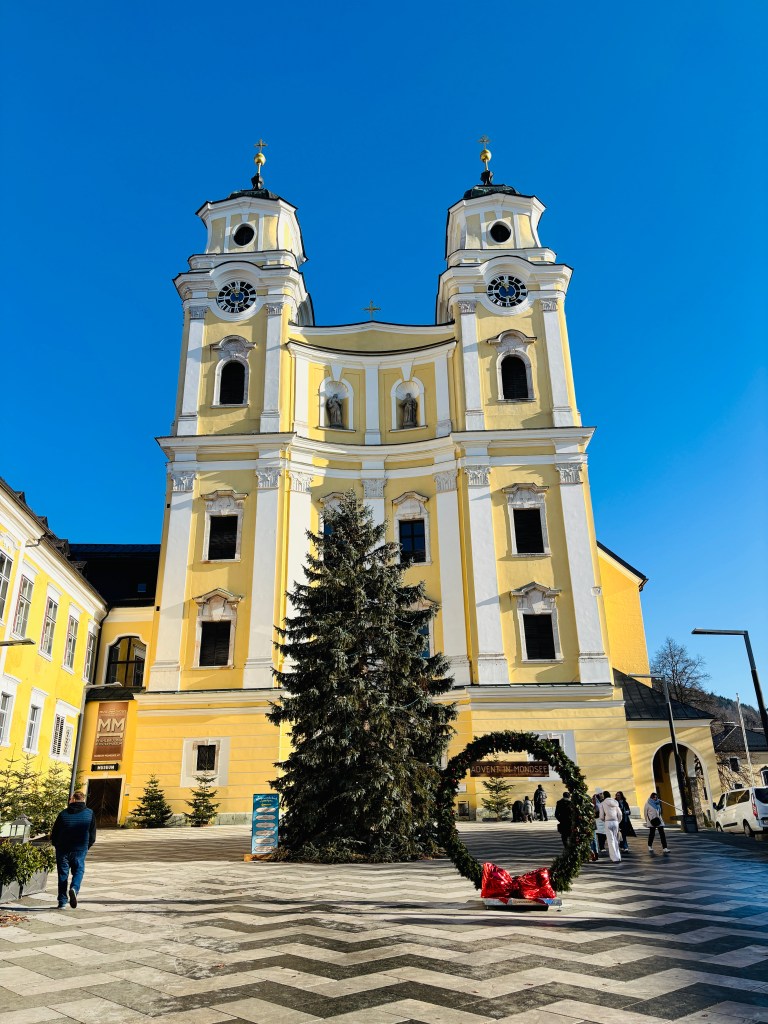
Step inside, and the scale becomes more apparent. The interiors are richly decorated in typical Austrian Baroque style – high vaulted ceilings, ornate stucco work, gilded altars, and layers of detail that draw your eyes upward and forward at the same time. The main altar, with its gold accents and dramatic composition, anchors the space, while side chapels and painted ceilings add to the sense of depth.
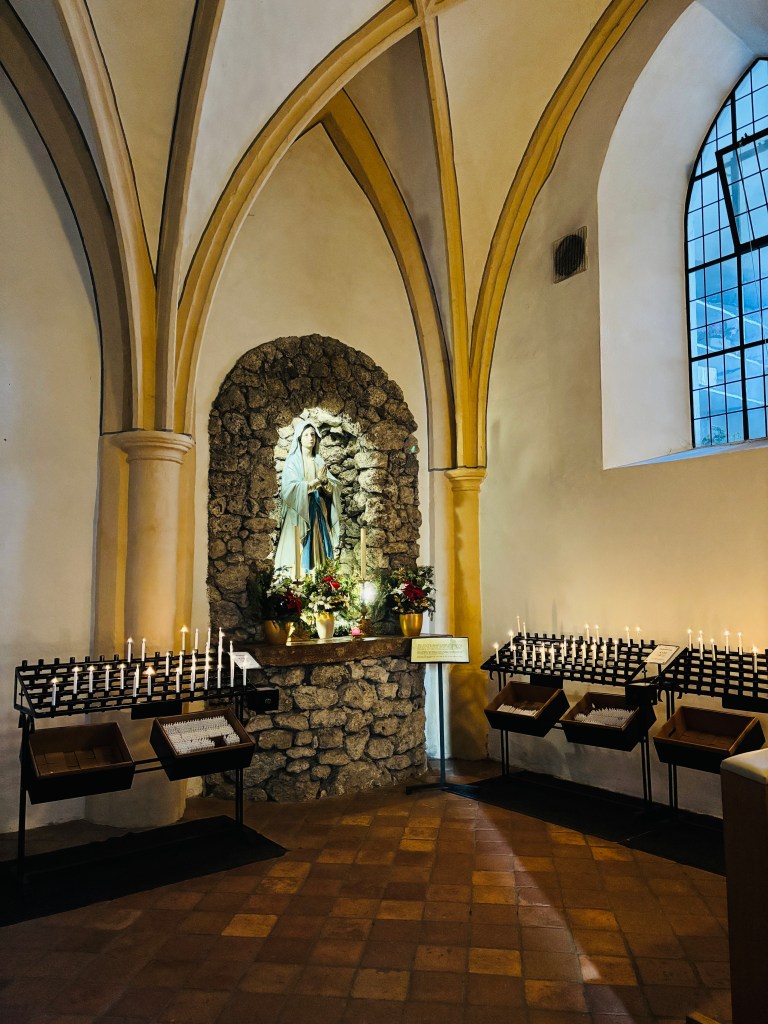
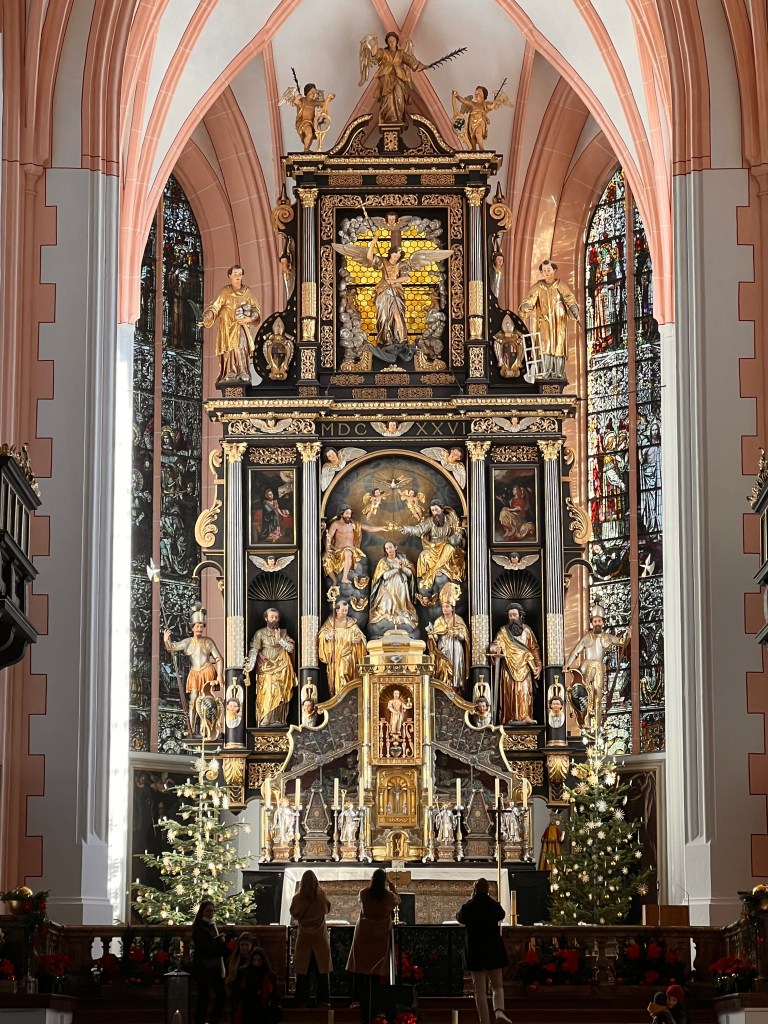
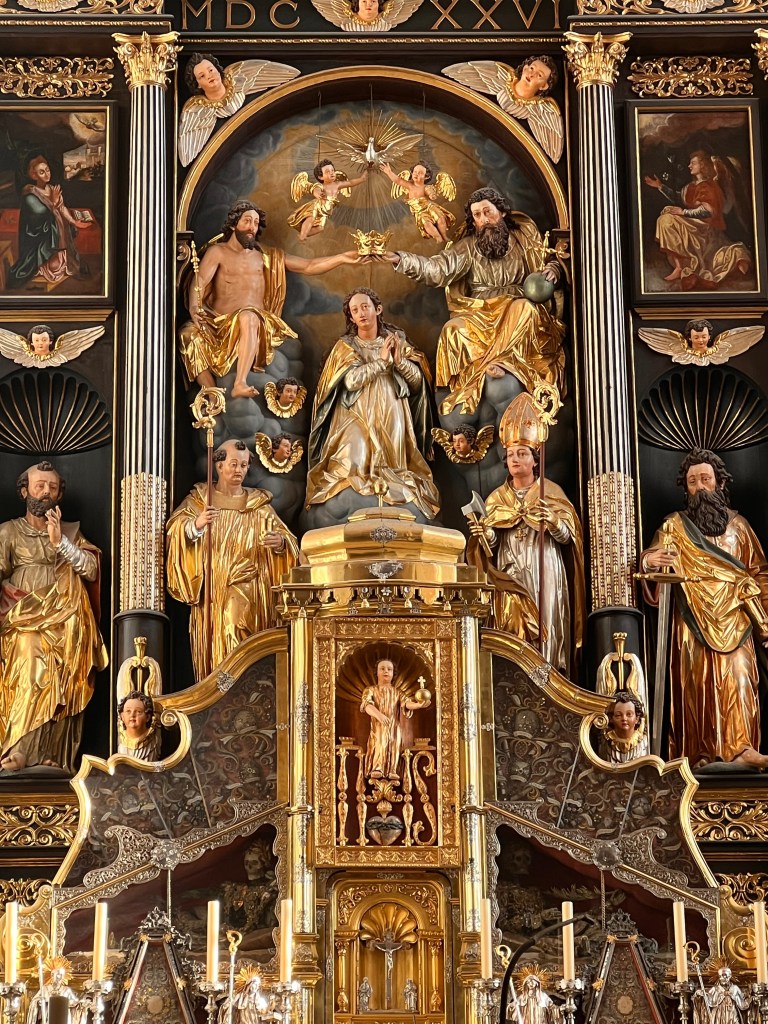
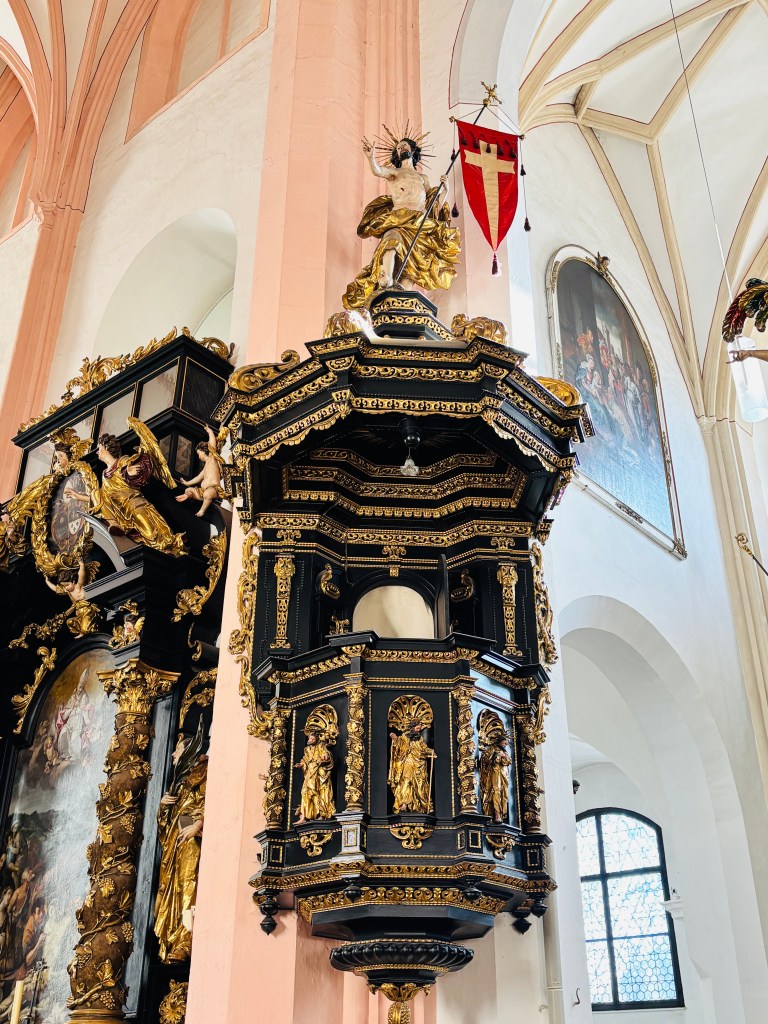
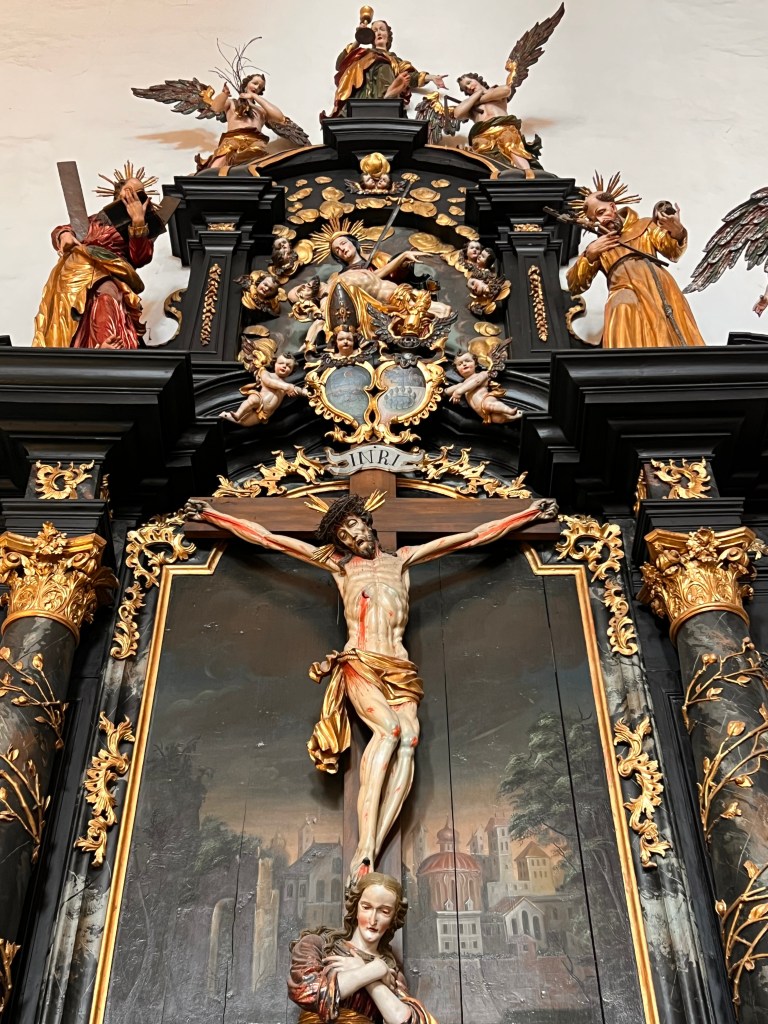
And then there’s its connection to The Sound of Music. This is where the wedding scene of Maria and Captain Von Trapp was filmed – one of the most recognisable moments in the movie. The long central aisle, the symmetry of the space, and the way the light falls from the entrance toward the altar all make sense once you’re standing there. It’s easy to see why this location was chosen — it carries a sense of occasion without feeling too large or impersonal.
Today, the basilica remains an active parish church and a key landmark in Mondsee.
Mirabelle Gardens – back to the start
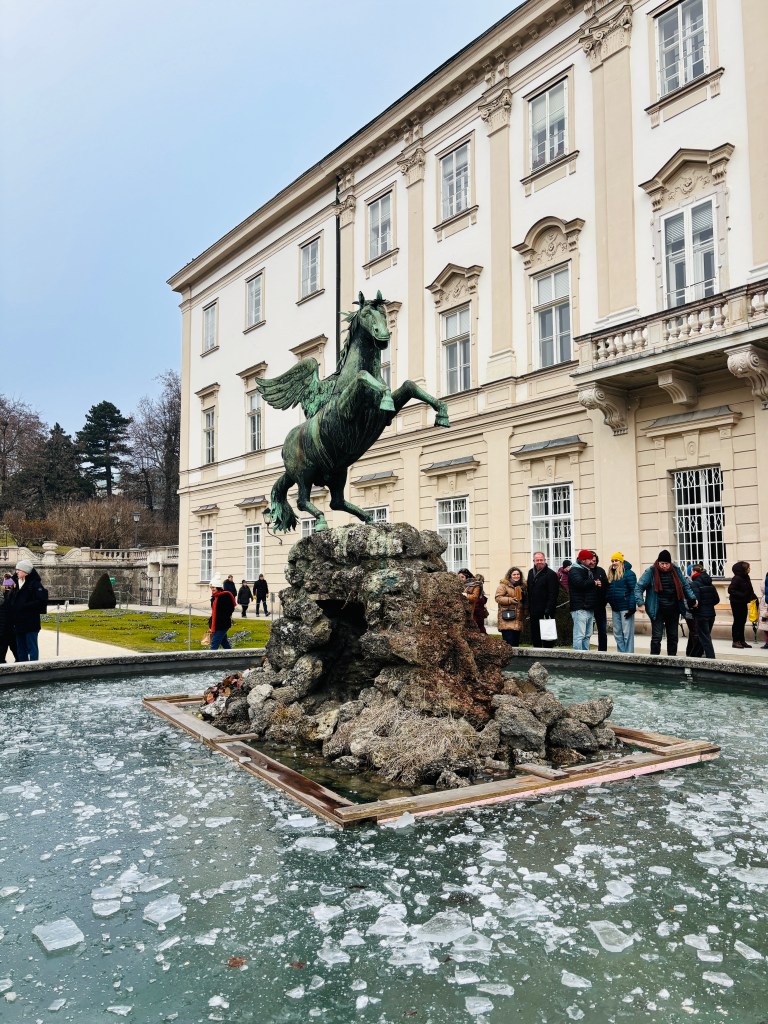
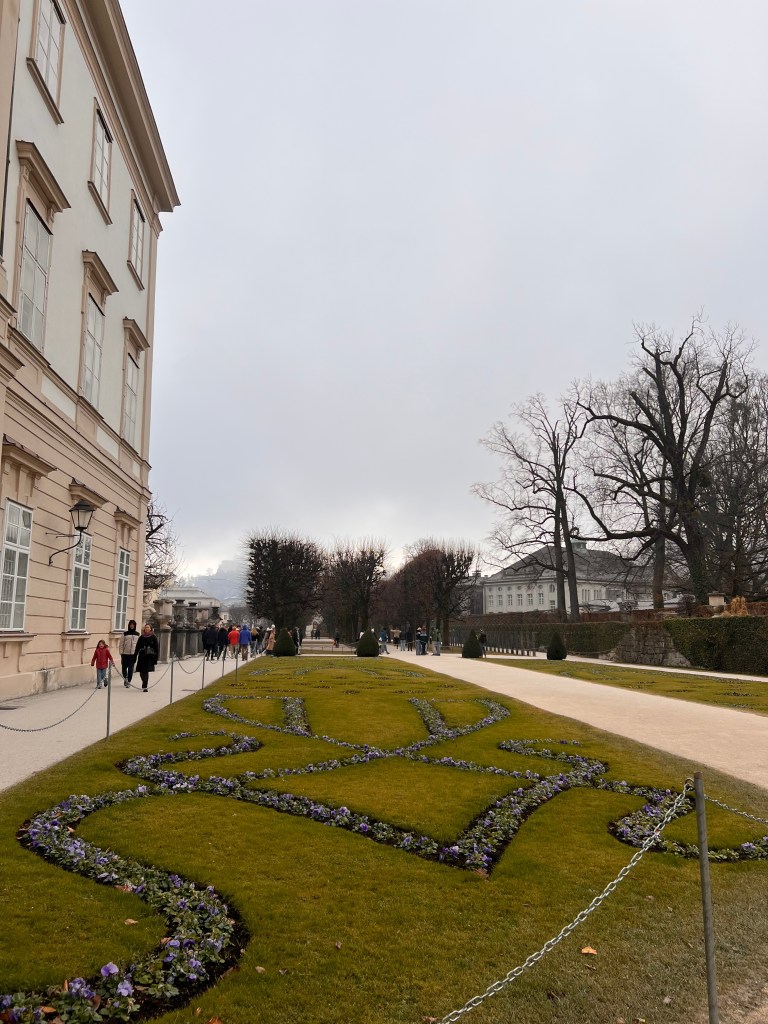
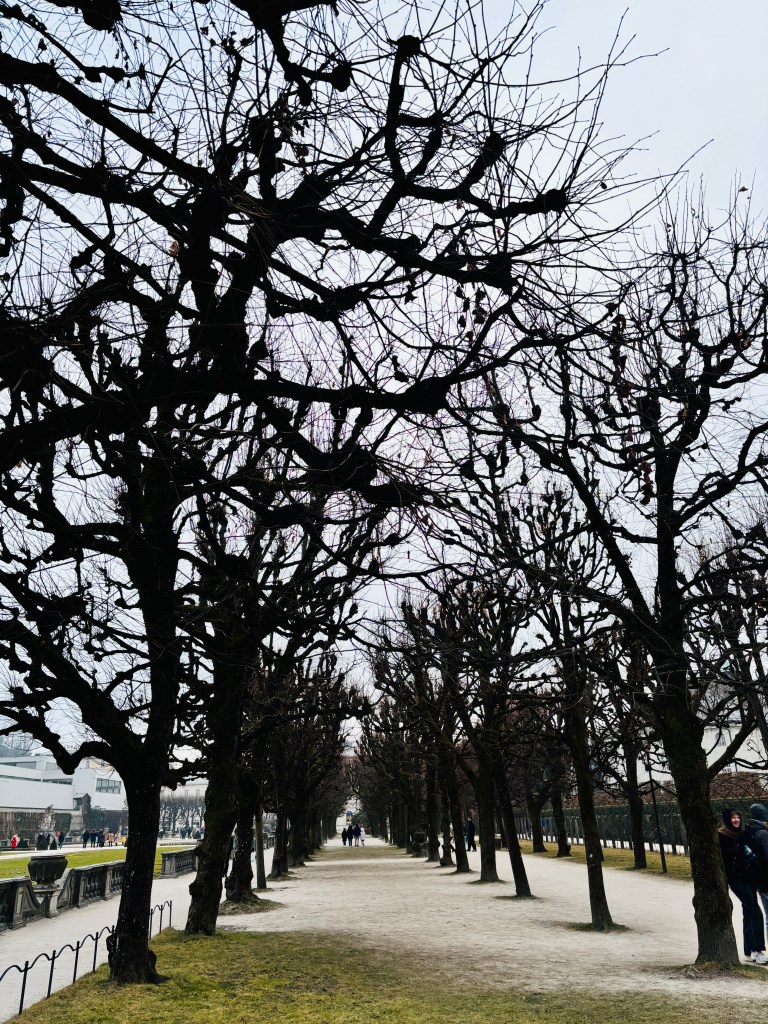
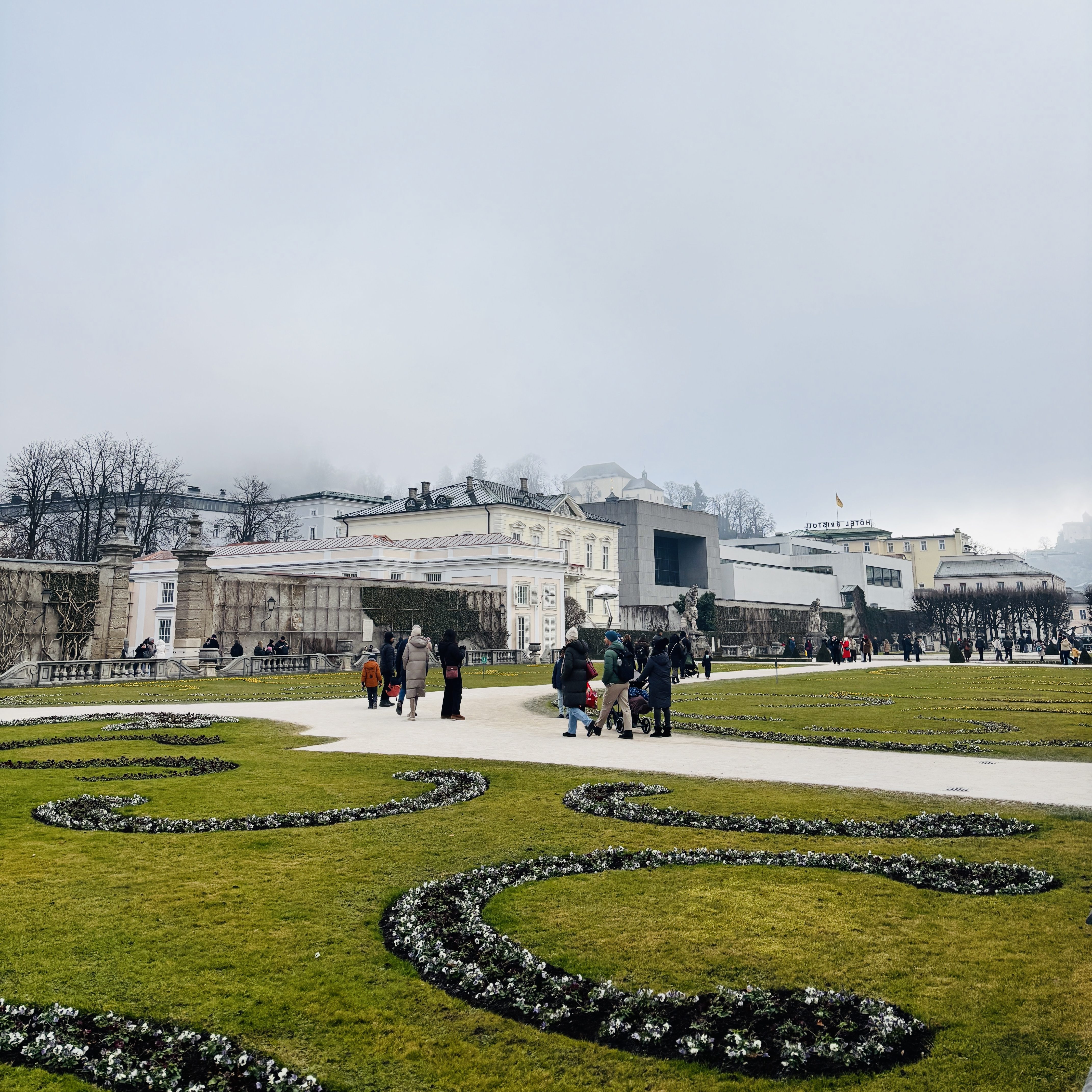
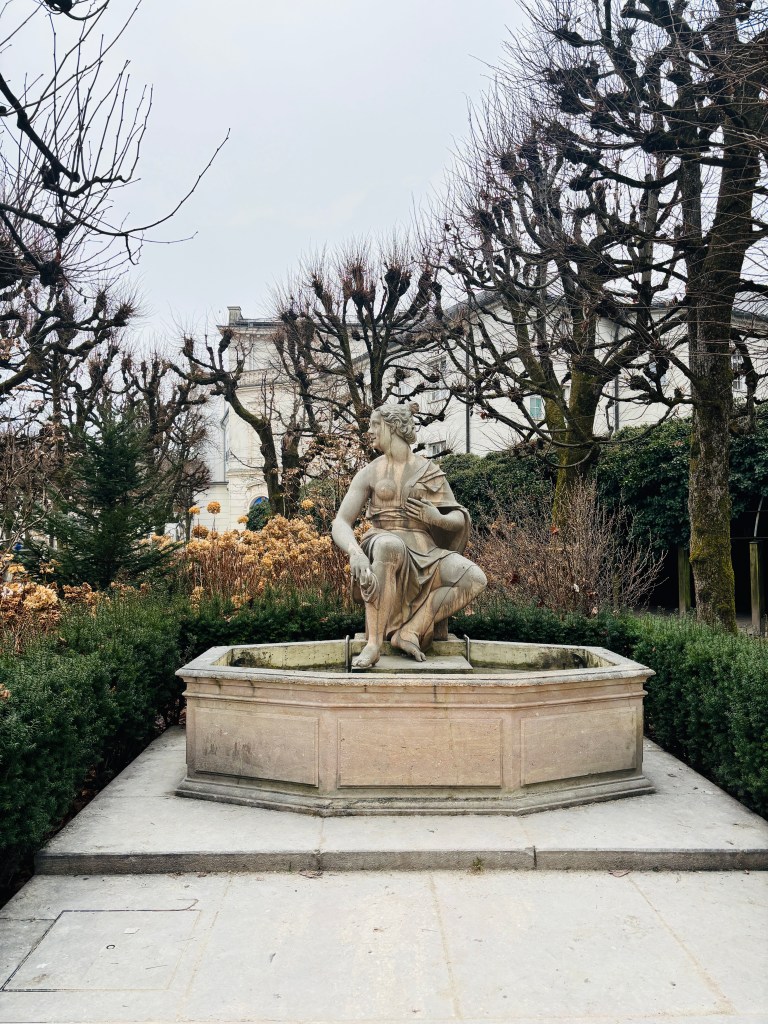
After Mondsee, the bus returns to Salzburg and back to the starting point. The Mirabell Gardens and Pegasus Fountain are where the Do-Re-Mi sequence was filmed – Maria and the children running around, singing across steps, statues, and pathways.
The tour review
And then, an honest bit. I had expected something slightly different from the tour.
Going in, I thought it would lean more toward the landscape – more time outdoors, more of the mountains and open spaces you associate with the film. The kind of views you imagine when you think of The Sound of Music. But the experience turned out to be more… contained.
A large part of it was spent on the bus – moving between stops, listening to the narration, and yes, occasionally singing along to the songs. Which, to be fair, is exactly what the tour is designed for.
But personally, I found myself wanting more of the place and less of the film.
There’s a lot of focus on how the movie was shot, what was filmed where, behind-the-scenes details, and while that’s great if you’re deeply into the film or looking for cinematography lessons, it didn’t quite land for me. I wasn’t really looking for a breakdown of scenes or production choices – that’s a different kind of interest altogether.
I think what I was hoping for was something more immersive in the setting itself – more time to just stand, look around, and take in the landscapes without being on a schedule or moving along to the next point.
And maybe that’s the distinction. If you’re a fan of the movie, the tour probably delivers exactly what you’d want. But if you’re going in for the scenery first and the film second, it can feel a little mismatched.
Not a bad experience – just not quite the one I had imagined.
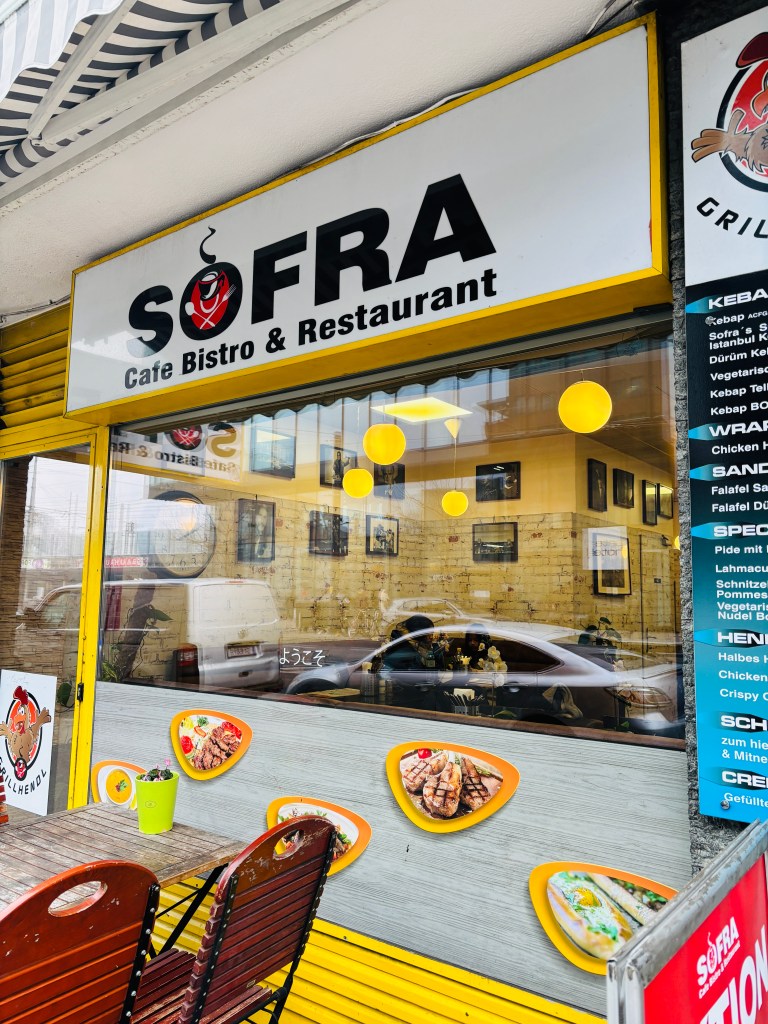
After the disappointment, my system needed food to revive 🤪 something warm, filling and uncomplicated ! We picked up takeaway from an Arabic restaurant near Salzburg station – think meat, rice, sauces – everything packed up quickly, no drama.
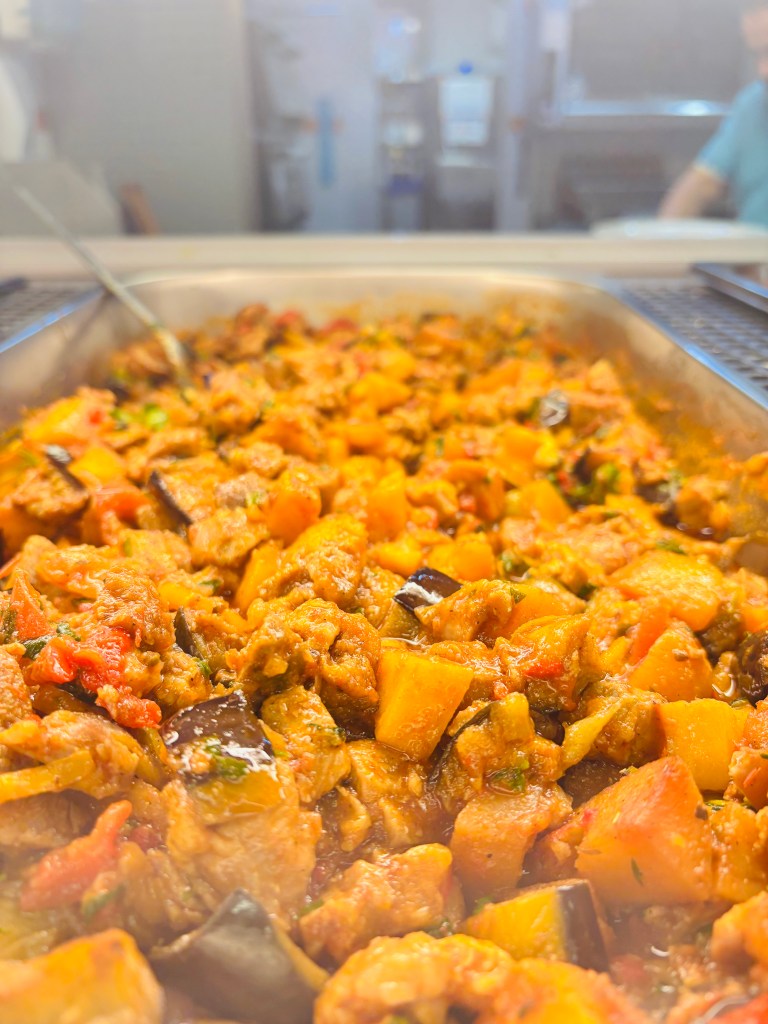
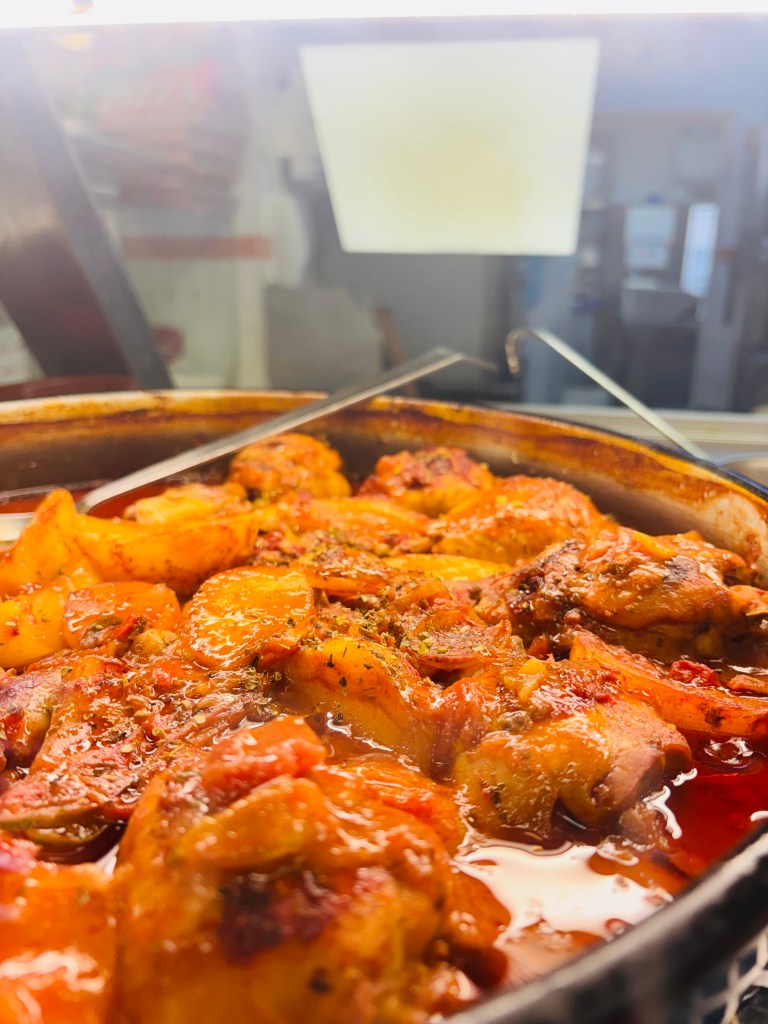
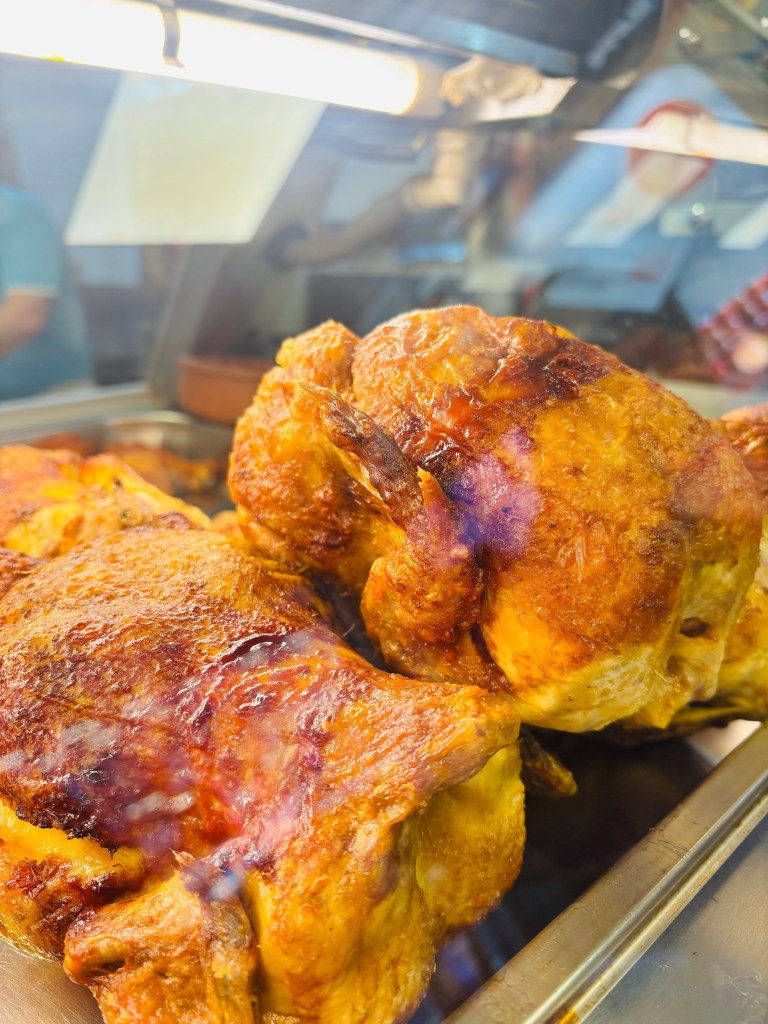
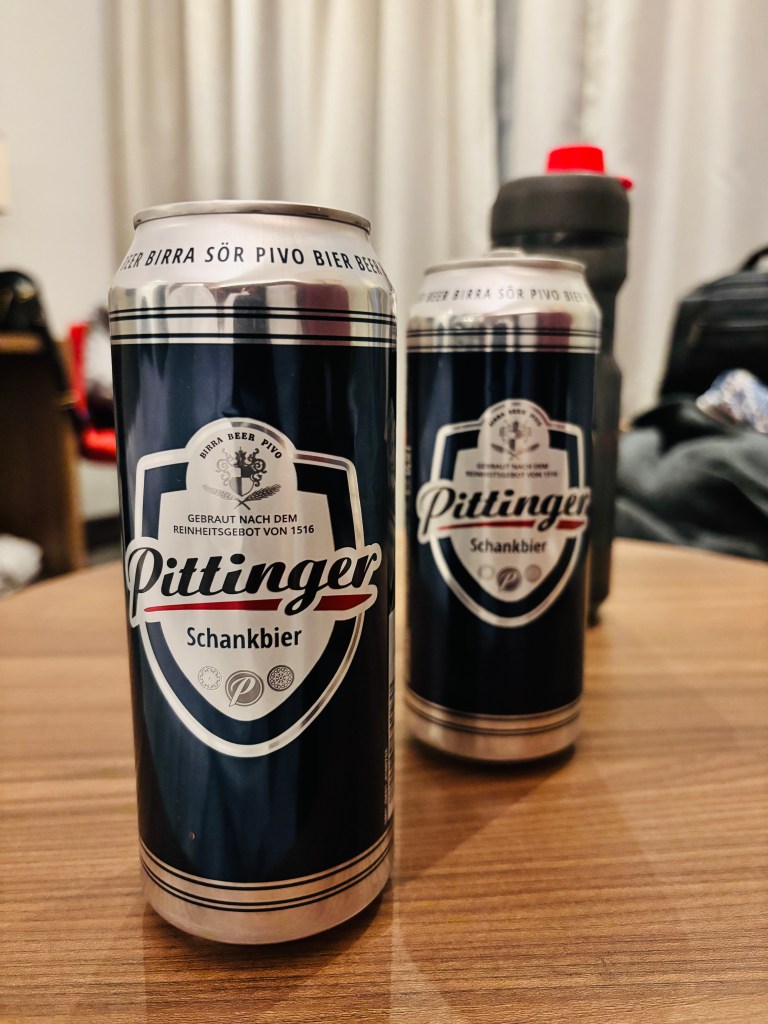
Back in the room, just sitting comfortably, opening boxes, eating and gulping beers straight from cans. After a long day – and honestly, a slightly underwhelming one – it felt perfect.
All roads lead to the Christmas market
The food and beer did their job a little too well. We knocked out for a bit – not planned, just one of those “lie down for a while” situations that turn into proper sleep. But it didn’t feel right to end our last evening in Salzburg, indoors and feeling groggy !
So we got up, layered back up, and stepped out again. Same route – almost like muscle memory at this point. All roads, quite literally, leading back to the Salzburg Christmas market.
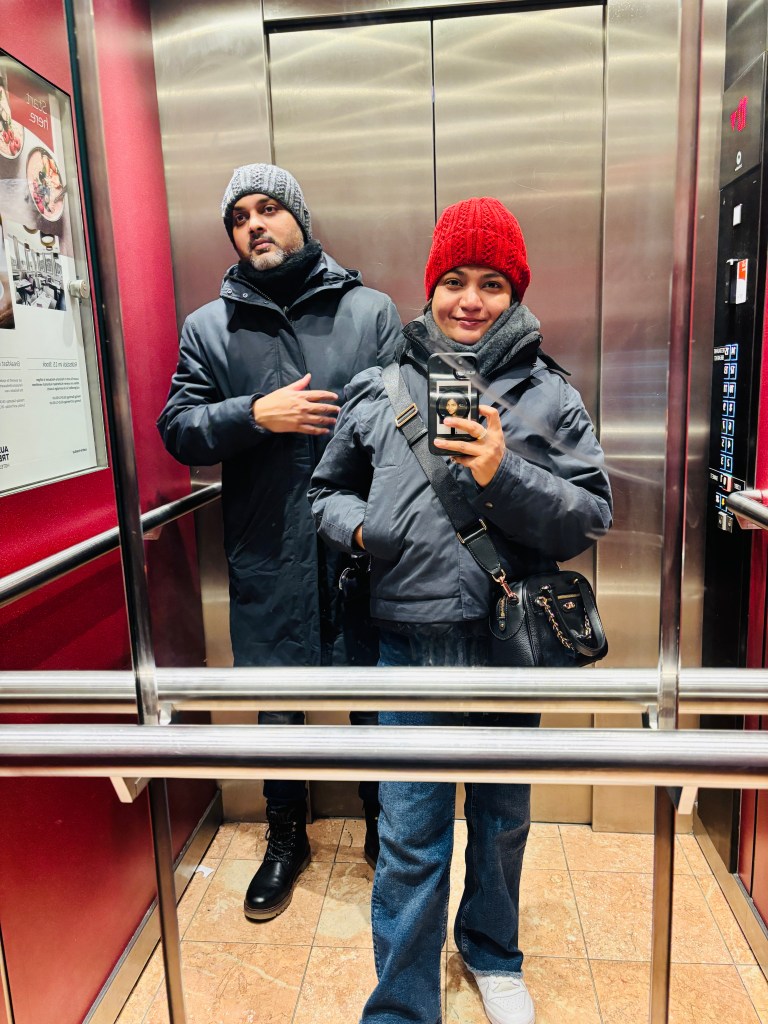
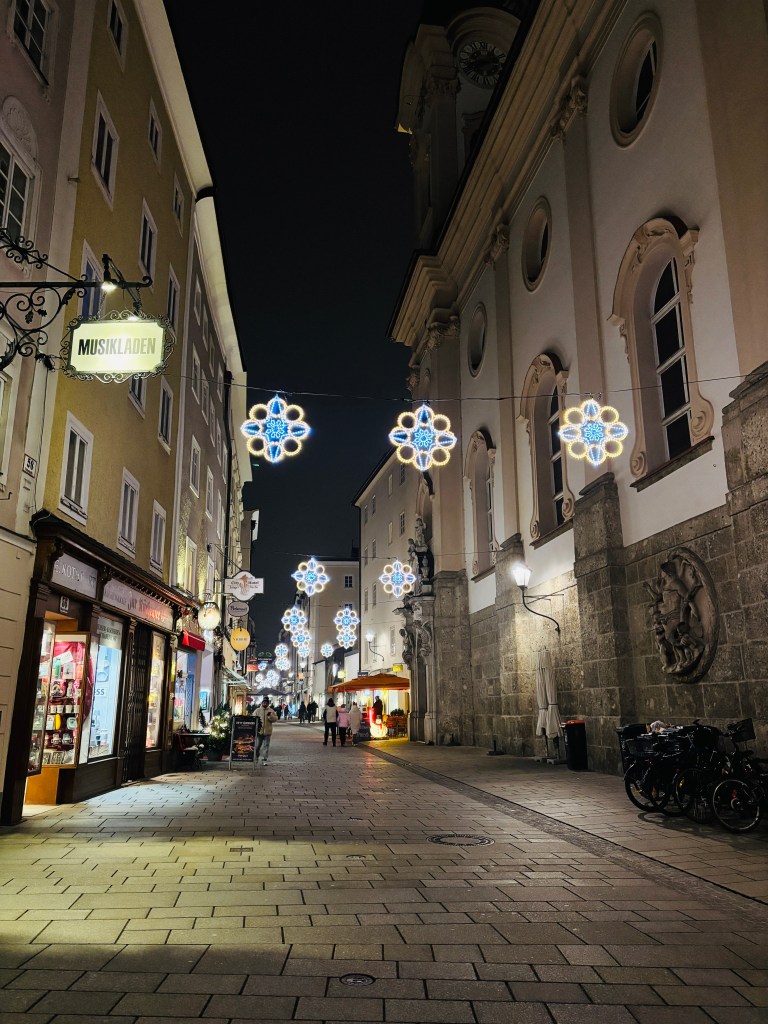
It was just about going back one last time – to see the lights again, to walk through the same squares, to just stand there without needing to do anything. The stalls, the glow, the crowd – familiar now, but still something we weren’t quite ready to leave behind.
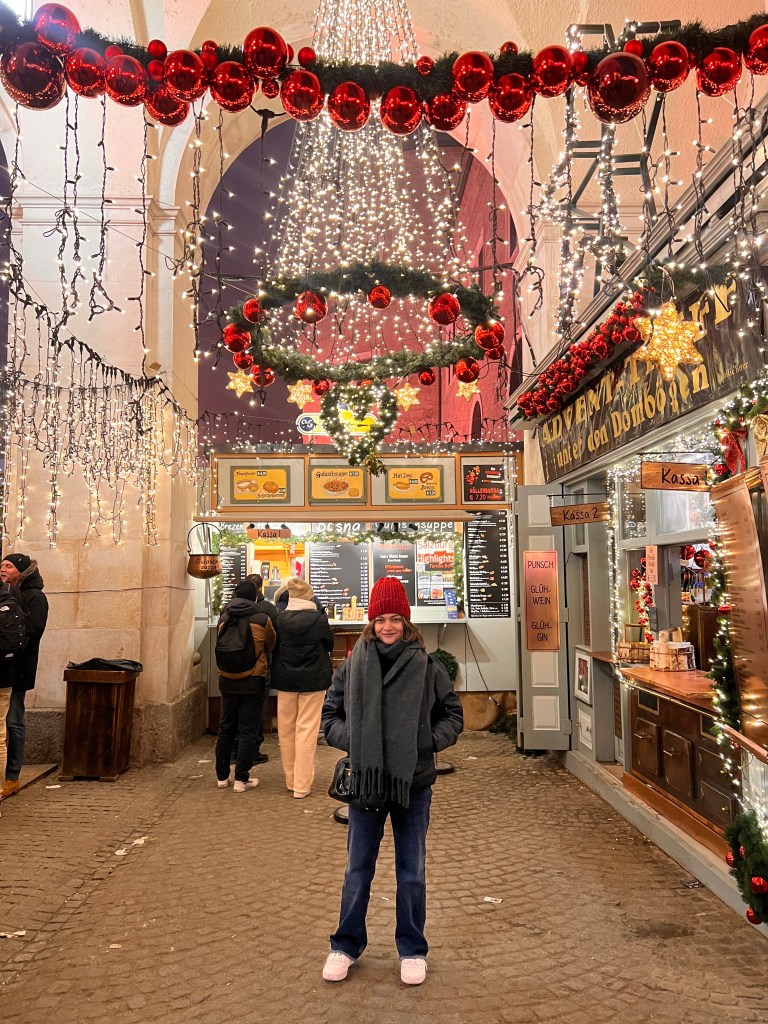
Even though we weren’t hungry, I found Kaiserschmarrn, and it had to be honoured. It’s funny how I had not seen it in the last several visits to the Christmas market, so yeah returning yet again filled that gap.
Kaiserschmarrn is a traditional Austrian dessert – shredded pancake, lightly caramelised, usually served warm topped with powdered sugar and fruit compote (or on the side). Simple on paper, but it lands differently in the cold. And paired with Glühwein, it just worked.
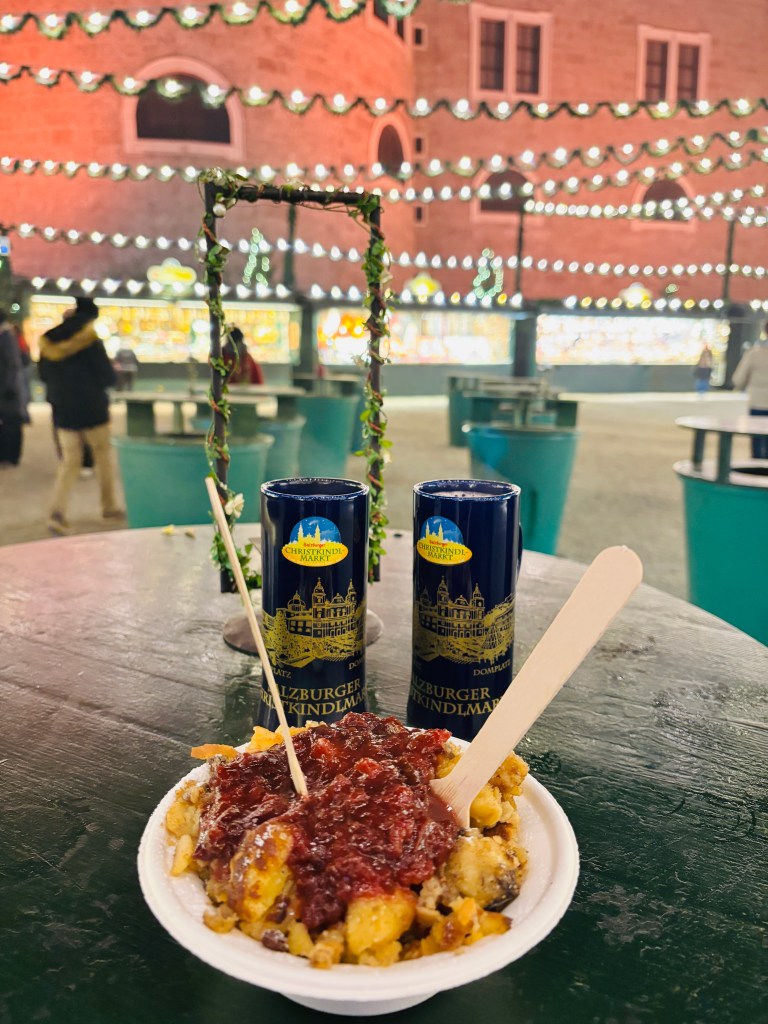
After this I felt like I had done justice to the one thing I love doing across my trips – eating local, properly, without overthinking it. We stood there for a bit, finishing it slowly, listening to the music till the shops started closing and we were quite literally forced to leave !
And that was it — the last of Salzburg.
Parting Notes – Salzburg – Day 4
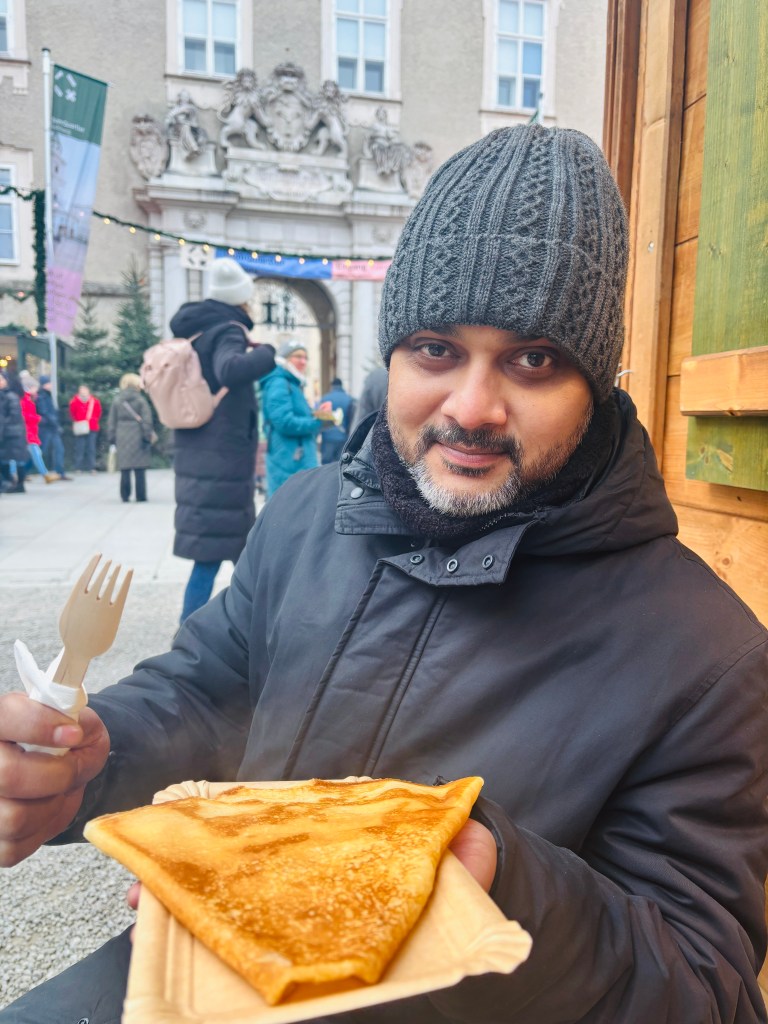
The next morning, we packed up, grabbed some burgers and crêpes for a late breakfast, and made our way to the station. Bags a little heavier, pace a little slower, but with that quiet sense of having done enough. Not everything went exactly as expected. Some parts stood out more than others, and a few didn’t quite land the way we had imagined. But that didn’t take away from the experience — it just made it more real.
As we walked into the station, I turned in the direction of the road leading to Alstatdt – a last glance. The one we’d been frequenting twice over the last 3 days, the one which had started as mere directions but become almost routine, the one I still hoped to return to some day.
After all, the fortress still stood there, at a distance, waiting for me. And there were so many smaller details we had simply walked past or left for “later”.
But at that moment, we turned away, stepped into the station, and moved on – because the journey wasn’t done yet. Another country, another leg, already waiting.
And just like that, Salzburg slipped into memory.
Discover more from thatbrowngirlinblackboots
Subscribe to get the latest posts sent to your email.

