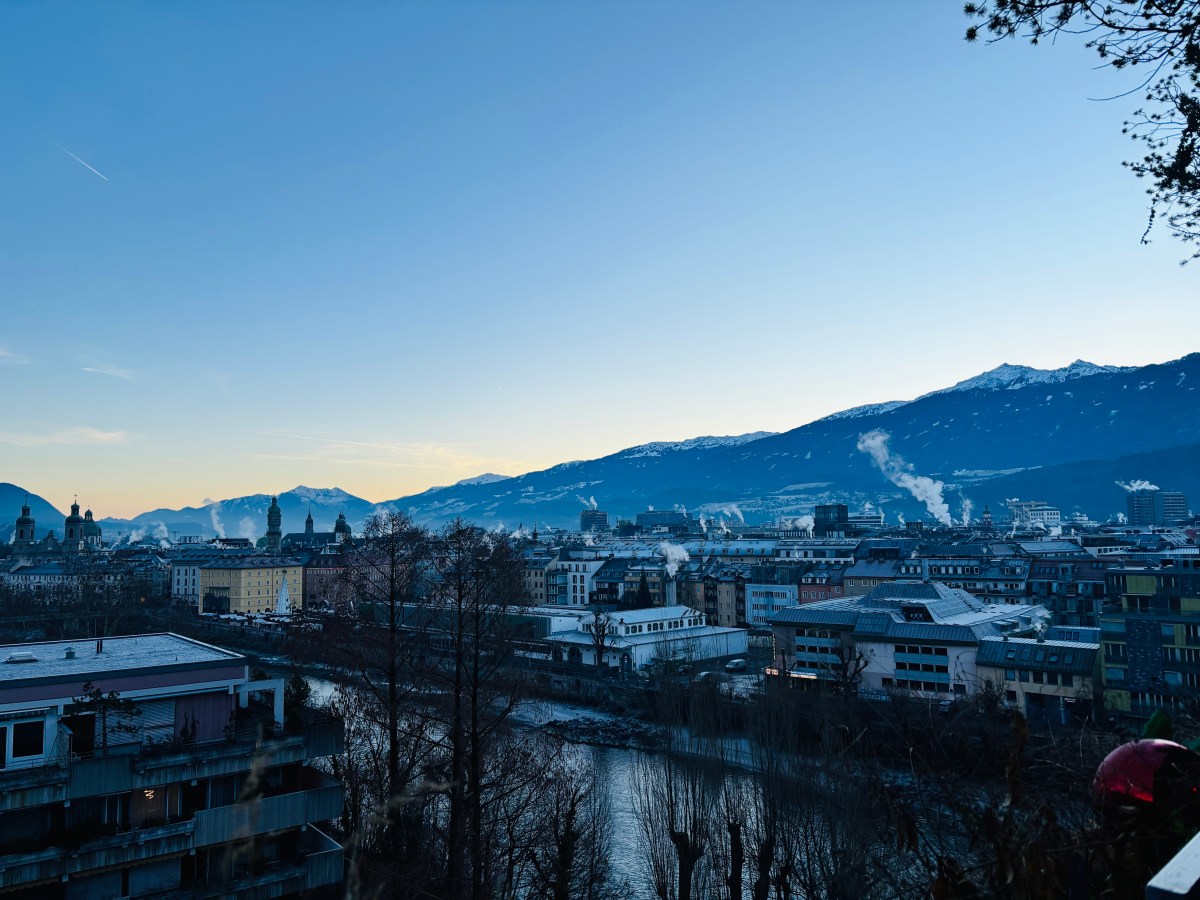
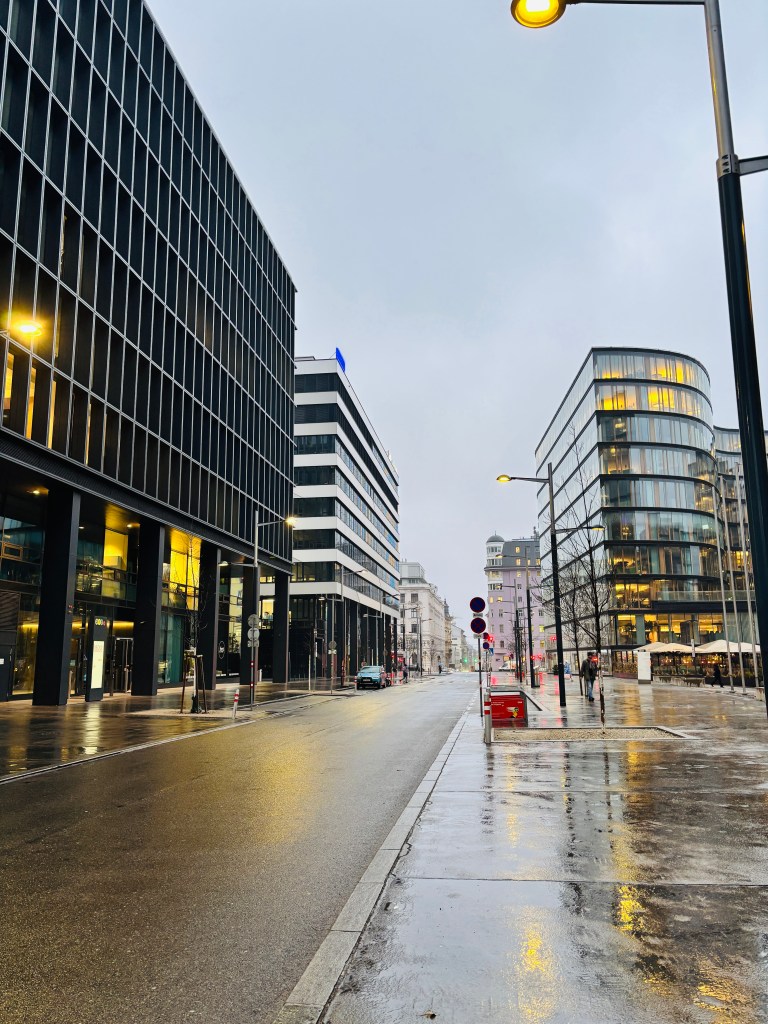
Innsbruck was the second city on our Austria travel itinerary for our December 2025 vacation. We left a rainy Vienna, early in the morning, boarding a train that would take us across the country to Innsbruck. You can read about our very short stay in Vienna in this post.
The train journey from Vienna to Innsbruck is ~5 hours and very scenic. Imagine a moving gallery of Austria’s landscapes. It transitions from eastern plains to the views of the majestic Alps (particularly between Salzburg and Innsbruck), river valleys, lakes, and settlements.
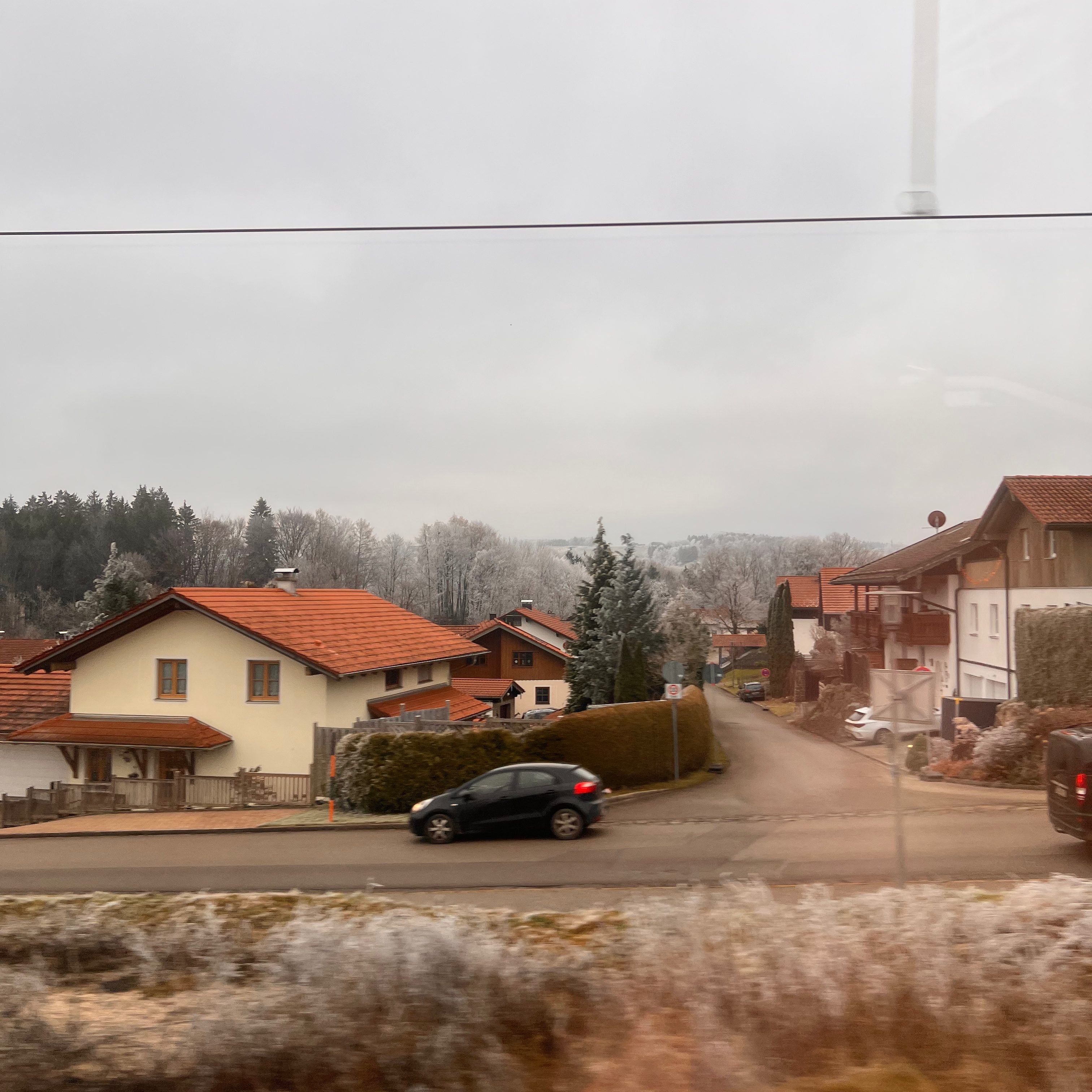
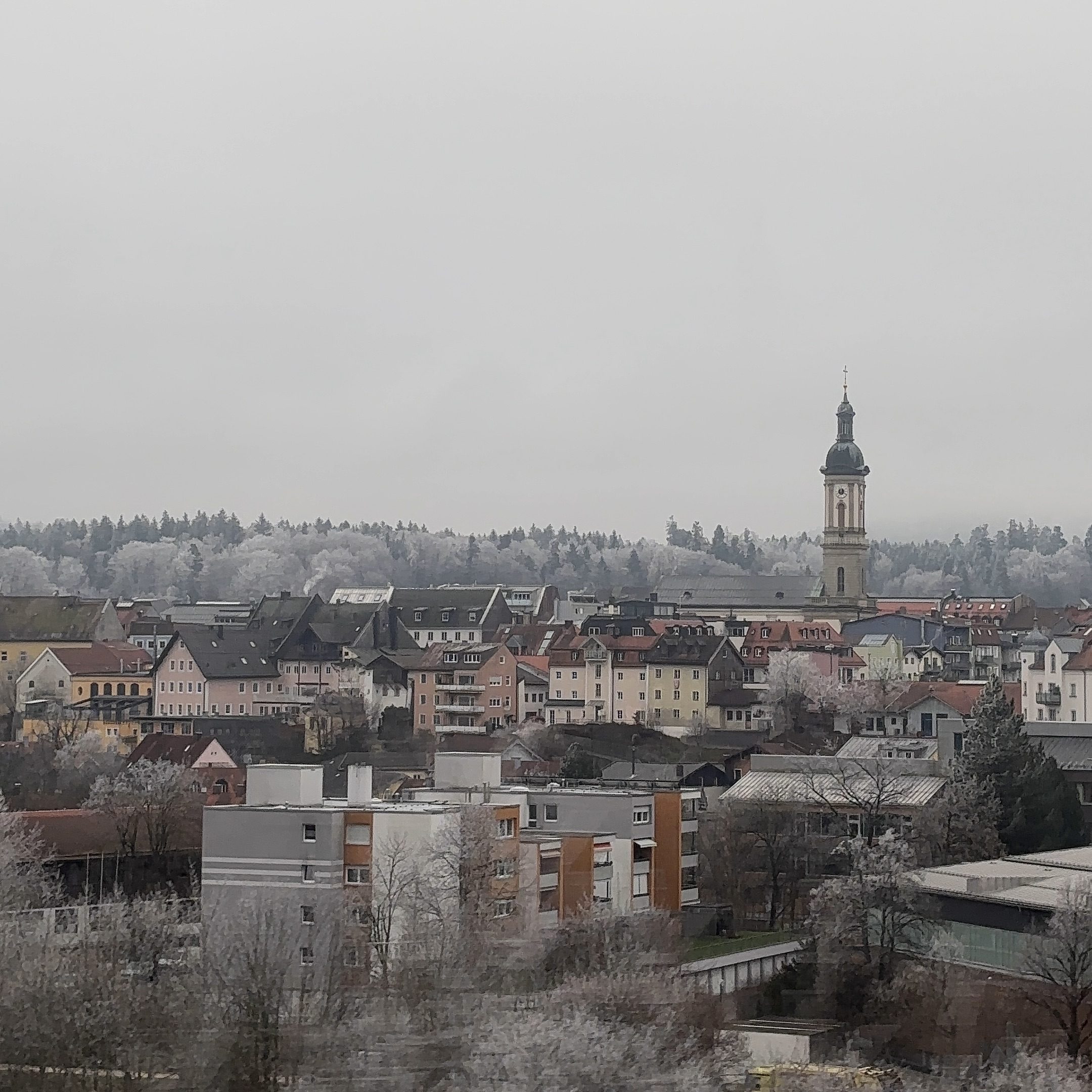
After hours of us staying seated in the same place, while the world outside kept shifting – cities dissolving into fields, fields into forests, and forests into mountains – Innsbruck arrived. Just a small, neat town tucked between towering peaks.
We dropped our bags at our AirBnB, thawed out, and did absolutely nothing for a bit. And then, because it was the last day of the Innsbruck Christmas market, we headed straight out again.
The Marktplatz (Market Square) Christmas market
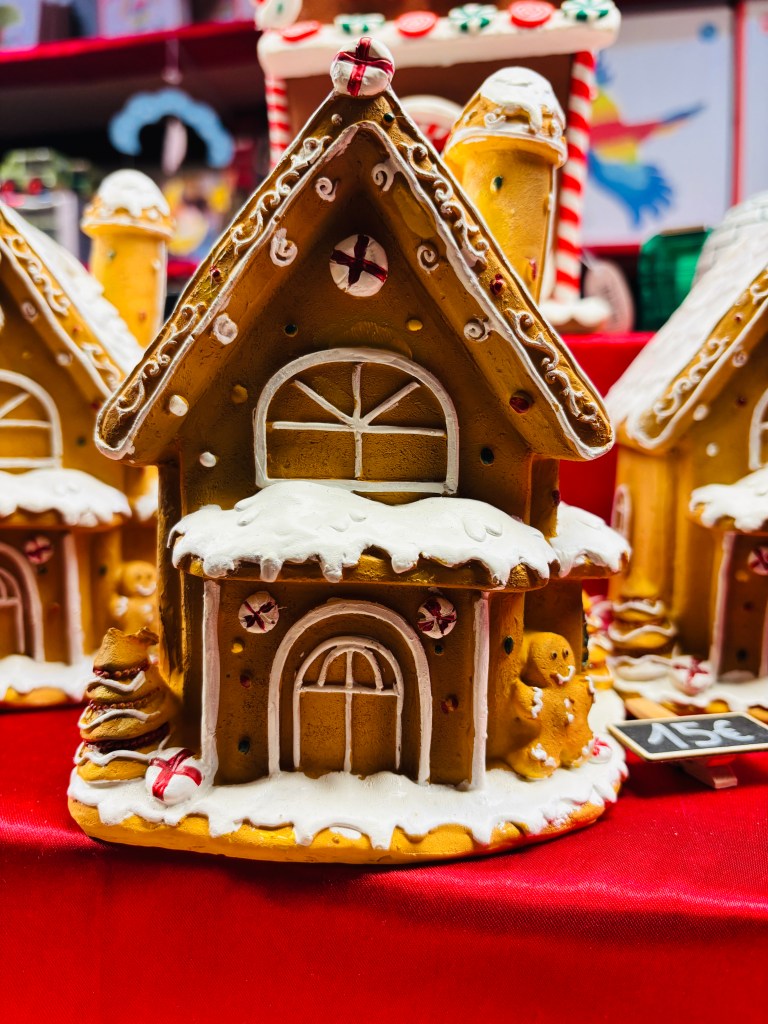
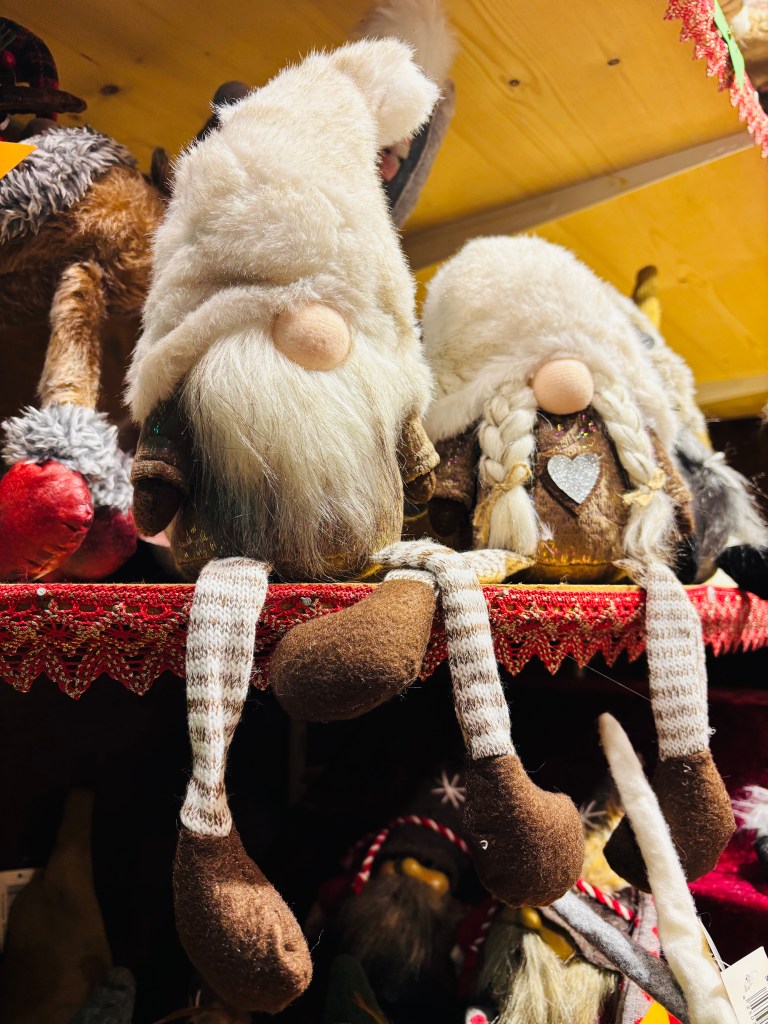
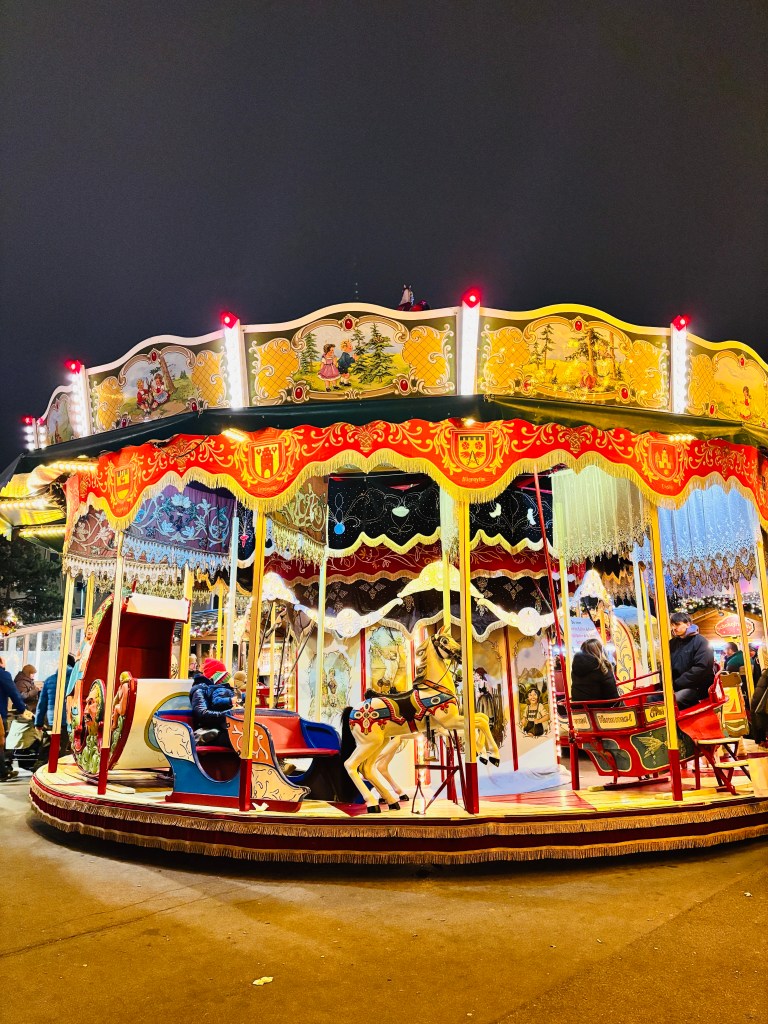
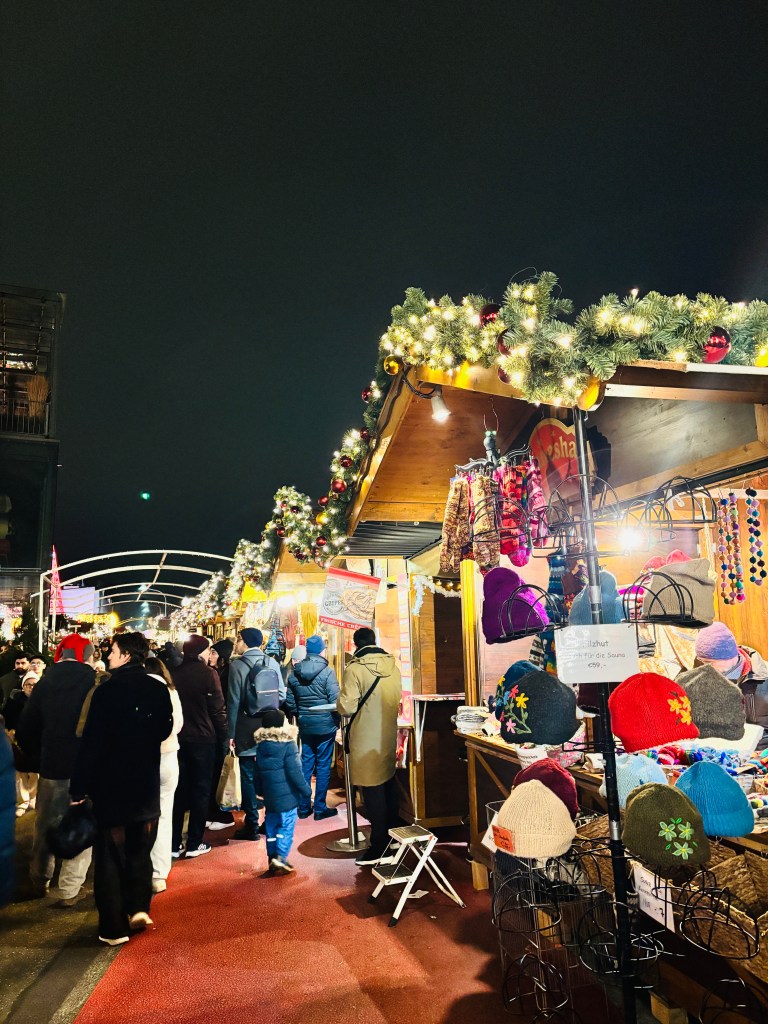
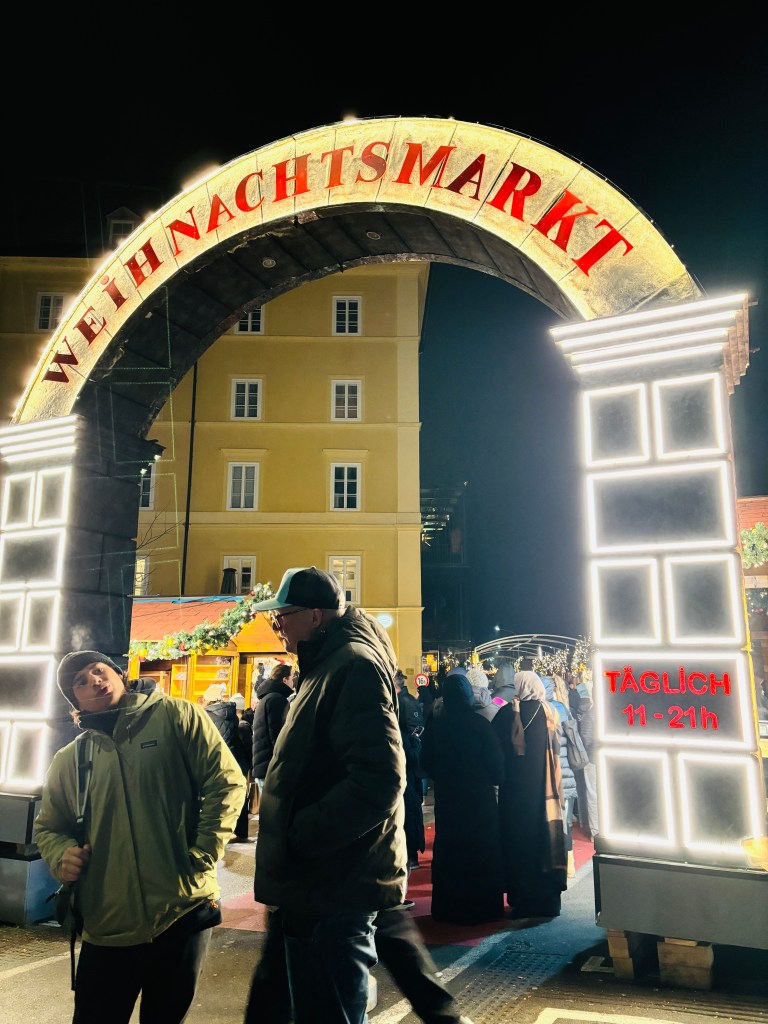
The Innsbruck Christmas market by the Inn River felt completely different from that of Vienna. Smaller, more intimate, more local. It was actually visible from our AirBnB, glowing softly along the riverbank, with the mountains rising behind it like a painted backdrop.
It was the last night of the season and packed to the brim – people making the best out of the last few hours. The stalls selling handmade crafts, woollens, ornaments, and food that “looked” more rustic than fancy, and local. Unfortunately, there wasn’t scope for us to eat or drink anything for what was planned after, but glad we at least experienced the vibe, if only for a bit.
The swarovski christmas tree
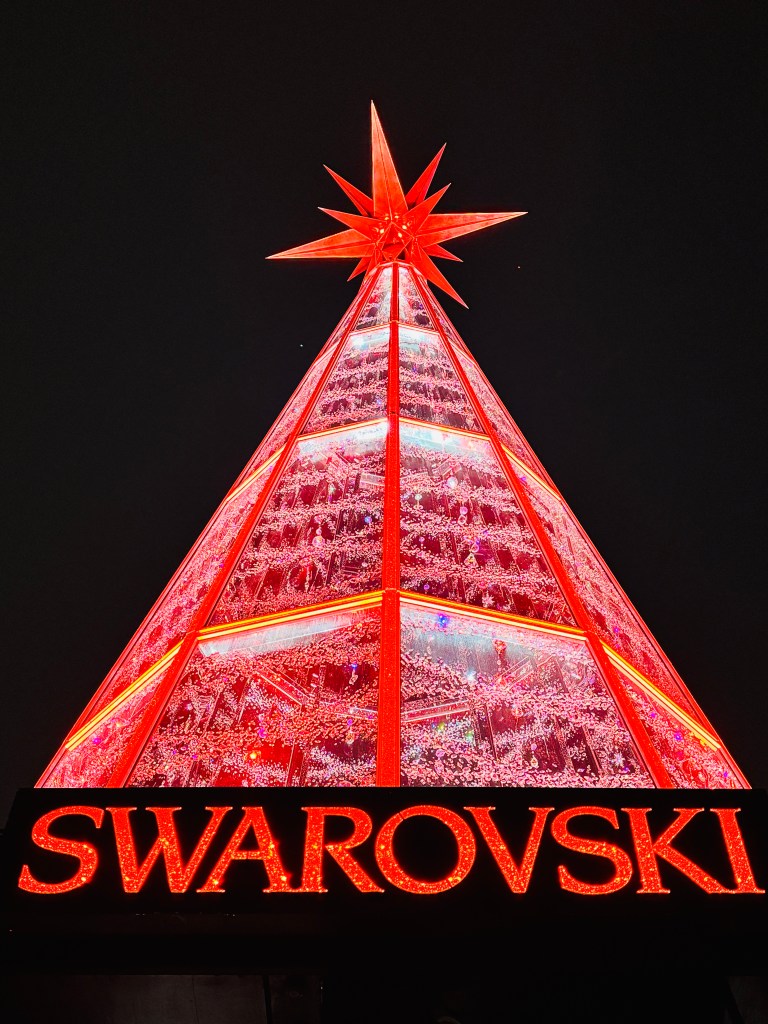
The centrepiece was the Swarovski Crystal Christmas tree – a towering, shimmering installation made entirely of crystals, catching and scattering light from every angle. It felt surreal – this ultra-glam object standing against the most natural, Alpine setting possible. Nothing like anything we’d ever seen before, definitely not a Christmas tree! I paused in front of it not realising I had stopped walking, no idea what I was looking at, the phone coming out almost instinctively.
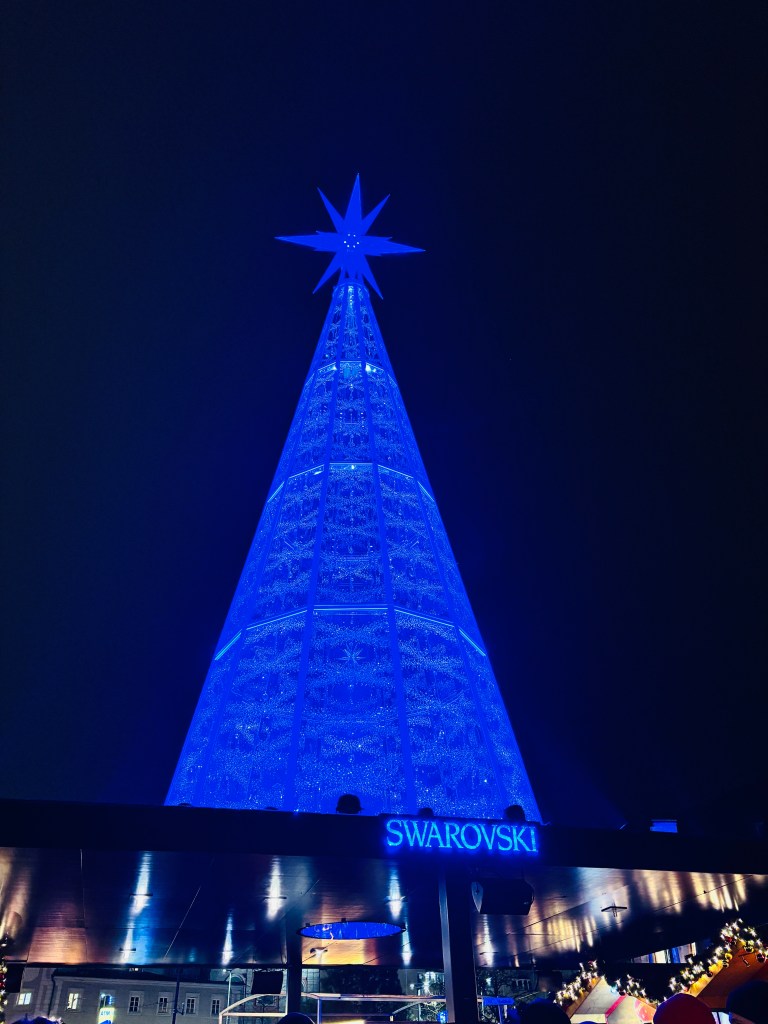
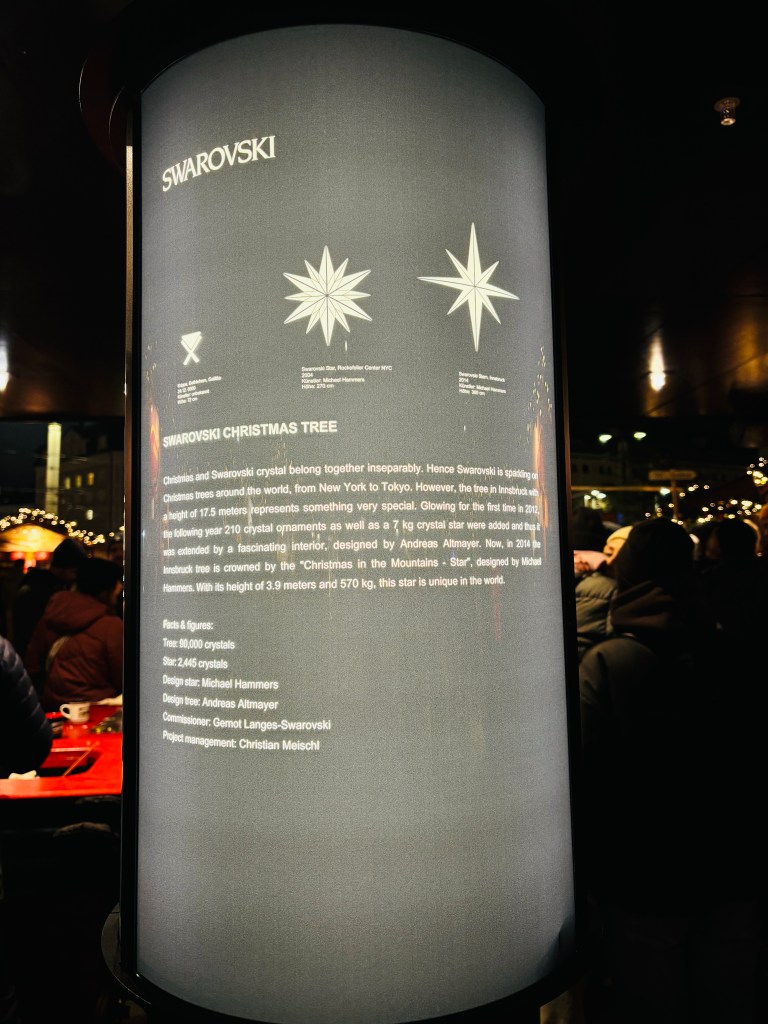
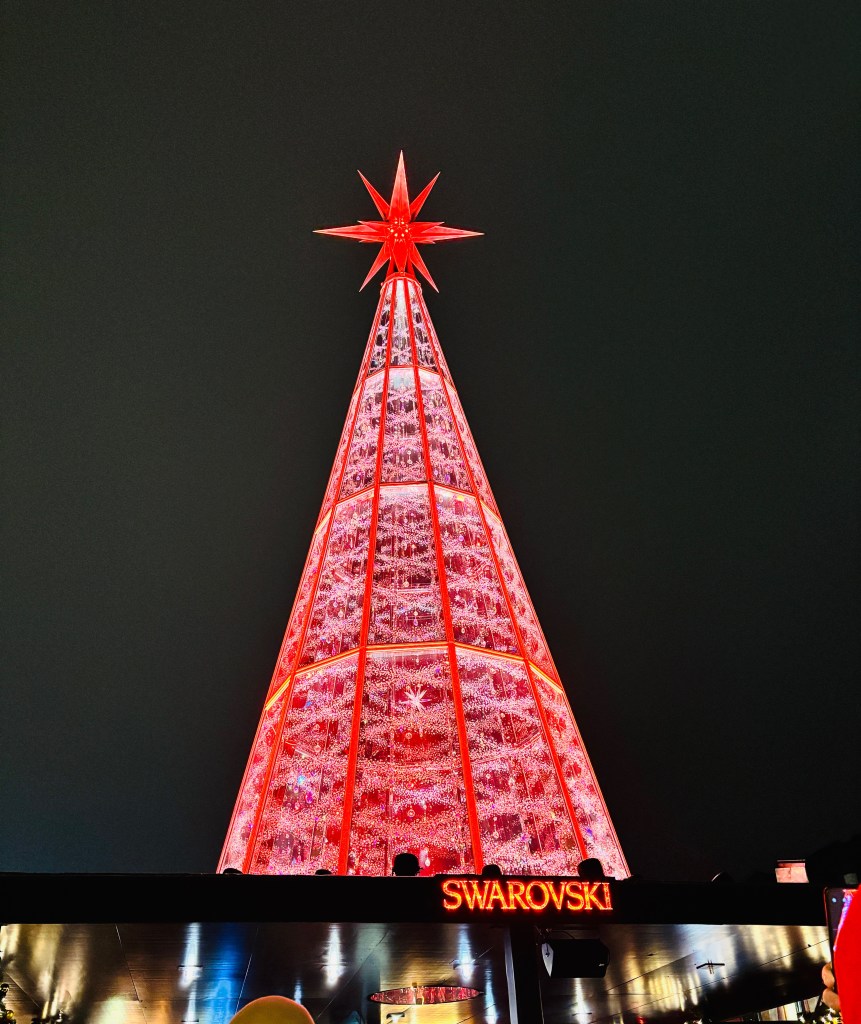
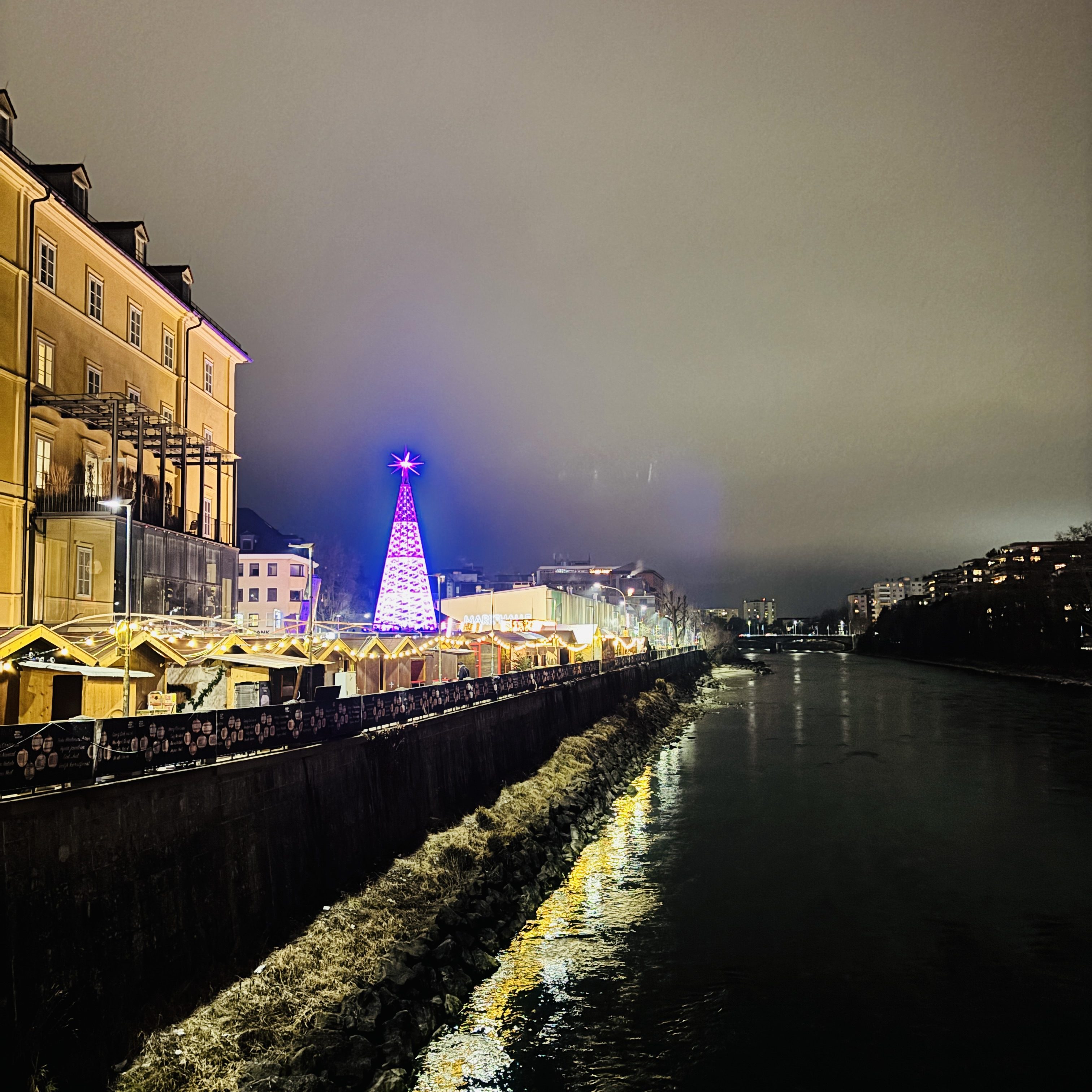
Honestly, unlike the louder, more commercial hubs, Marktplatz felt like a community Christmas market, but so beautifully done that it felt sad we didn’t get the opportunity to fully explore it.
The traditional Tyrolean evening at Familie Gundolf
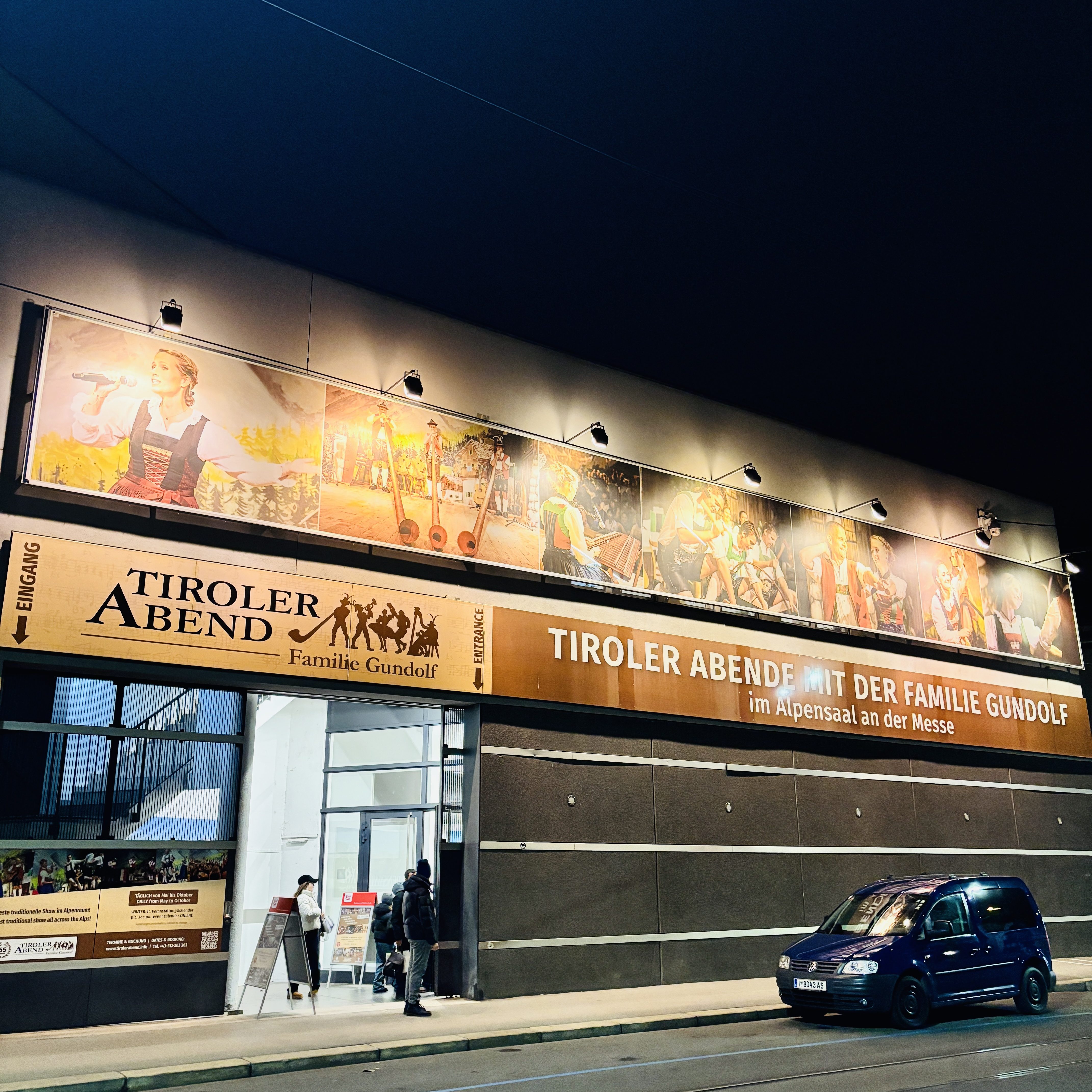
The highlight of our first evening in Innsbruck, after the very brief visit to the Christmas market by the Inn River, was a truly local experience – a Tyrolean evening with the Gundolf family. In hidsight, it’s actually quite touristy but still an amazing folk show – a long-running cultural tradition that has been part of Innsbruck’s winter life since 1967, when members of the Gundolf family first began presenting Tyrolean music, dance and song together in the city.
It’s held in the Alpensaal an der Messe, just a short walk or tram ride from the old town. The show brings to life authentic Tyrolean folk culture in a very lively and surprisingly engaging way, even if you didn’t grow up with this tradition or know anything about it.
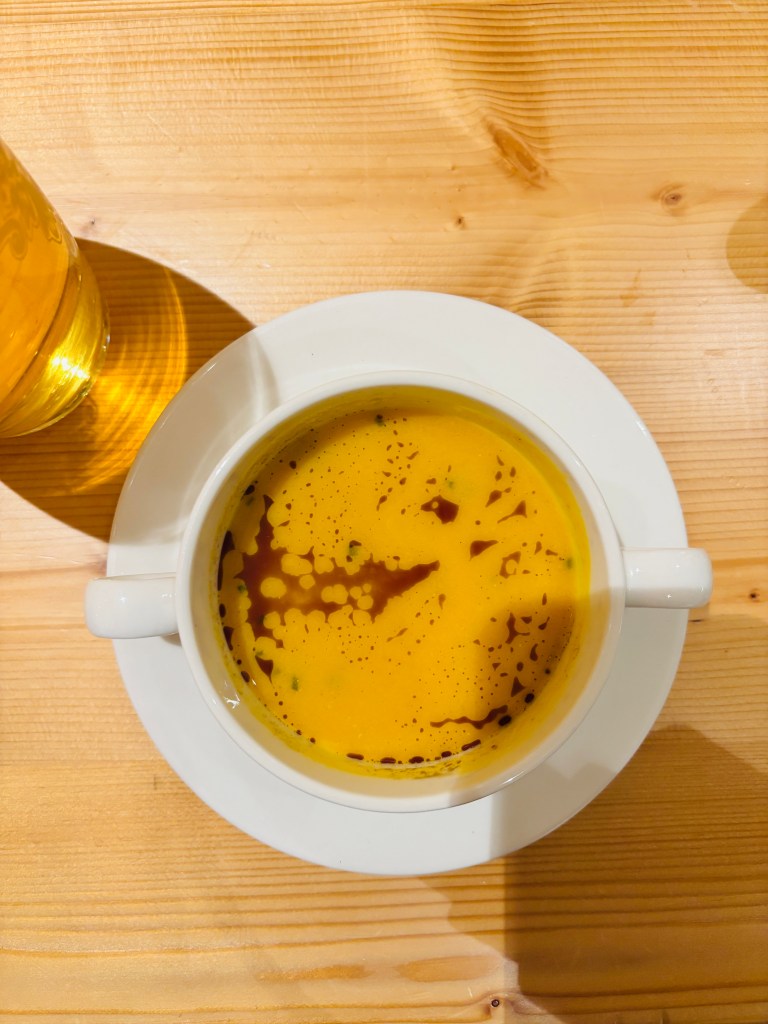
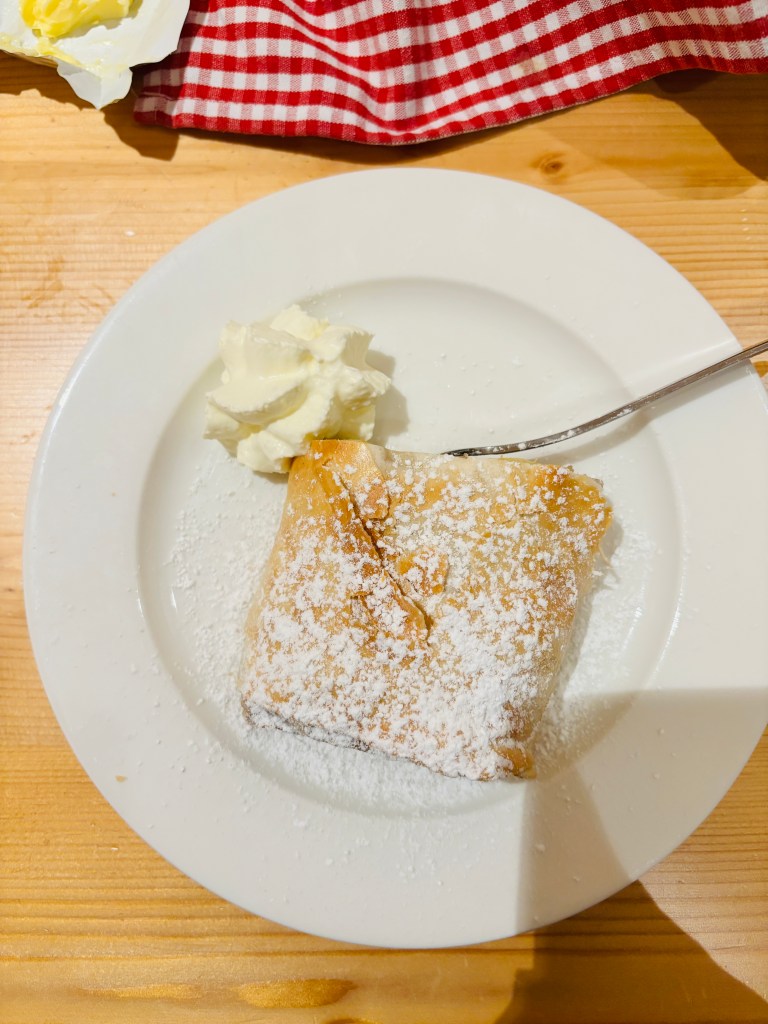
The evening began with a three-course Tyrolean dinner (if you’ve booked that option), featuring seasonal and regional dishes – pumpkin soup, roast pork with potatoes and vegetables, and classic apple strudel for dessert with a choice of a drink (beer, wine!)
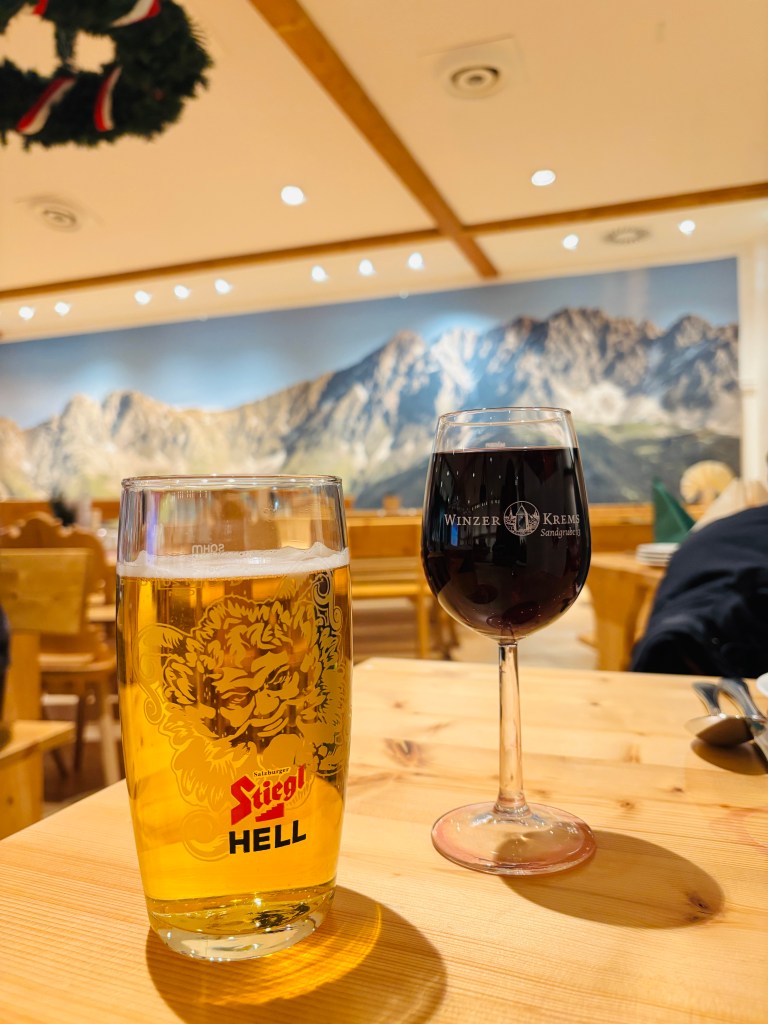
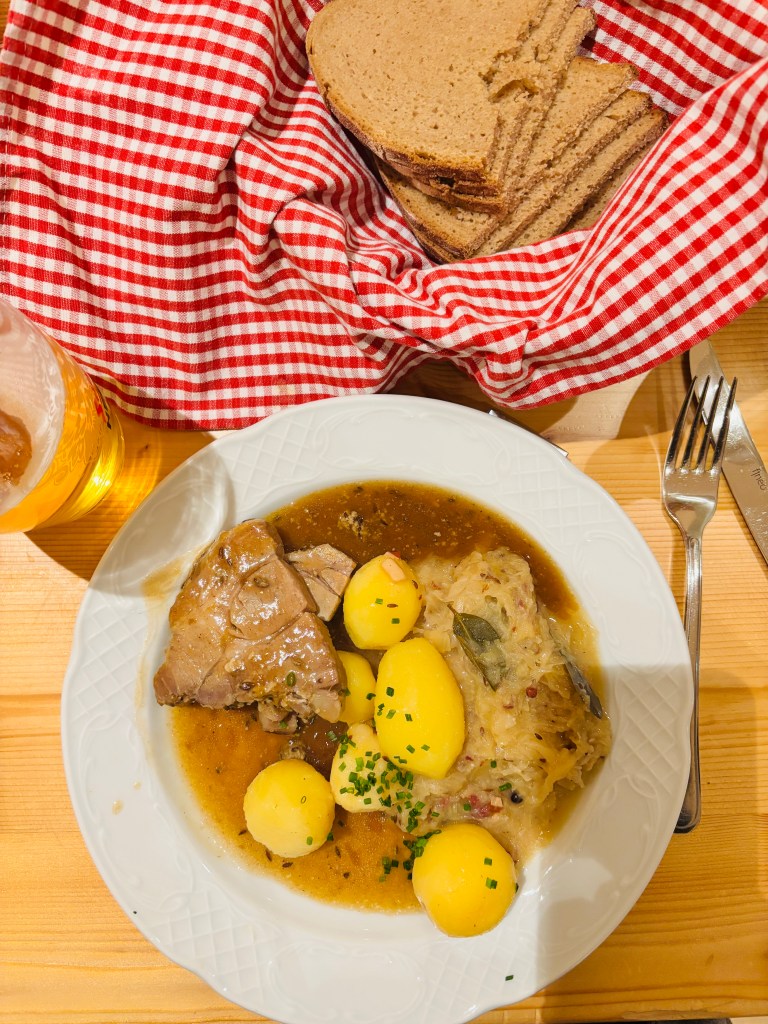
Post the sumptuous spread, the audience who had already dined sat together at long wooden tables, and there was another section of a similar setup but this one specifically for visitors who had chosen to have their meal while the show was in progress.
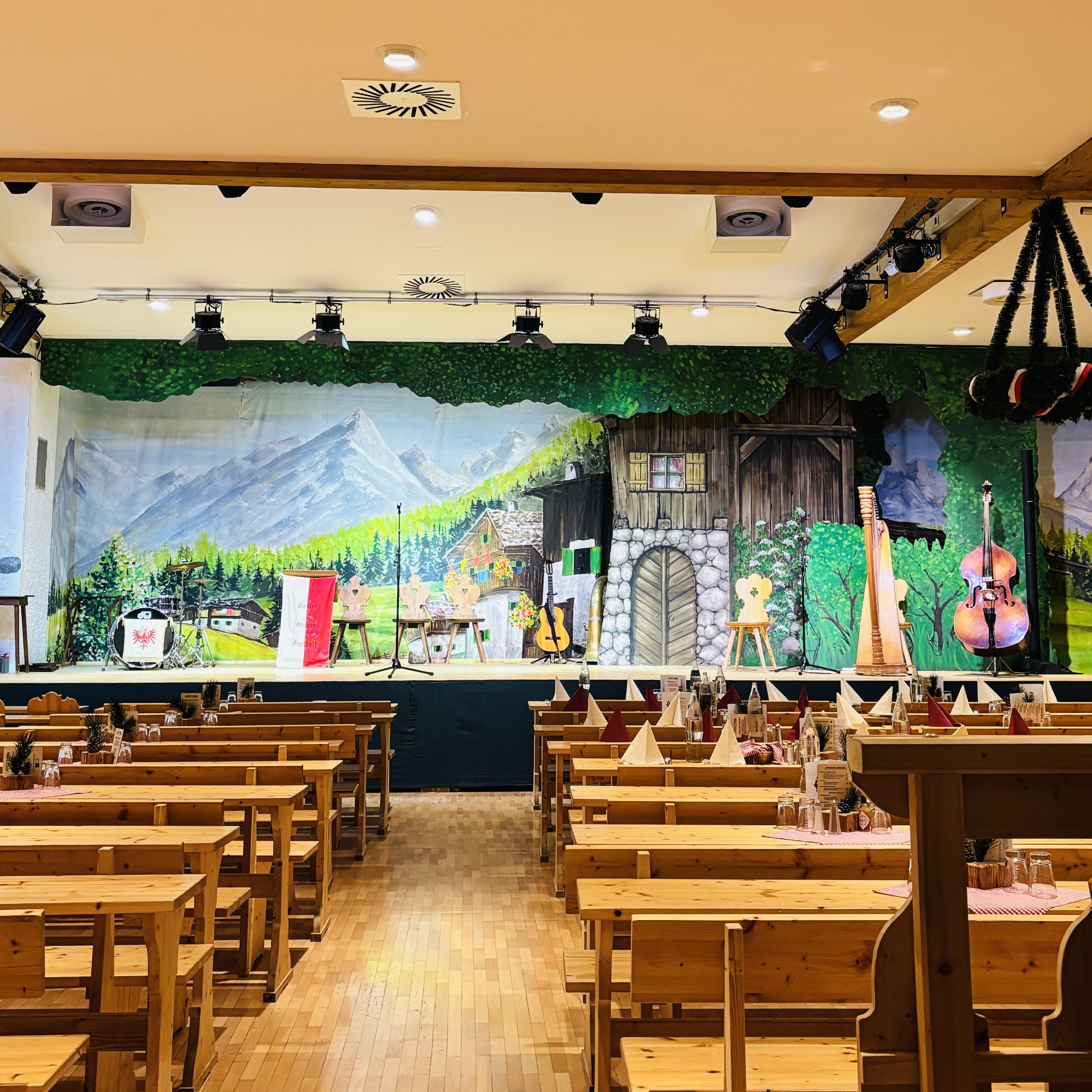
Traditional folk music filled the room, all performed on instruments deeply rooted in Alpine life. From the deep, resonant alphorn, to accordions, cowbells, harp and even musical saws that mimiced the everyday sounds of life in the mountains, tracing their roots back generations, drawing on centuries-old customs of Tyrolean villages. And oh, yodelling, lots of it ! And the entire audience clapping along, smiling, and sometimes joining in the yodelling.
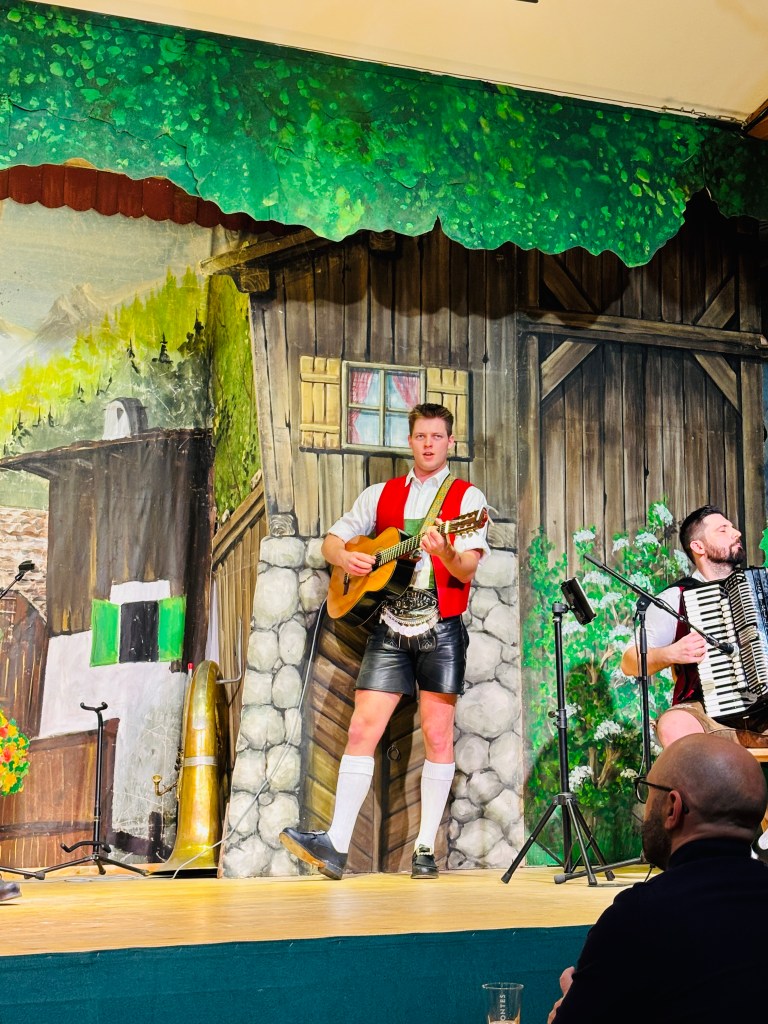
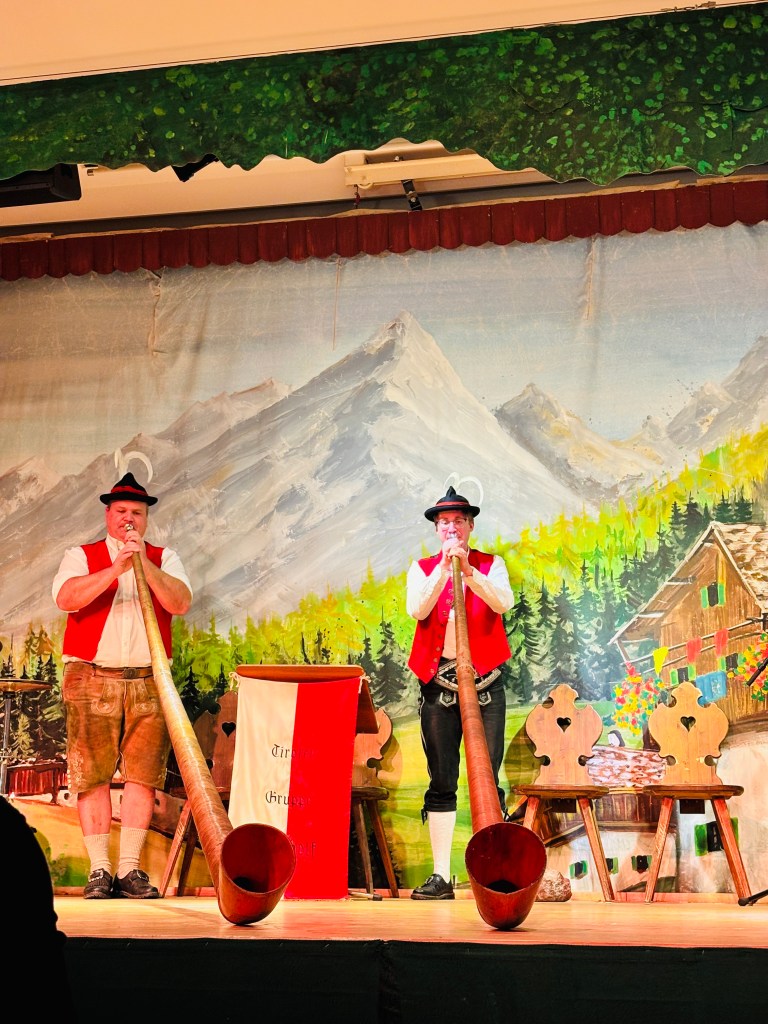
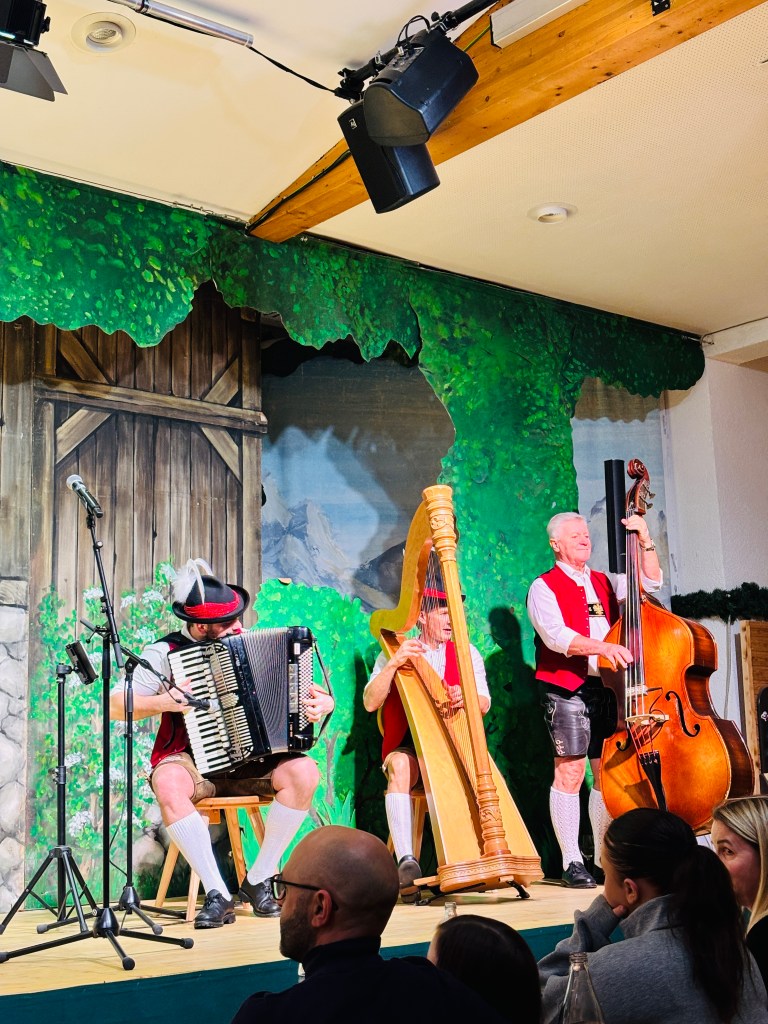
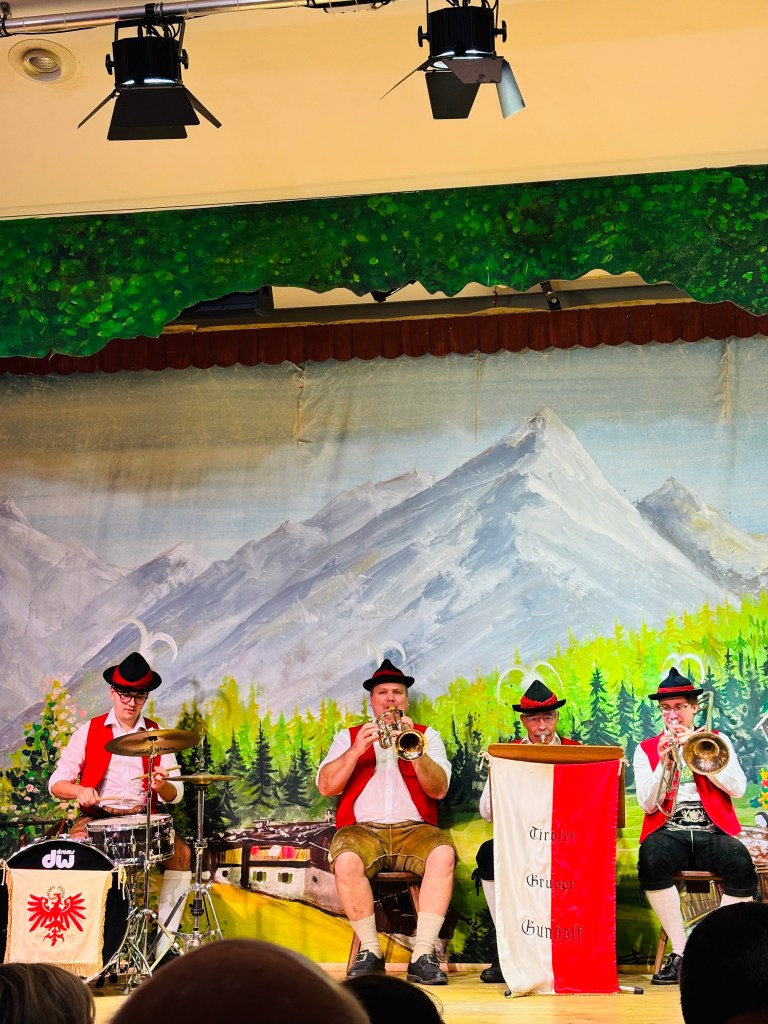
The ending was incredibly heartwarming with the Gundolf folk paying their respect to all countries, raising the flag and singing the anthem of the countries. By the time the cast took its bow, my mood had shifted from just watching a show to feeling part of a genuine cultural gathering.
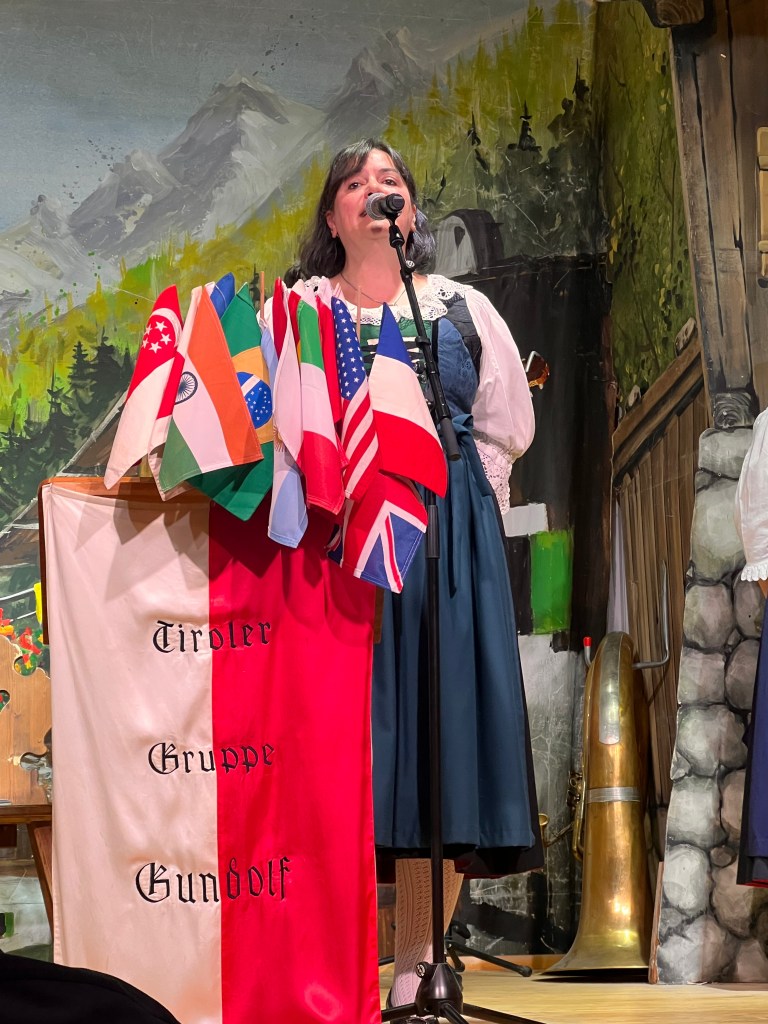
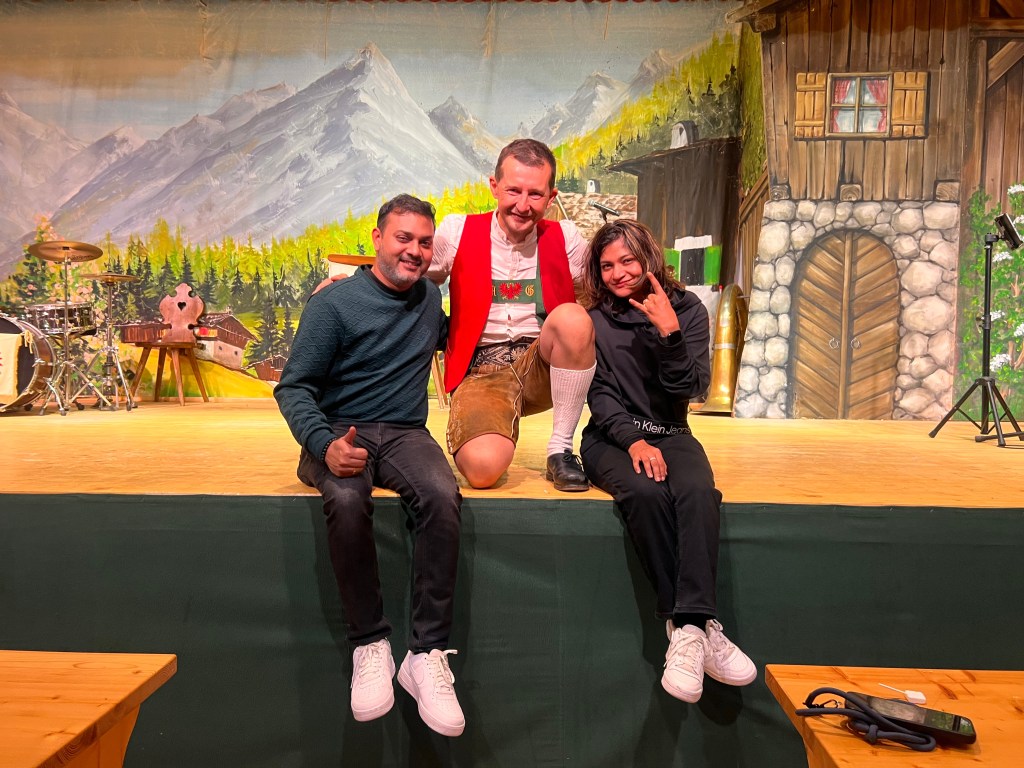
So yes, even though super touristy, it’s quite a living expression of Tyrol’s musical and cultural heritage, and for us, it became one of the most memorable parts of our winter vacation in the Austrian Alps.
Zell am See
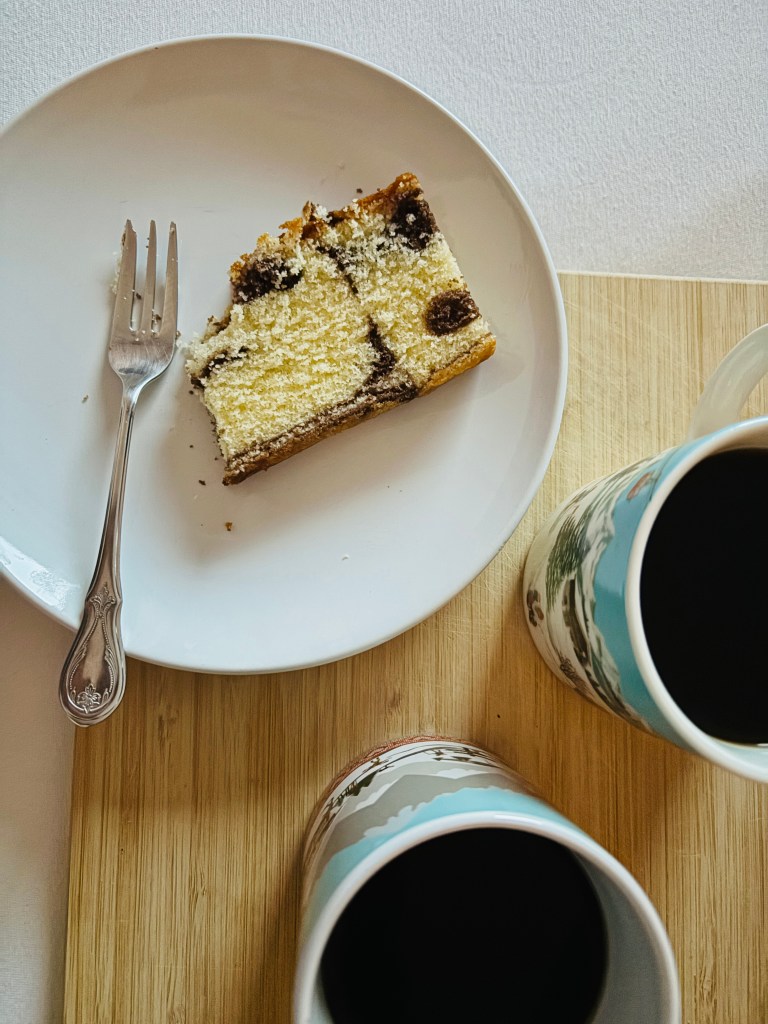
Our second day in Innsbruck didn’t quite start with a plan, rather a conversation over morning coffee – trying to decide if heading to Zell am See was even a good idea. The weather forecast predicted snow and it wasn’t clear whether the cable cars would be operational, and there was a real chance we’d spend half the day travelling only to be greeted by bad visibility and closed routes. But somewhere towards the end of the second cup of coffee, pieces of marble cake and with a mild dosage of optimism (after the brilliant previous night), we decided to go anyway. It was Christmas eve, and it deserved a good outing!
A few hours later, we were on a train headed south towards Zell am See. The further we moved away from Innsbruck, the more dramatic the scenery became – mountains closing in around the tracks, valleys opening up into wide white stretches, frozen rivers, scattered farmhouses, and pine trees heavy with snow – the world had turned monochrome. And after ~2 hours, we reached Zell am See under a steady fall of snow.
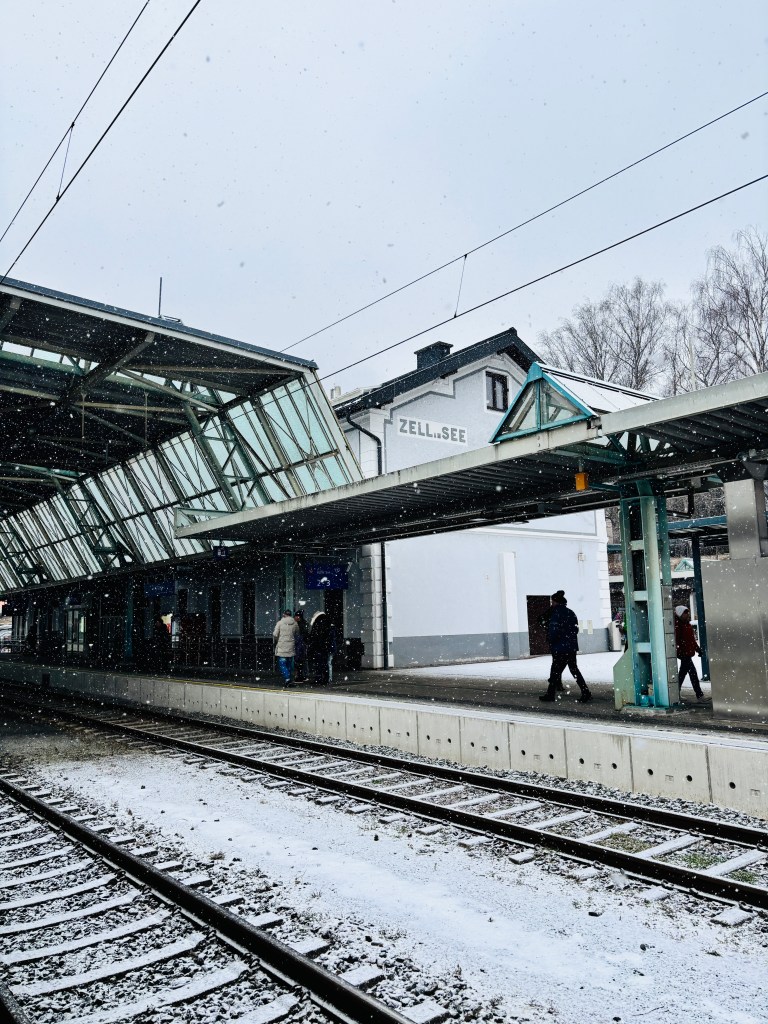
The lake was barely visible through the haze, and so we walked toward the town centre, boots sinking into fresh snow. A tiny little town – low buildings, wooden balconies, lights glowing faintly through the snowfall.
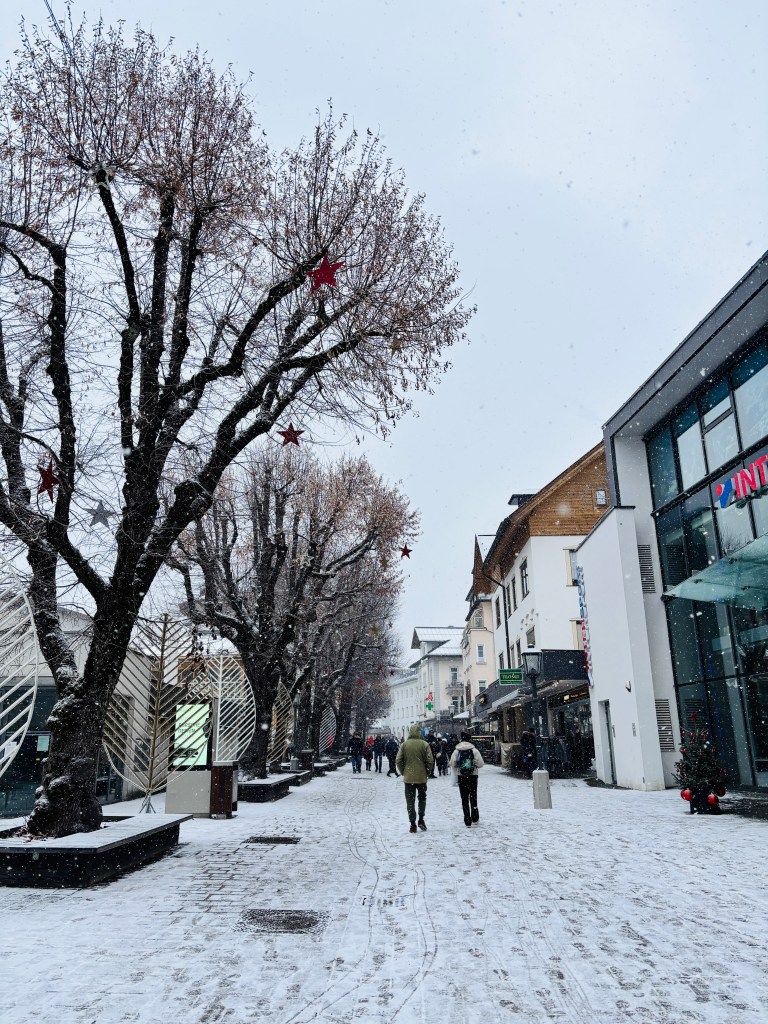
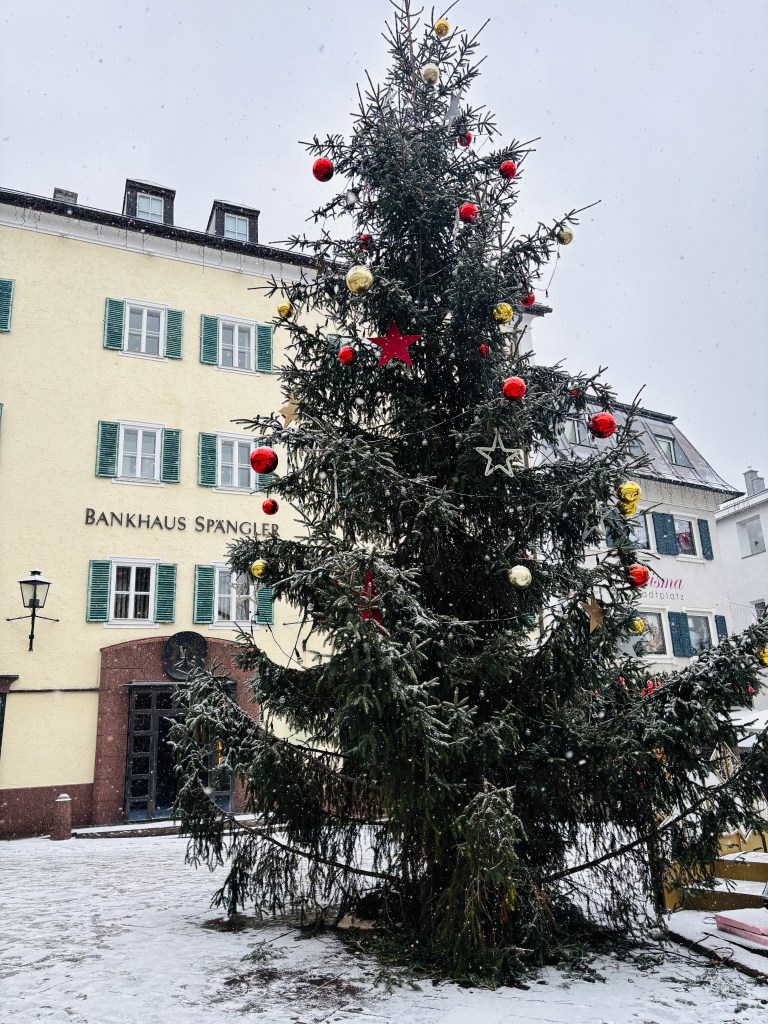
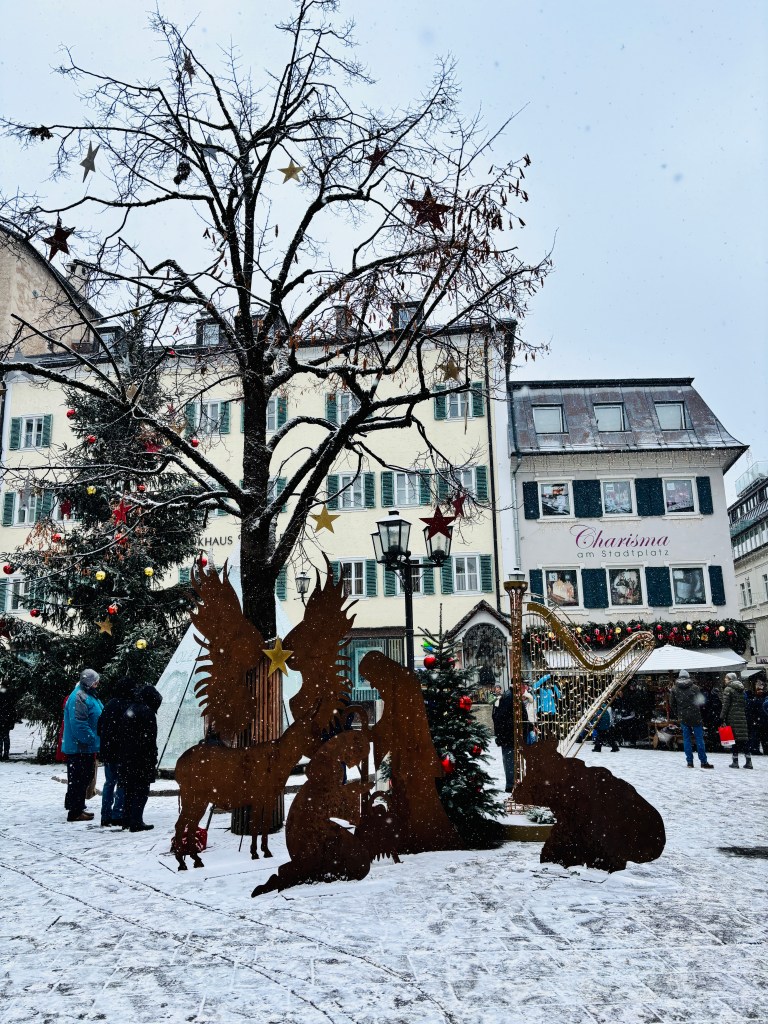
From there, we made our way to the cable car, still not entirely sure what would be open and what wouldn’t. The plan was to go all the way up, but winter makes its own rules. We managed to reach only the first station, since the cable car to go higher departed from a different location altogether, and it was snowing heavily enough for us to decide against that. As the gondola rose, the town quietly shrank below us – roofs blurred into white patches, the lake disappeared into mist, all suspended and shrinking rapidly.
We reached the first cable car station above Zell am See, the snow falling so thick, making everything ahead a white blur. With nothing else to do, we made our way to the Sonnkogel mountain restaurant, a cosy mountain inn right at the base of the Sonnkogelbahn cable car station.
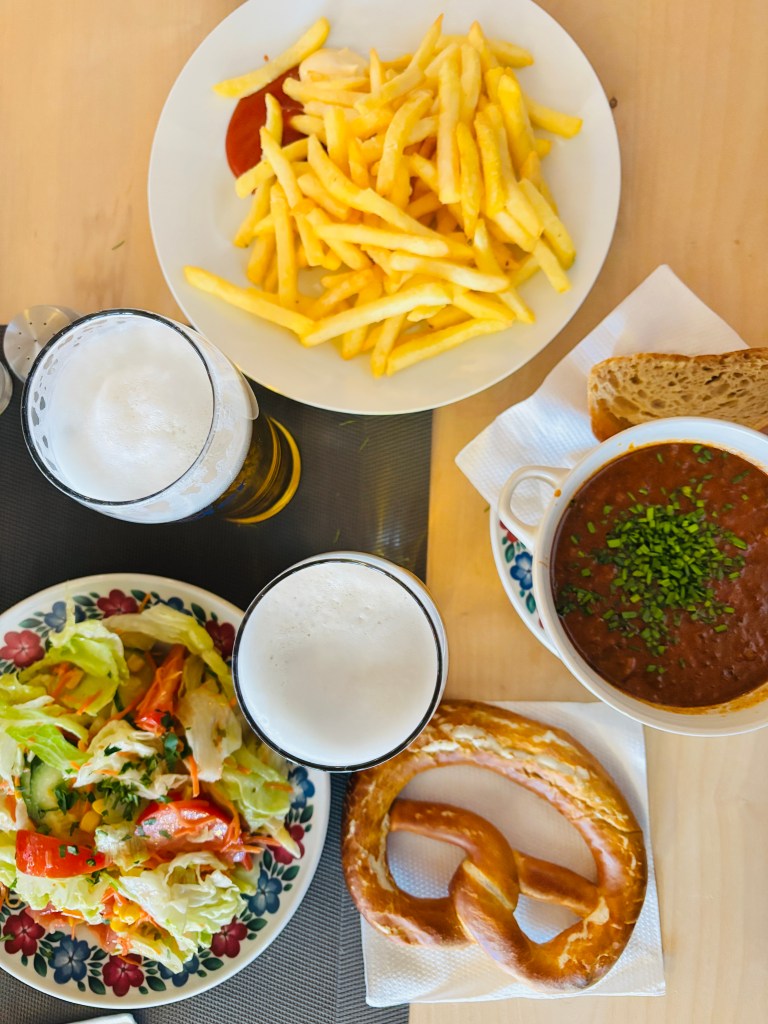
The restaurant is known for serving regional Pinzgau and Austrian cuisine in a warm, wood-lined setting – exactly what was needed with the biting cold outside. That afternoon, it was our Christmas Eve lunch spot, and our first taste of goulash – rich, hot, slightly spicy. We paired it with sides of fries and a simple salad, and washed it all down with beer.
When we finally stepped out, the day had quietly changed its mind. It had cleared out and how! Where there had only been white noise before, there were now mountains – real ones, stretching far into the distance. Layer after layer of the Alps unfolded in front of us, soft ridgelines fading into paler shades of grey and blue, the landscape was dissolving gently into the sky.
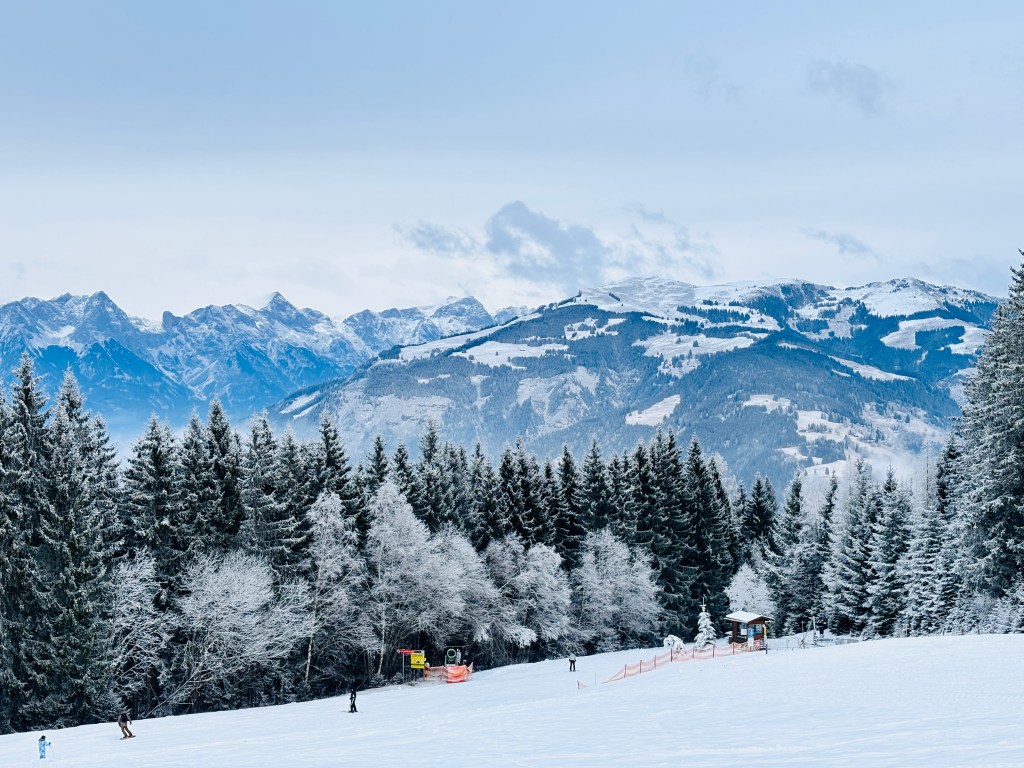
It felt surreal mostly because of how the day had started – the uncertainty over coffee, the long train ride, the heavy snow, the zero visibility, the very practical decision to stop for lunch because there was nothing else to do – and suddenly, here we were, standing still while an entire mountain range presented itself.
We didn’t go anywhere else. We just stood there for a long time, staring at the landscape, soaking it in, pretending it wasn’t cold because it felt too beautiful to leave. Enough photos were clicked, but not adequate enough to truly capture the beauty! No words felt necessary. Just us, quiet, at the edge of the day, watching the Alps stretch endlessly into the distance and knowing that this – this exact moment – was the reason we’d taken that train in the first place.
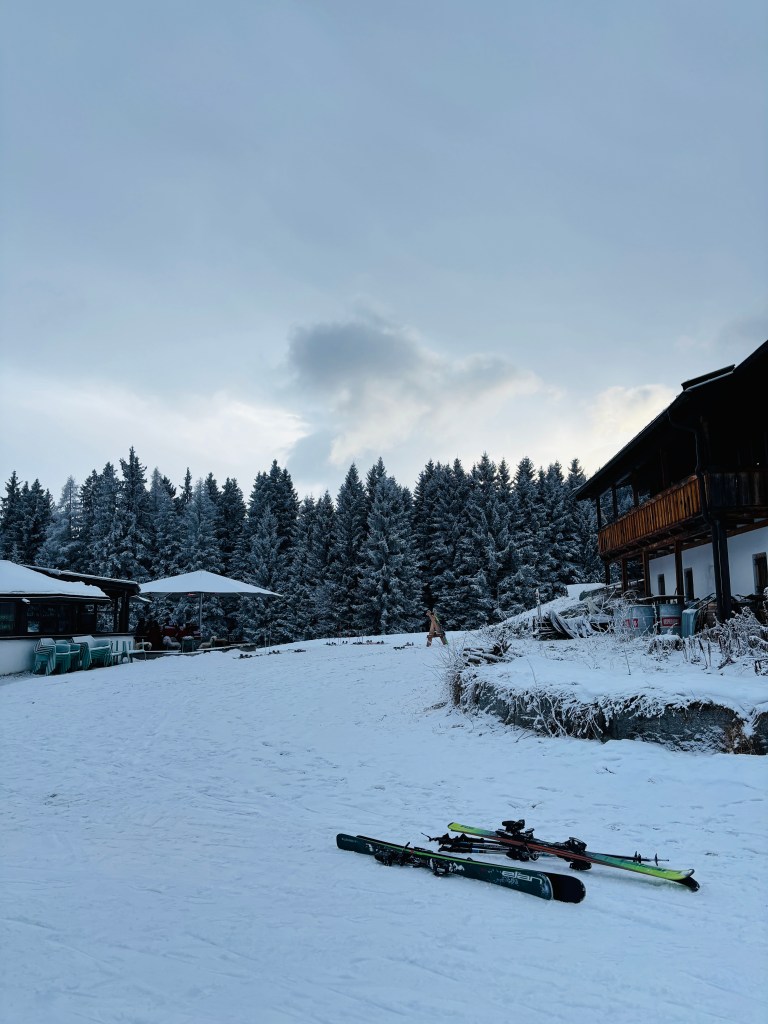
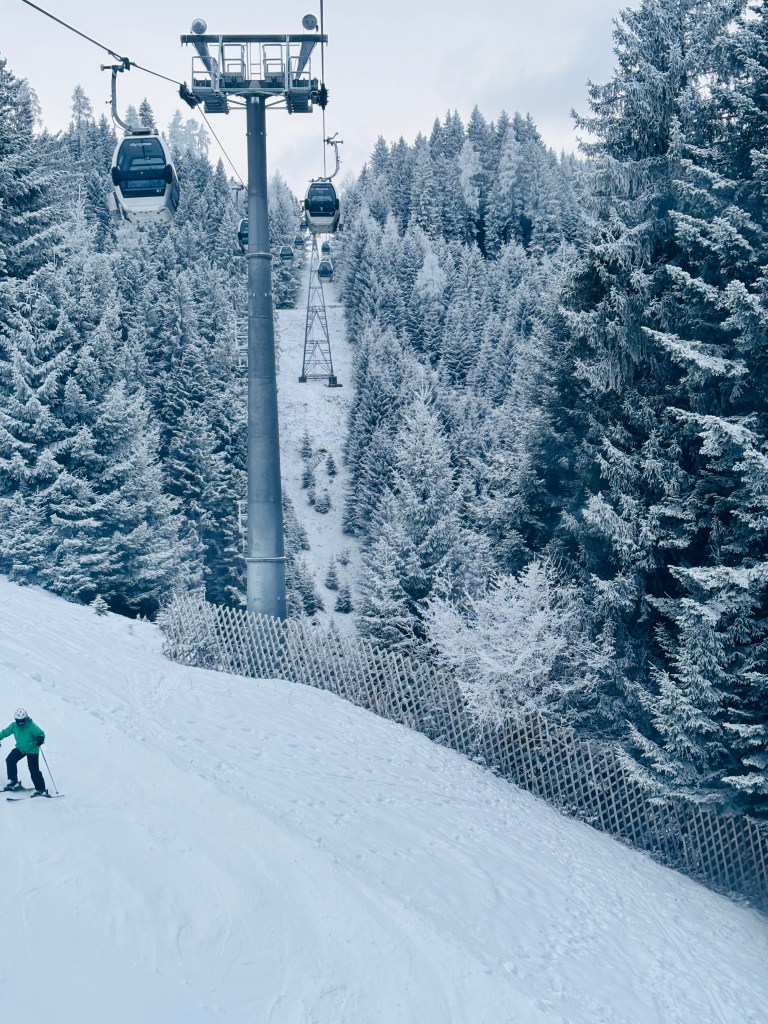
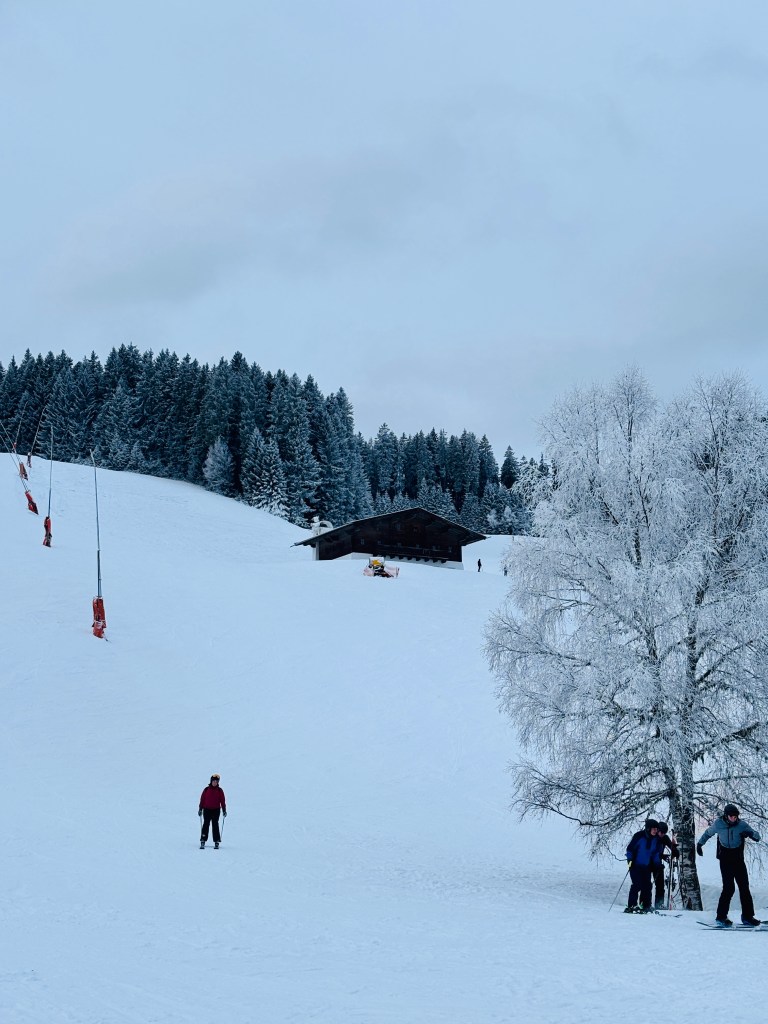
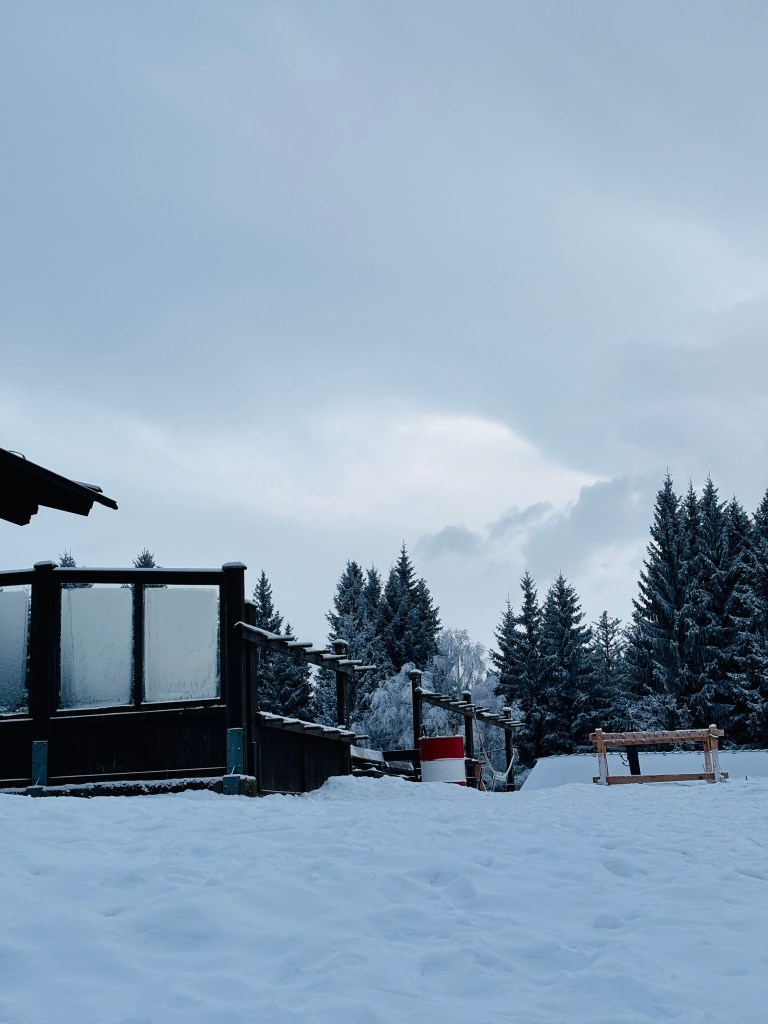
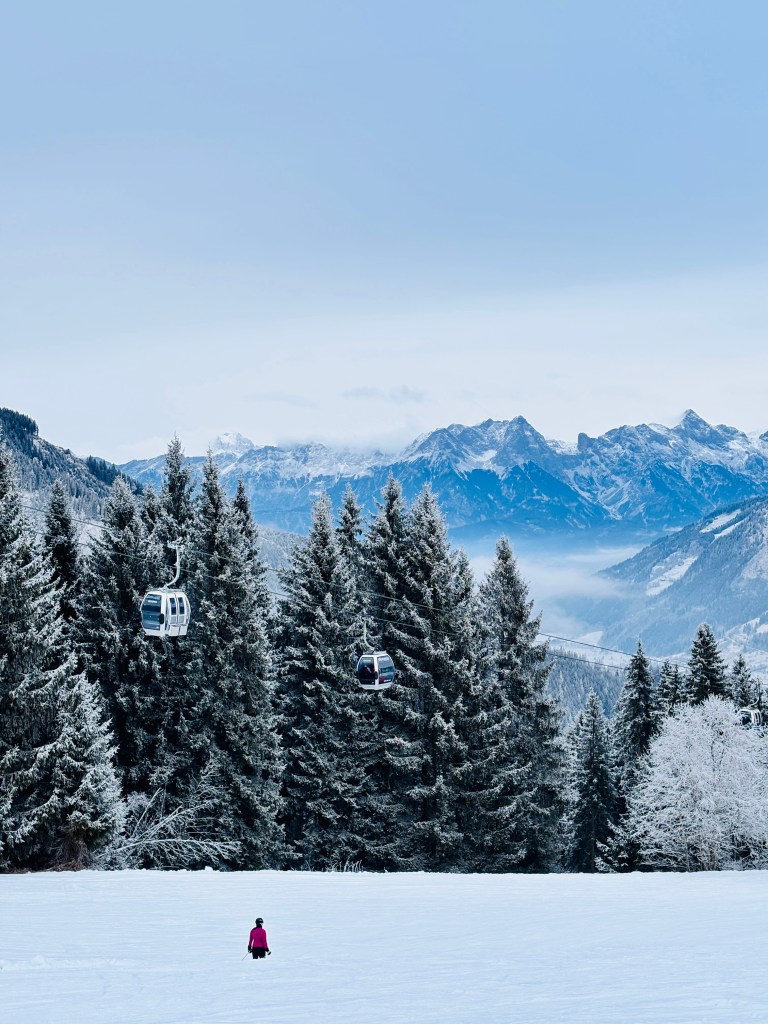
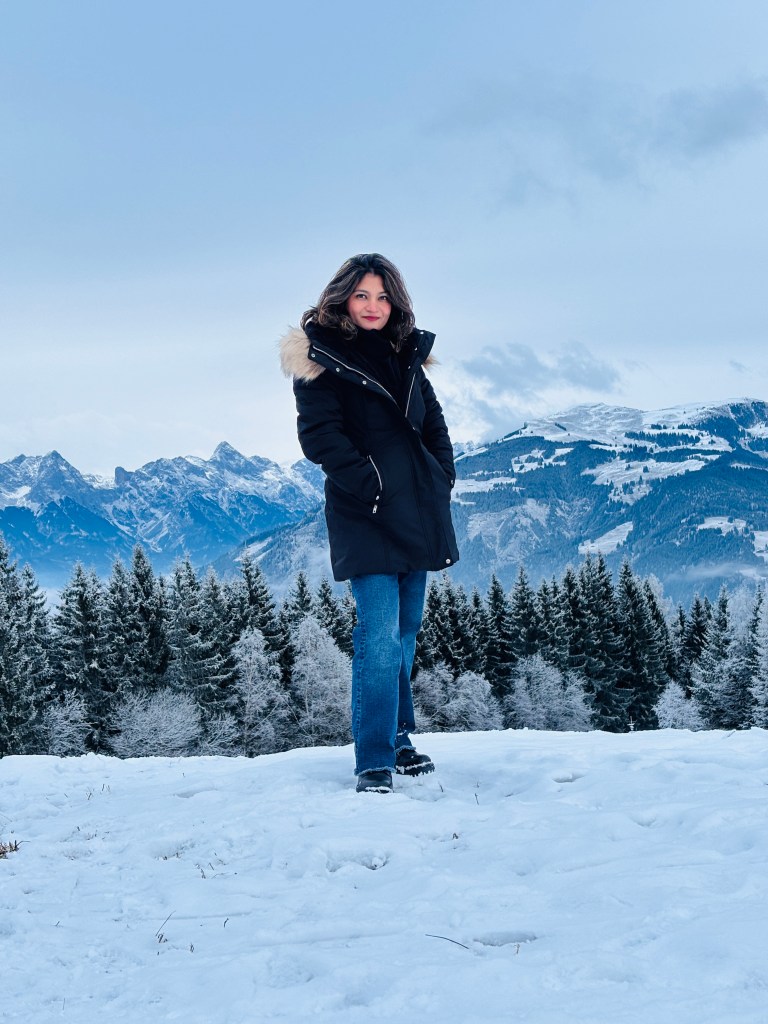
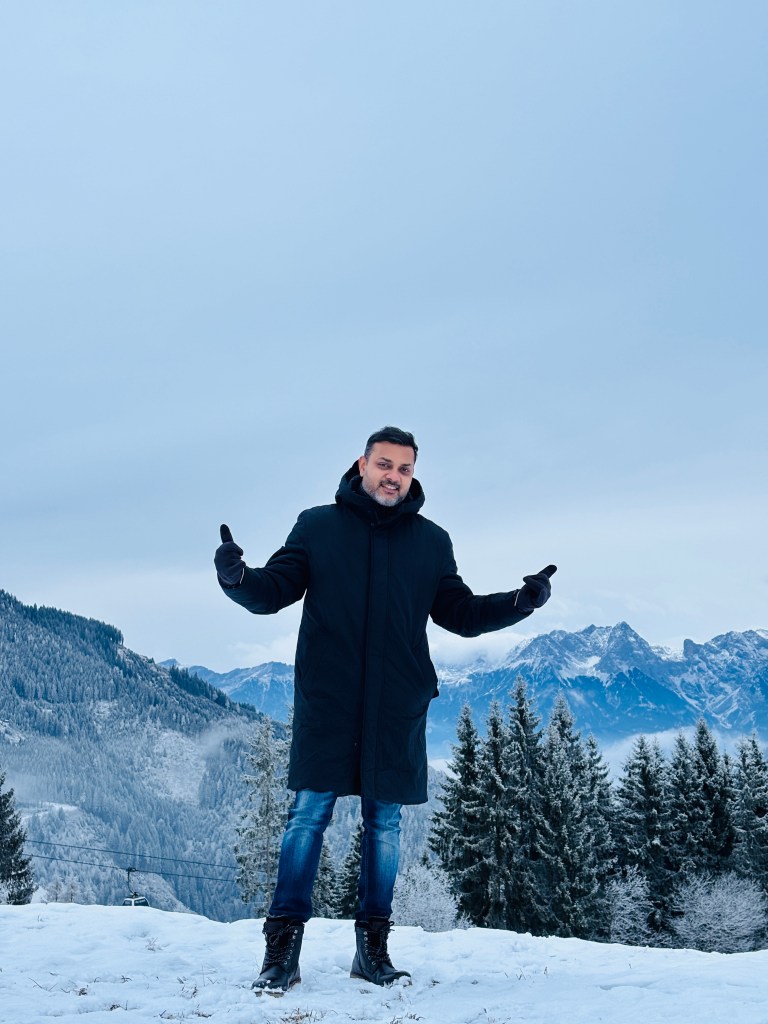
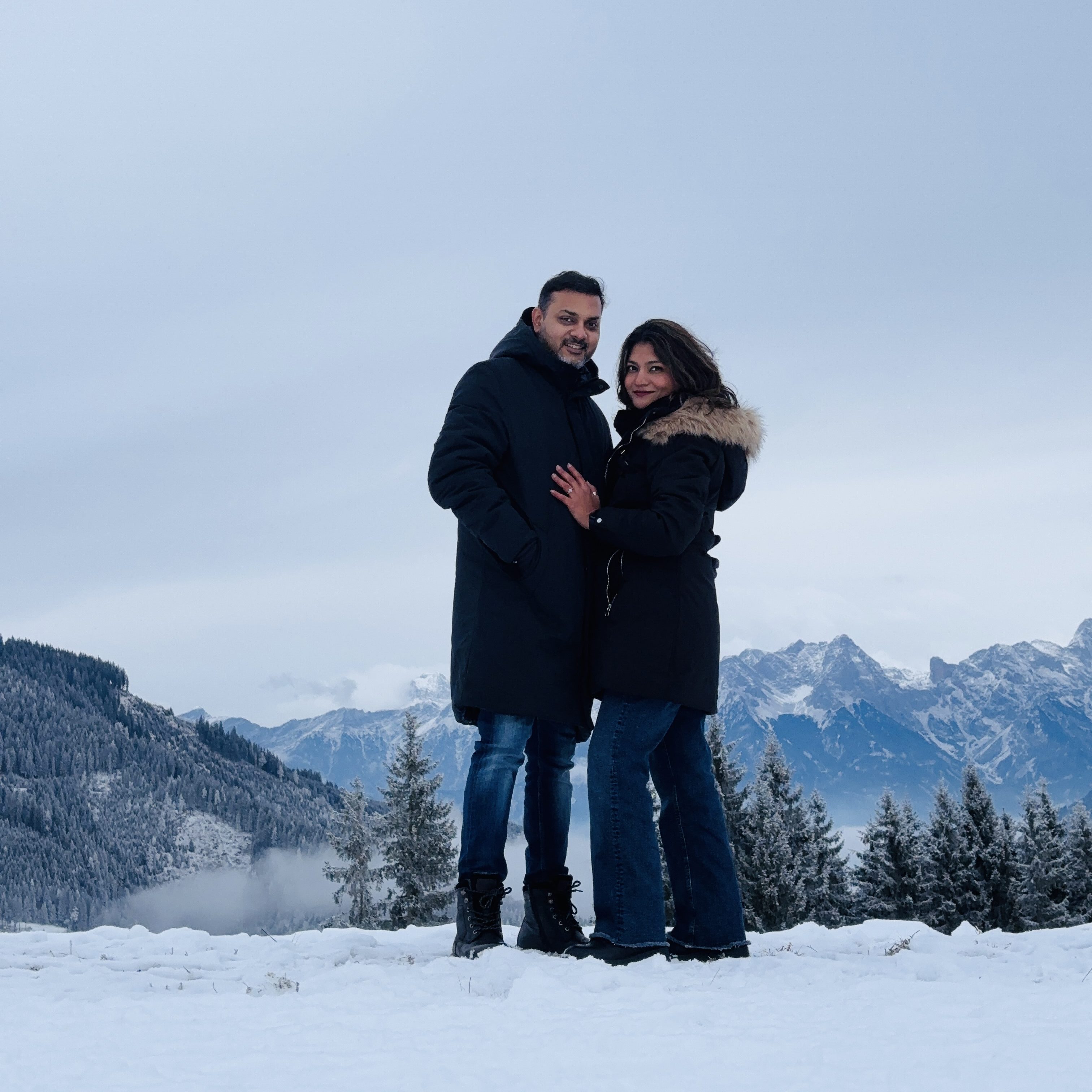
But like most good things, it didn’t last forever. Eventually, the cold won, the light began to fade, and reality and closing time quietly reminded us that we still had to board a train to go back to Innsbruck. So we took one last look, imprinted the view somewhere in memory, and headed down – already knowing this would be one of those moments we’d keep coming back to long after the trip ended.
Day 3 – Christmas Day – Up, Up, Up – to the top of Innsbruck
Christmas 2025 and our third day in Innsbruck became another “let’s go to the top” day – this time to the top of Innsbruck. It sounded simple in theory but turned into an exhausting day comprising multiple cable cars and long queues.
This ascent to the top of Innsbruck starts from within the city limits itself. The Nordkettenbahnen system connects Innsbruck’s old town to the Nordkette mountains through three linked stages, taking you from urban Innsbruck streets to about 2,256 m above sea level in less than an hour (not counting the waiting time).
Stage 1 – Hungerburgbahn (Funicular)
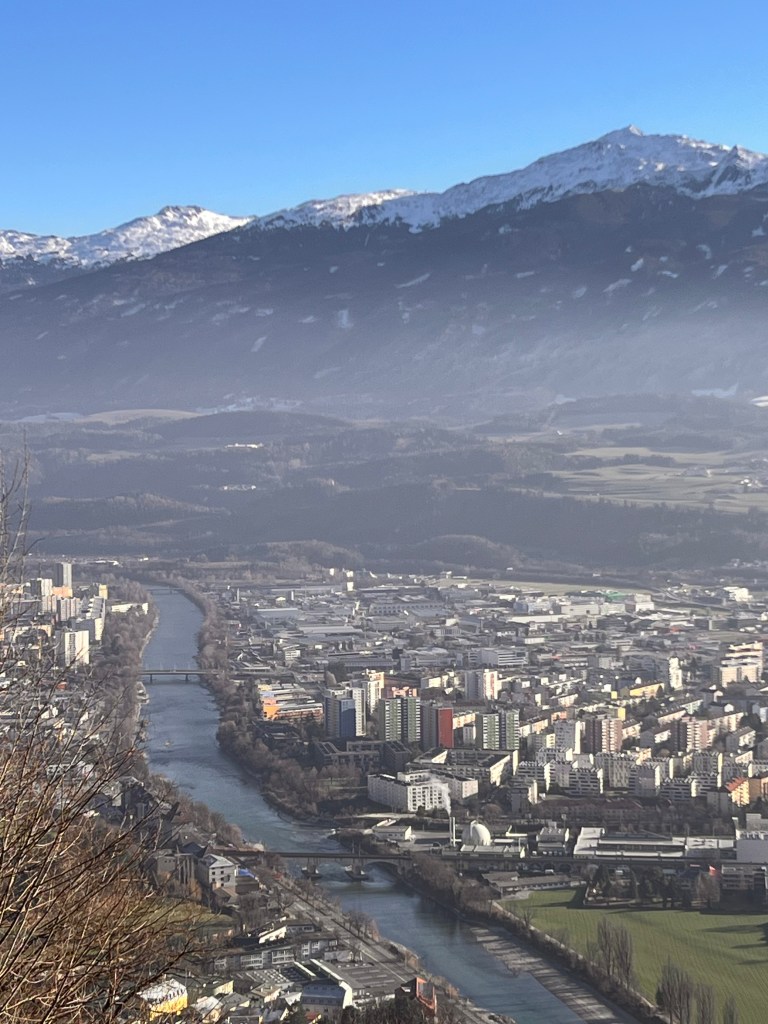
From near the old town, the modern funicular carries passengers up to Hungerburg in about 8 minutes, climbing roughly 287 m over 1.8 km, with intermediate stops. Hungerburg is the first pause, sitting only about 300 m above the city – observation decks, cafes brimming with people – already offering wide views over Innsbruck and the valley, but mostly it felt like a transfer node. From there, a short walk across Hermann-Buhl-Platz leads to the next lift.
Stage 2 — Seegrubenbahn Cable Car
From Hungerburg, you transfer to a large aerial cable car that climbs dramatically to Seegrube at 1,905 m elevation.
This section covers about 2.2 km with over 1,000 m of vertical gain, in just one huge cabin which can carry around 160 passengers (unlike the regular gondolas I’ve seen and experienced so far).
The station Seegrube definitely felt better and more like a mountain hub, functioning as the gateway to the ski area and hiking routes and viewing platforms providing expansive views of Innsbruck, surrounding valleys, and distant glacier regions in clear weather. Also has a famous eatery Restaurant Seegrube (was recommended to us by a couple of friends), which serves Tyrolean cuisine and drinks. But the whole experience had already shifted tone for me. Between the machinery hum, extra long queues and difficult to anticipate waiting time, it felt less like a scenic ride and more like a group of engineers heading up shift-wise (helmets missing, maybe) and so we decided to head on to the next stage without stopping for much needed refreshments.
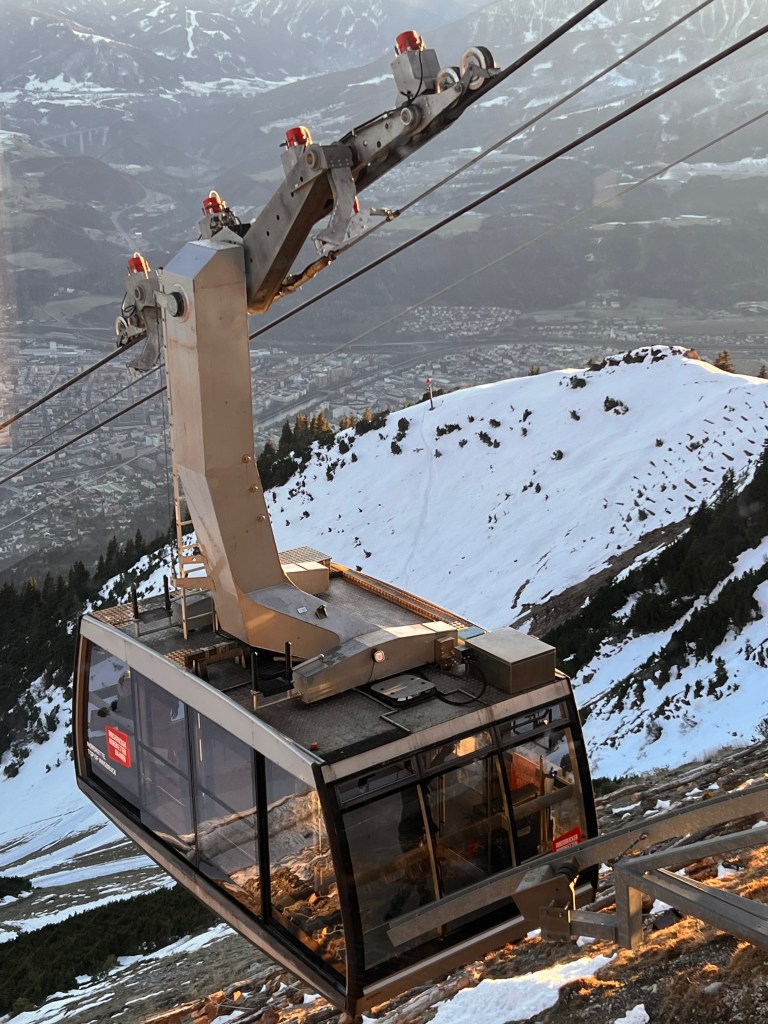
Stage 3 – Hafelekarbahn Cable Car
The final lift takes visitors from Seegrube to the Hafelekar summit station, roughly 2,256–2,334 m above sea level depending on reference point. This is the highest viewpoint on the top of Innsbruck, overlooking the Karwendel Nature Park – Austria’s largest conservation area – on one side and the city on the other.
Here, at the topmost, the views (when conditions allow) open up in every direction. On one side, Innsbruck and the Inn Valley lie far below, the city reduced to a quiet grid framed by the river. Turn around and you’re met by the rugged expanse of the Karwendel Alps, part of a protected nature park that feels vast and untouched. From the lower stations (barely visible though), sightlines stretch toward the Stubai Glacier and the peaks of the Zillertal Alps, and on especially clear days, visibility can extend across valleys almost to the Italian border. It’s a full 360-degree sweep of alpine ridgelines set against urban contrast.
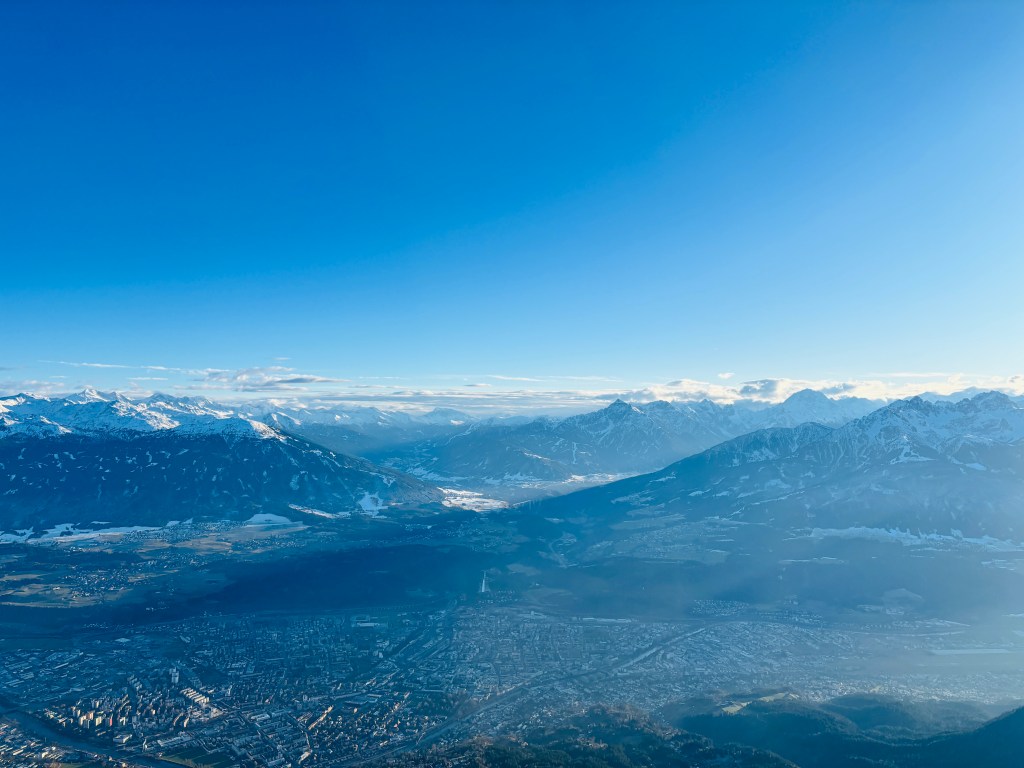
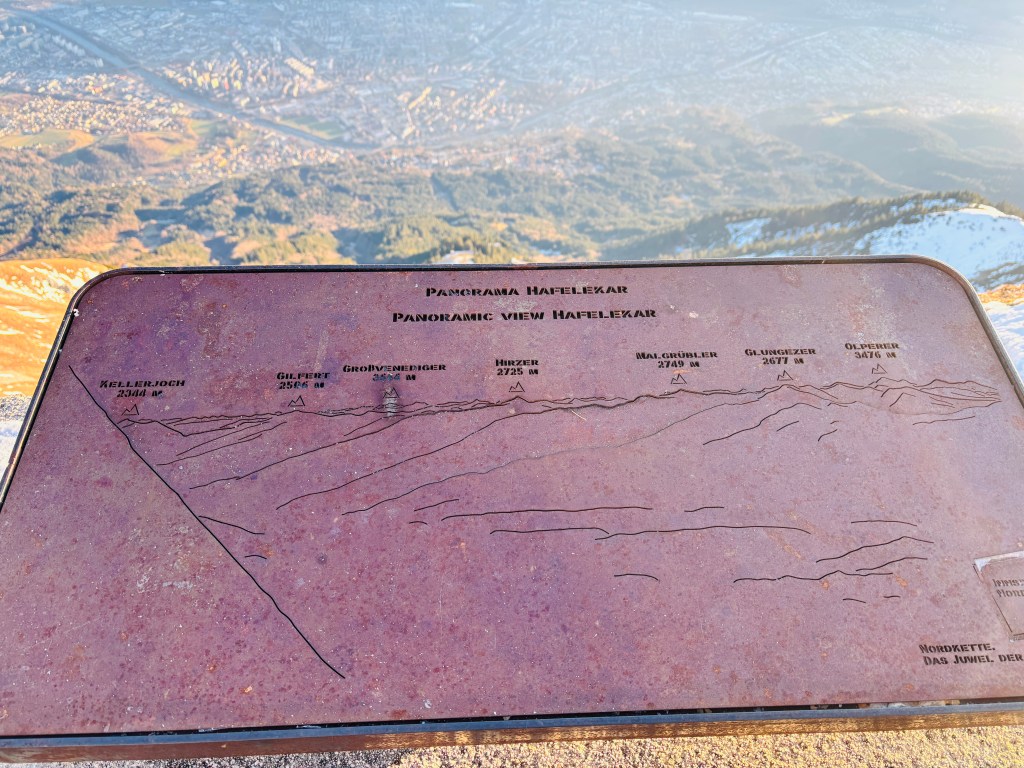
The views although beautiful, parts of the viewing platforms and pathways remain in shadow, and the surface there was icy. Even on that amazingly bright day that we were there, there were patches slick ice. We saw more than a few people lose their footing. Sadly, even the best boots didn’t help! Add to that – it was too cold, too windy, and somehow too bright in that high-altitude way where sunlight reflects aggressively off snow while wind slices through layers.
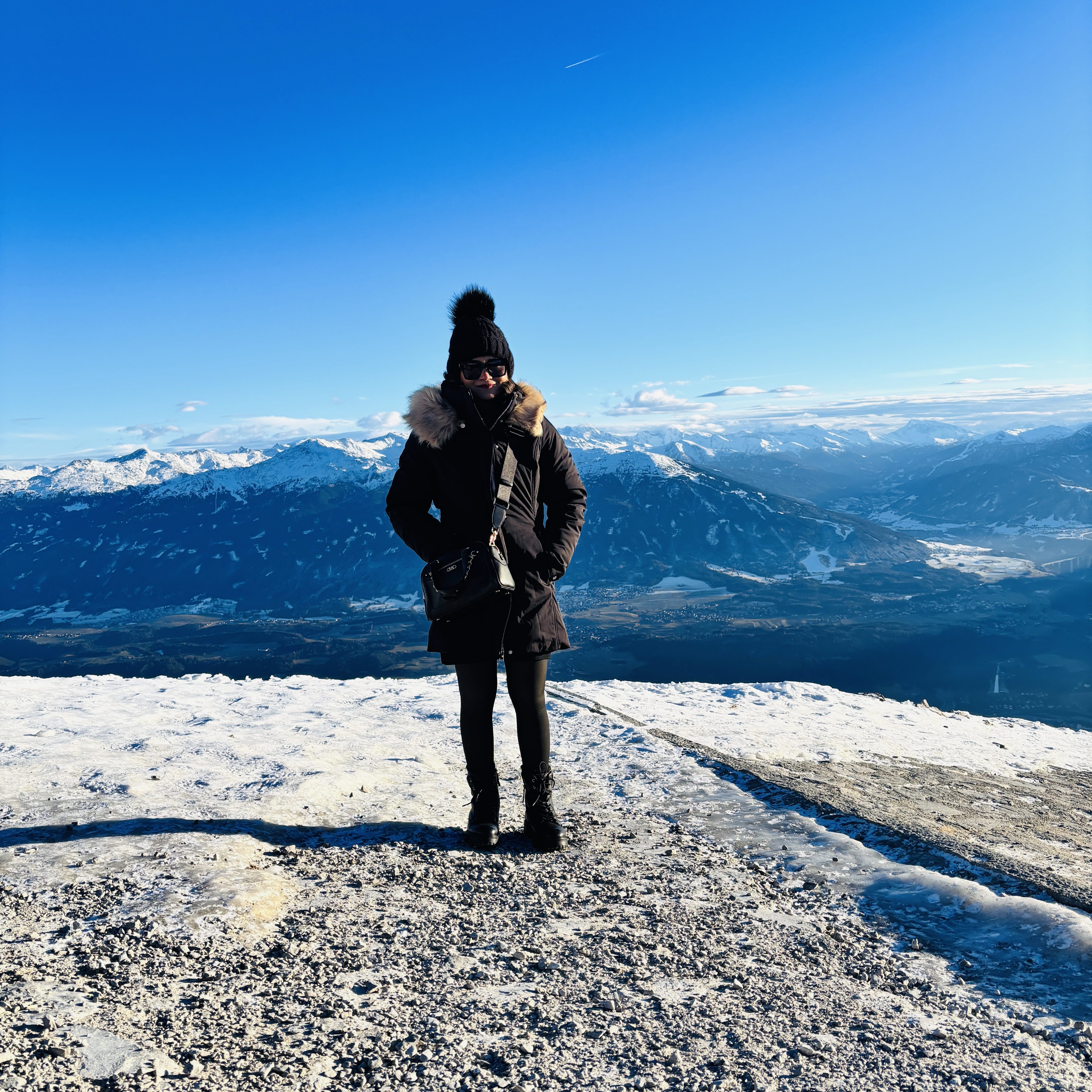
We didn’t stay long. Honestly, it was one of those experiences where the system, the scale, and the engineering journey were fascinating – the seamless transition from city street to alpine altitude was remarkable. But we didn’t feel like lingering around. We saw it, felt it, ticked the experience box, and headed back down – exhausted! (The booking counter did mention longer waiting times due to holiday season, and so it was purely our decision to go through. )
It was already dusk by the time we re-entered Innsbruck, back to it’s familiar streets and warm lights. We walked longer than necessary – not sightseeing, just unwinding – letting the day loosen its grip one step at a time.
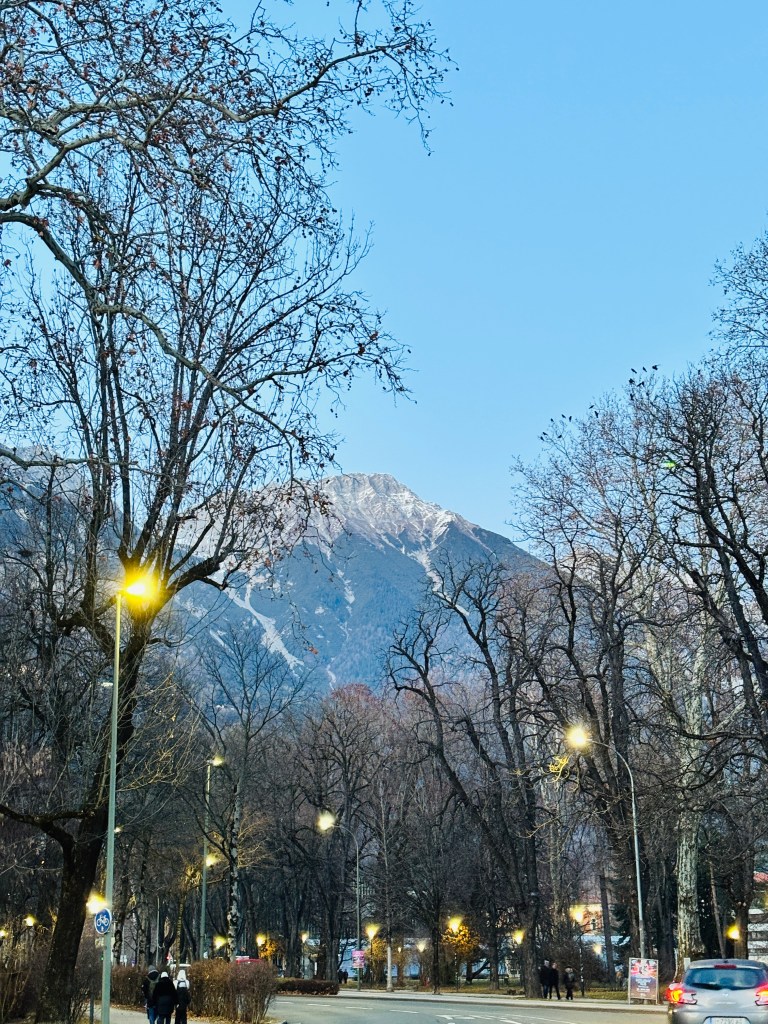
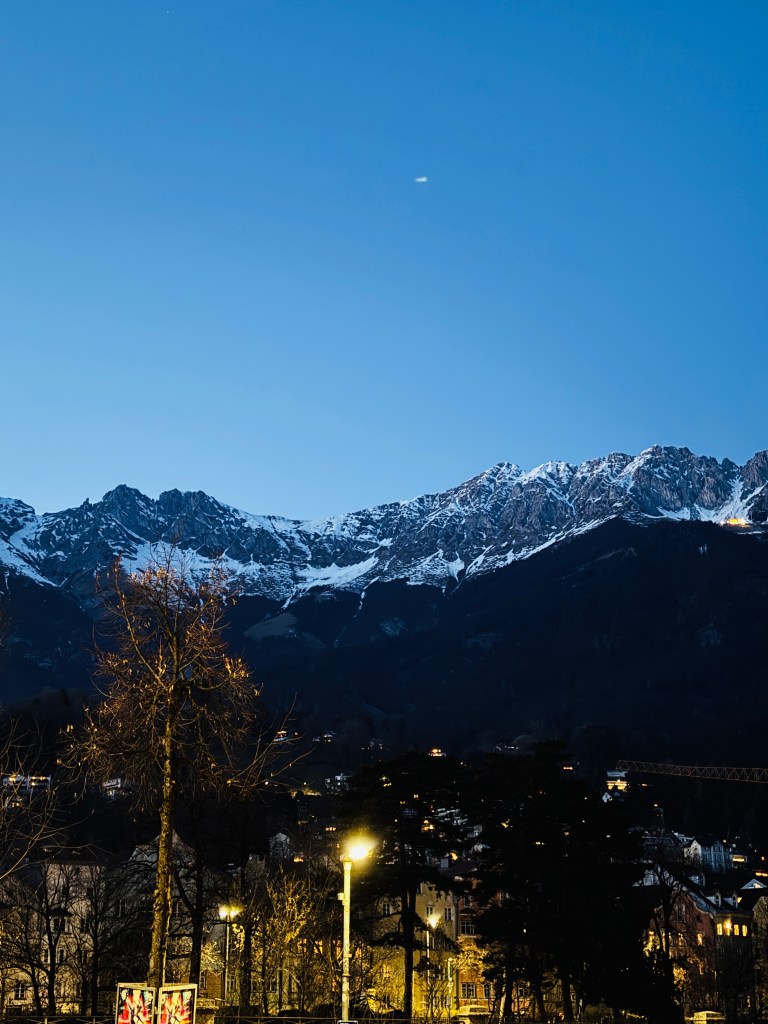
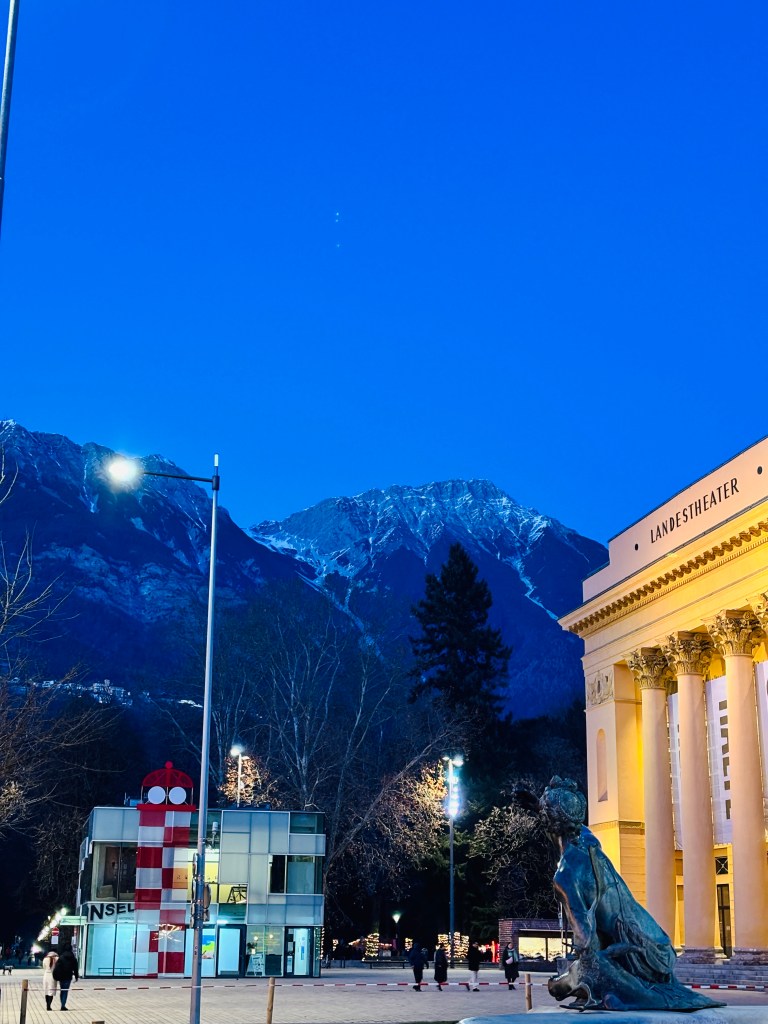
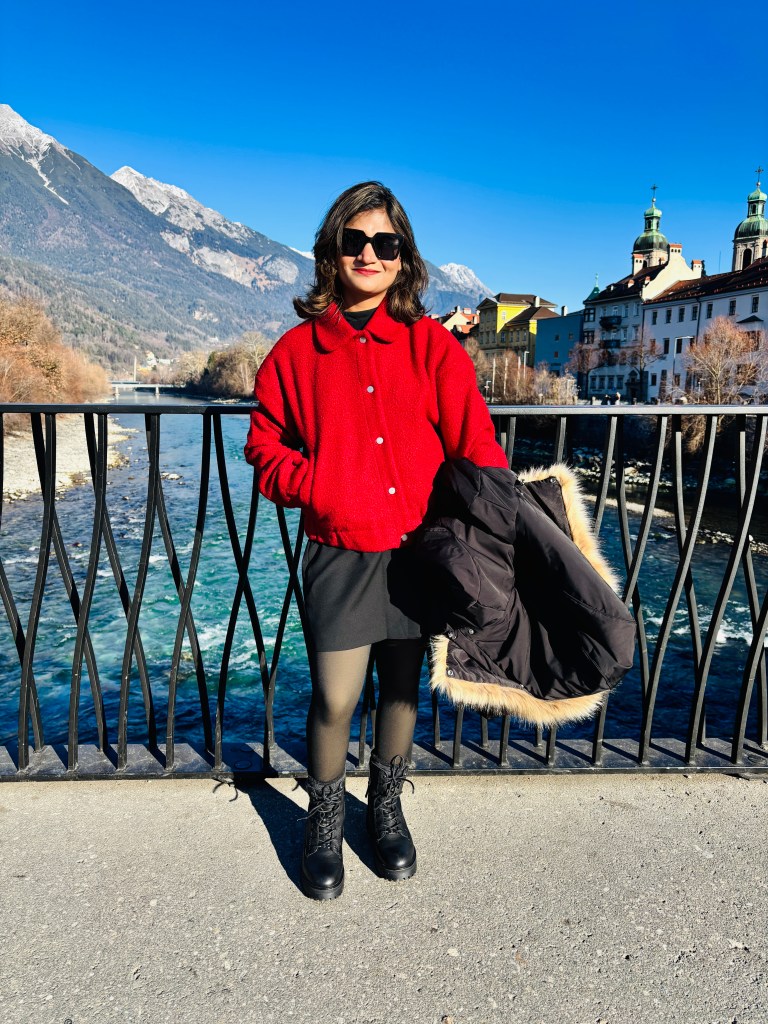
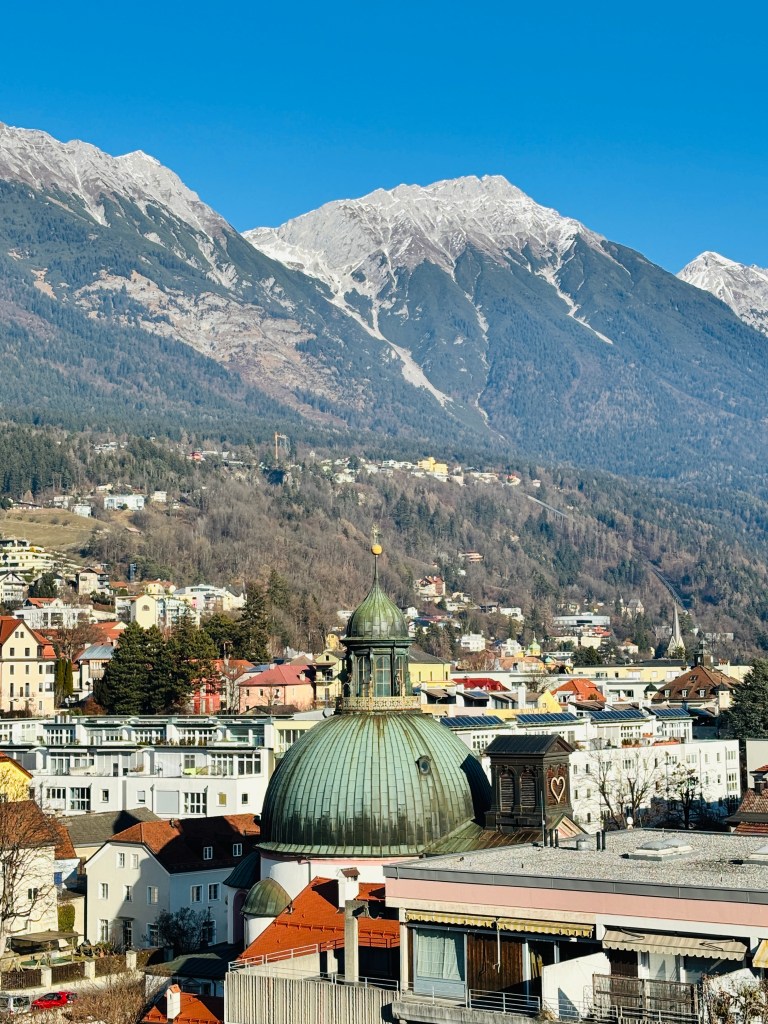
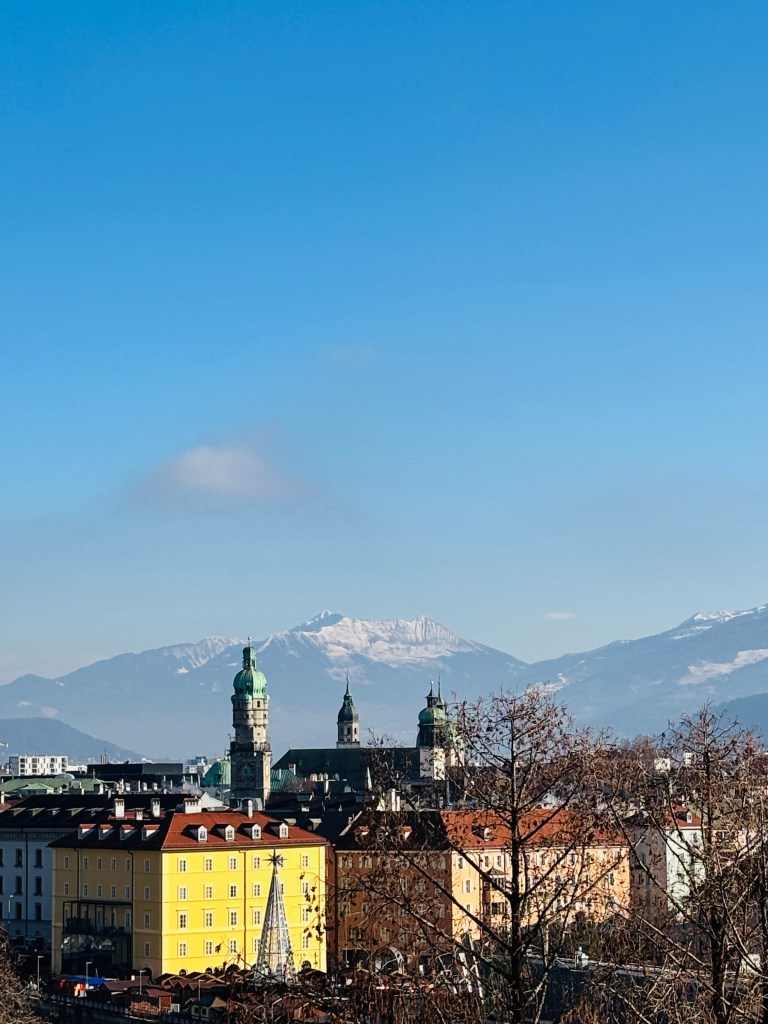
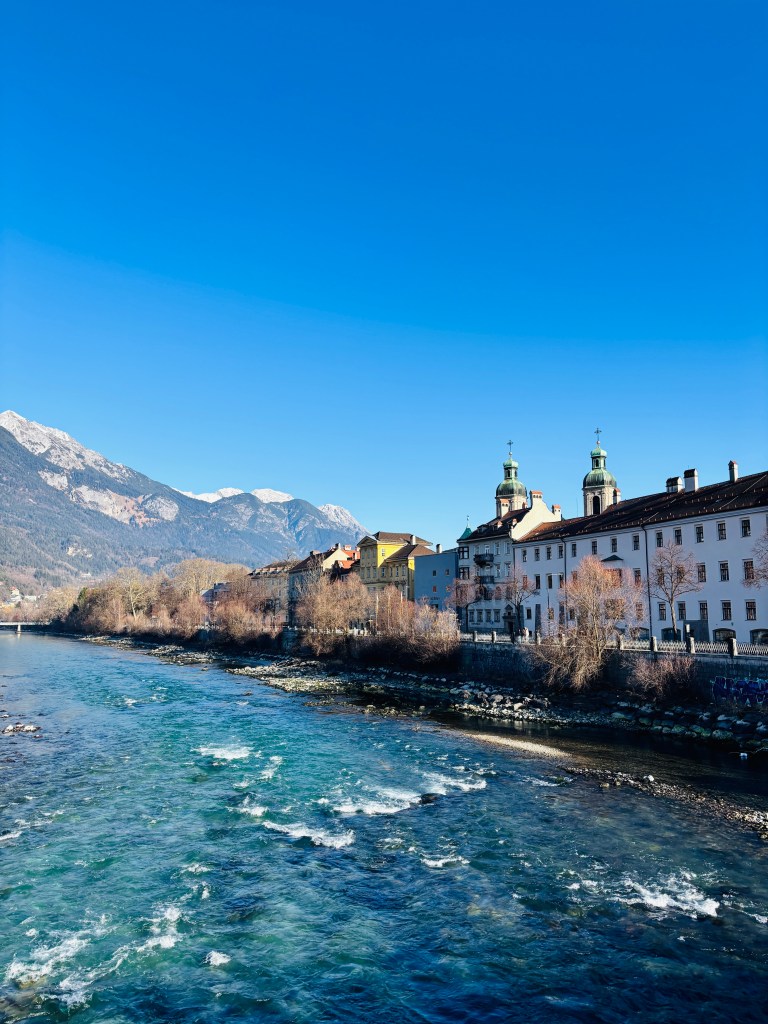
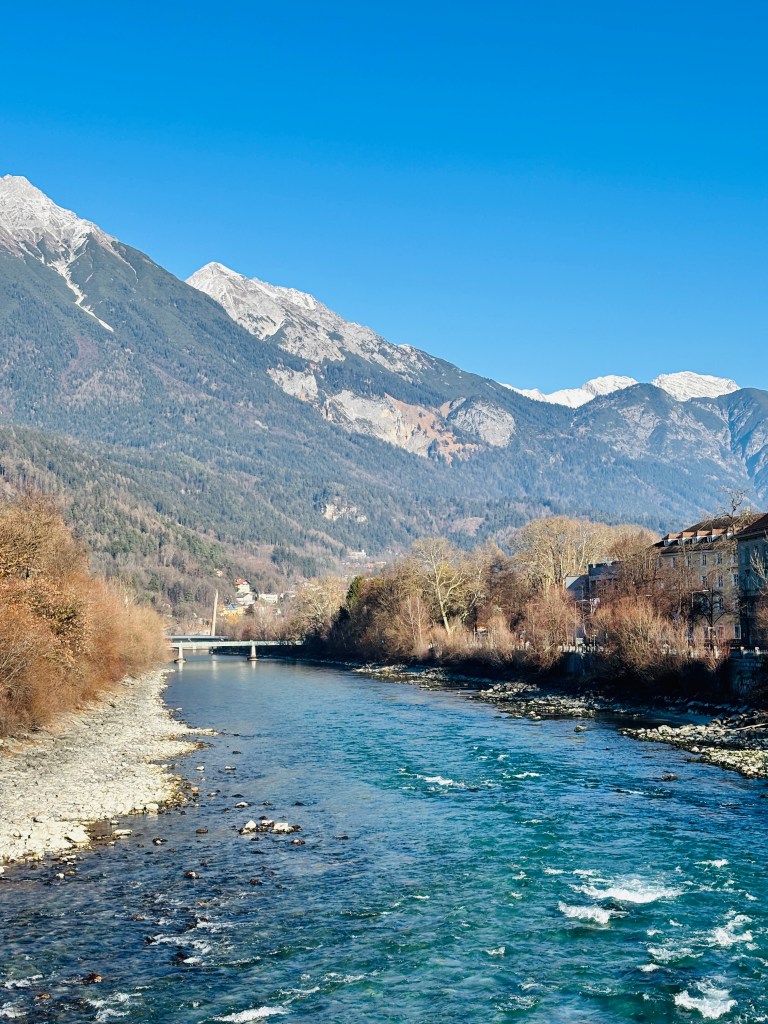
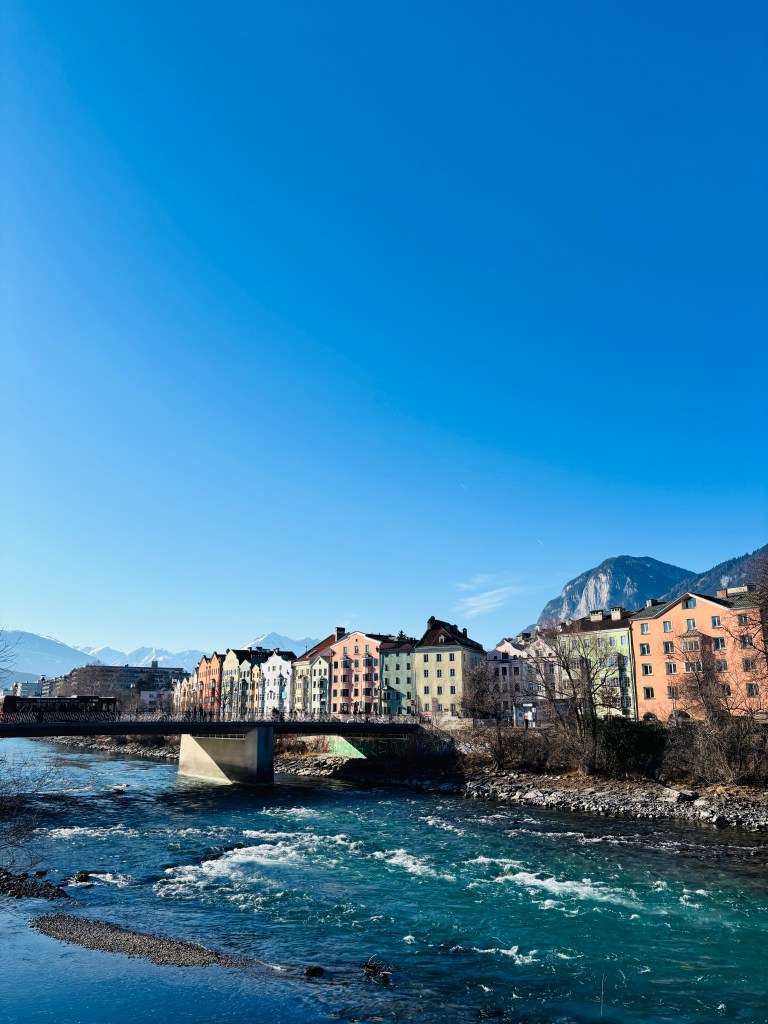
We turned in early that night. Innsbruck had given us a full spectrum – festive, cultural, scenic, mechanical, and raw – and we felt quietly content with how we’d experienced it. There was no urge to squeeze more in. And the next morning we’d move onwards to Salzburg. But before moving on to that chapter, here’s more pictures from our walks in Innsbruck – suspended between peaks !
Discover more from thatbrowngirlinblackboots
Subscribe to get the latest posts sent to your email.

