Vienna was our entry point into Austria for the first leg of our December ‘2025 vacation. And also our introduction to how cold this trip was going to be. Just 1.5 days, which was spent mostly walking around without much structure – exploring Christmas markets, finding warmth in food and drinks, and letting the city set the pace.
The Arrival in Vienna
So yeah, we arrived in Vienna bruised by travel – late evening, a long transit via Amsterdam, bags that had opinions about being jolted around – and basically operating on autopilot.
The musical concert at stephensdom
Still, Mozart musical concert tickets at St. Stephen’s Cathedral were booked. So 15 minutes after checking into our hotel, we trudged towards Stephansplatz like two very determined, but very tired tourists.
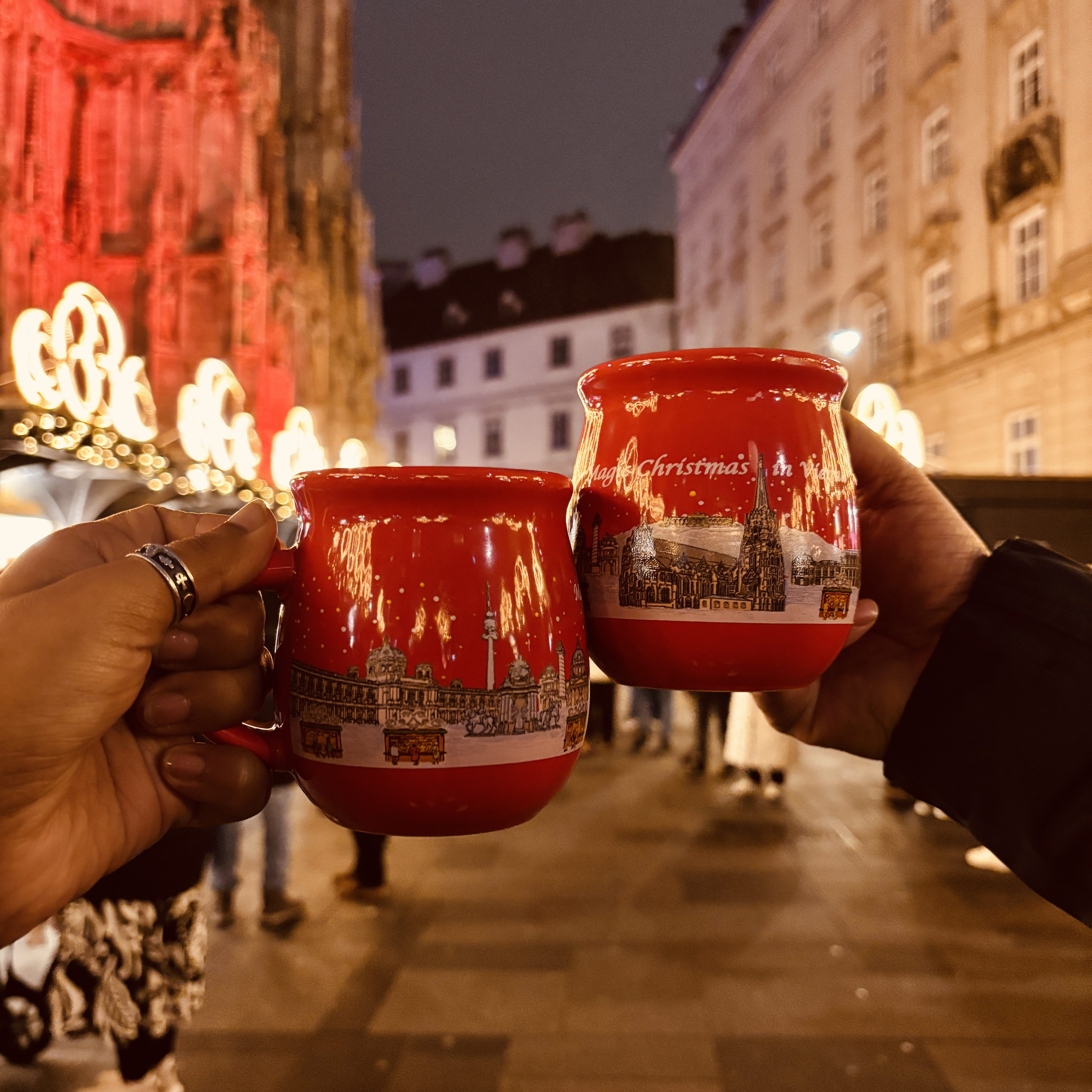
We walked towards the Christmas market at Stephansplatz to grab a quick bite before the show, but the stalls were almost starting to fold. After a quick glance of everything F&B the market had to offer, the first cup of Glühwein felt like a tiny, necessary decision, or maybe a much needed rescue. That warm, spiced mug was less about indulgence and more about survival – tiny gulps of the red hot deliciousness that restored some heat in our bodies and also returned some feeling to frozen fingertips.
Getting into St. Stephen’s was gloriously chaotic. We circled, asked too many questions along with several other confused tourists, and finally after a lot of to and fro, managed to figure out the entrance to the cathedral. The concert itself – billed as a Mozart evening – was extremely classical, reverent, and formal in a way that made my usual music-brain wander. Beautiful – yes! Comprehensible – briefly maybe, in the awe of the initial moments, but I ultimately dozed off (In my defense I was extremely tired and cold)! The program leaned on choral and organ traditions that float differently from a theatre show – long, sustained lines, ecclesiastical phrasing, and an acoustics-first performance aesthetic that asks you to sit very still and listen differently – and which I realised about 15 minutes into it, was not my cup of tea or coffee or whatever! No recording of the concert is allowed, so readers please amp up your imagination. (Practical note – many cathedral concerts run about an hour and often don’t have an intermission, so you’re committed once the music starts).
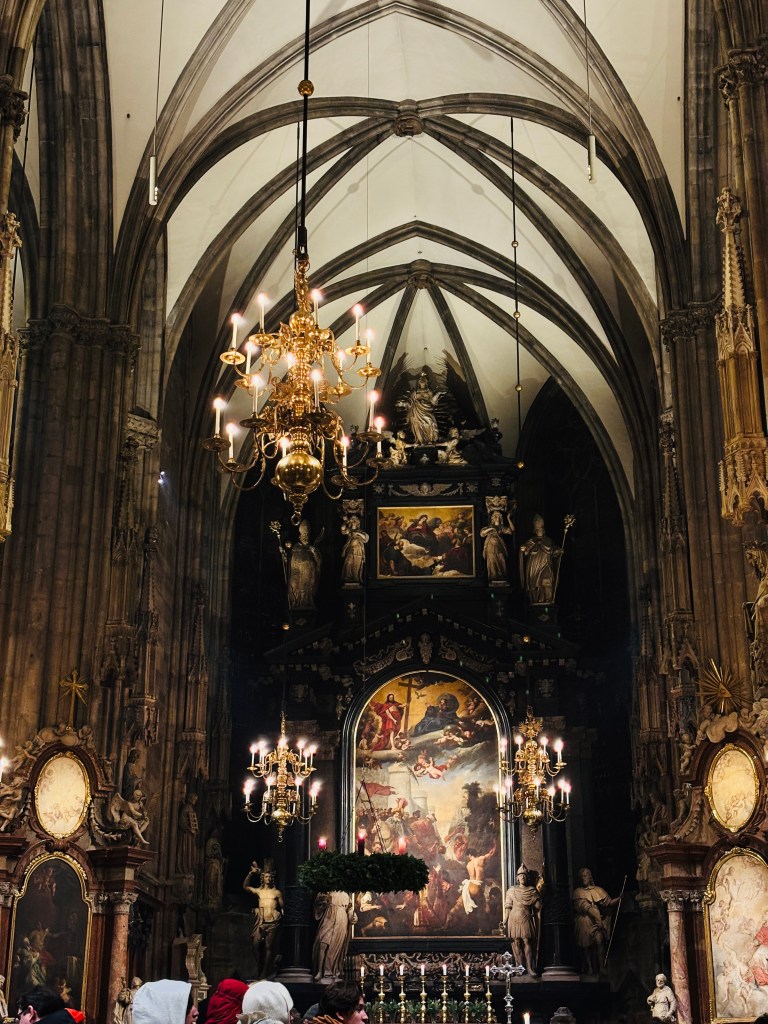
The interiors of St. Stephen’s Cathedral do take over your senses, and in a good way. It’s a Gothic cathedral with a nave that stretches long and narrow beneath ribbed vaults; light filters through tall stained-glass windows and pools on carved altars and side chapels. The south tower — affectionately called the “Steffl” — tops out at 136 metres, a dominant marker on the Viennese skyline, while the roof is a showpiece of 230,000 glazed tiles arranged into colourful mosaics . Walk slowly down the nave and you notice dozens of side altars, baroque embellishments, and sculpted confessionals that feel both intimate and impossibly old.
So, the first night of our vacation resulted in tired bodies, very cold fingers, a chaotic entrance, one life-saving Glühwein, and an evening of music that demanded patience.
Vienna – Day 2
We gave ourselves a lie-in because our bodies declared a ceasefire with punctuality after the late arrival. A very slow indulgent start to the day with coffee in bed, fingers slowly uncurling with the warmth and peeping outside the hotel room window, watching the invisible cold breeze. And when we finally stepped out, it was with warm layers, good shoes, and zero guilt about moving slowly. Since we had only one full day in Vienna and no plans beyond being present, we honoured the only sensible agenda possible in December – Christmas markets at a leisurely pace.
the SCHLOSS belvedere
Our first stop was the Schloss Belvedere. Now “schloss” in German means means palace, château, or manor house and “Belvedere” is an Italian word which means beautiful view. So, Schloss Belvedere literally translates to “Beautiful View Palace,” a fitting name for the art-filled palace complex built by Prince Eugene of Savoy. We did not venture inside the palace itself, but even from the outside you could feel the weight of its history and beauty. The Belvedere is actually two Baroque palaces – the Upper and Lower Belvedere – set in sprawling gardens and originally built as a summer residence for Prince Eugene of Savoy. It now houses an art museum that includes works from medieval masters through Viennese modernism, including Klimt’s world-famous The Kiss, and special exhibitions through the winter season.

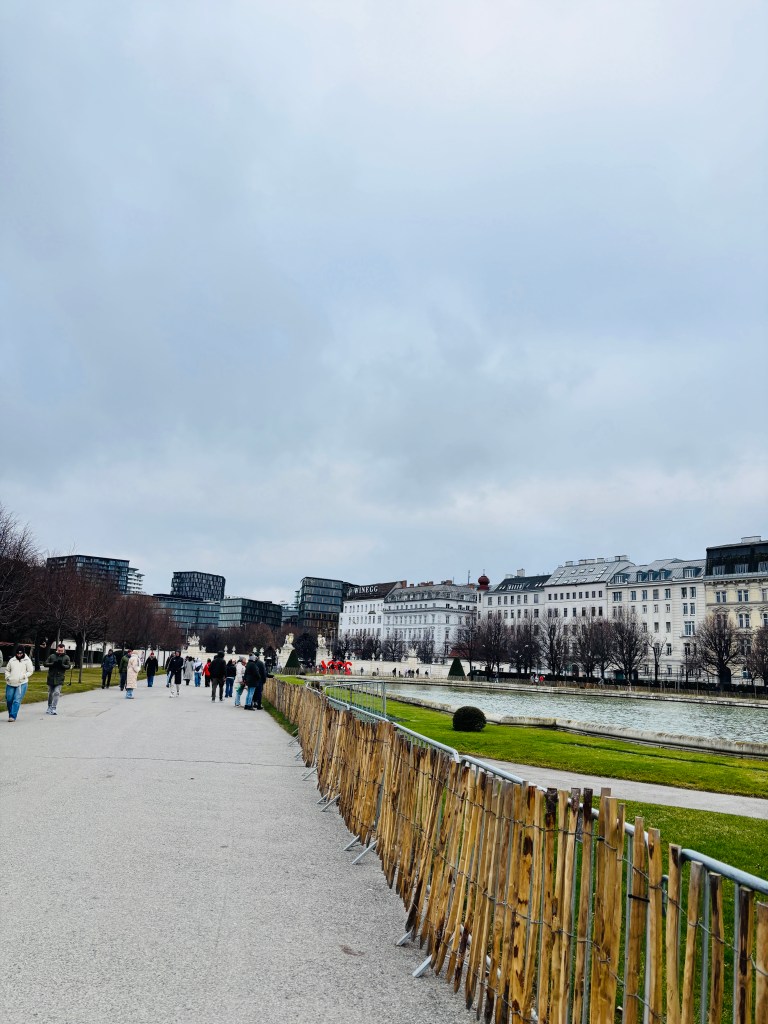
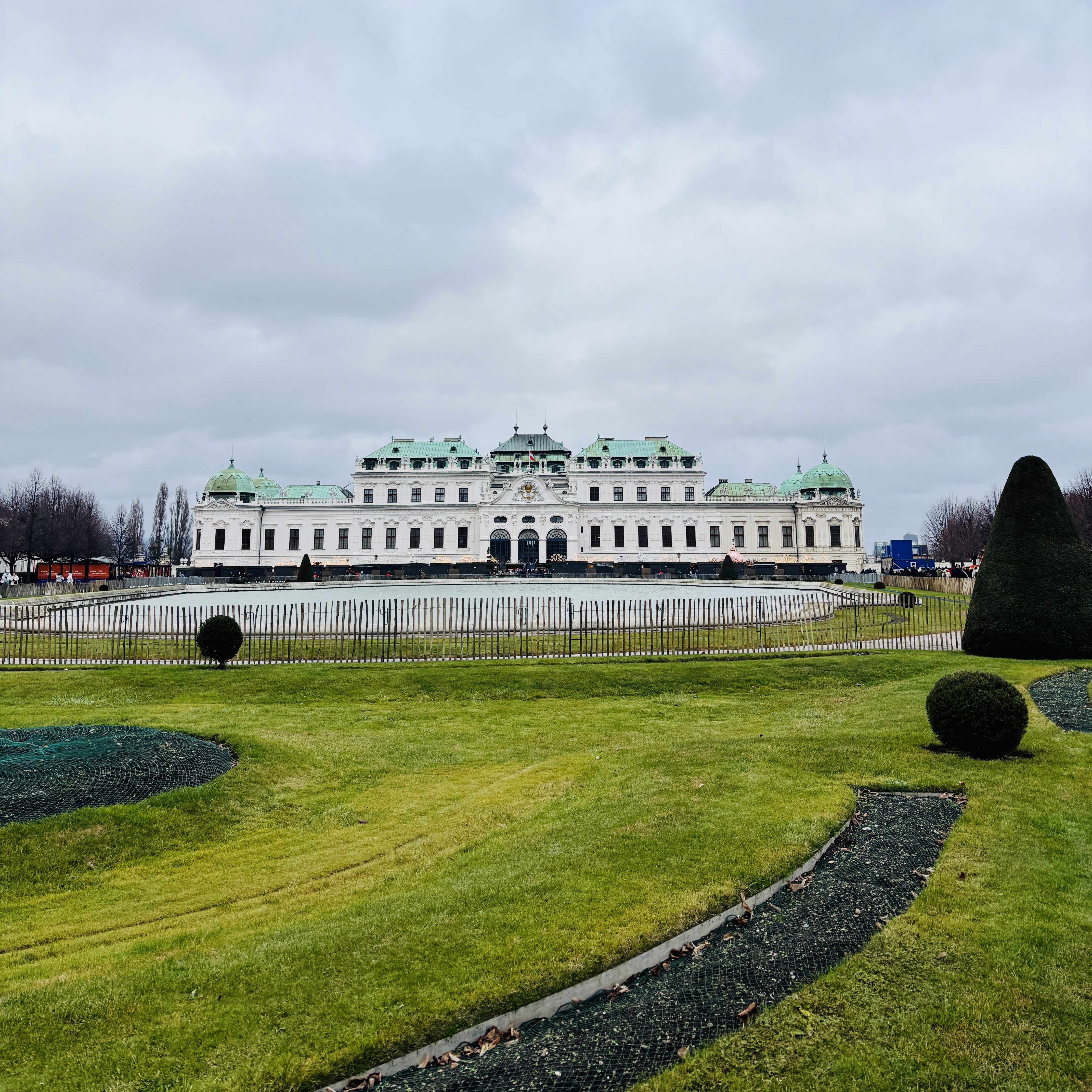
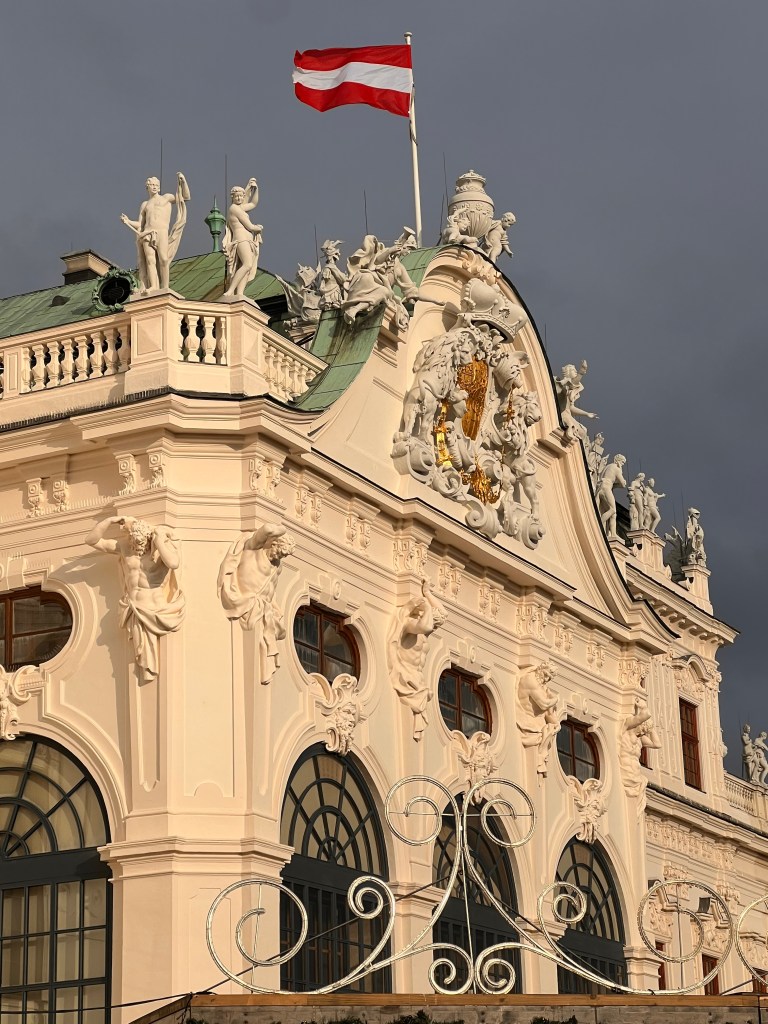
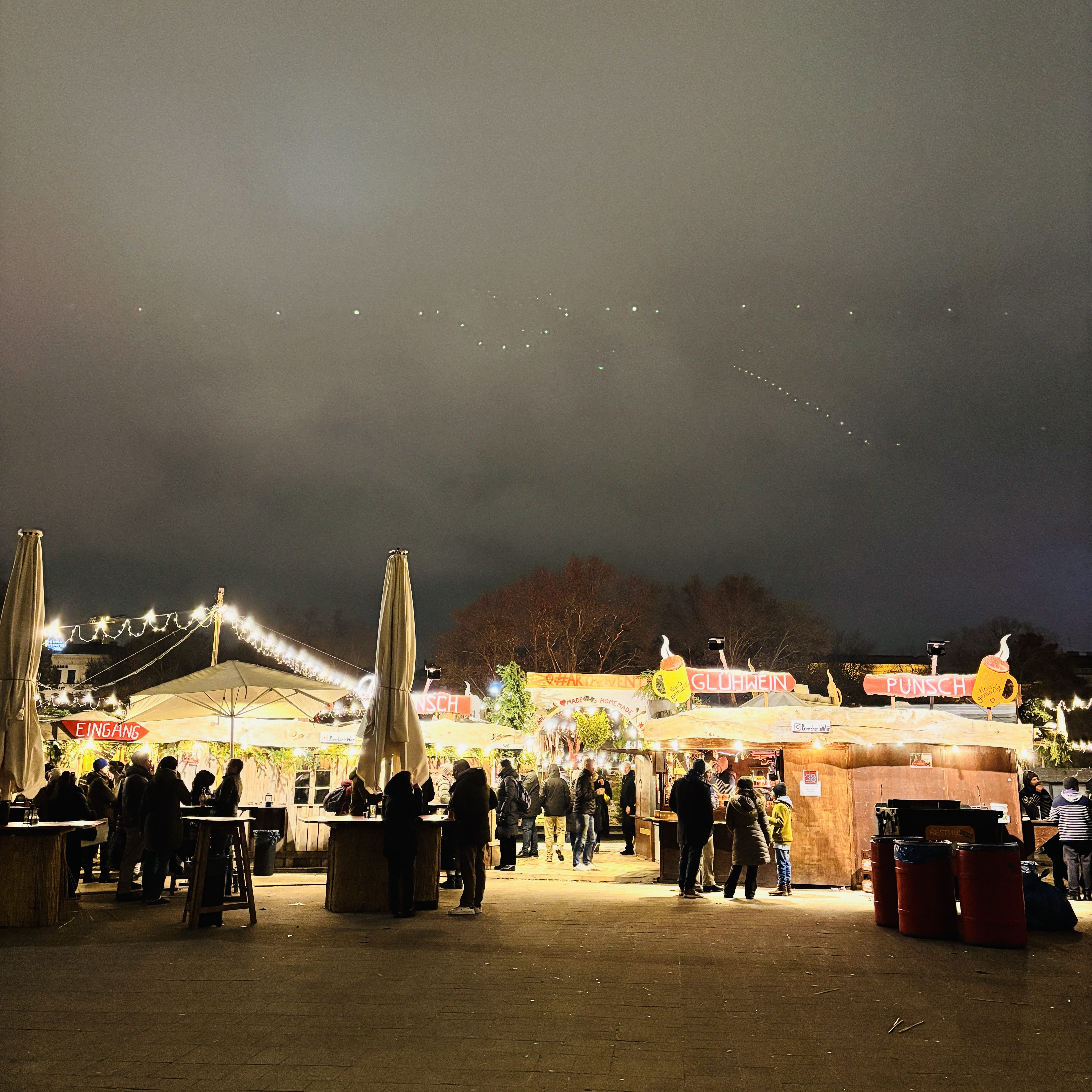
But we weren’t there for artworks — we were there for the Christmas market. The Weihnachtsdorf Schloss Belvedere (translating to Christmas Village at Belvedere Palace) spread out in front of the palace with stall huts set against the glowing Baroque backdrop, each offering something edible, wearable, or giftable. And thankfully, with no looming closing hours, no rush between destinations, it was an absolutely delightful experience.
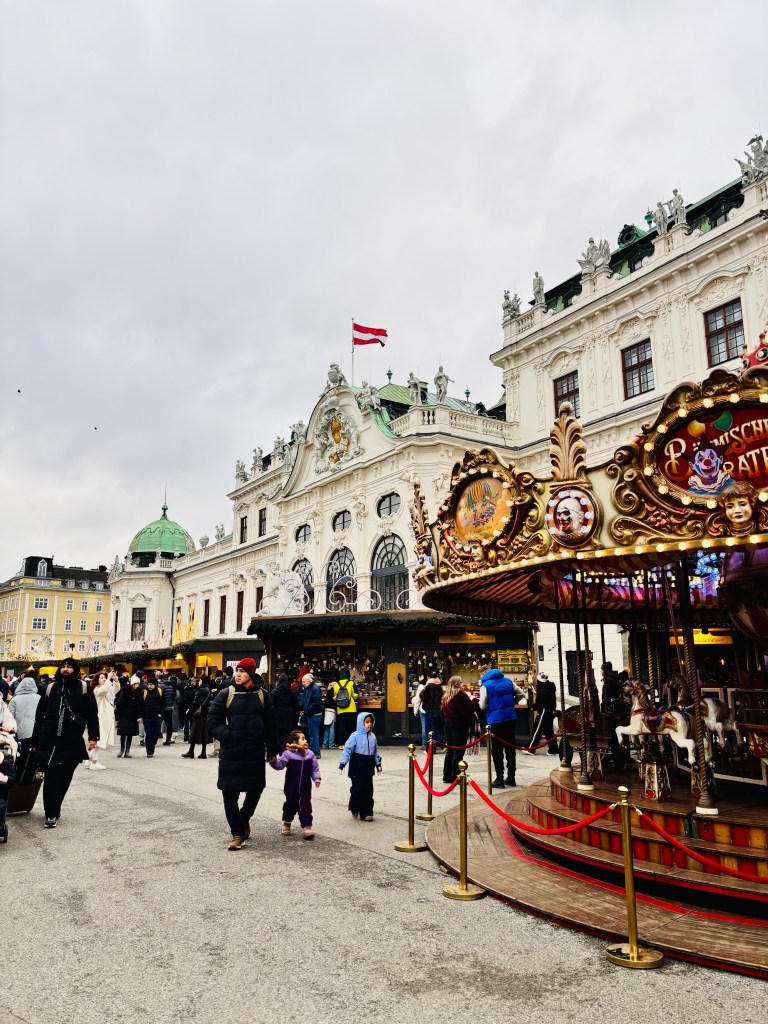
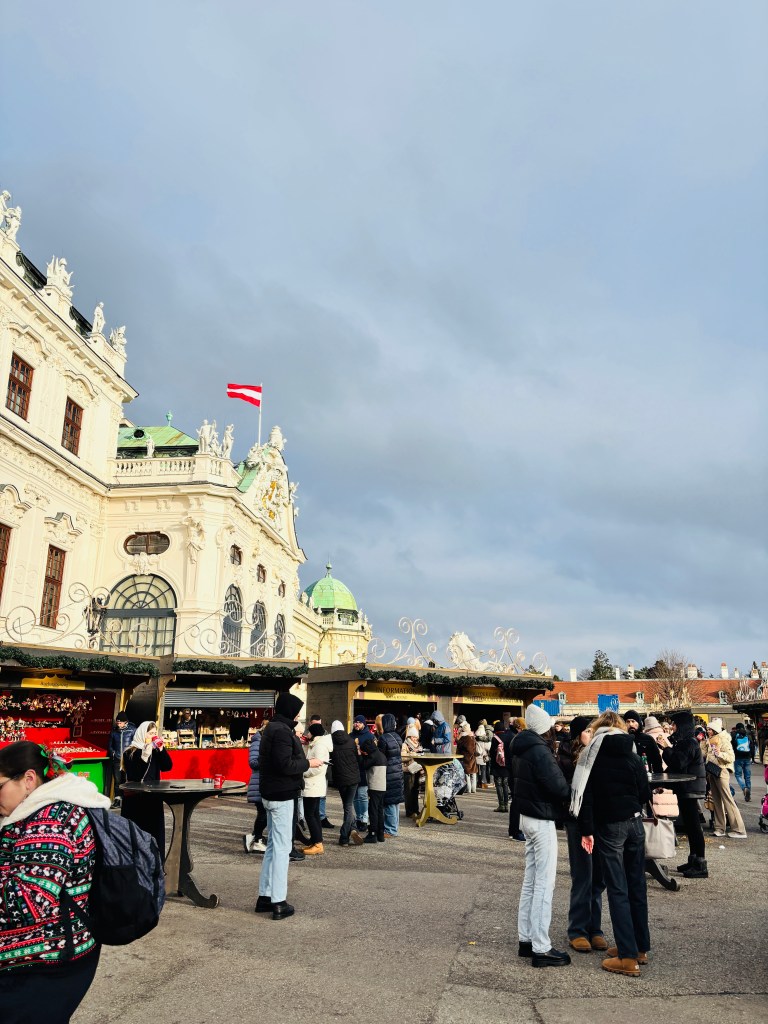
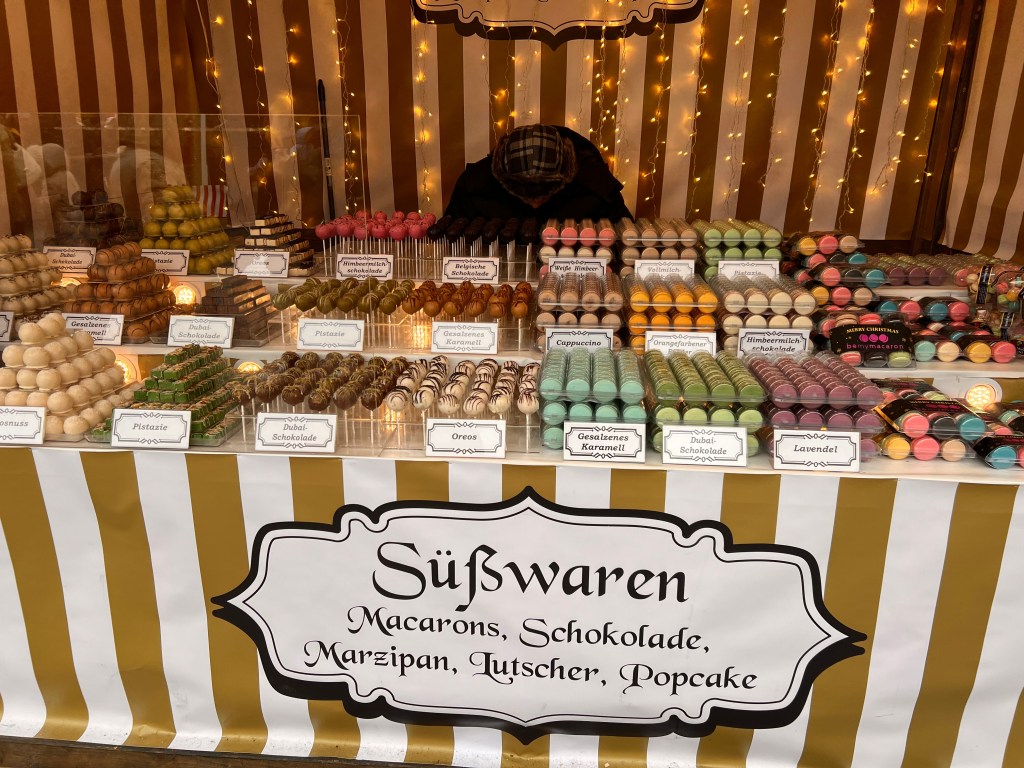
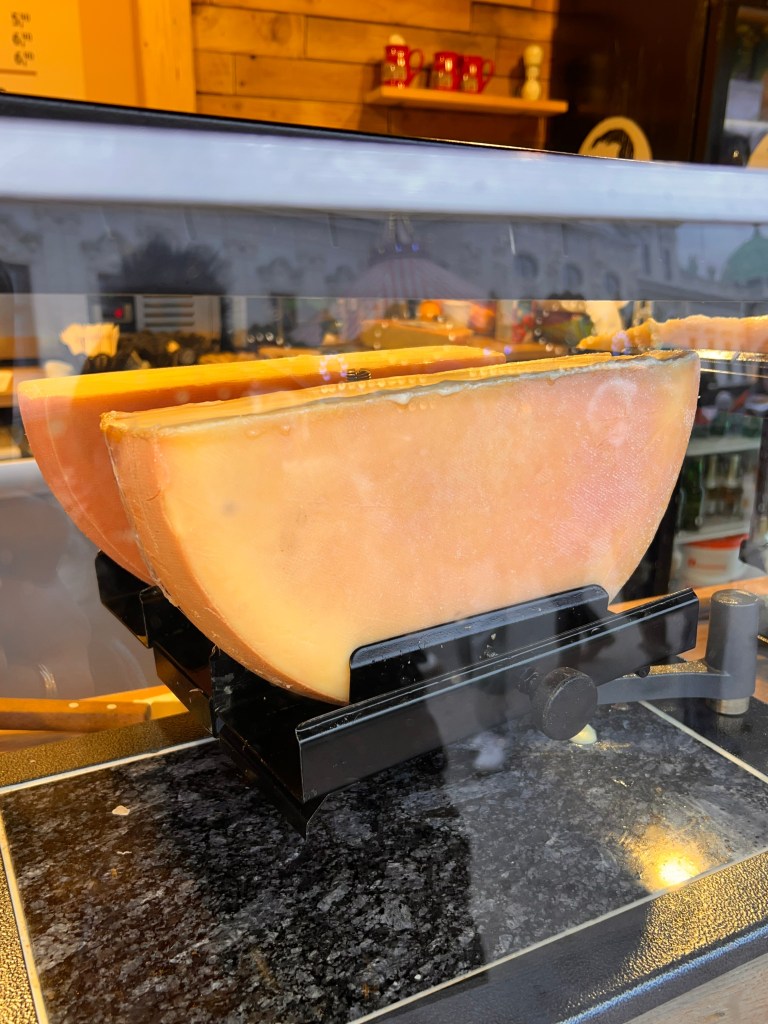
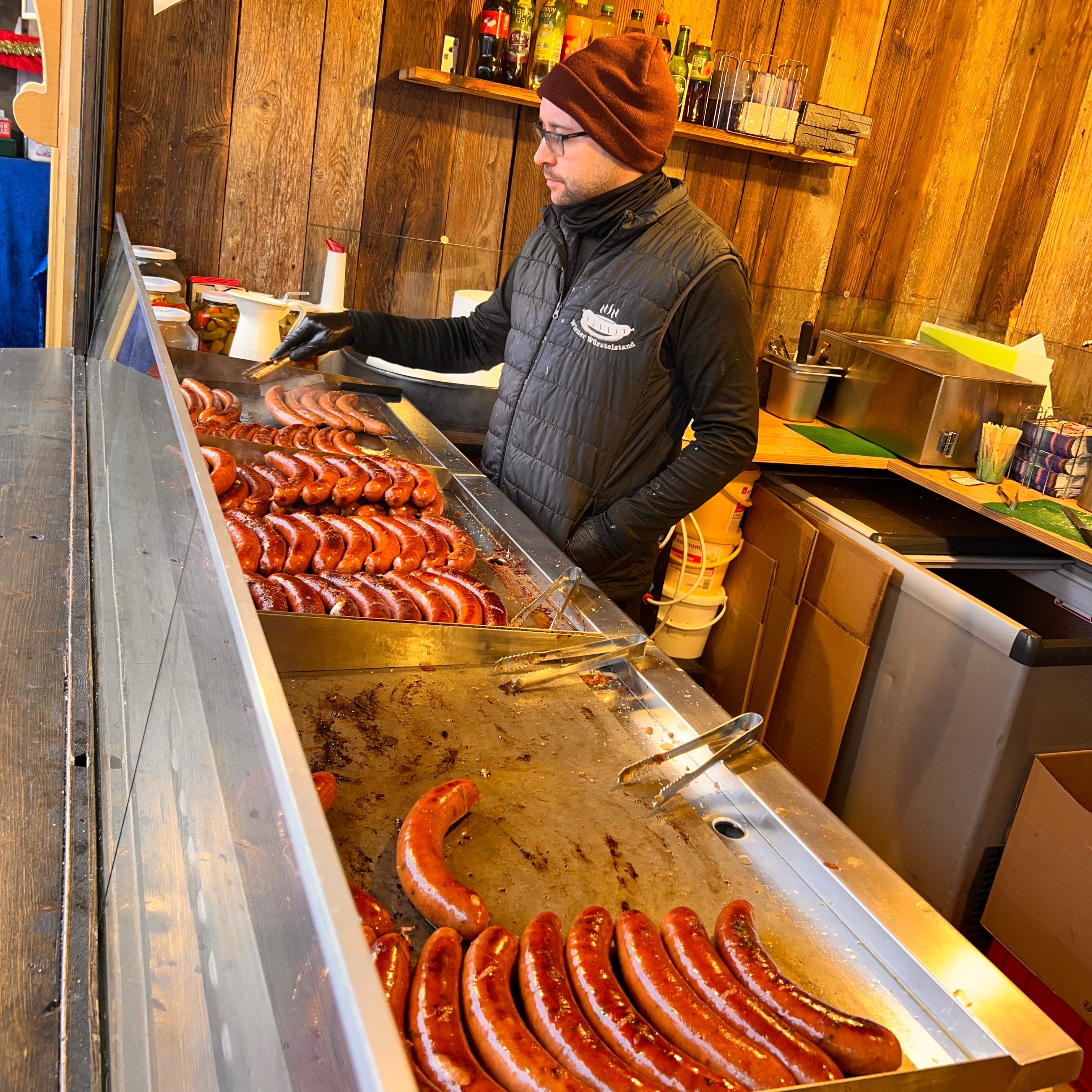
We devoured delicious hot chocolate laced with rum, hot dog with spicy sausage, and cheese and bacon pretzel. Oh, the pretzels!!! Throughout southern German-speaking regions (including Austria), pretzels — or Brezel — are a traditional twisted baked bread with a glossy, salted surface, sold everywhere from bakeries to Christmas markets. They also come sprinkled with sesame, poppy, or caraway seeds, and sometimes covered in cheese and bacon bits, and even just sugar sprinkled or the more generously chocolate coated – Yum !! Their history stretches back to medieval Europe, where monks baked and shared them as “little rewards” for children learning prayers, and even as symbols of good luck and spiritual meaning. The distinctive twist represents arms folded in prayer, while the three holes symbolize the Holy Trinity.
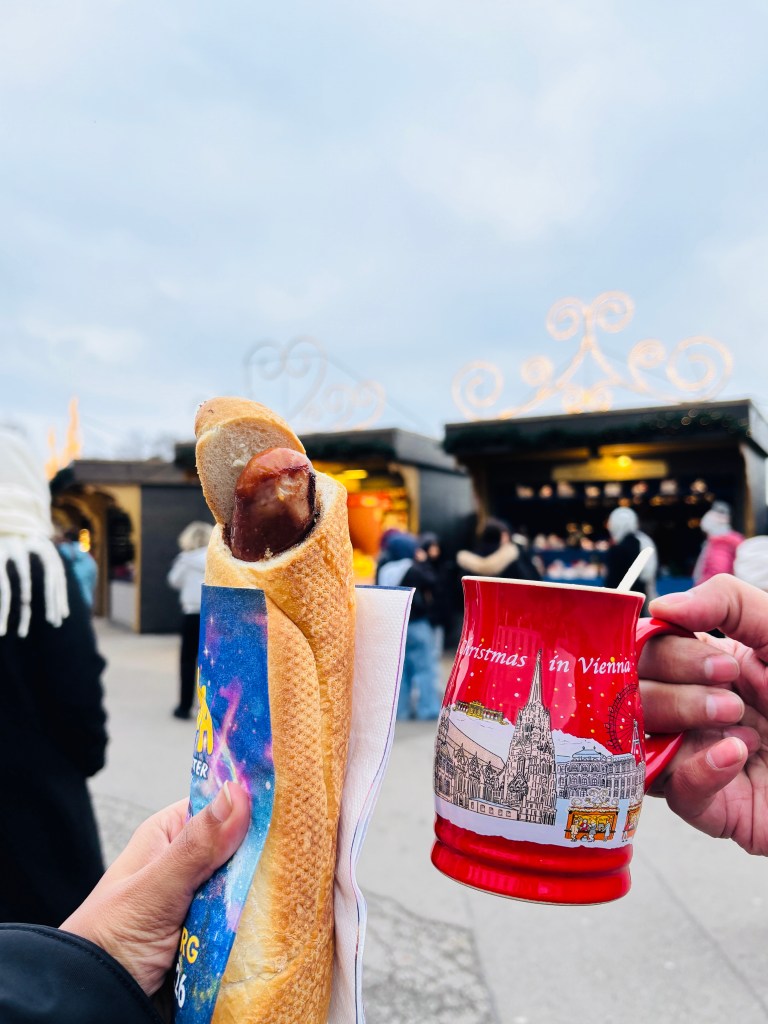
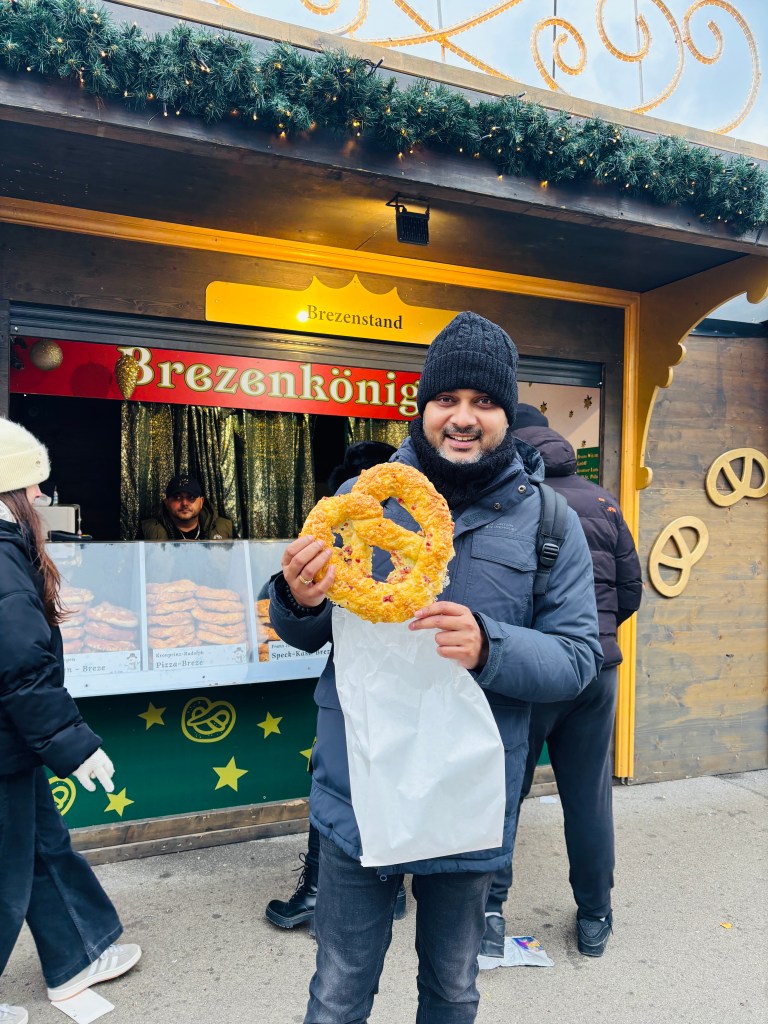
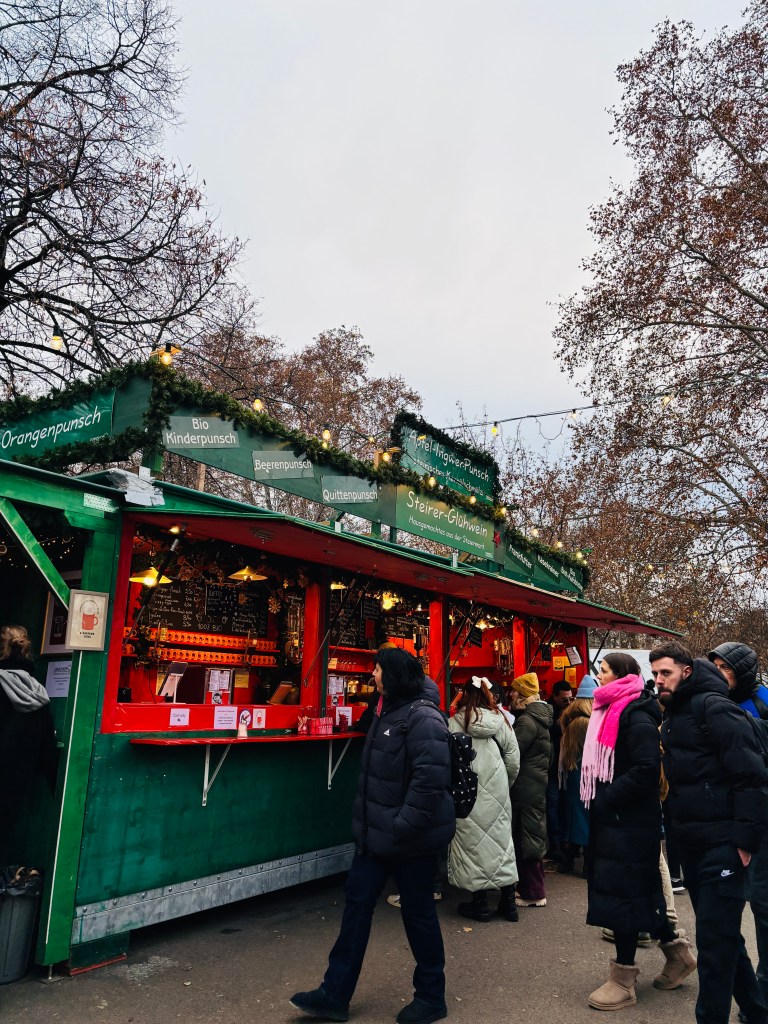
All beverages – from spicy hot punch to classic Glühwein – came in ceramic mugs with a tiny deposit fee. (Something we we hadn’t seen in the UK, France or Norway – there it was the usual paper cups). This deposit system means you pay a small extra when you order your drink, and when you return the mug, you get the deposit back if you hand it in – or you keep the mug as a collector souvenir. A nice clever little tradition that turns a mug into a memory.
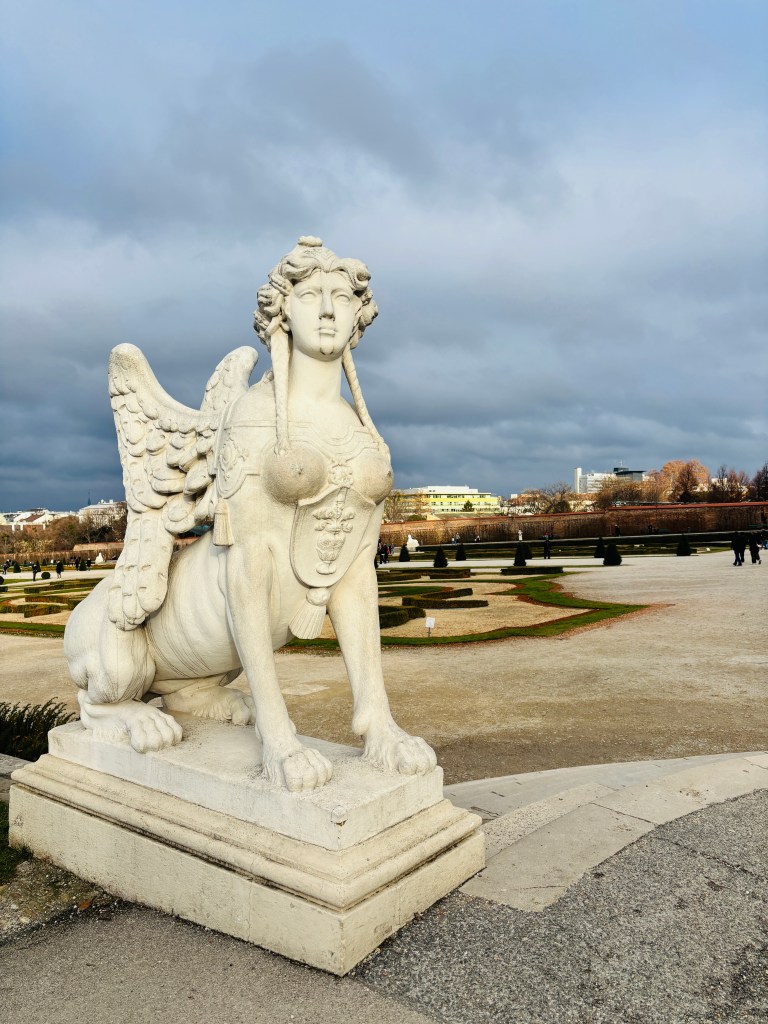
We then stepped out and walked towards the rear of the palace which offers stunningly, iconic perspectives of the meticulously landscaped Baroque gardens stretching out below, culminating in a beautiful vista of Vienna’s cityscape, and surrounding hills, creating a picture-perfect panorama.
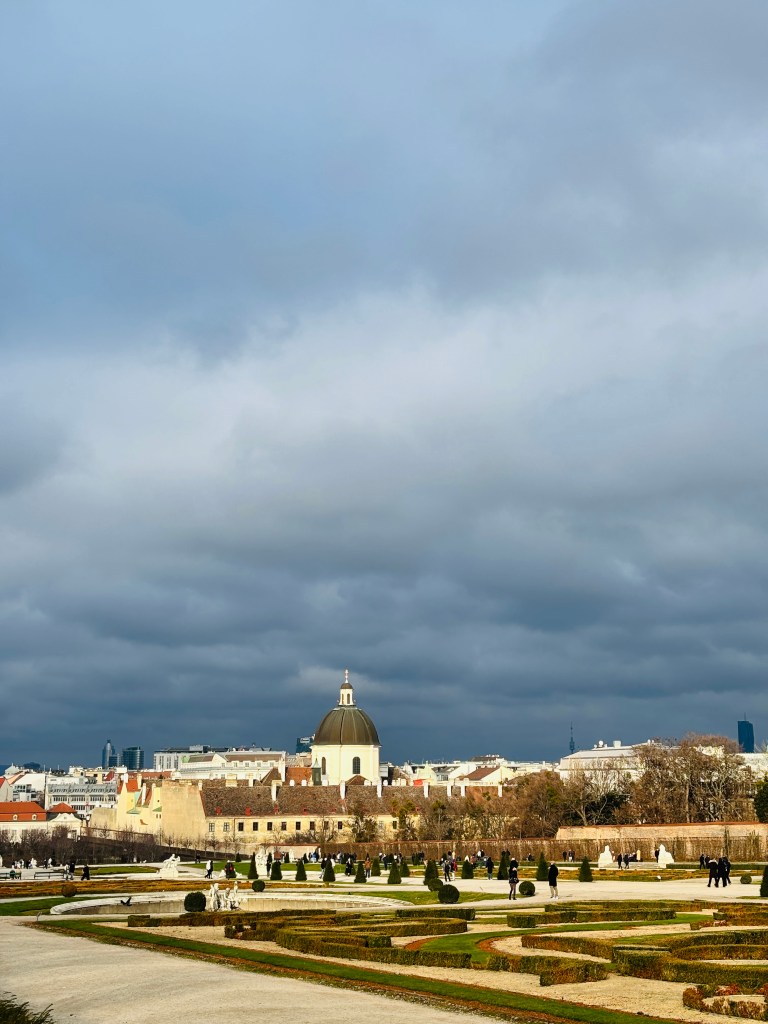
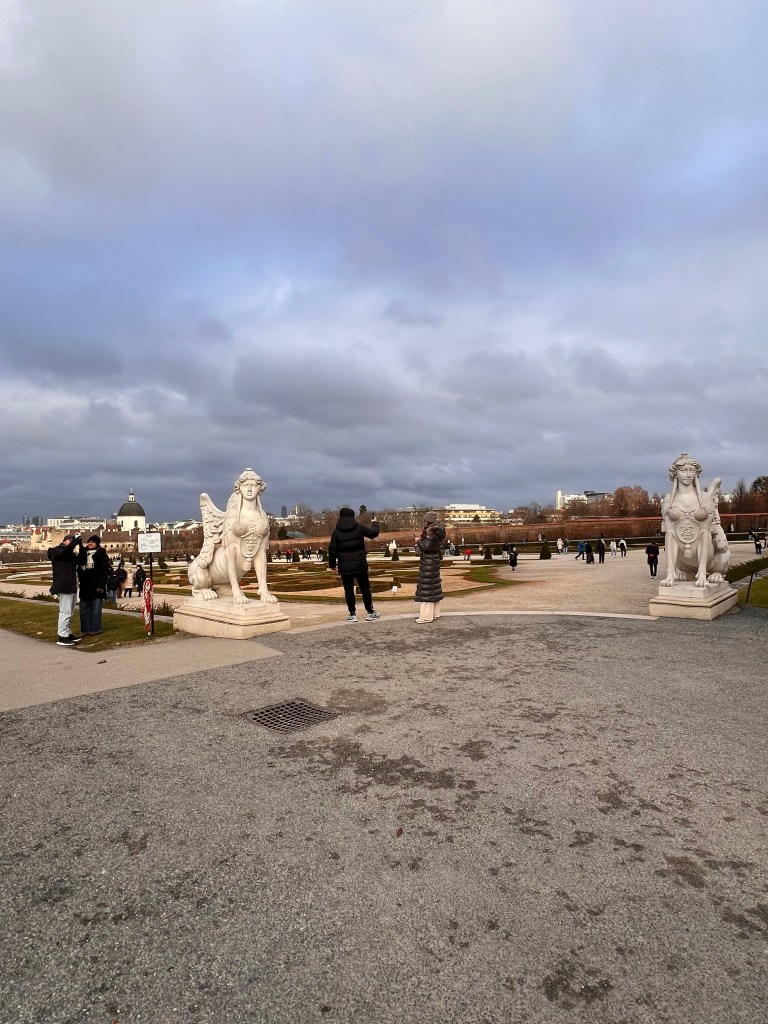
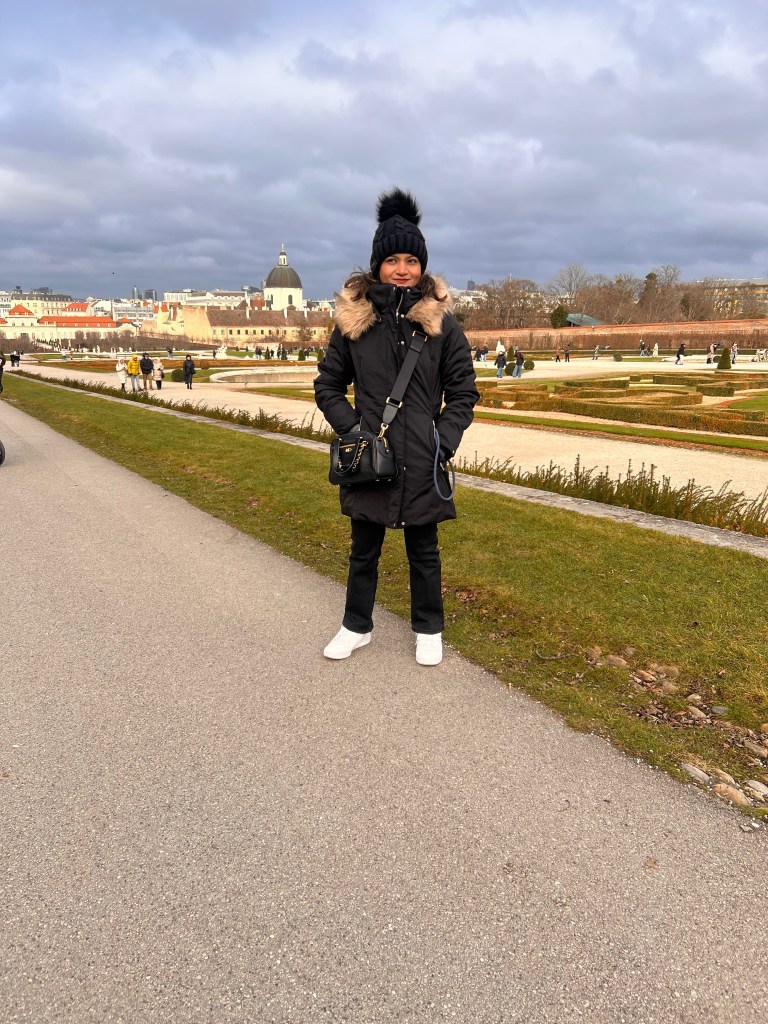
Heading out and further from the Belvedere, one of the unexpected pauses on our route was the Soviet War Memorial in Schwarzenbergplatz.
THE Soviet War Memorial
A semi-circular white marble colonnade and bronze statue known formally as the Heldendenkmal der Roten Armee (“Heroes’ Monument of the Red Army”).
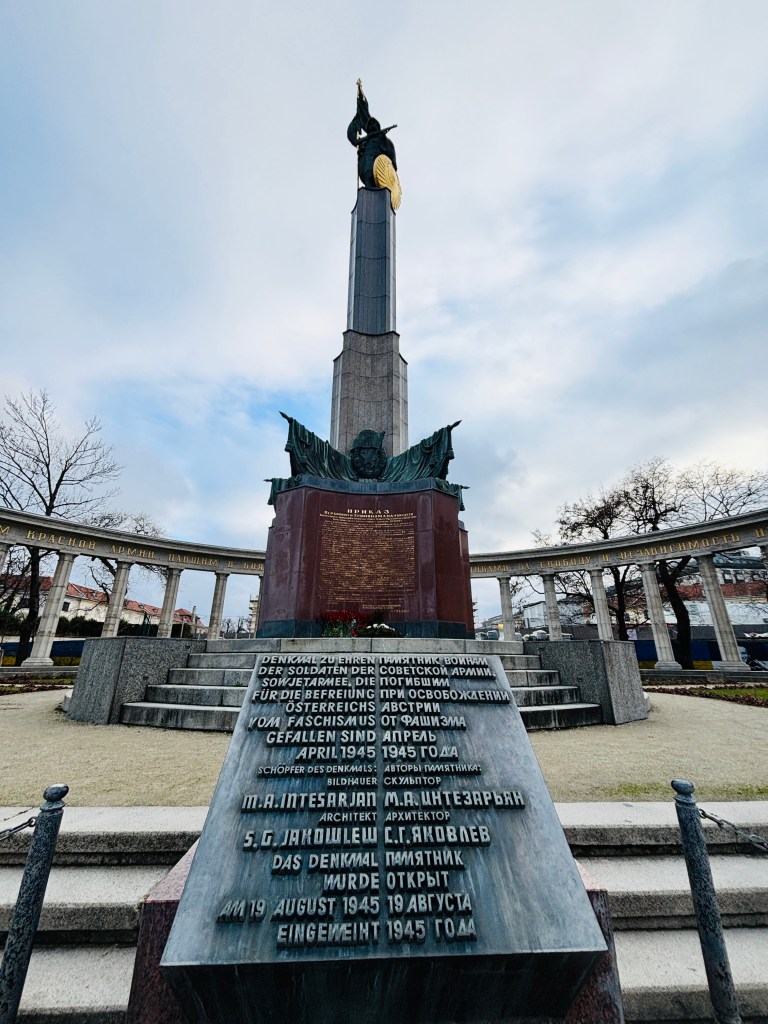
It was unveiled on 19 August 1945 – just months after Austria’s World War II fighting ended – making it one of the earliest war memorials erected in post-war Europe. The memorial commemorates the approximate 17,000 Soviet soldiers killed during the Vienna offensive — the intense series of battles in April 1945 during which the Red Army fought urban combat to wrest control of the city from German forces. Vienna officially fell to Soviet forces on 14 April 1945, bringing an end to years of Nazi rule.
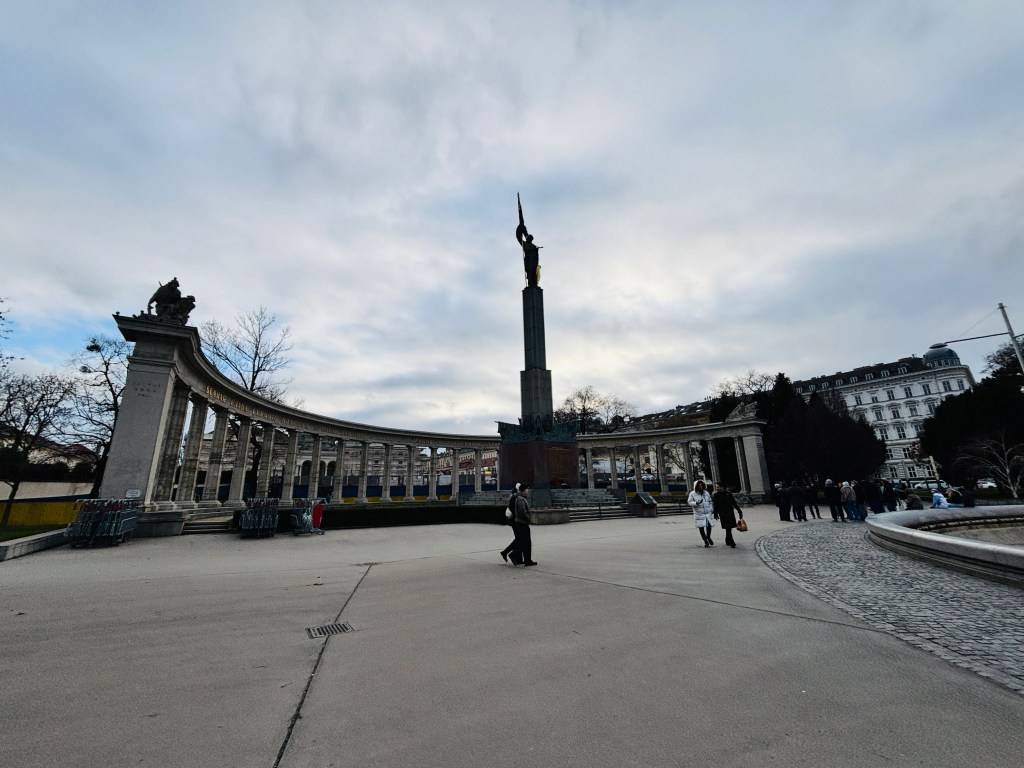
Architecturally, the memorial is striking – a semi-circular white marble colonnade frames a 12-metre figure of a Red Army soldier standing atop a high pedestal, helmeted and holding a flag and Soviet emblem, with inscriptions honouring those who fell “in the battles against the German-fascist invaders for the freedom and independence of the peoples of Europe.”
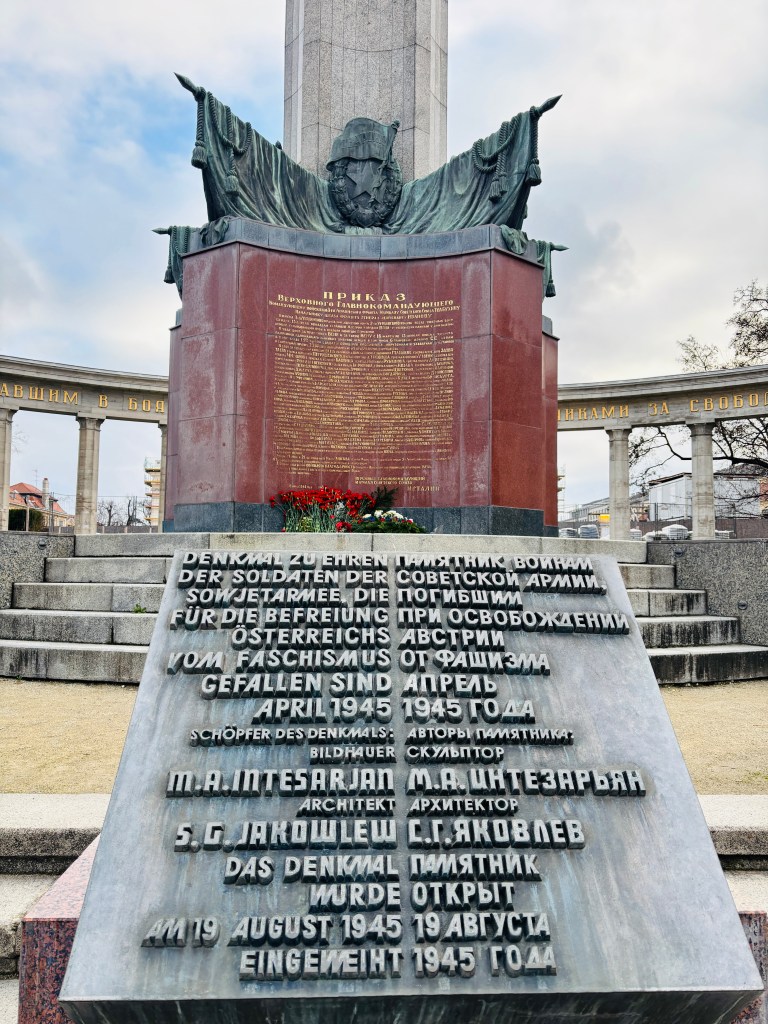
The location is deliberate – positioned where it was clearly visible during the early post-war occupation period and close to the Hochstrahlbrunnen fountain, anchoring Schwarzenbergplatz both physically and symbolically. The memorial’s presence in central Vienna is a vivid reminder of the city’s liberation from Nazi control -and also of the complicated legacy left behind. Because Austria was divided into four occupation zones (American, British, French, and Soviet) after the war, the monument also reflects broader post-war geopolitics and the realities of military occupation that shaped Austria’s path to sovereignty in the 1950s.
Today, it’s both historically significant and visually striking — a place where visitors often pause to reflect not just on the scale of the war, but on the tangled threads of liberation, memory, and remembrance that remain part of Vienna’s historical landscape.
Karlskirche – The St. Charles Church
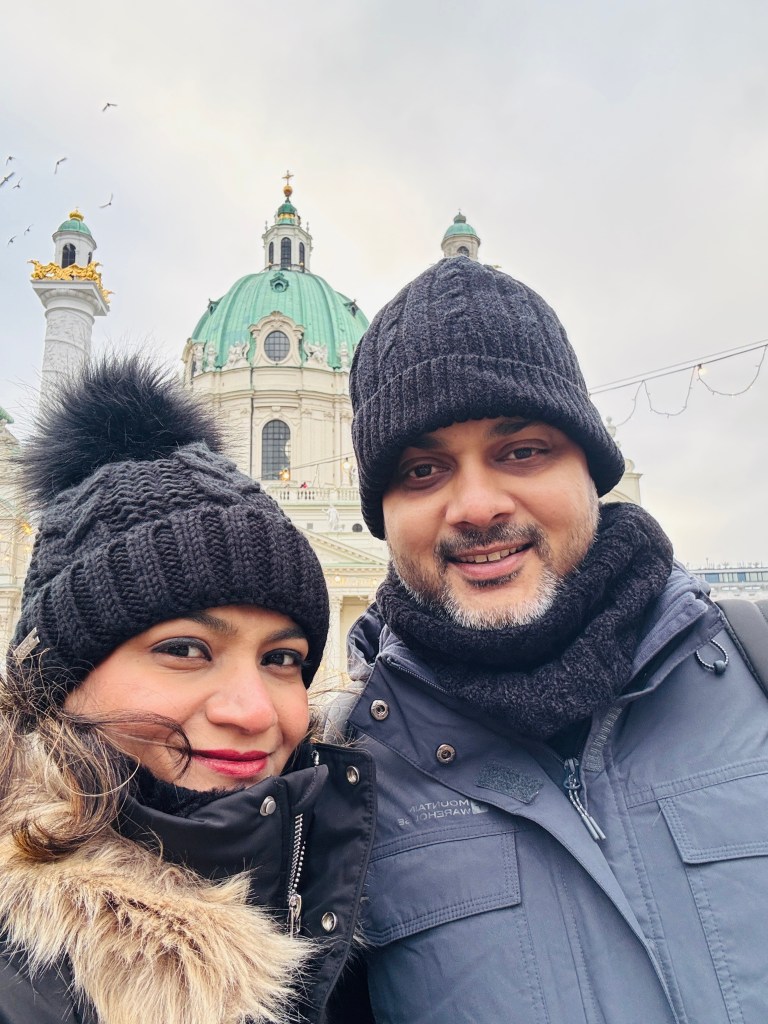
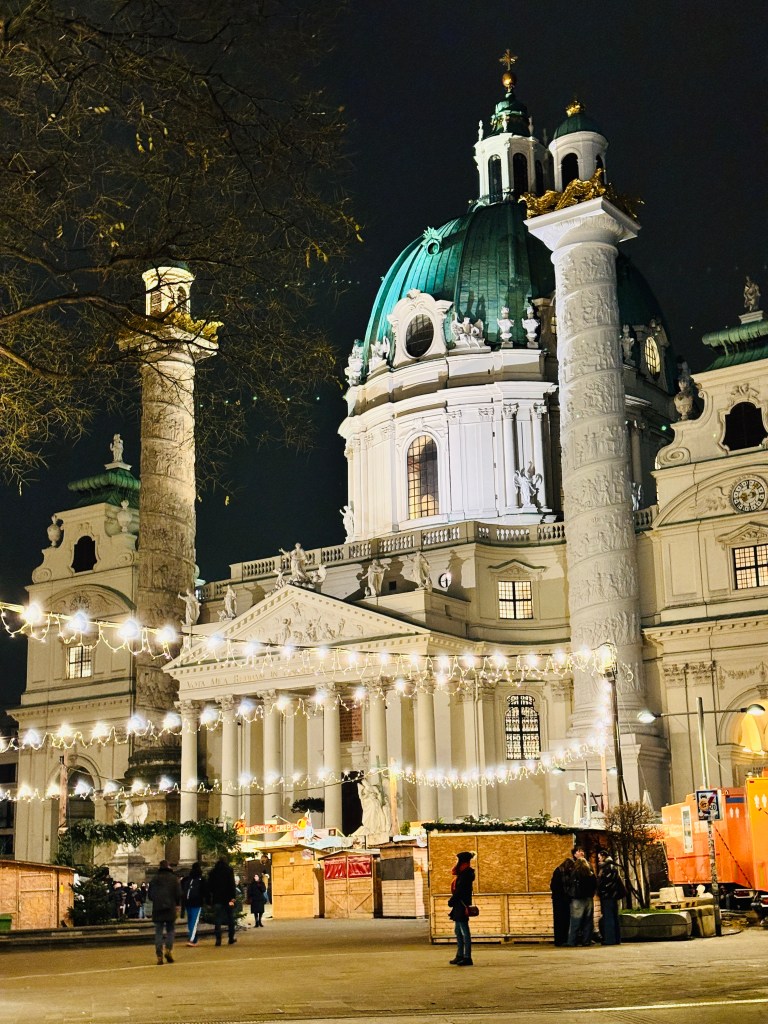
We wandered towards Karlskirche (kirche is the German word for church) next. From a distance it already feels larger than life – the dome rising above the square, the two tall columns standing on either side like they’re holding the place together. You don’t need to go inside to feel its presence. It’s one of those buildings that works purely as a visual anchor.
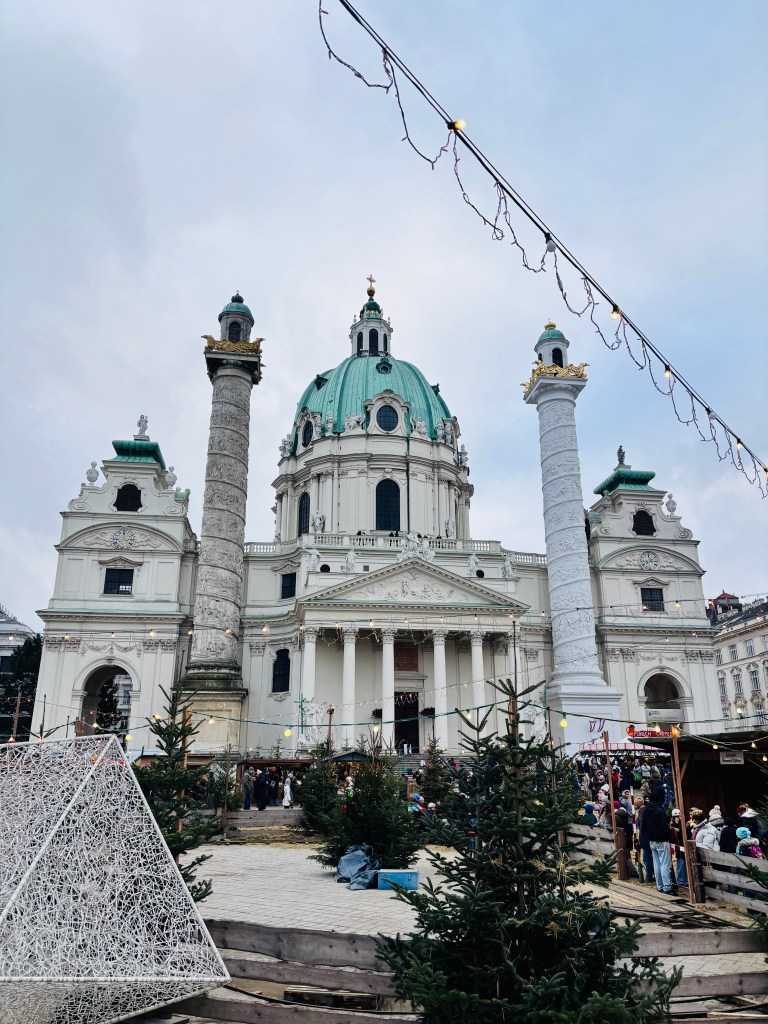
From what I read later, Karlskirche was built in the early 1700s after a major plague outbreak, commissioned by Emperor Charles VI as a kind of architectural vow – Emperor Charles VI basically promised that if Vienna was spared from the plague, he would build a grand church dedicated to St. Charles Borromeo (a saint associated with caring for plague victims). Once the plague ended, he followed through by commissioning the church.
The design blends Baroque drama with classical references, and the twin columns are inspired by Trajan’s Column in Rome, carved with scenes that spiral upward, drawing your eyes higher whether you want them to or not.
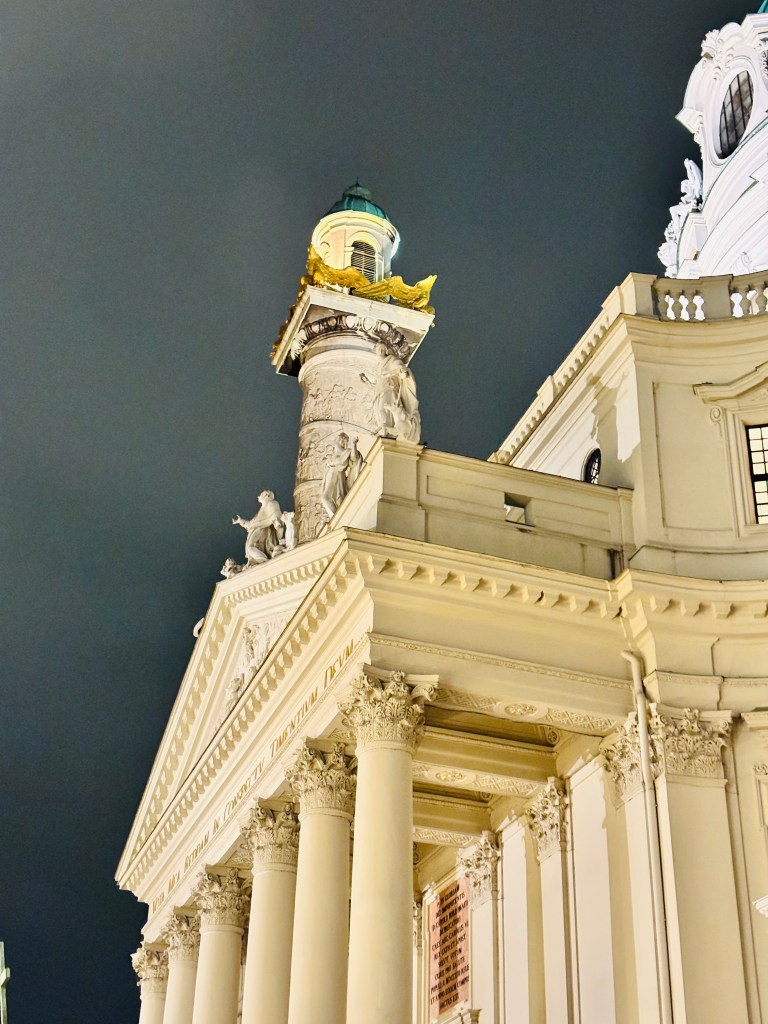
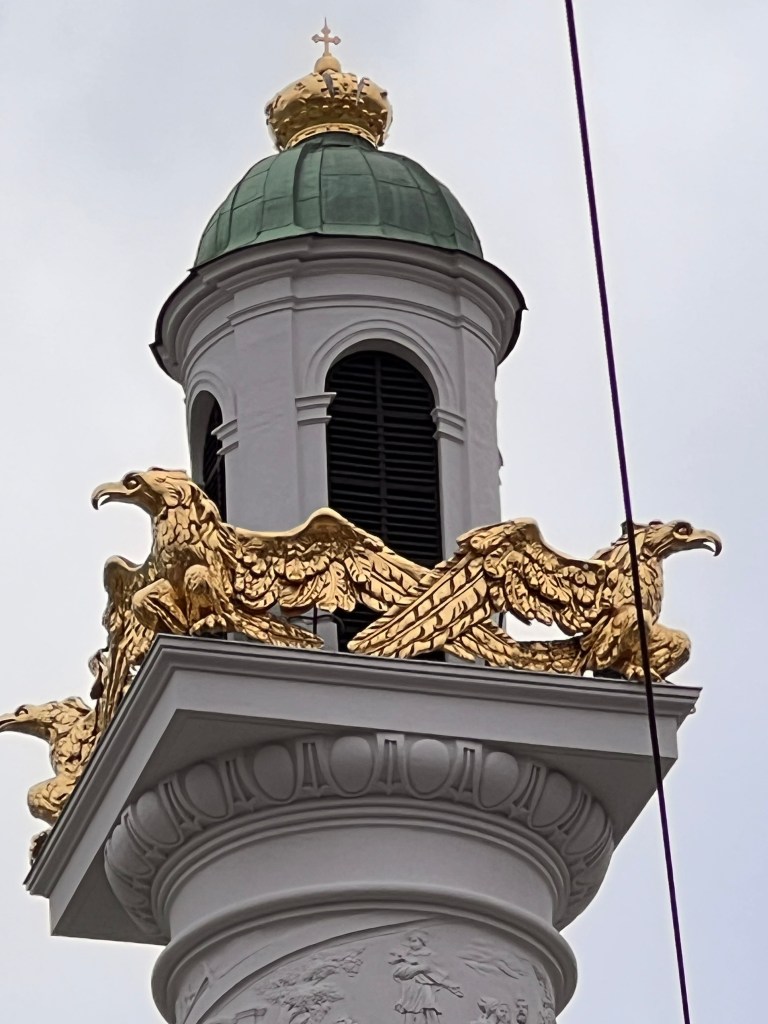
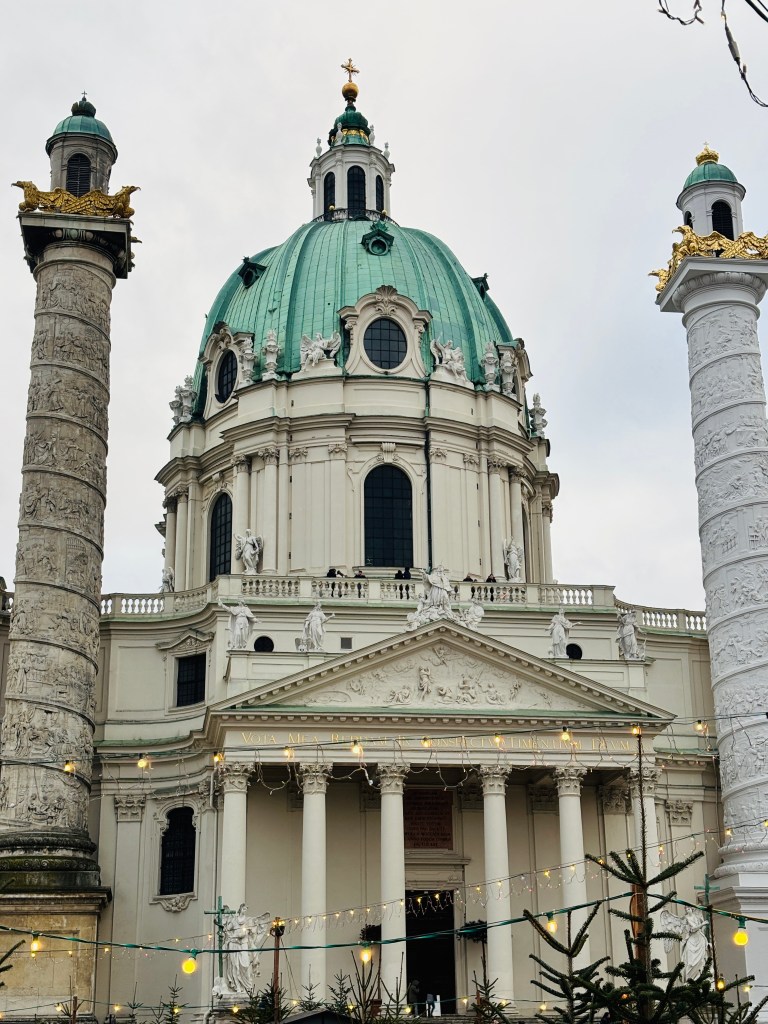
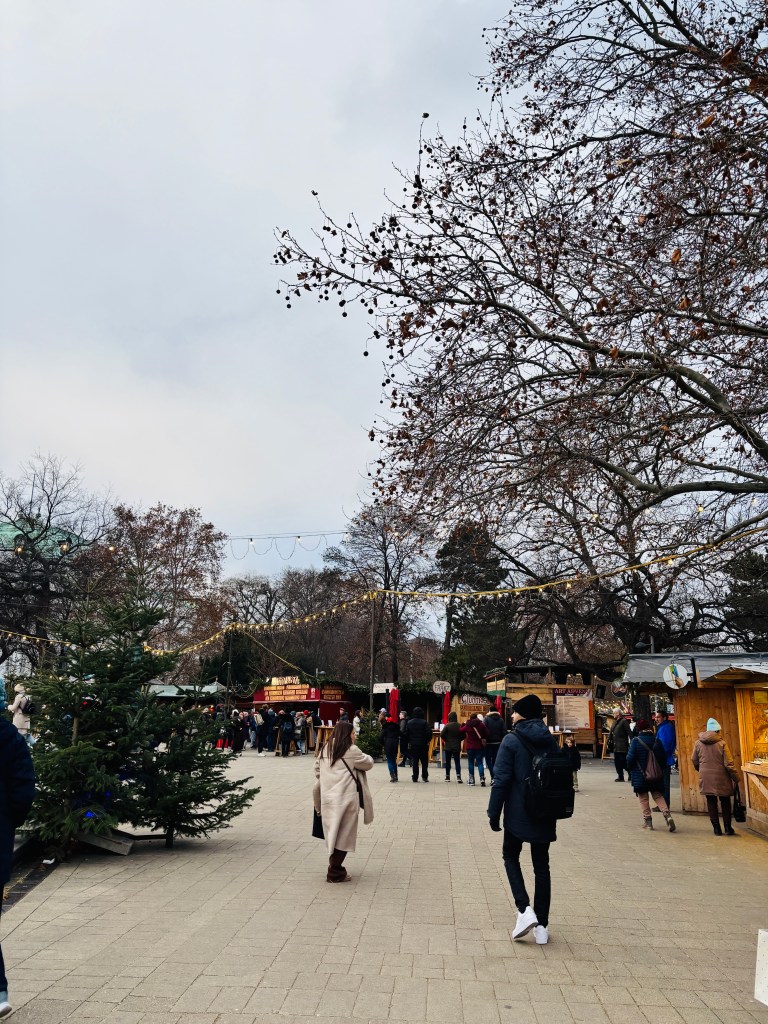
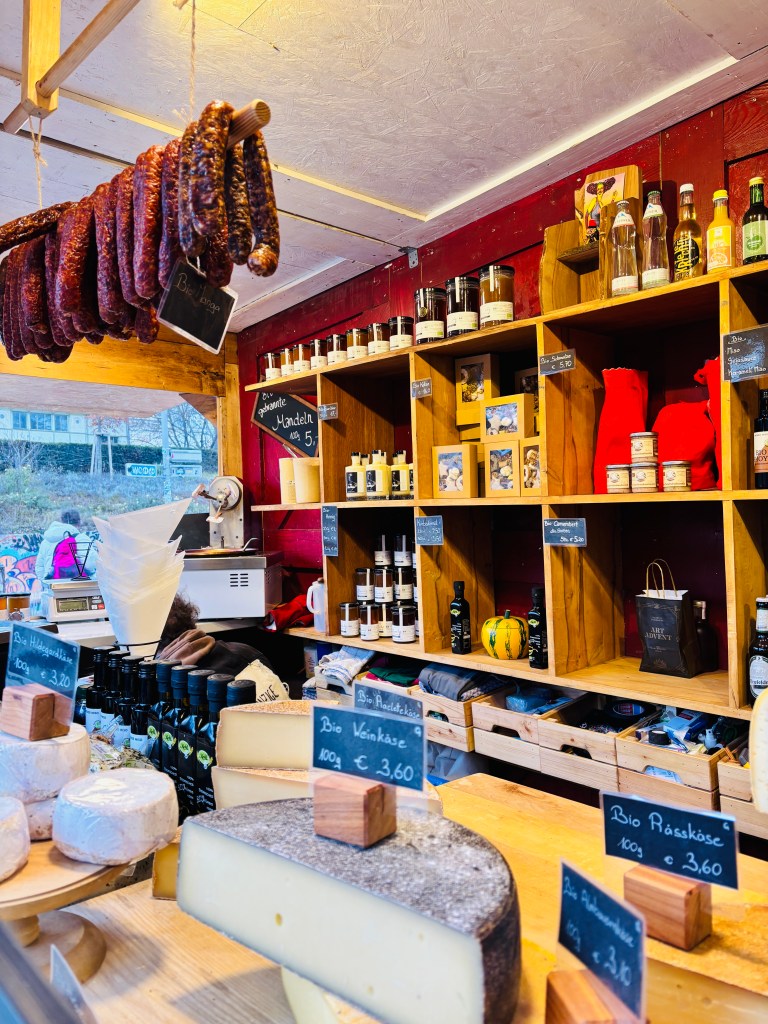
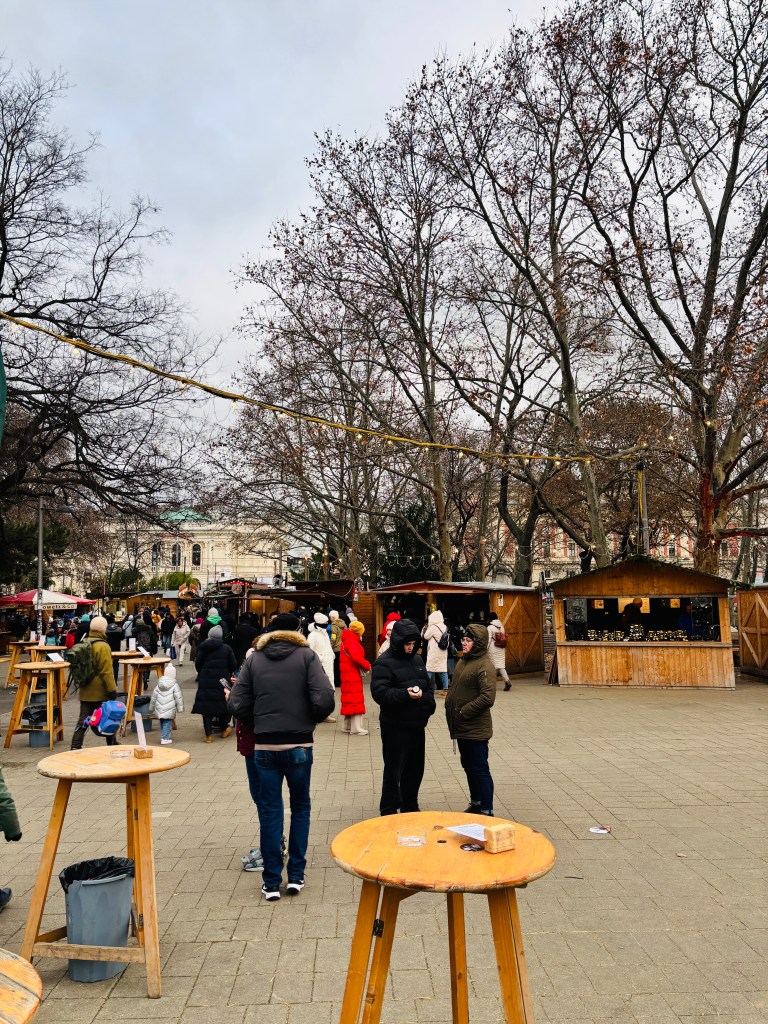
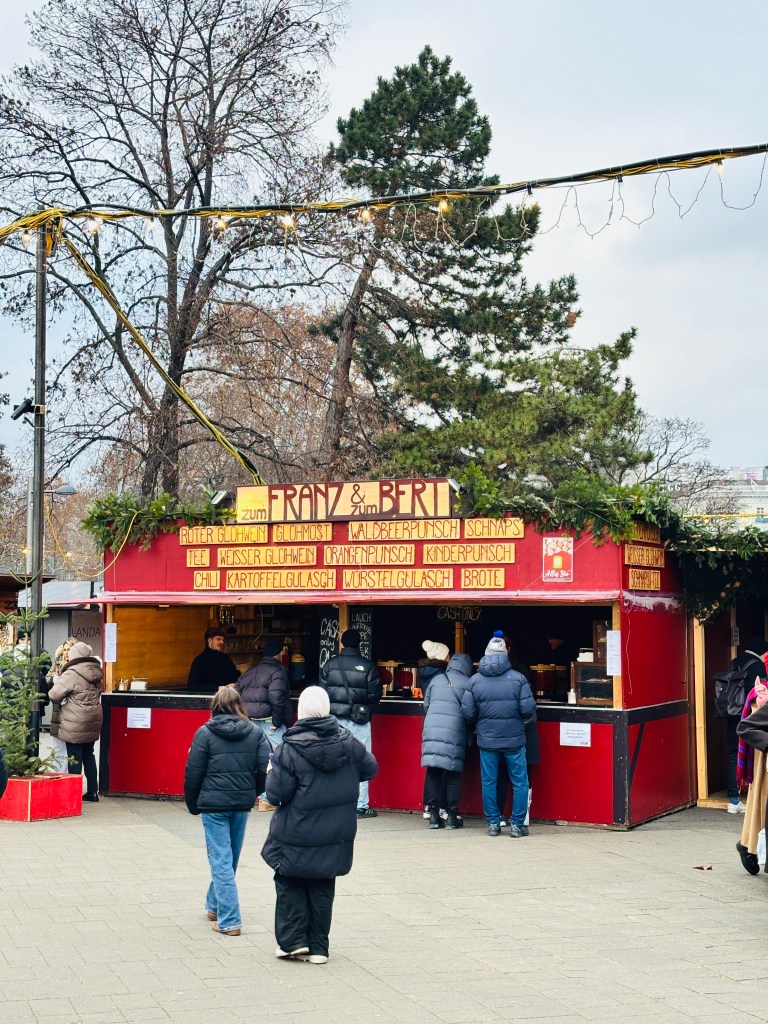
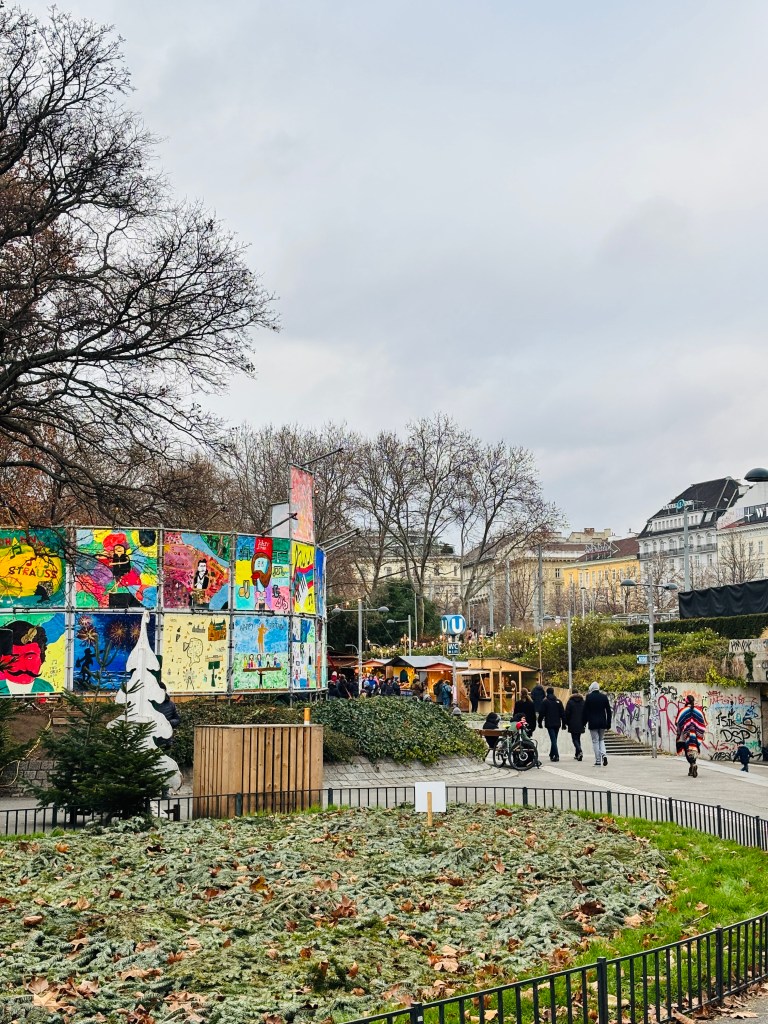
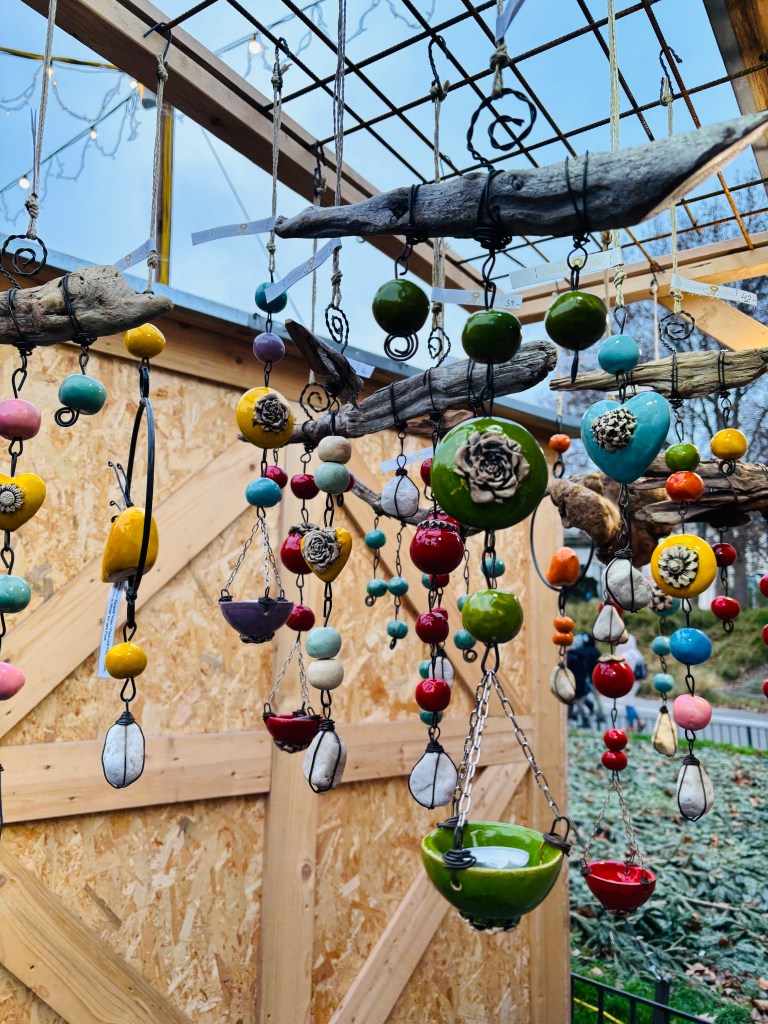
The Christmas market outside Karlskirche made the whole setting softer. Stalls were set up around the reflection pool, lights bouncing off the water, people lingering with mugs in hand, but less crowded, more spaced out. This market felt more curated than chaotic – artisan crafts, hand-blown glass, wooden toys, and food stalls that leaned more “gourmet winter” than fast street snacks. It was quieter, but more atmospheric in its own way, especially as dusk crept in and the dome began to glow from below.

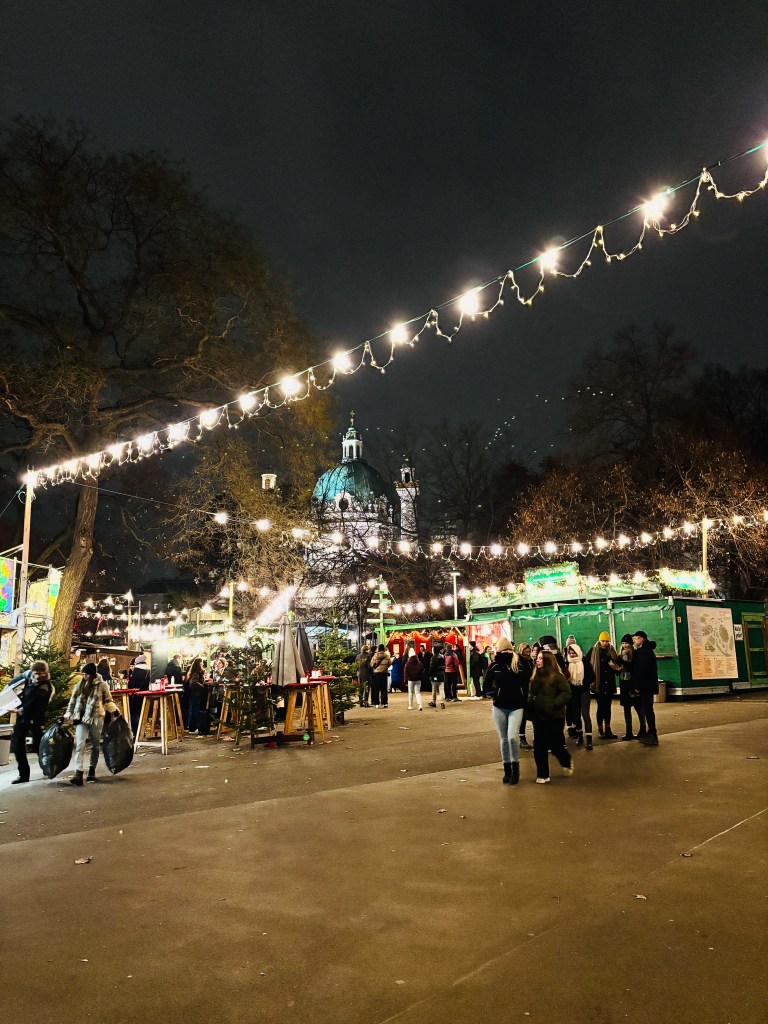
Again, we didn’t go inside the church, but it didn’t feel like we missed anything essential. Standing outside with cold air on our faces and warm drinks in our hands, watching the dome light up as evening set in — that felt like the experience.
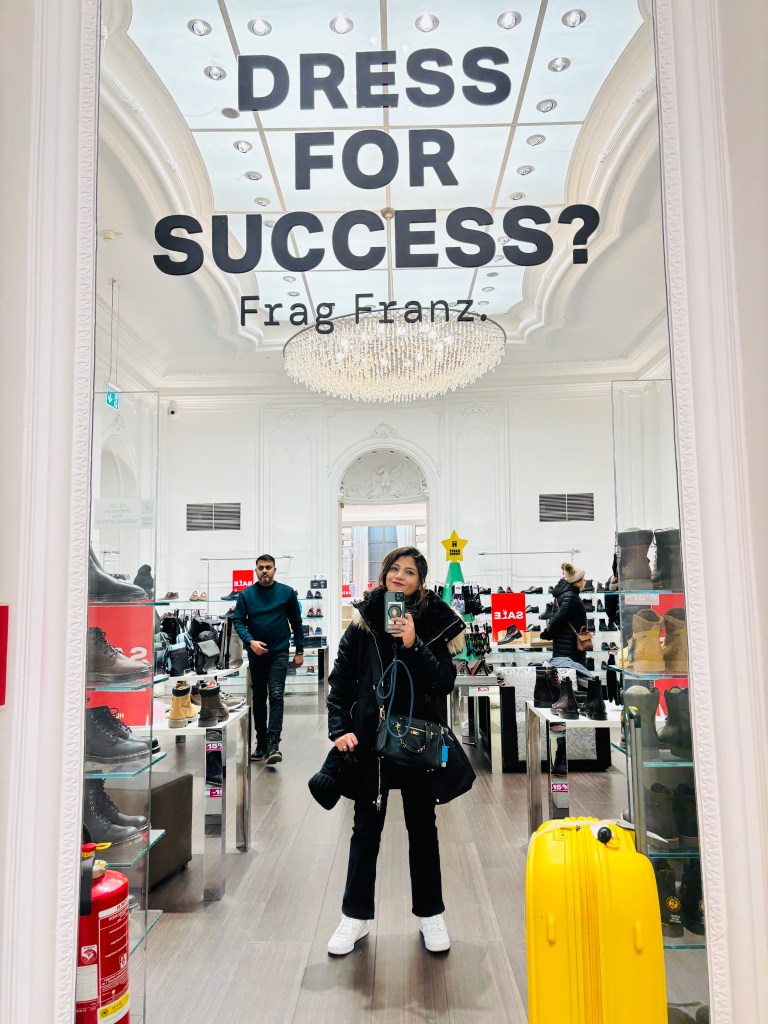
Between these moments we slipped into several boutiques and gift shops, and boots – yes we did random boot shopping! All along the way – snapping photos, drifting across streets without checking maps, stopping randomly because a window looked festive or a street felt quieter. We weren’t chasing anything specific, just letting the city carry us from one small moment to the next. It felt less like sightseeing and more like existing somewhere new. We were floating between stops like two people who’d agreed spontaneity was the best itinerary.
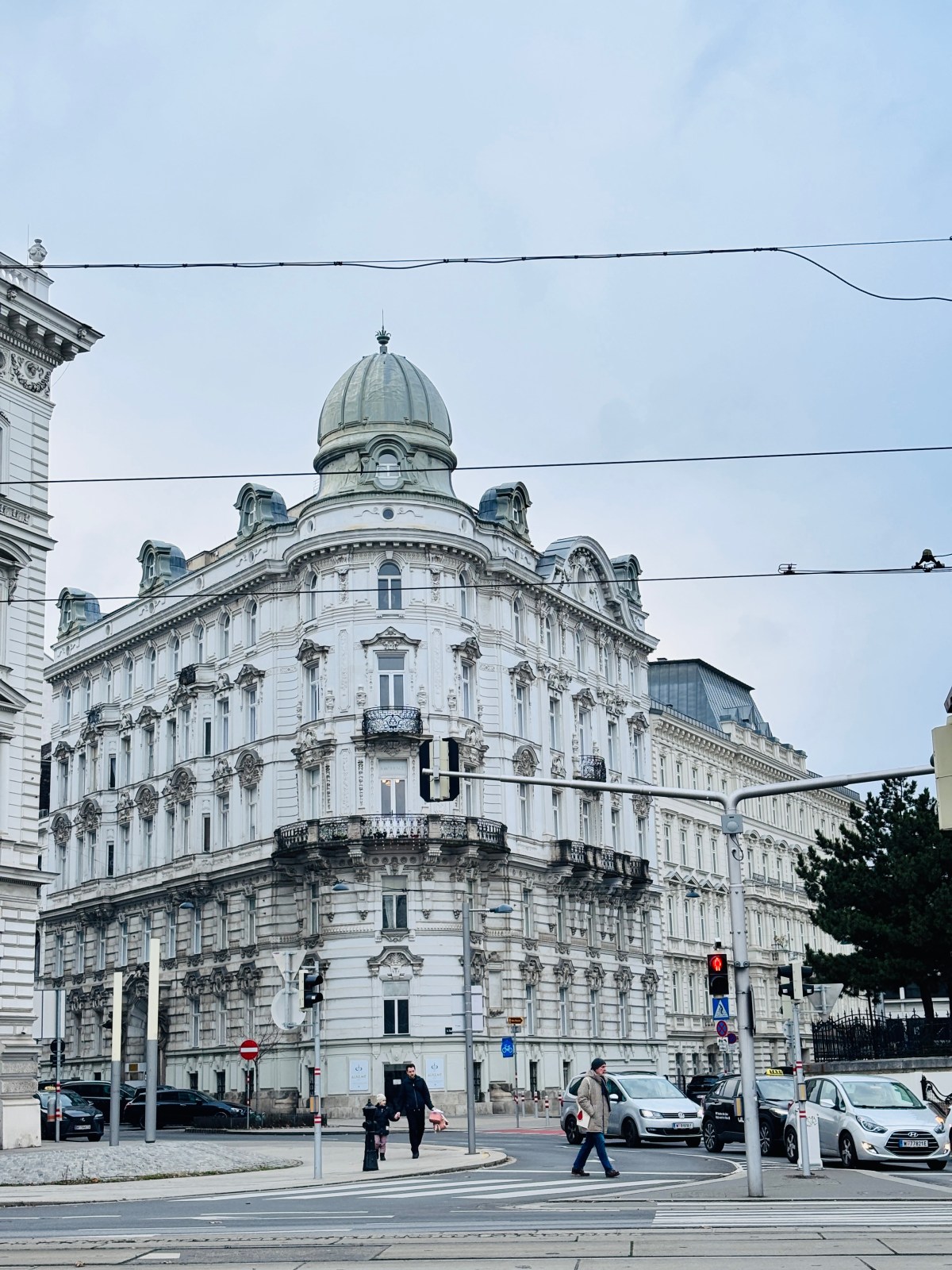
Palais Equitable – the unexpected gift
And then at a particular spot, there was a thick crowd gathered – people pressing phones up at every angle, laughing, swapping spots for better light, clutching mugs of Glühwein and hot chocolate while trying to capture the best shot. Following the direction of the phones, there was this building wrapped in a huge glowing bow and strands of lights that aligned perfectly with the city’s season-long lighting programme. It looked less like a building and more like a gift someone had forgotten to unwrap.
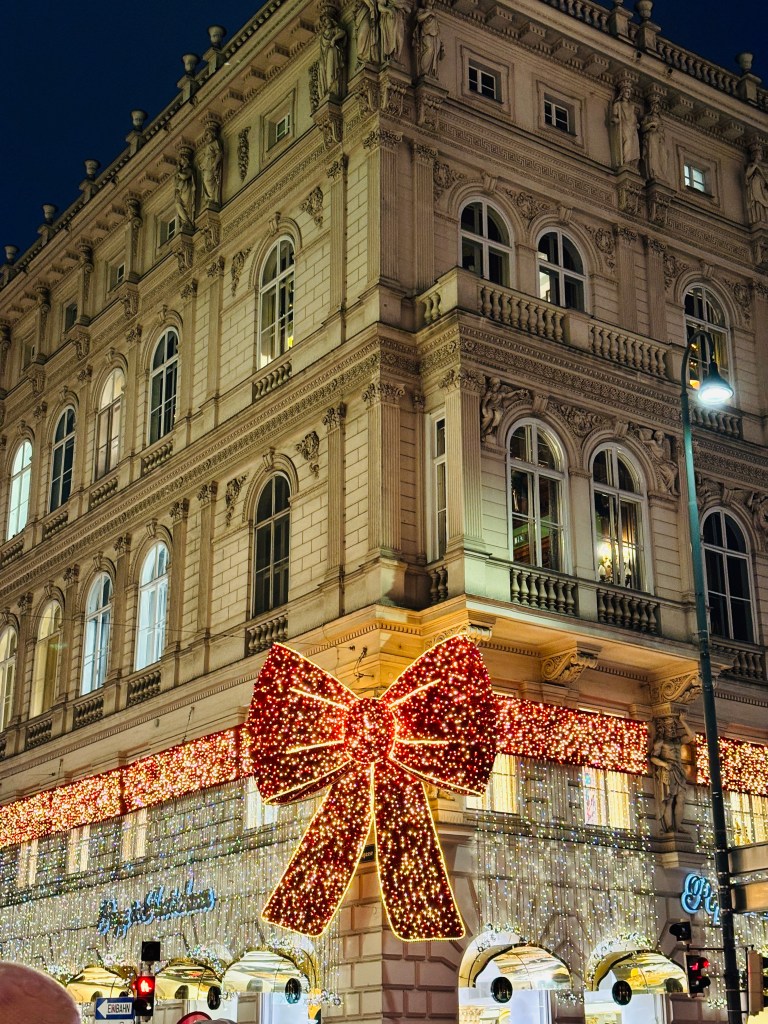
Of course, we joined the crowd. There was no resisting it. It was one of those sights that feels both beautiful and slightly absurd – a full façade turned into festive décor. We stood diagonally across the street with everyone else, waiting for gaps in people’s heads, trying to frame the bow without streetlights cutting through it, taking far more photos than we probably needed.
Only later, after the walking and the scrolling and the reading, did we find out that it was Palais Equitable – a 19th-century building constructed between 1887 and 1891 for an American insurance company, back when Vienna was still expanding into a modern imperial capital. It never belonged to royalty, but it earned the “palais” title through its scale and ornate design, and over time became one of those quietly important commercial landmarks that survived war damage and post-war reconstruction and simply blended into the everyday fabric of the city.
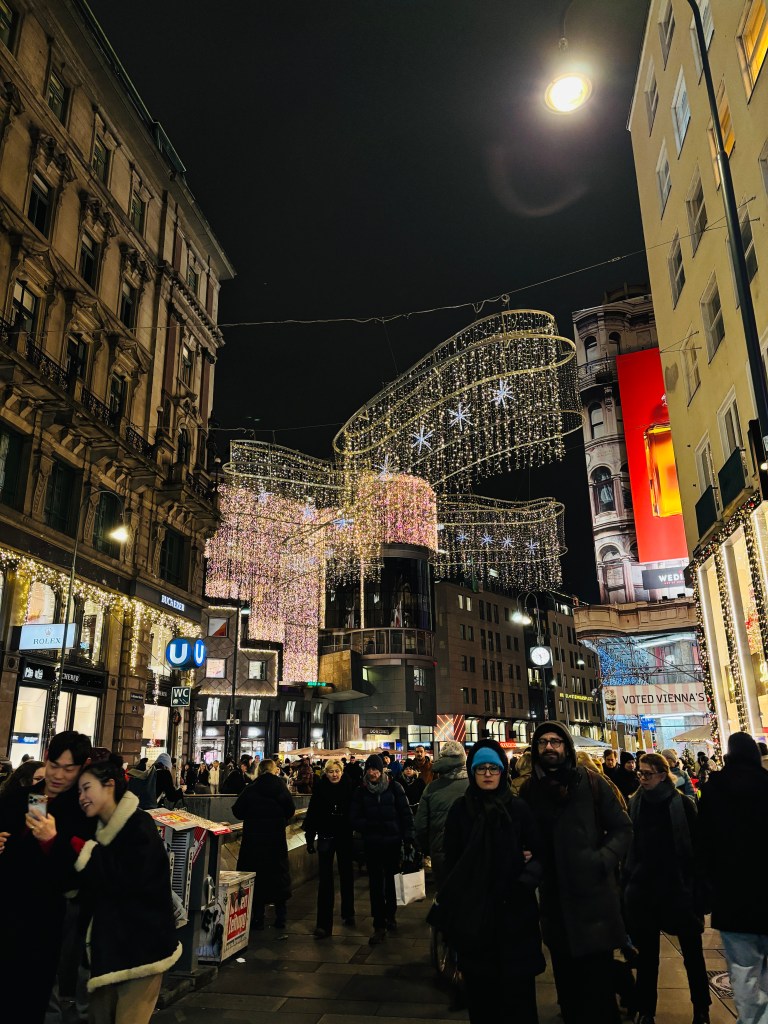
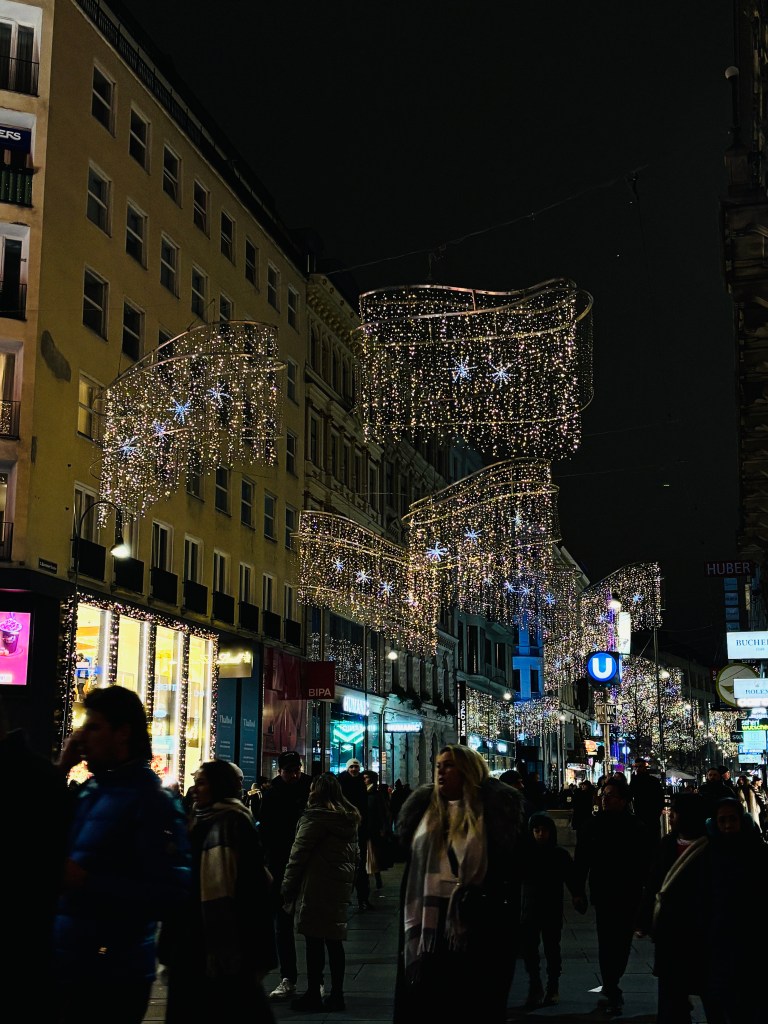
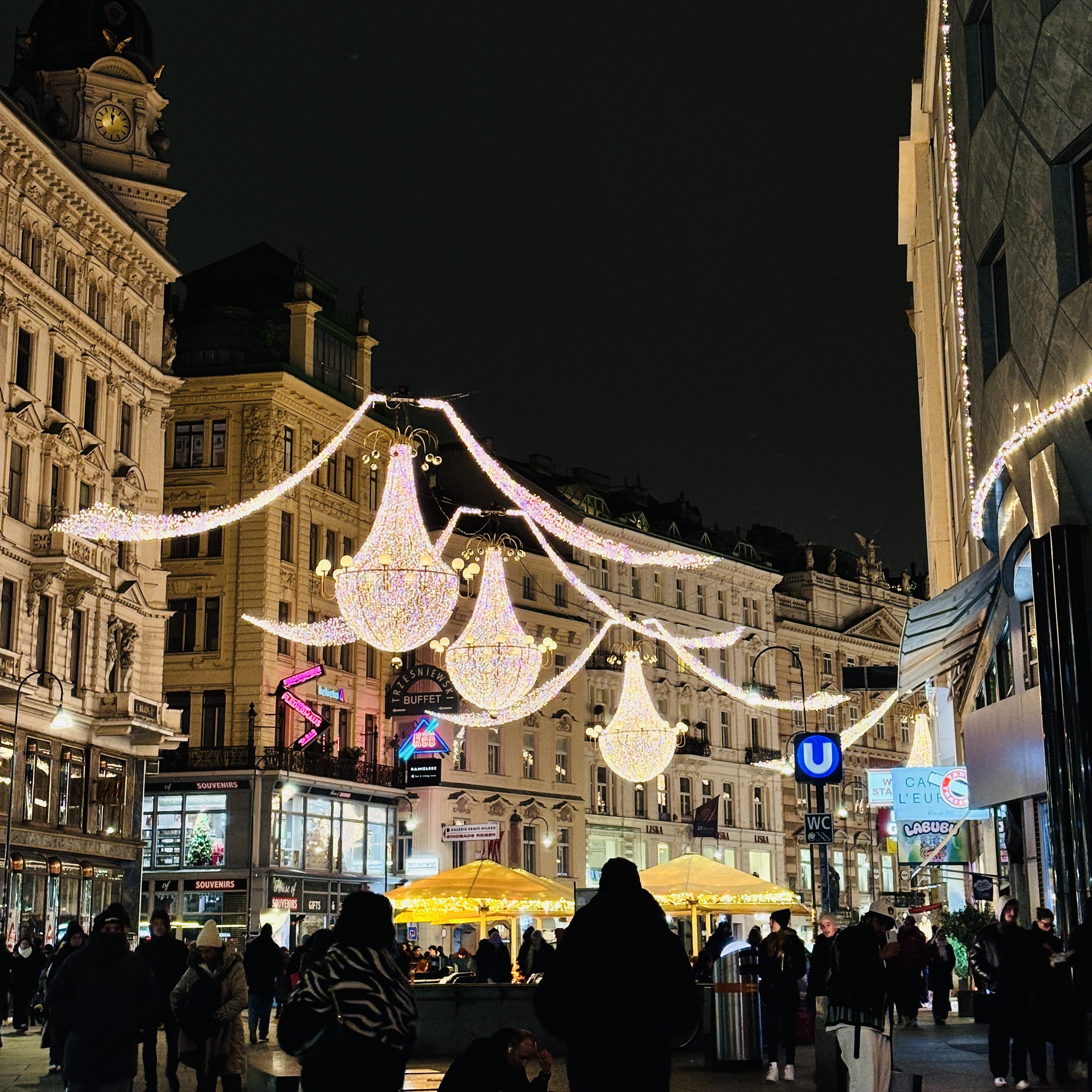
The decorations themselves were part of Vienna’s official Christmas illumination programme – the city lights up major streets from late November through early January, and places like Kärntner Straße and Stephansplatz become unofficial photo zones every evening. That night, it definitely worked a little too well. We later heard that this exact spot caused serious congestion, with pedestrian crowds spilling onto the road and traffic slowing to a near standstill — one of those seasonal side effects where a pretty corner of the city briefly becomes a logistical problem.
At the time, we had no idea. We just thought we’d stumbled into something oddly magical. Which, in a way, we had.
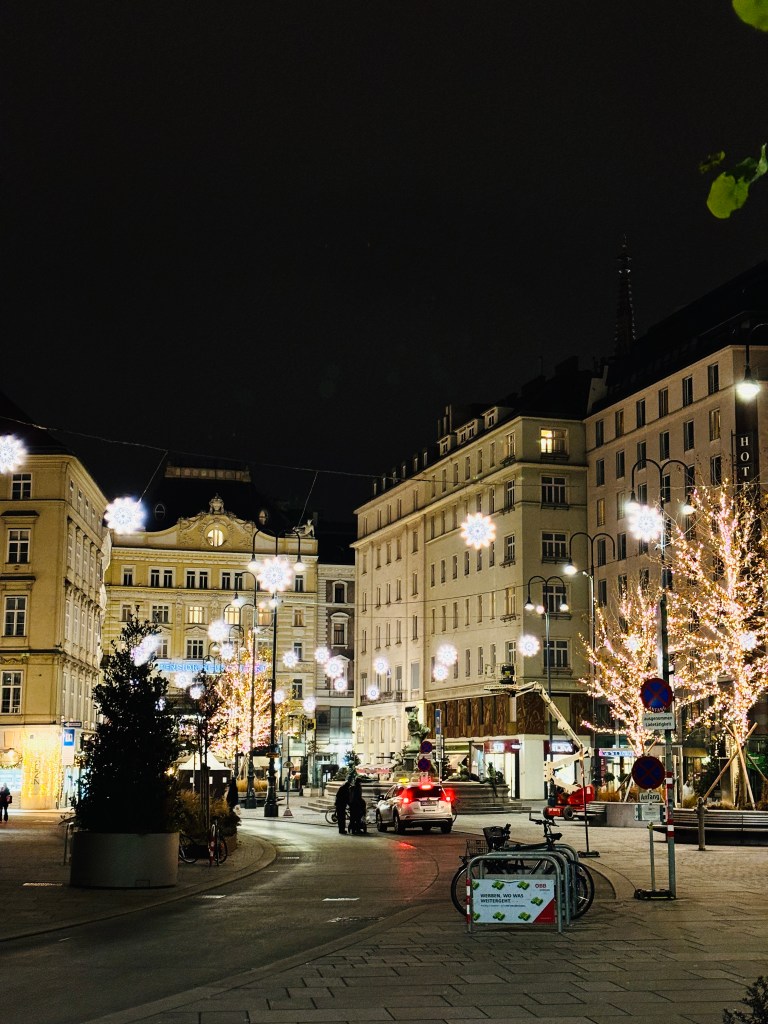
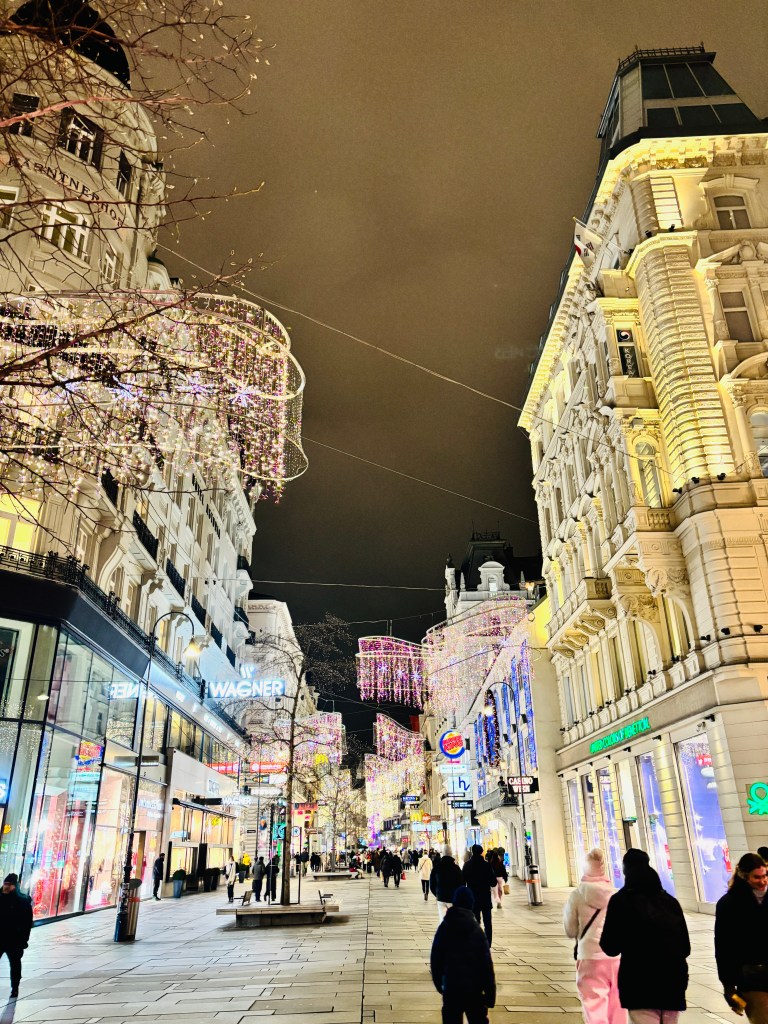
Stephensdom (St. Stephen’s cathedral)
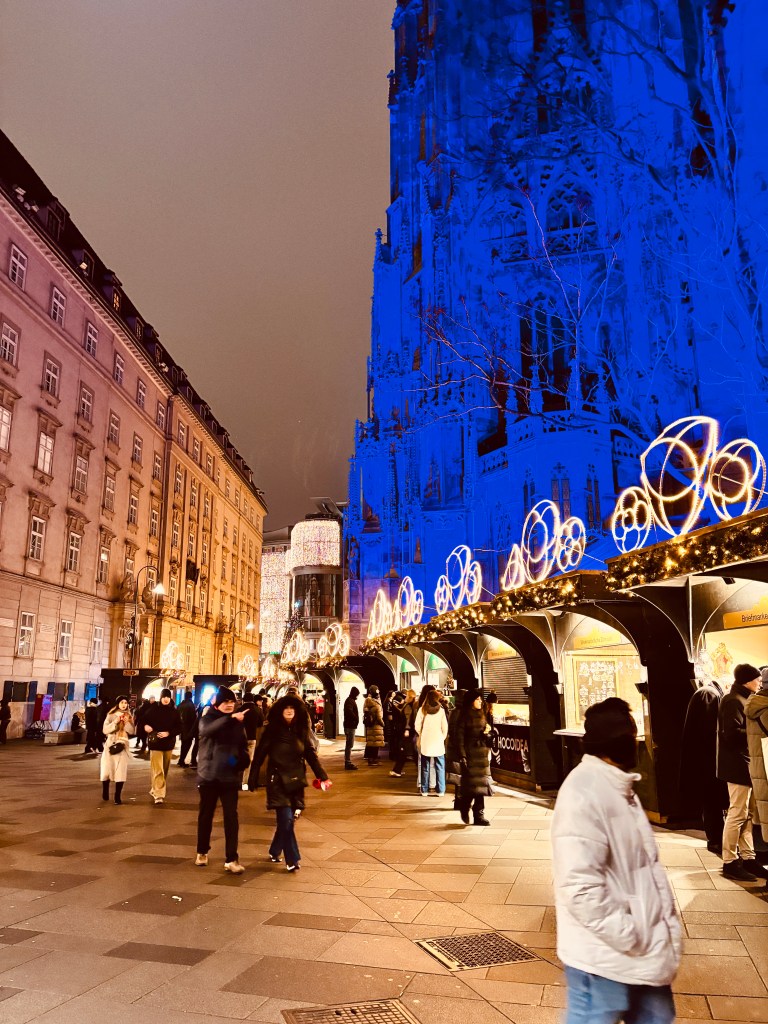
Post shopping, we eventually made our way back to Stephansplatz, and this time it felt completely different. The first night we’d been here, we were running on fumes and adrenaline. Now, rested and with no urgency, we could actually see Stephensdom properly – not as a concert venue, not as a navigational problem, but as what it really is – the heart of the city. We walked around the cathedral slowly, almost in circles, craning our necks the way everyone else was doing. The Gothic details impossible to ignore – the steep spire rising into the dark, the pointed arches, the heavy stone walls that somehow still feel delicate.
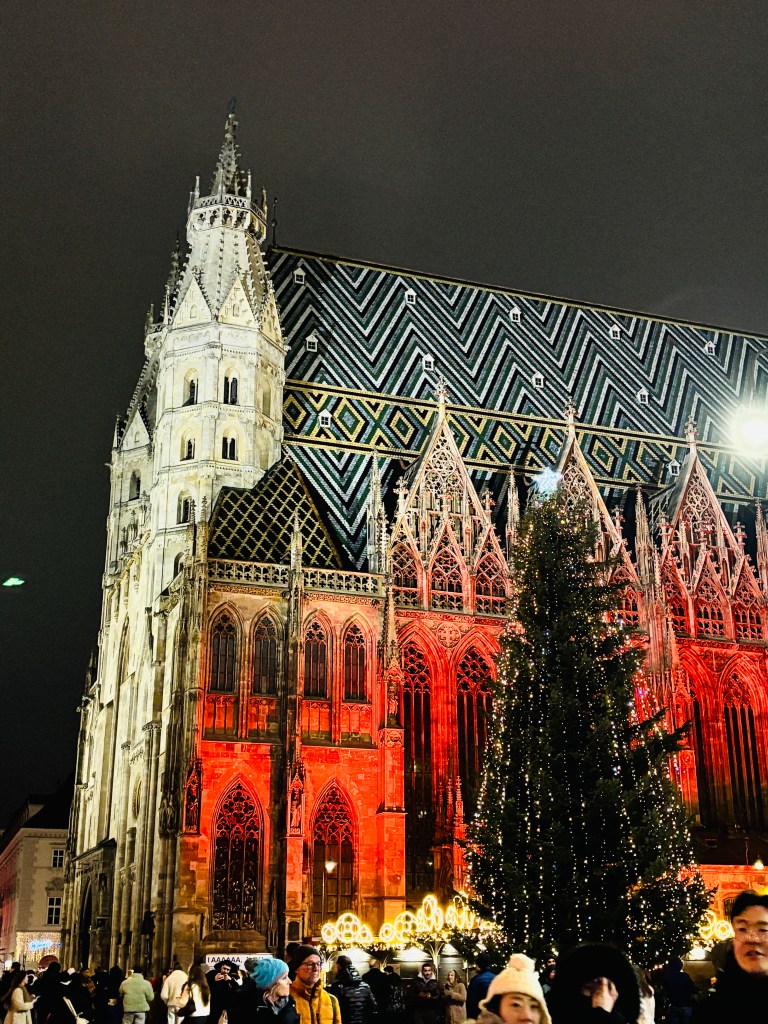
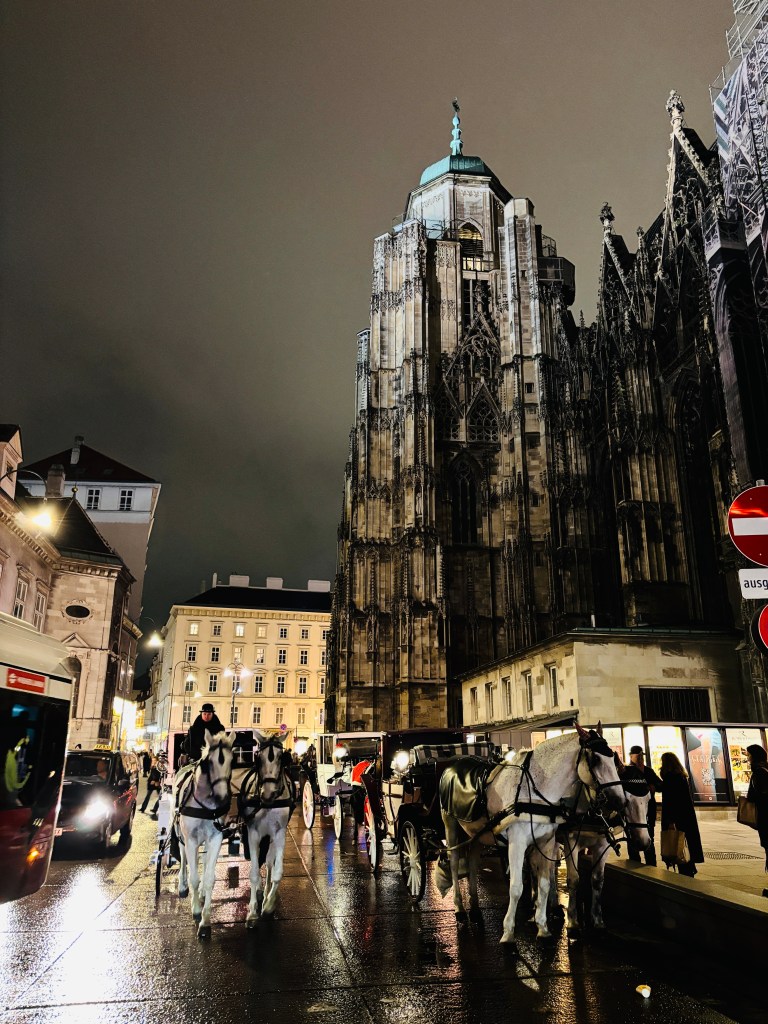
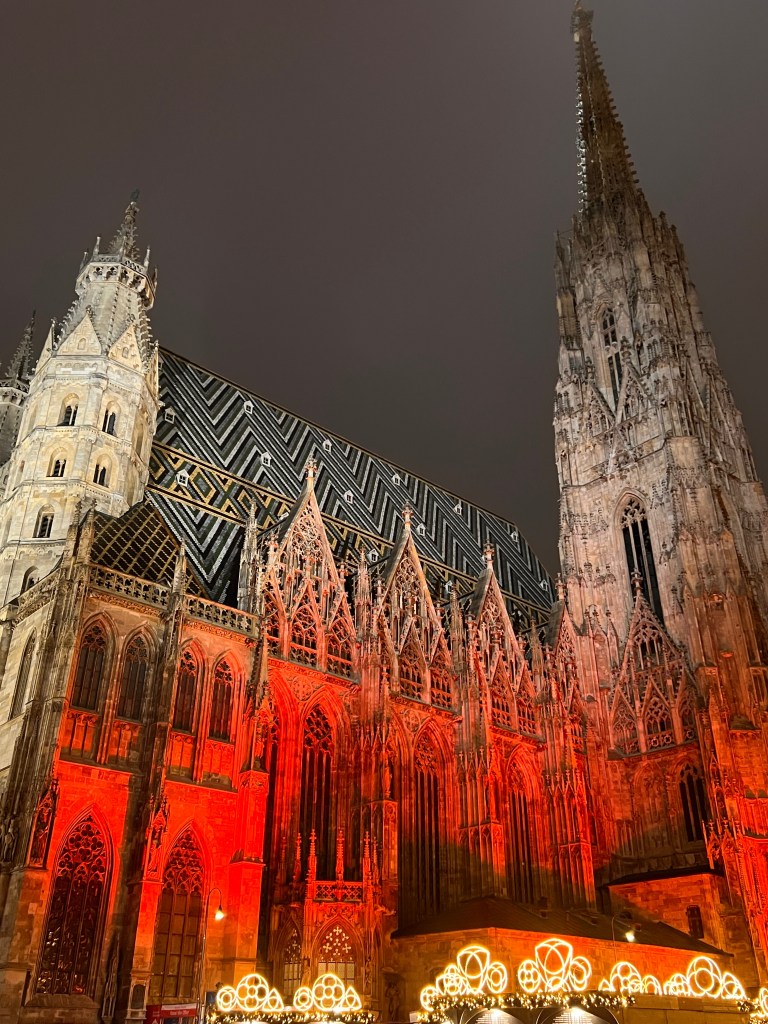
From what I read later, the church has been standing here in some form since the 12th century, first as a Romanesque structure and later rebuilt in the Gothic style after a fire in the 13th century. Over time, it became more than just a church — it became Vienna’s main symbolic landmark. Royal weddings, funerals, historic sermons, even the city’s collective grief and celebration have passed through these doors. The south tower rises to about 136 metres, and for centuries it was the tallest structure in the city, a literal point of orientation long before Google Maps existed. Even the patterned tiled roof – something we kept staring at – is made up of over 200,000 glazed tiles, forming the coats of arms of Austria and Vienna.
Stephansplatz Christmas market
The Stephansplatz Christmas market wrapped around the space like a moving border – stalls glowing, people queuing for drinks, the smell of sugar and grilled sausages constantly in the air. This market felt more chaotic than the others, but also more alive. Street performers, tourists, locals weaving through each other, the cathedral looming above it all like it had seen this exact scene play out a thousand times before.
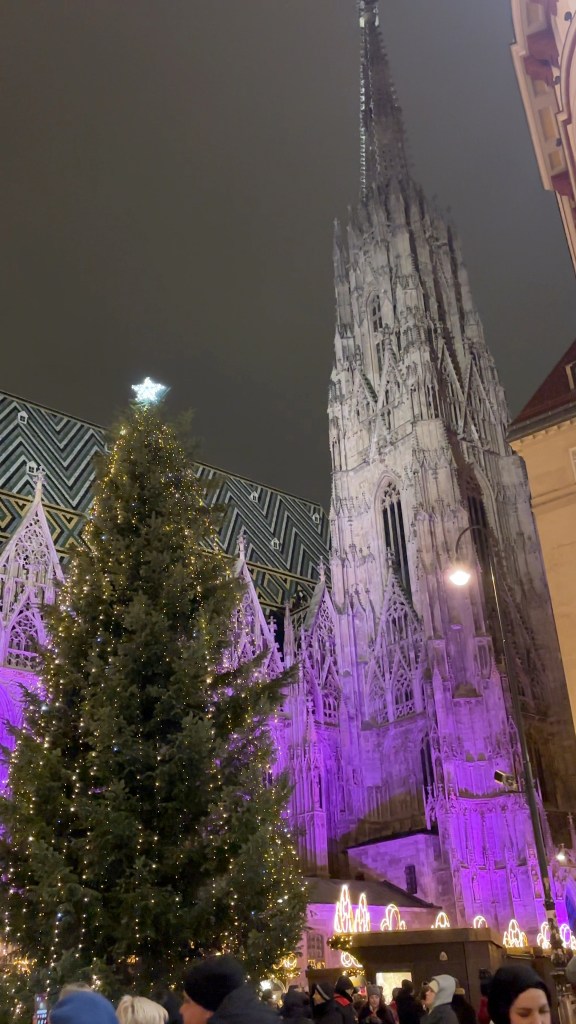
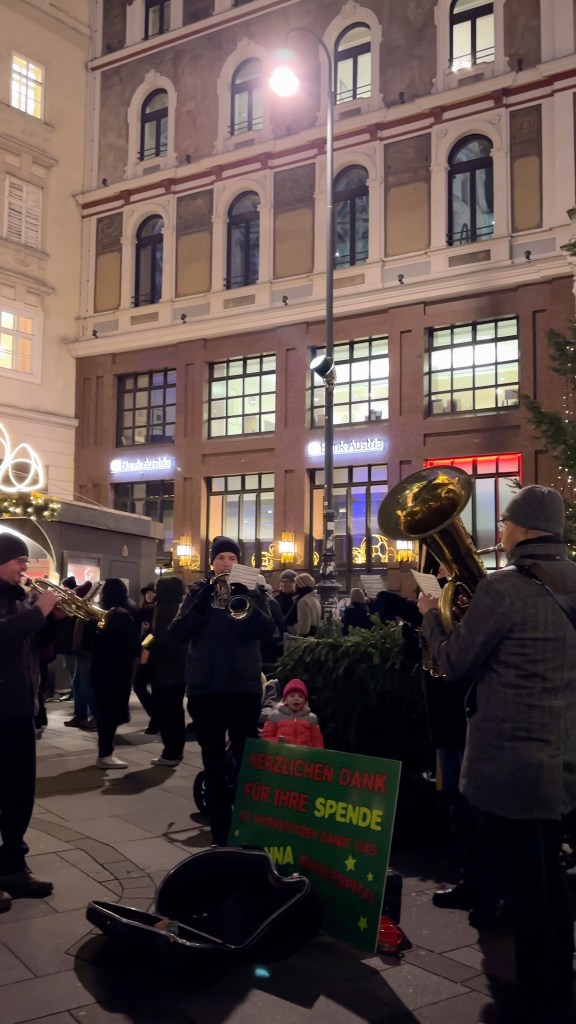
We just stood there for a while. No photos at first. Just watching the streets, the happy crowd, the Christmas decor. It felt grounding in a strange way – like we had finally arrived in Vienna emotionally, not just geographically.

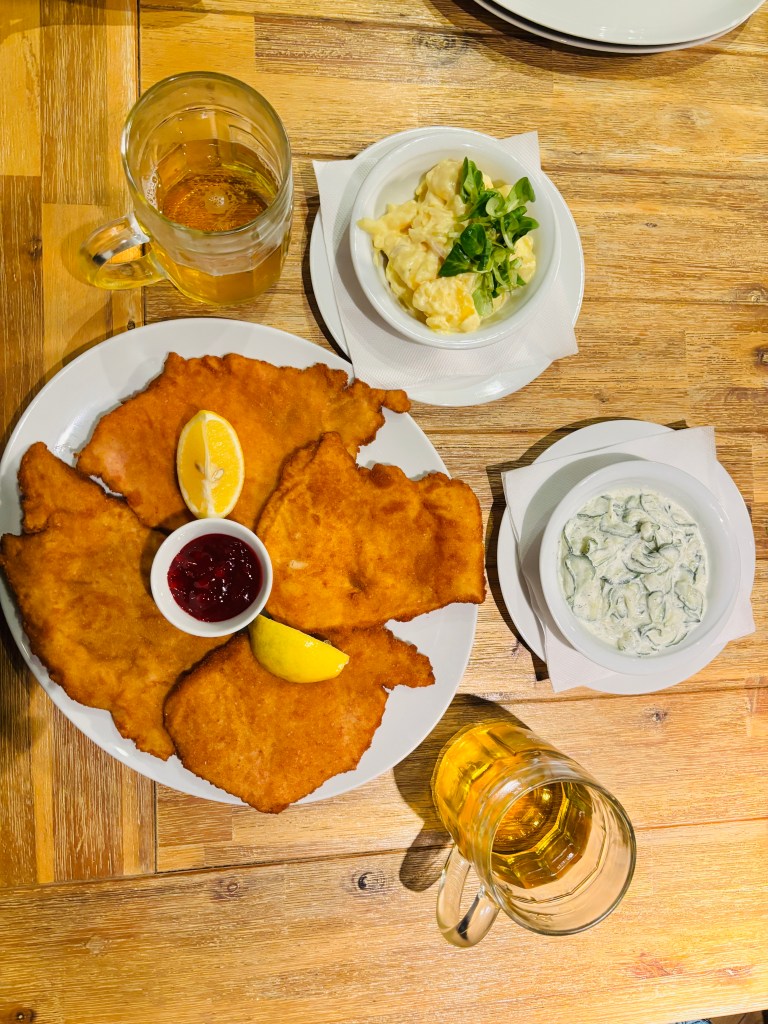
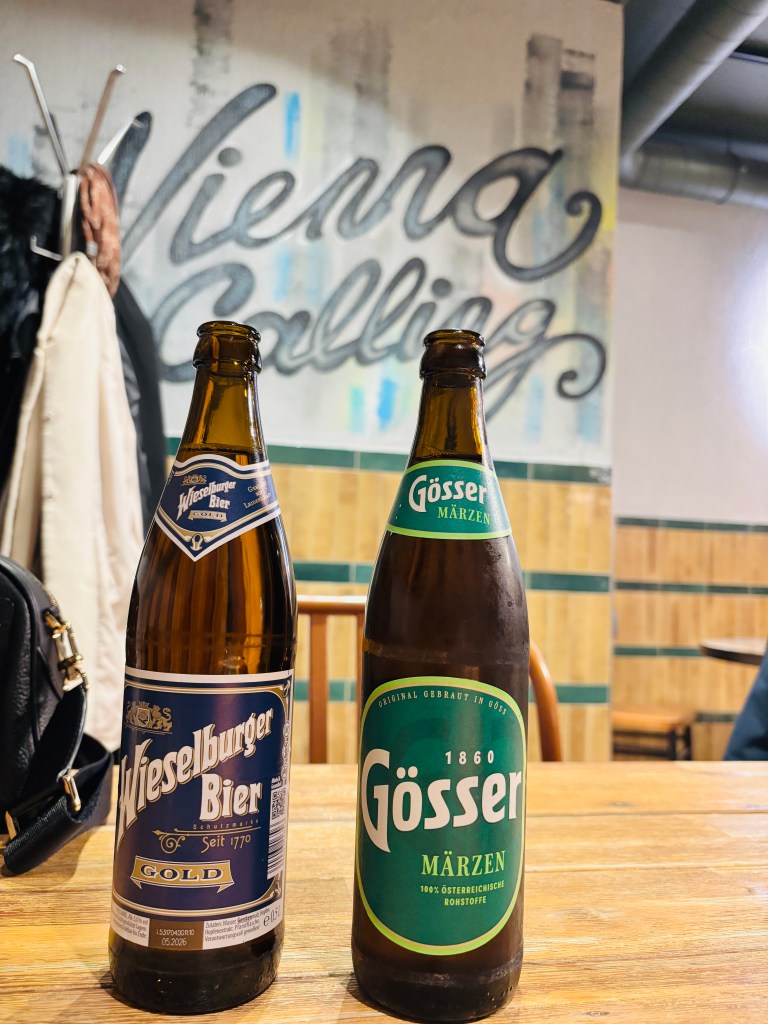
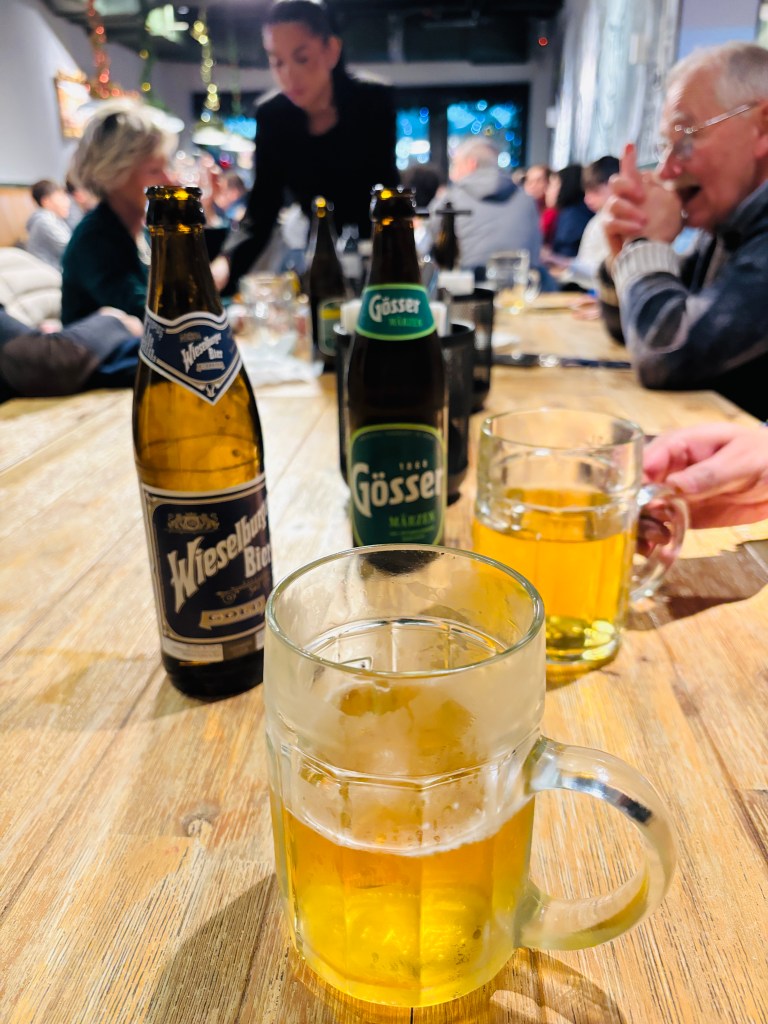
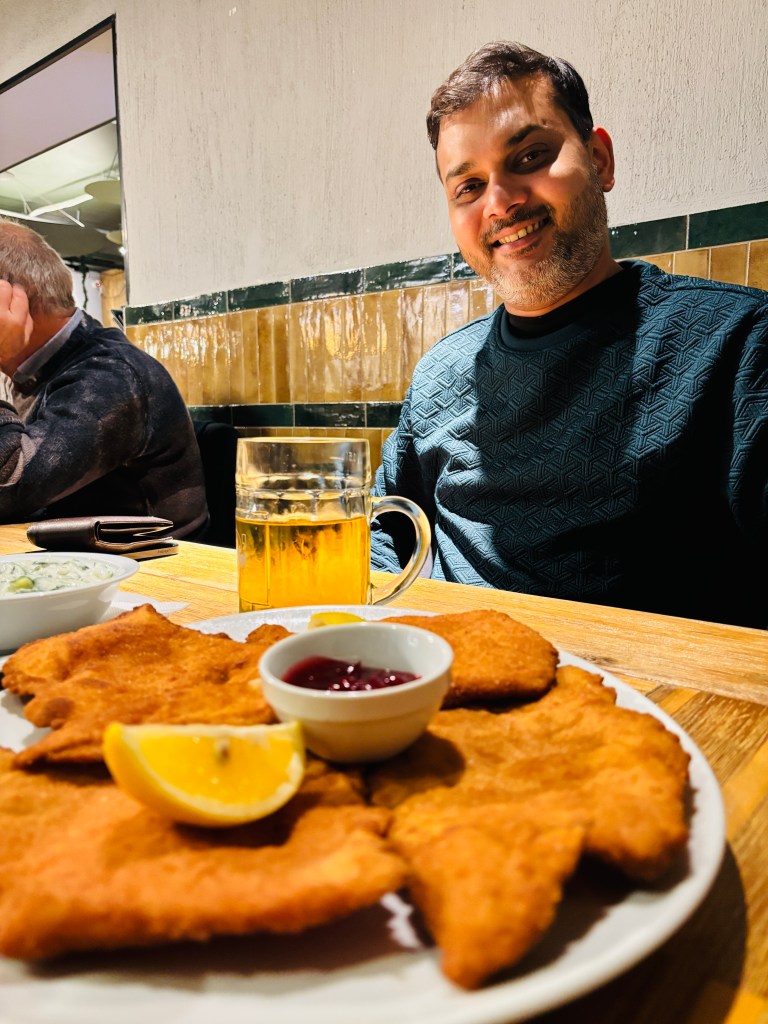
Dinner was at Schnitzel One, a nice cozy place tucked into one of those little side corners of Stephansplatz that you’d miss if you weren’t paying attention or asking ChatGPT for recommendations. It was a long wait but totally worth it. The schnitzel came exactly how it should – thin, golden, yummy! Paired with cold local Austrian beer and zero expectations beyond warmth and comfort. And somehow, that made it perfect.
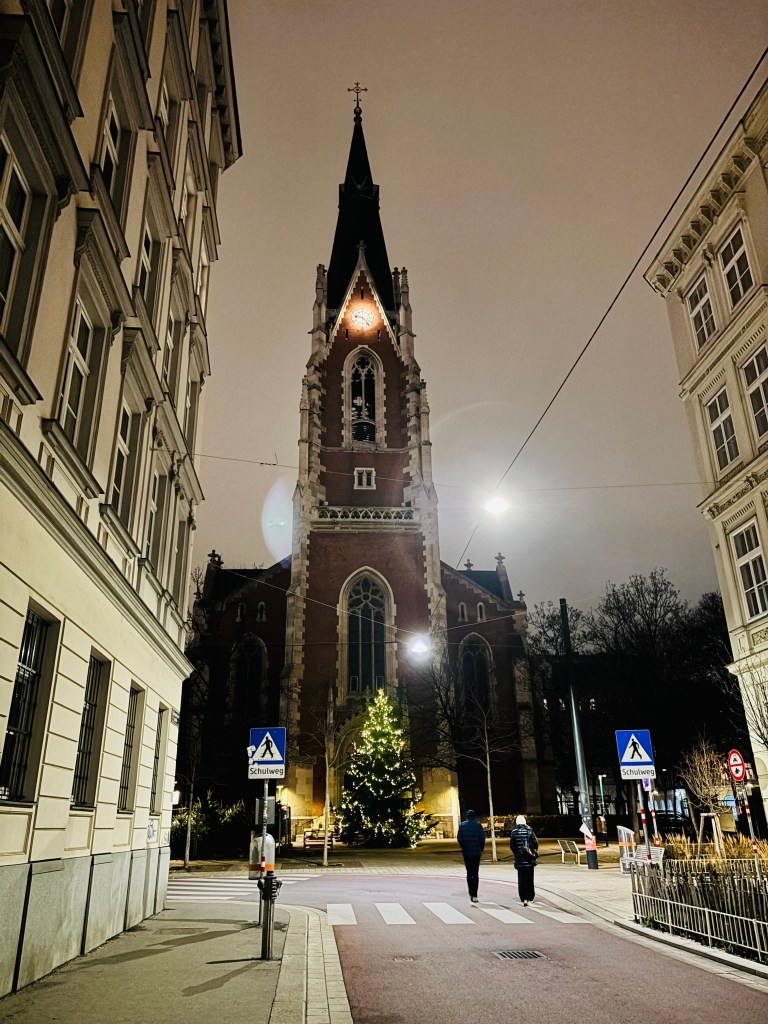
Walking back to the hotel after, with full stomachs and cold noses, leaving Stephansdom and other Viennese beauties behind us, it felt like the right way to end Vienna – not with a landmark, not with a checklist, but with a slow evening, good food, and the sense that we’d finally let the city move at its own pace around us.
The parting thoughts
And yet, even then, it didn’t feel complete. Not in a disappointing way – more in the sense that Vienna quietly hinted at how much more there was. We were content with what we did and how we did it. The slow mornings, the markets, the wandering without pressure – it all felt right for the time we had. But in hindsight, we probably should have given the city more days. There are so many layers here that don’t reveal themselves in just one or two walks – entire neighbourhoods we didn’t reach, museums we only read about, cafés we passed but never sat in.
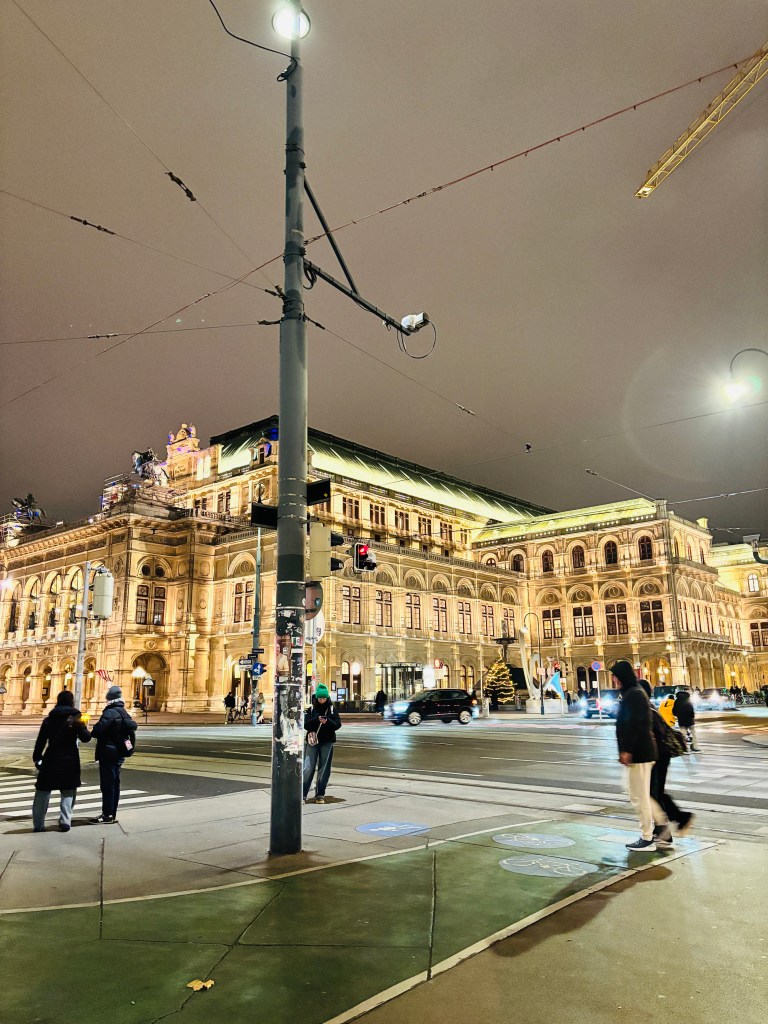
I’m not really the kind of person who travels with a checklist or feels the need to conquer a city, but Vienna felt like the sort of place that rewards staying. The kind where you don’t rush between landmarks, you settle into routines – coffee in the same place every morning, the same tram line, the same corner bakery. And somewhere in the back of my mind, that one line from the Billy Joel song “Vienna” kept echoing – “When will you realize Vienna waits for you?” It felt oddly accurate. We left feeling satisfied, not restless. Like we didn’t miss out – we just postponed. And honestly, that feels like the best way to leave a city.
So hippy, happy, we went onwards to our next destination -Innsbruck – post coming soon !
Discover more from thatbrowngirlinblackboots
Subscribe to get the latest posts sent to your email.

