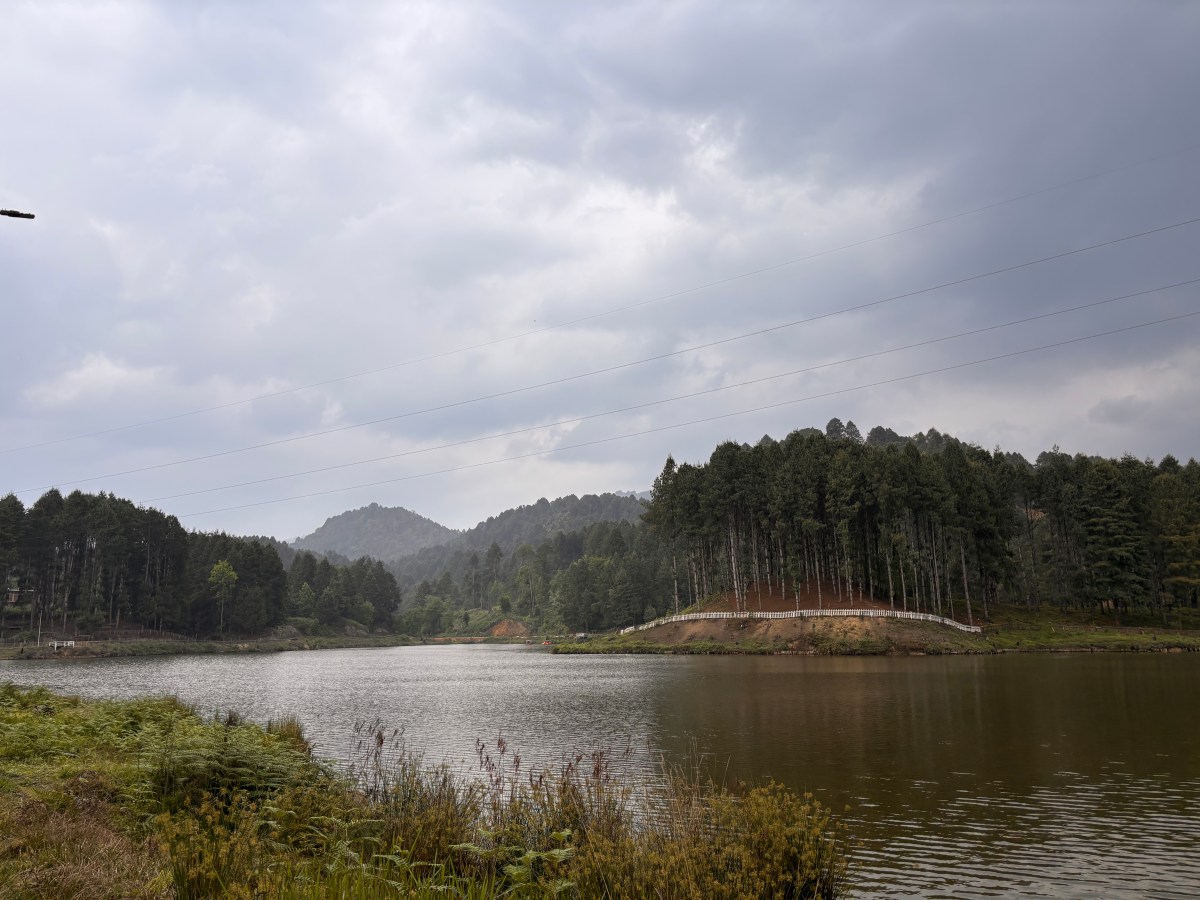
Welcome to this blog, where I’ve chronicled the end-to-end of my stay in Ziro, although short but incredibly beautiful. This town was part of my Arunachal Pradesh trip in April ‘2025, and (if you haven’t already) I’d suggest reading up this complete post on my trip to Arunachal Pradesh.
Ziro is a town and the district headquarters of the Lower Subansiri district in the state of Arunachal Pradesh. We reached Ziro from Hunli via Dibrugarh, which was quite a deviation from our original itinerary, but that’s the only way the universe allowed it.
You can read about the details of the deviation in this blogpost.
The Arrival into Ziro
We arrived at Ziro later than originally planned and more exhausted than we’d like to admit. The delays courtesy heavy rainfall leading to several landslides and reroutes.
The journey from Hunli via Roing and Dibrugarh had been long and jarring, and except for the beautiful sunset on the way, it had just been a long, boring drive.
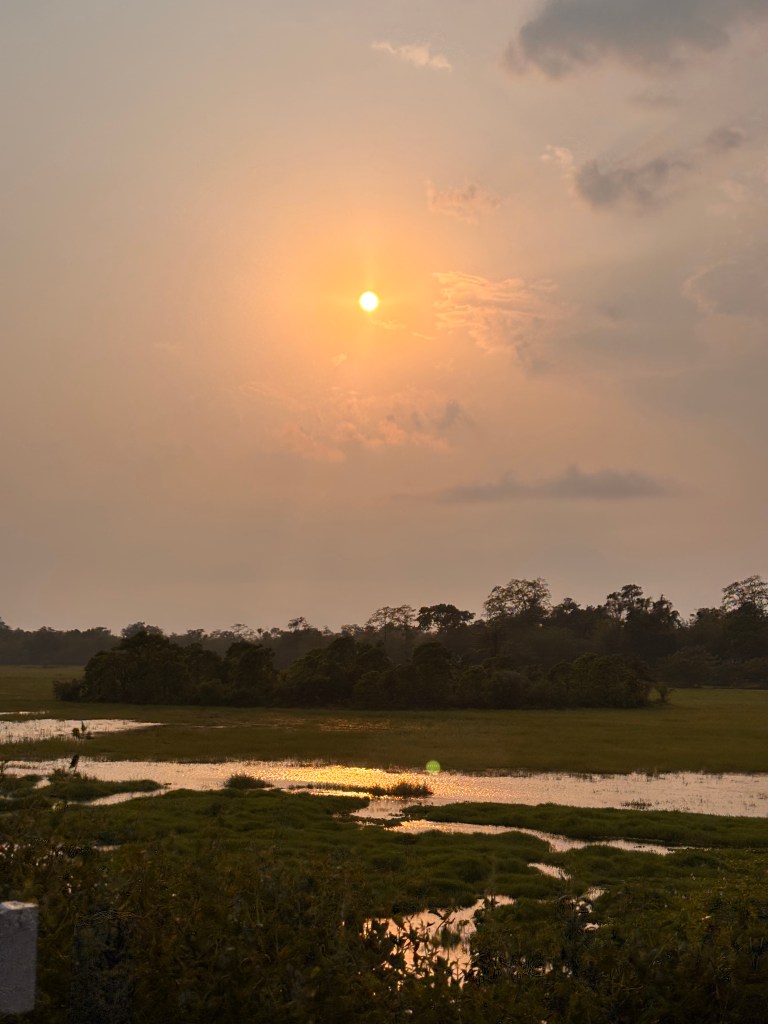
We did have a lovely dinner at a line hotel in Potin, an hour and half before reaching Ziro. And that meal was incredible, and quite made up for the terrible delays.
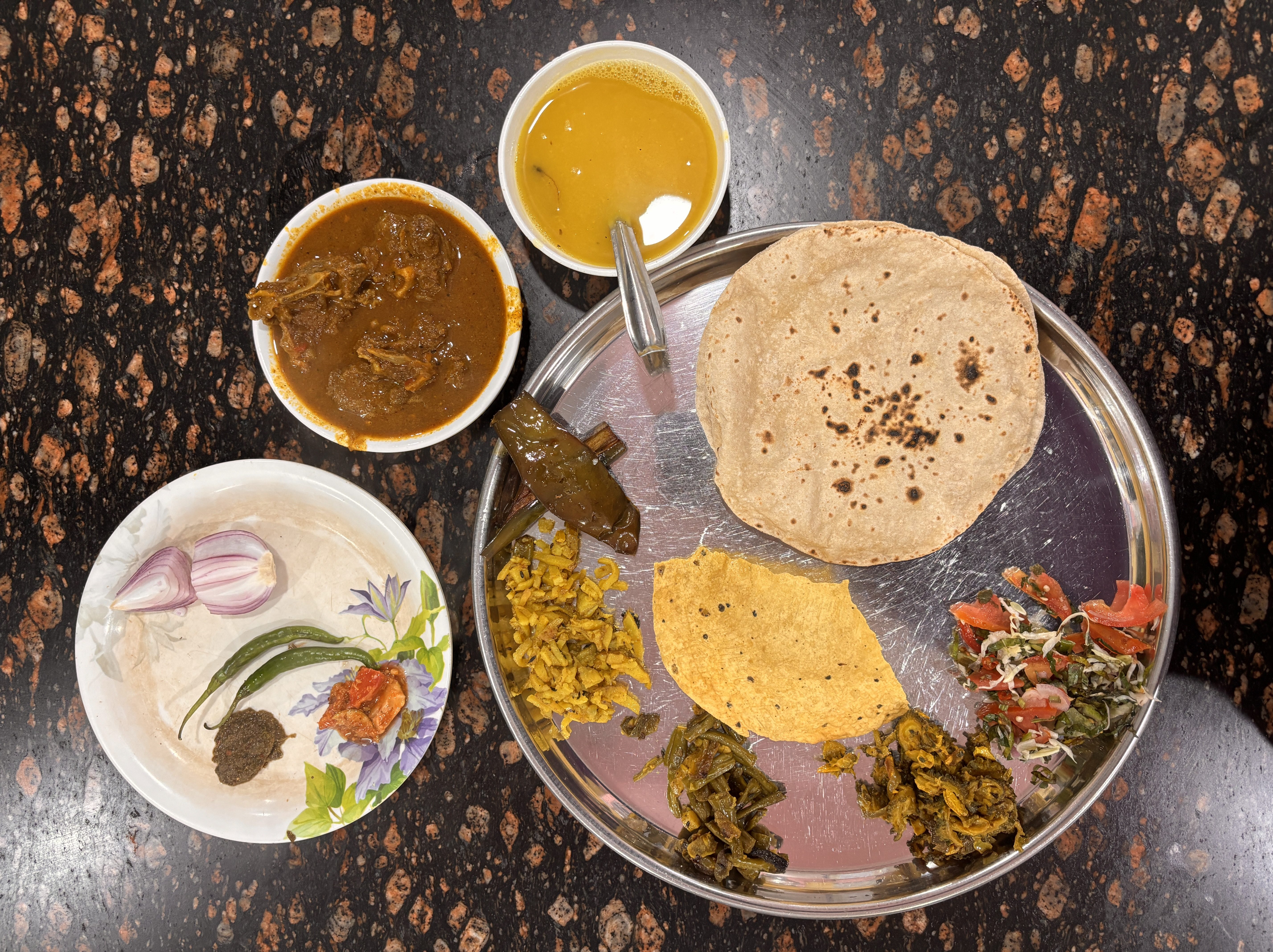
Trivia : For the uninitiated, line hotels are generally referred to smaller, budget-friendly establishments that primarily serve basic, simple meals, often catering to travellers and local workers (but mostly just the workers). Line hotels are found in almost all regions of India but coined under different names. The idea is sustenance – hearty food at low cost, served quickly, and refilled generously.
And so we really saw Ziro only the next morning and felt like we’d walked into another world while the world was asleep the (previous) night. There aren’t very many conventional tourist places in Ziro but a lot that the valley offers to nature and history lovers, and specifically for those steeped in culture and ethnicity.
The Land of the Apatanis
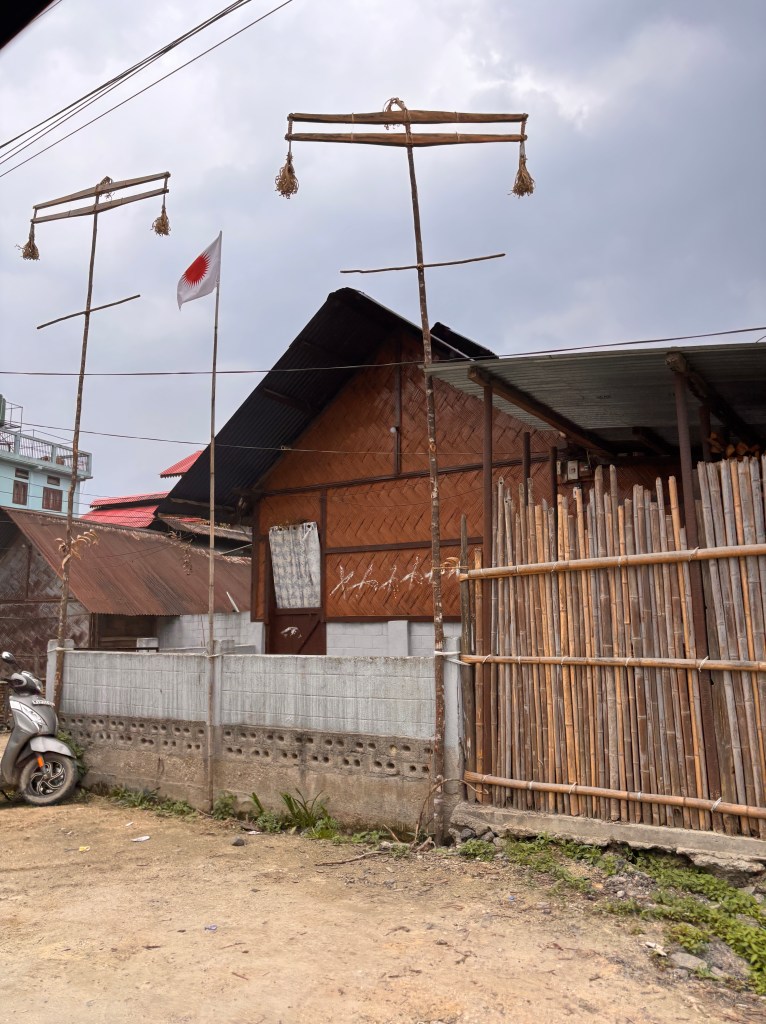
The Apatanis are the indigenous tribes of Ziro. Since the beginning of their existence, the Apatanis have been worshippers of nature. And till today several Apatanis follow Donyi-Polo (where Donyi means sun and Polo means moon) as their religion (while few others have converted to Christianity). They consider these celestial bodies as eternal witnesses to human conduct. And that is evident in their homes which even today reflect their faith in the form of Donyi Polo flags waving outside.
Their homes even have a tall T-shaped bamboo structures standing outside which might appear as decorative elements but which I later learned have a deeper meaning. These bamboo structures are called Babos and are erected during the festival of Myoko in front of the houses of Apatani tribe, and a visual symbol of the Apatani clan affiliation. Back in the day the babos also signified the number of unmarried male members in the house, though not sure how much of it is still true.
The Apatanis are also very well known for their sustainable and very productive agricultural practices. Their famous wet-rice cultivation, intercropped with fish in the same paddies, is a UNESCO-nominated practice for sustainable agriculture.
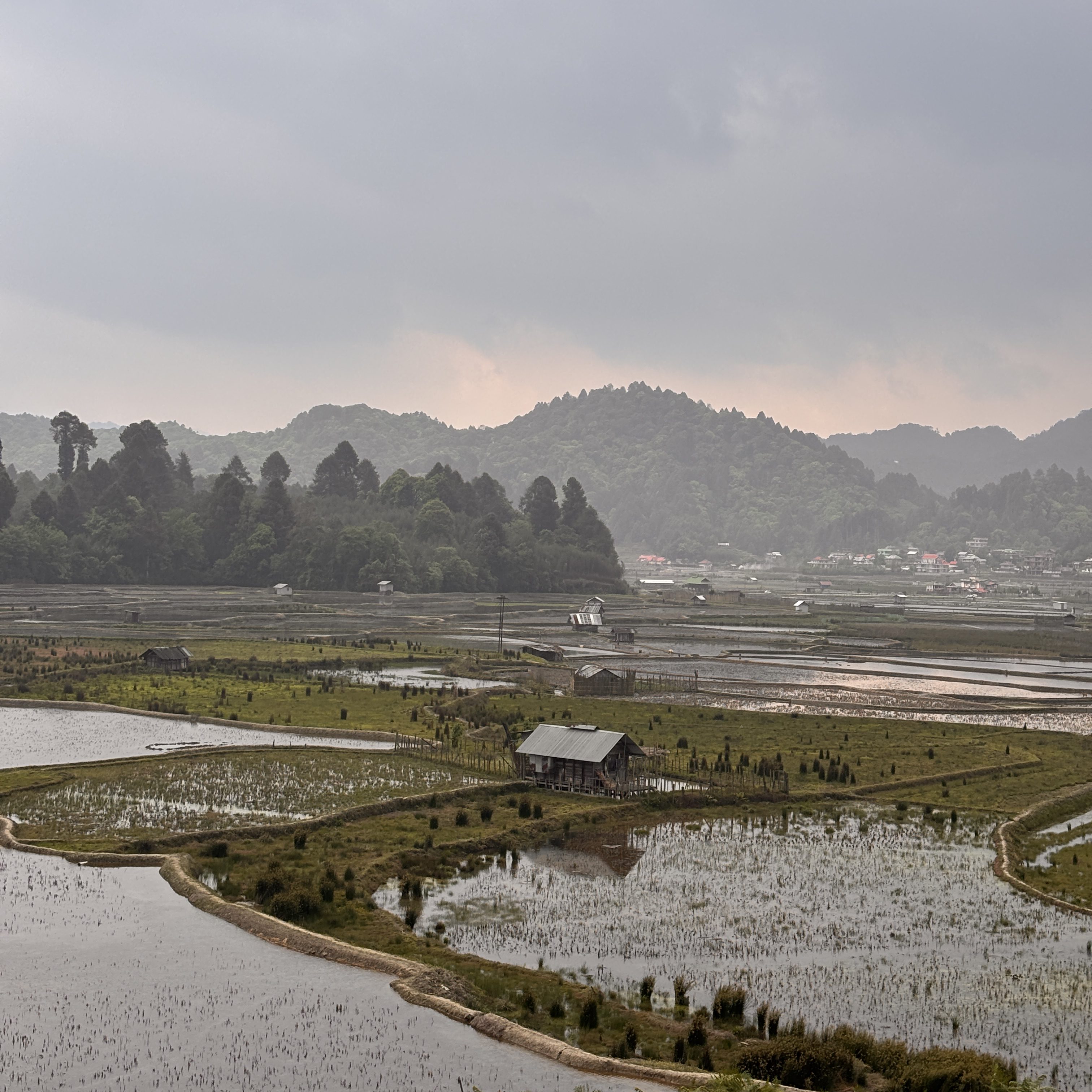
The practice is ingeniously simple yet sophisticated. Apatanis don’t use animals or machines to plough their fields. Instead, the paddies are laid out in neatly terraced plots, bordered by intricate bamboo sluice gates and irrigation channels. These are gravity-fed and hand-regulated, allowing water to flow gently from one plot to another without the use of any pumps.

What makes it truly fascinating is the integration of fingerlings (usually varieties of local carp) into the same flooded paddy fields where rice is grown. This occurs mostly during the monsoon months from May to August, when the paddies are waterlogged and ideal for both crops and fish. The rice continues its upward growth while the fish swim below, feeding on insects, pests, and weeds. This naturally reduces the need for fertilizers and pesticides, and when the rice is harvested in October–November, so too is the fish—providing a vital protein source for families.
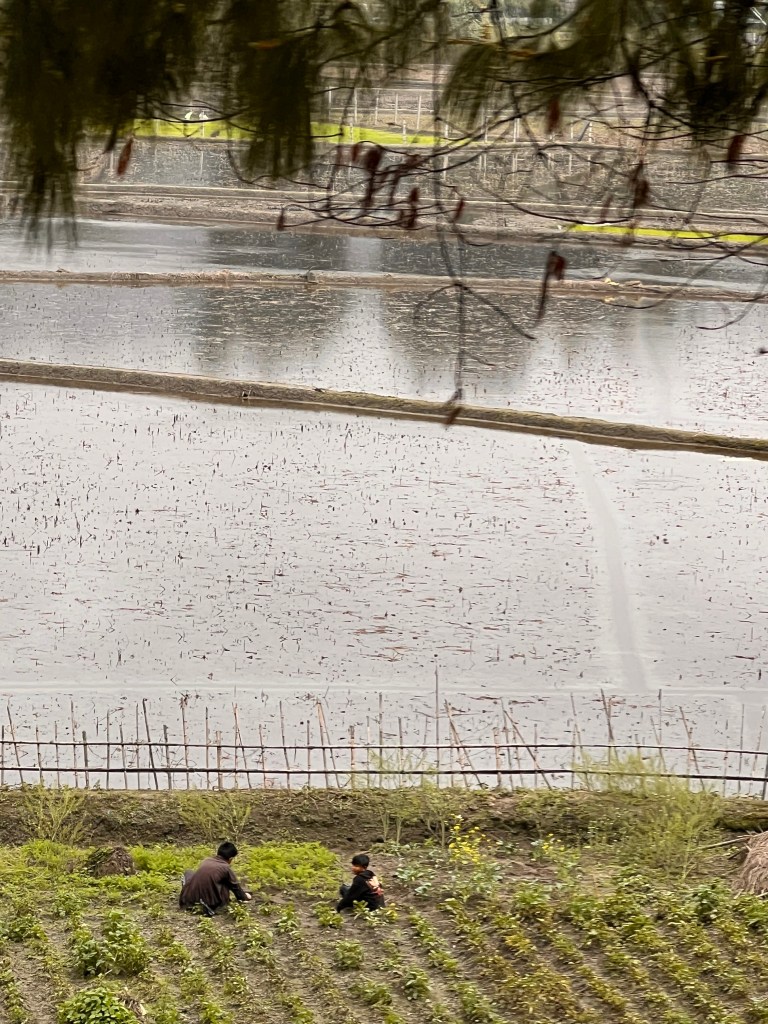
In introspection though, there’s also a subtle spiritual logic here. For the Apatanis, nature is cyclical and collaborative, not something to dominate, but to live with. Their rice-fish system reflects that harmony. Nothing is wasted, nothing is excessive. Even the bamboo fences and walkways separating the fields are reused or decomposed back into the soil.
Once you understand their agricultural practices, you not only see a clever farming system but a way of life deeply attuned to nature’s rhythm. It’s slow, patient work, requiring constant attention, but it ensures food security, community cooperation, and environmental stewardship all at once. In a world scrambling for sustainable solutions, the Apatanis have quietly held one for centuries, right here in the heart of Ziro.
The Shadows of 1962
Though known for its serene beauty today, Ziro was once a site of strategic importance, during the 1962 Indo-China War.
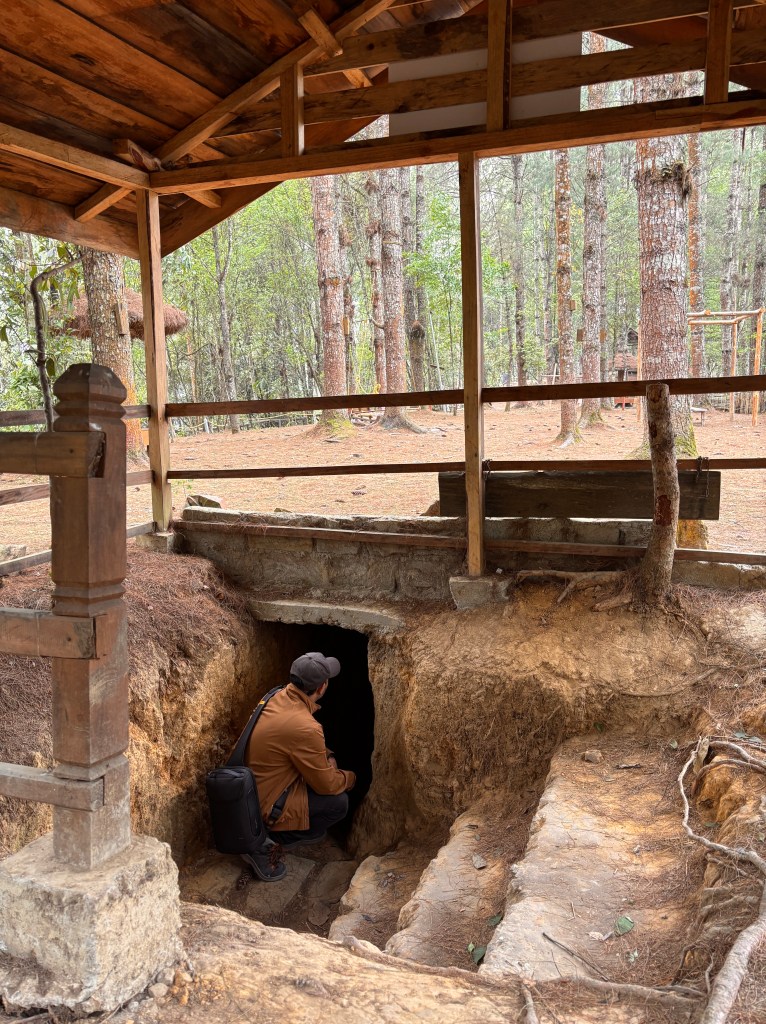
During the early 1960s, Ziro was one of the forward outposts for the Indian Army. Located in the Lower Subansiri district, its position made it a key supply and observation post toward the India-China border. The flat Ziro Valley, surrounded by pine-covered hills was ideal for temporary camps and air-drops. An army garrison was established on Ziro Putu, a hill that still offers sweeping views of the valley. But when war broke out, the garrison was suddenly vacated, as troops were re-deployed closer to the advancing frontlines in the eastern sector.
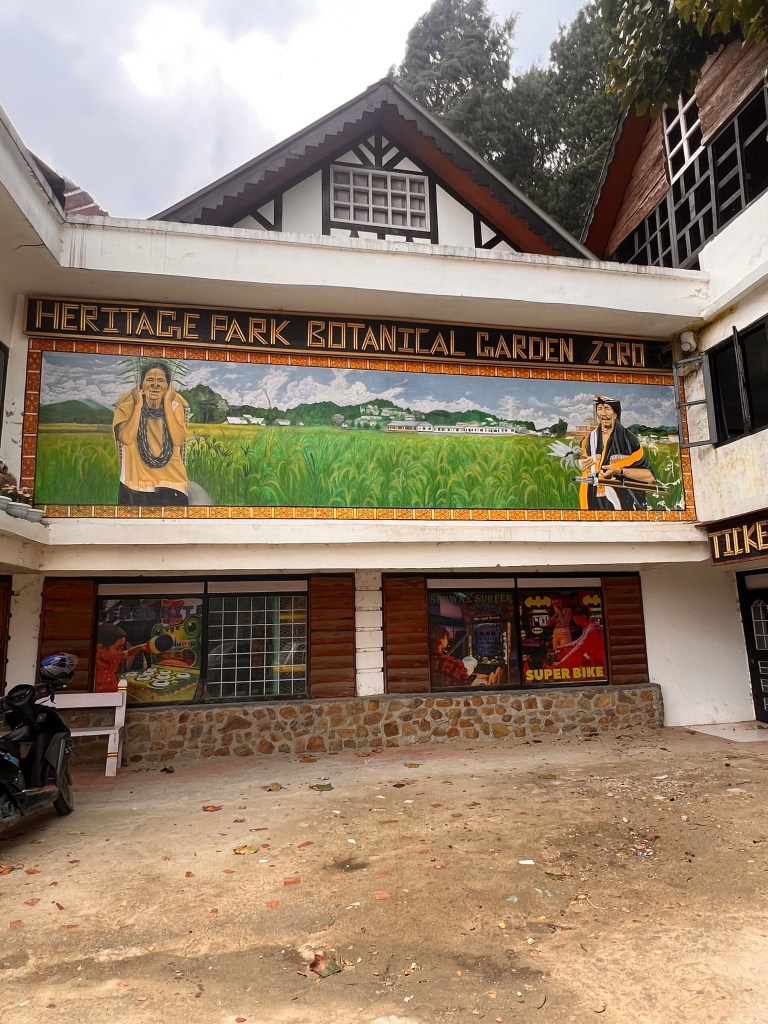
The scars of that era remain subtle in the form abandoned bunkers, tunnels and other relics in the Heritage Park Botanical Garden.
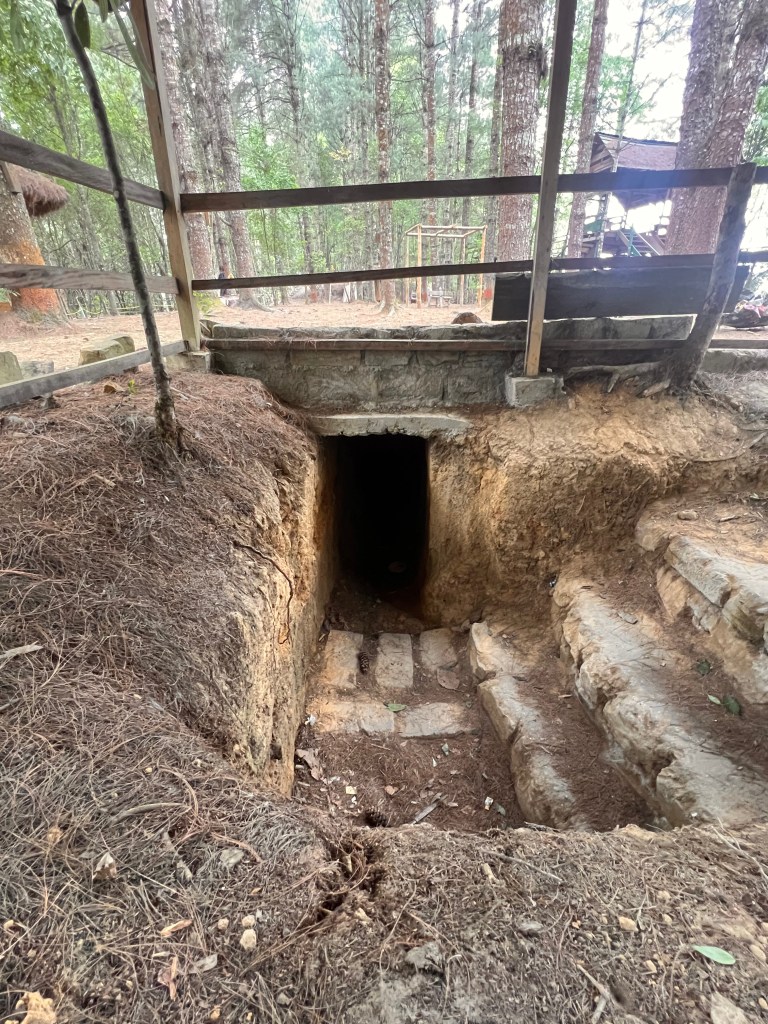
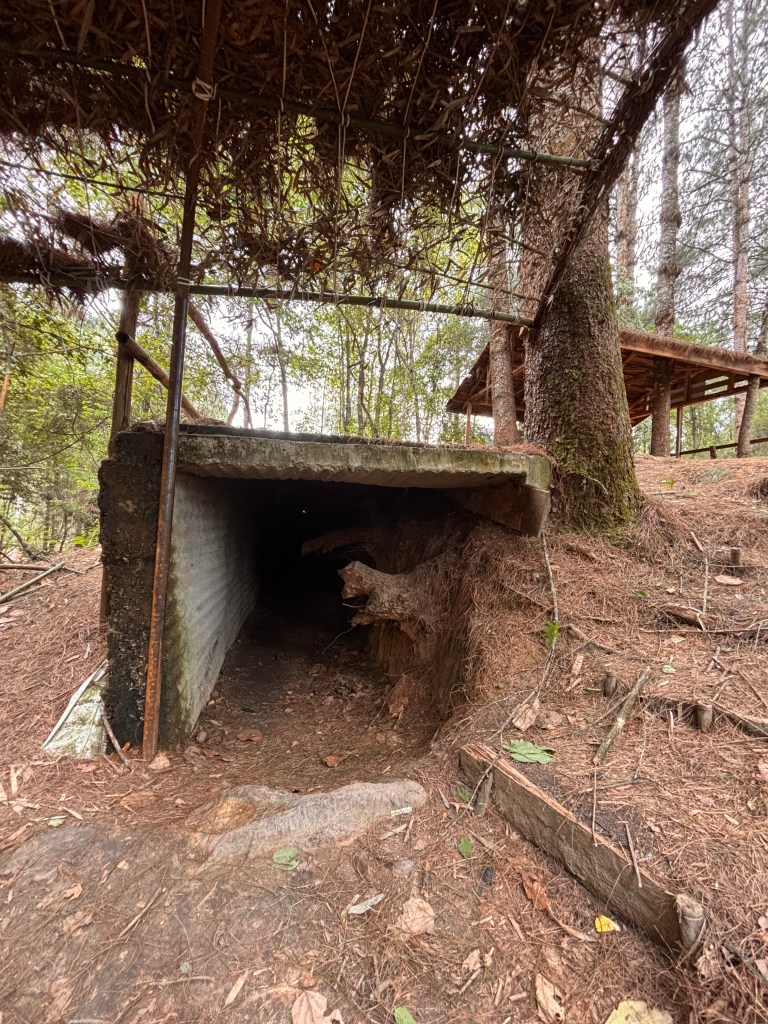

The Quiet Pour of Change
Not far from the misty paddy fields and bamboo-framed homes of Ziro lies a place that quietly reshapes how we think of this tranquil valley, in the form of Naara Aaba Winery. Founded by Tage Rita, a woman of the Apatani tribe, Naara Aaba began with a simple problem—local kiwis were going to waste. In response, she turned to winemaking, blending indigenous produce with quiet innovation. The result was India’s first organic kiwi wine, born in Ziro. Her story caught national attention when she appeared on Shark Tank India, earning a ₹75-lakh deal and inspiring many with her calm determination. But like all things in Ziro, what followed wasn’t loud or fast. It was a quiet pour of change.
Since then, Naara Aaba has grown steadily, expanding its production, and introducing new flavours like wild apple, plum, and pear. The winery now serves not just as a business, but as a symbol of possibility anchored in the land and open to evolution.


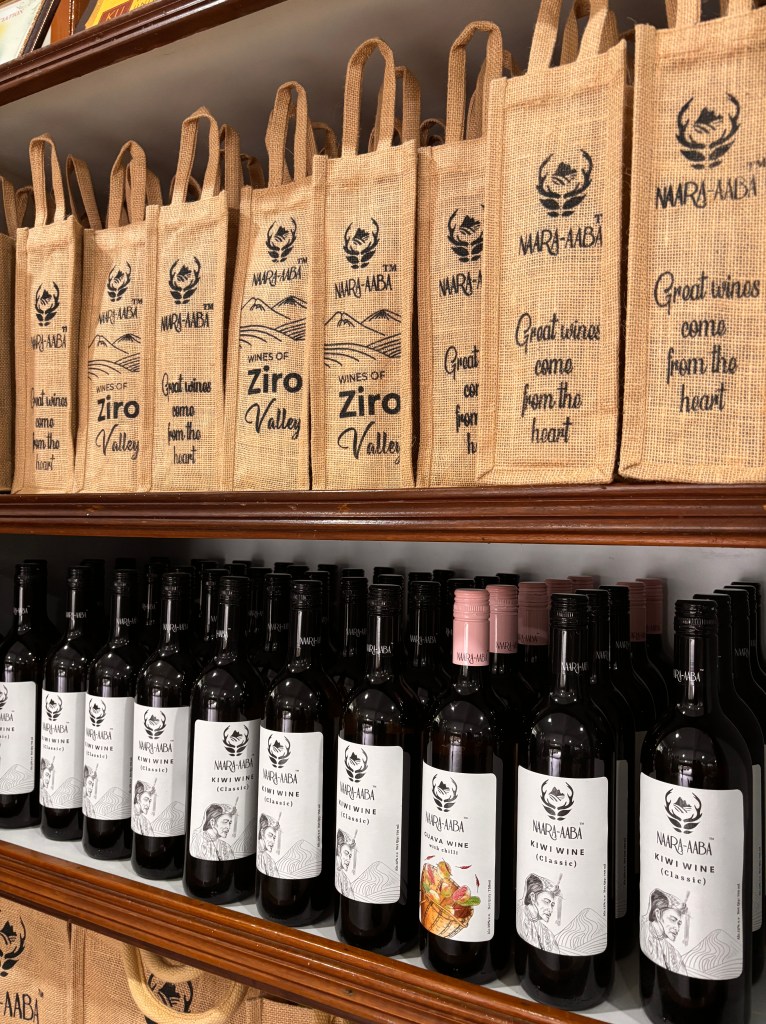
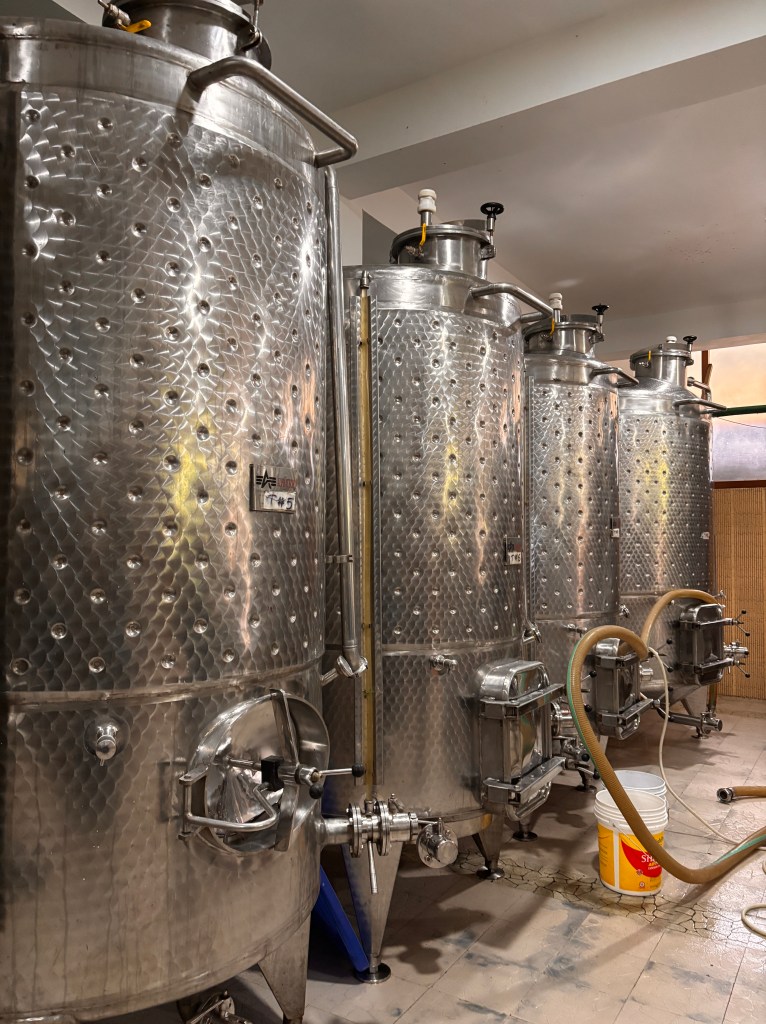

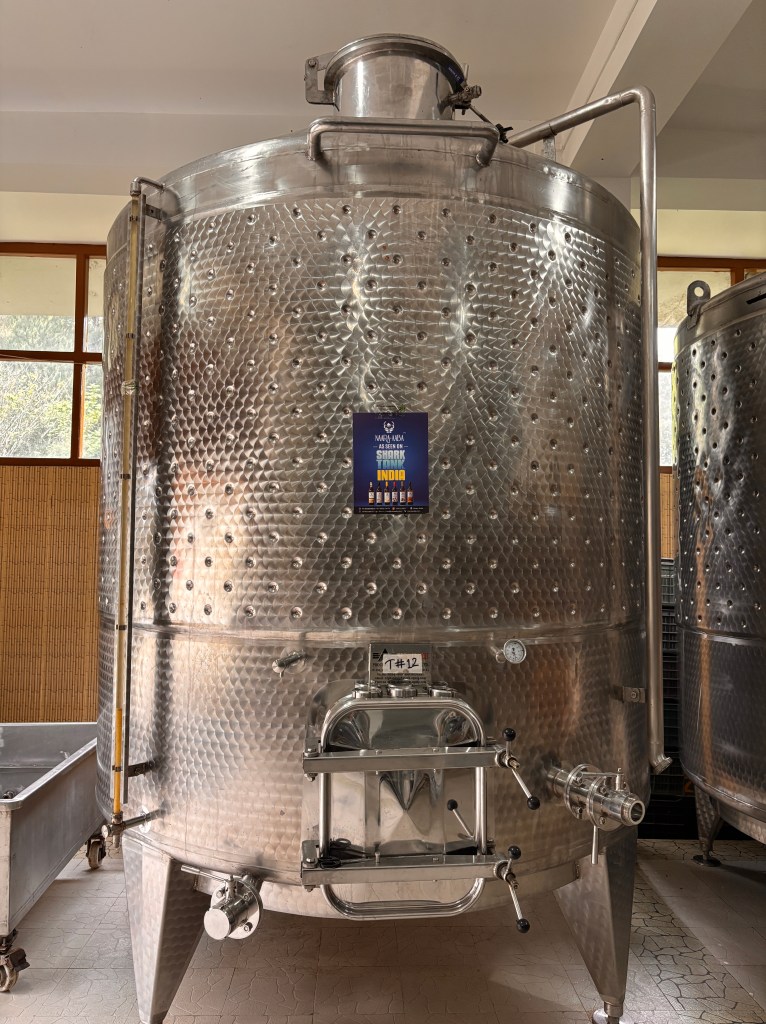

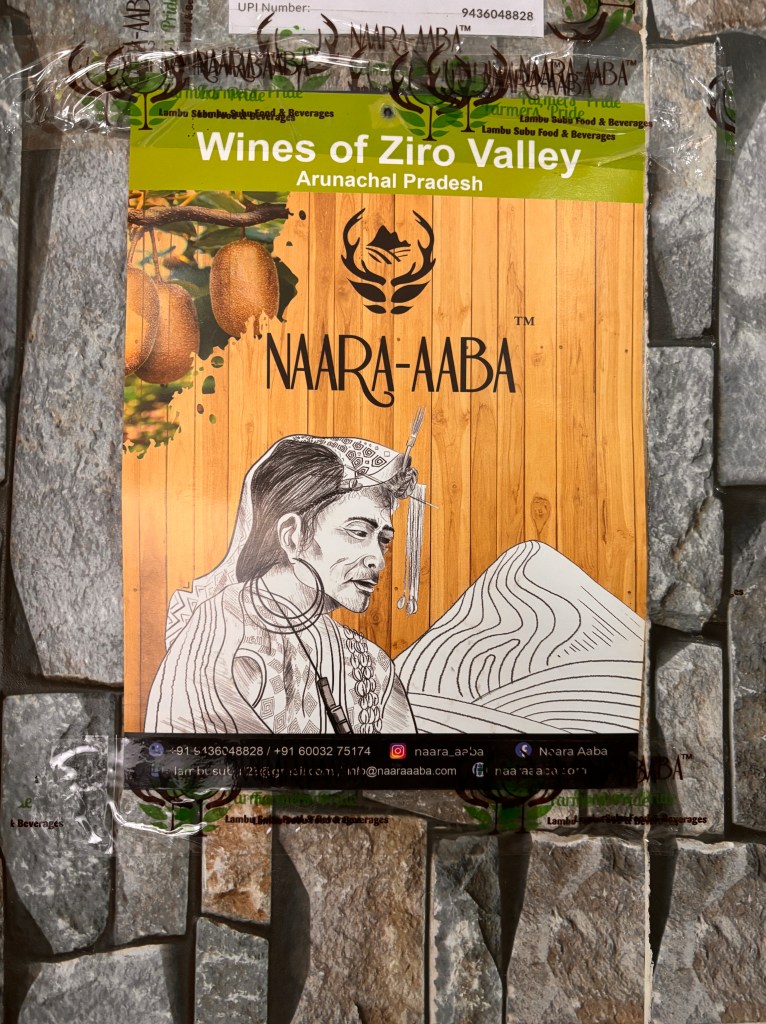
Visiting Naara Aaba was unlike visiting a typical vineyard. No rush, or pretense, just a small tasting room amidst their wine making setup.
The ZMF Ground
Just in case you’ve begun to believe that Ziro is all hushed pine forests, weathered traditions, and the slow rhythm of Apatani life, let me tell you – not all is grim and historical or traditional.
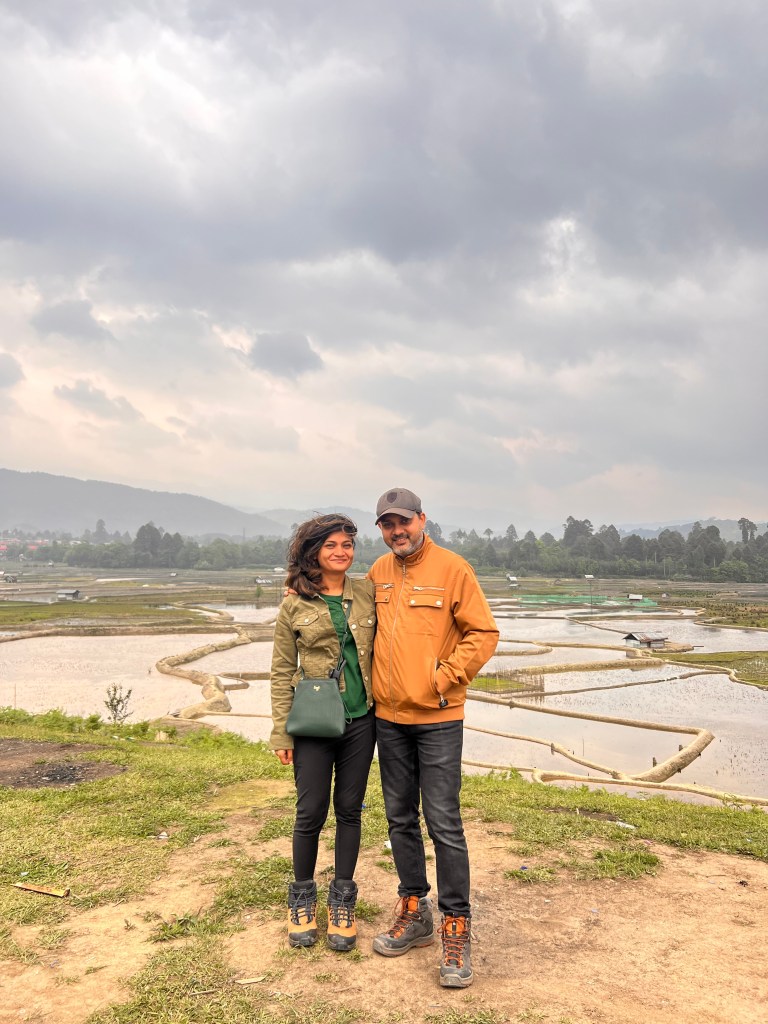
Ziro is home to the annual Ziro Music Festival held around September / October. And it takes place in an open elevated field surrounded by rice paddies and framed by green hills.
Even though we visited in April when the place was engulfed in silent nothings and howlings of the wind, I could almost imagine the pulse of what it would become during the festival bamboo stages rising from the green cover, barefoot crowds swaying with strangers-turned-friends, and a sky full of song instead of silence. But well, right there in that moment, it was just the vastness of the land, edged with distant hills and dotted with fading stubble from harvest, all of which had a kind of silent anticipation to it – as if it were simply pausing before the music begins again, and that was enough for me!
And well, that was a day in Ziro. Can hopefully go back again and witness the Ziro Music Festival. I hear Ziro is a different vibe then, not just coz of the festival, but also how different nature’s vibes are at that time of the year. But till then will just be happy in memory of our beautiful day in Ziro!

Discover more from thatbrowngirlinblackboots
Subscribe to get the latest posts sent to your email.

