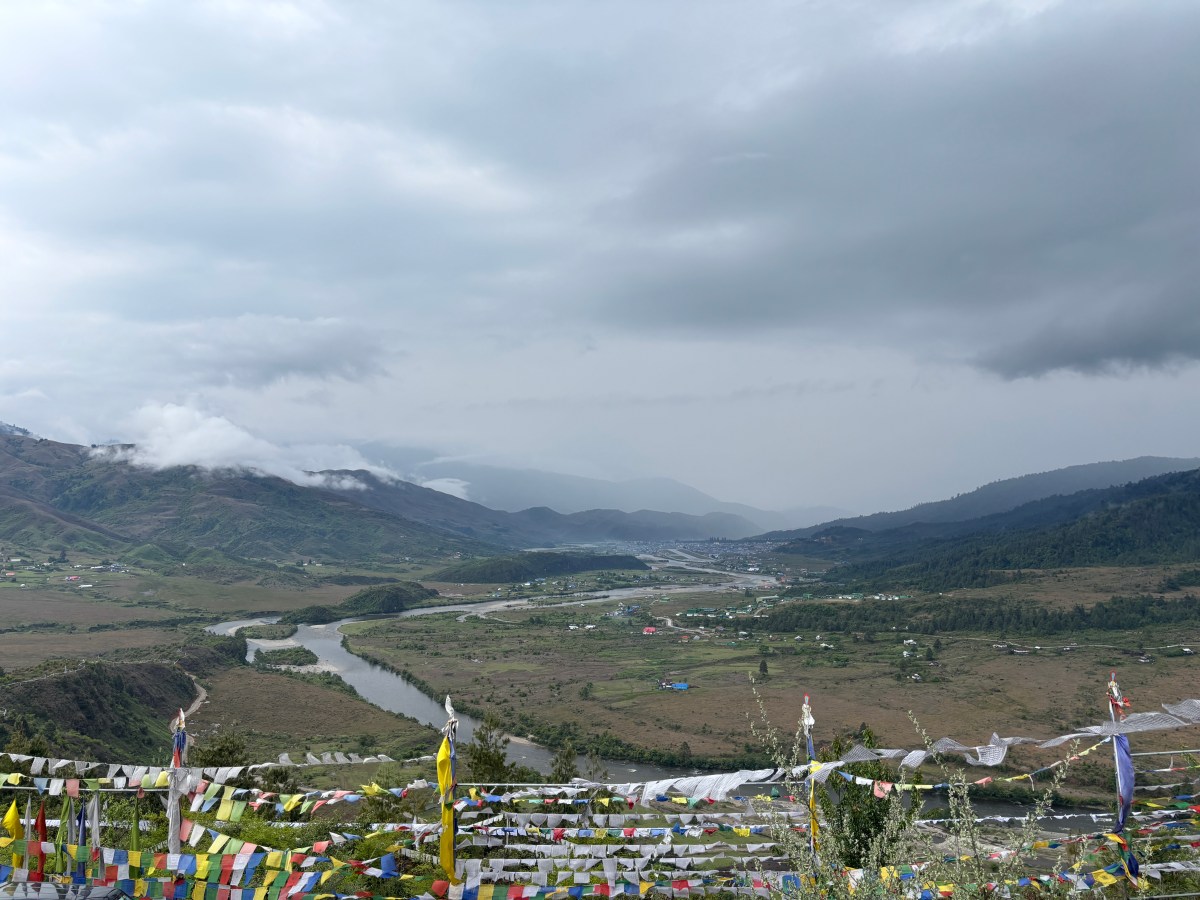
Welcome to this blog, where I’ve chronicled the end-to-end of my journey to Menchukha. This beautiful town was part of my Arunachal Pradesh trip in April ‘2025, and (if you haven’t already) I’d suggest reading up the complete post on my trip to Arunachal Pradesh.
Mechukha was the last leg of the Arunachal Pradesh trip. By then we’d braved the worst already in terms of torrential rains and horrible, broken, patchy roads. Or so we thought!
The Journey
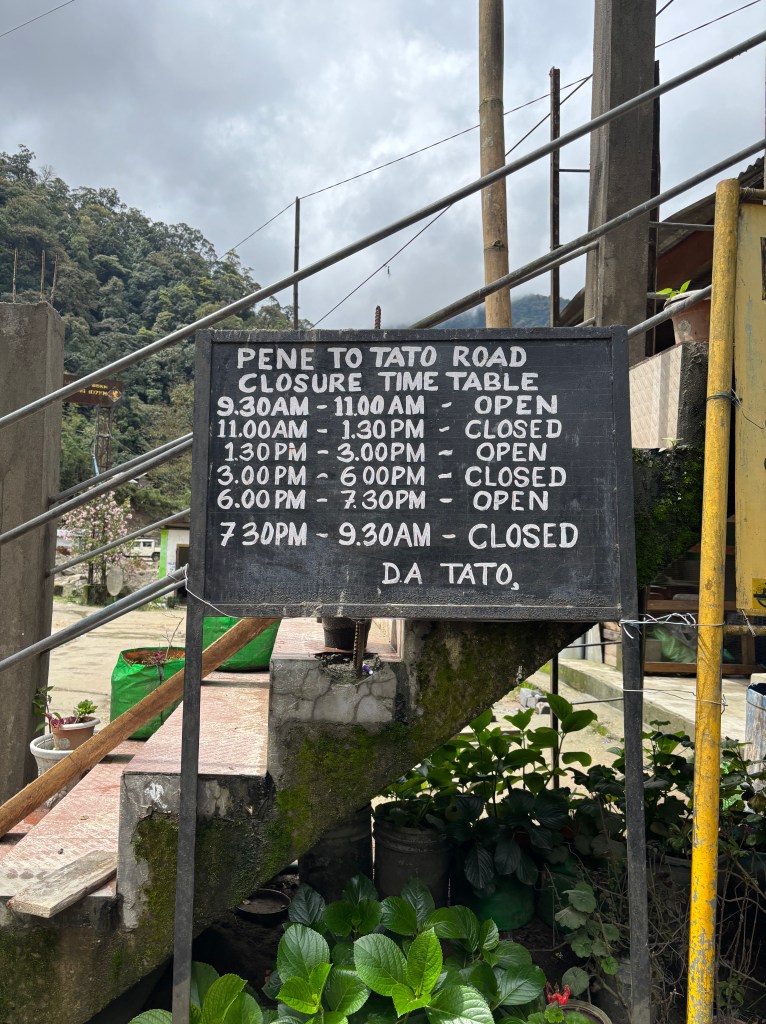
The road from Aalo to Mechukha is less a drive and more a slow negotiation with the mountains, patience and time – about 187 kilometres of narrow, winding passes and sudden drops that make even the calmest passenger grip the seat. We left Aalo early in the morning, to ensure we crossed the Pene–Tato stretch before the scheduled road closure. A small blackboard at Pene village spells out the rules of passage – a timetable that governs movement like mountain’s own version of traffic lights. Miss it, and you wait for hours, stranded between two bends with only uncertainty for company. Maybe other stranded travellers too.
But nothing prepares you for what’s to come. The road – well, let’s just say, is non-existent. Or has probably disappeared under a thick carpet of red mud, sticky and treacherous after rain – the tyres either skidding or sinking – either way turning the drive into a grinding challenge.
Adding to (or rather slowing down) the pace was the occasional rumble of army trucks, part of the large military presence stationed in Menchukha. Whenever they approached, civilians respectfully pulled over to let them pass. Their urgency, unlike ours, wasn’t just about the road – it was about national duty. And no one questions that.
(It’s astonishing though that the route which is the lifeline to a border town remains in such a precarious state. This was even very recently highlighted in this India Today North East report)
The Unhurried Welcome to Menchukha
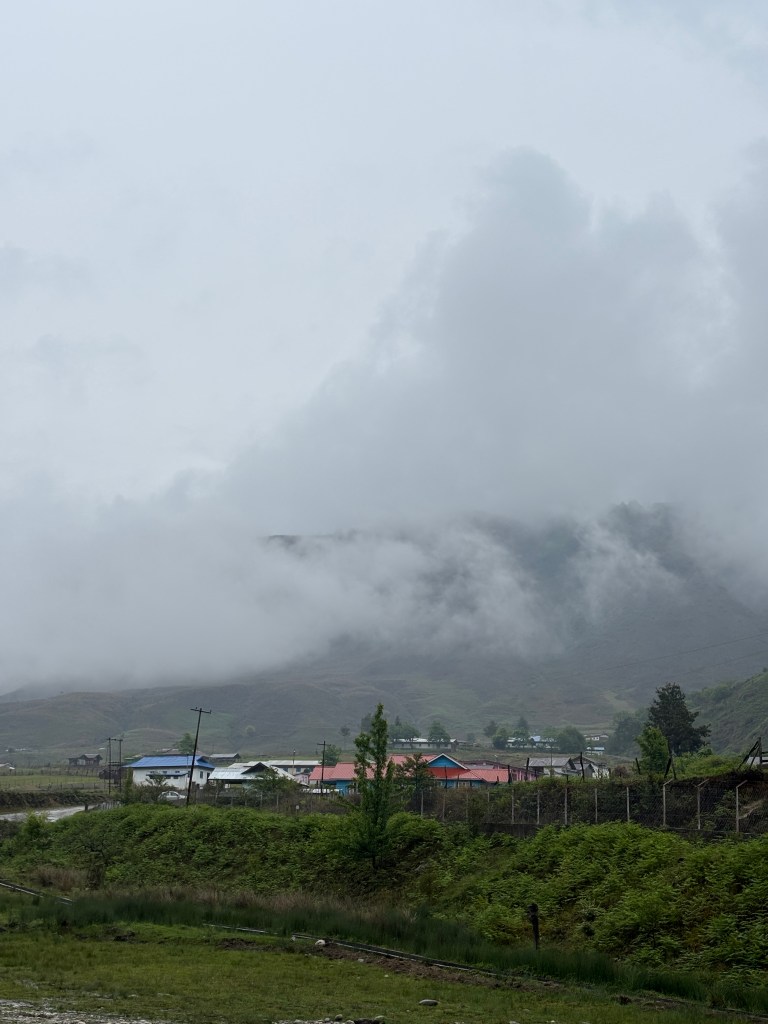
There’s a peculiar softness to Menchukha, one that doesn’t clamour for attention but gently absorbs your attention. After a road journey marked by red mud, landslides, and some seated abs exercises, entering Menchukha felt like stepping into a place that had been waiting for us all along, unbothered by time.
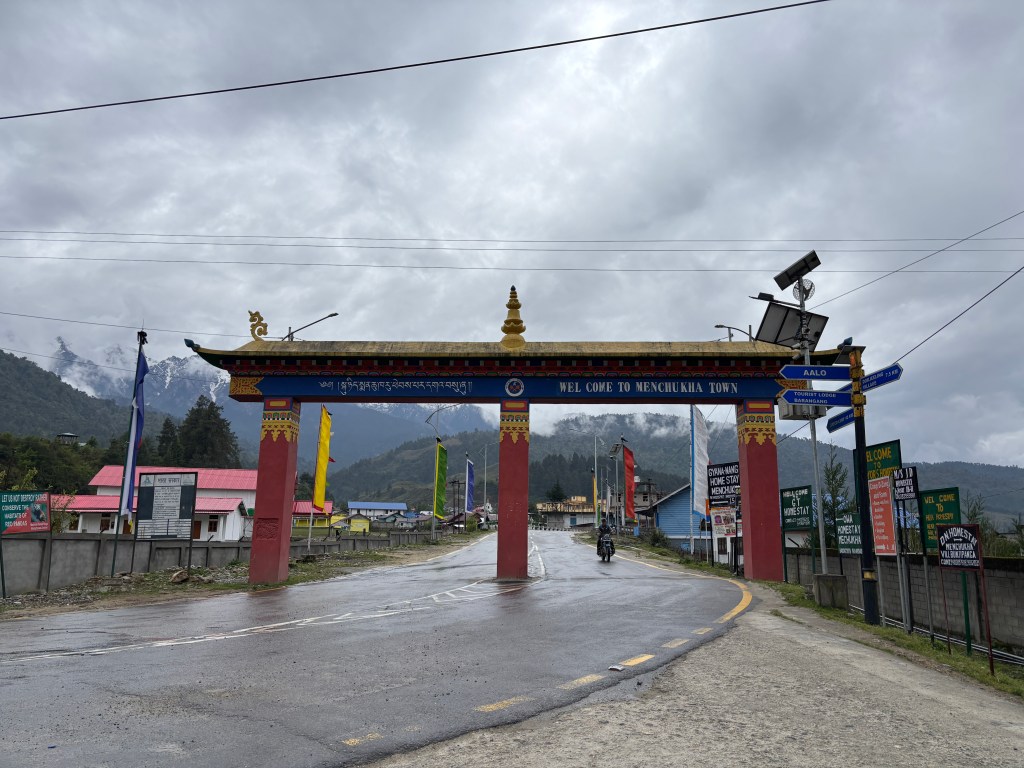
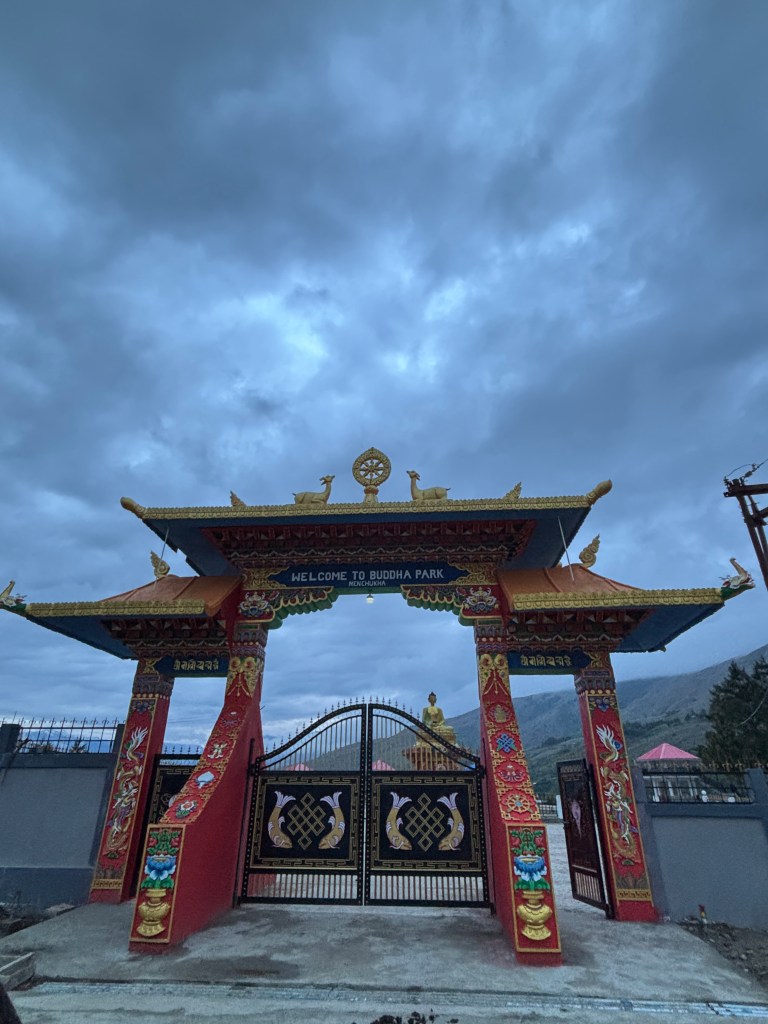
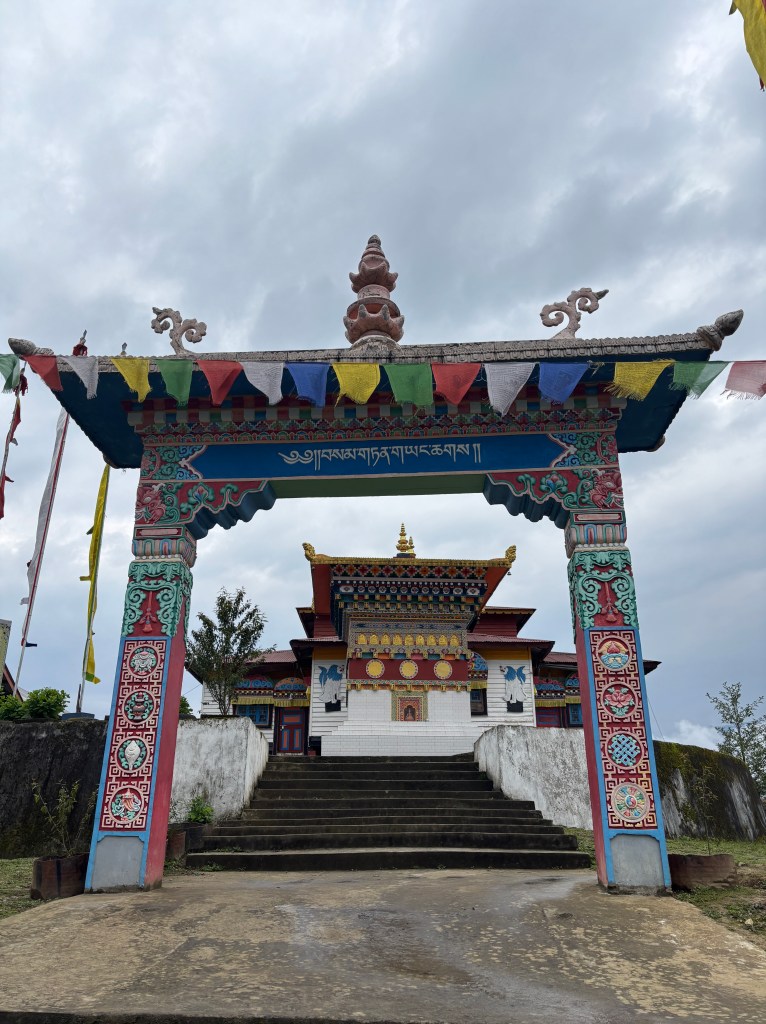
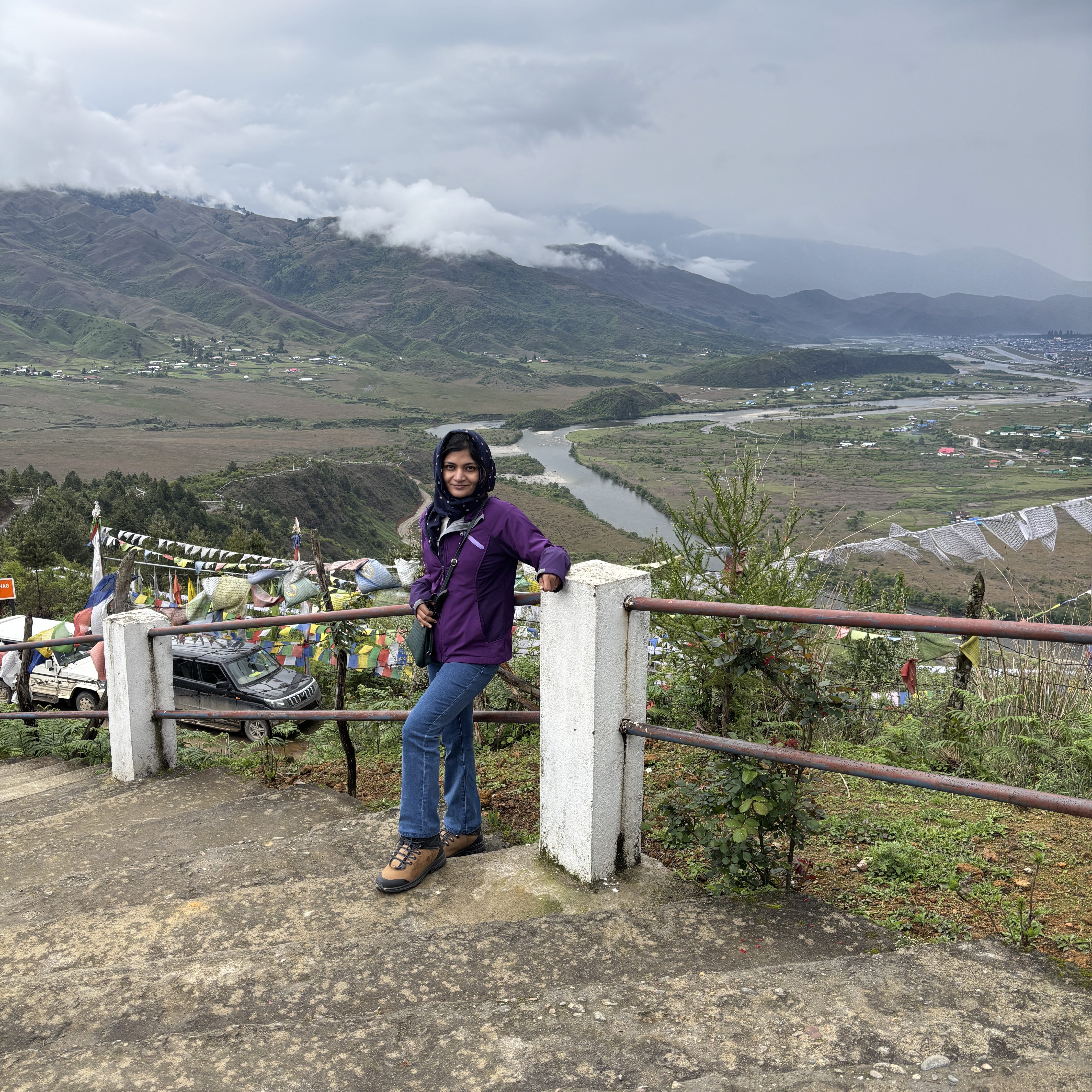
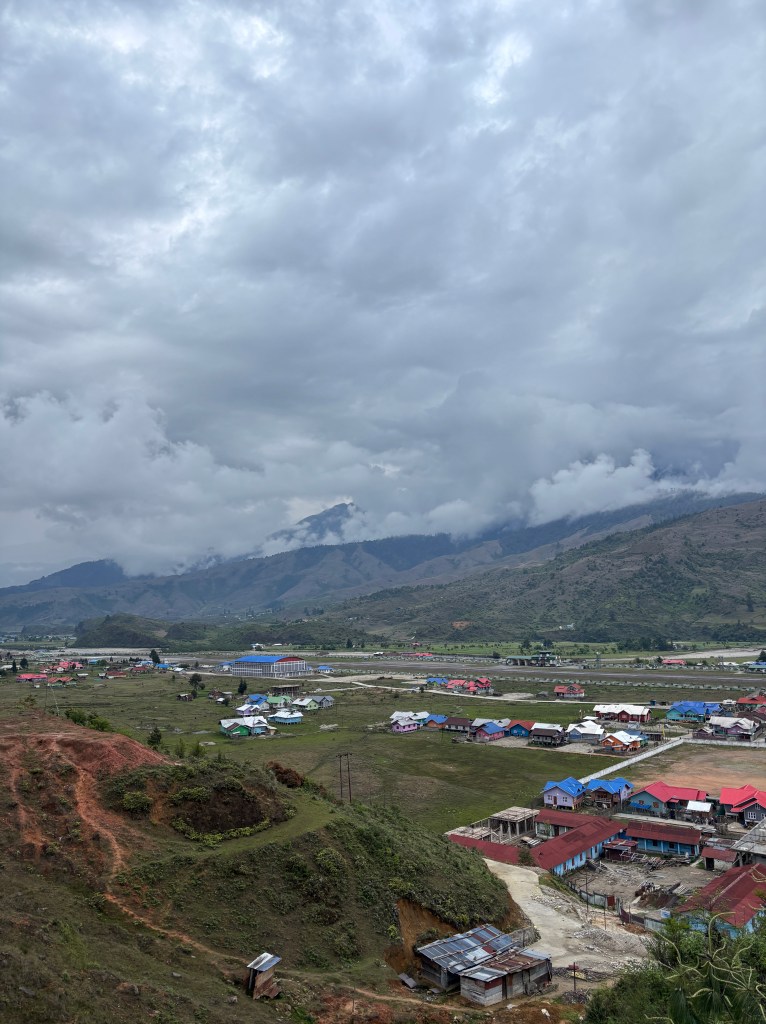
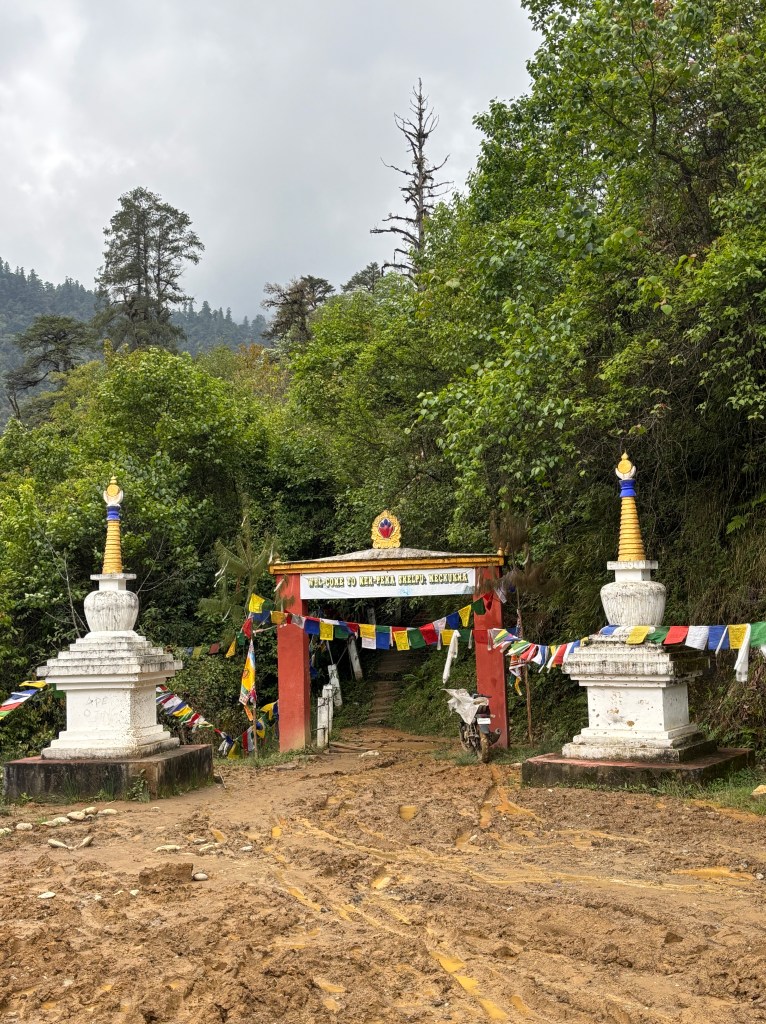
The welcome gate, its Tibetan script etched in colour against brooding skies, opens up to a wide valley cradled by undulating hills where “MENCHUKHA” is marked across the slopes, as if the land itself had whispered its name into the earth.
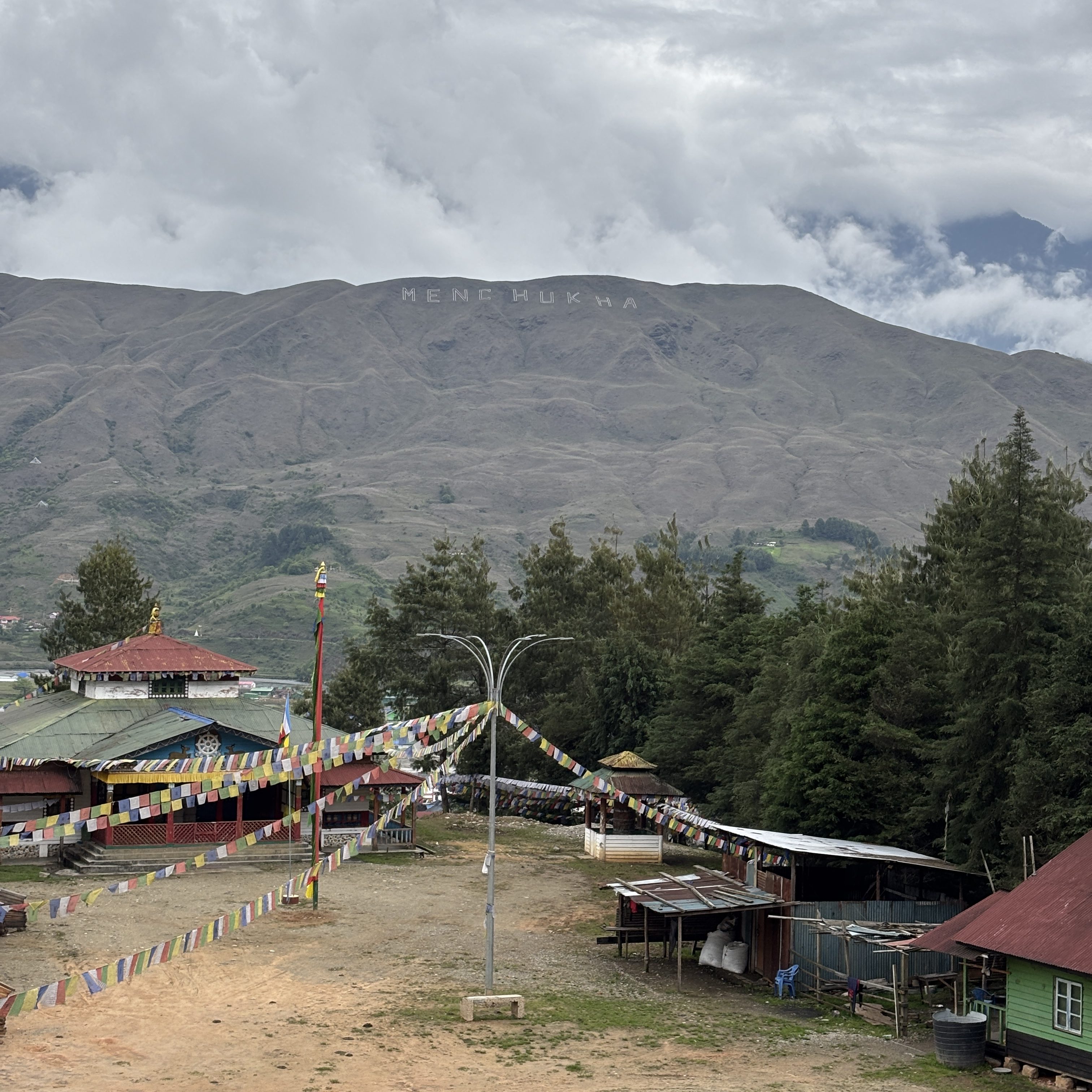
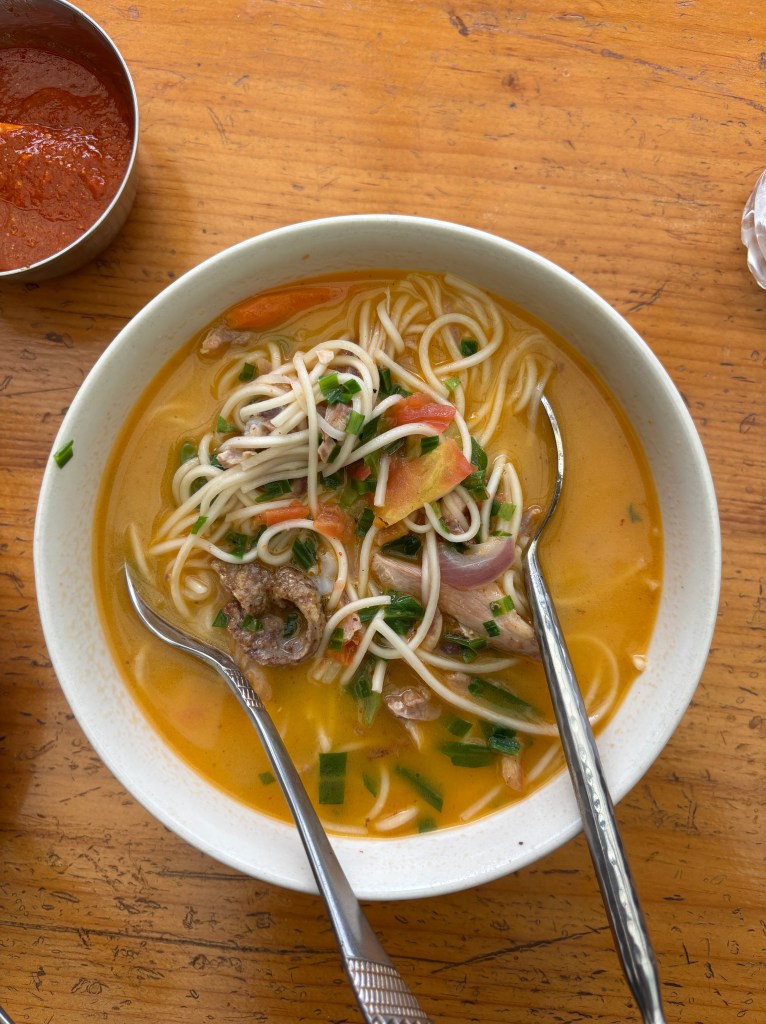
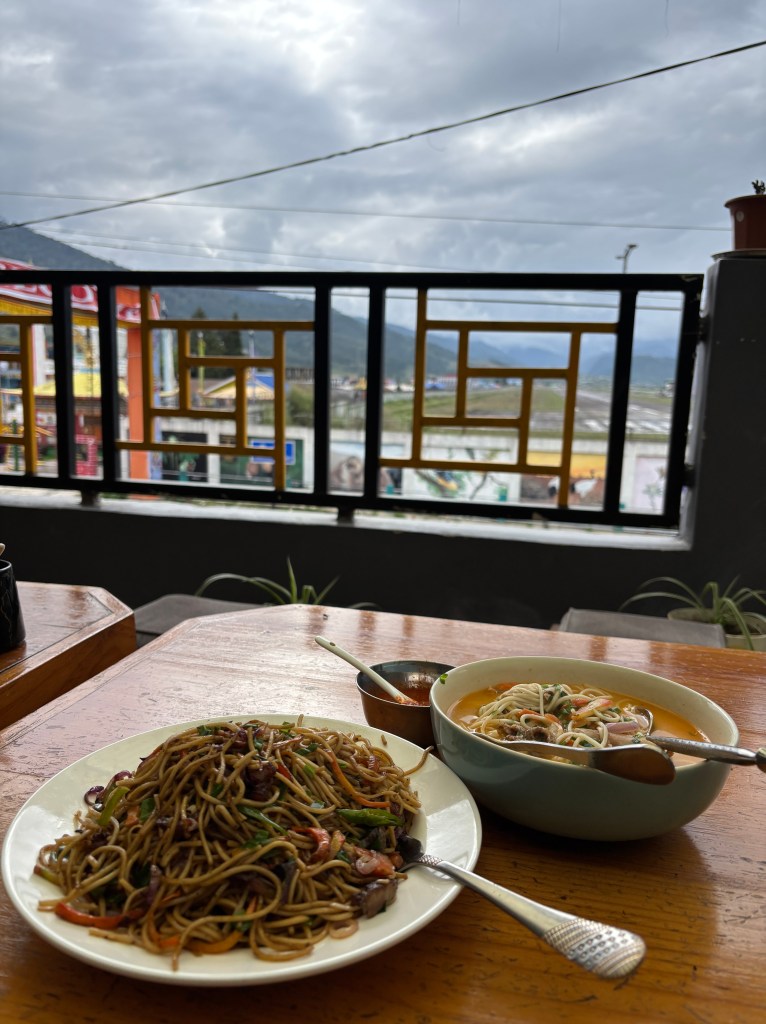
We checked into our homestay and made our way to Buddha’s Kitchen, a well-known local eatery that lived up to its quiet reputation. With its modest setting and a balcony that offered sweeping views of the mist-laced valley, we dug into a plate of freshly stir-fried chowmein and a steaming bowl of Thukpa, comfort food made better by the slow drizzle outside and the stillness in the air. Honestly, that was the best Thukpa I’ve had till date – a beautiful umami flavour, so distinct.

The Main Market
Our very first meal at Menchukha quite revived us from the zombie-like mode we were in post the excruciating 9 hours drive! Well-enough to go soak in the quaint Buddhist town.
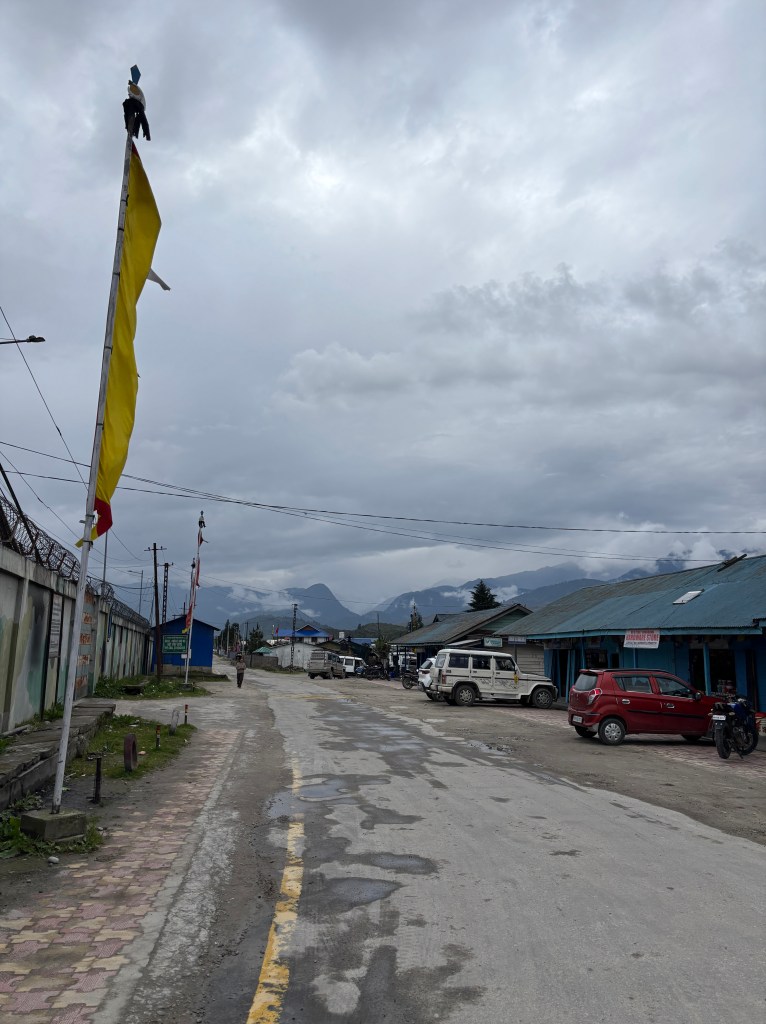
We strolled through Menchukha’s market street, a narrow but lively stretch, painted in the soft palette of everyday life. Shops on each side of the street, selling everything from thermals and trekking shoes to crystal beads and cosmetics, quaint cafés, general stores, and a few small homestays.

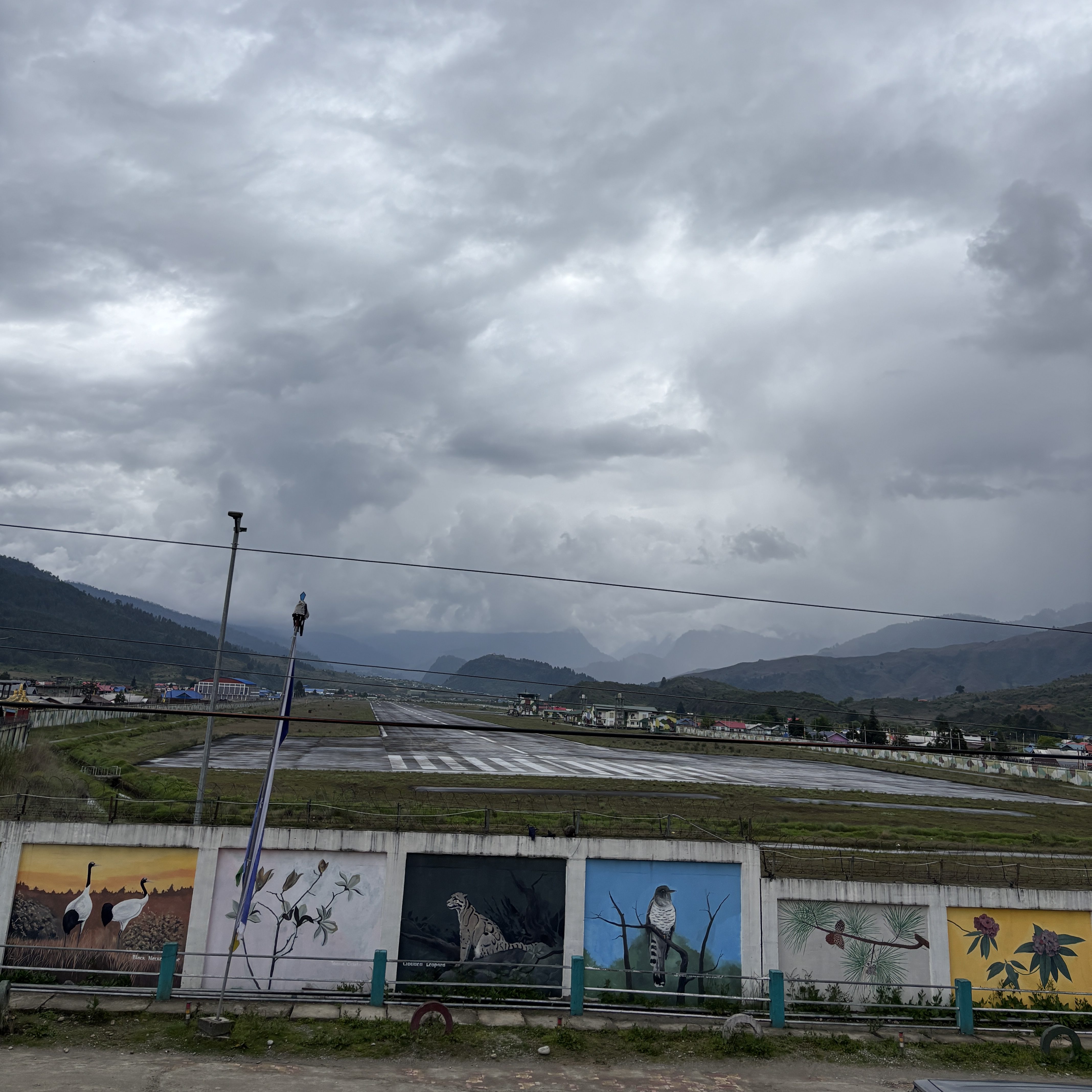
Right in the heart of the market and beyond the striking mural wall is an Air Force airstrip known as Menchukha Advanced Landing Ground. The airstrip is used by the IAF for various purposes, including launching operations, border management, and providing air support during natural calamities. The air strip serves as a vital supply route and military base, also mainly due to the proximity to China border.
At this point in time, I can’t really remember what we did then, but we spent about 3 hours just strolling in and around the market street, in and out several of those shops and admiring the mountains surrounding the valley.
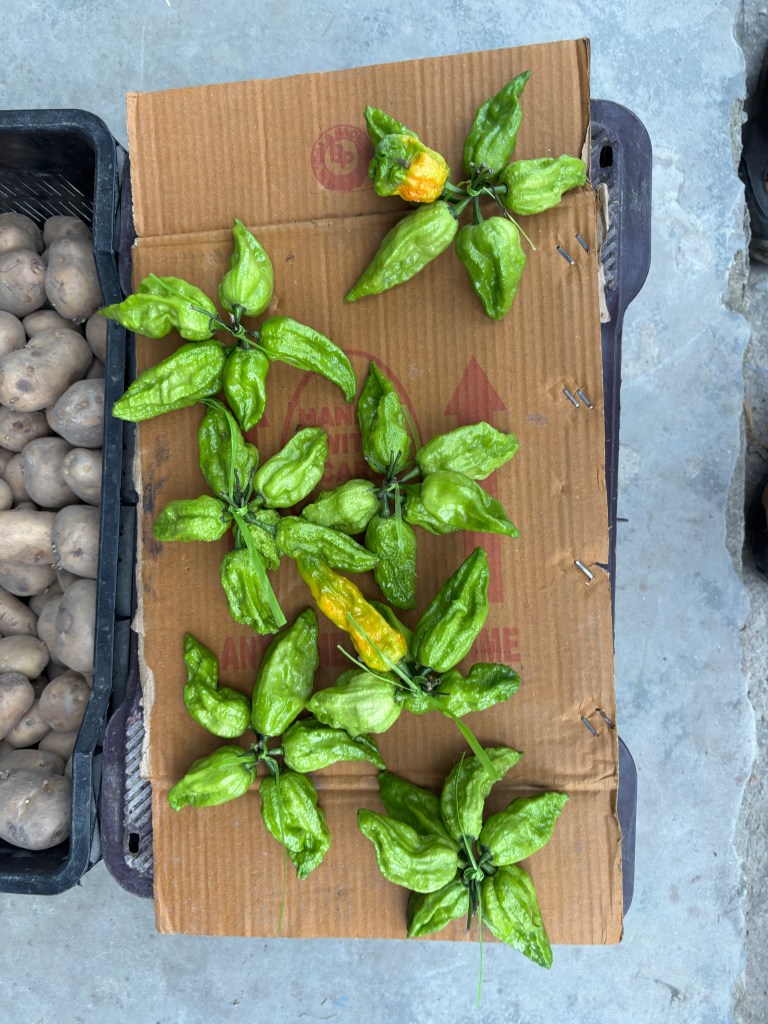
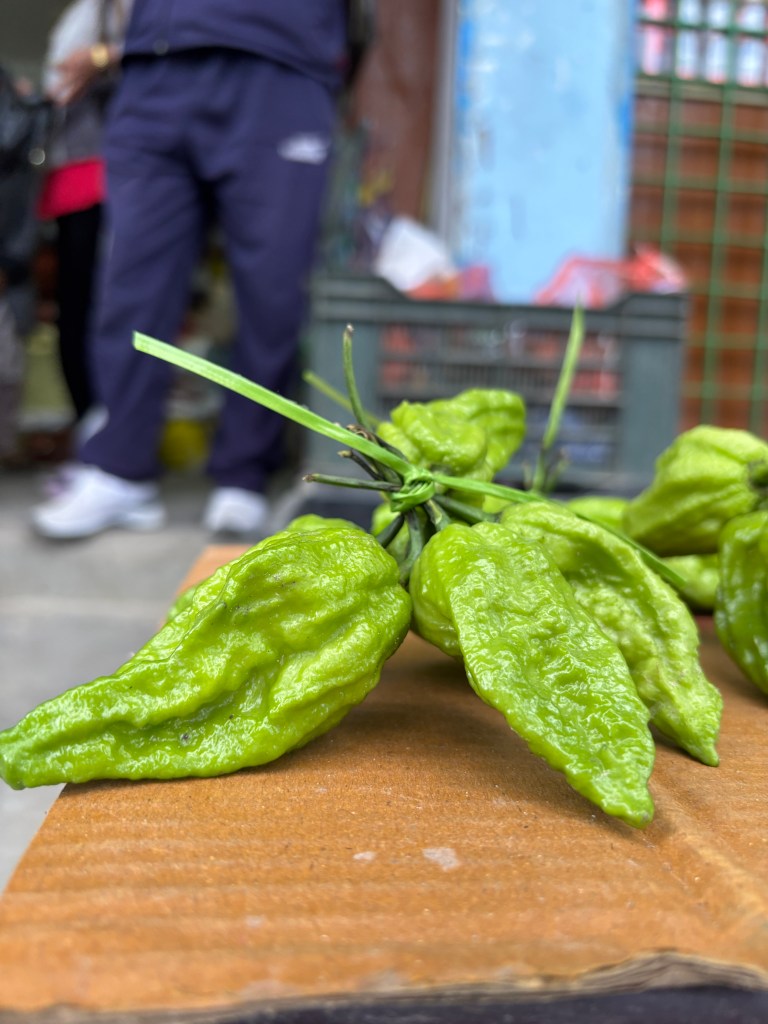
Oh yes, we also briefly stopped by at a general store to admire the king chillis (ghost pepper) on display, and got into a conversation with the shop owner coz she heard me say bhut jolokia (the coloquial term) but obviously I didn’t look like a local. Sweet! (Not the chillis)
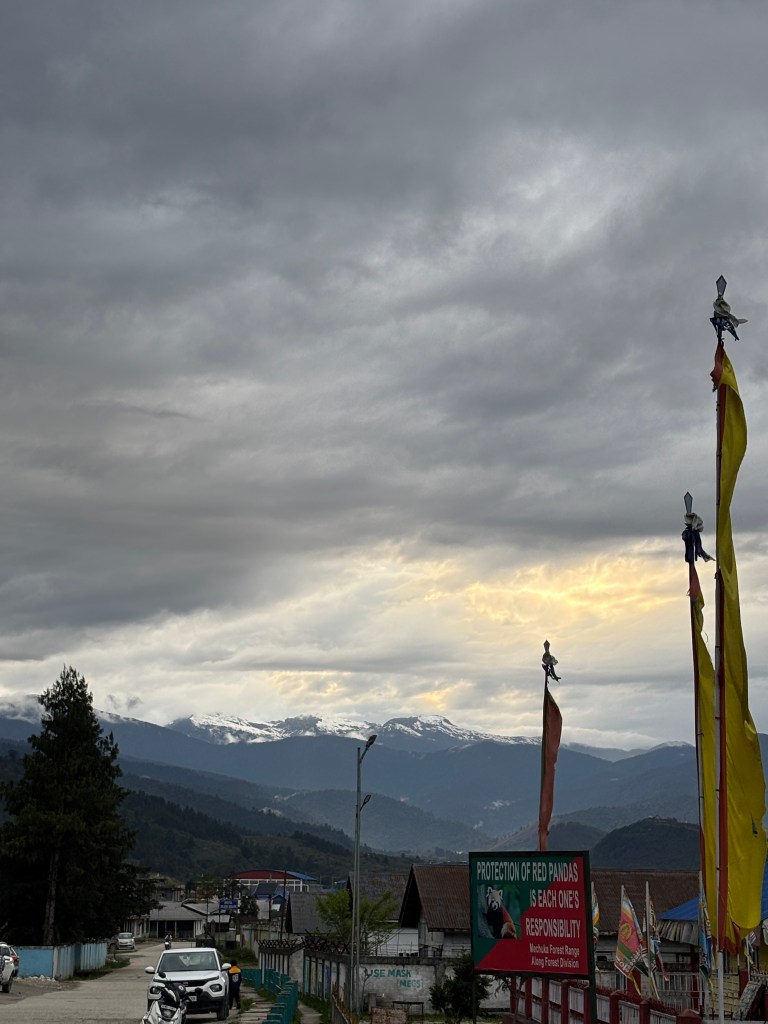
And almost at the center of the market area is a very striking chorten (Buddhist stupa), gently anchoring the town’s spiritual pulse, and so beautifully! The flags fluttering with the snow capped peaks in the background ❤️
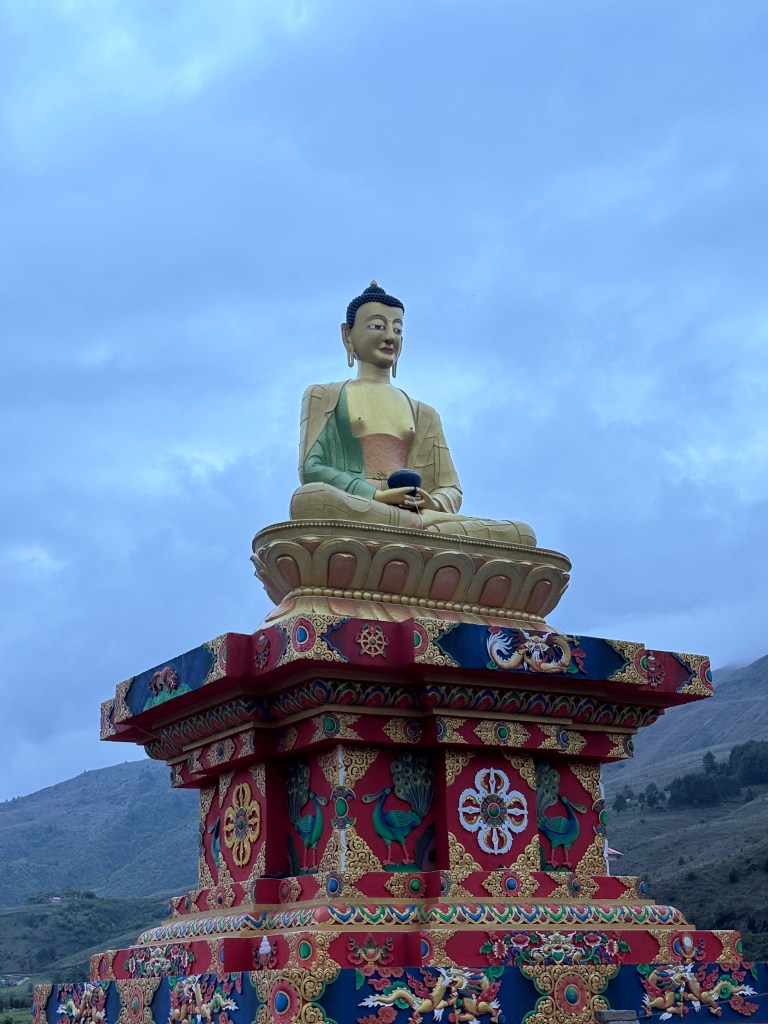
As dusk drew nearer, we started feeling the chills and so we retreated towards our homestay. Quickly just stopping by at the Buddha Park located just outside the market area and very close to our homestay.
We had a trek planned for the following day but the rains had other plans for us which included sleeping in till late and skipping any tiring activities including the trek. But we anyway walked around the homestay area soaking in the vibe that is Menchukha.
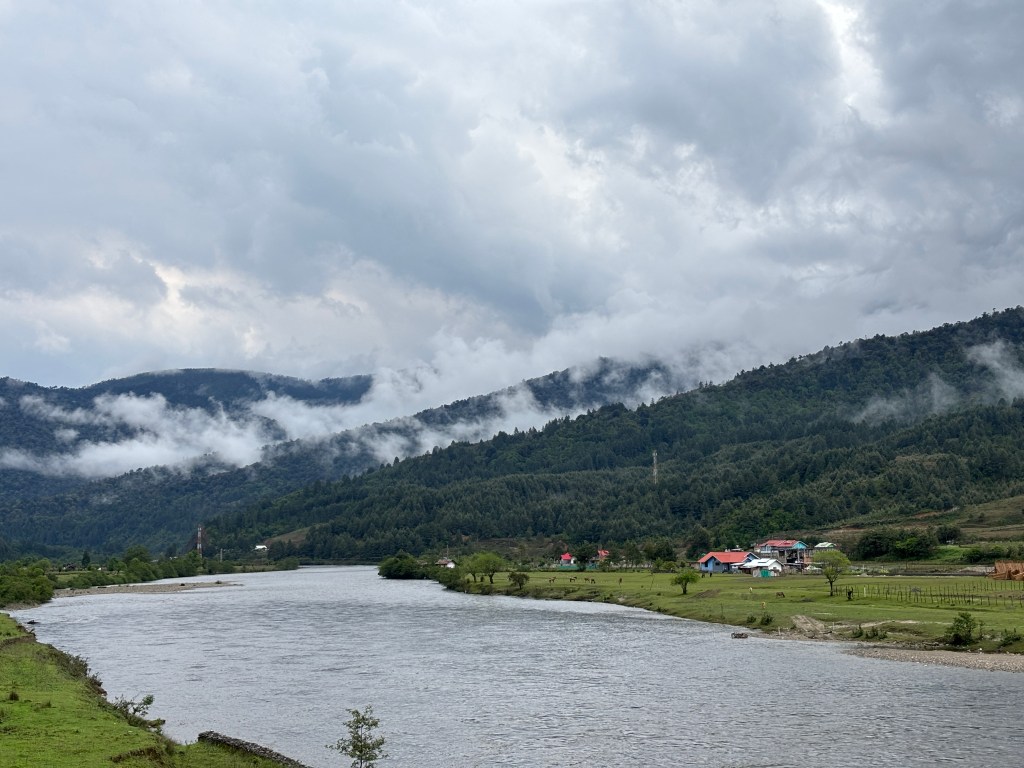
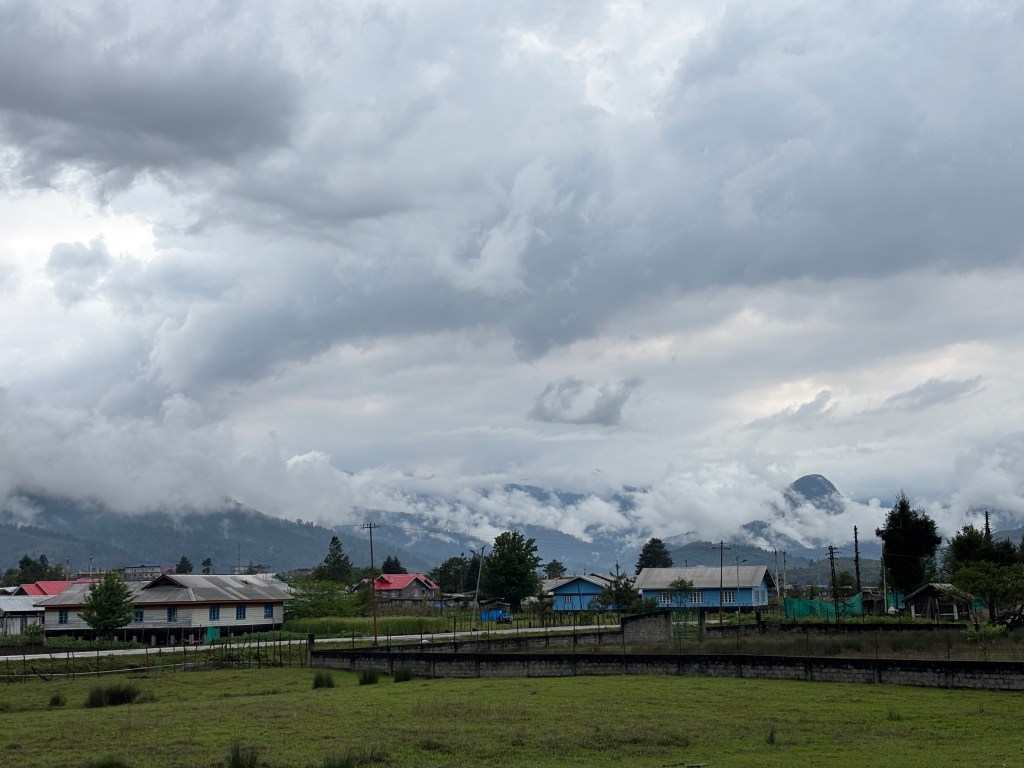
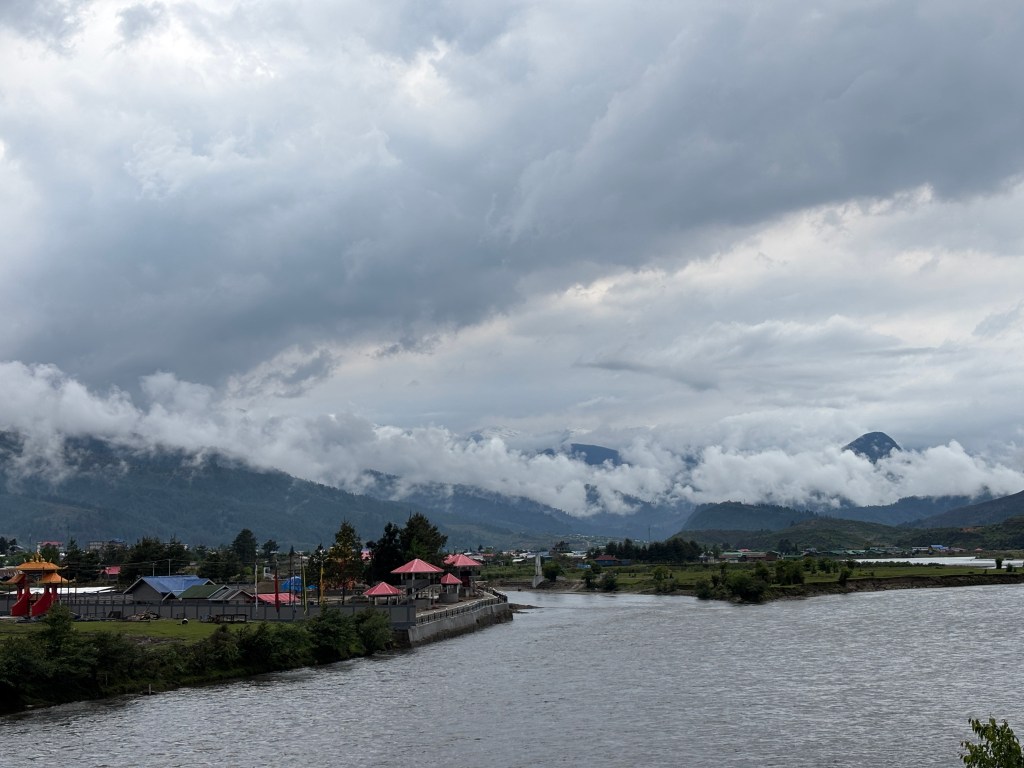
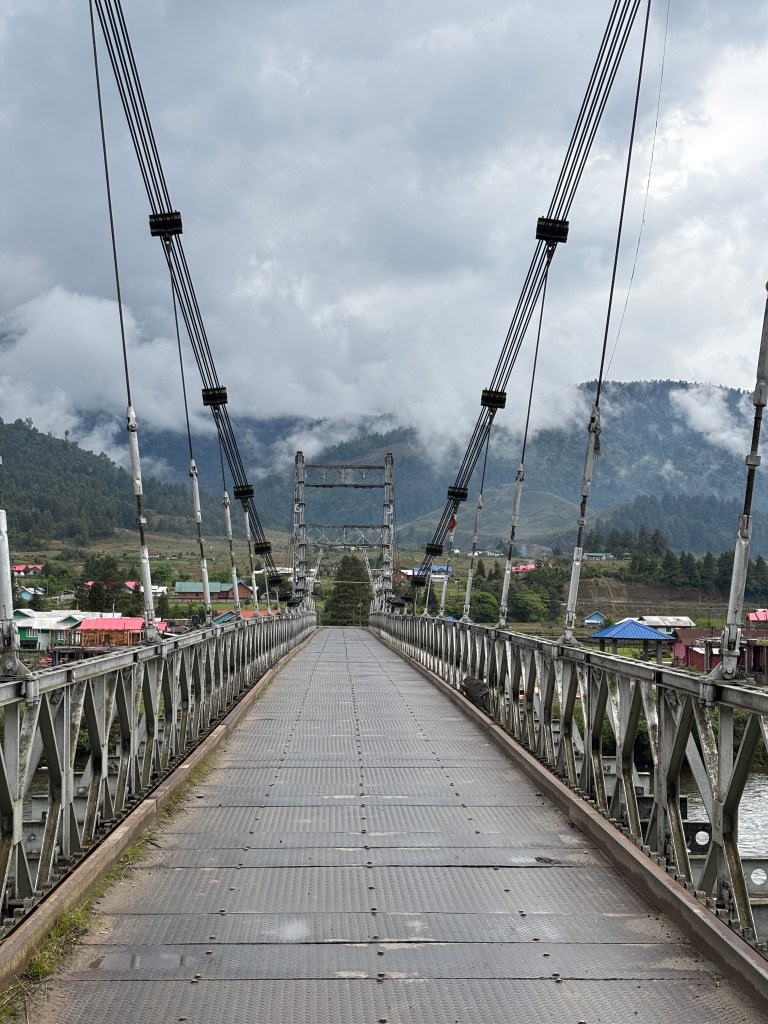
And then later, when the skies cleared out a bit drove towards another tiny town
Rolling Down from Menchukha to Pause in Dorjeeling
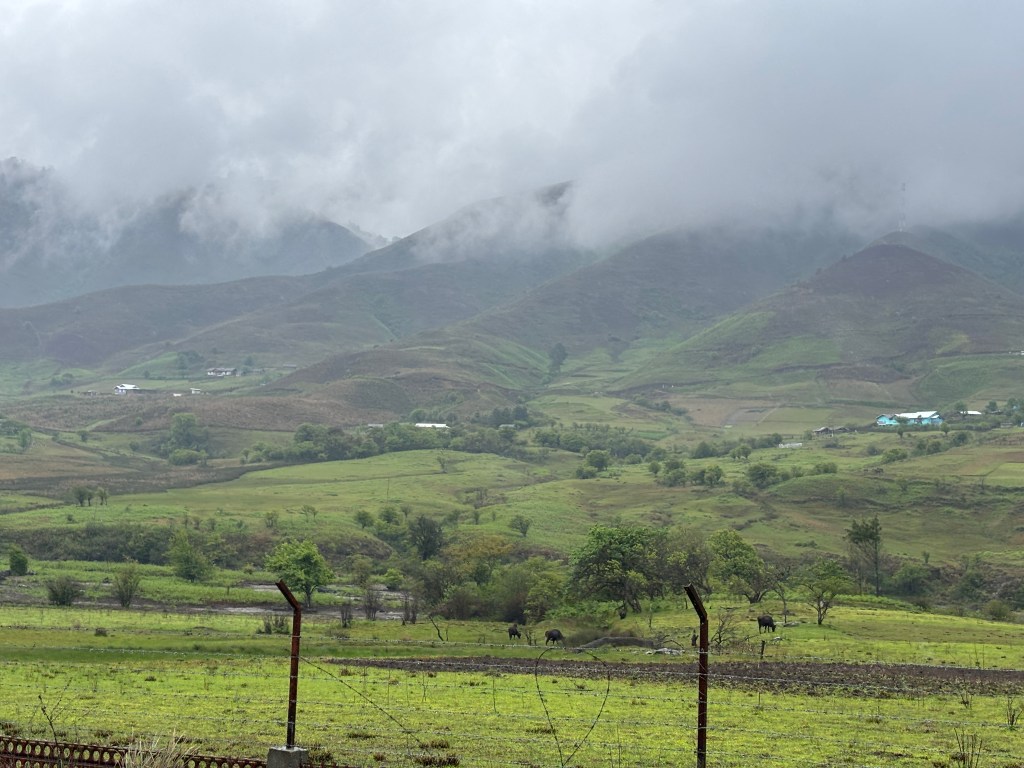
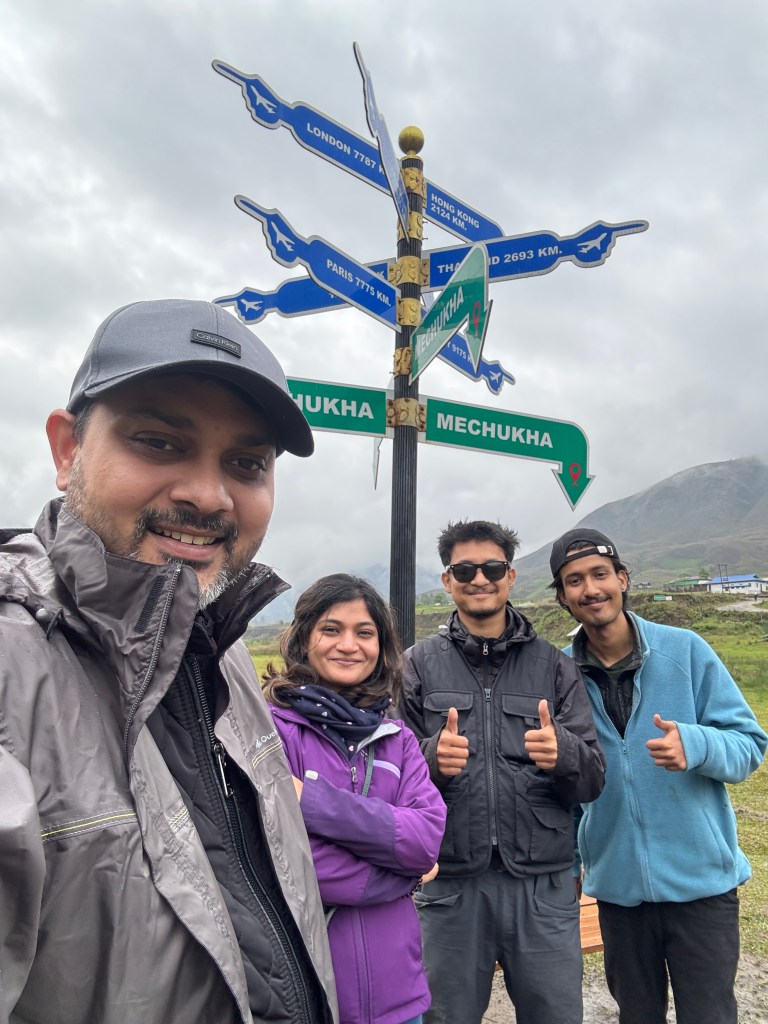
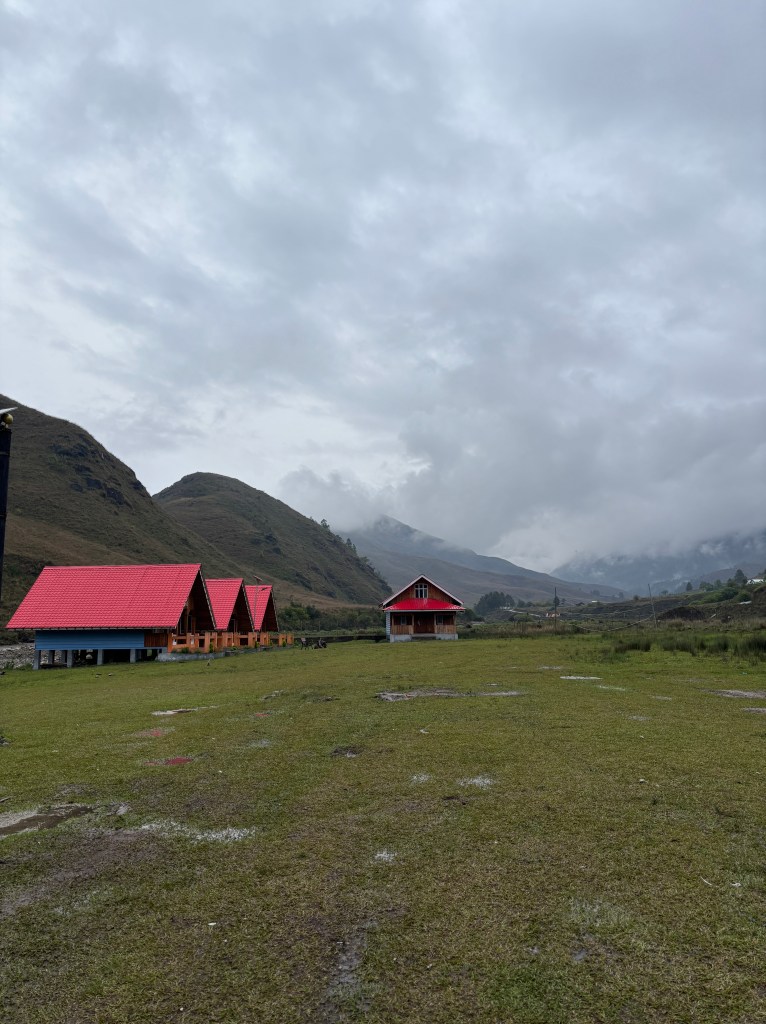
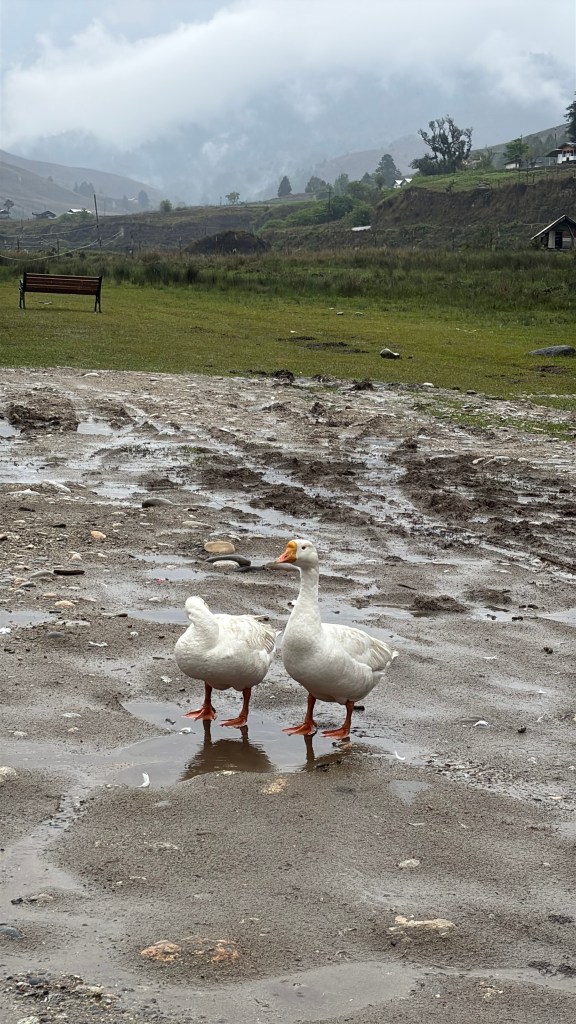
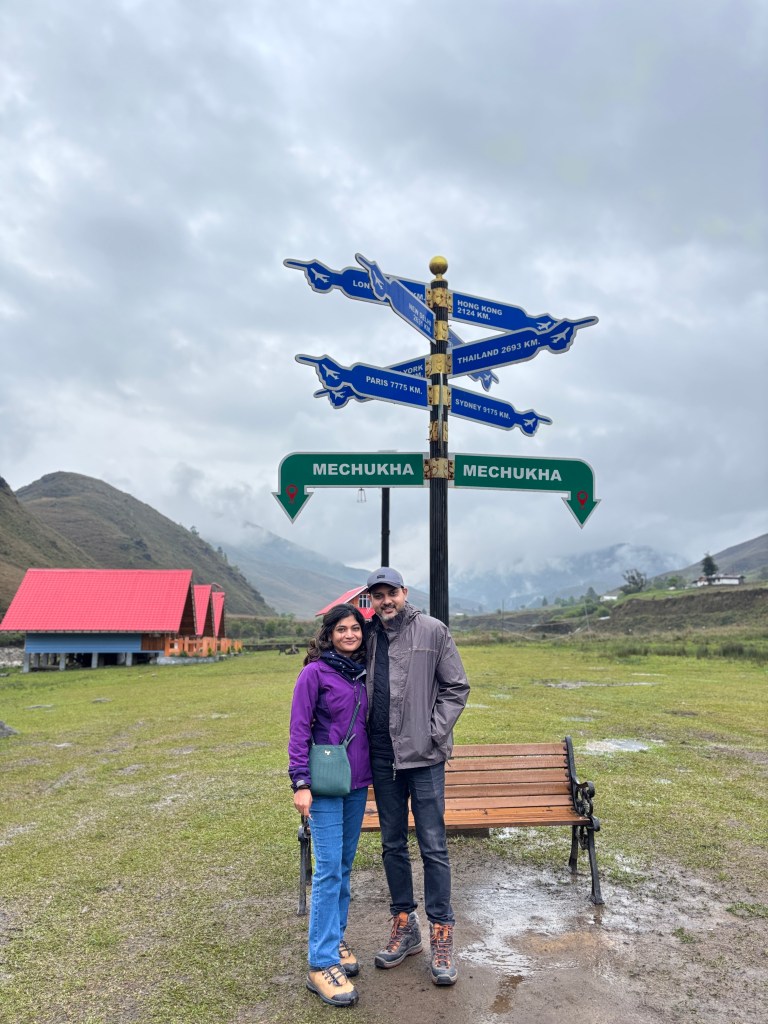
Leaving Menchukha – that pine-laced bowl of rivers, cliffs, and clouds – the road descends gently, tracing the soft curves of the Siyom River. It’s here, barely 5 km out, that you’ll glide into Dorjeeling – a name that might prompt double-takes, but one that has nothing to do with tea estates or colonial hill stations. This is Dorjeeling of Arunachal Pradesh – humbler, quieter, and deeply rooted in the rhythms of Memba and Tagin life. At first glance, it’s just a cluster of wooden homes on stilts, grazing mithun, and gurgling streams. But if you linger a bit longer, it’s much more – a living, breathing outpost that straddles tradition and the slow arrival of the outside world.
A Place That Bollywood Didn’t Miss
Dorjeeling might have stayed quietly under the radar if not for an unexpected visitor – Salman Khan, who stopped here during a 2018 shoot for the film Tubelight. And that’s when Dorjeeling hit the top charts. Locals still fondly recall the the surreal moment when Bollywood descended into their valley. Some shops even feature signed photos or smartphone shots taken with the star, like proud heirlooms. That was Dorjeeling’s limelight moment – but never overhyped, instead gently folded into local lore.
The Land of Spirits and Stories
Menchukha isn’t just a beautiful valley. It feels sacred. The name – Men (medicinal), Chu (water), Kha (snow) – translating to ‘medicinal water of snow’ hints at the life it holds. According to the Memba tribe, who inhabit the valley along with the Adi sub-tribes like Ramo, Bokar, and Libo, the river that cuts through the town carries healing powers. And perhaps it does – after all, how often does one find a glacial river flowing through a hamlet where monks chant in centuries-old monasteries!
The Samten Yongcha Monastery
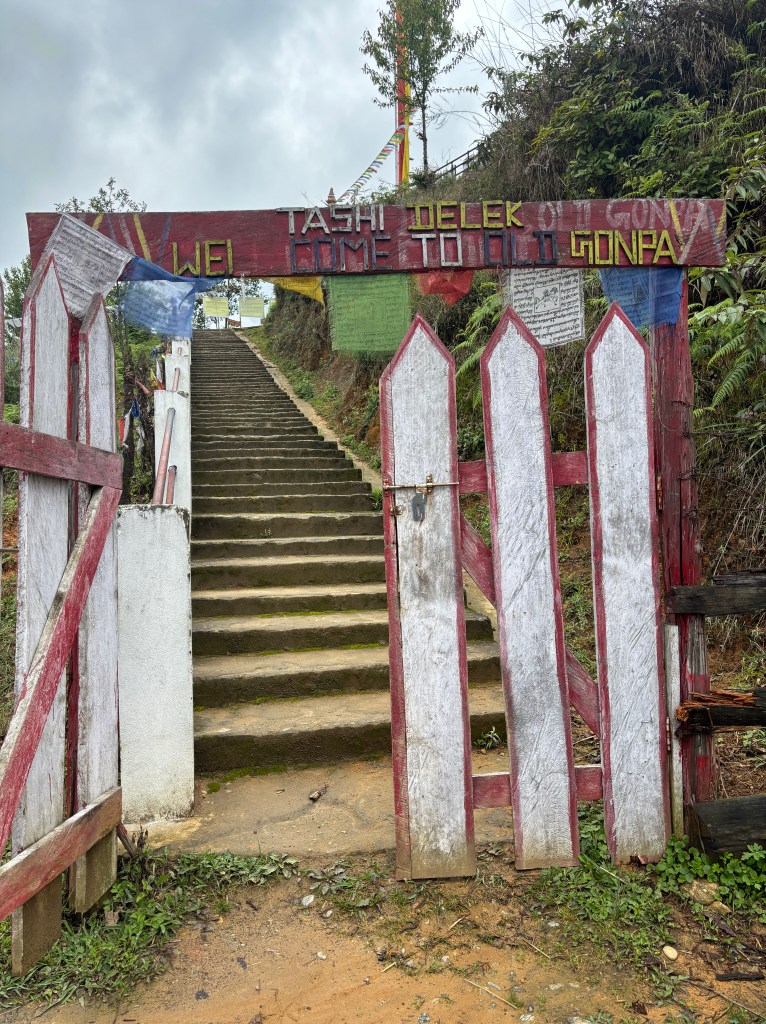
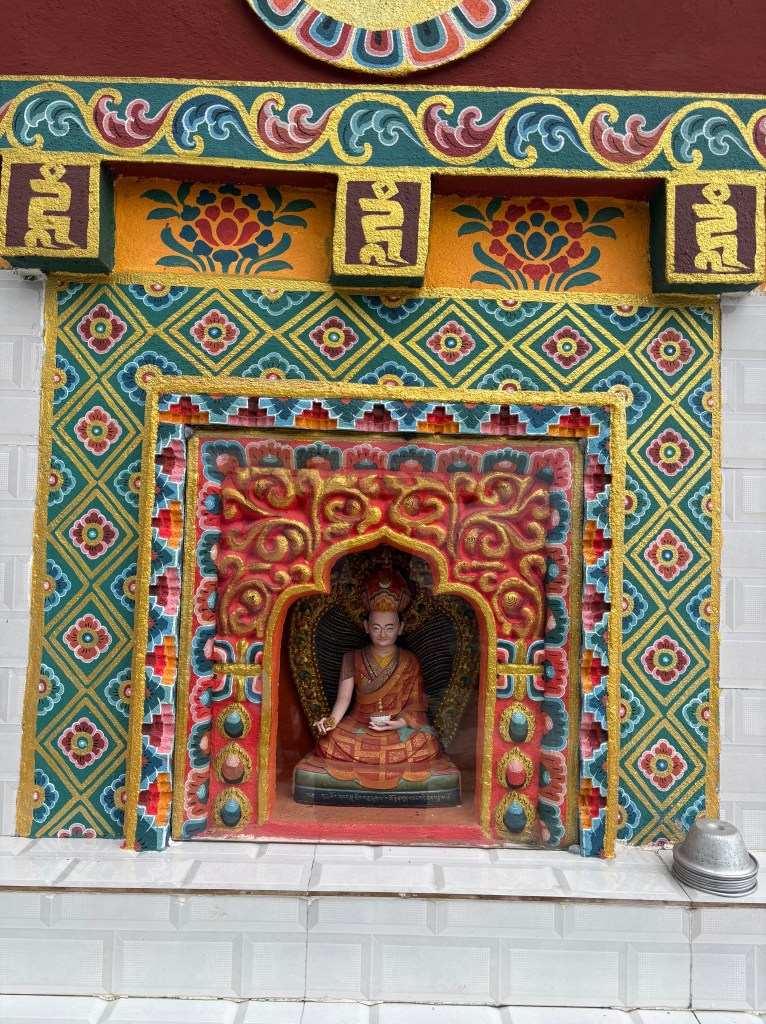
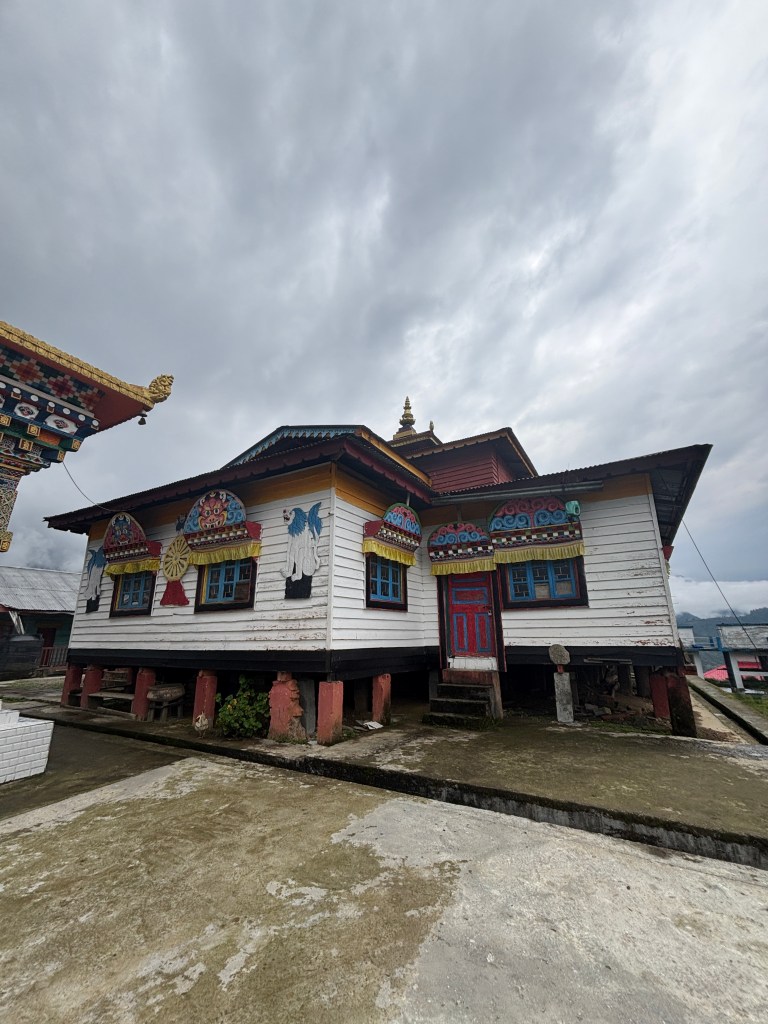
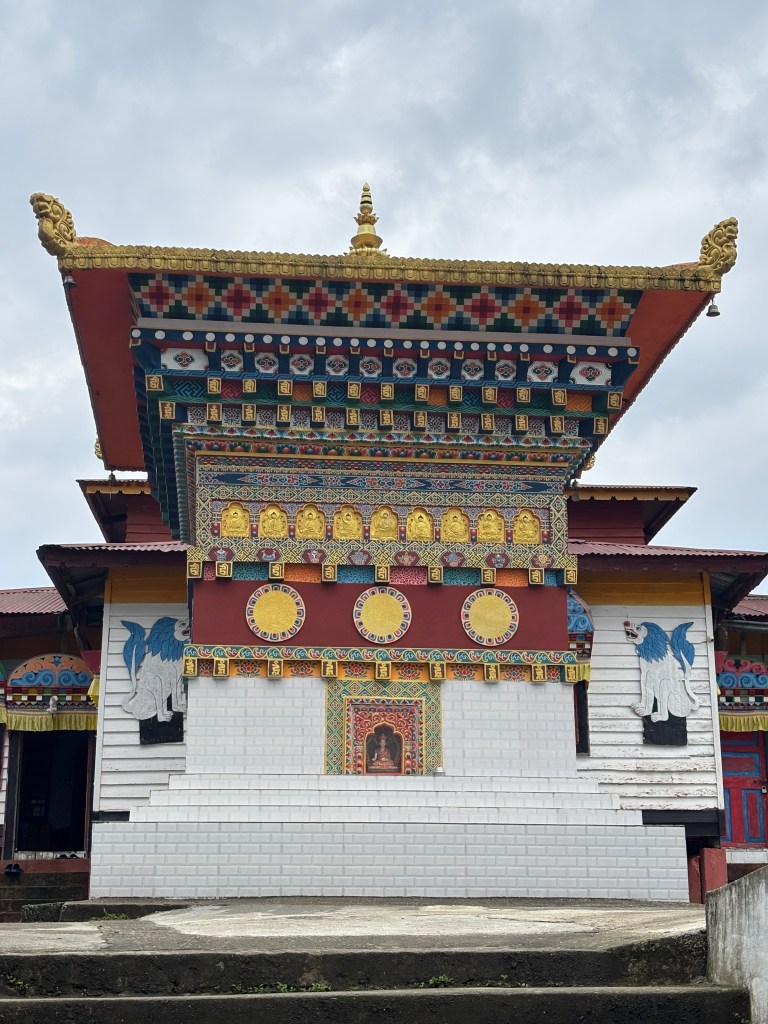
Believed to be around 400 years old, the Samten Yongcha Gompa is perched atop a hill approximately 6 km west of Menchukha, overlooking the valley and the turquoise Siyom River. Two-storeys of entirely wooden structure built in traditional Tibetan style, it features ancient thangkas, Tibetan masks, guardian deity statues, antique inscriptions, and artifacts . The Gompa’s calm feels timeless – kind guardians, fluttering flags, panoramic views, and a palpable link to Buddha and Guru Padmasambhava traditions.

Dzogchen Samtan Choeling Monastery
Situated closer to town than the older Gompa, the Dzogchen Samtan Choeling monastery is a striking modern complex visible from Menchukha’s heart. A newer monastery – more vivid and with the tallest prayer wheel in India. For me, the most striking sight was the winding way up to the monastery lined with the white, imposing chortens.
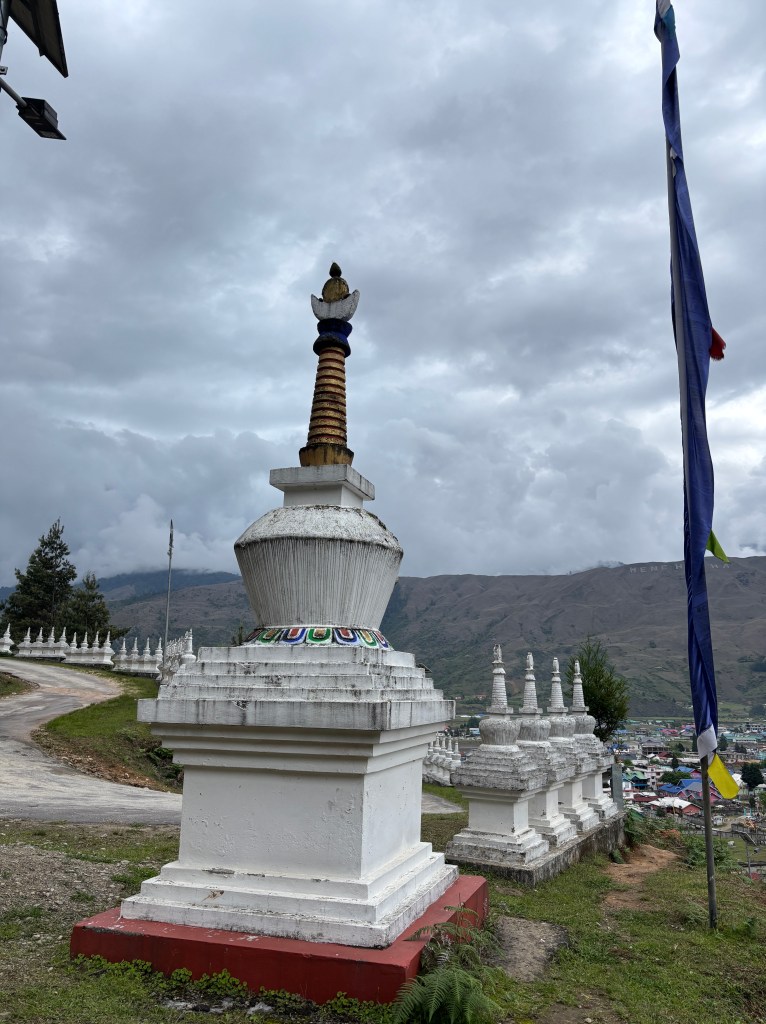

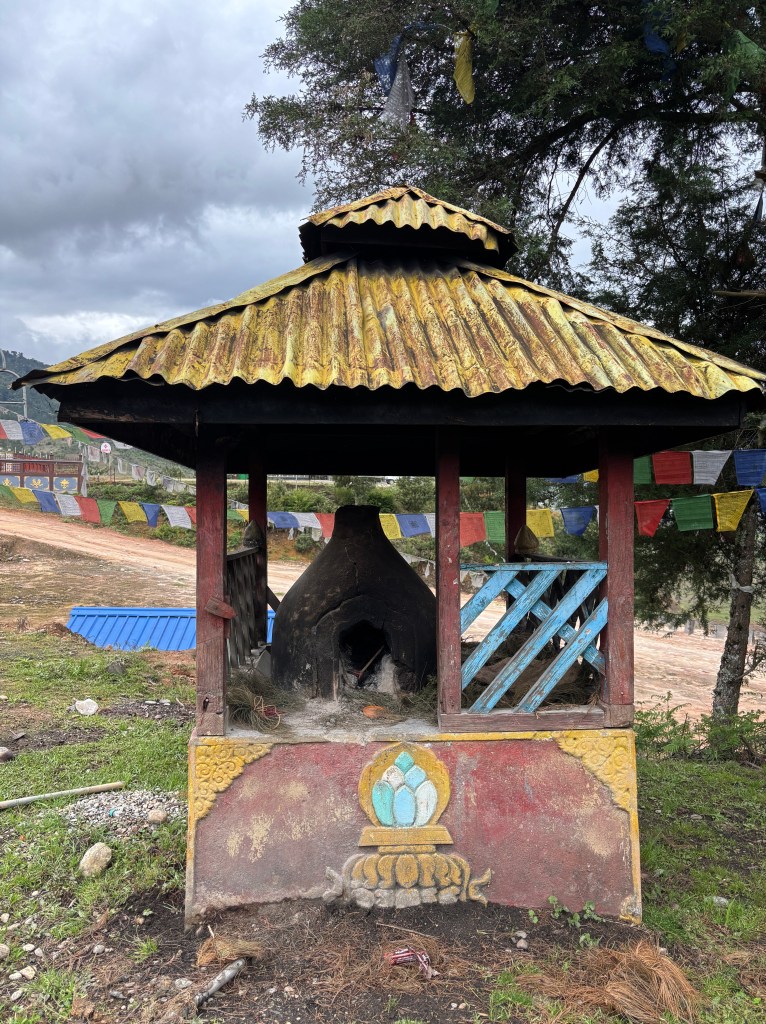

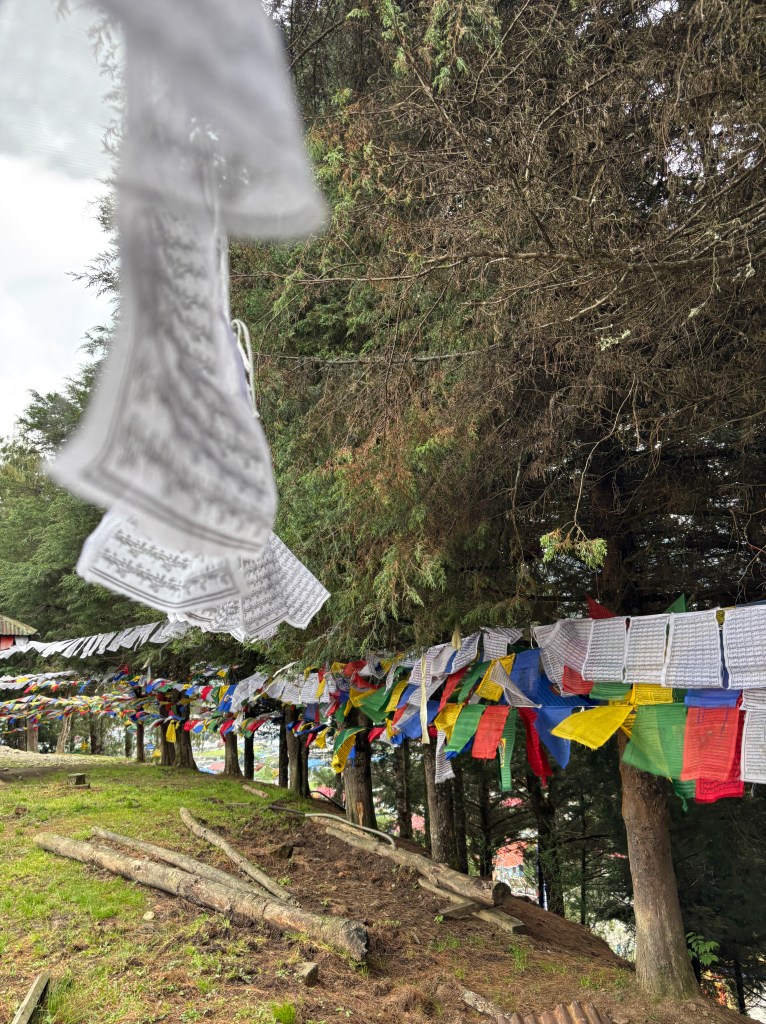
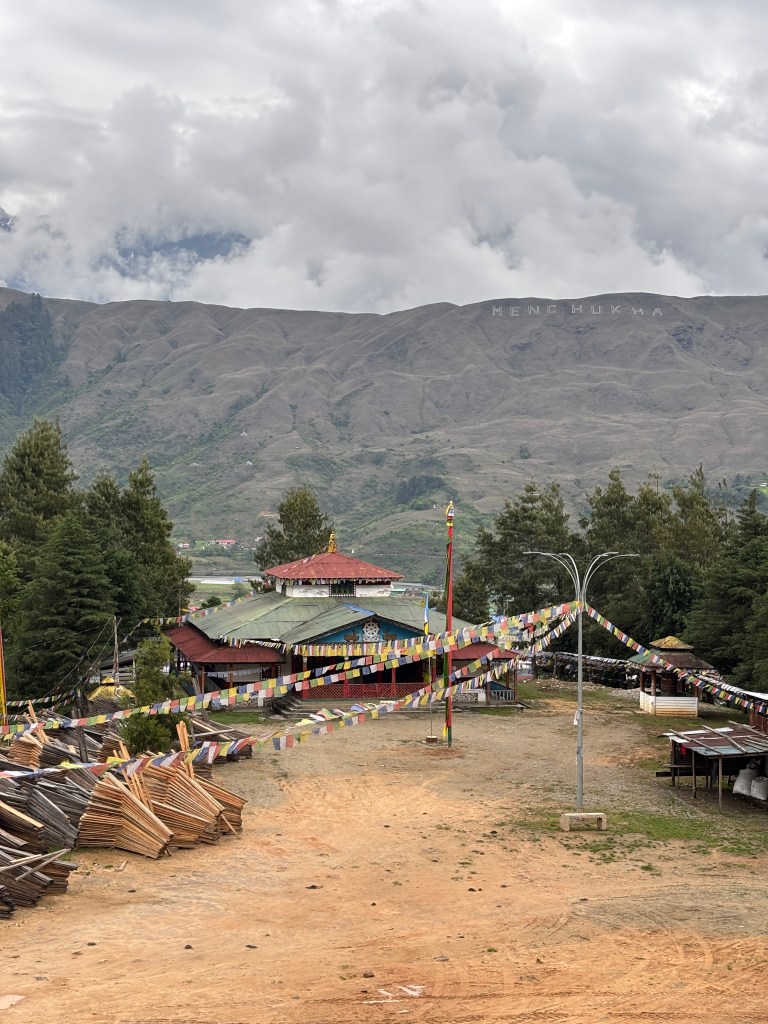

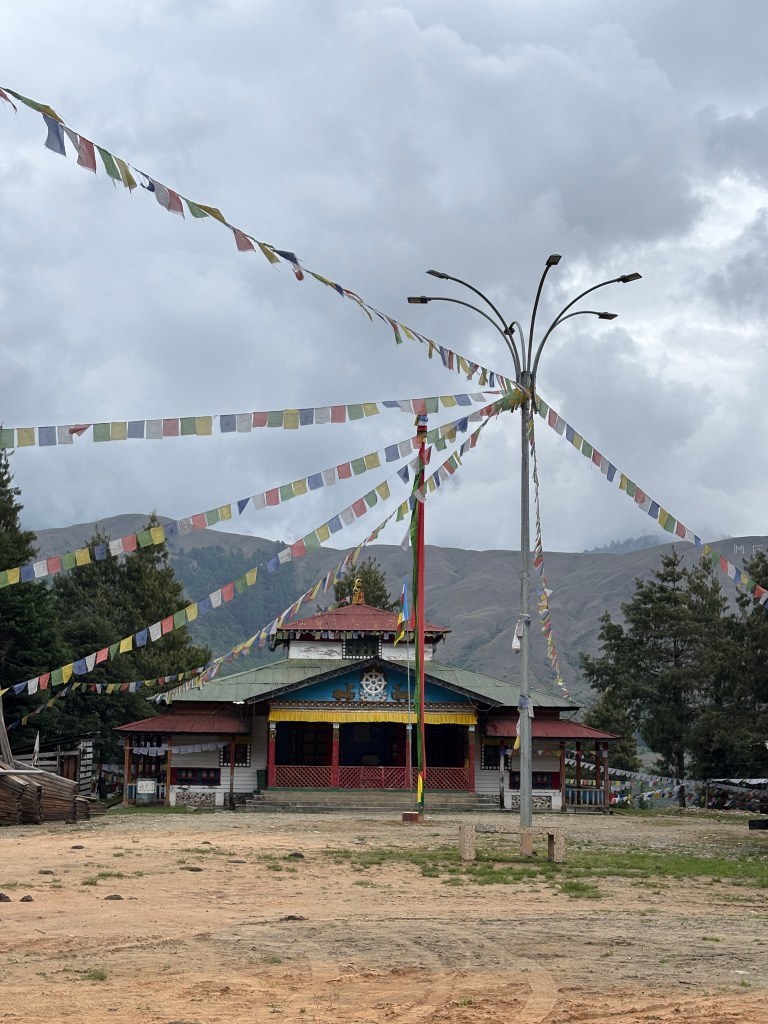
And not to forget the charming town of Menhcukha which appears like a picture perfect postcard from there.
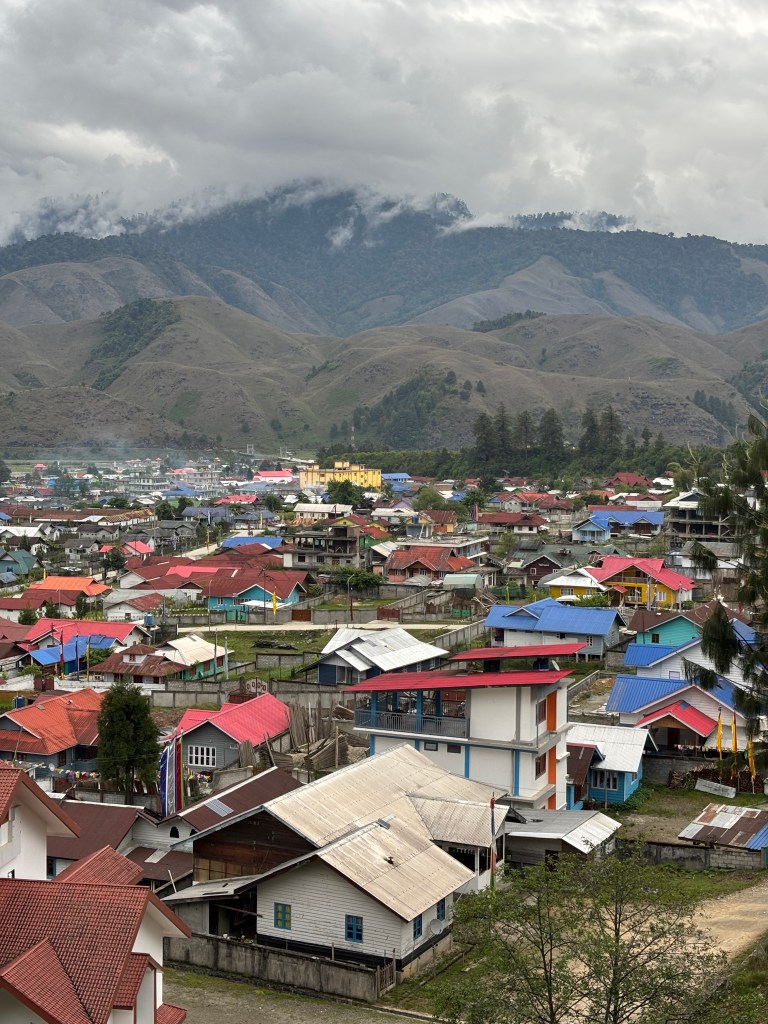
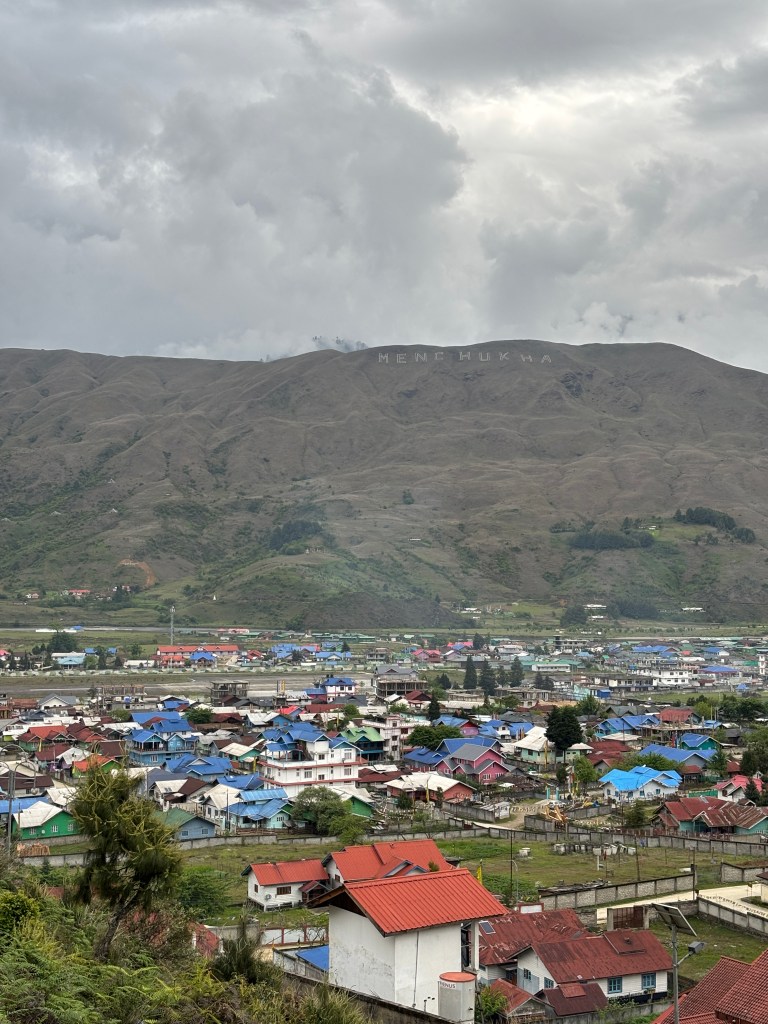
But Menchukha’s spiritual fabric stretches beyond Buddhism.
Of Pilgrims and Paths
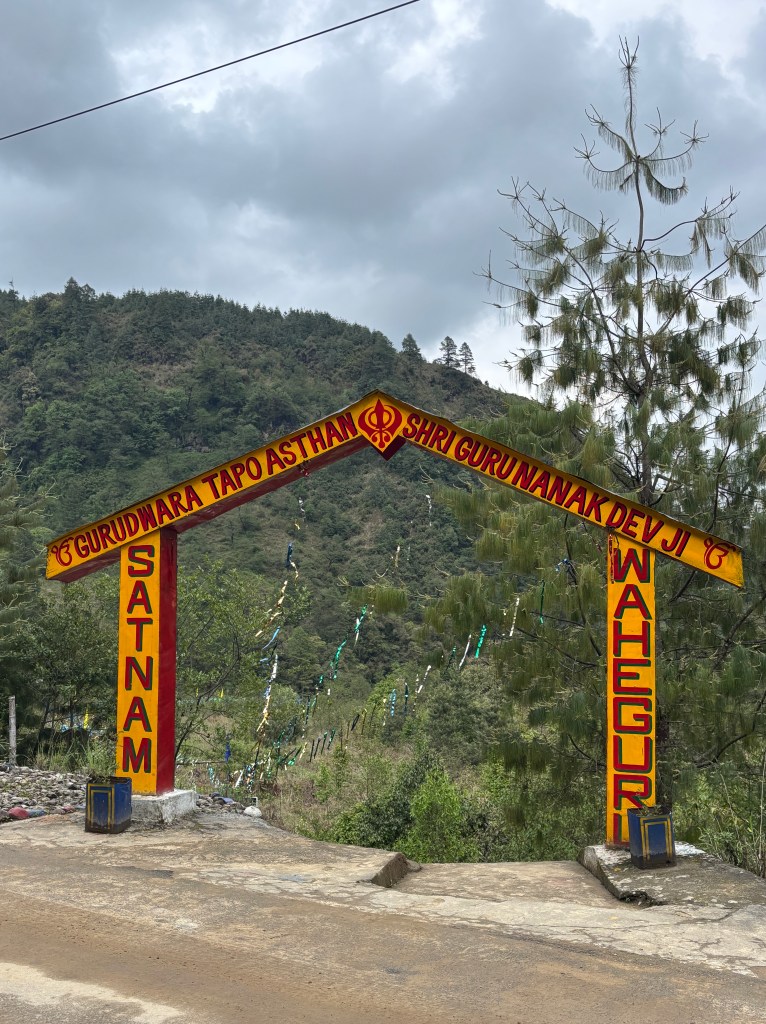
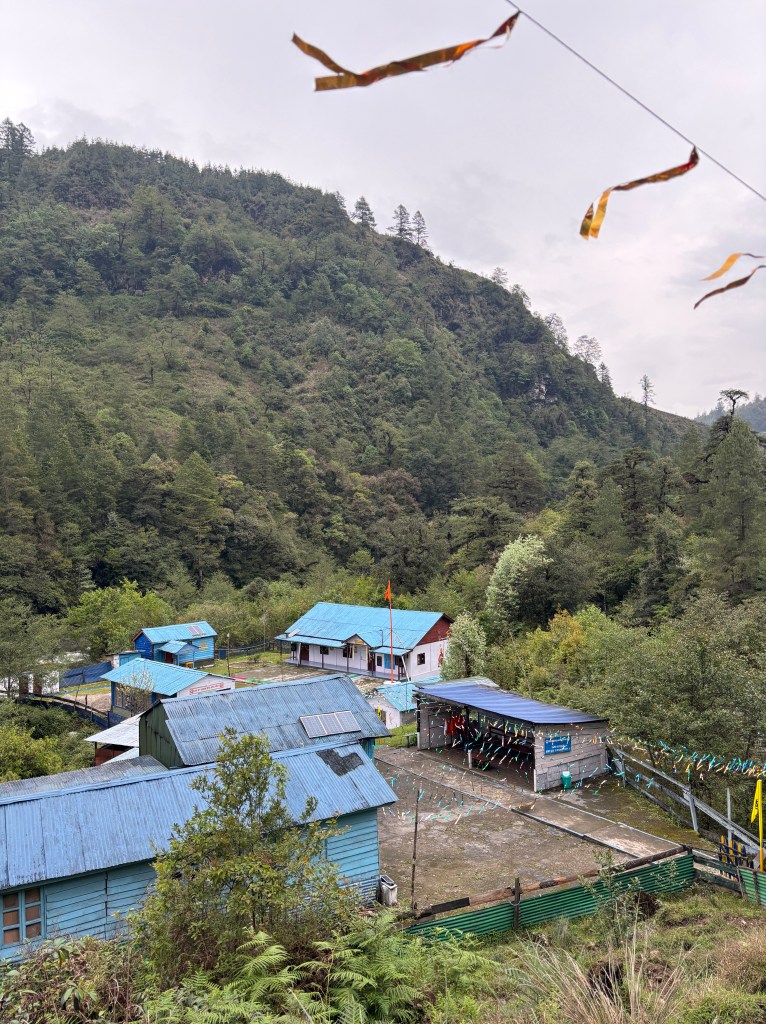
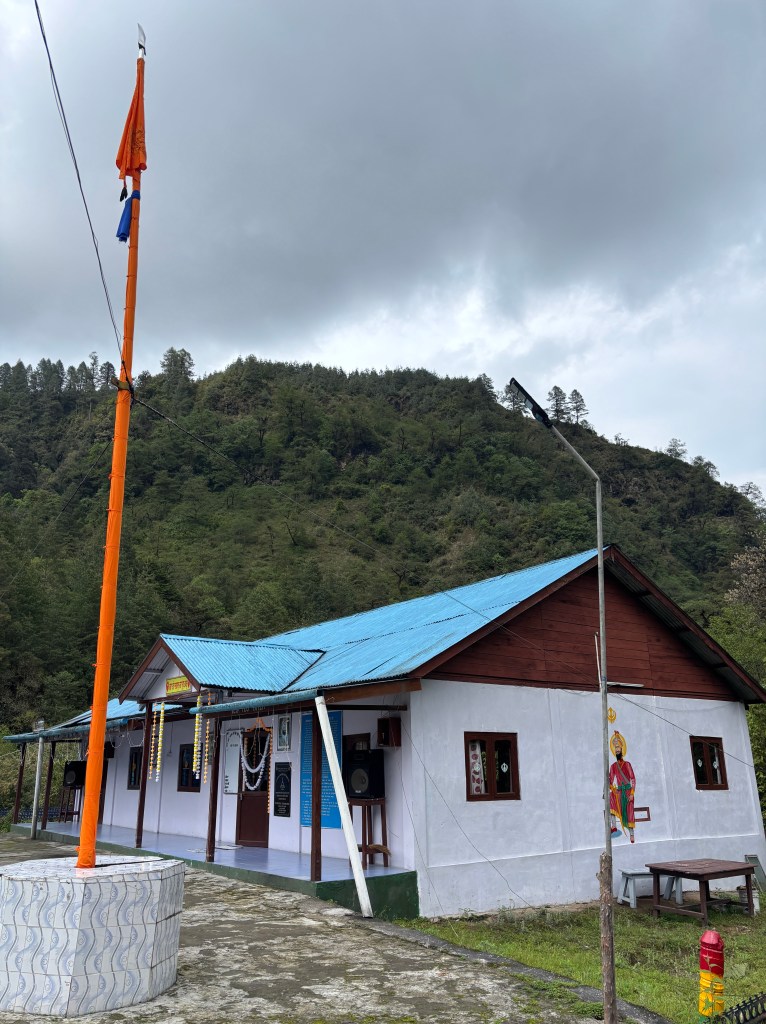
Few would expect to find a Gurudwara in this Himalayan pocket. And yet, there it is – Gurudwara Tapo Asthan – a modest, pristine structure on the outskirts of the town, believed by locals to mark the spot where Guru Nanak himself meditated during his journey to Tibet. It takes a bit of a downhill hike and a few stairs to get to it but once there, the vibe is absolutely peaceful and quiet, except for the gurgling stream nearby.
And the langar humble and generous. The caretakers insist that you eat a bite if not more, coz nobody goes away just like that from the house of the Almighty! Here, every traveler becomes a pilgrim, every bowl of dal a reminder of shared humanity.
Talking about humanity! We’d already understood by then how tough life must be in the entire town but then this happened in the casual chat between my husband and the caretaker where the latter said (translated from Punjabi) “I have no clue what happens in the rest of the world. I have to walk away in a specific direction for about half an hour before I can get network to talk to my family, and that’s once in 5 days. But, I’ve found peace here, in my service to God and the people that come here, and that’s enough!”
Maybe that’s religion! Or maybe, that’s humanity and faith!

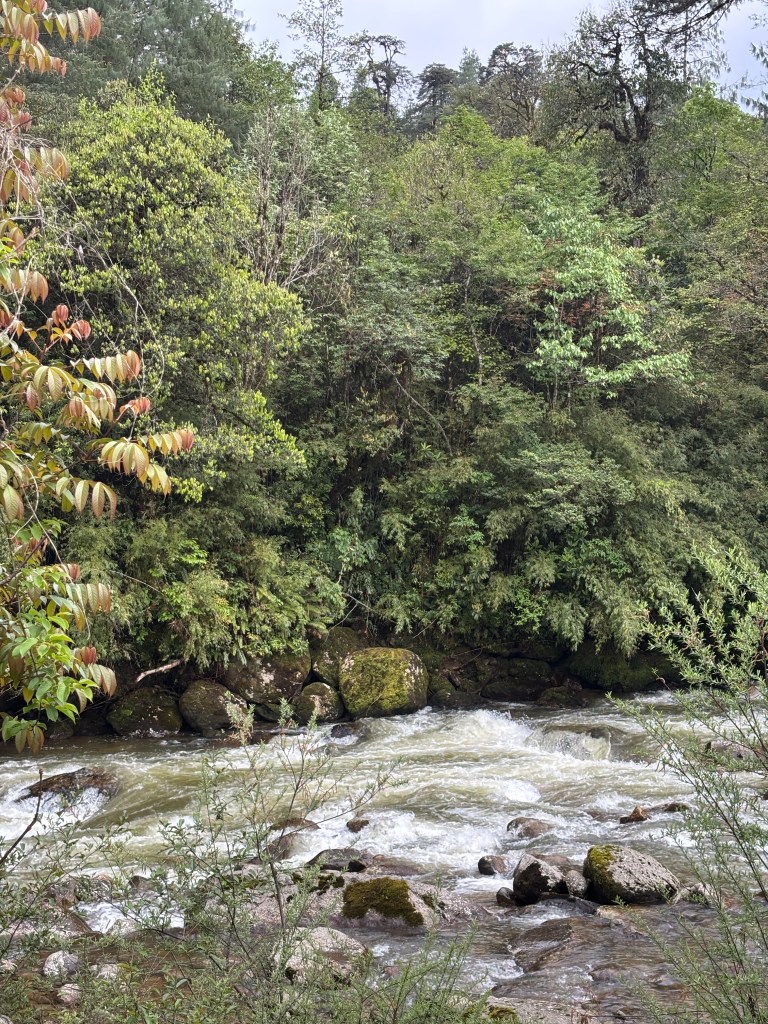
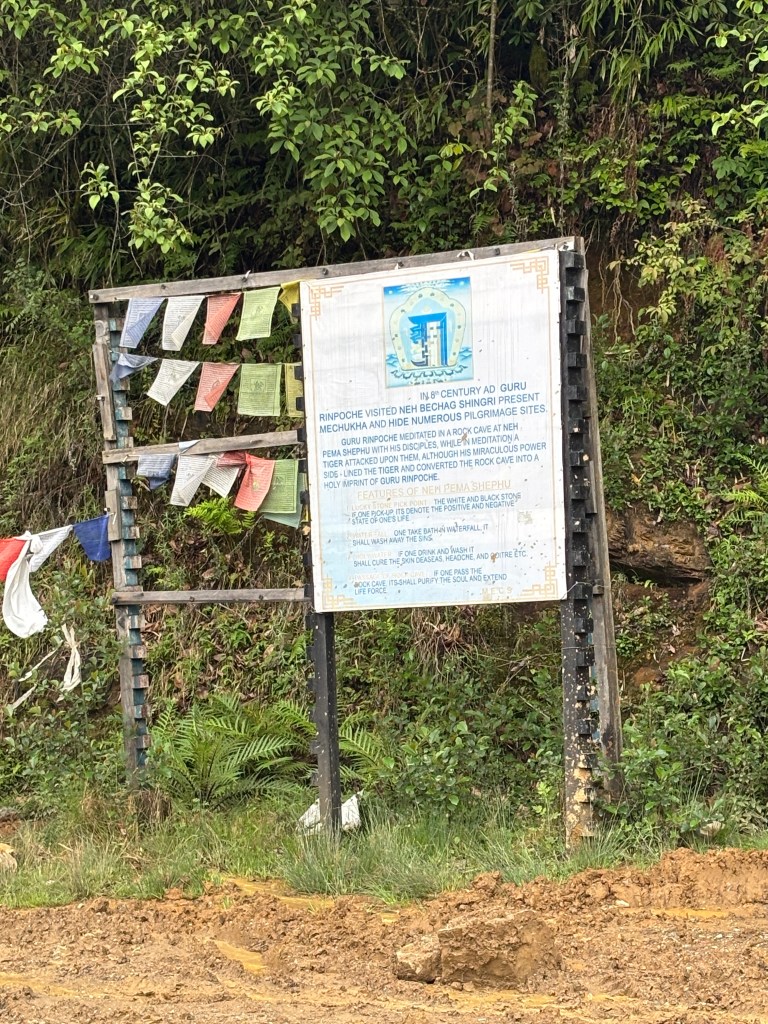
Further up, deep in the hills, lies Neh Pema Shelpu — a sacred cave and meditation site linked to Guru Padmasambhava, the great Buddhist tantric master. Visiting it isn’t easy; it requires a trek, a guide, and a willingness to surrender to the elements. And for us, we couldn’t even get to the entrance coz of the sinking slush right there at the gate.
The Frontier Town
Menchukha is quite the postcard-perfect valley, pine-fringed, river-laced, and rimmed by snow-dusted peaks, but scratch beneath that calm surface, and you’ll find a town with a long memory. One that has traded, meditated, withstood invasions, and now watches the shifting winds of geopolitics with mountain-eyed patience.
Historically, Menchukha was an active cross-border trade hub between the indigenous Memba people and Tibetan traders. Then came 1962. The Indo-China war turned this peaceful valley into a frontier zone. The border closed, and the trails silenced. Traces of the 1962 war are also visible at Lamang Village
A Journey to the edge of india – The Lamang China Border
While Menchukha itself feels remote, Lamang is where the map starts to blur into the mountains. It’s one of the last inhabited and patrolled points before the India–China Line of Actual Control (LAC). The ~50 km route (from Menchukha) begins on the paved road and gradually climbing in elevation. The Siyom River continues to flow along your side, no longer playful and blue but sharper now, colder, as if aware it too is headed to the edge of something. As you rise higher, the terrain transforms. Concrete yields to gravel. Soon, it’s just your car bumping across switchbacks, cliffs lurching beside you, and stretches so narrow you instinctively lean away from the edge. It’s just a thick forest rising from the ridges on both sides and on that day, was engulfed in mist and clouds.
Note : Lamang lies close to the Line of Actual Control (LAC) with China and you’ll need special permission from the District Administration at Menchukha, sometimes coordinated with the Indian Army or ITBP. This can be facilitated by a local travel guide or homestay host but should be planned at least a day or two in advance.
There are 3 checkposts before finally reaching Lamang. At roughly 11,154 feet, you arrive at the ITBP post at Lamang. Beyond that it’s a walk with the ridges towering over you!
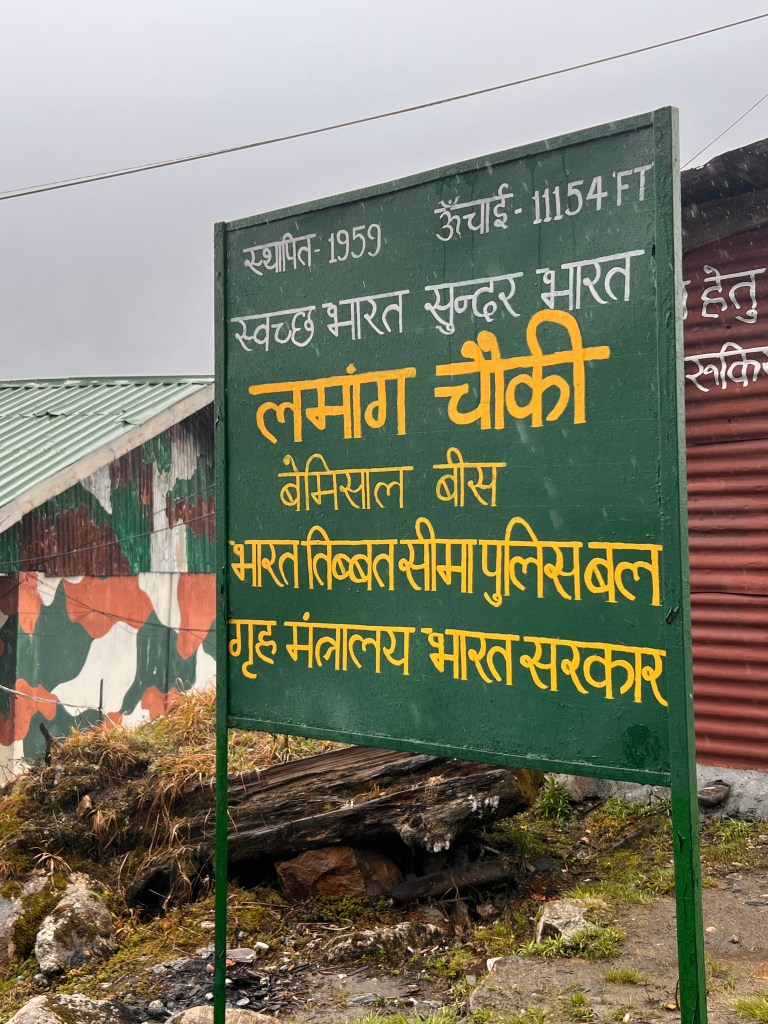
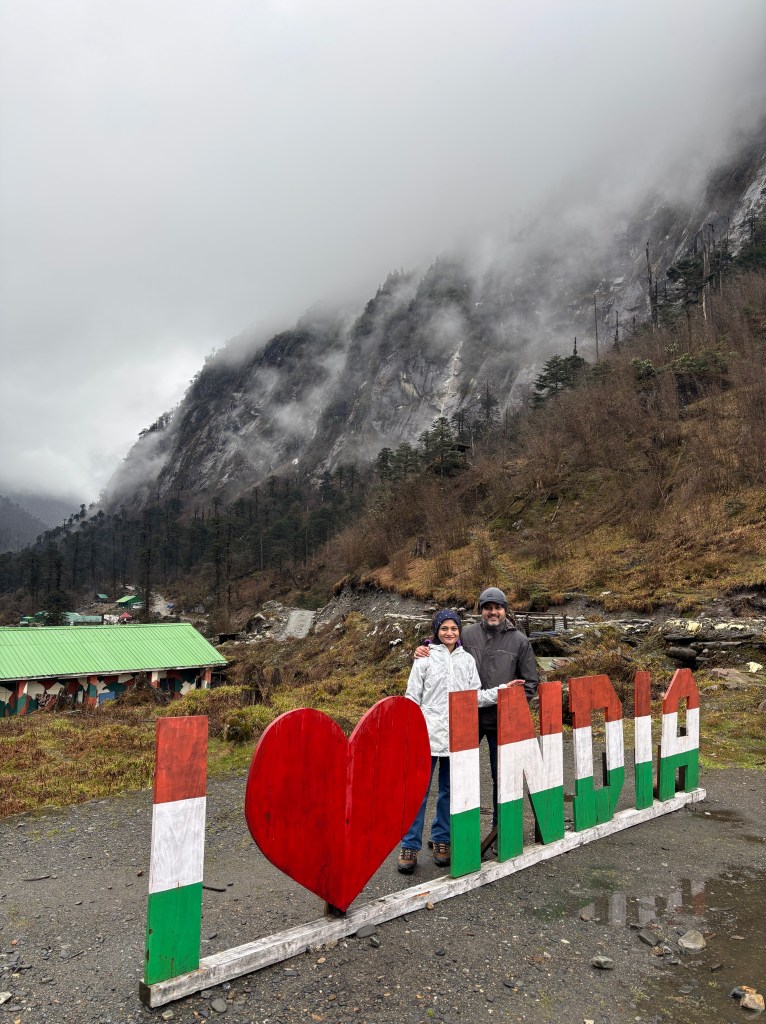
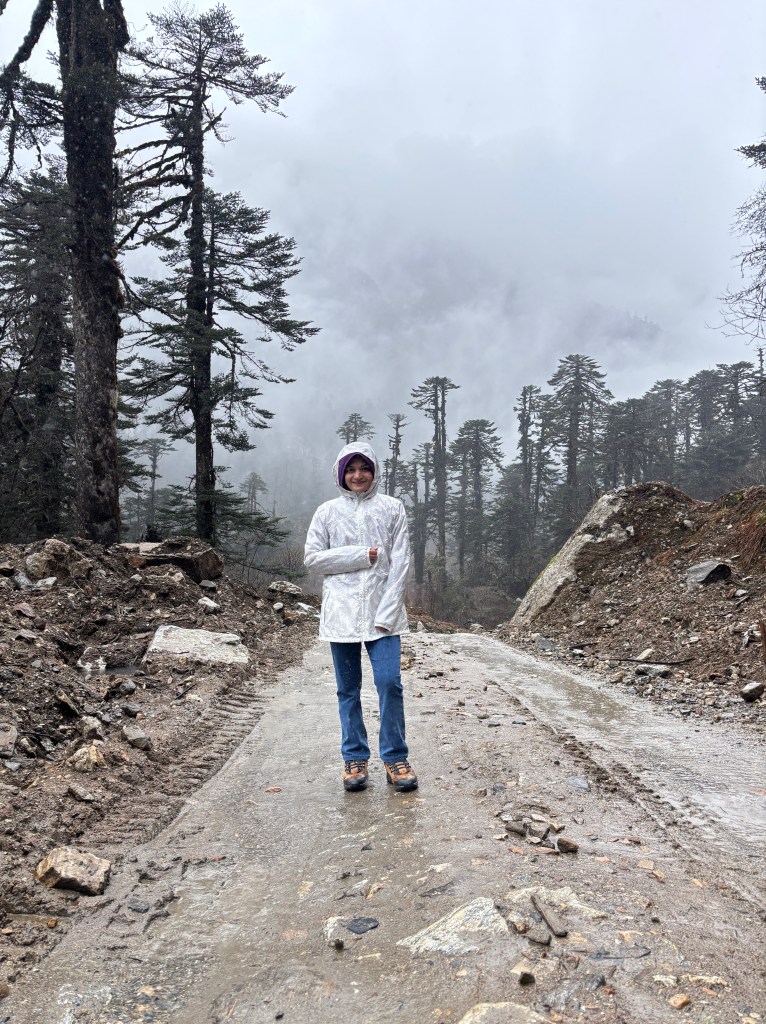
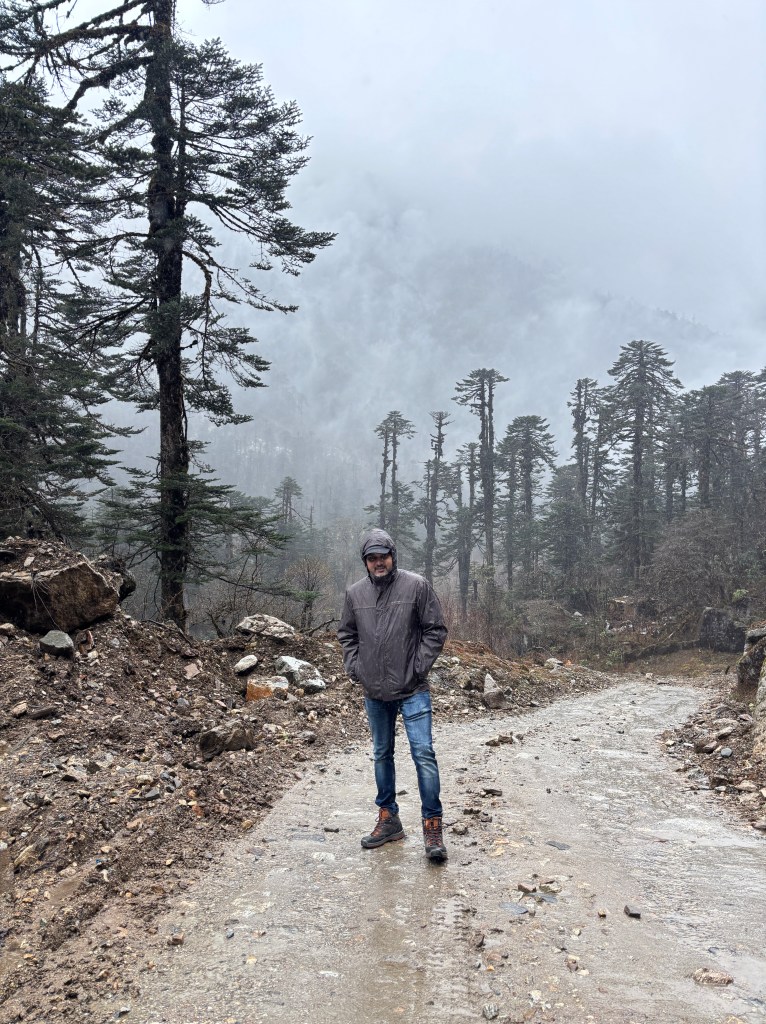
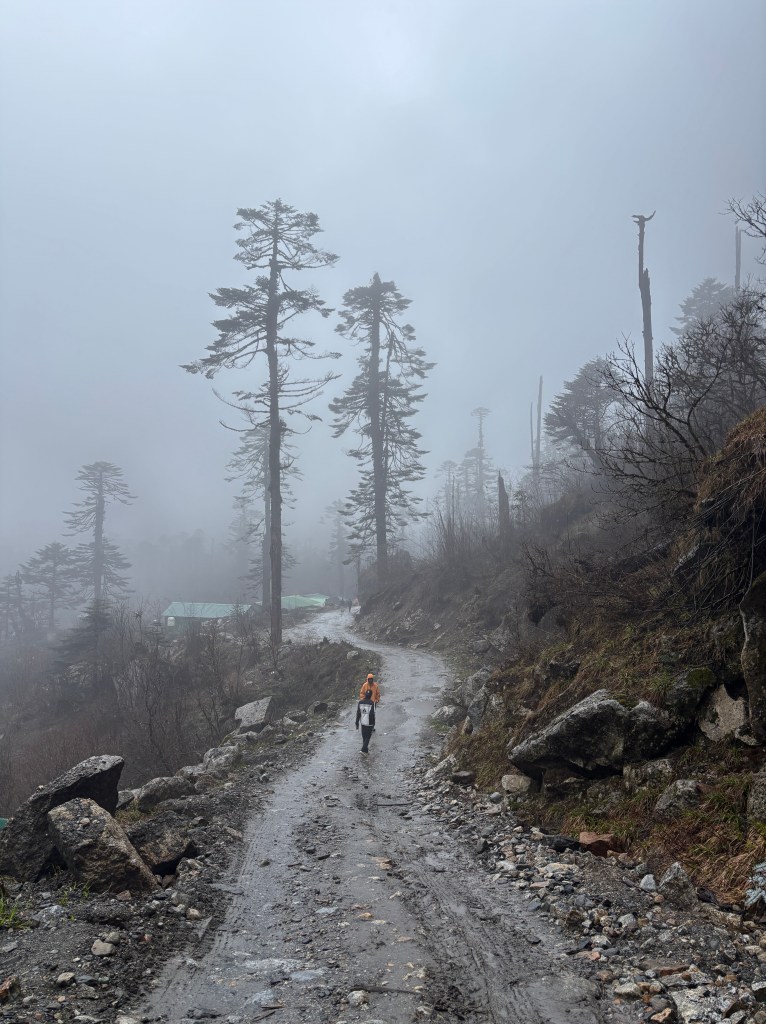
We left the Lamang ITBP post behind, altitude pressing at our lungs. It was raining heavily the day we were there and we walked on the wet trail winding through mist-laden pine and fir forests, the trees looming tall, their upper trunks shrouded in clouds that drifted low even during the day. There are ridges towering over you on one side – lined with weather-worn bunkers built not for comfort but for resilience – and there’s a steep drop on the other side. There are soldiers working, building, patrolling. The views are jaw-dropping. After all, you’re staring at the last ridgeline before the Chinese border. It’s said that on clear days, you can see PLA watchtowers glinting faintly on the opposing slope. But often, mist hangs low, like a veil protecting what lies ahead.
A Wreck in the Mist
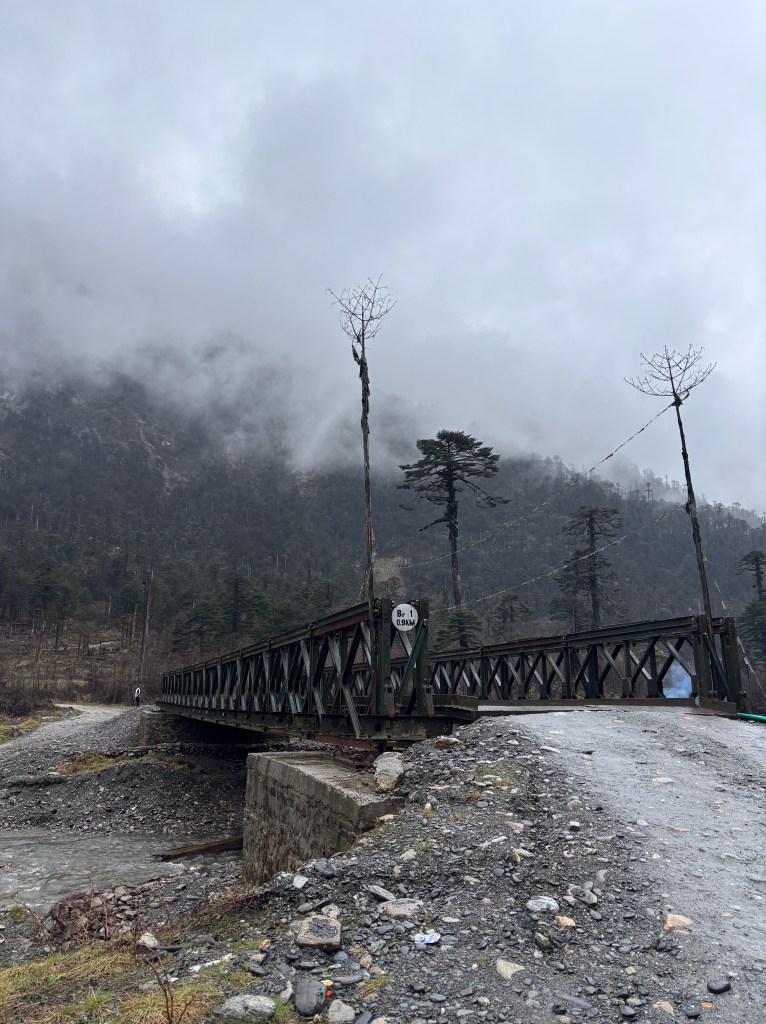
One kilometer past the last checkpoint, the forest trail opened up into a clearing near a makeshift river bridge. And there it is – the wrecked fuselage, half-submerged in damp earth, rotors and bodywork twisted – a MI-17 once, now a silent frontier monument. No signs, no barriers – just the helicopter husk.
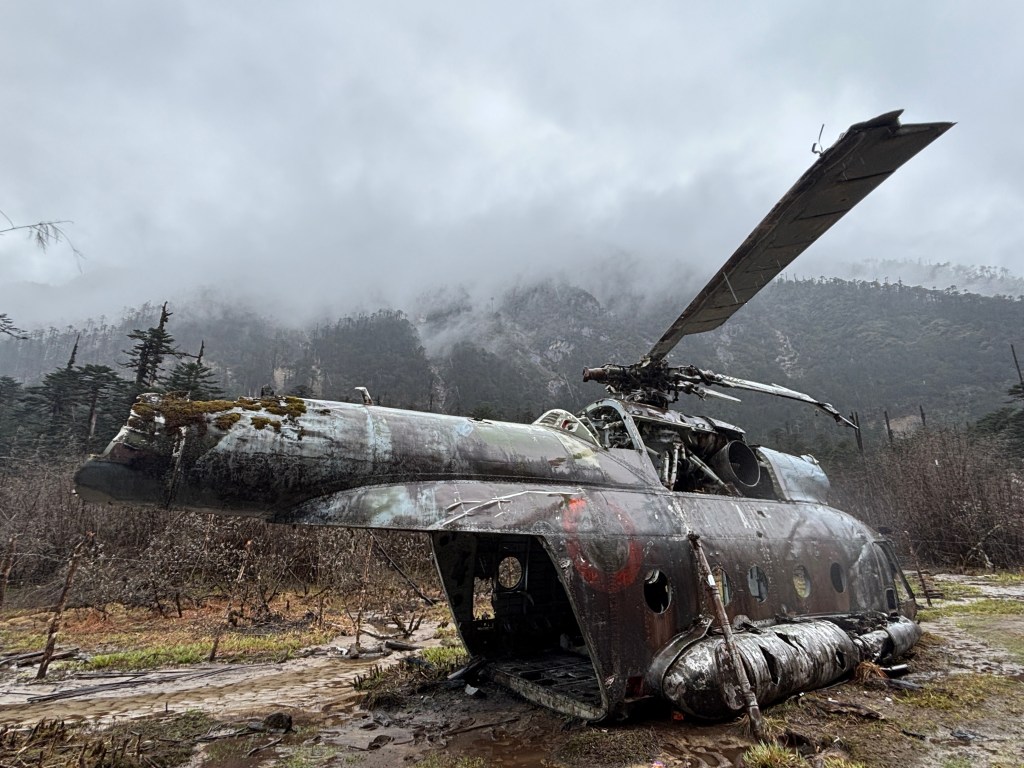
Standing there feels momentous. The valley is hushed, broken only by low cloud scuds and distant birdcalls in the incessant rain. The silence around it is not absence, but presence – the kind that stretches back through decades of weathered patrols, forgotten airlifts, and snow-blind landings. Looking around, you glimpse the jagged outlines of the high Himalayas. Ahead, the LAC sits hidden beyond ridges, near enough to feel its tension .

Culture & Community in Menchukha
Despite its rising strategic profile and rough military outlines, Menchukha is, at its heart, a deeply spiritual valley – one shaped not just by cliffs and rivers, but by chants, festivals, and the quiet dignity of its indigenous people. The town is home primarily to the Memba community, followers of Tibetan Buddhism, whose culture is deeply intertwined with nature and faith. Hardworking, deeply spiritual, and quietly proud, the Membas have built lives that are both humble and profound. In their highland homes – often timber-framed, adorned with prayer flags – you’ll find a deep respect for nature and neighbour alike. The Memba people are warm in their hospitality but never intrusive; generous in welcome, yet dignified in silence.
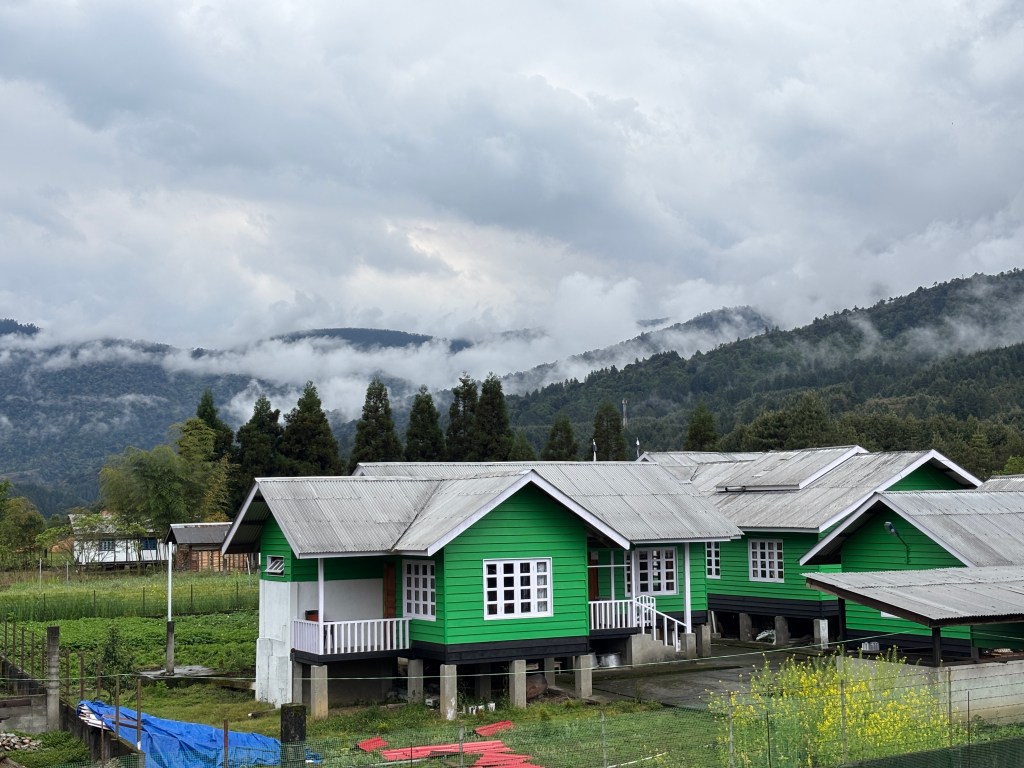
In fact, Menchukha was truly the best stay across our Arunachal journey, not just in terms of how beautiful the place was but also because of it’s indigenous population who made the stay so worth the while. Our homestay owners who fufilled every need of the guests with smiles on their faces, through every waking hour. And then the others from shopkeepers to random passers by – never without their smile and a hello and thank you!
The people here have simply chosen to walk through life with intention, faith and love but it isn’t worn loudly – it’s carried like breath, quietly and always present.
And so, that was about it, in Menchukha – 3 good days and a lifetime of memories. After that started the return journey, first to Dibrugarh and then back to base – the corporate life in Bangalore!
Discover more from thatbrowngirlinblackboots
Subscribe to get the latest posts sent to your email.

