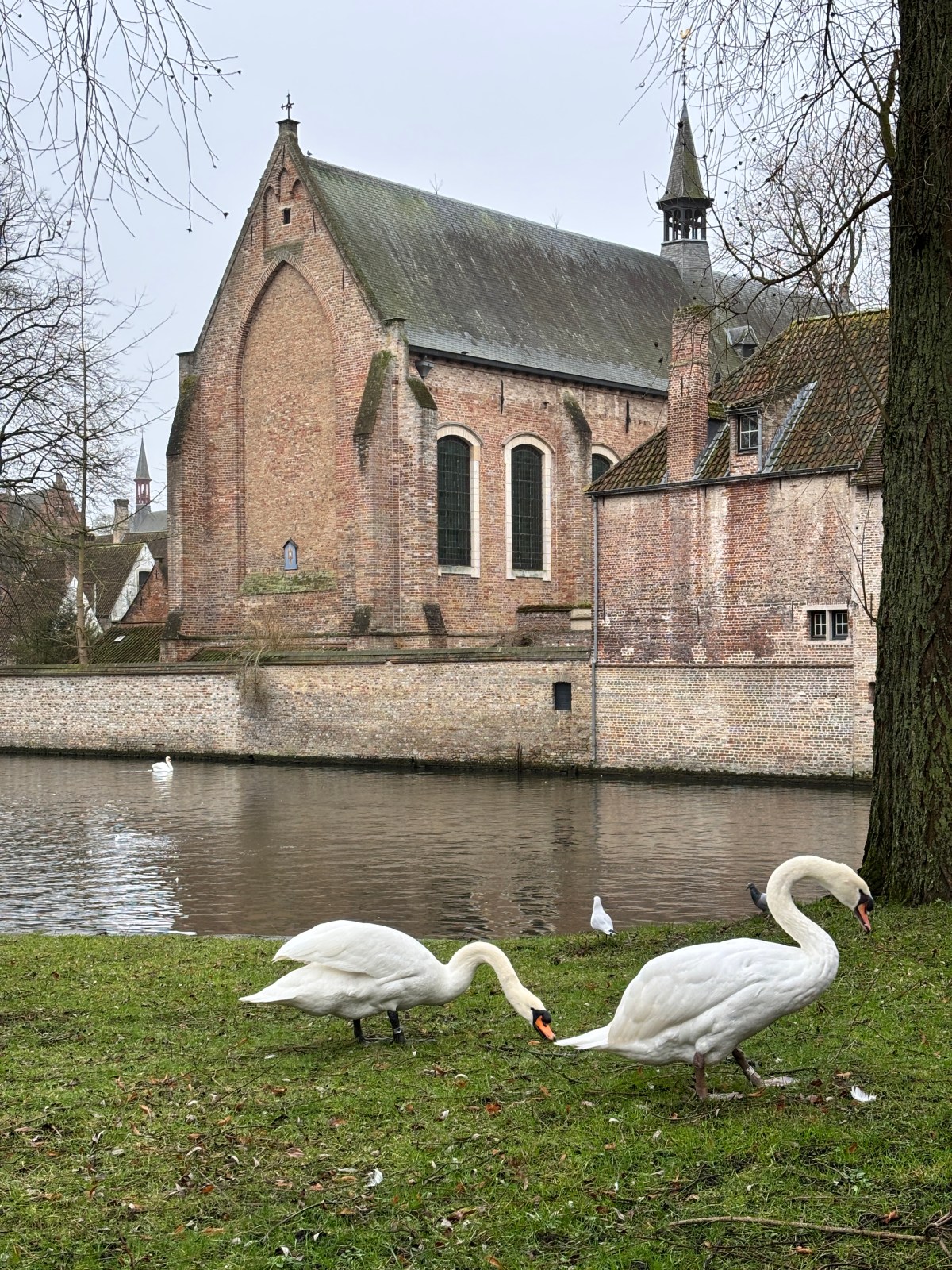
With its cobblestone streets, winding canals, and stunning medieval architecture, the city exudes a sense of magic that captivates anyone who steps foot in it. A day spent in Bruges is like stepping back in time, where every corner hides a story, and every view feels like a painting. I’ve written more about the feels in a separate post linked below:
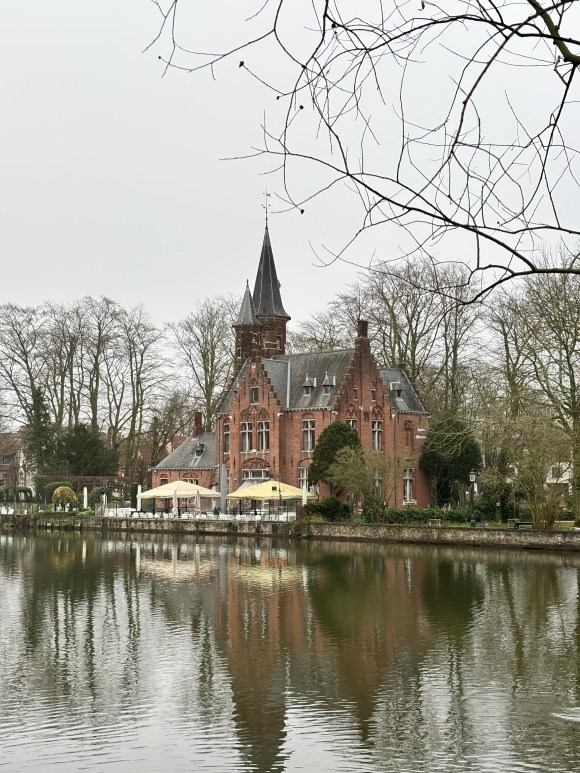

So, it was while on a trip to Amsterdam, that yours truly and husband took this one day trip to Bruges. We boarded an early morning train at Amsterdam Central and reached Bruges in just about 3 hours.
Now there are several guided tours available over the web, which you can avail instead of having to do this on your own. But the love for planning and exploring and getting lost and the hatred towards having to rush when travelling made us ditch all those group tours, even though this turned out way more expensive.
So the first thing I spotted at Bruges station was the tourist information center which had paper maps of Bruges along with other information on places to visit, etc.. And boy, oh boy! It’s always been my dream to go around a place with the aid of paper maps. That happiness was short lived though, as I could hardly figure anything and had to soon switch to Google Maps, but the paper map has found it’s way into my memorabilia box! We did already have a list of places figured out, all that had to be done was map the trail.
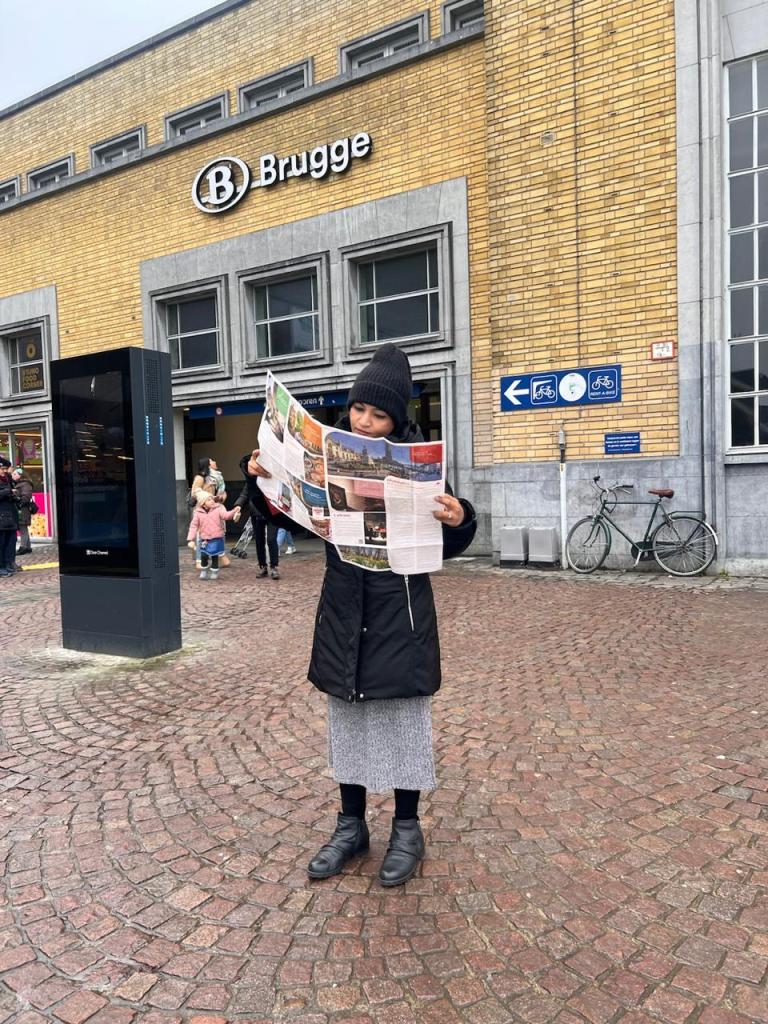
And so on a crisp winter day in December, Boxing Day to be precise, two lovers started their walk into Bruges city, the capital of West Flanders in Northwest Belgium. It was 6 years since we had been to Brussels, on another day trip and we were eagerly looking forward to exploring yet another Belgian city.
Below is the route we mapped out for ourselves, which can come in handy if you have only a day in hand and wish to do a self guided walking tour of Bruges (Brugge). Do note that the starting point of this tour is the Bruges train station.
So, out of the station premises and as soon as we crossed over towards the main city, the very first sights left us in awe.
Lake of love park
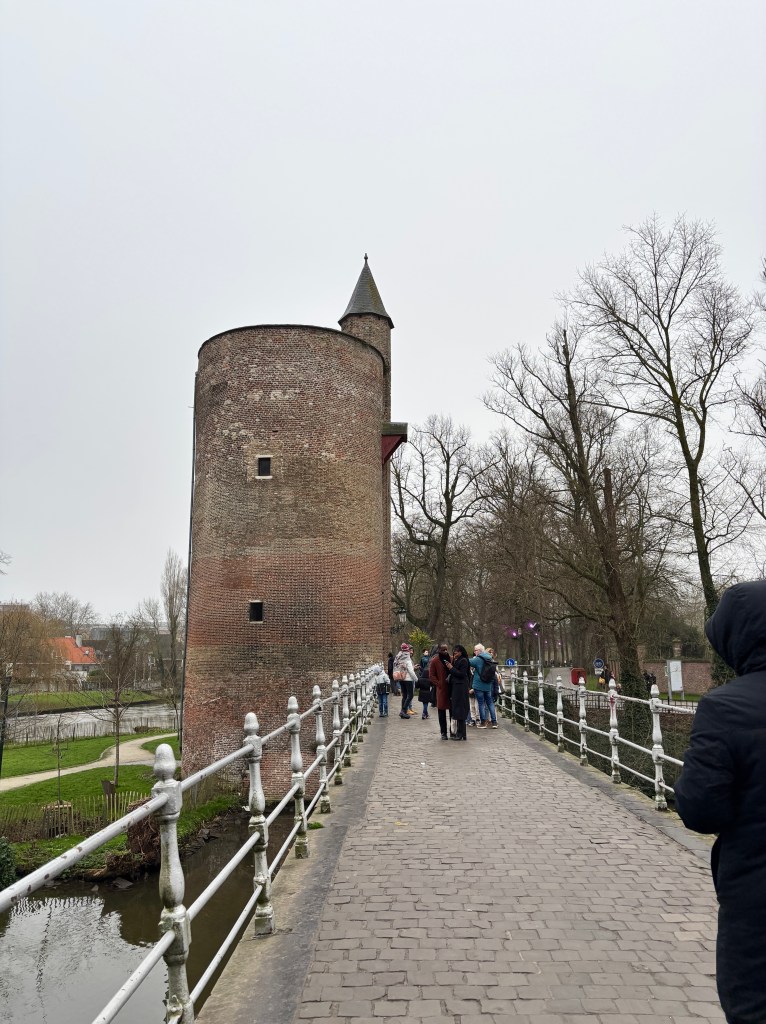
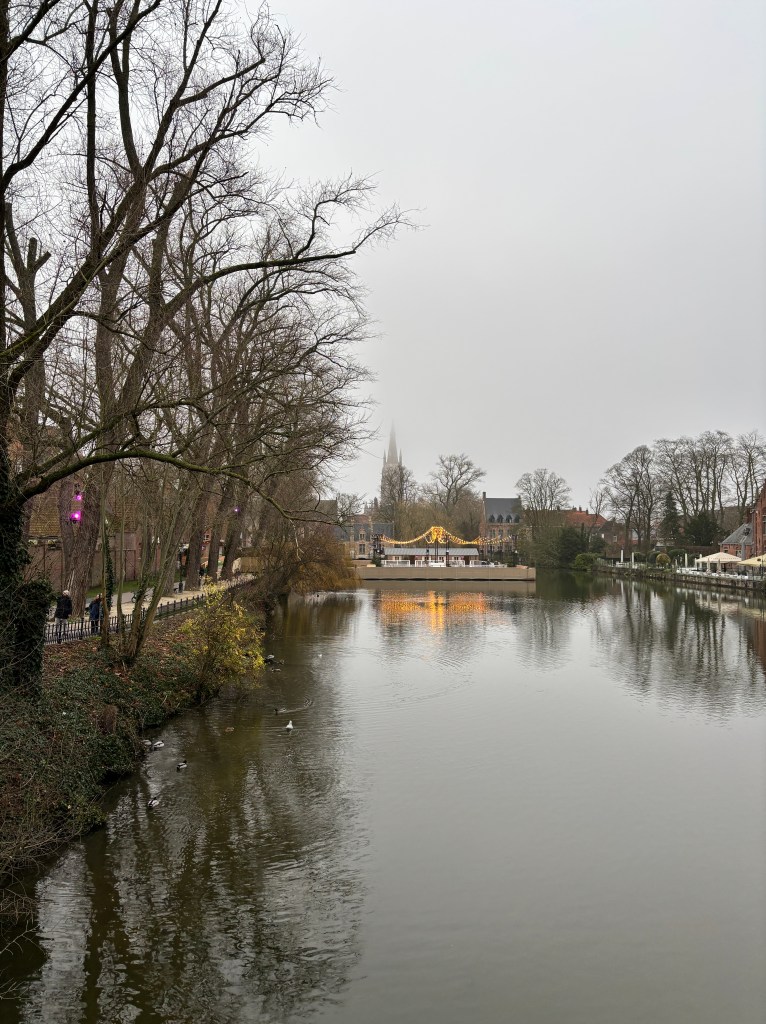
The walking trail lead us to a lake surrounded by trees which is Minnewater or the Lake of Love and the surrounding area is Minnewaterpark. The place is serene and mesmerising to say the least. So beautiful that it hurts to think that such a tragic story could be associated with it!
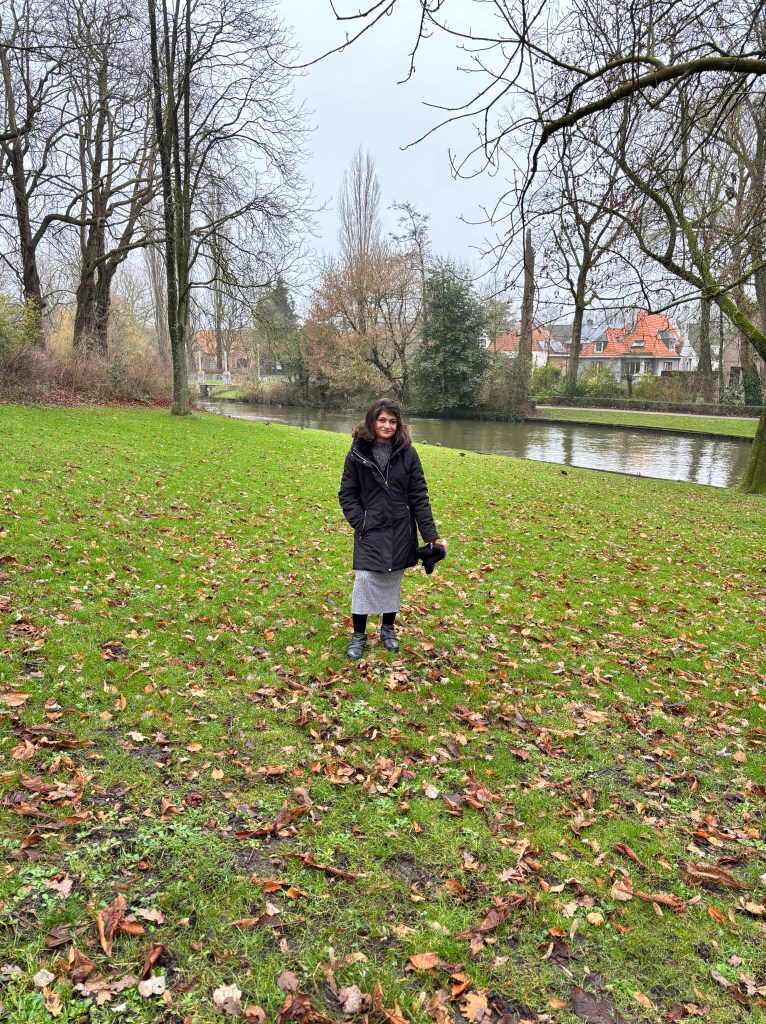

We continued walking on the trail alongside the Minnewater lake (pictured above) soaking in the green and the calm that the gentle waterbody lent to the atmosphere. And simultaneously read about the tragic romance of Minna and the events that unfolded leading to the christening of the lake.

The story of Minna
Goes back to a time when the Romans had begun the conquest of Gaul. An old retired sailor lived with his beautiful daughter Minna on the banks of the river Reie (at that time called Roya) in Bruges. It was a beautiful place surrounded by forests and swamps. The old man was worried about the future of his daughter and wanted her to marry as soon as possible. He had chosen Horneck, a young fisherman from a nearby settlement he occasionally went to visit. Minna, however was in love with Stromberg, a young farmer from a neighbouring tribe. But sadly the old man hated that tribe and Minna could not tell her father about her beloved. She instead kept postponing the wedding again and again.
When the Romans finally invaded the country, Stromberg went to war alongside fellow warriors, promising Minna he would come back to marry her. In the interim the old man kept trying to get his daughter married to Horneck. Minna was torn between her promise to Stromberg and the will of her father. She cried and cried and eventually went missing. Legend has it that she went wandering along the banks of the Roya. When the war with the Romans ended, Stromberg returned, and heard that Minna was gone. He began a painstaking search and eventually found her, hidden in thick undergrowth on the banks of the Roya. However, she was too exhausted and got sick, she died in the arms of her lover.
Stromberg wanted to take his own life, but instead decided to honour his beloved. He built a dam in the river to dry out the middle, on the dry bedding he made a grave where he laid his Minna to rest forever. Then let the water back in again. On the bank where he had found Minna, he placed a heavy rock on which he engraved Minna water. Where once stood the stone, now stands the ‘Poertoren by the Minnewater’, and where once the dam was is now the Minnewater Bridge.
Legend has it that if you walk over the lake bridge with your partner, you will experience eternal love.

The Princely Beguinage “Ten Wijngaerde”
(Dutch: Prinselijk Begijnhof Ten Wijngaerde)
The beguines were emancipated women who dedicated their lives to God without withdrawing from the world.
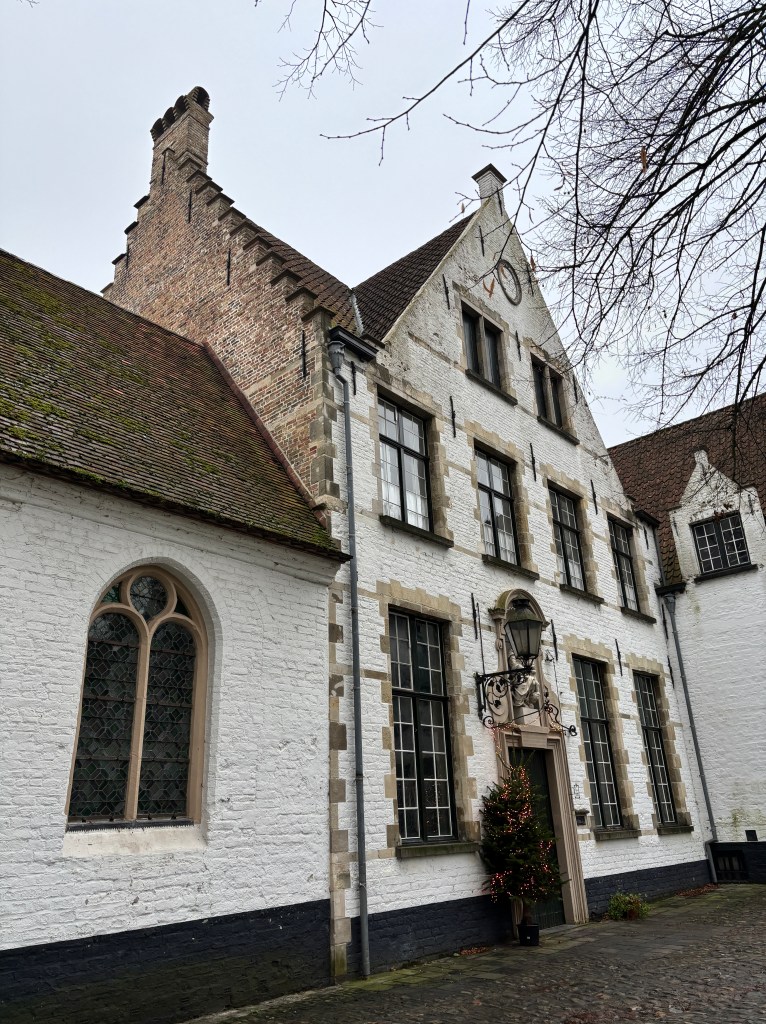
The Beguinage, although houses the Benedictine nuns today, it dates back to the 13th century, founded in 1245 by Margaret, Countess of Constantinople, to bring together the Beguines. It’s a beautiful site with a line of pristine white-washed houses around a collection of trees and an entirely green ground cover with pathways.
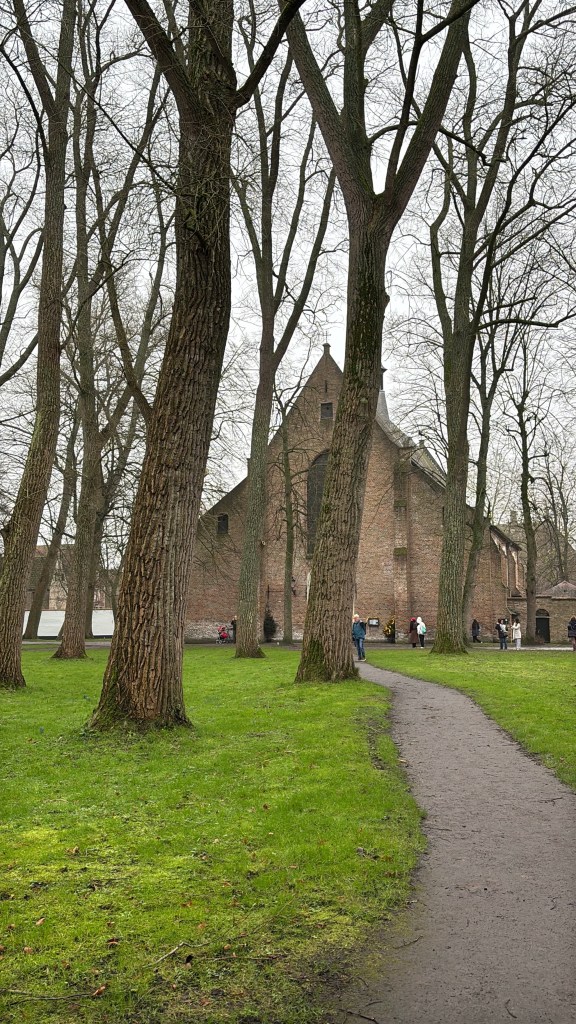

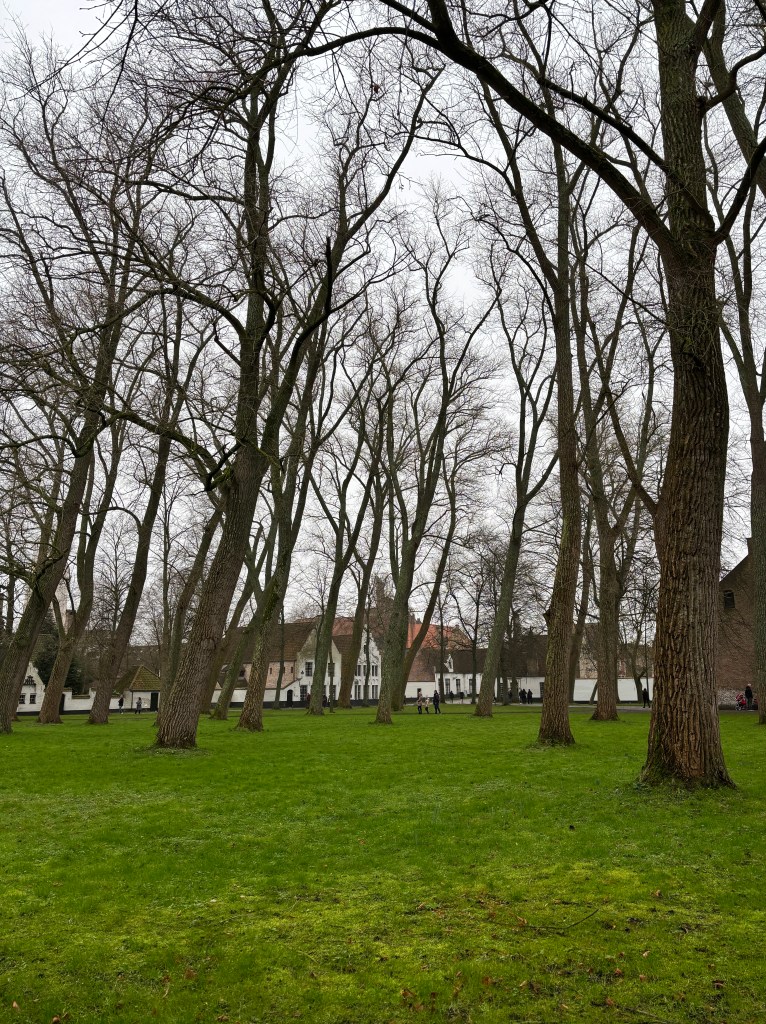
The carriage rides taken from the Markt Square stop here for about 10-15 minutes).
Right outside the precinct, the gateway bridge leads to a street lined with multiple cafes. And which is where your brown girl spotted the first horse carriage and the fairytale charm struck again. These carriages taken from the Markt Square carry tourists for a swift tour around the city.
But in my head I was already imagining a princess sitting there by the lake, feeding those swans. And a handsome prince riding in one of those carriages, the horses galloping away carrying the prince towards his beloved. The prince then hops out and lands a kiss on the princess’ cheek. ❤️
We moved further towards the market, going through tiny alleys. Even the tiniest of spaces all decked up adding to the festive season cheer.
Stoofstraat
But these alleys don’t exist for no reason. Historically (around 14th and 15th century), there was a bathhouse around the corner. And if one is to believe the so many articles and reviews, these bathhouses were frequented by the elite and even wealthy traders where they could clean up and have fun with a prostitute or two, clean up again, before heading back to their respectable abode. But all of which gained pretty bad reputation and gradually disappeared around the 16th century!
Irrespective, it’s fun to walk around these tiny stove streets which now lead to cute cafes and stores further ahead.
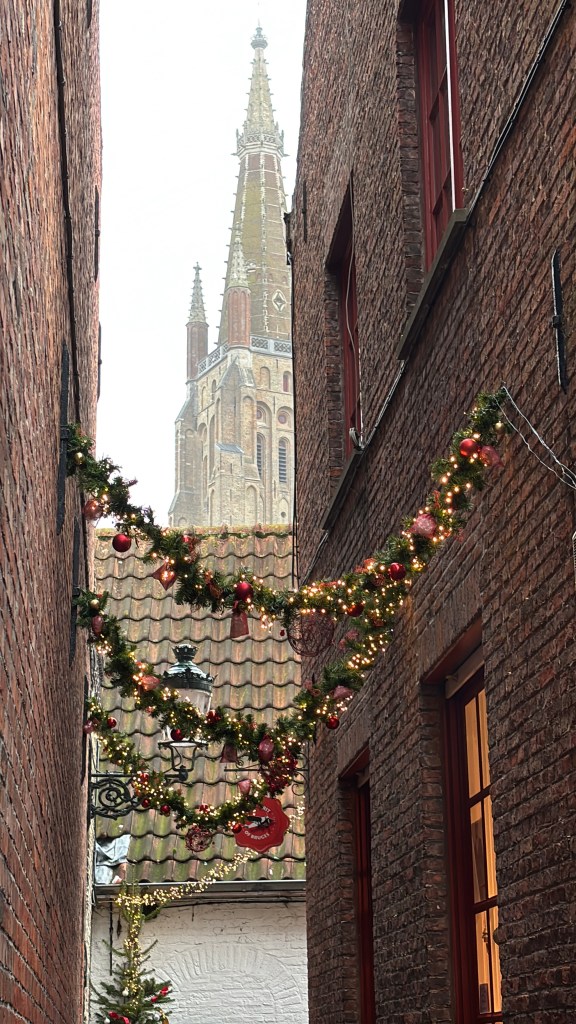
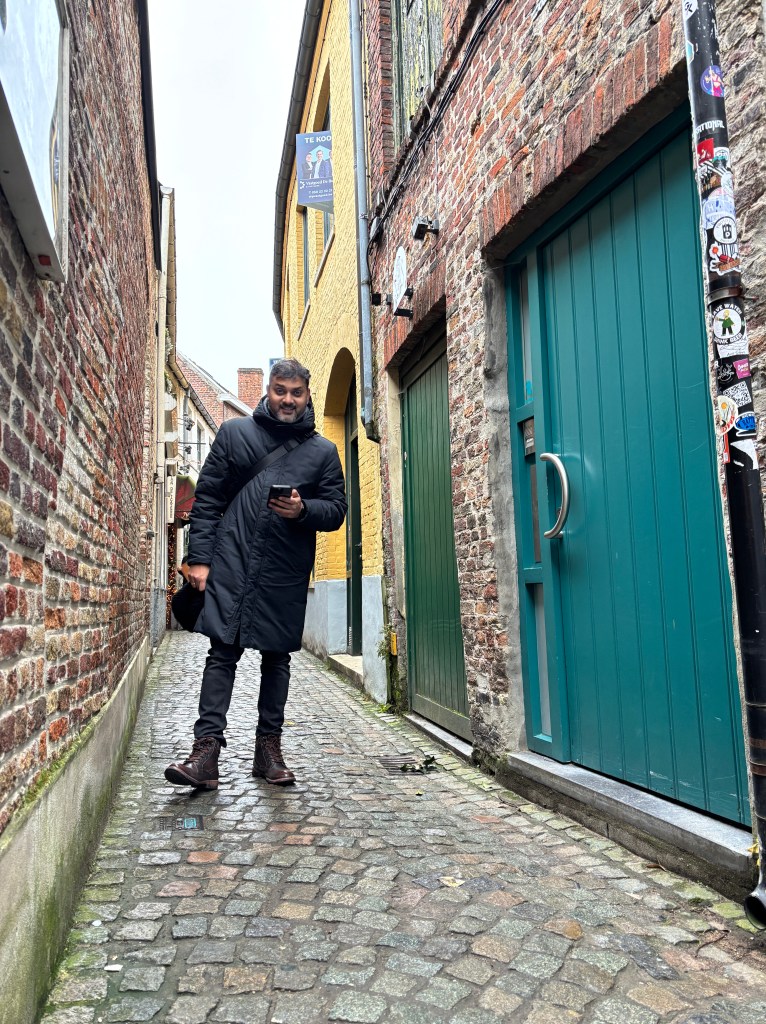
The first picture (above) of Stoofstraat has a faint view of the Church of our Lady, which is where our walking trail lead us to next.
Church of our Lady
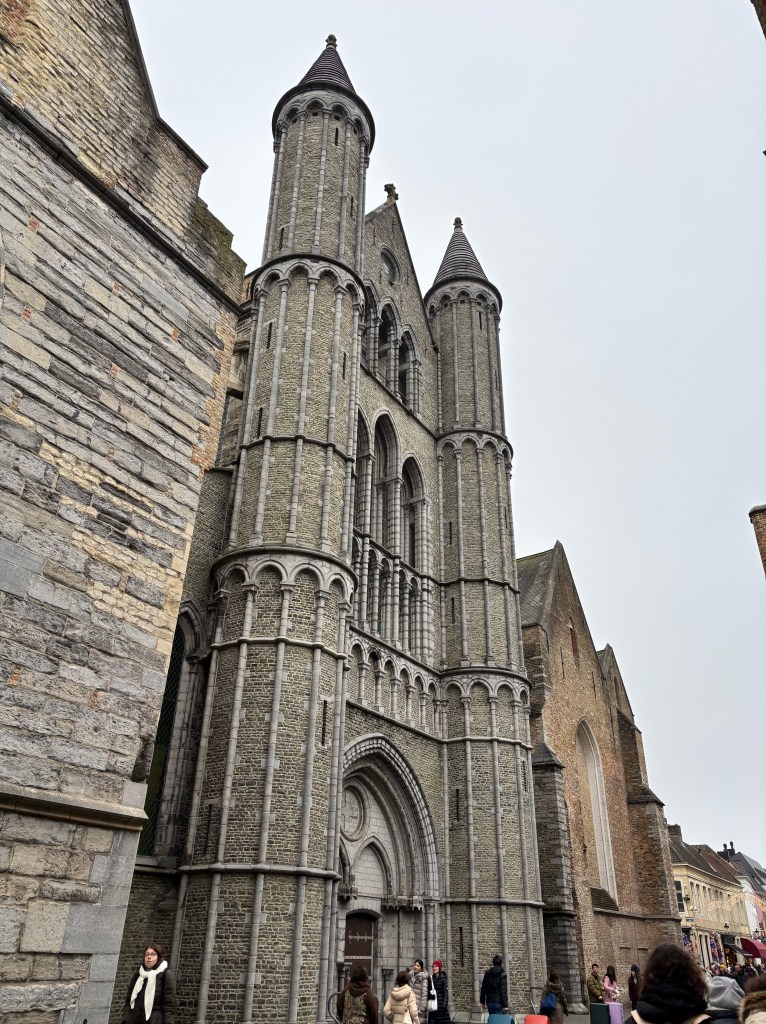
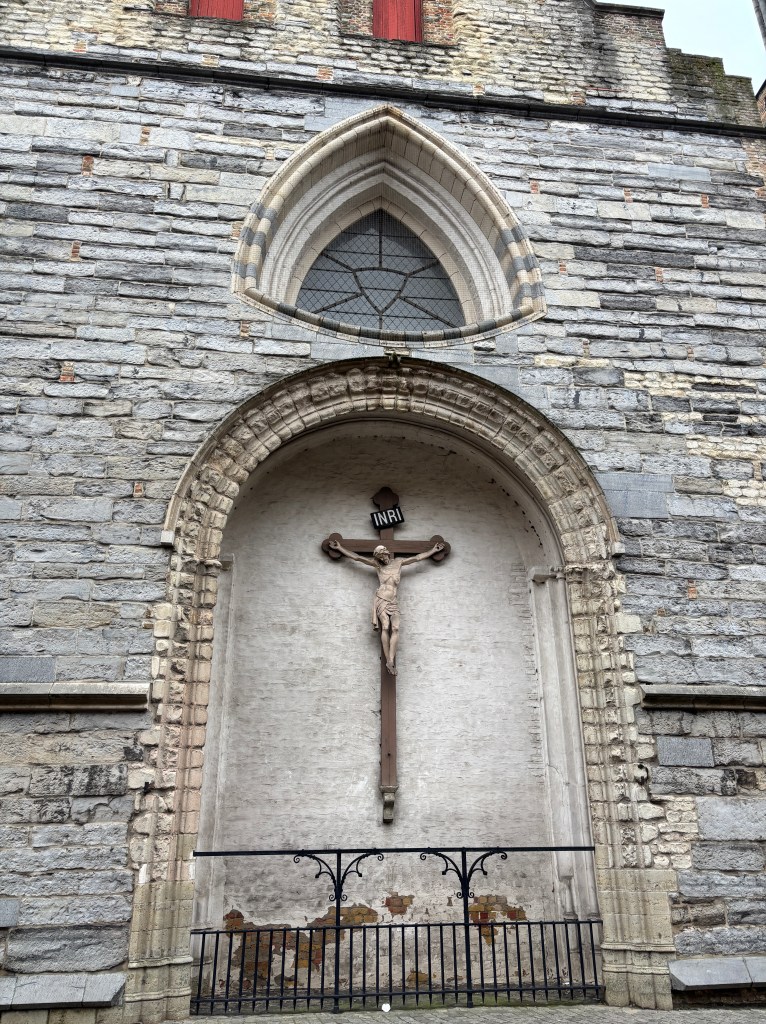
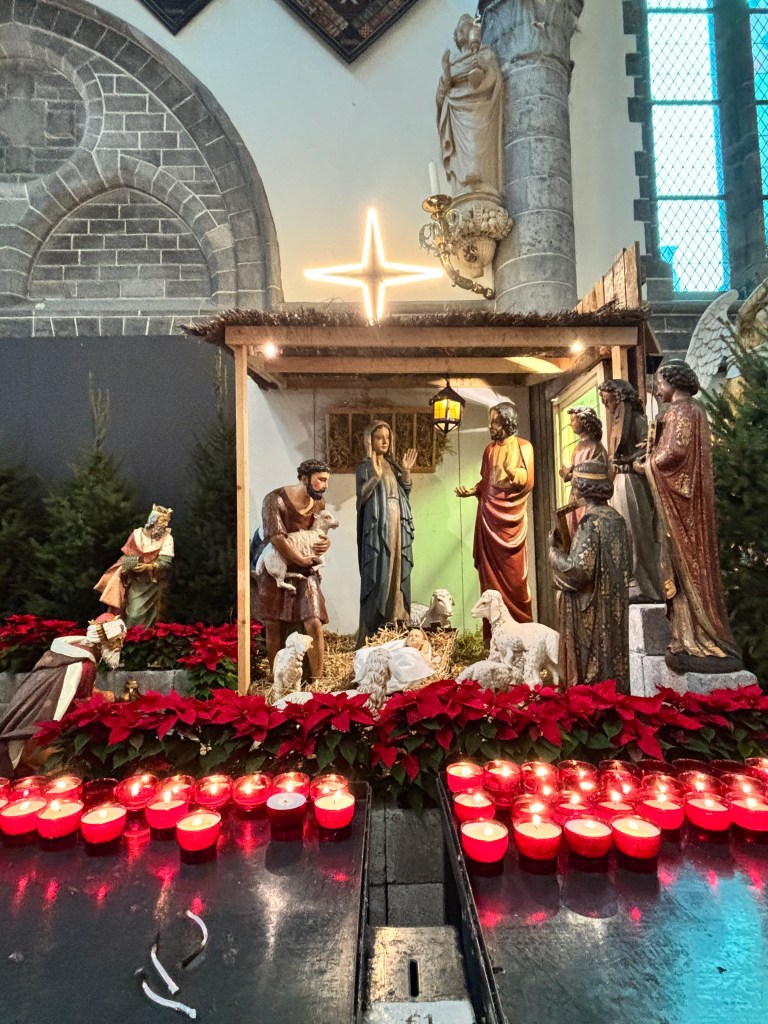
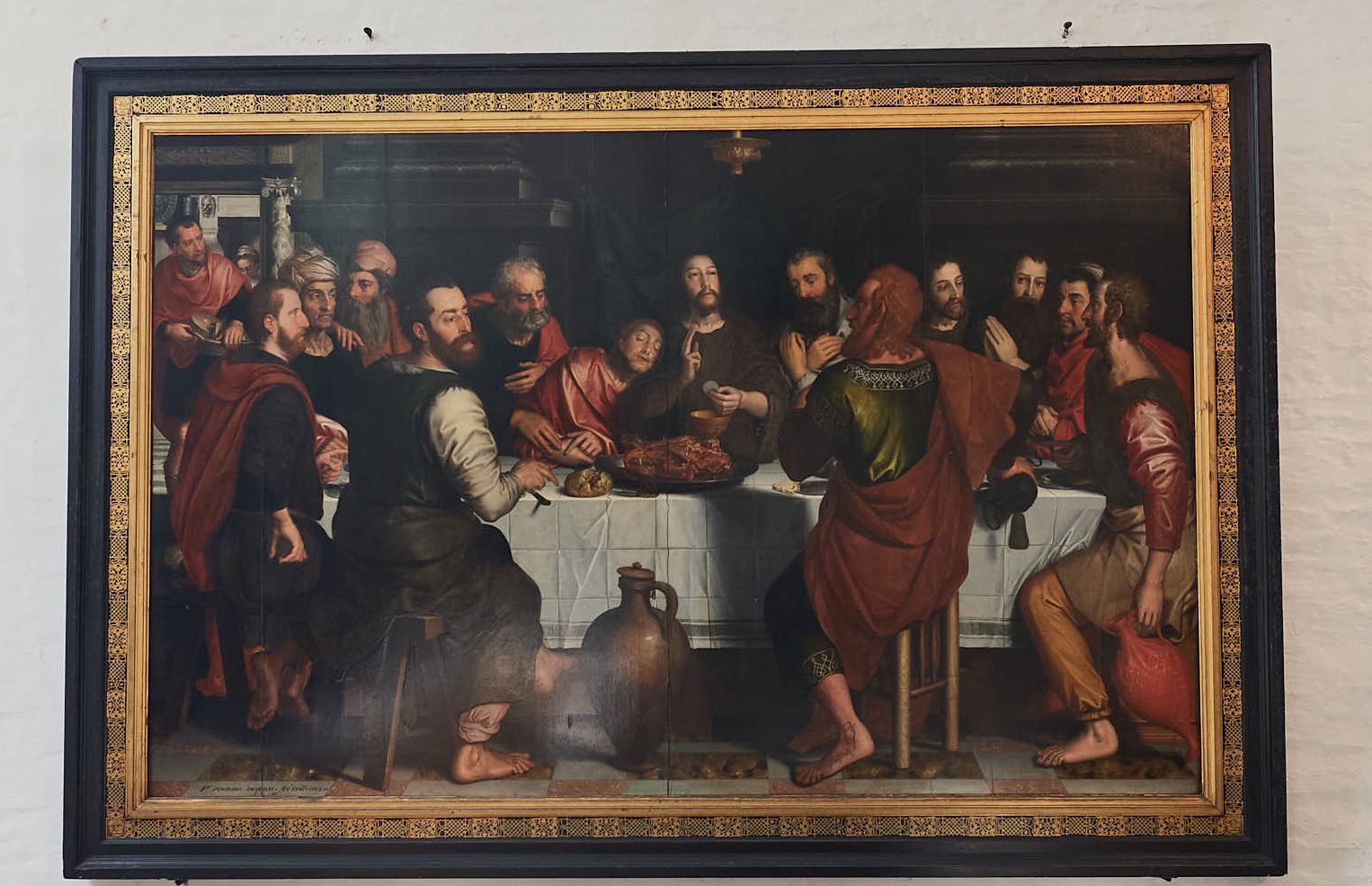
Now, your brown girl, although a spiritual atheist, has a thing for churches, since childhood. The calm that church premises bring into my system is unparalleled, plus the architecture is outstanding for most! And the Church of our Lady did exactly that. Also, inside this second tallest church tower of the world, one can find a wealth of art treasures, with Michelangelo’s world-famous Madonna and Child as the absolute highlight. There are numerous other paintings, 13th and 14th century painted crypts and the 15th and 16th century tombs of Mary of Burgundy and Charles the Bold.
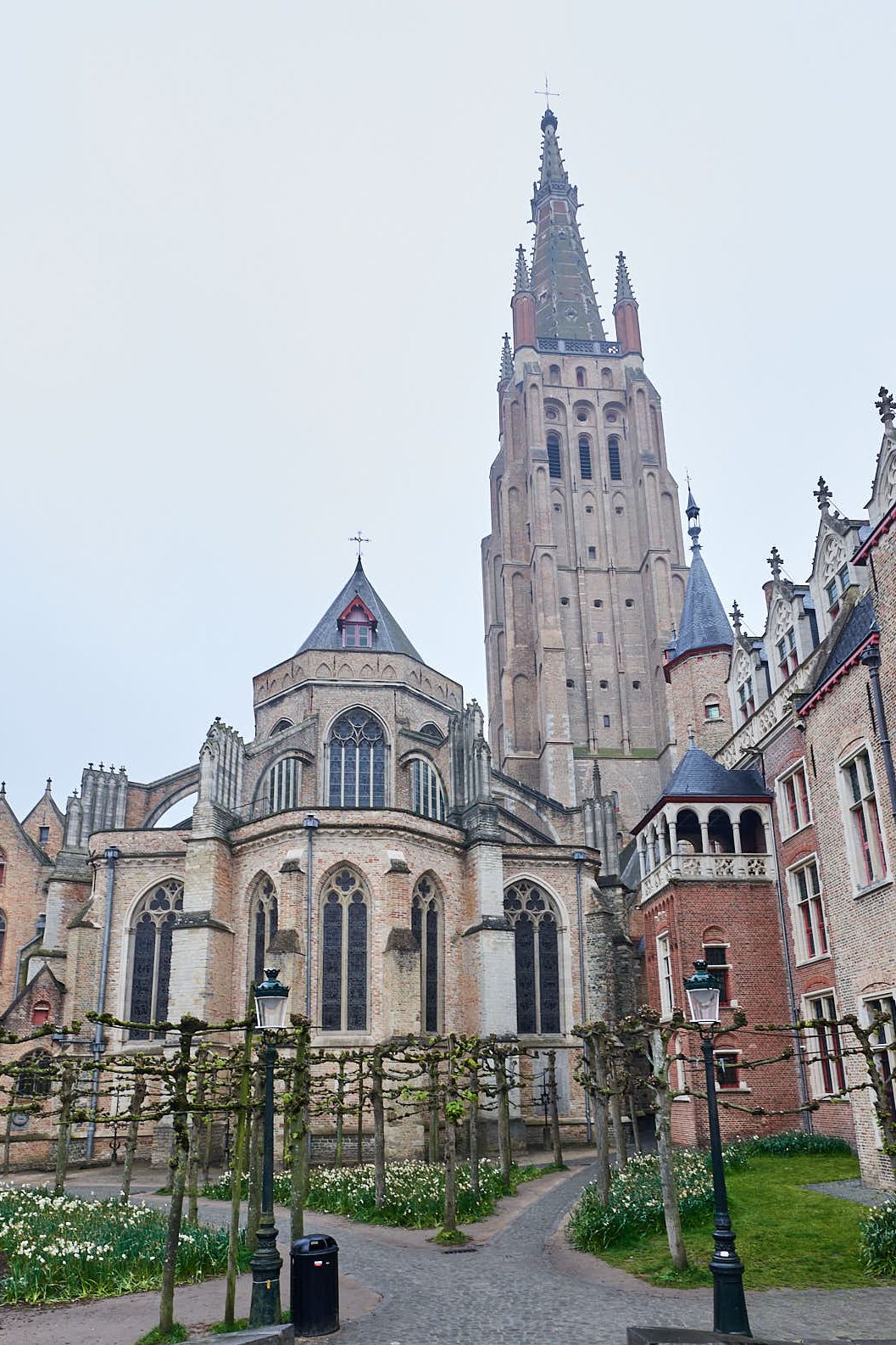


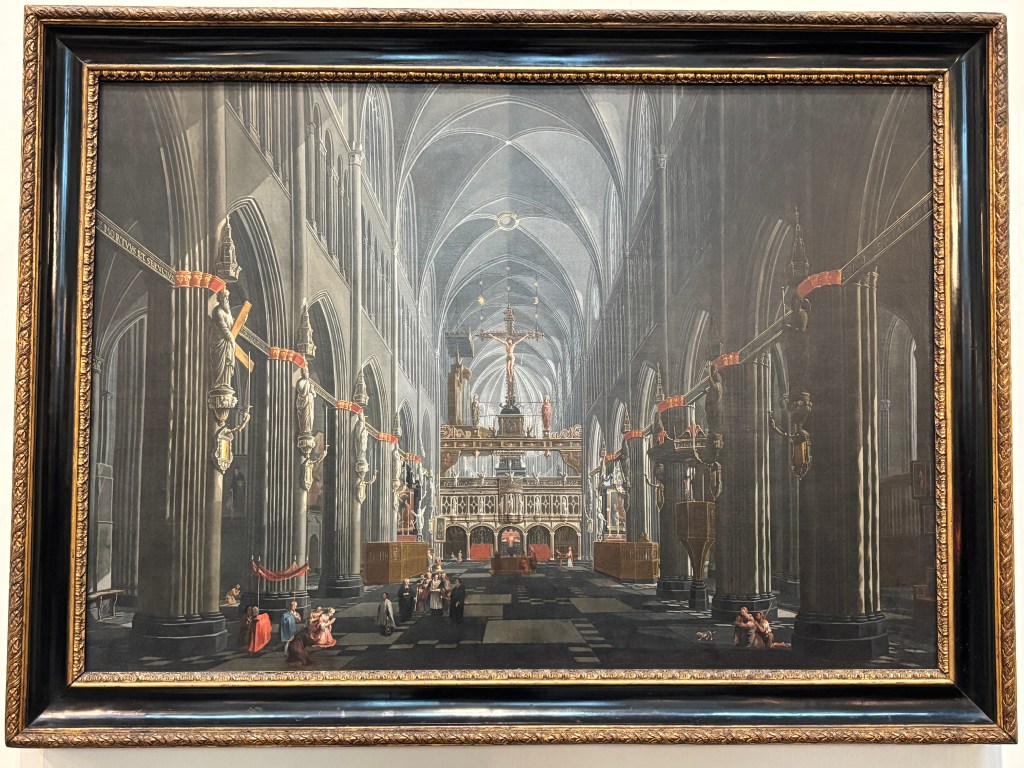
Since we’re already on the topic of churches, an absolute unmissable is:
The Basilica of the Holy Blood
The Basiliek van het Heilig Bloed is Bruges’ most significant and iconic religious site, and for good reason. The church is renowned for being home to a vial which is said to contain a relic of the Holy Blood, which, according to tradition, was brought back from the Holy Land by Thierry of Alsace, Count of Flanders, in the 12th century. Although located in the heart of Bruges, it’s easy to miss out on due to being in a very unassuming building in a corner of the Town Hall.
The basilica itself is a striking example of medieval architecture, combining both Romanesque and Gothic styles. The building is divided into two distinct parts:
The lower chapel of the basilica is older and retains much of its Romanesque character. It was originally built in the 12th century and has a simple, yet elegant design, with heavy stone walls, arched windows, and a vaulted ceiling. The chapel’s interior is decorated with frescoes, very subtle and no adornments. There are wooden sculptures depicting scenes from the life of Christ and the Virgin Mary. A very quiet, contemplative atmosphere.
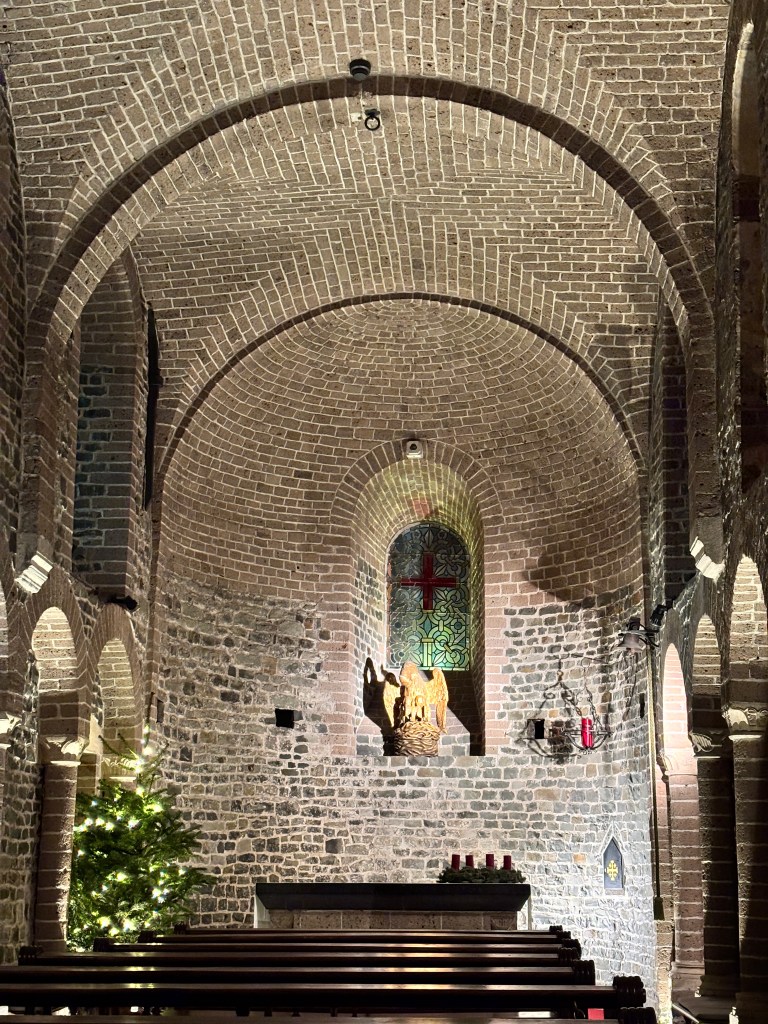
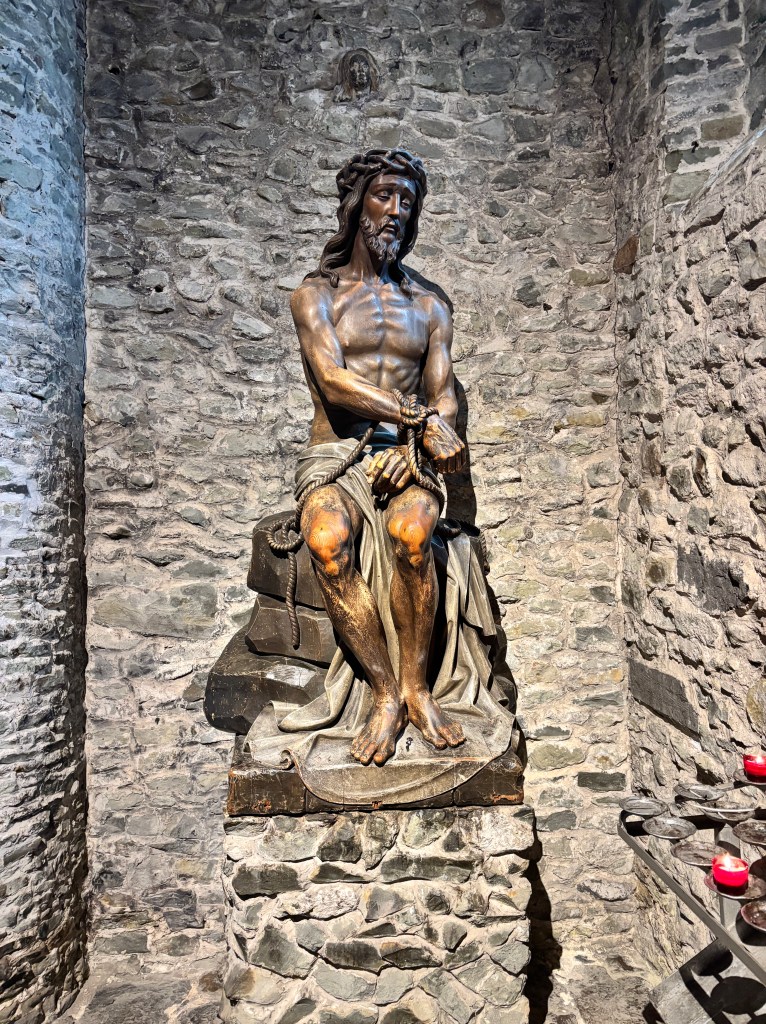
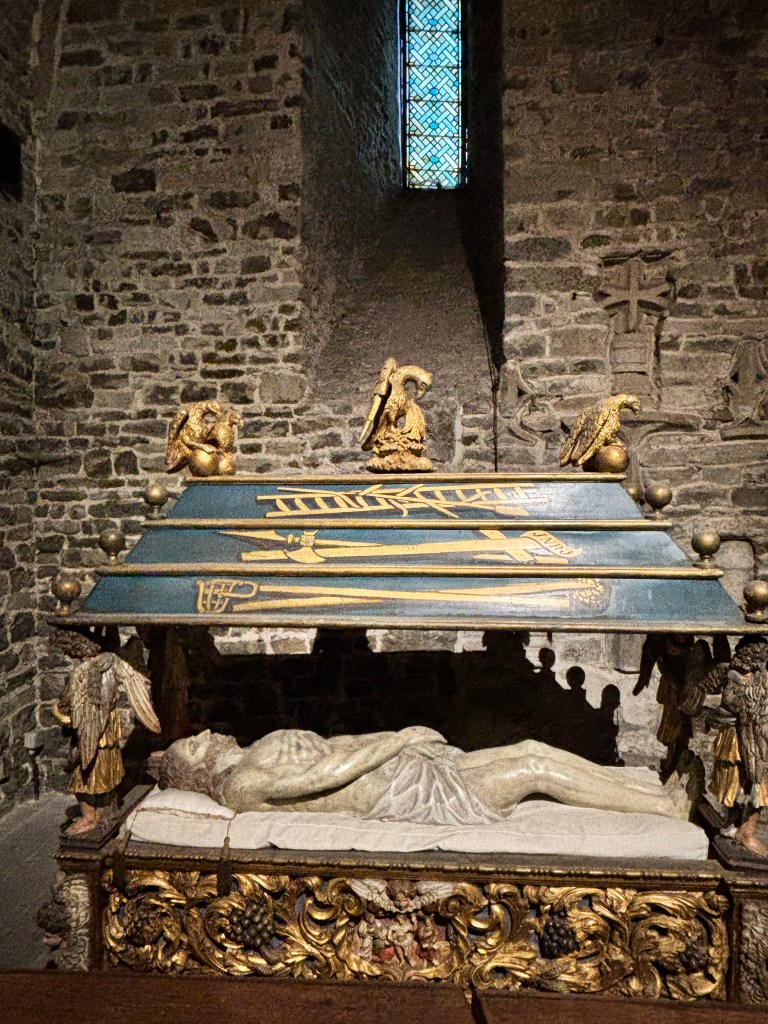
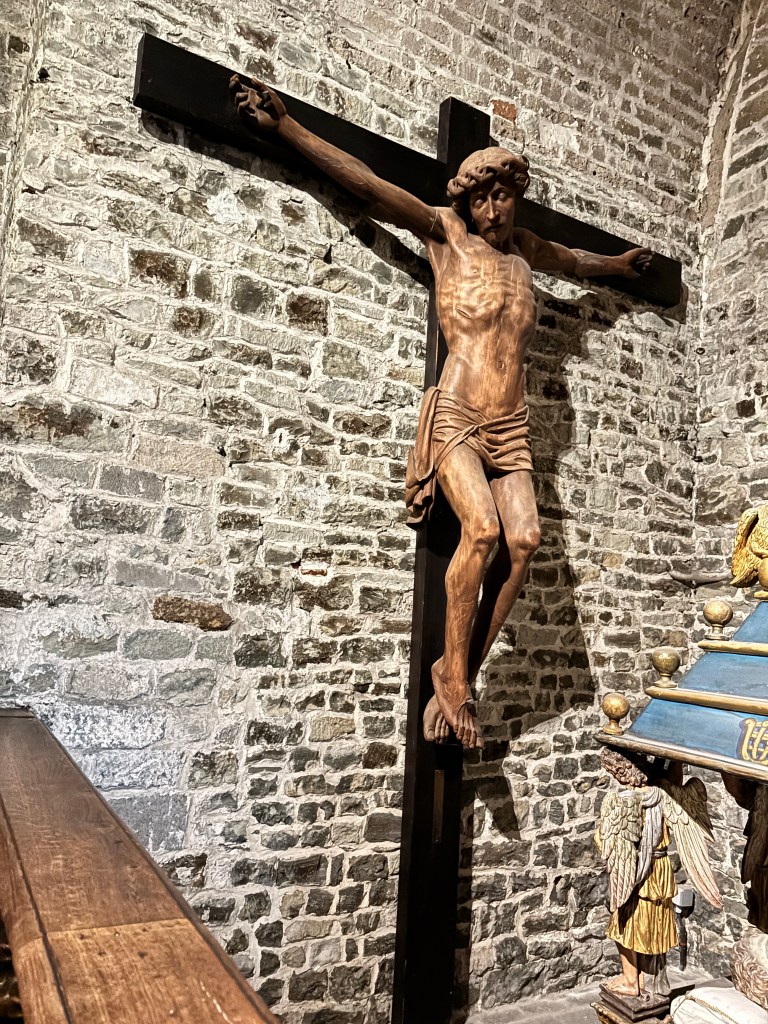
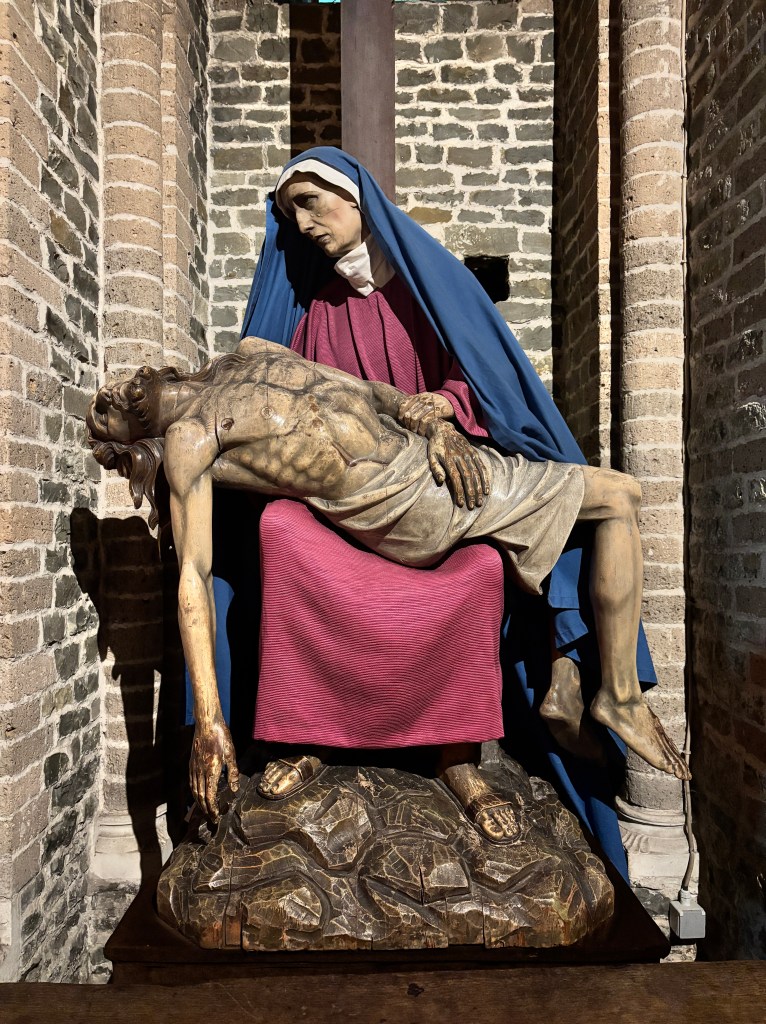
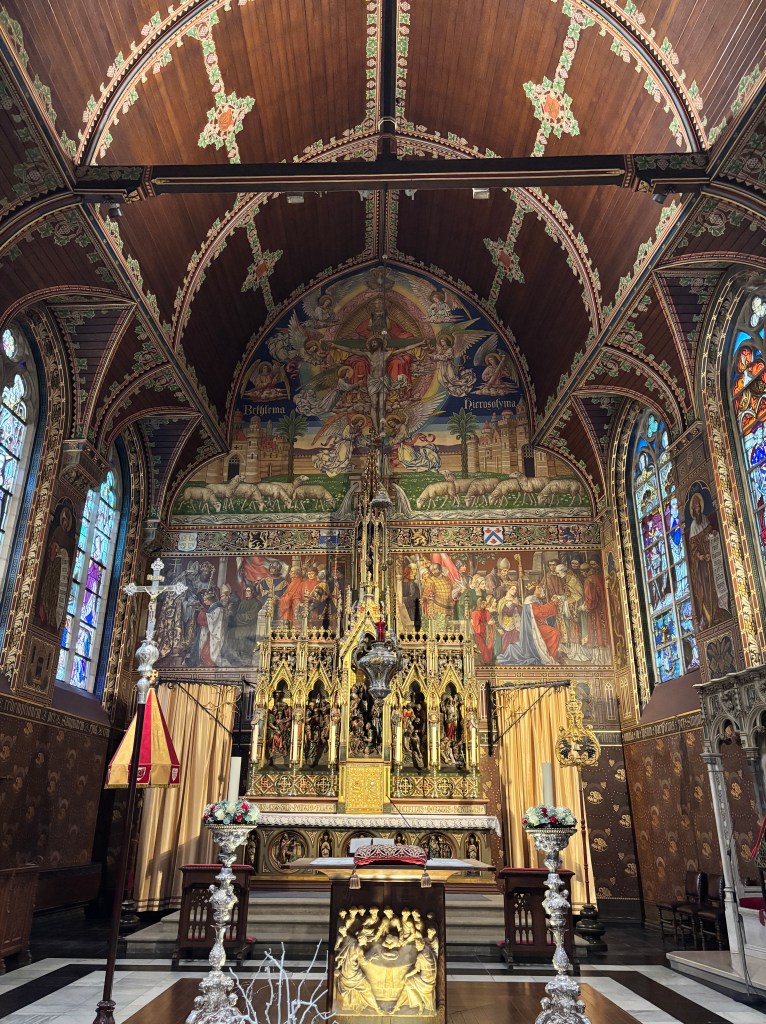
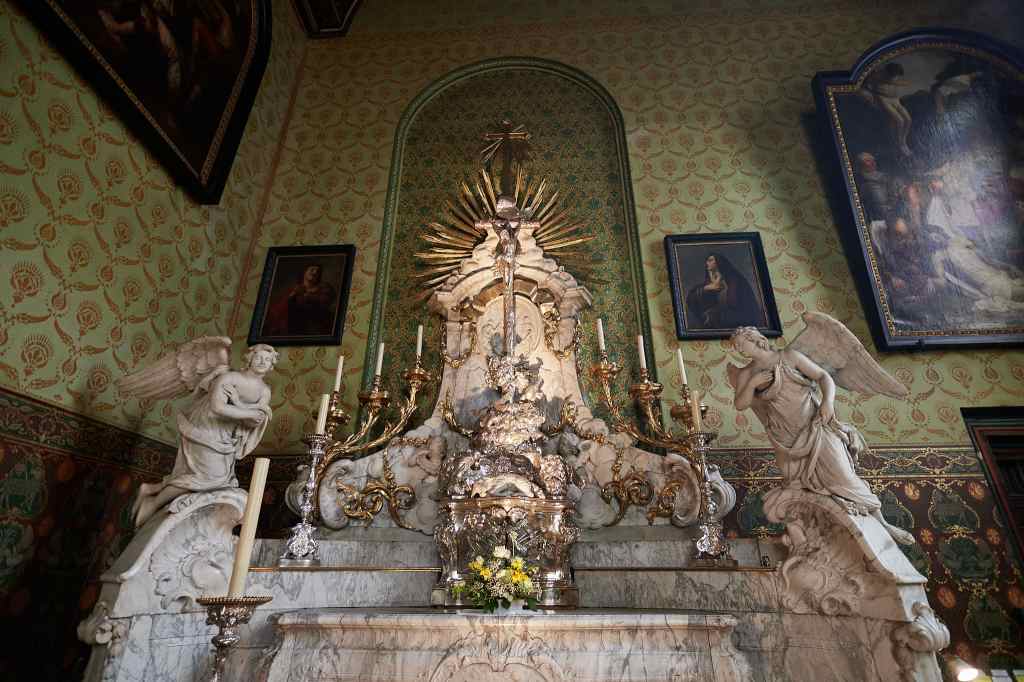
The upper chapel is the more famous part of the basilica. It was constructed in the late 15th century in a Gothic style, featuring elaborate stained glass windows, intricate stonework, and a vaulted ceiling that is both ornate and majestic. This chapel houses the revered relic of the Holy Blood, which is displayed in a beautiful, gilded shrine. The vial is said to contain drops of blood of Jesus Christ. (And it’s not allowed to take pictures in the specific area).
The upper chapel’s rich, luxurious decoration includes stunning sculptures, altars, and intricate woodwork. Pilgrims and visitors gather here to see the relic, which is traditionally brought out and displayed for veneration on certain feast days, particularly on Ascension Day. (I was there on Boxing day, which is the day after Christmas, and there was a long queue of visitors waiting to see the relic)
The Belfry
The Belfry, dating back to the 13th century, looms over the city, a reminder of Bruges’ importance as a commercial hub during the medieval period. The tower’s 366 steps lead to an awe-inspiring view, where you can gaze over the labyrinth of narrow streets and rooftops that stretch out beneath you. (I had to make the unfortunate decision of not climbing those 366 steps to heavenly views, but if I’ve to believe the pictures on the web, if you dear reader make it to Belfry, please do not repeat my mistake)
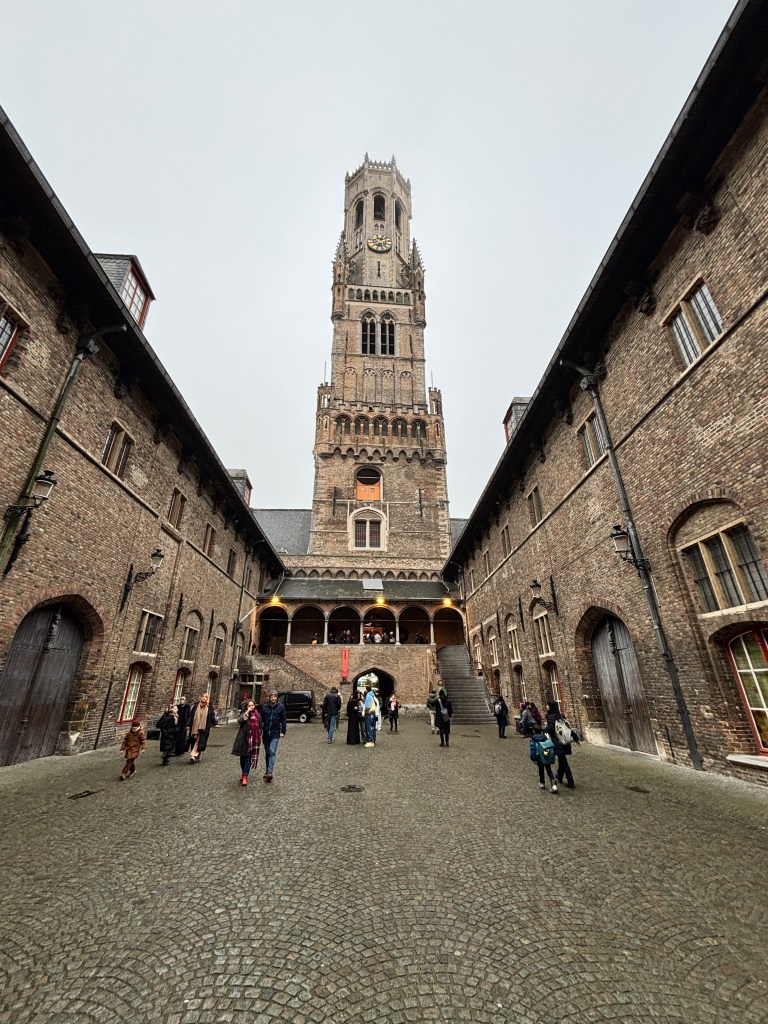
The Markt Square
This is where tourists usually start their walks and can even board horse carriages to take them around – the Markt Square and the vibrant heart of Bruges. Surrounded by colourful medieval buildings and the imposing Belfry Tower, the square sets the tone for your day.
The Markt is also home to the beautiful Provincial Court (Huis der Provincie), a grand structure built in the 16th century. Its gothic design is adorned with intricate details and the standing façade a testament to the wealth and influence Bruges enjoyed during the height of its trading power.
The Ending
We spent so much time walking in the park and staring into oblivion by the canals, that we weren’t left with enough time for the museums. We did have a couple of beers in the cozy cafes around the Markt Square.
But in my perspective, a dinner by the canal would be a great finisher. So maybe head to one of the many restaurants overlooking the canals for a peaceful dinner and savour a classic Belgian dish.
Belgian food, in my opinion is very much influenced by France, Germany and Netherlands (due to the proximity) but a classic choice would be mussels with frites. Or even the Flemish beef stew (known as stoofvlees in Dutch and carbonade flamande in French). And as you dine, the view of the canals and city lights, the gentle sounds of the gurgling water and the evening breeze will really complete the fairy tale vibe (Just the thought of it makes me wanna go back) and be the perfect end to the magical day in Bruges.
A day in Bruges – A lifetime of memories!
Discover more from thatbrowngirlinblackboots
Subscribe to get the latest posts sent to your email.

