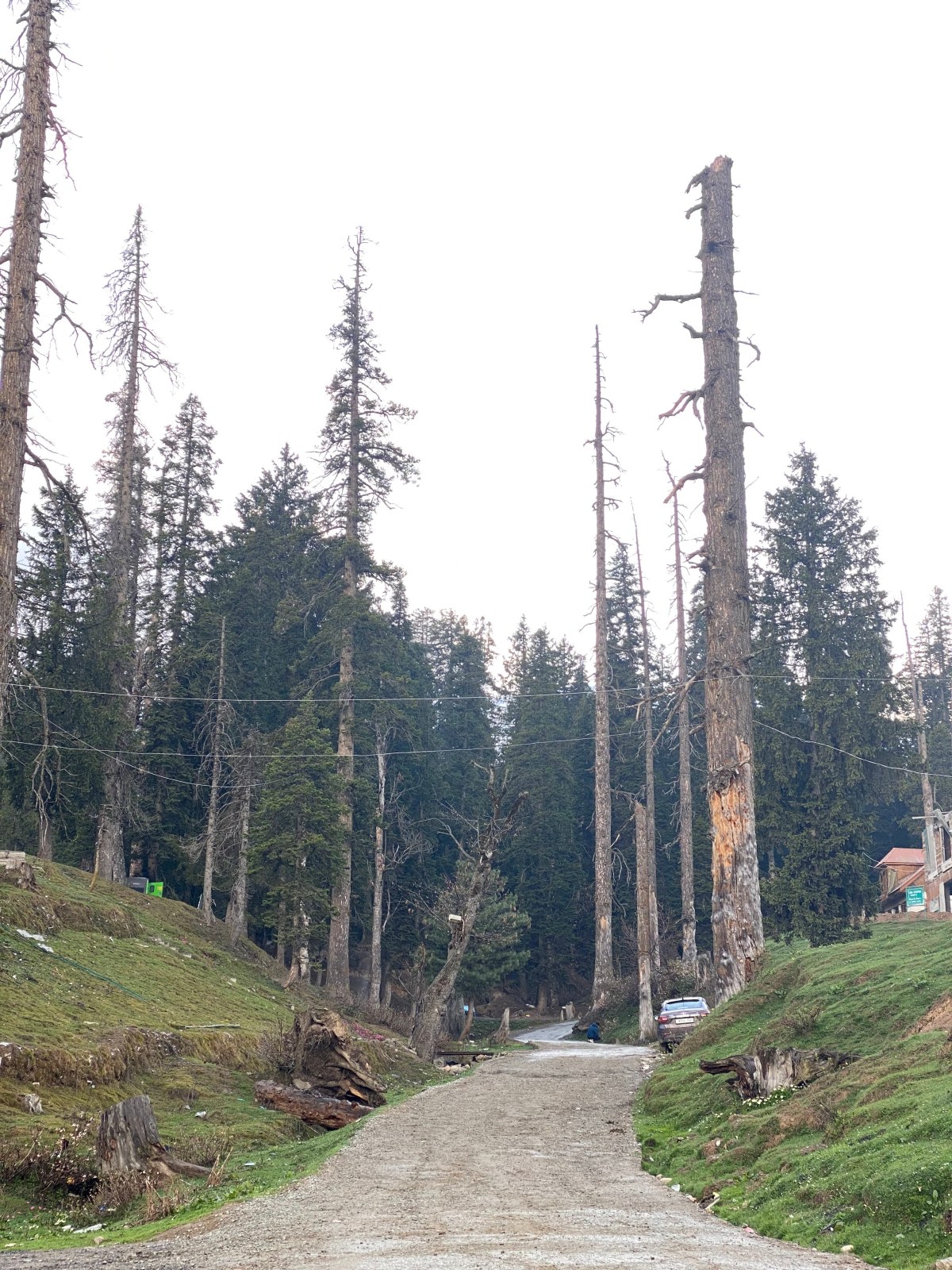
Nestled in the lap of the Himalayas, Kashmir is a tapestry of picture-perfect landscapes, rich culture, and turbulent history. Often referred to as “Paradise on Earth,” the region has captivated the hearts of travellers, poets, and emperors alike. However, when somebody said “Everything beautiful, comes with pain”, they were most likely referring to this enchanting vale, as it’s always been a land of paradoxes – of breathtaking beauty and harsh conflicts, of ancient traditions and the modern struggle for identity and autonomy.
The history of Kashmir is as rich and complex as the region itself, spanning millennia of cultural, religious, and political evolutions. A tapestry of diverse cultures, religions, and influences, reflecting the complexities of the Indian subcontinent’s past and present.
Ancient period: Kashmir’s early history is shrouded in mythology and ancient texts. It was mentioned in the epic Mahabharata as the land of Kashyapa, a sage. The region witnessed the rise and fall of various dynasties, including the Mauryas and the Kushans.
Buddhist Influence on the region: Kashmir became a center of Buddhism during the reign of the Kushan Empire. The famous Chinese Buddhist pilgrim, Xuanzang, visited Kashmir in the 7th century and described it as a prosperous and thriving kingdom.
Hindu period: The arrival of Hinduism in Kashmir marked a significant era. The Karkota dynasty, followed by the Utpala dynasty, ruled Kashmir during its golden age. The 9th to 12th centuries are often referred to as the “Hindu period” of Kashmir, characterized by the flourishing of art, literature, and Sanskrit scholarship.
Islamic rule: In the 14th century, Islam was introduced to Kashmir by the Persian Sufi saint, Mir Sayyid Ali Hamadani. The region witnessed the establishment of Muslim sultanates, notably the Shah Mir dynasty. Mughal Emperor Akbar annexed Kashmir in 1586, bringing it under Mughal suzerainty.
Sikh rule: The Sikh Empire, under Maharaja Ranjit Singh, annexed Kashmir in the early 19th century. However, after his death, Kashmir became part of the princely state of Jammu and Kashmir, ruled by the Dogra dynasty.
Partition times: During the partition of British India in 1947, the princely states were given the option to accede to either India or Pakistan. The Maharaja of Jammu and Kashmir, Hari Singh, initially chose to remain independent. However, tribal militias supported by Pakistan invaded Kashmir, leading to a conflict between India and Pakistan. In 1948, India and Pakistan agreed to a ceasefire, dividing Kashmir into areas administered by both countries, with the Line of Control (LoC) serving as the de facto border.
Other challenges: Kashmir has been a hotbed of conflict and tension between India and Pakistan, with both countries claiming the entire region. The issue remains unresolved, leading to sporadic violence and political instability. The region has also witnessed insurgency and militancy, along with a significant military presence.
Article 370: Until August 2019, Jammu and Kashmir enjoyed a special autonomous status under Article 370 of the Indian Constitution. However, the Indian government revoked this article, sparking controversy and further escalating tensions in the region.
Covid : The deadly Covid paralysed the entire globe but for a state which was already under lockdown, it added pain and suffering to existing misery.
Not a very elaborate historical account, albeit just snippets over the centuries. And which forces the thought that despite the political and military conflicts, Kashmir’s history is a testament to cultural syncretism and tolerance, with Hinduism, Buddhism, and Islam leaving rich legacies in the region and which is so evident in its diverse architectural, linguistic, and cultural practices. The history of Kashmir also reflects a continuous struggle for autonomy, identity, and self-determination, with various movements and uprisings against rulers and governing states through the centuries. The desire for political self-determination has been a significant aspect of Kashmir’s recent history, leading to complex national and international dynamics.
Discover more from thatbrowngirlinblackboots
Subscribe to get the latest posts sent to your email.

