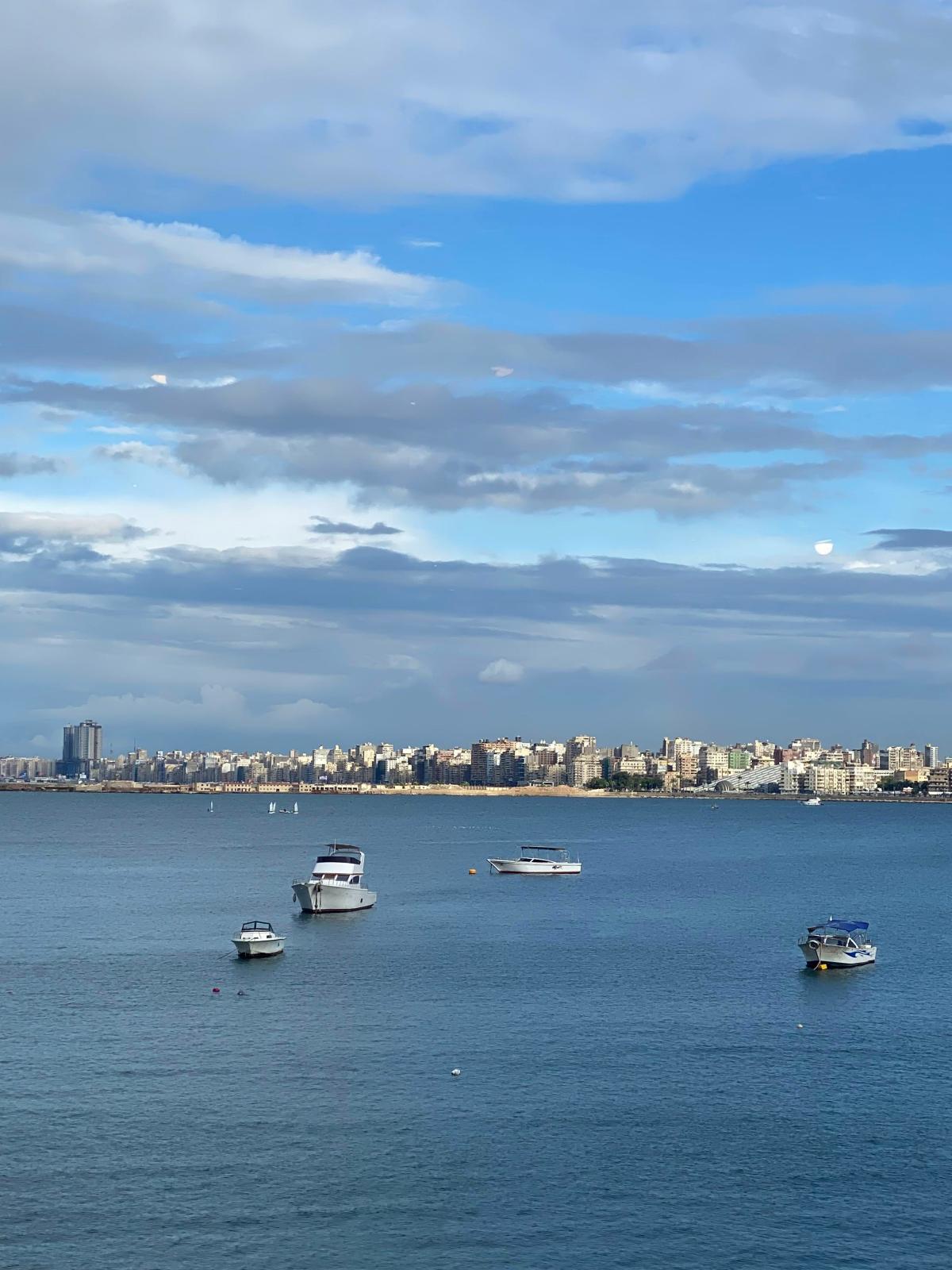
After days spent tracing the pharaohs’ footsteps through the sunbaked tombs of Luxor, drifting past temple columns on the Nile, and wandering Cairo’s ancient streets, our journey turned north – where Egypt’s desert soul meets the sea. Alexandria. A name that feels like a whispered promise of cool air and old secrets.
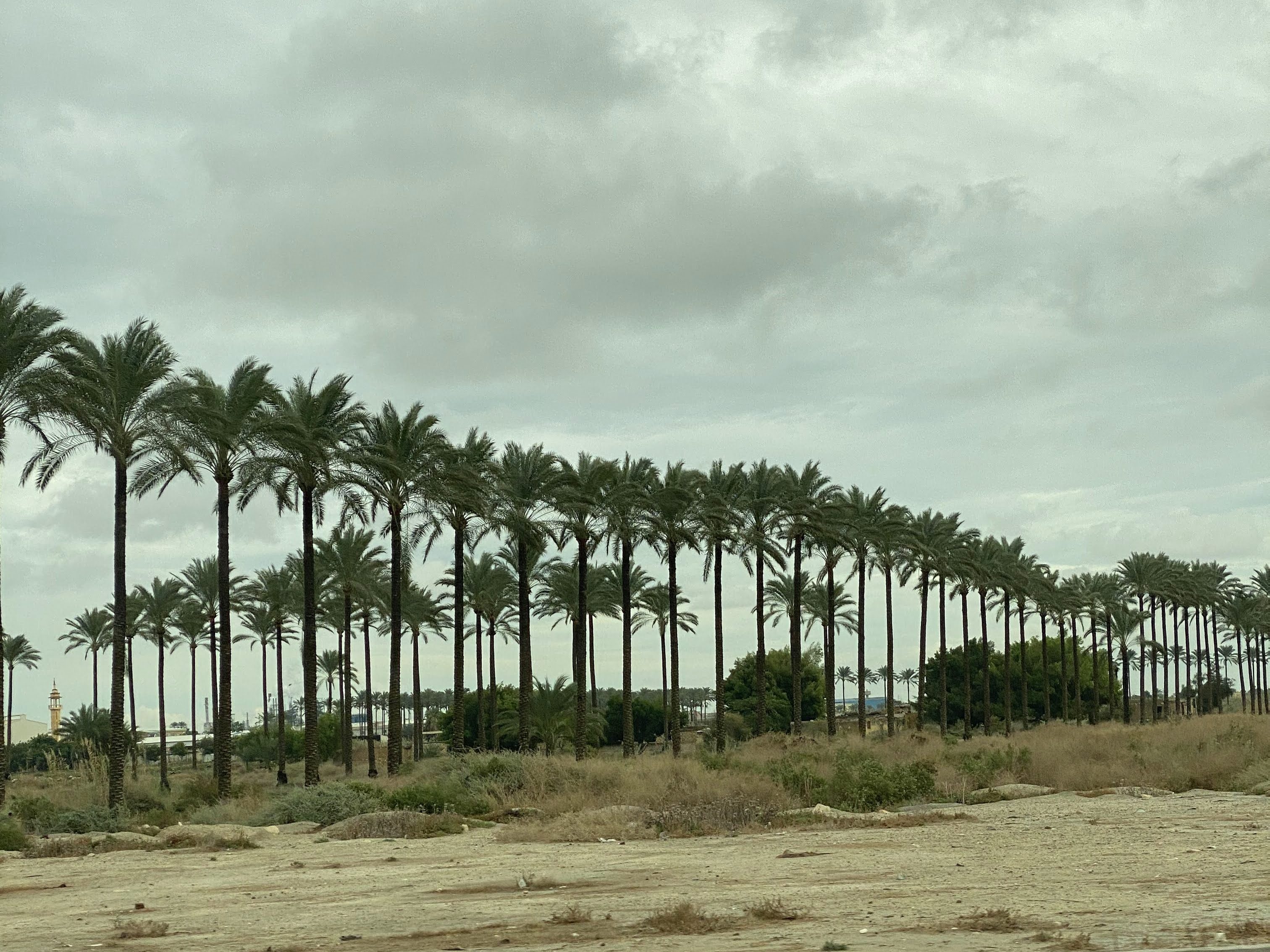
The drive from Cairo is long enough to make you doze off somewhere beyond the endless beige of the desert highway – and then, suddenly, the Mediterranean appears like a brushstroke of turquoise against the horizon. Alexandria is Egypt’s other face – lighter, salt-kissed, tinged with European echoes and layers of empire that cling to its breezy corniche and faded Belle Époque facades. Time seems to slow down as you enter the city, as if requesting you to hold your horses and take a breath. After all, the air is fresh and the weather is pleasant.
The history of Alexandria dates back to the time when Alexander the Great founded the city in ~332BC. It was to be the capital of his new Egyptian dominion. The city was constructed on the site of an ancient settlement dating back to 1500BC. And it’s since that the city has been the playground of philosophers, queens, revolutionaries, and poets.
The Catacombs
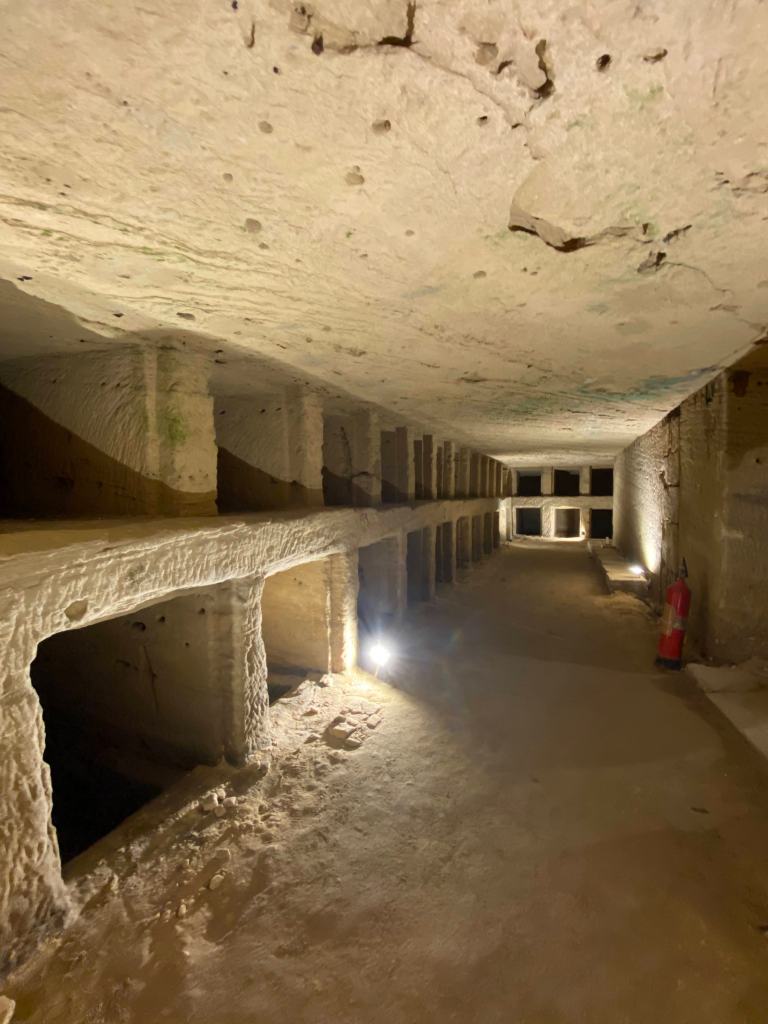
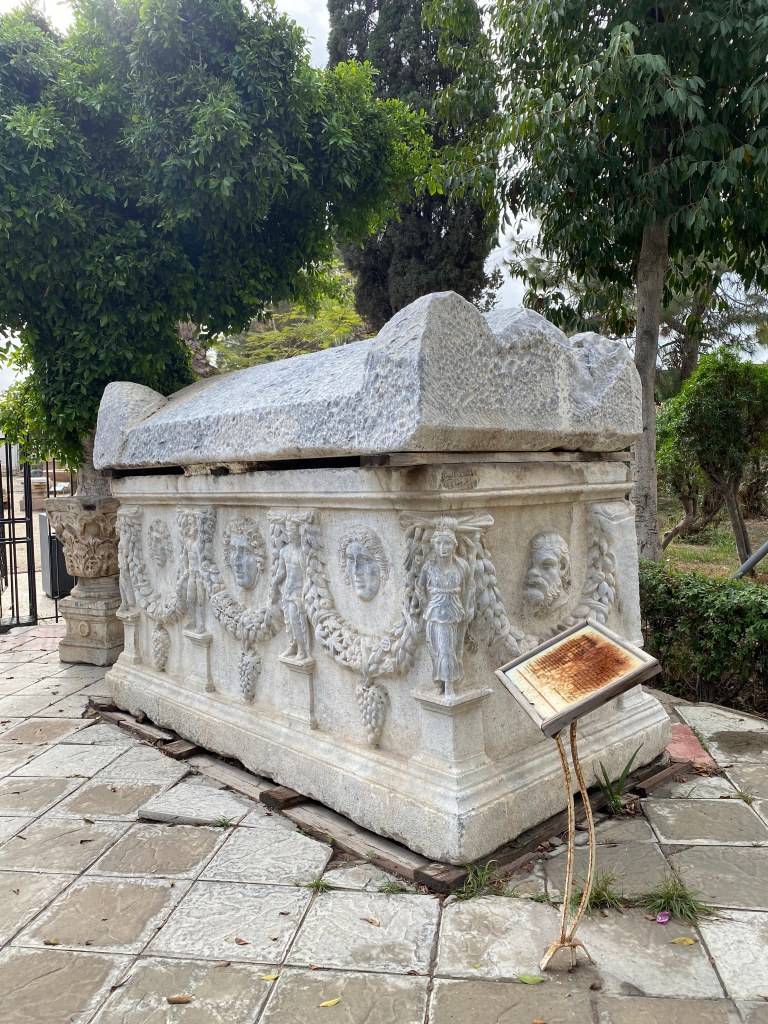
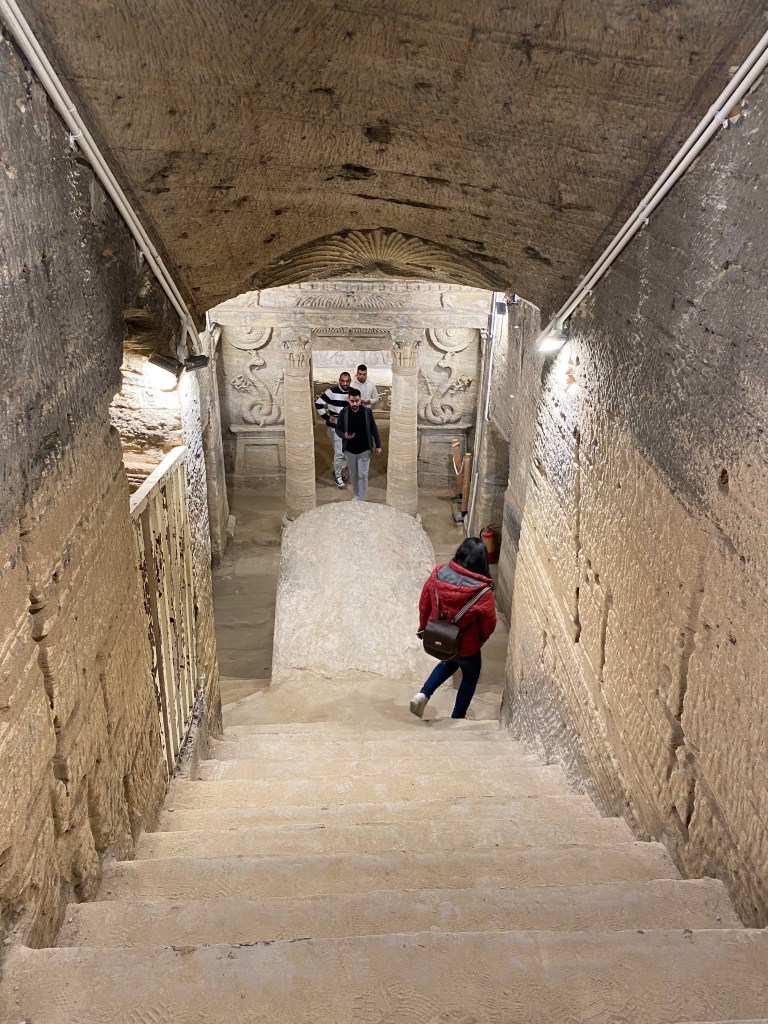
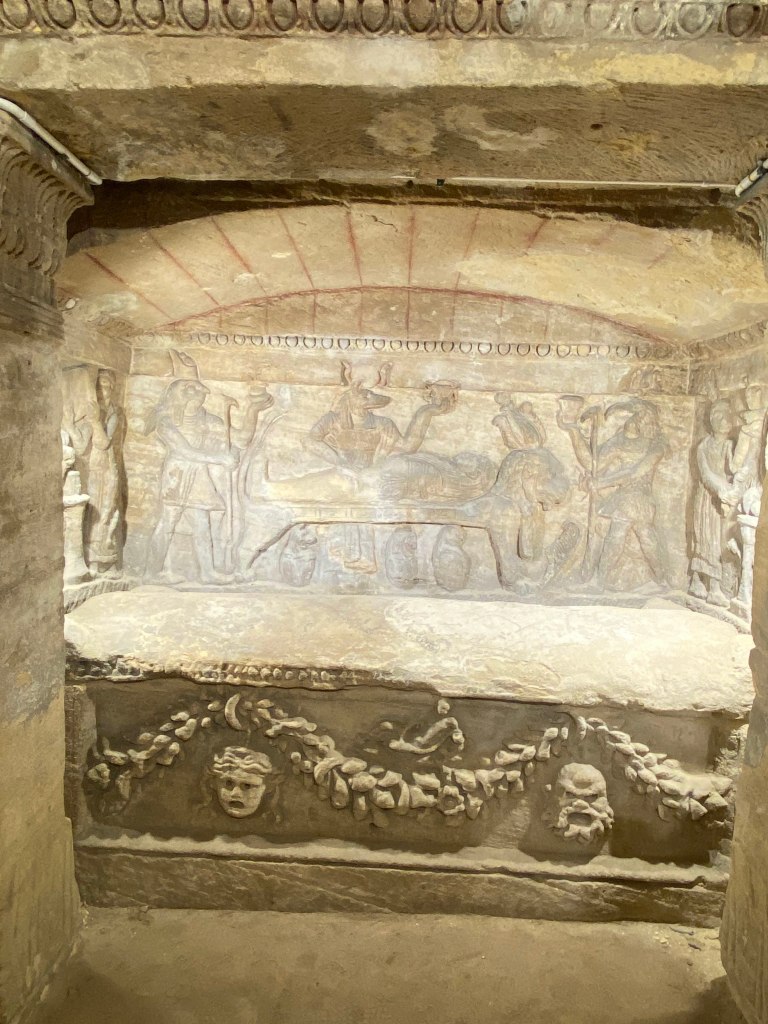
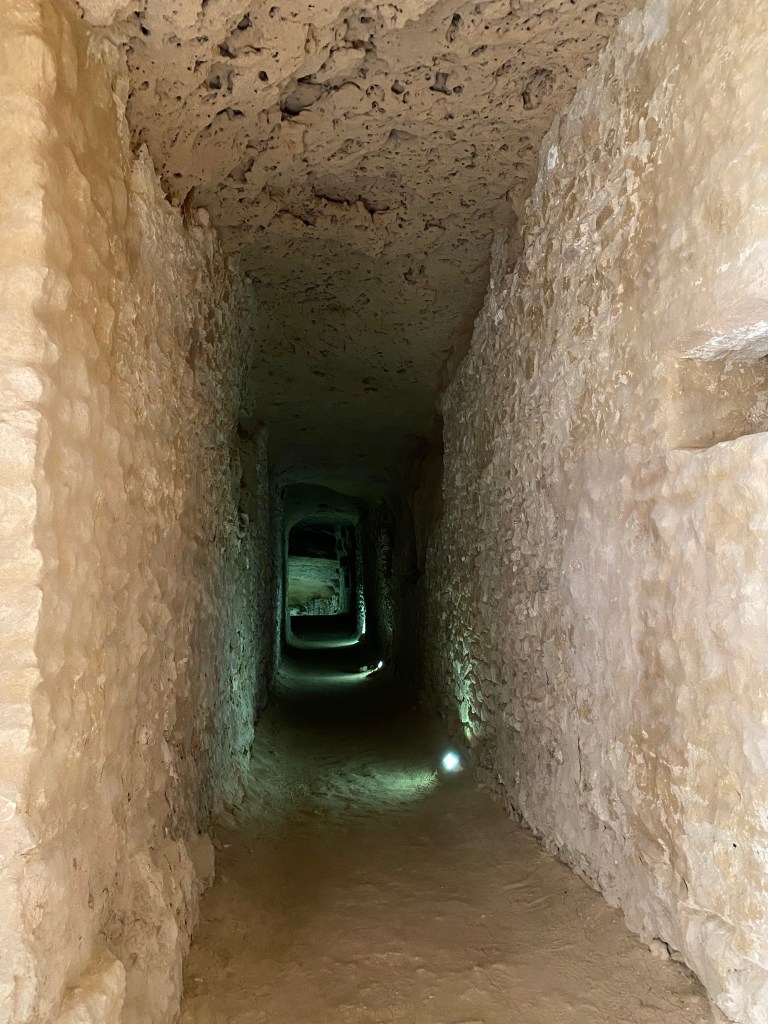
Our first stop was the Catacombs of Kom el Shoqafa, one of the Seven Wonders of the Middle Ages, and the largest known Roman burial site in Egypt. Down a spiral staircase we went, trading Mediterranean sunlight for cool stone and low lighting that reveal Roman columns, pharaonic carvings, and Hellenistic statues blending three cultures in one eternal tomb. In this necropolis, Greek elegance, Egyptian symbolism, and Roman detail share walls — an echo of Alexandria’s DNA and known as the Graeco-Roman approach.
Interesting fact: These catacombs were buried deep down in rubble till apparently a donkey accidentally fell into the access shaft leading to the discovery of the complex.

Pompeii’s Pillar
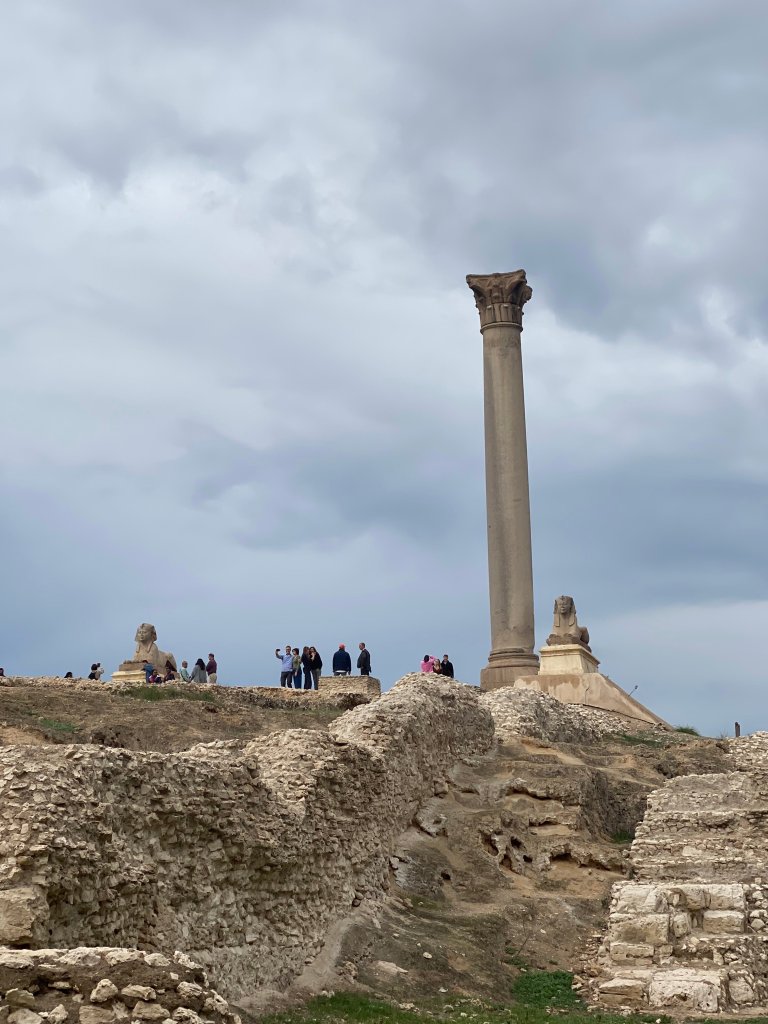
Back up in the daylight and very close to the catacombs is a hill with bare remains of architectural fragments and Alexandria’s only ancient monument still intact and upright. Pompeii’s Pillar – standing alone yet defiant above ancient rubble, a massive 30 metres long column stands tall as if rising from the ruins of the ancient Temple of Serapis, a magnificent structure which once stood there. once used to store manuscripts besides the Great Library of Alexandria.
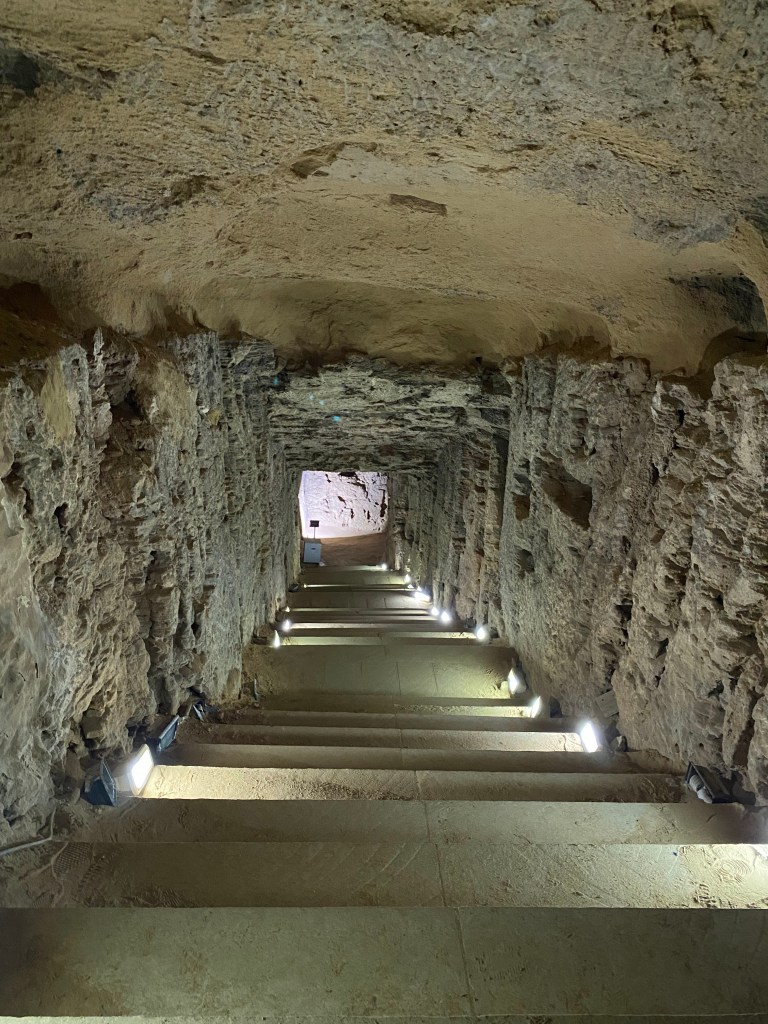
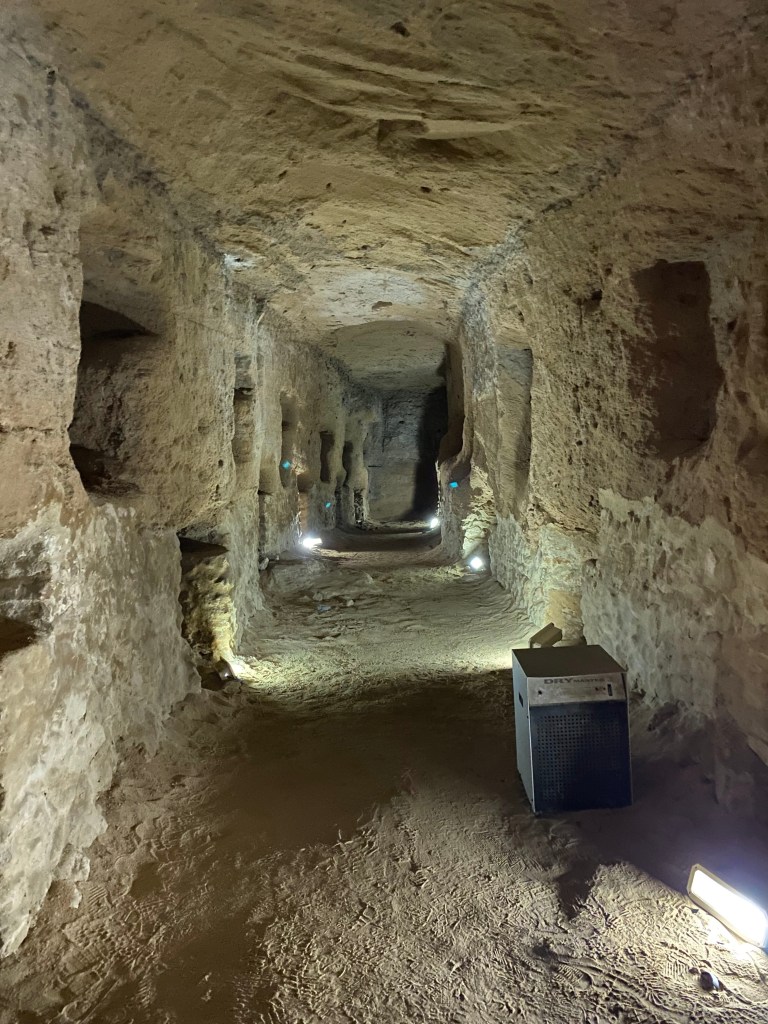
Underneath the column, steps lead down to the dark ruins of the Temple of Serapis, the hybrid Greek and Egyptian god of Alexandria. Also here was the ‘daughter library’ of the Great Library of Alexandria, which was said to have contained copies of manuscripts.
The Alexandrian Lunch
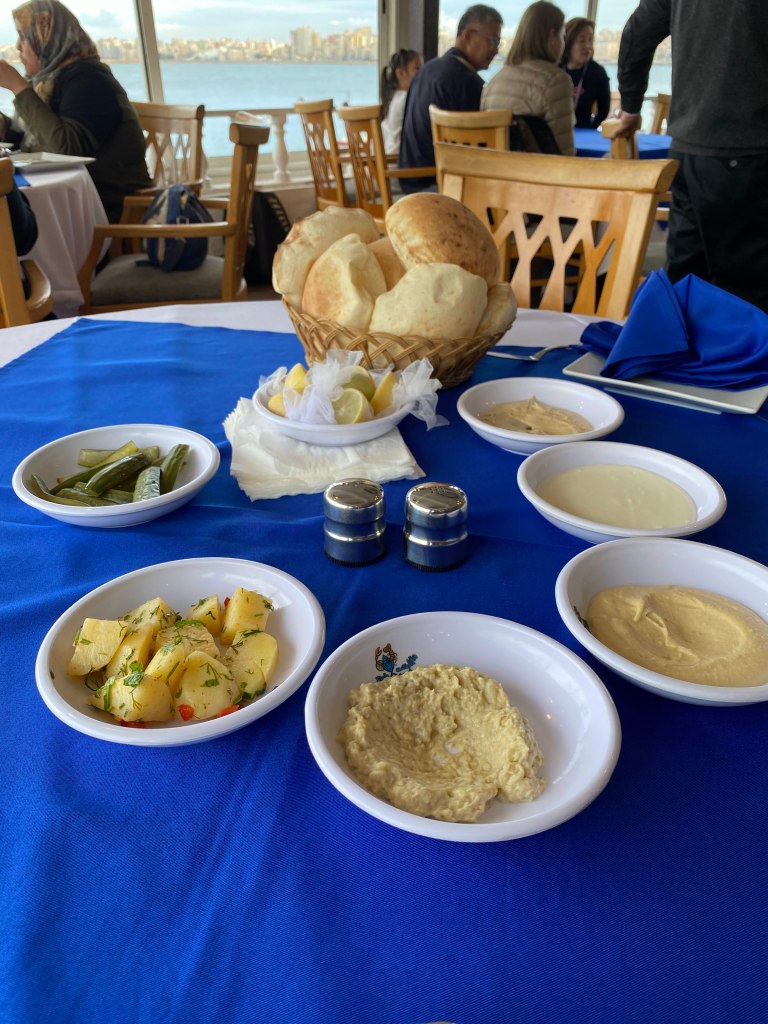
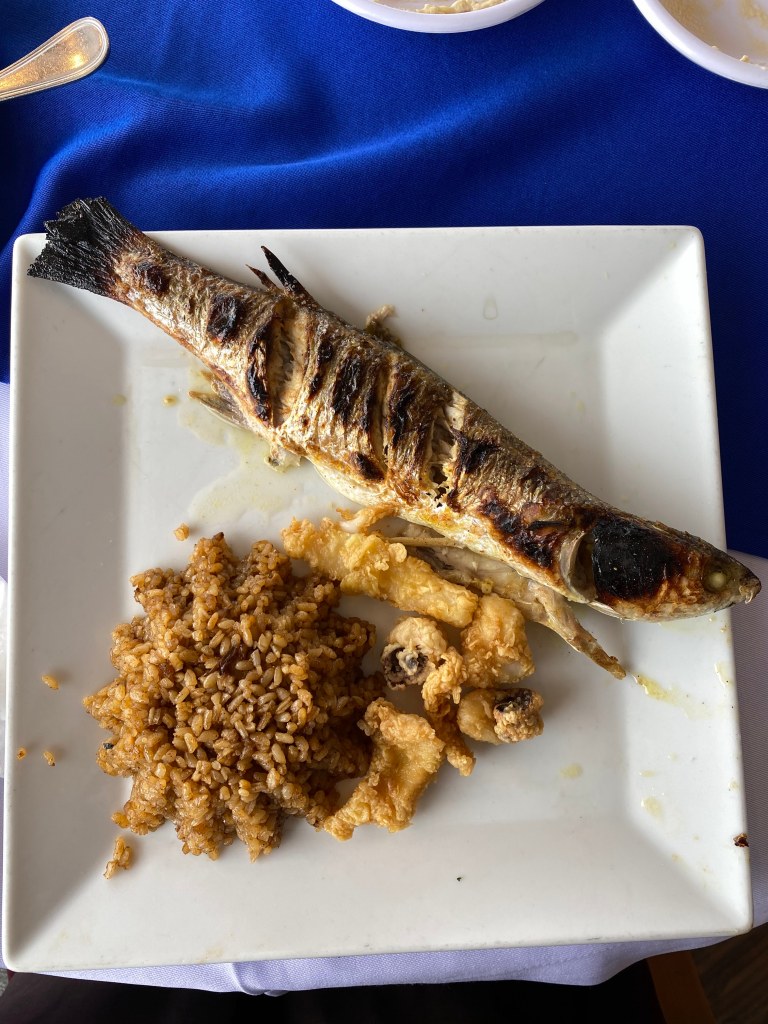
Lunch was fresh seafood at a local restaurant called Fish Market with views of the harbour. Let me stop there and let you drool over the photos.

A Walk By the Harbour – Alexandria’s Living Pulse
After wandering ancient tombs and lone pillars and that sumptuous lunch, we drifted down towards the seafront, a stretch of sunlit concrete and salt-laced breeze where the city’s true life hums. We walked slowly along the corniche – sellers with their wares and old men huddled over backgammon boards on low stools, their laughter lost in the wind. And a sprawl of ships of every size drifting on the shimmering blue. Nothing feels staged here – just an ordinary stretch of concrete where history slips into the rhythm of daily life.
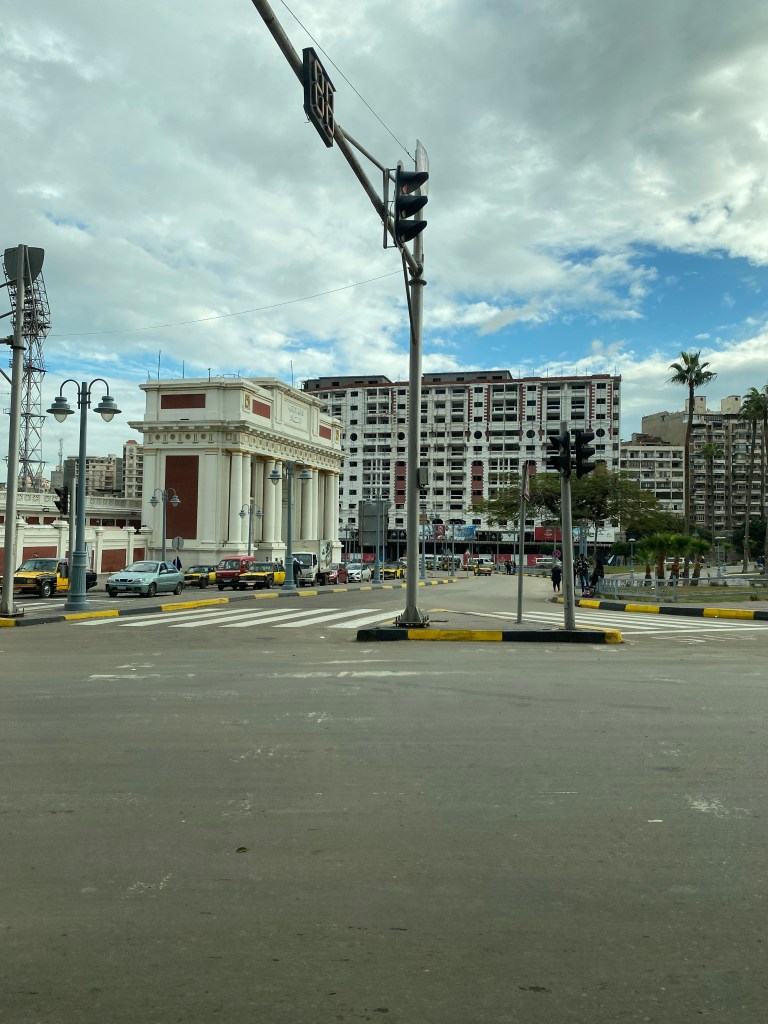
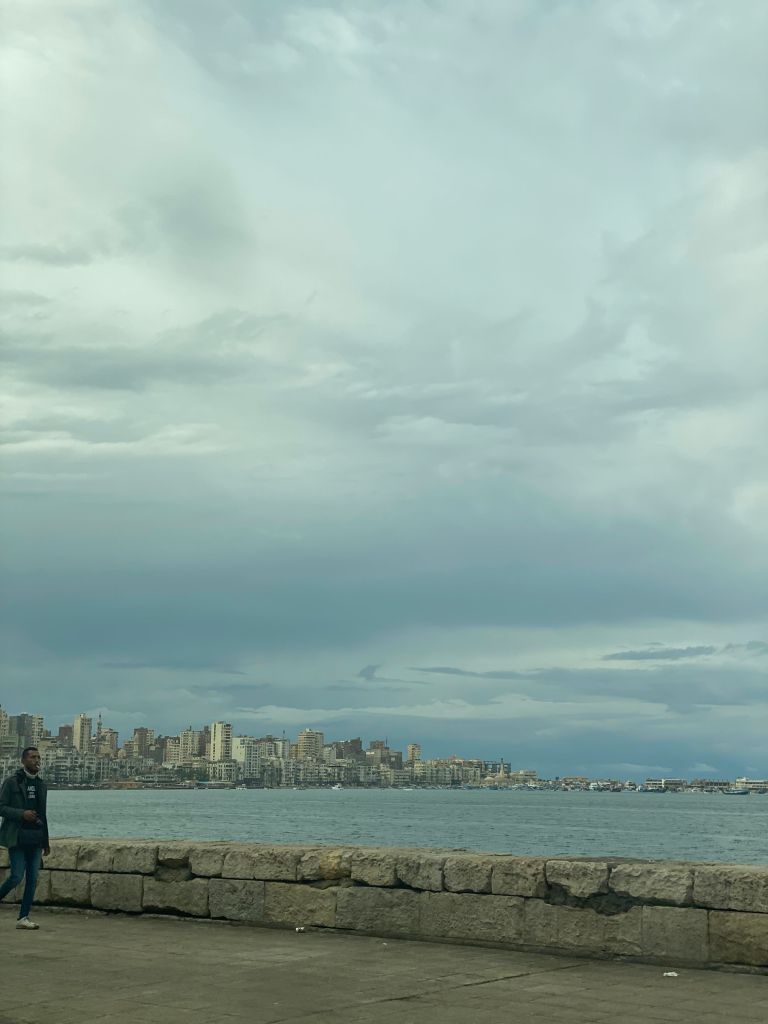

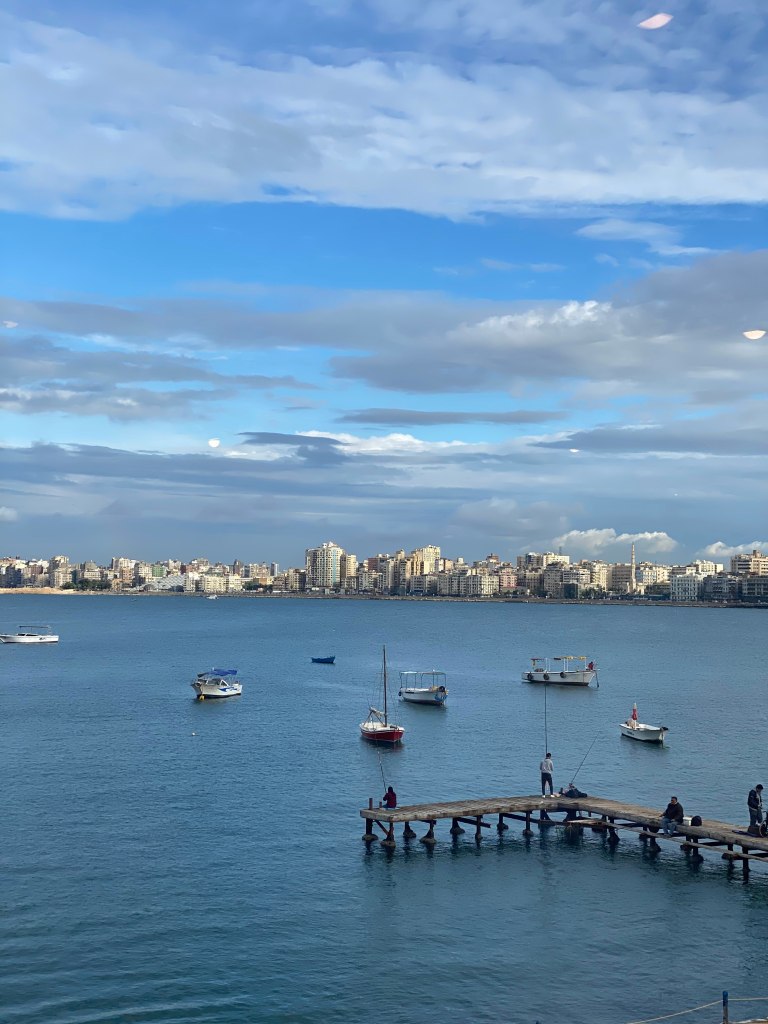
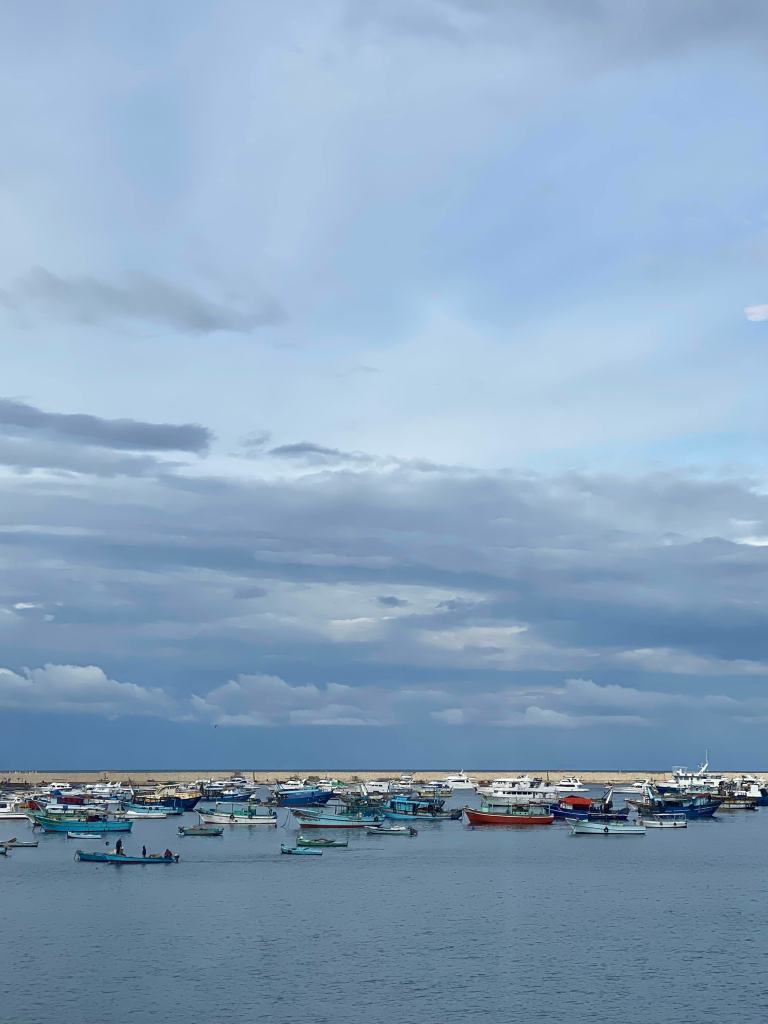
As we turned away from the harbour, the last gulls wheeled over the masts and the hush of dusk started settling in. We left before sunset, the road back to Cairo stretching out ahead, but a part of us stayed there – drifting somewhere among the boats and the brine and the gentle promise that some cities, no matter how quickly you pass through, never really let you go.
Discover more from thatbrowngirlinblackboots
Subscribe to get the latest posts sent to your email.

