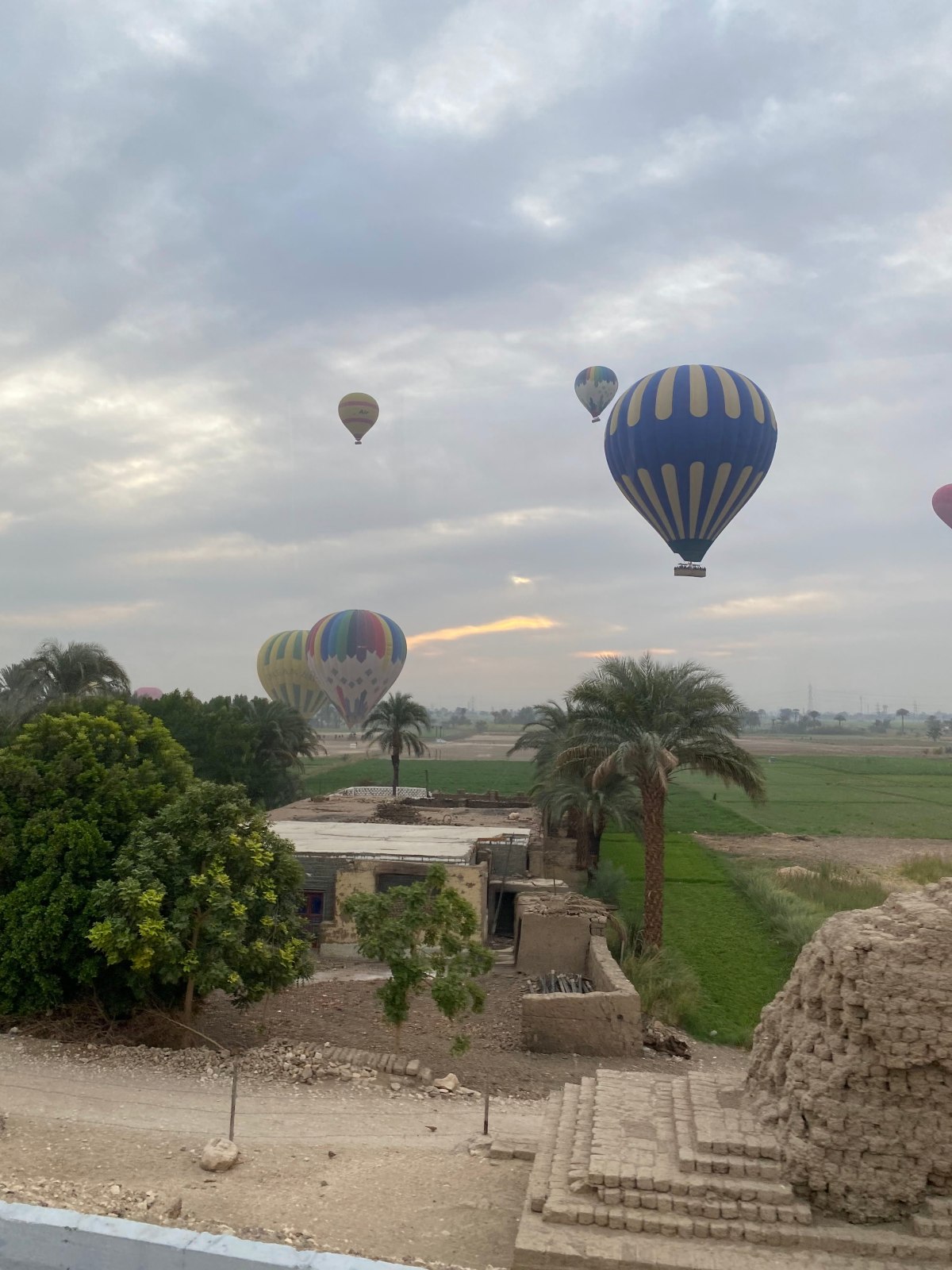
If Cairo is chaos, Luxor is reverence. The temples aren’t ruins -they’re scriptures in stone. From exploring Karnak, where pillars rise like a stone forest, to Hatshepsut’s Temple which cuts right into the cliffs of Deir el-Bahari. And then the Valley of the Kings where beneath the arid surface, tombs of pharaohs lay cool and richly painted, stories preserved in lapis and ochre. Read on!
Luxor lies on the east bank of the Nile River in southern region of Upper Egypt. This is where we de-boarded the Nile Cruise and set off on a day long trip. Later that night we’d board a flight back to Cairo. You can read about the complete Egypt trip here.
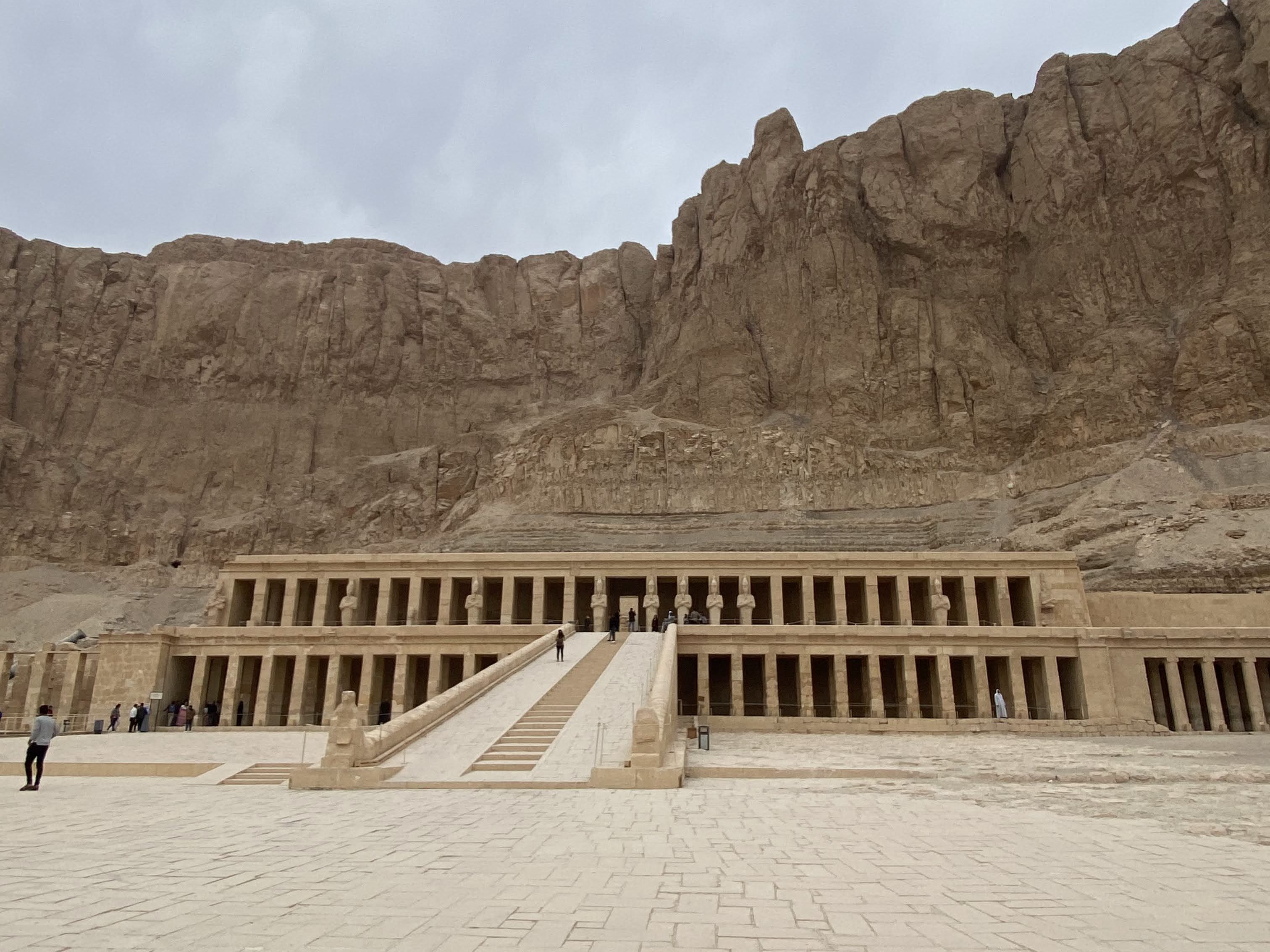
Queen Hatepshut Temple – Terraced Elegance in Stone
Queen Hatepshut, the only one in the history of Egypt to have declared herself as Pharaoh, also adopting all associated emblems and titles. The temple was built to commemorate her achievements and is also her mortuary. Built into amber cliffs and supported by three soaring terraces linked by colonnades, the temple (known as Djeser‑Djeseru) is a masterpiece of New Kingdom architecture and a rare testament to Egypt’s female pharaoh. Sculpted reliefs trace Hatshepsut’s divine birth, her Punt expedition, and offerings to Amun‑Ra. Recent excavations southeast of the temple uncovered over 1,000 beautifully decorated blocks from its foundation wall, giving new insight into its original color and scale.
Valley of the Kings
Next stop – the Valley of the Kings, carved deep into the Theban hills on Luxor’s West Bank, where pharaohs charted their afterlife among cliffs carved with hieroglyphs. From the outside, it appears stark and unforgiving: sun-scorched limestone cliffs, wind-whipped paths, and an uncanny hush that hangs over the dry wadi. But beneath this quiet landscape lie some of the world’s richest burial chambers – the final resting places of Egypt’s greatest Pharaohs, hidden away from looters and time.
The Valley of Kings is famous for housing the royal tombs. For over 500 years during the New Kingdom, the royals of 18th, 19th and 20th dynasties chose this secluded valley to bury their bodies and secure their passage to the afterlife. There are 62 known tombs as of writing date (January 2023), and excavations are still in progress. While some are simple shafts cut deep into rock, others elaborate underground palaces painted top to bottom in brilliant scenes from the Book of the Dead, the Amduat, and the Litany of Ra.
Trivia: The Amduat and the Litany of Ra are ancient Egyptian funerary texts. The Amduat, meaning “That which is in the Underworld,” details the journey of the Sun God Ra through the underworld during the twelve hours of the night, while the Litany of Ra focuses on the various forms and names of Ra, aiming to connect the deceased with the sun god’s power.
The valley is located at Luxor on the western bank of the River Nile, at a distance from the river to protect from floods. It’s widely believed that having the burial sites towards the west was a strategic decision – the Egyptians associated west with the end of life since that’s where the sun sets!
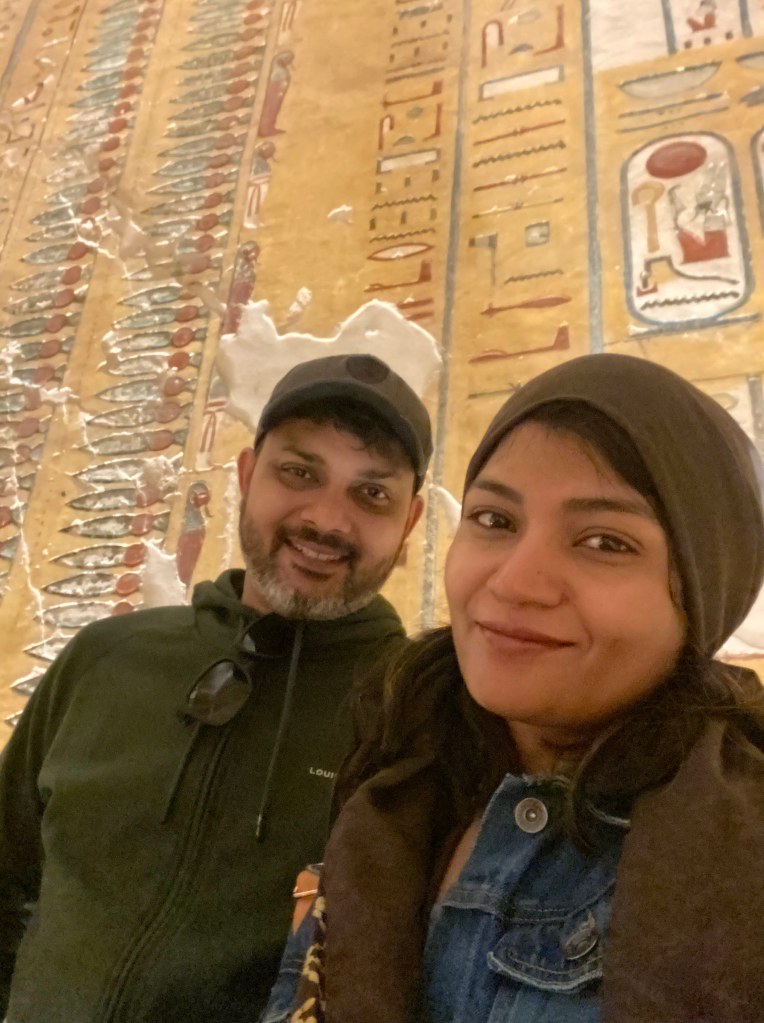
As we stepped down into our first tomb, the walls came alive with stories – Osiris and Anubis, rivers of hieroglyphs winding their way through narrow corridors like sacred graffiti.
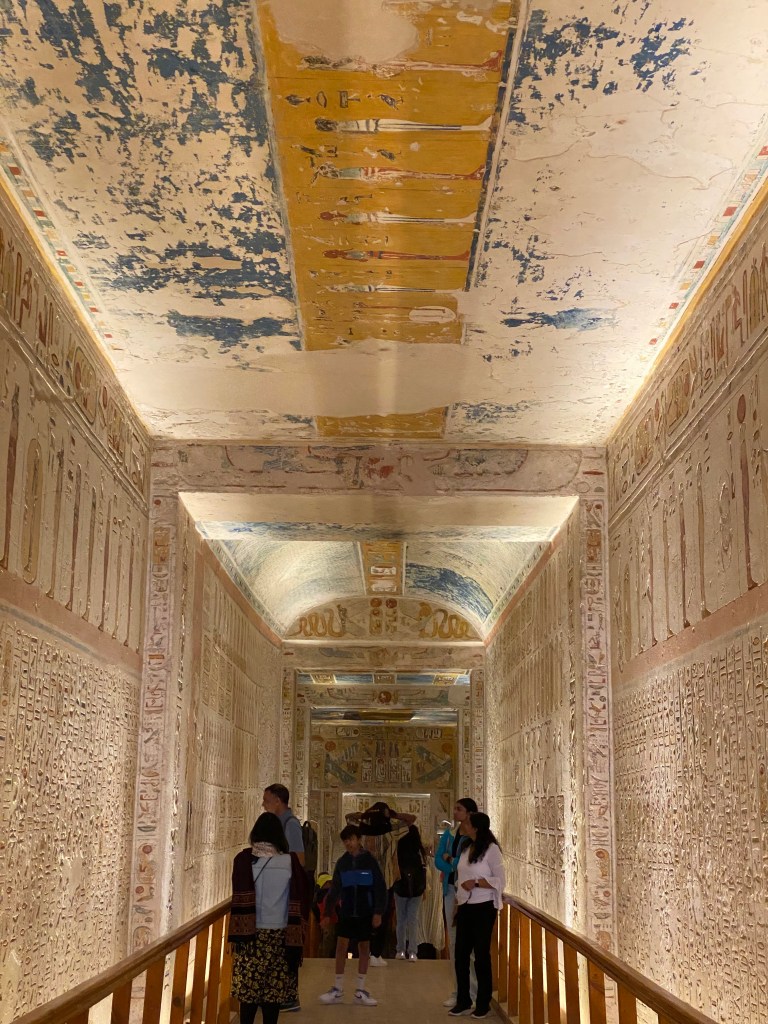
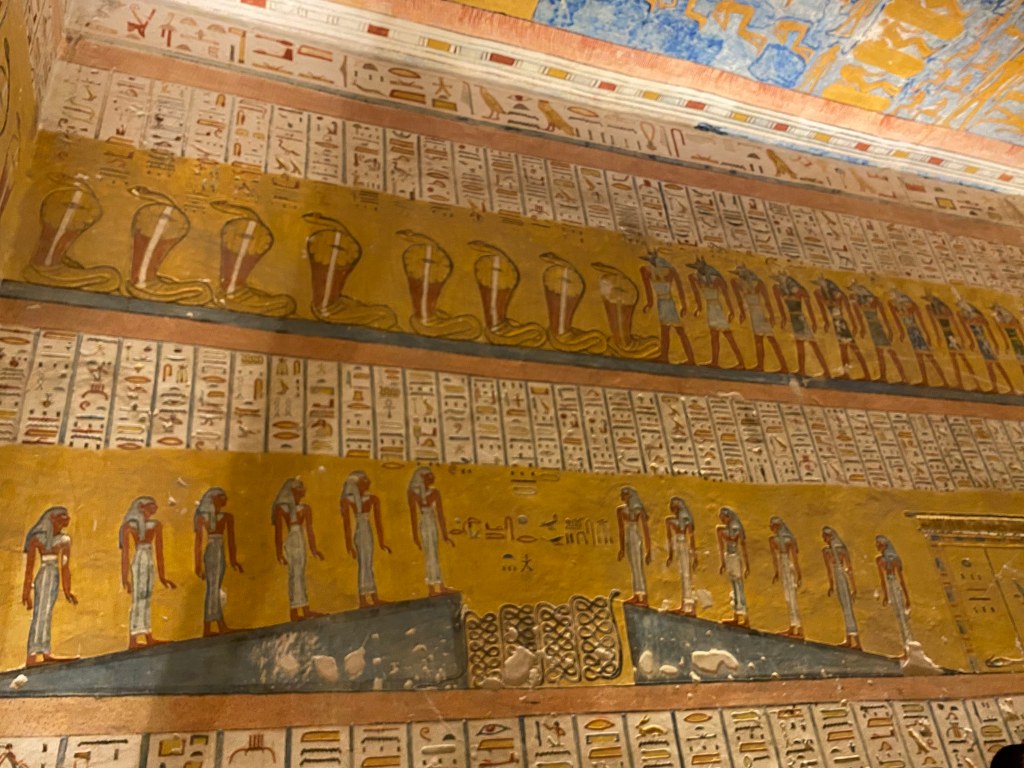
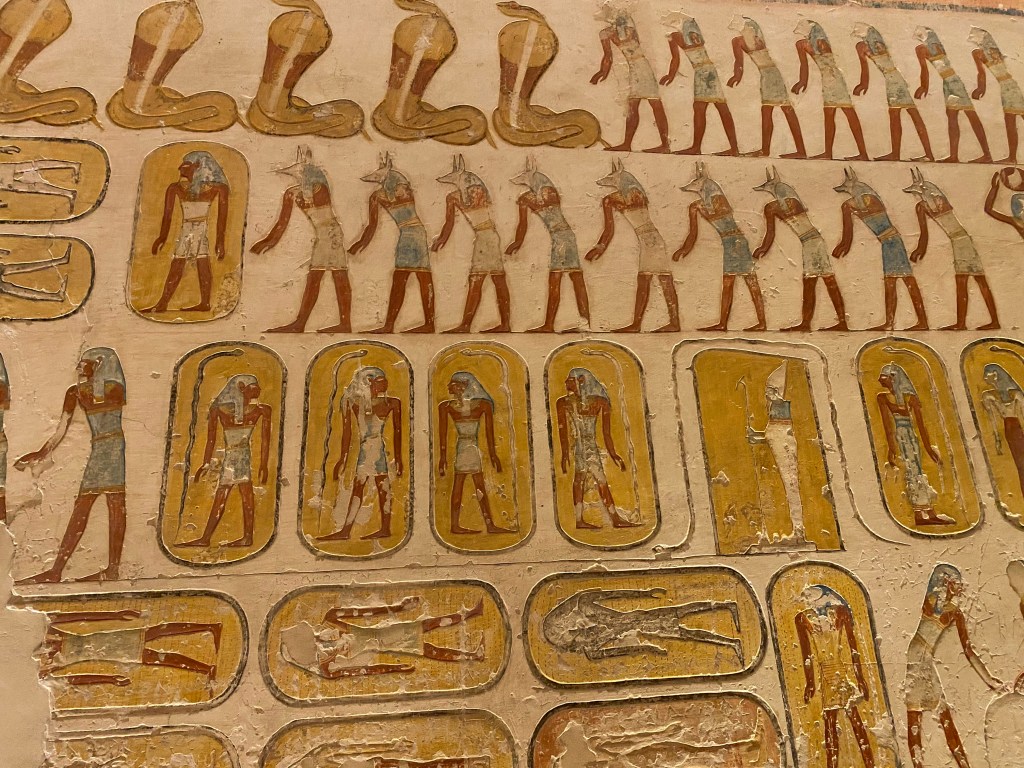
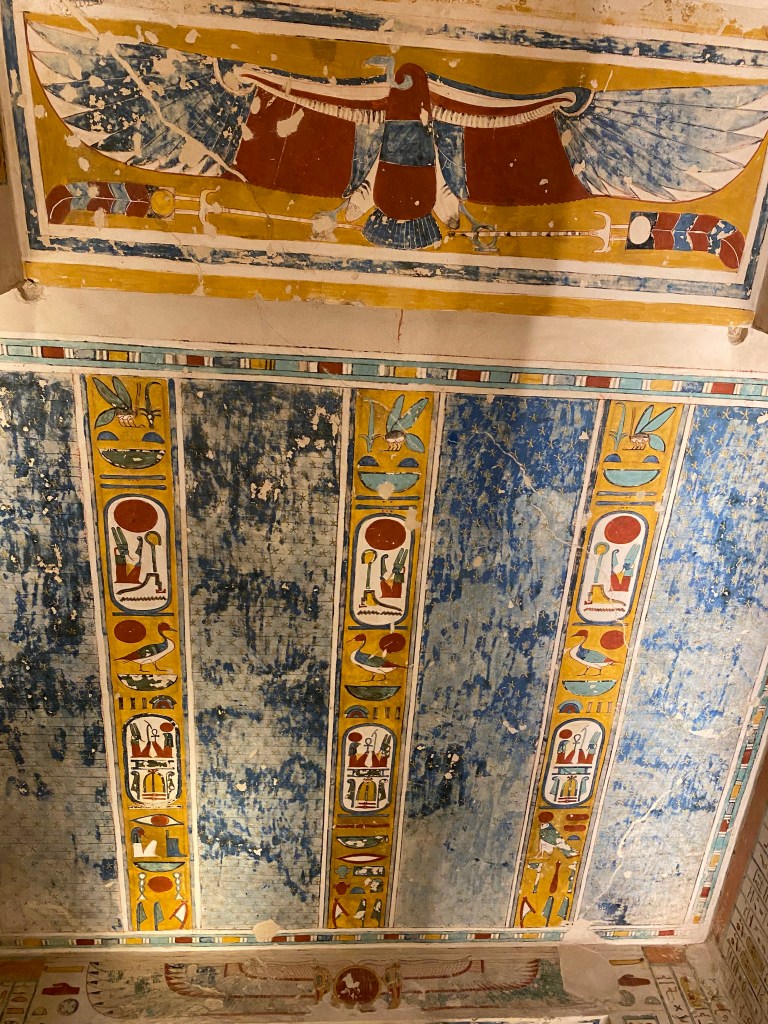
The tombs were cut into limestone rocks, long corridors leading to the burial chamber. The walls of the corridors and chamber were carved and painted with murals depicting scenes from daily life and afterlife journey. During the time of burial, the chambers were filled with every accessory that the king or queen would need in sustain the afterlife – everything like furniture, food, jewellery. None of these tombs have the mummies or the accessories now as they’re all moved to the museums.
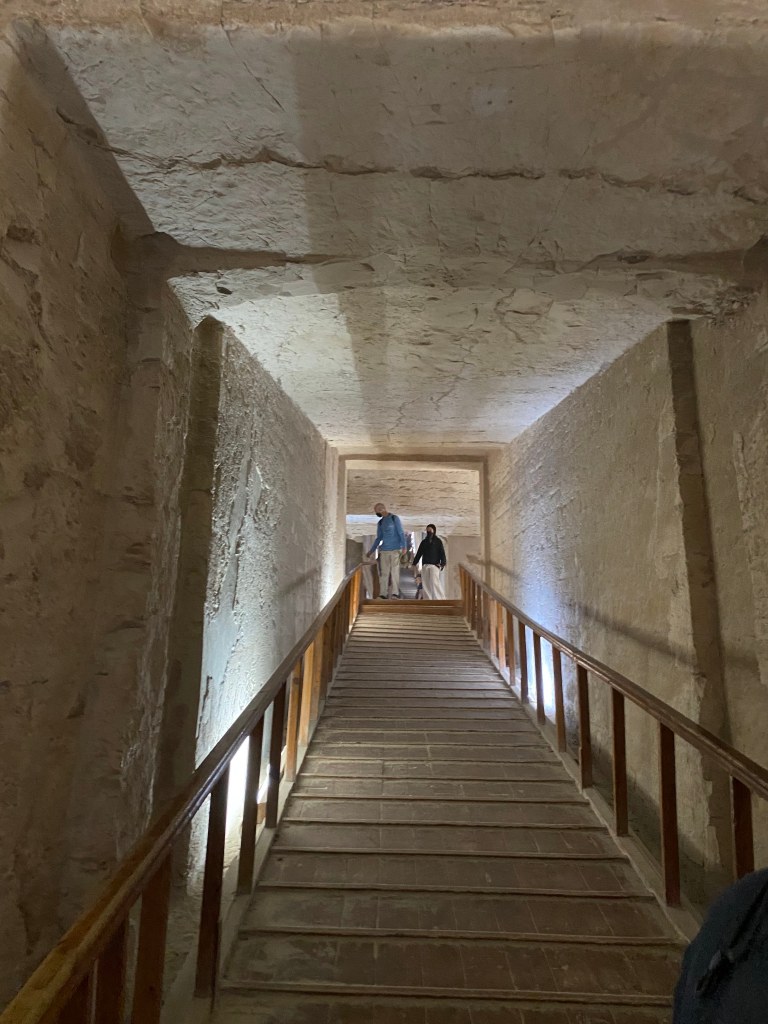
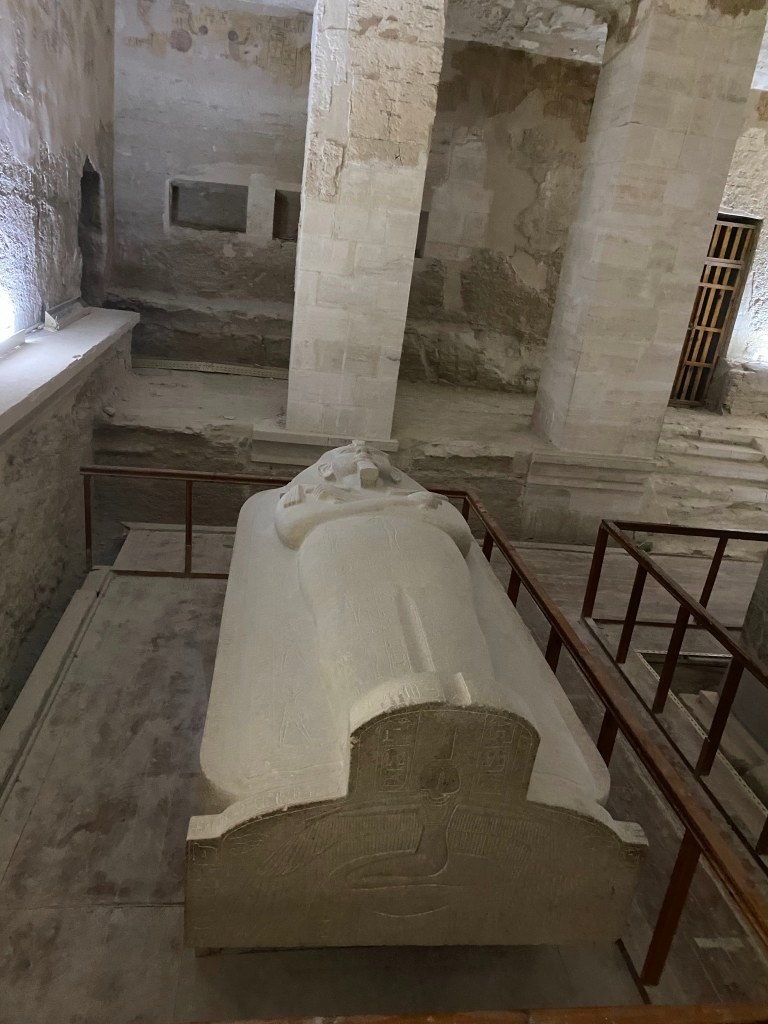
Not all secrets have been revealed either. New excavations continue to unearth hidden chambers and unfinished tombs.
Luxor and Karnak Temples
As the day softened into late afternoon, we crossed back to Luxor’s East Bank, ready to stand where pharaohs once knelt before gods and crowds gathered for grand festivals that bound the city to its divine protectors. Few places in Egypt capture this eternal dance between power and worship quite like the twin jewels of the East Bank – Luxor Temple and Karnak Temple – once connected by a sacred road lost to time and sand, but now revealed again.
We started at Luxor Temple, built around 1400 BCE under the watchful eye of Amenhotep III, added to by Tutankhamun, and later Ramses II — whose massive seated statues still guard the grand pylon entrance. Unlike the funerary temples of the west bank, Luxor Temple wasn’t dedicated to death but to rejuvenation — a living stage where kings were crowned and reborn as gods in the flesh. Stepping through its colossal gateway flanked by a single obelisk (its twin famously stands today in Paris’s Place de la Concorde), you’re swallowed by a forest of papyrus-bud columns, colossal statues, and courtyards where priests once moved in flickering torchlight.
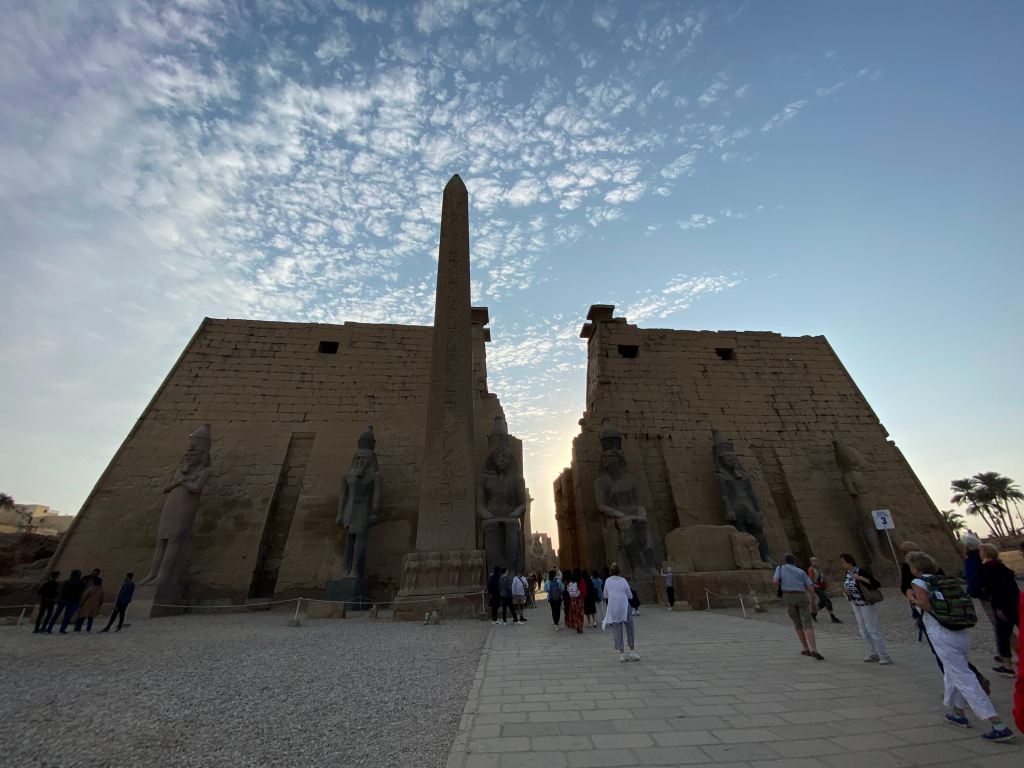
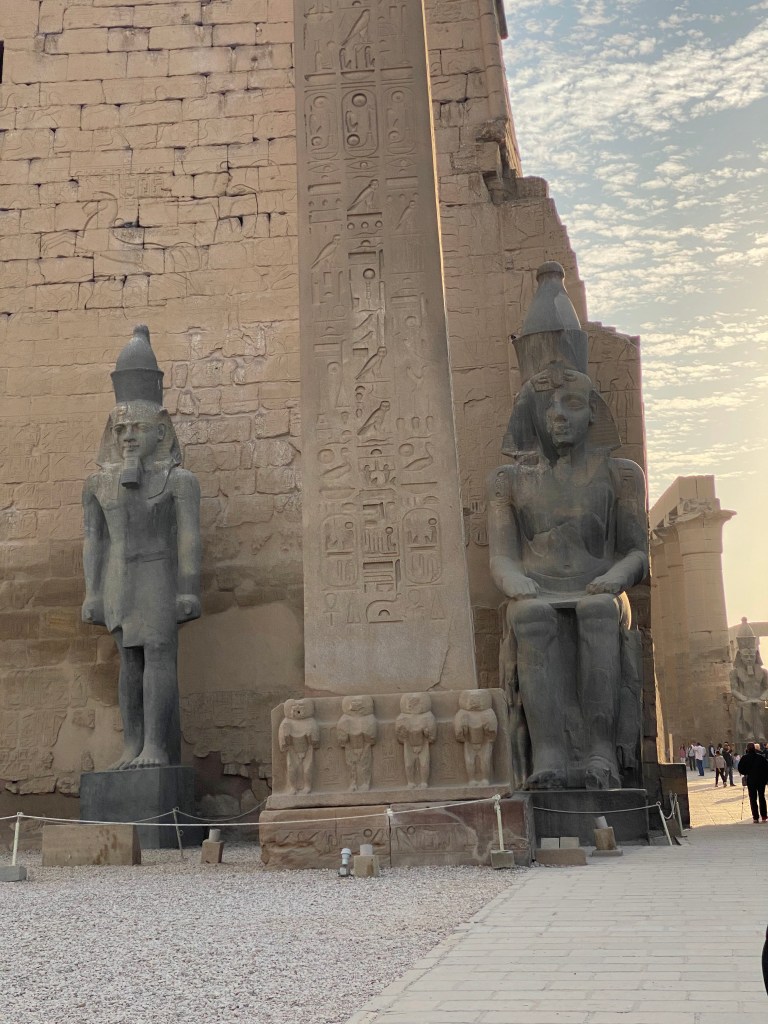
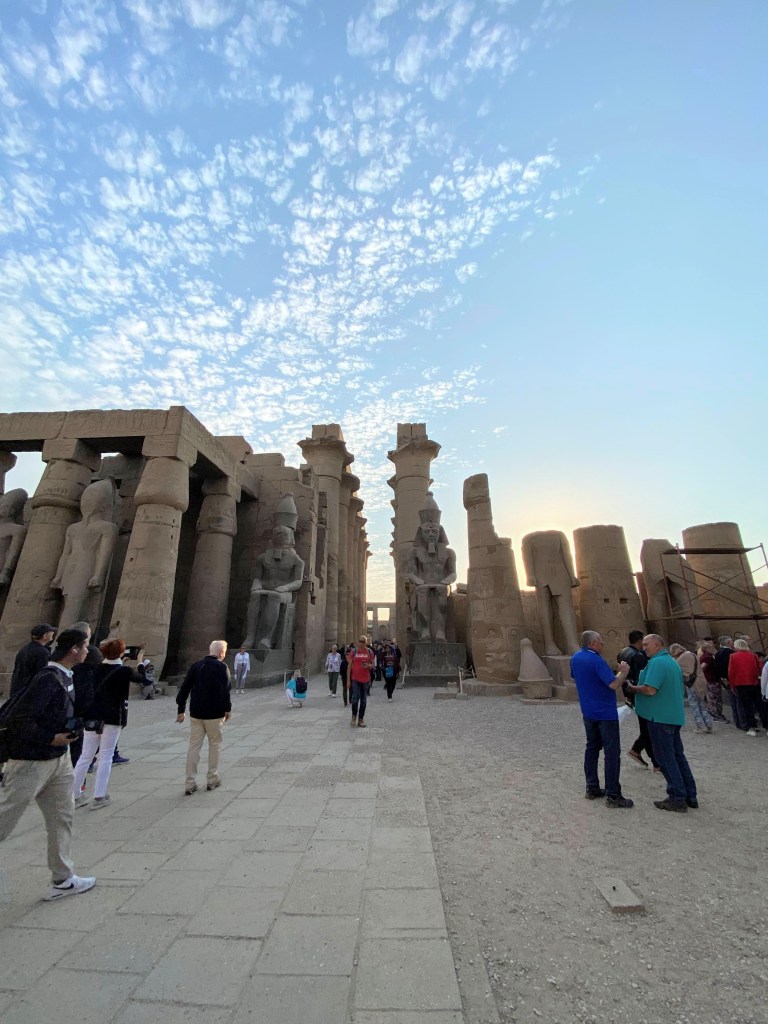
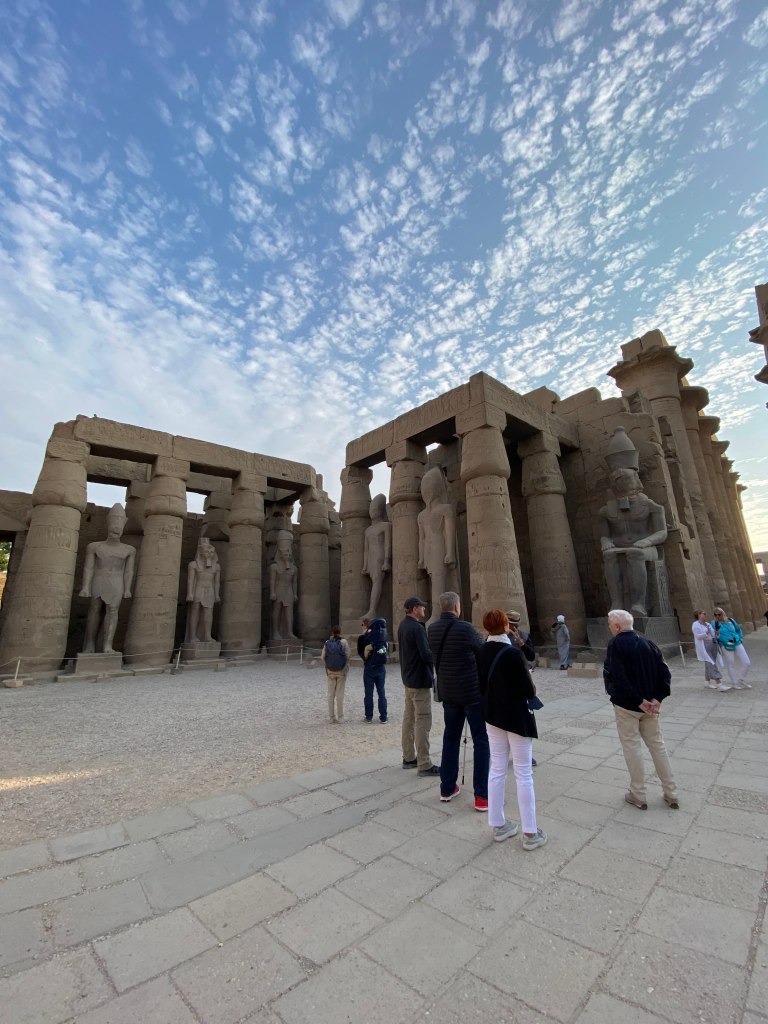
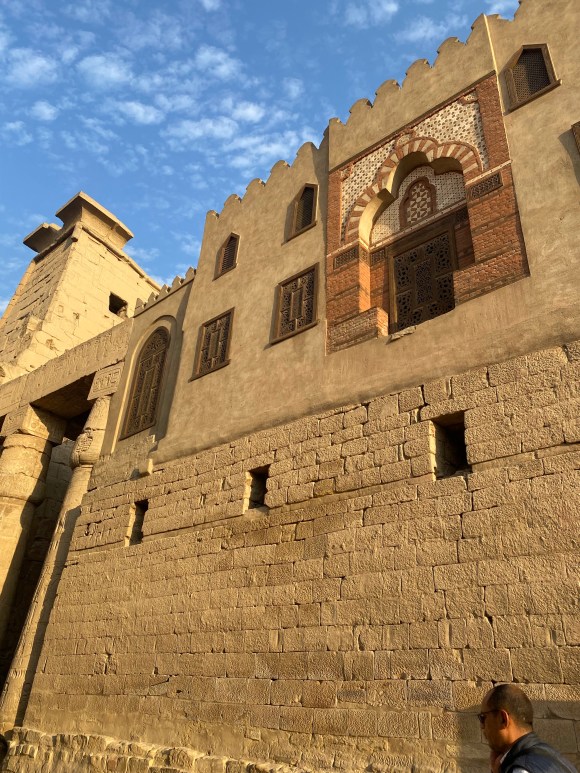
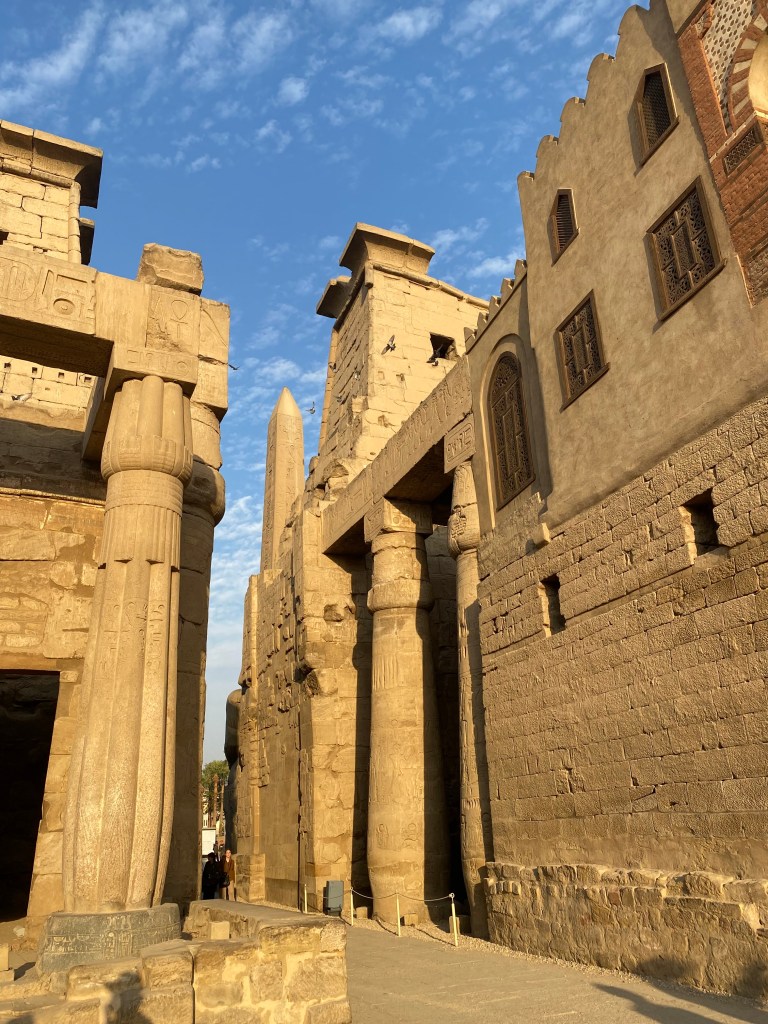
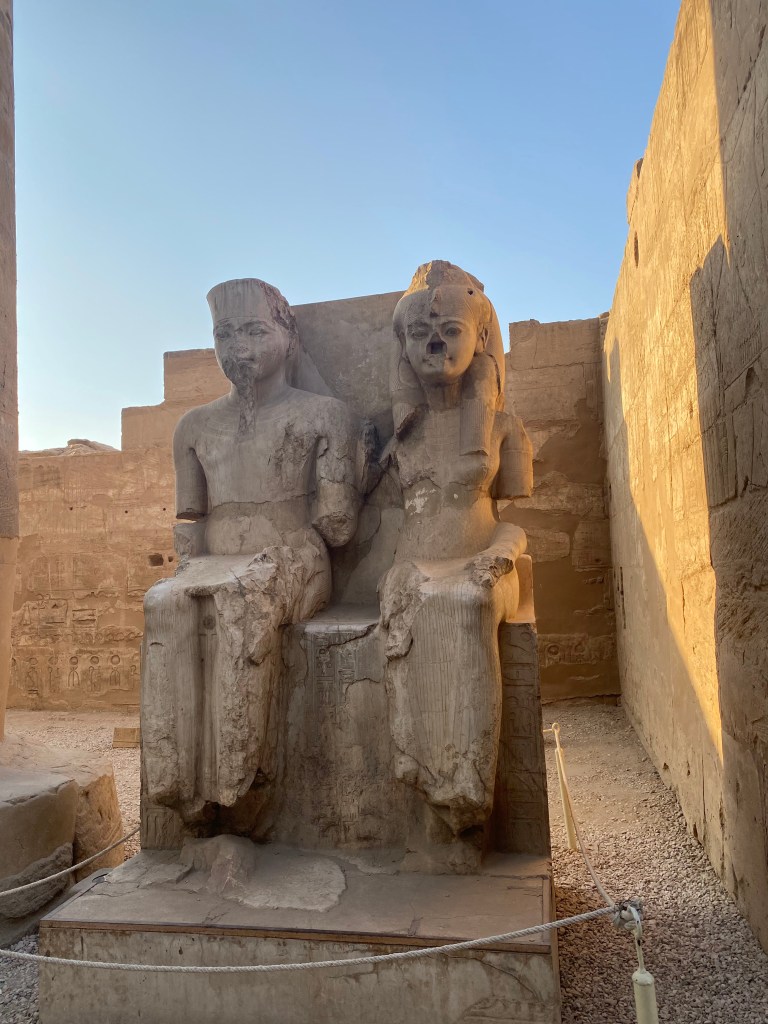
From Luxor Temple’s great courtyard, we traced the newly restored Avenue of the Sphinxes — a breathtaking 2.7-kilometre processional path once used for the Opet Festival, when the sacred barque of Amun was carried from Karnak to Luxor amid incense, music, and cheering crowds.
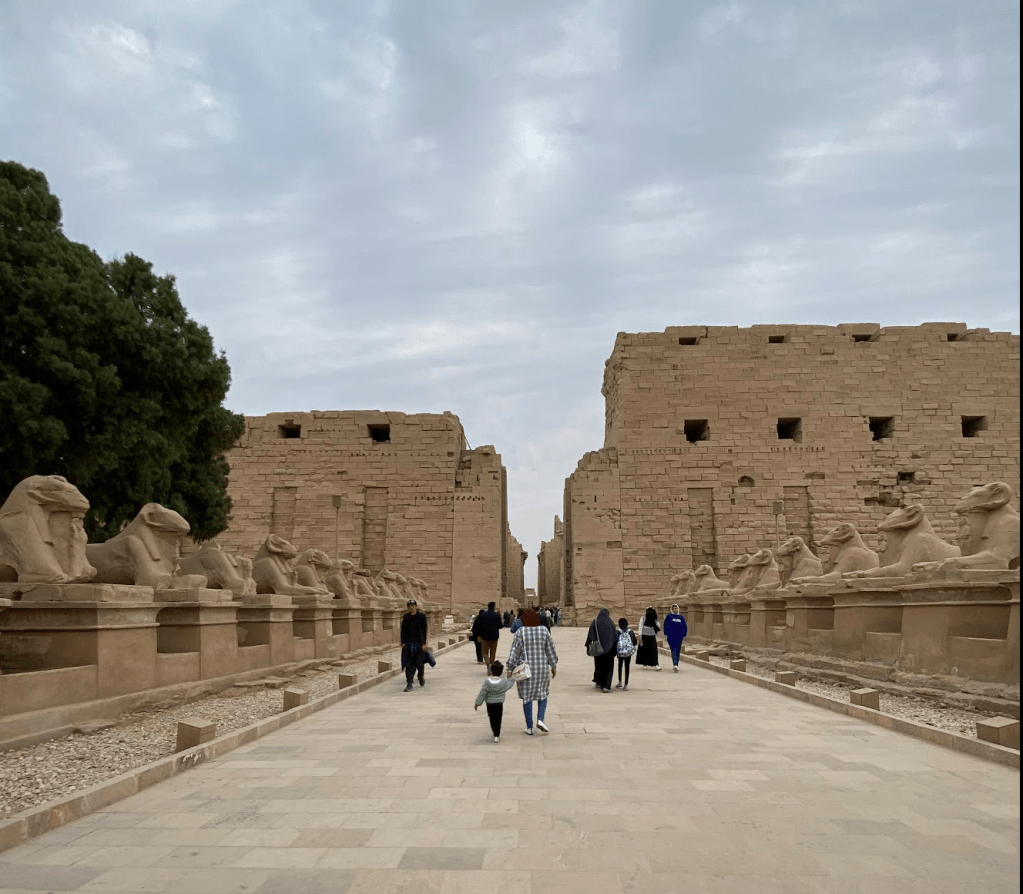
At the far end of this holy avenue rises Karnak Temple, a vast, open-air museum of stone so grand it feels more like a city than a single complex. Over 2,000 years, each pharaoh who ruled added his mark here, expanding Karnak into the largest religious building ever constructed. Its beating heart is the Great Hypostyle Hall, where 134 giant sandstone columns stand like a petrified forest, each trunk carved with scenes of offerings, battles, and the eternal bond between ruler and gods.
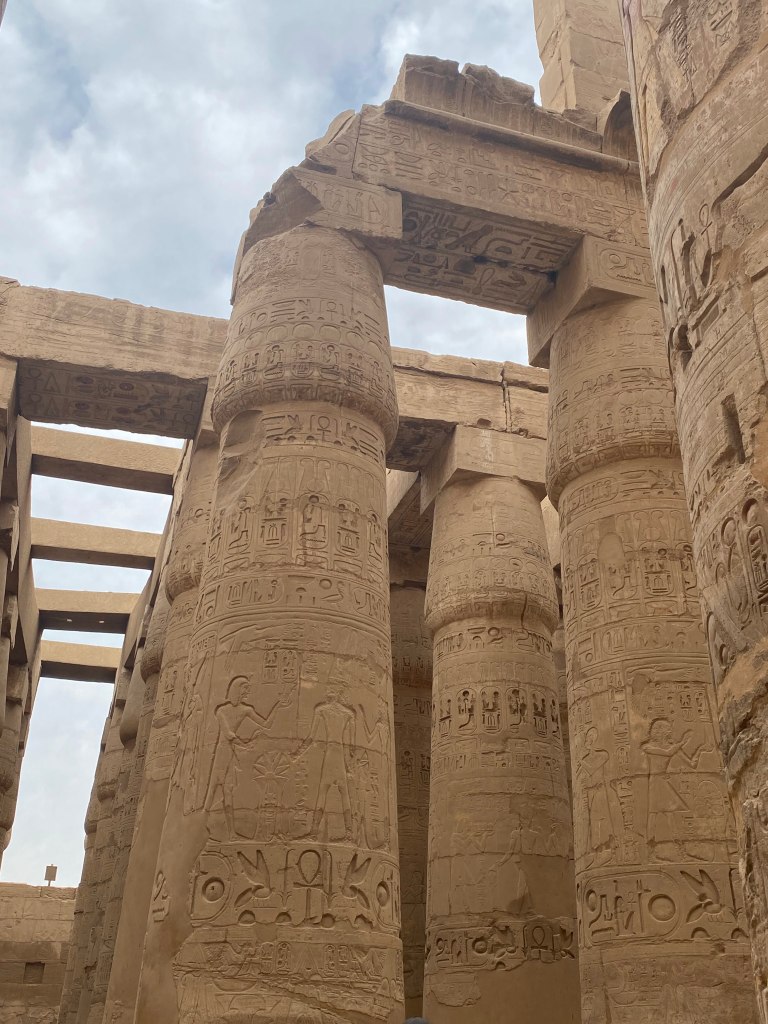
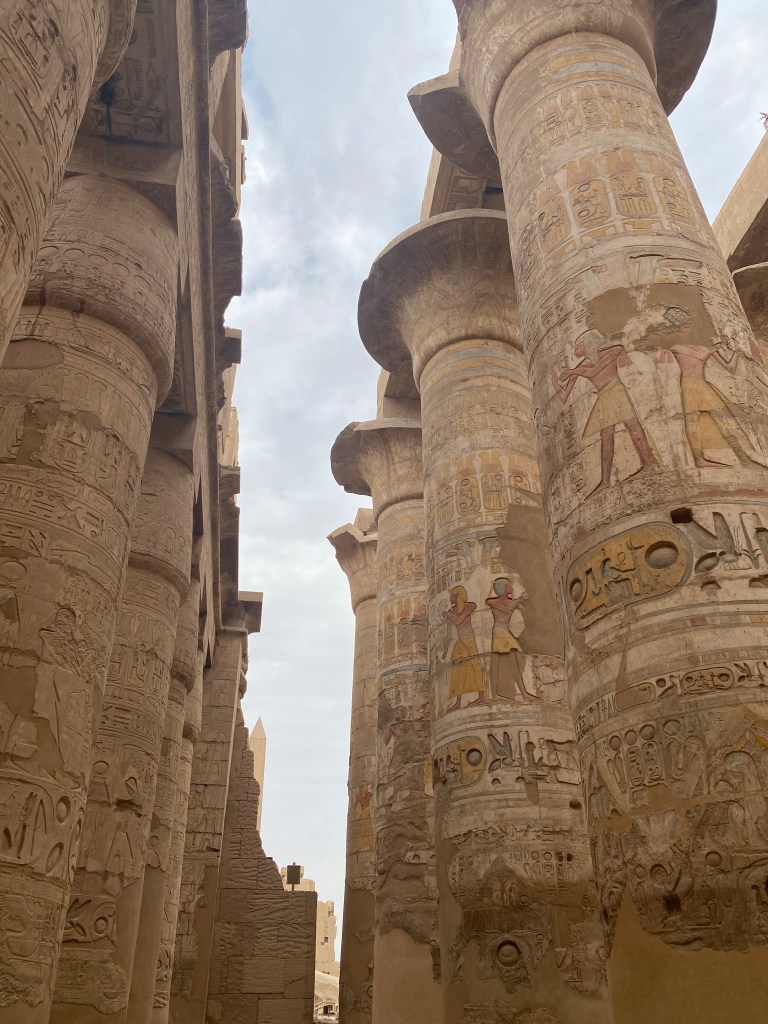
Sunlight filters through broken lintels, dappling ancient reliefs in shifting gold and shadow.
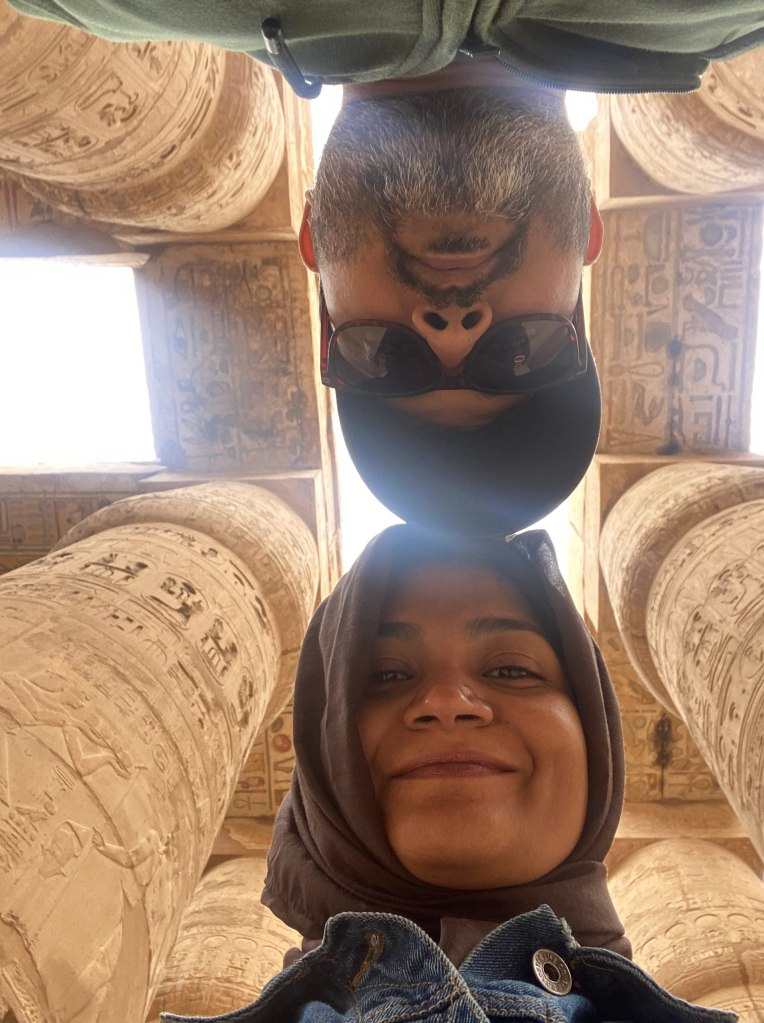
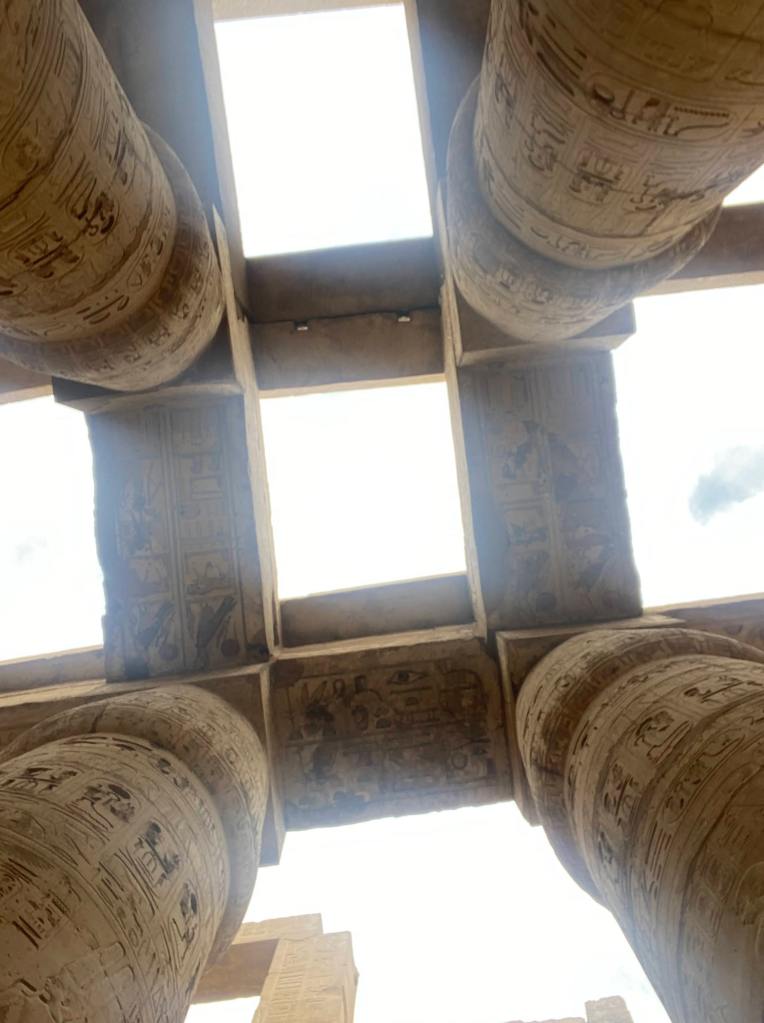
Beyond the hall, the sacred lake still lies mirror-still, once used for ritual purification by priests. Obelisks pierce the sky — the most famous belonging to Hatshepsut, whose pink granite monolith once shone with electrum that caught the dawn light. Elsewhere lie lesser-known gems — the Festival Hall of Thutmose III, hidden chapels built by Seti I, the Red Chapel of Hatshepsut rebuilt block by block. Here, each doorway is a portal not just through stone, but through dynasties.
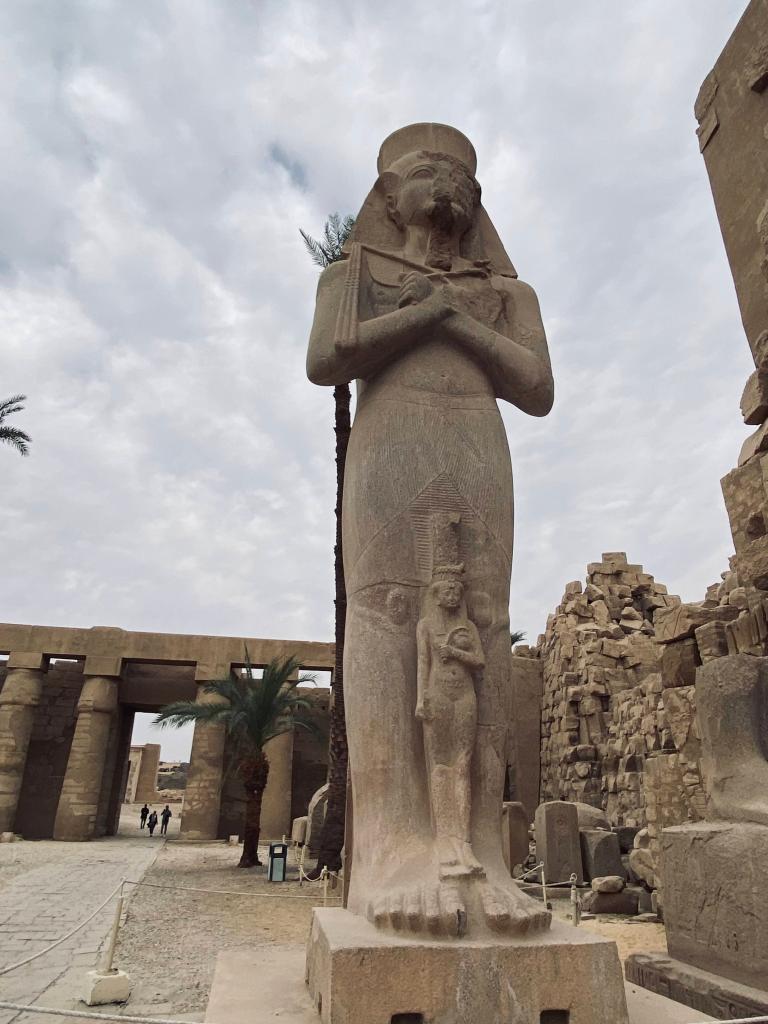
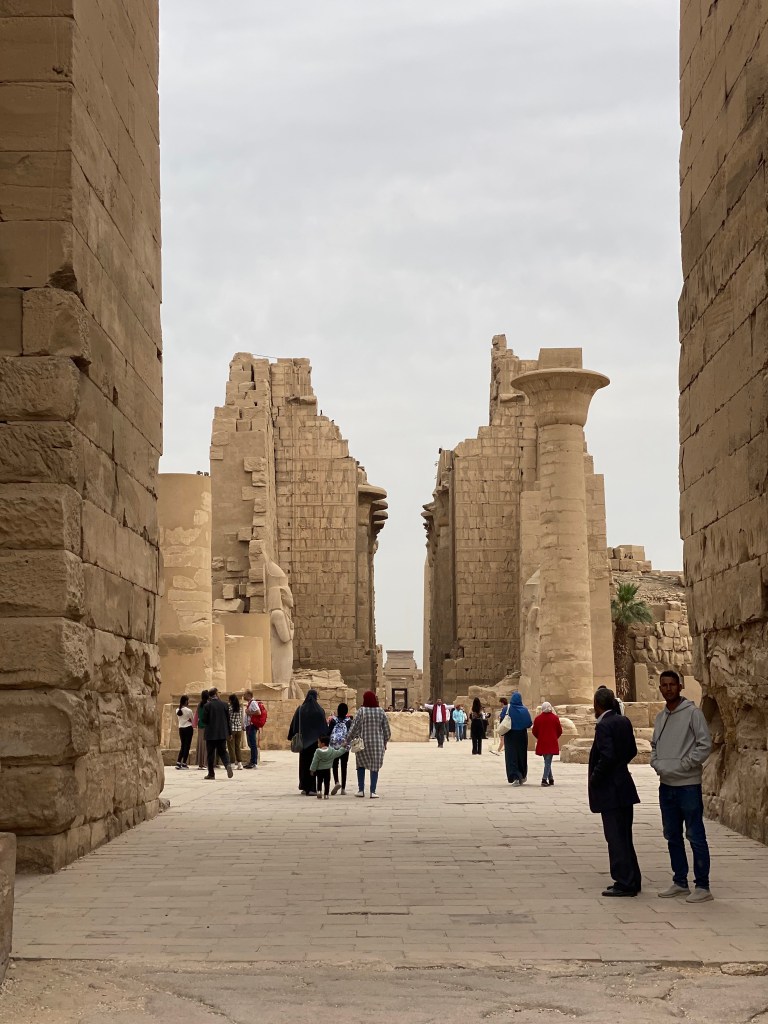
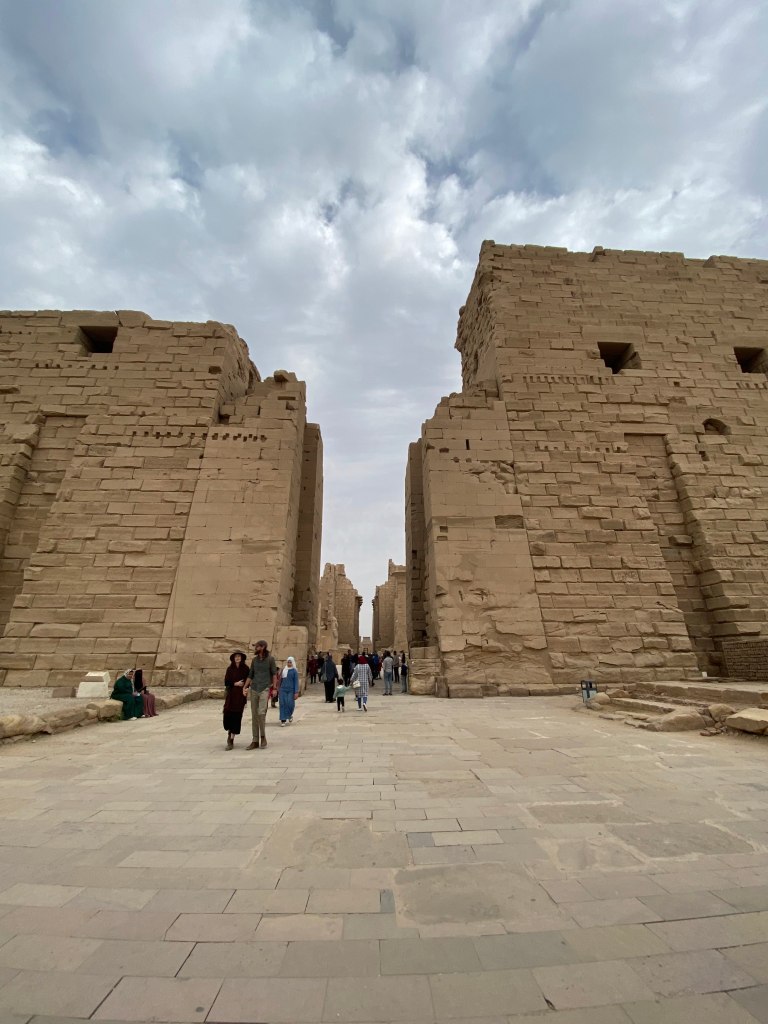
Here you can almost feel what ancient Egyptians must have felt – that here, the gods lived among men. And when you finally step out leaving the giant pylons behind, you carry a strange sense of victory – the sense that you’ve brushed up against something bigger than centuries, something that no empire could ever quite bury.
The Return Stretch – Back to Cairo
The return journey was long. Our flight was delayed but by the time we got onboard, Luxor had woven itself into our bones. A city that is less a place and more a library written in stone. From the Valley of the Kings’ painted tombs to the terraced grandeur of Hatshepsut’s temple, from Luxor’s golden columns to Karnak’s endless hypostyle, you realise why the ancients called this Thebes – the City of a Hundred Gates – gateway to eternity itself.
Discover more from thatbrowngirlinblackboots
Subscribe to get the latest posts sent to your email.

